The quick answer — what our basalt factory delivers
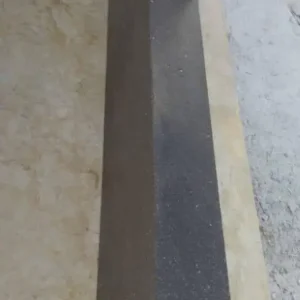
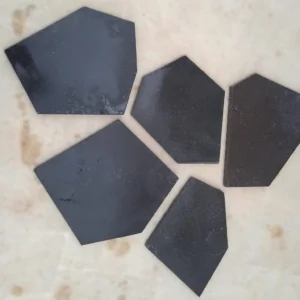
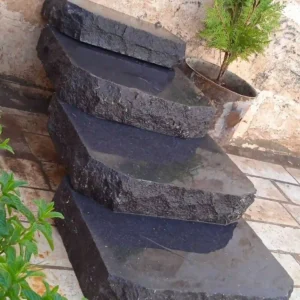
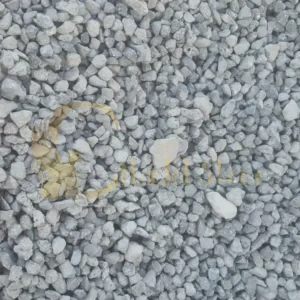
Citadel Stone operates a state-of-the-art basalt factory dedicated to producing high-quality basalt products for diverse applications across the United States. We serve two primary buyer streams: architectural clients seeking premium tiles, pavers, coping, and slabs for construction and landscaping, and industrial clients requiring specialized crushed basalt for mineral-wool production, refractory feedstock, and various aggregate uses. Our comprehensive capabilities ensure precision manufacturing and reliable supply for projects of any scale, from intricate architectural designs to large-volume industrial demands. We are a basalt factory focused on quality in our operations.
Premium Natural Stone — Available in Every Size and Thickness
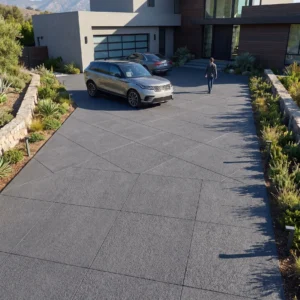
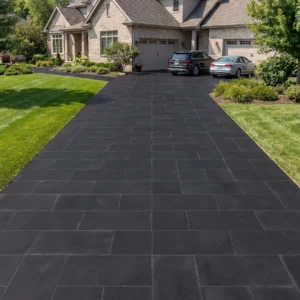
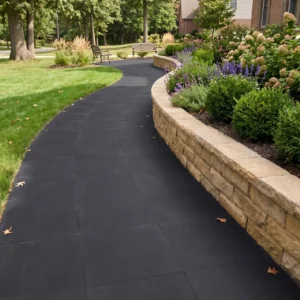
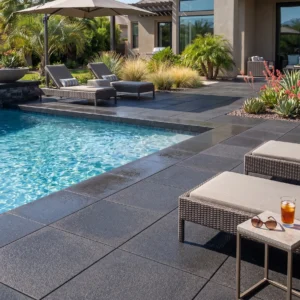
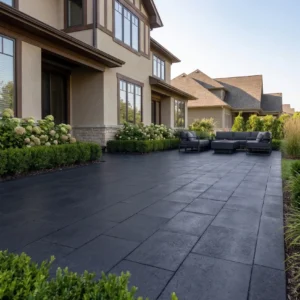
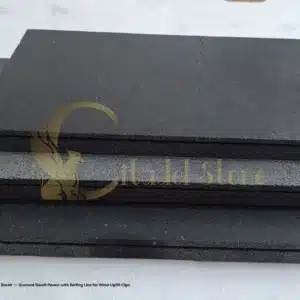
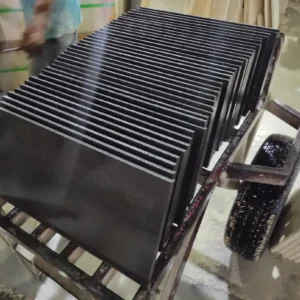
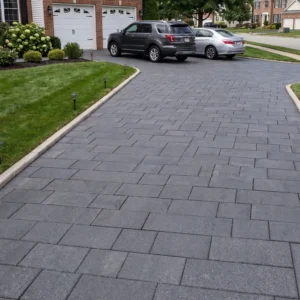
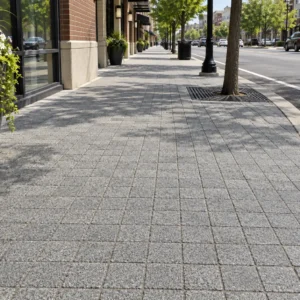
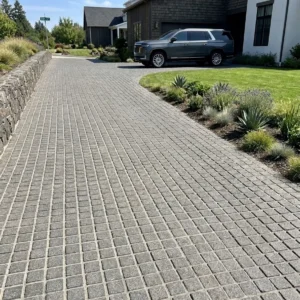
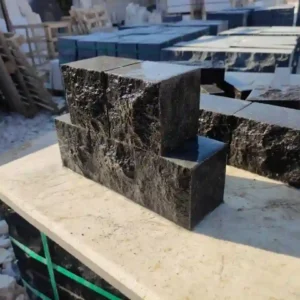
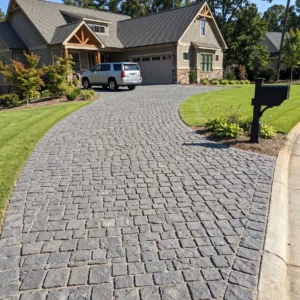
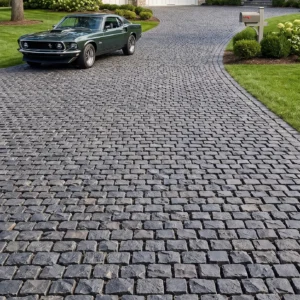
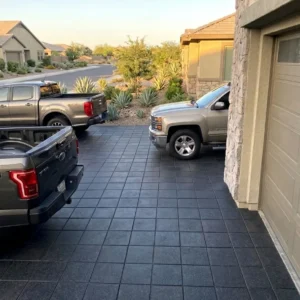
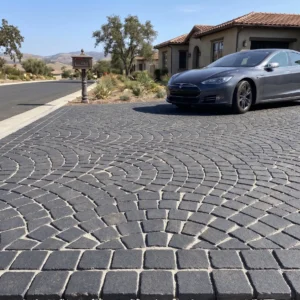
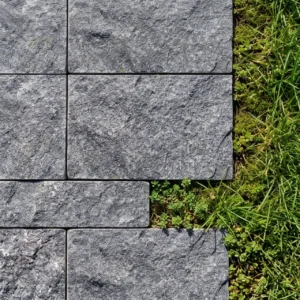
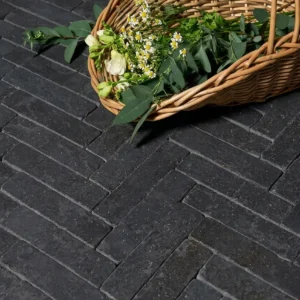
Get the perfect fit with our black basalt — available in standard sizes or custom-cut to your exact dimensions, from ready-to-ship formats to fully bespoke cuts including large-format tiles and slabs. Every paver, tile, sett and coping profile is finished to your exact specification — one pallet or full containers, residential or commercial.
Fundamental Technical Specifications for Basalt Pavers & Tiles
Technical Parameter
Test basis
Value
Description
Density (g/cm³)
Certified mill test
3.01–3.06
Measured on two production batches (3.01 and 3.06 g/cm³), about 15% denser than typical granite (2.6–2.7 g/cm³). Use it for weight and freight calculations.
Water Absorption (%)
Certified mill test
0.59–0.69
Measured on two production batches (0.59% and 0.69%), lower than the limestones tested in the same lab (1.34–1.61%). Less water in the stone means less water to freeze inside it.
Compressive Strength (N/mm²)
Published range for basalt as a rock type
100–300 (typical)
Published range for dense basalt as a rock type.
Flexural Strength (N/mm²)
Certified mill test
9.04–10.03
Measured on two production batches: 21% to 37% higher than the two limestones tested in the same lab (7.31 and 7.50 N/mm²). A unit’s breaking load also depends on its thickness and support.
Abrasion Loss, Böhme (mm)
Certified mill test
0.87–0.91
Böhme abrasion loss (DIN 52108) on two production batches. Lower is better. About one-third of the white limestone tested in the same lab (2.68 mm) and slightly lower than the shellstone (1.02 mm).
Modulus of Rupture (N/mm²)
Certified mill test
10.13–11.02
Measured on two production batches: 32% to 49% higher than the two limestones tested in the same lab (7.40 and 7.69 N/mm²). Real-world capacity depends on thickness and support.
Certified mill test results, measured on 2 production batches of Citadel Basalt.
❄ Planning for a cold climate? See our Freeze-Thaw Performance Guide — certified absorption, deicing-salt chemistry and snowplow wear data for black basalt.
Available Thickness Options for Black Basalt
Thickness Options
Description
1.5 cm (0.59 in)
Perfect for indoor applications, providing a sleek.
2 cm (0.79 in)
Versatile thickness ideal for both indoor settings and areas with light foot traffic outdoors.
3 cm (1.18 in)
Common choice for patios, offering a balance of strength and aesthetics for moderate outdoor use.
4 - 6 cm (1.57 - 2.36 in)
Suitable for regular outdoor applications such as walkways and patios, offering good durability.
7 - 10 cm (2.76 - 3.94 in)
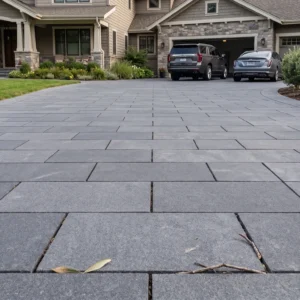
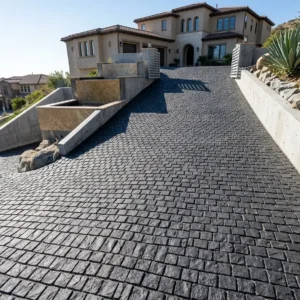
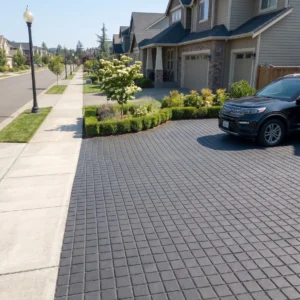
Highly durable thickness, perfect for driveways and high-traffic areas where heavy use is expected.
11 - 15 cm (4.33 - 5.91 in)
Built for heavy-duty environments, ideal for high-impact areas that require robust, long-lasting materials.
16 - 20 cm (6.30 - 7.87 in)
Ideal for custom or wholesale orders, providing maximum durability for industrial and heavy-load applications.
Citadel Basalt: Key Features and Benefits
Property
Description
Exceptional Hardness
Black Basalt is significantly harder-wearing than limestone and sandstone. Lab testing (DIN 52108 Böhme) records 0.87–0.91 mm abrasion loss against 2.68 mm for the white limestone tested in the same lab, roughly three times more abrasion-resistant.
Low Maintenance
Easily maintained and cleaned, making it perfect for long-term use.
Global Popularity
The most popular natural stone for hard landscaping projects worldwide.
Cost Efficiency
Basalt is normally a premium-priced stone; buying quarry-direct from Citadel Stone brings it within reach of most budgets.
Longevity
Properly installed, Black Basalt holds its appearance for generations with minimal upkeep.
Harsh Climate Suitability
The ideal choice for projects in harsh climates due to its resilience.
Versatile Applications
Perfect for both private and commercial projects, indoors or outdoors.
Aesthetic Appeal
Features an attractive, unique black color that enhances any design.
Low Water Absorption
Water absorption of just 0.59–0.69% across two tested batches (certified mill test), the lowest of the stones on our certificate, so little moisture or staining enters the stone and there is less water in it to freeze.
Hand-Selected Quality
Citadel Stone hand-selects the most durable and beautiful Black Basalt tiles for customers.
Versatile Basalt Sizes to Suit All Design Requirements
Basalt Tile Sizes
Metric (cm)
Imperial (in)
Small Format
30 x 30 cm
12 x 12 in
Medium Square
40 x 40 cm
16 x 16 in
Standard Rectangle
30 x 60 cm
12 x 24 in
Large Square
60 x 60 cm
24 x 24 in
Extra-Large Rectangle
60 x 90 cm
24 x 36 in
Custom Sizes
Custom options available on request
Versatile Applications of Basalt: Extremely Durable Solutions for Harsh Climates
Application Area
Suitable Uses
Details
Indoor
Flooring, Walling
Ideal for residential and commercial spaces, adding a natural, elegant look.
Outdoor
Flooring, Walling
Durable in outdoor conditions, perfect for patios, walkways, and facades.
Walling
Indoor & Outdoor Walling
Enhances both interior and exterior walls with a timeless, natural texture.
Flooring
Indoor & Outdoor Flooring
Textured and heat-resistant, suitable for high-traffic areas and pool decks.
Free Basalt vs. Sandstone, Granite, and Limestone Comparison – Discover the Superior Stone for Your Project
Property
Citadel Basalt
Sandstone
Granite
Limestone
Hardness
Very hard and highly abrasion-resistant: 0.87–0.91 mm Böhme loss vs 2.68 mm for limestone
Softer stone, prone to scratches and wear
Very hard (Mohs ~6–7); comparable to basalt
Softer than basalt, can wear over time
Durability
Extremely durable, resistant to harsh conditions
Less durable, prone to weathering and erosion
Excellent durability, comparable to basalt
Less durable, prone to cracking and weathering
Maintenance
Very low maintenance, easy to clean
Requires more frequent cleaning and care
Low maintenance, but can stain easily
High maintenance, especially in wet conditions
Water Absorption
0.59–0.69% (certified mill test, two batches)
High water absorption, prone to staining
Low absorption, broadly comparable to basalt
1.34–1.61% for the limestones tested in the same lab, roughly 2–2.7x higher than basalt
Aesthetic Appeal
Attractive dark color, ideal for modern designs
Warm, earthy tones, but can be uneven
Classic appearance, but may appear too uniform
Neutral tones, but may discolor over time
Weather Resistance
Water absorption of just 0.59–0.69% (certified mill test), the lowest of the stones on our certificate; our first choice for cold-climate paving
Prone to damage in extreme climates
Excellent weather resistance, including freeze-thaw
Poor resistance in extreme weather conditions
Cost
More affordable than typical high-end stones
Generally inexpensive but less durable
Expensive due to high demand and rarity
Often affordable, but lacks durability
Strength
Dense and hard-wearing: flexural strength 9.04–10.03 N/mm² (certified mill test)
Weaker, especially under heavy load
Strong but can be brittle
Less strong under pressure
Versatility
Suitable for both private and commercial projects, indoors & outdoors
Best for indoor use or decorative features
Excellent for countertops, paving and cladding, indoors and outdoors
Commonly used for flooring but not ideal for high-traffic areas
Table of Contents
Factory capabilities & capacity overview
Citadel Stone’s basalt factory is equipped with advanced machinery and optimized processes to handle both the intricate demands of architectural stone fabrication and the high-volume requirements of industrial basalt production. Our facilities integrate cutting-edge technology with stringent quality control measures to ensure consistent product excellence and operational efficiency. We continuously invest in upgrading our equipment and training our personnel to maintain our commitment to quality basalt manufacturing.
Manufacturing lines
Our architectural manufacturing lines are designed for precision and versatility, capable of transforming raw basalt blocks into a wide array of finished products. This includes sophisticated tile cutting, large-format sawing, and a variety of surface finishing techniques. We utilize automated systems for consistent sizing and superior aesthetic quality.
Crushing & processing lines for industrial aggregate
For industrial applications, our crushing and processing lines are engineered for high throughput and precise gradation control. These lines handle the initial breakdown of raw basalt, followed by multi-stage crushing, screening, and dust control systems to produce various grades of crushed basalt. Our robust infrastructure supports the production of specialized materials for demanding industrial uses.
Our key equipment includes:
Advanced gang saws and bridge saws for block cutting and slab production
CNC machining centers for intricate cuts and custom fabrication
Automated polishing lines for various finishes (honed, polished)
Flame, brush, polish, hone, and bush-hammering machines for textured surfaces
Primary, secondary, and tertiary crushers for size reduction
Vibrating screens and classifiers for precise material separation
Dust suppression systems and environmental controls
Conveyor systems for efficient material handling
Drying kilns (if applicable) for moisture control
Production process — step-by-step
Our production process is a meticulously managed sequence of operations, designed to transform raw basalt from our selected quarry into finished products of exceptional quality. Each stage is carefully monitored to ensure efficiency, safety, and environmental responsibility, providing full transparency to our buyers.
| Stage | What happens & buyer relevance -| | Quarrying | Extraction of raw basalt blocks from proprietary quarries. This ensures a consistent and high-quality source material, which is crucial for both architectural and industrial products. Buyers can be assured of material traceability from the very beginning.
| Primary crushing | Large basalt blocks are fed into primary crushers to reduce their size. This is the first step in producing both architectural slabs and industrial aggregates. Environmental controls are in place to manage dust and noise. –
| Block cutting | For architectural products, crushed blocks are cut into manageable sizes for further processing. This stage determines the initial dimensions of slabs and tiles.
| Splitting / sawing | Blocks are further split or sawn into specific thicknesses for tiles, pavers, and other architectural elements. Precision sawing ensures dimensional accuracy and consistency.
| Surface finishing | This is where the aesthetic character of the basalt is defined. We offer a range of finishes, including honed, polished, flamed, and bush-hammered, to meet various design specifications.
| Quality control lab | Samples are taken at various stages and tested in in-house laboratory. This ensures that all products meet stringent quality standards and client specifications. Buyers can request batch test reports for verification.
| Packing / palletising | Finished products are carefully packed and palletized to prevent damage during transit. Architectural products are typically crated, while industrial aggregates are prepared for bulk shipment.
| Dispatch | Orders are dispatched from our factory to client sites across the country. We offer a range of logistics options to ensure timely and efficient delivery.
Product range — architectural & industrial lines
Our basalt factory produces a comprehensive range of products tailored to the specific needs of both architectural and industrial clients. We pride ourselves on the quality and consistency of our offerings, ensuring that every product meets our rigorous standards.
Architectural products
Our architectural basalt products are celebrated for their beauty, durability, and timeless appeal. We offer a variety of options to suit any design vision, from classic to contemporary. Our range includes:
Tiles: Available in a variety of sizes and finishes for flooring, walls, and cladding.
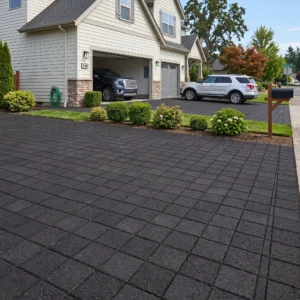
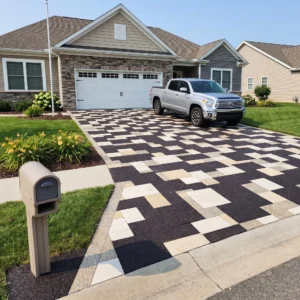
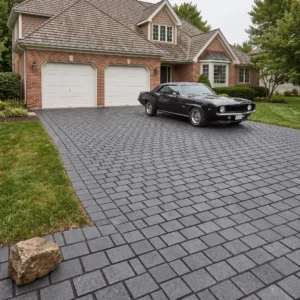
Pavers: Ideal for driveways, walkways, patios, and other outdoor applications.
Slabs: Large-format slabs for countertops, feature walls, and custom furniture.
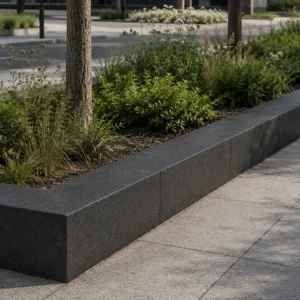
Coping: For pools, walls, and other architectural features.
Bespoke cut-to-size: Custom-fabricated pieces to meet unique project requirements.
Industrial products
We produce industrial-grade basalt, supplying materials for a range of manufacturing and construction applications. Our industrial products include:
Crushed basalt (graded fractions): For use in concrete, asphalt, and other construction materials.
Sand/fines: Byproducts of our crushing process, suitable for various industrial uses.
Feedstock for mineral-wool: High-quality crushed basalt for the production of mineral-wool insulation.
Refractory aggregate: For use in high-temperature applications.
Our typical formats, finishes, and packaging options include:
Packaging: Crates for tiles and pavers, bundles for slabs, bulk bags for industrial products.
Quality control & testing laboratory
Citadel Stone maintains a state-of-the-art in-house quality control and testing laboratory to ensure that all basalt products meet the highest standards of quality and performance. Our dedicated team of technicians conducts rigorous testing at every stage of production, from raw material inspection to finished product verification. This commitment to quality assurance provides our clients with confidence in the durability and reliability of our basalt.
In-house lab capabilities
The laboratory is equipped to perform a comprehensive suite of tests, ensuring that both architectural and industrial basalt products adhere to strict specifications. Our capabilities include:
Sample testing: Regular sampling and testing of materials throughout the production cycle.
Sieve analysis: For precise gradation control of crushed basalt, critical for industrial applications.
Chemical assay: Detailed analysis of basalt’s chemical composition, particularly important for mineral-wool and refractory feedstock.
Moisture testing: To determine moisture content, ensuring product stability and performance.
Porosity/water-absorption: Evaluating the material’s resistance to water ingress, vital for outdoor architectural applications.
Abrasion/resistance: Assessing the durability and wear resistance of finished surfaces.
COF (Coefficient of Friction): Measuring slip resistance for safety in flooring and paving applications.
We recommend requesting tests based on relevant industry standards, such as:
ASTM C97 (Standard Test Methods for Absorption and Bulk Specific Gravity of Dimension Stone)
ASTM C170 (Standard Test Method for Compressive Strength of Dimension Stone)
ASTM C241 (Standard Test Method for Abrasion Resistance of Stone Subjected to Foot Traffic)
Petrographic analysis
Sieve analyses for aggregate sizing
LOI (Loss on Ignition) for industrial feedstock
For buyers seeking verification, we offer a clear workflow:
Request Citadel Stone Technical Data Sheets (TDS) for detailed product specifications.
Request batch-specific test reports for your ordered material.
Consider third-party re-testing options for independent verification, if required.
Finishes & fabrication services
Citadel Stone offers a comprehensive range of finishes and fabrication services to customize basalt products to the precise requirements of any project. Our advanced machinery and skilled artisans ensure that every piece of basalt is crafted to perfection, meeting both aesthetic and functional demands. From subtle textures to highly polished surfaces, we provide options that enhance the natural beauty and performance of basalt.
Finishes offered
Our factory provides a variety of surface finishes, each designed to achieve a distinct look and feel, while also influencing the material’s performance characteristics:
Honed: A smooth, matte finish that retains the natural color of the basalt without gloss.
Flamed: A rough, textured finish created by intense heat, providing excellent slip resistance.
Sawn: A relatively smooth, unpolished finish that shows the marks of the saw blade, offering a natural, rustic appearance.
Brushed: A soft, worn texture achieved by brushing the stone, enhancing its natural grain.
Bush-hammered: A coarse, dimpled finish that provides a high degree of slip resistance and a rugged aesthetic.
Polished: A high-gloss, reflective finish that deepens the color and highlights the inherent beauty of the basalt.
We also offer a wide array of fabrication services, including:
Edge profiles: A selection of standard and custom edge treatments for tiles, pavers, and slabs.
Chamfers: Beveled edges for a clean, finished look.
Bullnose: Rounded edges, commonly used for coping and stair treads.
Anti-slip treatments: Specialized applications to enhance safety in wet or high-traffic areas.
Large-format cutting: Precision cutting for oversized panels and custom dimensions.
CNC routing: Computer Numerical Control machining for intricate designs, precise cut-outs, and complex shapes.
Our customization capabilities include:
Precise CNC tolerances for complex architectural elements.
Custom bevels and mitred edges for seamless installations.
Ability to produce bespoke shapes and sizes to match unique project specifications.
Industrial-grade processing for mineral-wool & melting feedstock
Citadel Stone specializes in providing high-quality, industrial-grade crushed basalt specifically engineered for demanding applications such as mineral-wool production and as a melting feedstock. Our basalt factory processes raw material with meticulous attention to chemical consistency and physical properties, which are critical for these specialized industrial uses. We understand the stringent requirements of these industries and are equipped to deliver materials that meet precise specifications.
Why basalt is used in rock-wool
Basalt is an ideal raw material for rock-wool (mineral-wool) insulation due to its unique chemical composition and excellent melting behavior. When heated to high temperatures, basalt melts into a liquid state that can be spun into fine fibers. These fibers possess exceptional thermal and acoustic insulation properties, as well as fire resistance. The consistent chemical makeup of our basalt ensures predictable melting characteristics and uniform fiber quality, which are paramount for efficient mineral-wool production. Its inherent durability and stability contribute to the longevity and performance of the final insulation product.
Industrial buyers, particularly those in mineral-wool and foundry operations, require basalt with specific physical and chemical properties. We offer various gradations of crushed basalt to suit different manufacturing processes. Typical specifications often include:
Sieve sizes: Precise particle size distribution, often ranging from 0-5mm, 5-10mm, or custom fractions to optimize melting and handling.
Moisture limits: Low moisture content is crucial to prevent issues during high-temperature processing.
Chemical assay: Detailed analysis of key oxides such as SiO2, Al2O3, Fe2O3, CaO, MgO, Na2O, K2O, and TiO2, ensuring the basalt meets the required chemical profile for the end product.
For industrial purchasers, we recommend a comprehensive checklist to ensure material suitability:
Chemical assay: Request a detailed chemical analysis report.
LOI (Loss on Ignition): Understand the volatile content of the basalt.
Moisture content: Verify moisture levels to prevent processing issues.
Contaminants check: Ensure the absence of undesirable impurities.
MSDS (Material Safety Data Sheet): For safety and handling information.
Environmental management & sustainability
Citadel Stone is deeply committed to responsible environmental stewardship throughout all operations at our basalt factory. We recognize the importance of minimizing our ecological footprint and strive to implement sustainable practices that protect natural resources and promote a healthier environment. Our approach integrates advanced technologies and operational protocols designed to reduce waste, conserve energy, and manage emissions effectively.
Emissions control
Environmental management strategy includes robust measures for emissions control, focusing primarily on air and water quality. Employs state-of-the-art dust suppression systems across our crushing and processing lines to prevent particulate matter from entering the atmosphere. Water management is also a critical component, with systems in place to recycle process water and treat any discharge to meet or exceed regulatory standards. Where applicable, we explore opportunities for energy recovery to enhance efficiency and reduce overall energy consumption.
Furthermore, we actively engage in the recycling of fines and cut-off stone generated during our manufacturing processes. These materials are often repurposed for other applications, reducing waste and conserving virgin resources. We also investigate and implement options for lower-carbon logistics, such as optimizing transportation routes and utilizing near-shore supply chains to minimize fuel consumption and associated emissions.
Packaging, logistics & delivery options
Citadel Stone understands that efficient packaging and reliable logistics are crucial for timely project completion. Our basalt factory offers a range of packaging and delivery solutions tailored to the specific needs of architectural and industrial clients, ensuring products arrive safely and on schedule. We manage the entire process from our facility to your site, providing comprehensive support every step of the way.
Palletised tile shipping
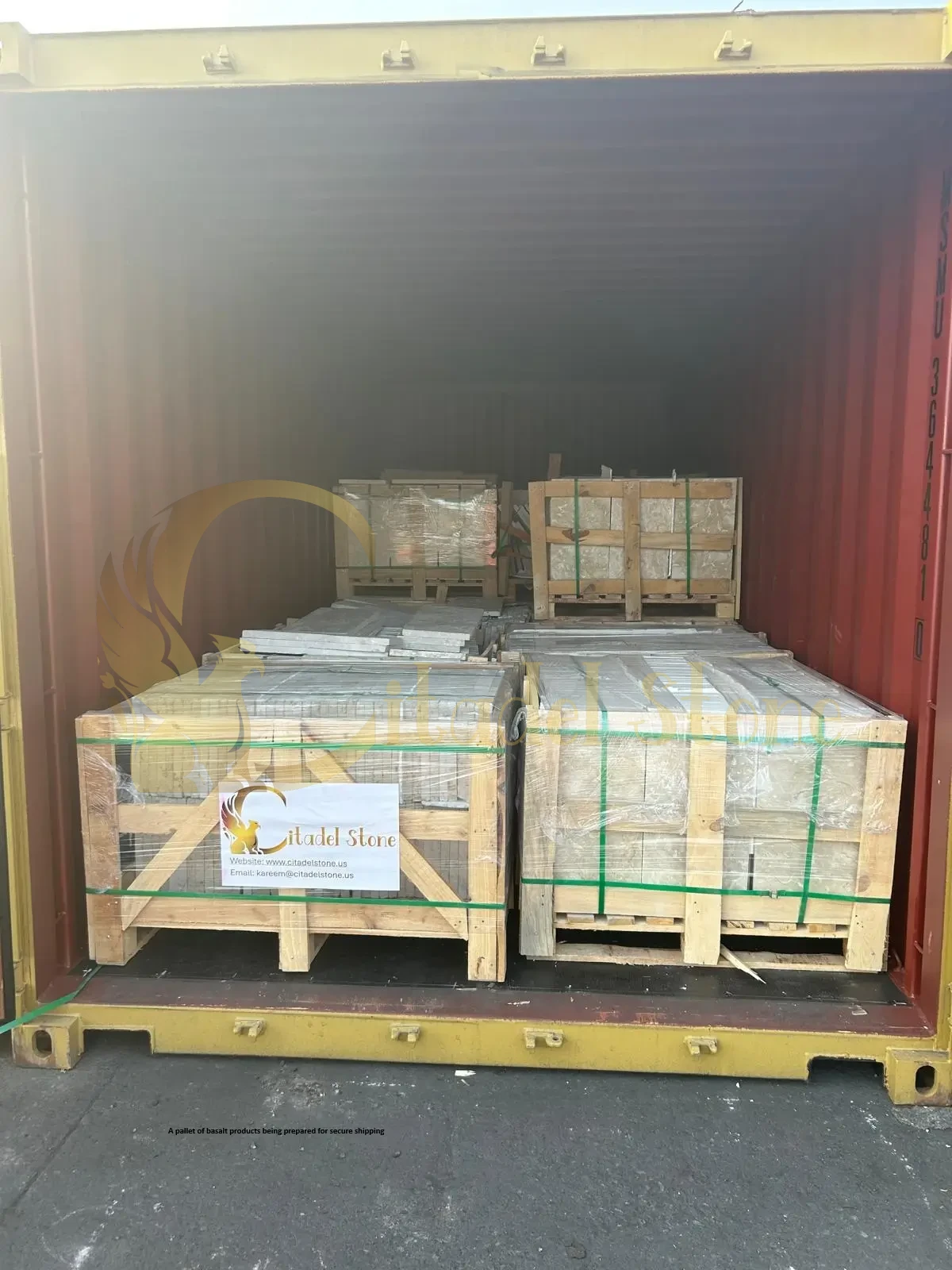
For architectural products like tiles, pavers, and coping, we utilize robust palletized shipping methods. Products are securely crated or shrink-wrapped onto pallets, designed to withstand the rigors of transit and protect against damage. Larger slabs are typically transported in specialized freight or container options, ensuring their integrity during long-distance travel. For crushed basalt, we offer bulk tipping services, allowing for efficient and cost-effective delivery of large volumes.
Our logistics network supports both domestic trucking across the USA and international export. We offer flexible warehousing solutions and can accommodate various shipping requirements, including Less Than Truckload (LTL) for smaller orders and Full Container Load (FCL) for larger shipments. Our team provides comprehensive export support, assisting with documentation and customs procedures to ensure smooth international deliveries.
Upon receiving shipments, buyers should follow this checklist:
Inspection: Thoroughly inspect all packages for visible damage upon arrival.
Moisture checks: For industrial materials, verify moisture levels, especially if specified.
Batch matching: Confirm that batch IDs on packaging match order specifications to ensure consistency.
This image highlights the final steps of the factory process before distribution.
Procurement & specification checklist
To facilitate a smooth procurement and specification process, Citadel Stone provides comprehensive documentation and support. We encourage our clients to utilize the following checklist to ensure all necessary information and agreements are in place for their basalt orders:
Citadel Stone is committed to transparency and accountability in all our operations. We provide robust systems for certifications, product traceability, and support for third-party testing to assure our clients of the quality and compliance of our basalt products. Our dedication to these practices underscores our commitment to delivering materials that meet the highest industry standards.
Chain-of-custody
We maintain a comprehensive chain-of-custody system that tracks our basalt from the quarry face through every stage of processing and manufacturing to final delivery. This meticulous record-keeping ensures complete batch traceability, allowing us to identify the origin and production history of every product. This level of detail is invaluable for quality assurance, regulatory compliance, and for clients who require verifiable sourcing information.
The in-house laboratory operates with stringent quality protocols, and we advise buyers to request references for any claimed lab accreditation, such as ISO/IEC 17025, which signifies competence in testing and calibration. We also encourage clients to review our test reports and, if desired, to engage independent third-party laboratories for additional verification. This multi-layered approach to quality control and external validation provides maximum assurance for our architectural and industrial clients.
Basalt Factories in the USA: Domestic Production, Capacity & What Buyers Should Know
Regional Manufacturing Hubs
Basalt factories in the United States cluster near volcanic bedrock regions—primarily the Pacific Northwest—where quarry-to-factory logistics reduce transport costs and enable bigger-format production. Secondary fabrication centers appear near major distribution corridors in the Midwest and West Coast ports, allowing suppliers to serve urban and coastal projects with shorter lead times.
Factory Capabilities & Modern Technologies
Contemporary basalt manufacturing plants combine heavy-duty gang saws and calibrated bridge saws with CNC profiling, waterjet cutting, and thermal flameworks to produce tiles, pavers, architectural cladding, and precision slabs. Many factories now run automated block-yield software to maximize usable stone from each block and integrate closed-loop water reclaim systems to lower freshwater use during cutting operations.
Quality, Sustainability & Specifier Guidance
Top U.S. basalt producers issue mill reports, performance test data (water absorption, freeze-thaw, abrasion), and Environmental Product Declarations to support green builds. For reliability, buyers should verify factory lead-time guarantees, reserve-slab programs, and on-site finishing capabilities. Opportunity areas include factories adding downstream value—such as producing basalt fiber precursor and recycled aggregate blends—which create new revenue streams and improve circularity.
Choosing domestic basalt factories that combine advanced fabrication, documented test data, and strong logistic links delivers predictable supply, better warranty coverage, and simpler certification for construction projects across the United States.
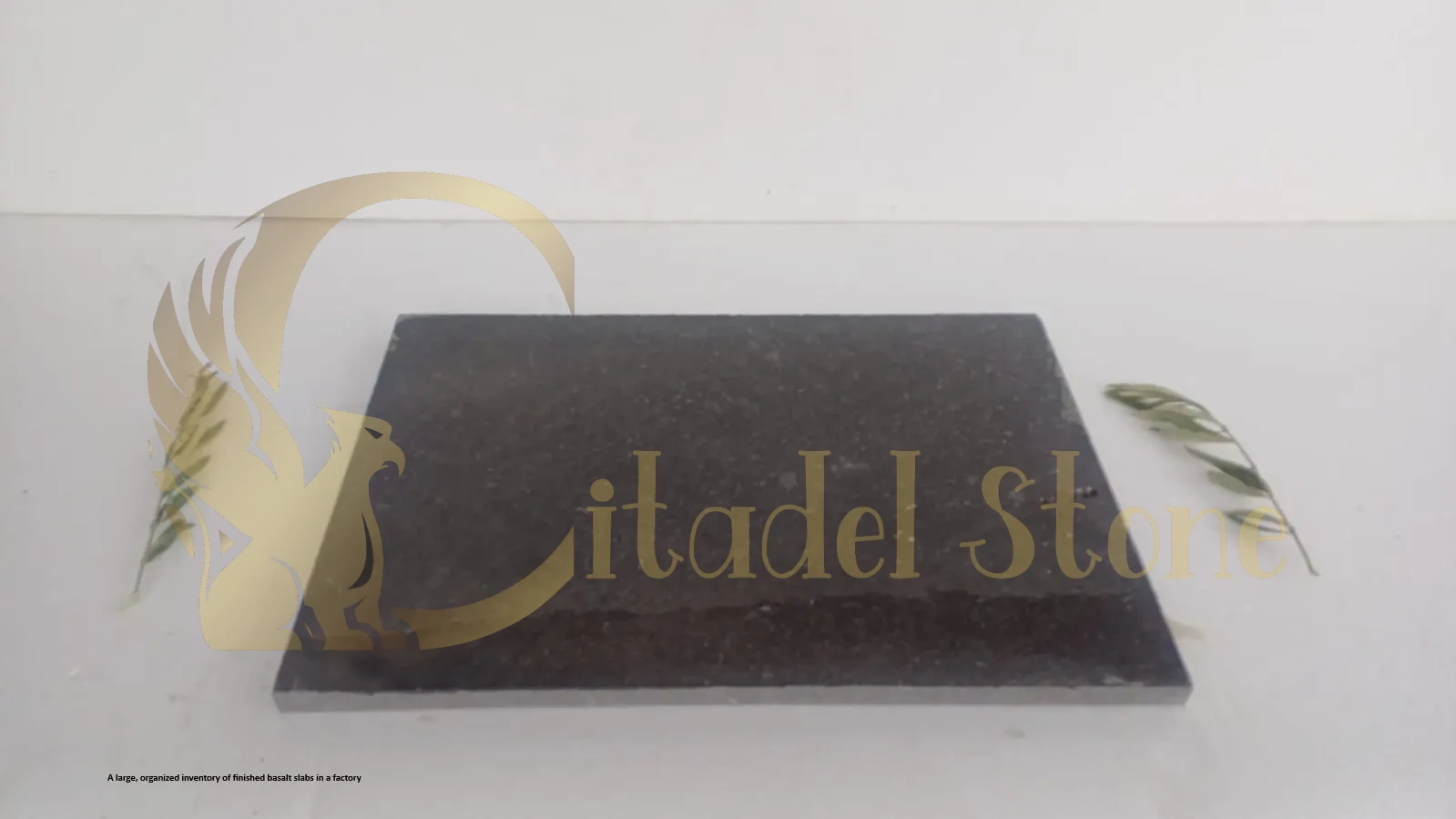
This image conveys the product availability and ready-to-ship status.
Templates & downloads
To streamline your procurement and specification process, Citadel Stone provides convenient templates and downloadable resources. These tools are designed to assist you in requesting samples, understanding quality control specifications, and managing bulk orders efficiently.
Subject: Basalt Sample Request – [Your Project Name] Dear Citadel Stone Sales Team, I am writing to request samples of your basalt products for an upcoming architectural project, [Your Project Name], located in [City, State]. We are specifically interested in the following: – Product Type: [e.g., Basalt Tiles, Basalt Pavers, Basalt Slabs] – Desired Finish: [e.g., Honed, Flamed, Polished] – Approximate Size/Dimensions: [e.g., 12×24 inches, 2cm thickness] – Quantity of Samples: [e.g., 2-3 pieces per finish] Please let us know the availability of these samples and any associated costs or shipping information. We are looking to specify materials for [Project Phase, e.g., design development, material selection]. Thank you for your time and assistance. Sincerely, [Your Name] [Your Title] [Your Company] [Your Phone Number] [Your Email Address]
At Citadel Stone, our basalt factory stands as a testament to our unwavering commitment to quality, precision, and customer satisfaction. Whether you are an architect envisioning a landmark project, a landscape architect designing an enduring outdoor space, or an industrial buyer seeking reliable feedstock, we are your trusted partner for superior basalt products. Our extensive capabilities, rigorous quality control, and dedication to sustainable practices ensure that every product we deliver meets the highest standards.
We invite you to experience the Citadel Stone difference. Take the next step in your project by:
Requesting a factory tour: Witness our advanced manufacturing and processing capabilities firsthand.
Requesting samples: Evaluate the quality and aesthetic appeal of our basalt products for your specific application.
Downloading our Technical Data Sheets (TDS): Access detailed specifications and performance data.
Requesting a line-item quote: Obtain competitive pricing for architectural or industrial volumes tailored to your project needs.
Partner with Citadel Stone for basalt solutions that combine natural beauty with unparalleled strength and performance.
Free Comparison: Citadel Stone vs. Other Suppliers—Find the Best Value!
Features
Citadel Stone
Other Stone Suppliers
Exclusive Products
Offers exclusive natural stones sourced from selected quarries
Stone ranges differ between suppliers.
Quality and Authenticity
Provides high-grade, authentic natural stones with unique features
Material origin and grading are not standardised across the market.
Product Variety
Wide range of premium products
Catalogue breadth differs between suppliers.
Global Distribution
Distributes stones internationally, with a focus on providing consistent quality
Distribution footprints differ between suppliers.
Sustainability Commitment
Committed to eco-friendly sourcing and sustainable production processes
Sourcing practices are not standardised across the market.
Customization Options
Offers tailored stone solutions based on client needs and project specifications
Custom-cut services differ between suppliers.
Experience and Expertise
Highly experienced in natural stone sourcing and distribution globally
Stone-specific experience differs between suppliers.
Direct Sourcing – No Middlemen
Works directly with quarries, cutting unnecessary costs and ensuring transparency
Supply chains differ; some include intermediaries.
Handpicked Selection
Handpicks blocks from quarries and hand select paver and tile post manufacture for quality and consistency. Ensuring only the best materials are chosen
Selection methods differ between suppliers.
Durability of Products
Stones are carefully selected for maximum durability and longevity
Quality-control procedures are not standardised across the market.
Vigorous Packing Processes
Utilizes durable packing methods for secure, damage-free transport
Packing standards are not standardised across the market.
Citadel Stone Origins
Supplies limestone from selected Middle East quarries.
Origin documentation practices differ between suppliers.
Customer Support
Dedicated to providing expert advice, assistance, and after-sales support
Support models differ between suppliers.
Competitive Pricing
Offers high-quality stones at competitive prices with a focus on value
Pricing structures differ between suppliers.
Escrow Service
Included for secure transactions and peace of mind
Escrow is not offered by every supplier.
Manufacturing and Delivery Lead Times
Lead times are quoted per order and confirmed at the time of purchase.
Lead times differ between suppliers.
With unlimited black basalt, features, and the fastest delivery options, What’s not to love? Say goodbye to unnecessary hassles!
DanielOwner
Thank you, Kareem. We received the order. The stones look great!
FrankOwner
You are a good businessman and I believe a good person. I admire your honesty, this is why I call you a good businessman.
Gemma CPrivate Project
Undoubtedly the price was the reason that we chose Citadel stone, in addition to the fact that you offer a
white limestone that is hard to source. Your products are very good value for money by comparison with
other companies. You have helped at every stage of the process and have been quick and reliable in
your responses. It was a big risk for us to pay everything up front including shipping and not know the
quality. You did make me feel that I could trust you and your company however and we are very happy
with the tiles. They appear to have been finished to a very high quality of smoothness and I can't wait to
see them once they have been laid. We need to see now how easy they are to fit and maintain, yet you
also sealed them before shipment so we think that they will be very durable. Our building project has
been delayed for a few months now so it may be sometime before we see them laid, but I promise that I
will send photos as soon as we have them down. Thank you so much Kareem and your team, you have
done a great job. I am hoping that we can pay for, and receive our second shipment in the not too far
future, so that we can finish everything off.
Wishing you well. Gemma
Molly McKPrivate Project
I appreciate the quality of product and care for the custom order in packaging each crate to minimize
breakage as well as the flexibility with the order to help us make the most of shipping. The timely
communications are impressive from the beginning and throughout the process. It's reassuring to have
gone through one order to know what the process will be like in the future. I am glad to have had some
guidance through the importing process and recommendations for shipping partners to assist. It's
incredible to think about the journey the stone traveled to get to our site and I'm grateful to have made it
to the next stage of the project relatively smoothly and with from what I can tell
What factory-level quality tests are performed on finished basalt products?
Snippet: Modern basalt factories run dimensional checks, water-absorption and density tests, compressive/abrasion testing where required, visual grading against sample panels, and packing inspections — all recorded per batch for traceability. Expanded answer: Quality control in a basalt plant is multi-stage. After sawing and calibration, pieces are measured for thickness and flatness tolerances with digital gauges. Selected samples go to in-house or third-party labs for water-absorption, bulk density and sometimes compressive or abrasion testing depending on the spec. Visual grading compares production lots to an approved sample panel for colour, veining and surface defects. Before packing, operators check finish uniformity, edge profiles and carton/ pallet integrity. Each lot is tagged with a batch ID and QC report so architects and contractors receive verifiable evidence that the material conforms to the agreed acceptance criteria.
How do basalt factories manage water use and dust control during cutting and finishing?
Snippet: Efficient factories use closed-loop water recycling systems, sediment traps and multi-stage filtration plus local exhaust and mist suppression to minimise freshwater use and dust emissions during sawing and polishing. Expanded answer: Wet cutting and polishing generate slurry and airborne dust—responsible factories treat these as resources, not waste. Slurry is captured at source, sent to settling tanks, and clarified water is recycled back into saws and polishers; recovered fines are dewatered and repurposed as aggregates or landscaping material. Dust extraction systems and HEPA filtration protect worker health and reduce fugitive emissions. Managing water and dust reduces environmental footprint, lowers disposal costs, and improves workplace safety. For clients who care about sustainability, factories can provide water-recycling metrics and waste-reuse statements to include in tender documentation.
Can basalt factories produce complex CNC profiles and large, structural stone panels?
Snippet: Yes — many factories now offer CNC routing, 5-axis profiling and composite backing for large panels, enabling precise bespoke edgework, integrated drainage channels, and factory-assembled cladding units. Expanded answer: Contemporary stone factories equip CNC routers and multi-blade machining centres to cut accurate mitres, complex coping profiles, and pocketing for anchors or services. For large cladding, slabs can be bonded to certified composite or stainless backings and factory-prepped with concealed anchor points. This reduces on-site cutting and speeds installation. When ordering CNC work, specify tolerances, tool radii, panel sizes and anchoring details early so the factory can program tool paths, pre-test fixtures and produce mock-ups. Engineered panel work usually requires structural testing and certification for wind/load compliance—plan these steps in the procurement timetable.
What packaging and export preparations do factories use to protect polished basalt in transit?
Snippet: Finished units are packed with face-protective layers, corner guards, strapped to treated pallets, banded/crated for container or truck shipping, and accompanied by batch IDs and handling instructions to minimise transit damage. Expanded answer: Packing is a final QC step. Polished faces are interleaved with protective sheets, corners receive reinforced guards, and pallets are shrink-wrapped and strapped for stability. For international shipments crates are built to container dimensions with blocking to prevent movement; desiccant or moisture indicators are added for sensitive loads. Each pallet or crate is labelled with batch IDs, a packing list, and explicit handling notes (upright/flat, crane points). Clear packing reduces breakage claims and preserves the approved sample match on site — essential for large projects where visible mismatch or polish damage causes costly delays.
How do basalt factories support architects with mock-ups, sample panels and finish approvals?
Snippet: Factories produce signed sample panels and build mock-ups showing grout, edge details and transitions; these are photographed, shipped or held for client inspection and form the production reference for batch matching. Expanded answer: To control visual variability, reputable factories offer pre-production sample panels cut from the same block families planned for the job. Architects can approve colour, finish level and edge details before bulk cutting begins. For critical junctions or public facades, factories build full-size mock-ups that show installed appearance with jointing and sealant—these may be erected onsite or produced as panel samples. The approved sample panel becomes the master reference, and production batches are checked against it during QC. This process reduces disputes over colour, finish and tolerances and is best specified contractually in the procurement stage.
What are typical lead times from order to shipment at a basalt factory — and how can projects expedite production?
Snippet: Standard lead times vary (often 4–12 weeks) depending on block allocation, finishing complexity and batch size; expedite options include approving stock lots, accepting standard sizes, and pre-paying for priority runs. Expanded answer: Lead time depends on whether the factory must allocate new blocks, produce bespoke CNC work, or run specialised finishes. Simple stock cuts and finishes can ship fast (days to a few weeks), while bespoke large panels, complex edgework or colour-matched phased runs require longer scheduling. To accelerate delivery: approve existing stock or sample panels, accept standard modular sizes, consolidate a single finish across larger areas, and request a prioritized production slot (paid premium). Early communication of critical dates, confirmatory sample sign-off, and batch reservation help factories sequence production to fit tight project timetables.