50 Years Of Manufacturing & Delivering The Highest-Quality Natural Stone. Sourced & Hand-Picked From The Middle East.

Escrow Payment & Independent Verifying Agent For New Clients

Contact Me Personally For The Absolute Best Wholesale & Trade Prices:

USA & Worldwide Hassle-Free Delivery Options – Guaranteed.

12×12 Natural Stone Tile in Arizona

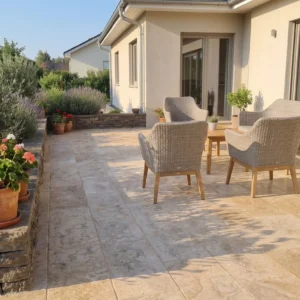
Contractors and architects sourcing 12x12 natural stone tile for Arizona projects will find direct supply through Citadel Stone — with format options, finish selections, and thickness profiles suited to the pronounced thermal cycling that defines the desert Southwest's climate. Arizona's day-to-night temperature swings can exceed 40°F seasonally, making material density and joint integrity critical factors that Citadel Stone accounts for when advising on product selection for both interior and exterior installations. Citadel Stone 12x12 Natural Stone Tile in Arizona is available in honed, polished, and brushed surface finishes — each with different performance characteristics under repeated expansion and contraction — and trade supply is accessible to contractors without container minimums or import broker delays. The finish type and substrate preparation method you choose will directly affect long-term joint stability across freeze-thaw conditions, a specification detail covered in full below. Citadel Stone supplies 12x12 Natural Stone Tile sourced from quarries across the Mediterranean and Middle East to projects in Phoenix, Tucson, and Scottsdale, Arizona.

See & Feel the Quality – Free Arizona Stone Samples

Our stones are made for the Arizona sun. See how the colors hold up in your specific light.

Design Your Arizona Home with a Local Stone Expert

Get personalized advice on the best stone for Arizona's climate and your design style.

Premium Natural Stone — All Sizes & Thicknesses Available

From standard cuts to fully custom dimensions — our limestone, granite, basalt & shellstone
are cut to your exact specifications. Residential or commercial, we’ve got you covered.

Showing all 69 resultsSorted by popularity

Get Your Free Arizona Stone Quote

Transparent Pricing for Your Arizona Project

Elevate Your Arizona Property with Premium Stone, Priced for Value.

Unlock $10,000 Worth of Deals on Beautiful Paver, Tiles & Cobble Setts—For Free!

Invest in Arizona’s Landscape: Stone That Lasts a Lifetime.

100% Happiness Guarantee

Trust 50 Years of Expertise. Invest in Quality Limestone Tiles

Custom-Cut for Your Arizona Project: Any Size, Any Finish.

No-Obligation Consultation: Get Expert Advice for Your Arizona Home.

The Stone Supplier Trusted by Arizona's Leading Architects & Designers.

Arizona's Most Diverse Selection of Natural Stone.

Elevate Your AZ Property with Natural Stone Built for the Desert. Our expansive collection of Natural Stone brings timeless beauty and proven durability to both residential and commercial spaces across Arizona. As the state’s leading supplier, we offer a diverse palette of colors and finishes—from cool, light tones that reflect the sun to rich, earthy textures that complement the Southwest landscape. Transform your environment with limestone that stands up to the Arizona heat while providing the sophisticated aesthetic you desire.

Incredible Prices for Top-Quality Stone—Shop Citadel Stone Today!

Table of Contents

How Thermal Cycling Affects 12×12 Natural Stone Tile Performance in Arizona

The specification failure most installers overlook with 12×12 natural stone tile in Arizona isn’t the peak summer temperature — it’s the daily swing between 45°F at pre-dawn and 105°F by mid-afternoon, a 60-degree thermal cycle that repeats hundreds of times per year. Natural stone expands and contracts with each cycle, and if your joint spacing and setting mortar don’t accommodate that movement, you’ll see tent cracking and lippage within two to three seasons. Flagstaff compounds this further: its elevation introduces genuine freeze-thaw cycles where water infiltrates micro-pores and fractures bonds from within, making stone selection and sealing protocol the two most consequential decisions on any northern Arizona project.

Citadel Stone evaluates material batches specifically for absorption rate and pore connectivity before they leave the warehouse, because those two properties determine whether your 12×12 stone tile in Arizona survives thermal cycling intact or begins delaminating at the setting bed interface. You can request absorption test data alongside your sample order — that’s the kind of specification support that separates a confident material decision from an expensive guess.

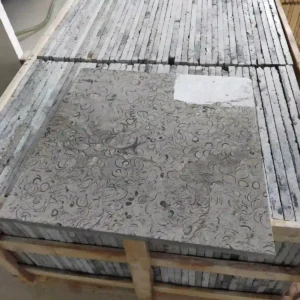
12x12 natural stone tile arizona, featured here — industrial saw cutting into a large block of limestone material for fabrication.
Precise cutting of limestone blocks ensures consistent dimensions for construction projects, demonstrating 12×12 natural stone tile arizona, versatility.

Selecting the Right Stone Type for 12×12 and Larger Formats in Arizona

Not every stone species handles Arizona’s thermal cycling equally, and the format size amplifies the differences. A 12×12 natural stone tile carries a smaller thermal mass per unit than a 24×24 stone tile in Arizona, which means dimensional movement per piece is lower — but that advantage disappears if your mortar bond lacks adequate shear strength. Here’s where the material choice becomes decisive.

  • Limestone tiles with absorption rates below 3% perform reliably across Phoenix’s low-elevation heat cycles but require enhanced sealer penetration depth to resist salt crystallization from irrigation water.
  • Basalt and dense granite hold up well across all Arizona elevation zones — compressive strength above 15,000 PSI means neither freeze-thaw infiltration nor thermal expansion creates measurable damage over 20-year service periods when properly installed.
  • Travertine in 12×12 format works indoors and in covered outdoor applications but its open pore structure makes it vulnerable in exposed freeze-thaw environments like Flagstaff without a penetrating consolidant applied before setting.
  • Bluestone is often underspecified in Arizona — 12×24 bluestone in Arizona installations show excellent dimensional stability across thermal cycles because its low absorption combined with high flexural strength resists both surface spalling and bed delamination.
  • Honed finishes on any 12×12 stone tile in Arizona reduce micro-surface texture variation that can trap freeze-thaw water, while brushed or tumbled finishes provide slip resistance appropriate for outdoor patios and pool surrounds.

For 18×18 natural stone tile in Arizona projects, the base preparation requirements increase substantially — you’re managing a larger thermal mass that places more shear stress on the mortar bed during temperature cycling. Plan your mortar specification accordingly, and verify that the setting bed achieves a minimum 95% back-butter coverage on every tile.

According to the Natural Stone Institute ASTM tile stone specifications, absorption classification directly governs which installation methods are appropriate for outdoor climates with significant temperature variation. Using that data as your specification baseline — not manufacturer marketing claims — is the move that experienced specifiers make before any Arizona stone project begins.

Base Preparation and Thermal Movement Accommodation

Your base preparation protocol for 12×12 natural stone tile in Arizona determines how well the system tolerates the cumulative strain of hundreds of thermal cycles per year. A standard 4-inch compacted aggregate base is sufficient for interior applications, but exterior installations in Arizona’s climate zones need 6 inches minimum — and in Scottsdale’s expansive clay soil pockets, 8 inches with geotextile separation fabric is the defensible specification.

  • Use a polymer-modified thinset rated for exterior and temperature-variable conditions — standard grey thinset loses bond strength at the upper end of Arizona’s thermal range faster than polymer blends.
  • Spec expansion joints at 10-foot intervals maximum in exterior settings, not the 12–15 feet that interior guidelines permit — the reduced interval absorbs the thermal cycling load that would otherwise migrate to tile edges and grout joints.
  • Grout joint width for 12×12 stone tile should run 3/16 to 1/4 inch minimum for outdoor Arizona installations — narrower joints leave no room for thermal expansion and are the leading cause of grout cracking within the first two years.
  • Schluter-type edge transitions at all perimeter boundaries prevent the differential movement between the stone field and adjacent concrete or wood structure from cracking tiles at the interface.

The interaction between compacted aggregate and regional soil expansion coefficients becomes critical in clay-heavy soils in the greater Mesa and Chandler areas. Those soils can shift 1/2 to 3/4 inch seasonally, and an inadequately bonded 12×12 natural stone tile installation will rock and crack under that movement regardless of mortar quality. A soil bearing test before base design isn’t optional on high-value exterior projects — it’s the specification step that protects your installation budget. For projects requiring complementary design elements across multiple stone formats, 12×12 Natural Stone Tile from Citadel Stone provides specification details covering both format transitions and mortar system selection that apply directly to Arizona’s thermal cycling conditions — including the joint-to-format ratio math that most installation guides skip over entirely.

Freeze-Thaw Performance Across Arizona Elevation Zones

Arizona’s elevation range — from Yuma at just 141 feet above sea level to Flagstaff at 6,900 feet — creates dramatically different performance requirements for the same 12×12 natural stone tile specification. Yuma installations essentially never experience freeze-thaw cycling, so your performance focus there is UV degradation, thermal mass management, and efflorescence control from irrigation. Flagstaff is a fundamentally different environment where freeze-thaw cycles can occur 80 or more times per year.

The physics of freeze-thaw damage operates through pore saturation and ice expansion. Water expands approximately 9% when it freezes — if a stone tile’s pores are more than 90% saturated when that transition happens, the internal pressure exceeds the stone’s tensile strength and micro-fracturing begins. You won’t see it in year one. By year four or five, the surface begins to spall and the setting bed bond deteriorates at the mortar interface.

  • Specify stone with water absorption below 0.5% for Flagstaff and other high-elevation freeze-thaw zones — granite and dense basalt meet this threshold reliably, and many limestone varieties from the right quarry sources do as well.
  • Apply a penetrating silane-siloxane sealer before installation in freeze-thaw environments — not after grouting. Pre-sealing the back face prevents moisture infiltration at the most vulnerable point: the mortar-stone interface.
  • Avoid polished finishes in freeze-thaw zones because they have no surface texture to facilitate drainage, allowing water to pond and infiltrate rather than sheet off.
  • Check your tile’s ASTM C1026 freeze-thaw cycling test results before specifying for Flagstaff or Sedona applications — this standard specifically tests dimensional stone tiles through 300 freeze-thaw cycles and identifies candidates likely to fail in real-world northern Arizona conditions.

The Tile Council of North America natural stone tile installation standards classify freeze-thaw environments and prescribe minimum absorption thresholds and mortar system requirements for each zone. Those classifications map directly onto Arizona’s elevation gradient and give you a defensible specification baseline for any climate zone within the state.

Format Selection: 12×12 Through 24×24 Stone Tile for Arizona Interiors and Exteriors

Format selection isn’t just aesthetic — it’s a structural and thermal management decision with measurable consequences in Arizona’s cycling climate. The 12×12 natural stone tile in Arizona remains the most versatile format because it tolerates subfloor irregularities better than larger formats, requires less back-buttering skill to achieve full coverage, and distributes thermal movement across more joints per square foot.

That said, the trend toward 18×18 stone tile in Arizona and 24×24 stone tile in Arizona interiors reflects genuine design value — larger formats reduce grout line frequency and create a more seamless visual plane, which architects and designers in the Scottsdale luxury residential market increasingly specify. The trade-off is installer skill requirements: a 24×24 tile demands a flatter substrate (no more than 1/8-inch deviation in 10 feet versus the 1/4-inch allowance for 12×12) and full mortar coverage without gaps.

  • 12×12 stone tile in Arizona works well in both interior and exterior applications and is the default recommendation for DIY-adjacent projects or installations where substrate flatness cannot be guaranteed.
  • 18×18 stone tile in Arizona suits large interior floor areas — great rooms, foyers, and open-plan living spaces — where the larger format creates visual continuity without the substrate complexity of 24×24.
  • 24×24 stone tile in Arizona is a premium specification requiring professional installation on properly prepared substrates — the performance payoff is significant, but the preparation cost is higher.
  • 4×4 natural stone tile and 4×4 stone tile work well as feature inserts, border accents, and small-area applications like powder rooms or pool step risers where larger formats would feel disproportionate.

Citadel Stone stocks 12×12 natural stone tile in Arizona in standard thicknesses of 3/8 inch, 1/2 inch, and 3/4 inch, along with complementary formats including 12×24, 18×18 natural stone tile in Arizona, and 24×24, so your project can maintain material consistency across format transitions without sourcing from multiple suppliers. You can confirm current warehouse inventory levels before finalizing your project timeline — lead times from regional stock typically run 5 to 10 business days for Arizona delivery.

Finish Selection for Arizona’s Thermal and UV Conditions

The finish you specify on 12×12 natural stone tile affects thermal performance, maintenance intervals, and safety ratings — three factors that matter more in Arizona than most climate zones because UV intensity accelerates sealer degradation and surface temperatures routinely exceed 140°F on west-facing exterior applications.

  • Honed finishes balance aesthetics and practicality — the matte surface reduces glare from Arizona’s intense sun, provides moderate slip resistance for outdoor applications, and responds well to penetrating sealers.
  • Polished finishes are best reserved for interior applications where UV exposure is controlled — outdoor polished stone in Arizona loses its sheen within two to three seasons without quarterly maintenance sealing, which most property owners won’t perform consistently.
  • Brushed and antique finishes on natural stone tile create genuine surface texture that performs well in wet areas and exterior patios — the irregular surface channels water away from the tile plane rather than allowing ponding that accelerates freeze-thaw infiltration in higher elevations.
  • Tumbled finishes soften edge profiles and create a textured surface that handles foot traffic well, though the irregular face geometry requires slightly more grout to fill properly — account for 10–15% additional grout material versus smooth-face tiles of the same format.

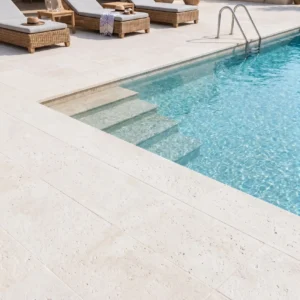
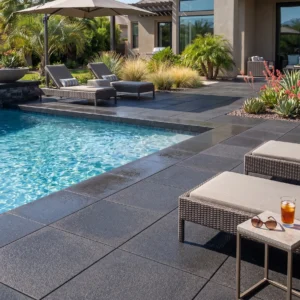
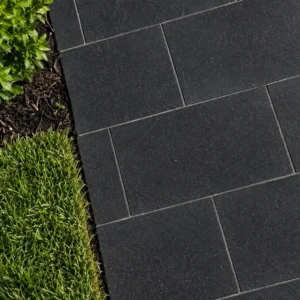
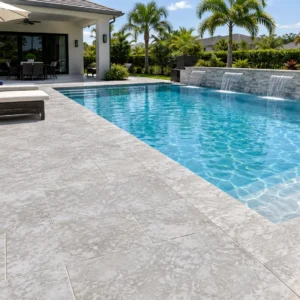
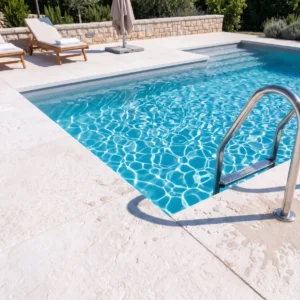
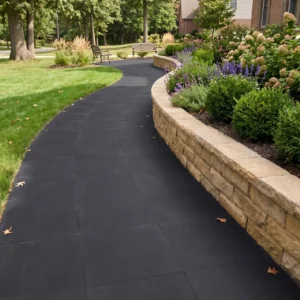
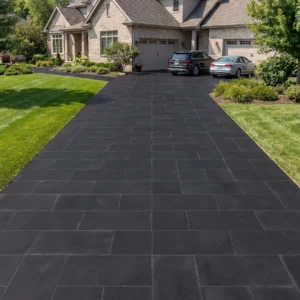
Surface temperature management matters in Phoenix-area projects specifically. Lighter stone colors — cream limestone, white granite, silver travertine — reflect significantly more solar radiation than dark varieties, which translates to measurably cooler barefoot surface temperatures on pool decks and patios. Dark basalt or black granite tile in full sun exposure in Phoenix can reach surface temperatures that cause discomfort or burns on exposed skin during peak summer hours — a detail worth discussing with residential clients before finalizing color selections.

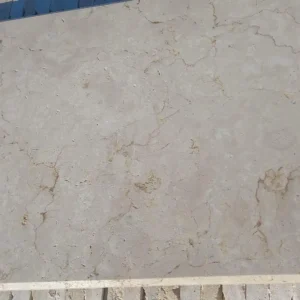
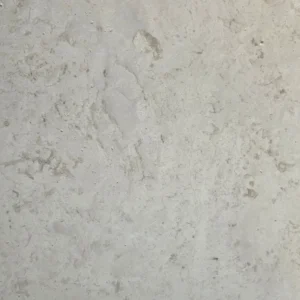
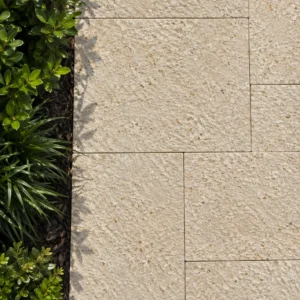
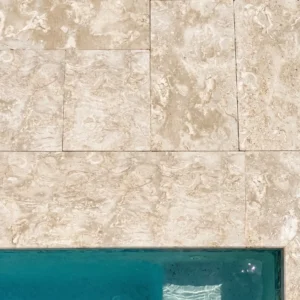
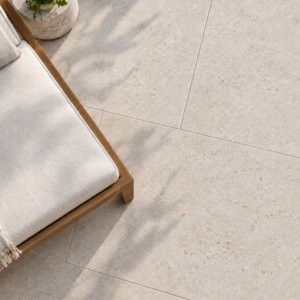
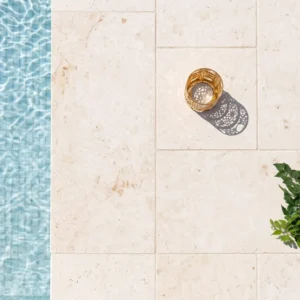
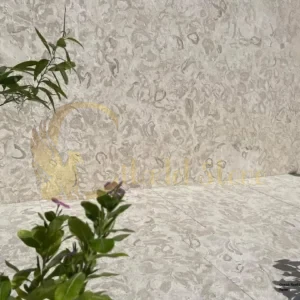
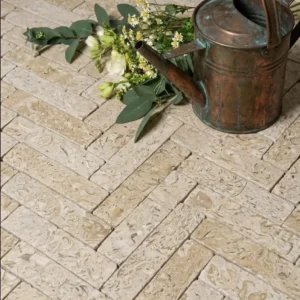
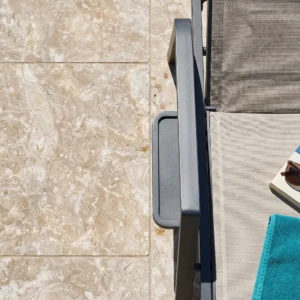
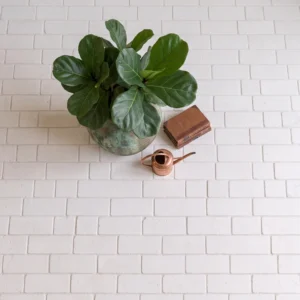
12x12 natural stone tile arizona, up close — close-up of a light beige limestone slab showing subtle variations in texture and color.
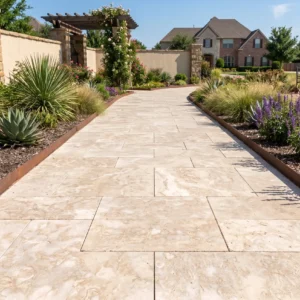
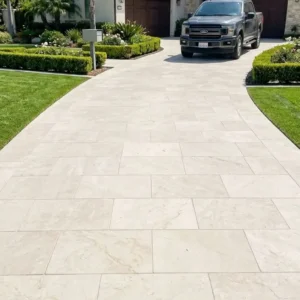
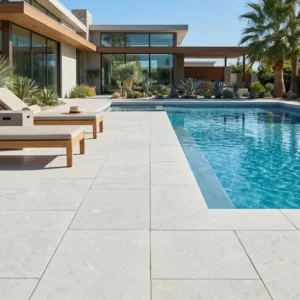
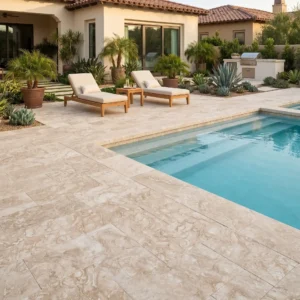
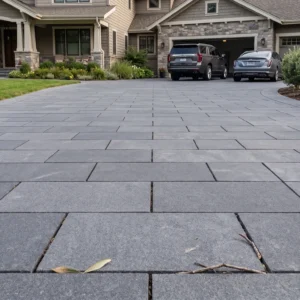
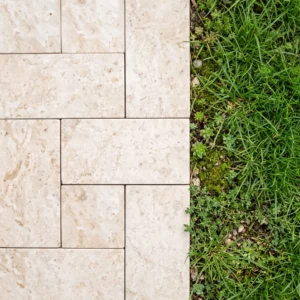
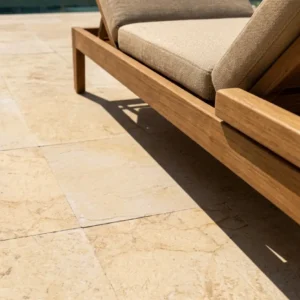
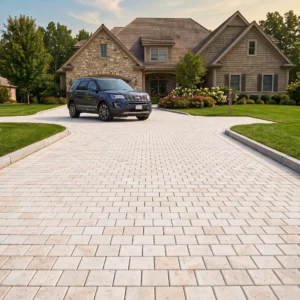
12×12 natural stone tile arizona, showcase — explore the versatile applications of this durable limestone, perfect for creating timeless interior and exterior designs.

Installation and Sealing Protocols for Long-Term Performance

The installation sequence for 12×12 natural stone tile in Arizona’s thermal cycling environment differs from the sequence you’d follow in a temperate climate, and those differences directly affect how long the installation performs without remediation. Temperature during installation is the first variable most specs ignore.

  • Avoid setting stone tile when ambient surface temperatures exceed 90°F — setting mortar loses moisture too quickly in Arizona’s dry heat, resulting in inadequate hydration and reduced bond strength. Early morning installation windows between 6 a.m. and 10 a.m. from May through September are the practical solution on exterior projects.
  • Allow stone tile to acclimate to installation-site temperature for a minimum of 24 hours before setting — material arriving on a truck from a warehouse at 70°F ambient temperature will be dimensionally different from the same tile sitting on a 95°F Arizona job site.
  • Back-butter every tile to achieve 95% coverage minimum — 80% coverage may pass inspection but leaves thermal cycling stress concentrated on a smaller bond area, which is where failures initiate.
  • Cure grout for a minimum of 72 hours before sealing — Arizona’s low humidity accelerates surface drying but doesn’t accelerate the full curing depth, and sealing too early traps moisture that disrupts grout hardness.

Sealing intervals for Arizona exterior installations run shorter than national guidelines suggest because UV intensity degrades silane-siloxane sealers faster at Arizona’s solar radiation levels. A two-year resealing interval that works in the Pacific Northwest becomes a 12-to-18-month interval in Phoenix’s UV environment. You’ll know the sealer is due for renewal when water no longer beads on the surface — don’t wait for staining to appear.

According to ASTM natural stone tile absorption strength and slip resistance testing standards, the absorption rate classification of your specific stone determines the appropriate sealer chemistry — solvent-based penetrating sealers perform better on dense, low-absorption stones while water-based formulas provide sufficient protection for higher-absorption varieties. Matching sealer chemistry to stone absorption class is a detail that gets overlooked when contractors default to whatever product they have on the truck.

Maintenance Considerations and Long-Term Durability in Arizona

Realistic performance expectations for 12×12 natural stone tile in Arizona start with understanding the maintenance commitment the material requires. Natural stone isn’t a zero-maintenance product, but the maintenance tasks are straightforward and the payoff — 25-to-40-year service life on properly installed and maintained exterior applications — is substantially better than engineered alternatives.

  • Annual inspection of grout joints for cracking or hollowing is the single most important maintenance task — compromised joints allow water infiltration that accelerates thermal cycling damage at the setting bed interface.
  • Repoint grout joints showing cracks wider than 1/16 inch immediately — delaying grout repair by even one monsoon season allows water to undermine the mortar bed, creating hollow spots that grow with each thermal cycle.
  • Clean natural stone tile with pH-neutral cleaners only — acidic cleaners etch calcium-based stones like limestone and travertine, and alkaline degreasers degrade silane-siloxane sealers, both of which increase maintenance frequency and cost.
  • Inspect expansion joint sealant annually and replace when it shows cracking or loss of adhesion — expansion joint failure transfers thermal movement stress back into the tile field, which is the scenario proper joint spacing was designed to prevent.

In Sedona, the iron-oxide-rich soil and occasional monsoon runoff create a specific staining challenge for light-colored natural stone tile installations near grade — ferrous staining from soil contact can penetrate unsealed stone surfaces quickly during summer monsoon events. Applying a color-enhancing penetrating sealer on light-toned stone in Sedona-area projects prevents iron staining while maintaining the stone’s natural character, but it does shift the surface tone slightly warmer. Discuss that color effect with clients before committing to the sealer specification.

Get 12×12 Natural Stone Tile Delivered Across Arizona

Citadel Stone supplies 12×12 natural stone tile across Arizona in a full range of species, finishes, and complementary formats including 12×24, 18×18 natural stone tile in Arizona, and 24×24 stone tile in Arizona, all sourced from established quarry partners and inspected for dimensional consistency and absorption class before leaving the warehouse. At Citadel Stone, we serve both trade accounts and direct project orders, with truck delivery available statewide — typically within 5 to 10 business days from confirmed inventory for in-state projects.

You can request sample tiles in your preferred species and finish before committing to full-project quantities — a step worth taking on any specification where color matching across a large floor area matters. For projects requiring custom cuts, non-standard thicknesses, or split shipments across multiple job phases, contact Citadel Stone’s project team directly for lead time confirmation and pricing. Trade and wholesale enquiries receive dedicated account support, and we can provide specification sheets and test data — including absorption classification and ASTM compliance documentation — on request. Getting the right material data early in your project timeline is the move that prevents late substitutions and schedule disruptions. As you finalize your Arizona stone project decisions, related applications across your property may benefit from complementary flooring choices — natural stone flooring options in Arizona covers a broader range of species and format combinations worth reviewing alongside your 12×12 natural stone tile specification. Stone selections for Arizona projects in Flagstaff, Sedona, and Yuma include 12×12 Natural Stone Tile supplied direct from Citadel Stone.

Why Arizona’s Builders Choose Citadel Stone?

Free AZ Comparison: Citadel Stone vs. Other Suppliers—Find the Best Value!

FeaturesCitadel StoneOther Stone Suppliers
Exclusive ProductsOffers exclusive natural stones sourced from selected quarriesTypically offers more generic or widely available stone options
Quality and AuthenticityProvides high-grade, authentic natural stones with unique featuresQuality varies; may include synthetic or mixed-origin stone materials
Product VarietyWide range of premium productsProduct selection is usually more limited or generic
Global DistributionDistributes stones internationally, with a focus on providing consistent qualityOften limited to local or regional distribution
Sustainability CommitmentCommitted to eco-friendly sourcing and sustainable production processesSustainability efforts vary and may not prioritize eco-friendly sourcing
Customization OptionsOffers tailored stone solutions based on client needs and project specificationsCustomization may be limited, with fewer personalized options
Experience and ExpertiseHighly experienced in natural stone sourcing and distribution globallyExpertise varies significantly; some suppliers may lack specialized knowledge
Direct Sourcing – No MiddlemenWorks directly with quarries, cutting unnecessary costs and ensuring transparencyOften involves multiple intermediaries, leading to higher costs
Handpicked SelectionHandpicks blocks from quarries and hand select paver and tile post manufacture for quality and consistency. Ensuring only the best materials are chosenSelection standards vary, often relying on non-customized stock
Durability of ProductsStones are carefully selected for maximum durability and longevityDurability can be inconsistent depending on supplier quality control
Vigorous Packing ProcessesUtilizes durable packing methods for secure, damage-free transportPacking may be less rigorous, increasing the risk of damage during shipping
Citadel Stone OriginsKnown as the original source for unique limestone tiles from the Middle East, recognized for authenticityOrigin not always guaranteed, and unique limestone options are less common
Customer SupportDedicated to providing expert advice, assistance, and after-sales supportSupport quality varies, often limited to basic customer service
Competitive PricingOffers high-quality stones at competitive prices with a focus on valuePrice may be higher for similar quality or lower for lower-grade stones
Escrow ServiceOffers escrow services for secure transactions and peace of mindTypically does not provide escrow services, increasing payment risk
Fast Manufacturing and DeliveryDelivers orders up to 3x faster than typical industry timelines, ensuring swift serviceDelivery times often slower and less predictable, delaying project timelines

Extra Benefits

Choosing Citadel Stone offers unique advantages beyond premium stone quality:

Exclusive Access to Durable Stones

Citadel Stone specializes in unique, regionally exclusive stones, sourced directly from the Middle East.

Transparent Pricing – No Hidden Costs

With no middlemen, Citadel Stone provides direct, transparent pricing that reduces unnecessary costs.

Flexible Customization for Bespoke Projects

Tailor your order to precise specifications, from sizes to finishes, ensuring your project aligns perfectly with your vision.

Streamlined Delivery & Reliable Stock Availability

Benefit from fast production and delivery timelines, designed to minimize delays and ensure reliable availability.

The Preferred Stone Supplier for Luxury AZ Developments.

Scale Your Vision: We Support Arizona's Largest Projects with Reliable, Fast Delivery.

With unlimited tiles, pavers, cobble setts, curbstones, and the fastest delivery options, What’s not to love? Say goodbye to unnecessary hassles!

Leading AZ Stone Suppliers are Loving Citadel Stone!

Don’t Settle for Less. Source the Best Stone for Your Local Stone Expert.

DanielOwner
Thank you, Kareem. We received the order. The stones look great!
FrankOwner
You are a good businessman and I believe a good person. I admire your honesty, this is why I call you a good businessman.
Gemma C
Gemma CPrivate Project
Undoubtedly the price was the reason that we chose Citadel stone, in addition to the fact that you offer a white limestone that is hard to source. Your products are very good value for money by comparison with other companies. You have helped at every stage of the process and have been quick and reliable in your responses. It was a big risk for us to pay everything up front including shipping and not know the quality. You did make me feel that I could trust you and your company however and we are very happy with the tiles. They appear to have been finished to a very high quality of smoothness and I can't wait to see them once they have been laid. We need to see now how easy they are to fit and maintain, yet you also sealed them before shipment so we think that they will be very durable. Our building project has been delayed for a few months now so it may be sometime before we see them laid, but I promise that I will send photos as soon as we have them down. Thank you so much Kareem and your team, you have done a great job. I am hoping that we can pay for, and receive our second shipment in the not too far future, so that we can finish everything off. Wishing you well. Gemma
Molly McK
Molly McKPrivate Project
I appreciate the quality of product and care for the custom order in packaging each crate to minimize breakage as well as the flexibility with the order to help us make the most of shipping. The timely communications are impressive from the beginning and throughout the process. It's reassuring to have gone through one order to know what the process will be like in the future. I am glad to have had some guidance through the importing process and recommendations for shipping partners to assist. It's incredible to think about the journey the stone traveled to get to our site and I'm grateful to have made it to the next stage of the project relatively smoothly and with from what I can tell

Frequently Asked Questions

If your question is not listed, please email us at [email protected]

How do Arizona's temperature swings affect 12x12 natural stone tile installations?

Arizona’s thermal cycling — with daytime highs and nighttime lows sometimes spanning 40°F or more — causes stone and setting materials to expand and contract repeatedly across seasons. This cycling places stress on grout joints and adhesive bonds, particularly in exterior installations exposed to direct sun. Specifying a tile with a consistent density profile and using a flexible setting mortar rated for thermal movement helps protect joint integrity over time.

Yes, but material selection matters. Denser stone types such as granite and certain hard limestones perform reliably outdoors in Arizona because they absorb less moisture and resist the micro-cracking that repeated freeze-thaw cycles can produce in more porous materials. Surface finish also plays a role — textured or brushed finishes tend to hold up better on exterior horizontal surfaces than polished ones, which can become slippery and show thermal stress more visibly.

For residential floors, 12×12 natural stone tile in 3/8-inch to 1/2-inch thickness is the most common range for interior applications, while exterior installations subject to load or temperature cycling generally benefit from 3/4-inch or thicker profiles. Thicker tiles distribute stress more evenly across the substrate and reduce the risk of cracking at thin cross-sections when thermal expansion is a factor. Subfloor rigidity and deflection limits should be confirmed before specifying thickness, particularly over wood framing.

Penetrating sealers appropriate to the stone type should be reapplied periodically — typically every one to three years for exterior surfaces — to limit moisture ingress that accelerates freeze-thaw deterioration in joints and the stone face itself. In Arizona’s high-UV environment, some lighter-toned stones may show color shift over time, which is a material characteristic rather than a quality defect. Dry-brushing and pH-neutral cleaners are recommended for routine maintenance to avoid degrading the sealer prematurely.

Honed finishes provide a matte surface with a slightly open pore structure, which gives better slip resistance on exterior surfaces but requires more attentive sealing to prevent staining. Polished finishes close the stone surface and reflect light, making them popular for interior applications where thermal cycling is less extreme. In Arizona’s outdoor conditions, honed or brushed finishes are generally the more practical choice for pool surrounds, patios, and walkways where thermal movement and foot traffic are ongoing considerations.

From a contractor’s standpoint, the advantage with Citadel Stone comes down to climate-informed sourcing — the product range reflects an understanding of how desert thermal cycling, freeze-thaw stress at elevation, and Arizona’s wide seasonal temperature ranges affect stone performance and joint behaviour over time. Citadel Stone supplies natural stone tile directly to Arizona professionals without middlemen, import brokers, or container-order minimums, which keeps procurement straightforward and lead times manageable. Arizona buyers benefit from direct warehouse access that puts the right material in the right hands at the right stage of a project.