

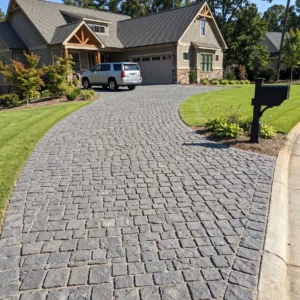

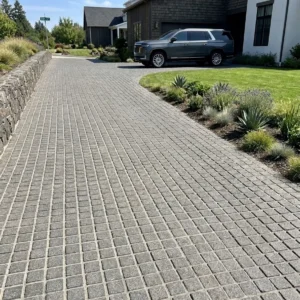
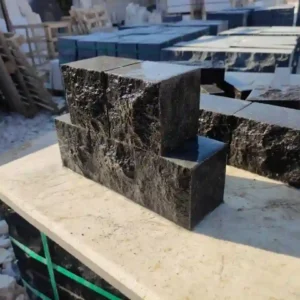
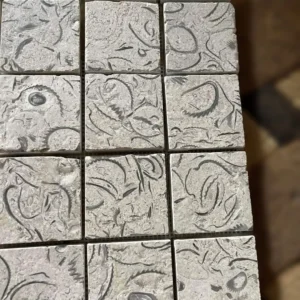
The compressive strength of limestone cobblestone pavers varies with the quarry bed, and that single figure determines whether your installation handles vehicular loads or stays confined to pedestrian zones — request the test report for the batch you are buying. You’ll want to verify the specific gravity and absorption values before you commit a batch to a driveway, because a paver pulling 6% water absorption behaves nothing like one testing at 2%. Most specification errors trace back to treating all limestone cobblestone pavers as interchangeable when the geology varies dramatically between beds. Getting this right at the front end saves you from tear-outs three winters down the road.
What Makes Limestone Cobblestone Pavers Perform Under Load
Limestone behaves as a sedimentary calcium carbonate stone, which means its performance hinges on density and grain structure rather than the crystalline hardness you get with granite. You’ll find that denser beds resist abrasion and freeze-thaw cycling far better than the softer, more porous varieties. That’s why quarry sourcing matters more here than with almost any other paving material.
The material’s real advantage shows up in how it ages. Where concrete alternatives spall and crack, limestone develops a patina that many designers actively prefer. According to limestone formation and characteristics, the stone’s carbonate matrix forms under conditions that produce predictable, workable density ranges — which is exactly what you want when you’re specifying thousands of units for a single project.
You can request sample units or absorption specifications from Citadel Stone before committing to a full order, and doing so lets you match the specific bed density to your load requirements. This step alone eliminates the most common sourcing mismatch.
- Compressive strength varies across common beds — ask for the tested value on your batch
- Water absorption by weight is what signals freeze-thaw suitability — request the absorption result before you order
- Denser beds resist surface abrasion under repeated point loading
- Natural patina development reduces the harsh weathering seen in concrete
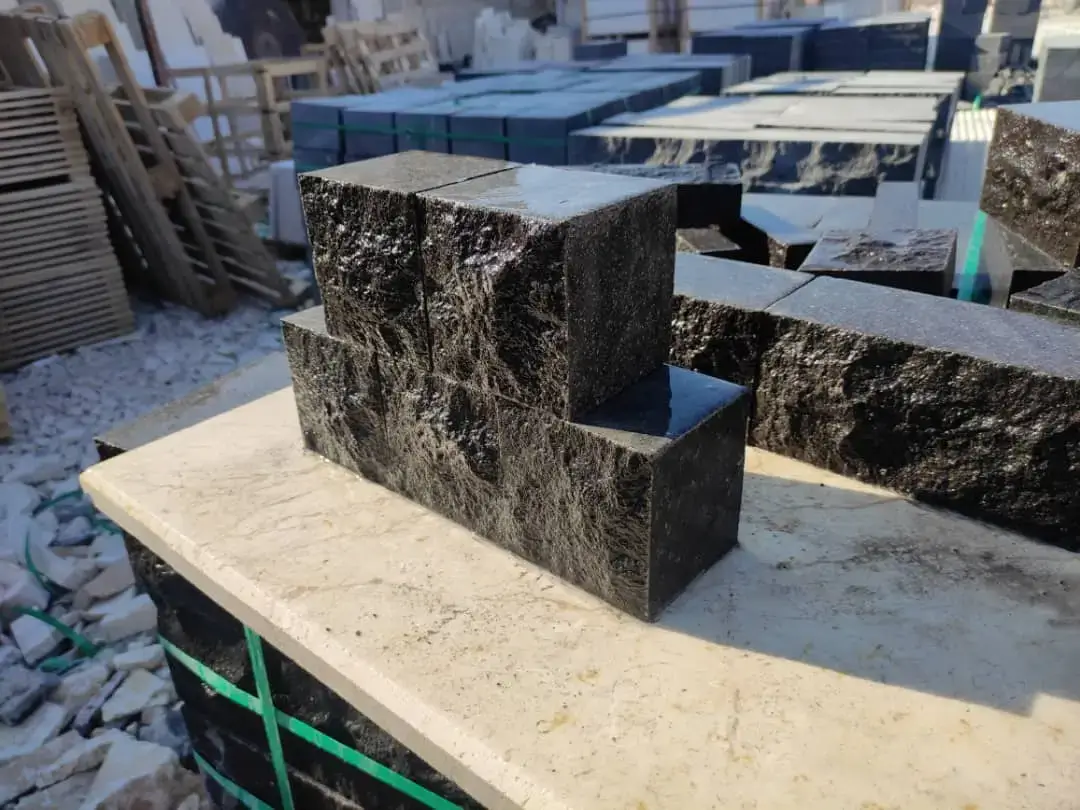
Choosing Formats: Square, Rectangular, and Irregular Options
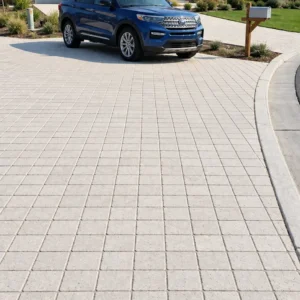
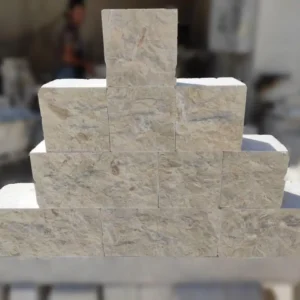
Your format choice drives both the installation labor and the finished appearance more than any other single decision. Square limestone pavers give you the cleanest grid layouts and the fastest install times because there’s no rotational alignment to fuss over. You’ll spec these for contemporary courtyards and formal entry zones where the geometry needs to read as intentional.
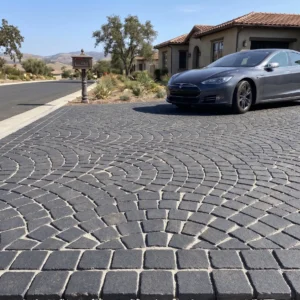
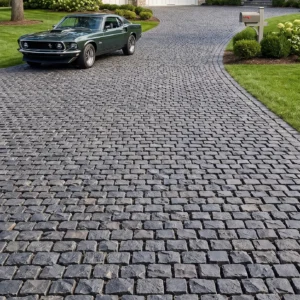
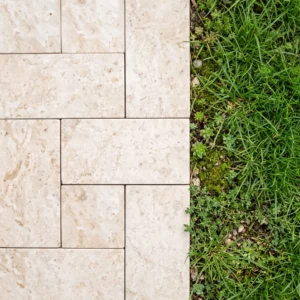
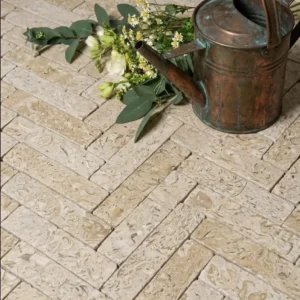
Rectangular limestone pavers open up the pattern vocabulary considerably. Here’s where you start working with running bond, herringbone, and basketweave layouts that distribute load across joint lines rather than concentrating it. The interlocking geometry of a proper herringbone actually improves the structural performance under lateral loads, which is why it’s the go-to for driveway applications. Even the limestone paving bricks cut to a tighter module benefit from this same interlock logic.
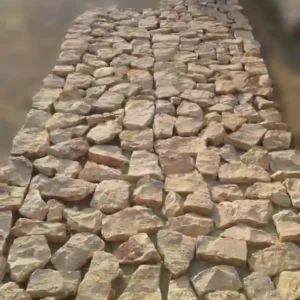
Irregular limestone pavers deliver the organic, weathered look that fits rustic and transitional designs. You trade install speed for character — each unit needs individual placement and joint judgment. Budget roughly 30-40% more labor time for irregular layouts compared to a uniform square grid. Square limestone pavers, by contrast, let a crew sequence quickly across large fields.
- Square units suit formal grids and speed up installation sequencing
- Rectangular units enable herringbone and running bond load distribution
- Irregular units create organic character at higher labor cost
- Mixed formats can define zones within a single continuous surface
Color, Finish, and Texture Options That Fit Your Design
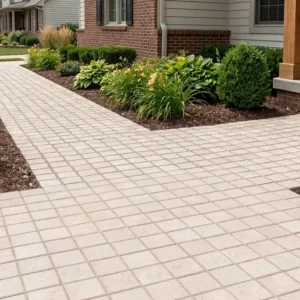
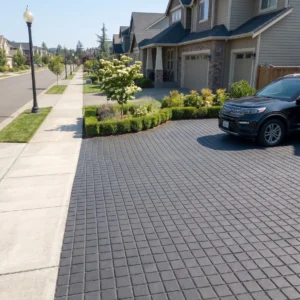
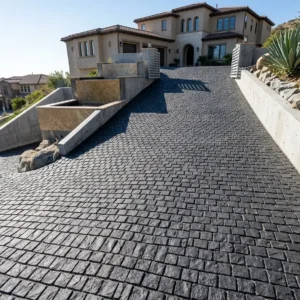
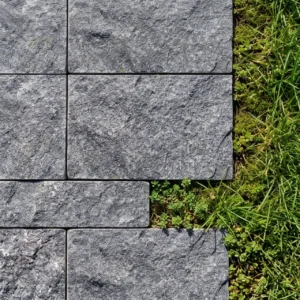
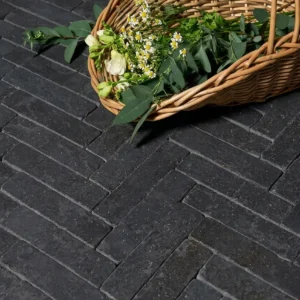
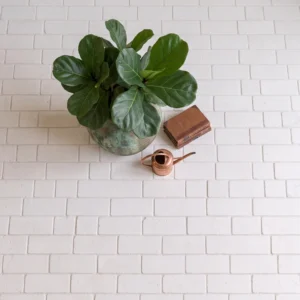
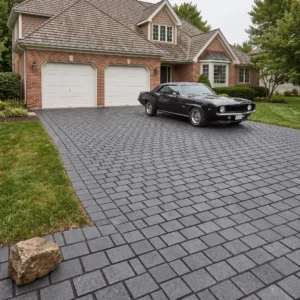
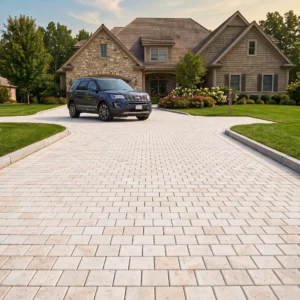
Limestone’s color palette runs cooler and more subtle than most homeowners expect. You’ll typically work within cream, ivory, silver, and grey ranges, with occasional charcoal and graphite tones from darker beds. The lighter cream and ivory shades reflect solar radiation and stay cooler underfoot, while grey and charcoal options hide surface soiling better in high-traffic commercial zones.
Finish selection changes both the aesthetic and the slip performance. Tumbled surfaces give you the antiqued, rounded-edge look with a textured texture. Honed finishes read smoother and more refined but require attention to slip ratings in wet zones. You’ll want to match finish to function here rather than picking purely on appearance. Rectangular limestone pavers in a honed finish, for instance, read especially crisp in formal entry courts.
Citadel Stone stocks limestone cobblestone pavers in cream, ivory, silver, grey, and charcoal ranges across multiple finishes, and you can request finish samples to evaluate slip texture before finalizing your specification. Available in tumbled, honed, and natural-cleft textures to match both formal and rustic project requirements. Irregular limestone pavers in natural-cleft texture suit the most rustic schemes.
- Cream and ivory tones reflect heat and stay cooler in high-sun conditions
- Grey, silver, charcoal, and graphite shades mask soiling in traffic zones
- Tumbled finishes deliver antiqued edges with natural slip texture
- Honed finishes read refined but need slip evaluation in wet areas
Base Preparation That Determines Long-Term Success
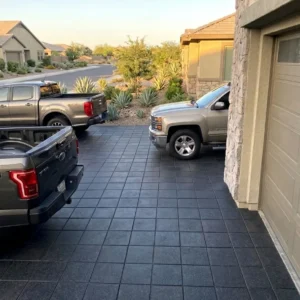
The single biggest predictor of a 20-year installation versus a 10-year one is base preparation, and most field failures trace back to what happens below the surface. Your aggregate base depth should run 6-8 inches for pedestrian applications and 10-12 inches for anything carrying vehicular loads. Compact in 3-inch lifts rather than dumping the full depth and compacting once — the difference in long-term settlement is dramatic.
When you’re specifying limestone brick pavers or setts for a driveway, the interaction between your compacted aggregate and the underlying soil expansion coefficient becomes critical in clay-heavy conditions. Clay soils swell and contract with moisture, and a thin base transmits that movement straight to your joint lines. Add a geotextile separation layer over expansive soils to keep your aggregate from migrating into the subgrade. The same holds for limestone brick pavers set in tighter modular courses.
Base preparation standards shift with soil composition and expected traffic, and for projects pairing cobbles with complementary stone details, limestone cobblestone paving patterns covers specification points that apply directly to similar site conditions. Getting the subgrade compaction right at this stage prevents the settlement failures that cause the vast majority of callbacks.
- Pedestrian bases: 6-8 inches of compacted aggregate
- Vehicular bases: 10-12 inches compacted in 3-inch lifts
- Geotextile separation over clay and expansive soils
- Screeded bedding sand at 1 inch, consistent across the field
Limestone Paving Patterns and Joint Detailing
Pattern selection isn’t purely aesthetic — it changes how loads travel through the surface. Limestone paving patterns like herringbone lock units against lateral displacement, which is exactly what you need where turning vehicles impose shear forces. Running bond works well for pedestrian walkways and reads clean, but it offers less interlock resistance than a 45- or 90-degree herringbone.
Joint width matters more than people realize. You’ll want to hold joints at 3-6mm for tight contemporary looks and open them to 8-12mm for tumbled, rustic layouts where the wider gaps suit the aesthetic. Wider joints with polymeric sand handle minor substrate movement better, while tight joints demand a more stable base. The best limestone paving patterns balance joint width against the base stability you can realistically achieve on site.
Here’s what most specifiers miss: limestone block paving performs best when you maintain joint sand at 92-95% capacity through the service life. Sand that washes out below that threshold lets units rock under load, which accelerates edge chipping. Plan on topping up polymeric sand every 2-3 years in high-traffic zones, and inspect the limestone block paving joints on the same cycle.
- Herringbone patterns resist lateral shear from turning vehicles
- Running bond suits pedestrian zones with clean visual lines
- Tight joints (3-6mm) need a highly stable base
- Wider joints (8-12mm) accommodate minor movement with polymeric sand
How Limestone Cobblestone Handles Wind, Storm, and Severe Weather
Severe weather events test paving in ways that steady climate never does, and this is where the mechanical stability of a properly installed cobblestone system earns its keep. High wind loads don’t lift individual limestone setts paving the way they lift lightweight surfacing — the mass of each unit works in your favor. A 4-inch-thick limestone sett carries enough dead weight that wind uplift becomes a non-issue compared to thin-format pavers or loose aggregate. Well-laid limestone setts paving stays put where thinner surfacing shifts.
Hail impact is where density separates good stone from marginal stone. Denser limestone beds shrug off hail that would pit or chip softer material. You’ll see the difference most clearly on horizontal surfaces after a severe storm event — the denser beds show negligible surface damage while porous alternatives develop visible impact marks.
Storm-driven water movement is the real durability test. Proper drainage geometry — a consistent 1-2% surface slope — moves storm runoff off the field before it saturates the base and undermines the bedding layer. Where you’re pairing cobbles with limestone paving edging or limestone edging pavers, those border units anchor the field against the lateral hydraulic pressure that flooding rains can generate. A well-detailed run of limestone paving edging and matched limestone edging pavers keeps the perimeter locked. According to Natural Stone Institute limestone specifications, absorption characteristics directly govern how the stone resists the repeated wetting and drying cycles that severe weather imposes.
- Unit mass resists wind uplift far better than thin or loose surfacing
- Denser beds resist hail pitting that damages porous alternatives
- 1-2% surface slope sheds storm runoff before base saturation
- Edge restraints anchor the field against lateral hydraulic pressure
Freeze-Thaw Cycling and Climate Resilience
Freeze-thaw regions demand that you pay close attention to water absorption before anything else. Water that penetrates the stone, freezes, and expands is the mechanism behind spalling — and limestone with absorption above 6% starts trending toward vulnerability in aggressive freeze-thaw zones. For those conditions, you’ll want to spec beds testing at 3% or below and confirm the value against the actual batch rather than a generic datasheet.
Drainage does more freeze-thaw protection work than the stone itself. If water can’t pool in or under the pavers, it can’t freeze and lift them. This is why your base drainage and joint permeability specification matters as much as the stone selection in cold climates.
Thermal movement in limestone runs modest — the coefficient sits low enough that you rarely need dedicated expansion joints on residential-scale fields. On large commercial expanses, though, you’ll still want a movement allowance every 40-50 feet to accommodate seasonal cycling without stressing the perimeter restraints.
- Specify 3% or lower absorption for aggressive freeze-thaw zones
- Base and joint drainage prevent the water pooling that drives spalling
- Movement allowances every 40-50 feet on large commercial fields
- Verify absorption against the actual batch, not generic datasheets
Sealing, Maintenance, and Sourcing Consistency
Sealing protocols for limestone differ from concrete because the calcium carbonate matrix responds to penetrating sealers rather than film-forming ones. You’ll get the best results with a breathable penetrating sealer that repels water and oil while letting vapor escape. Film sealers trap moisture and eventually cloud or peel on limestone — avoid them.
Maintenance is genuinely light. Sweep debris, rinse periodically, and reseal on a 2-3 year cycle in high-traffic zones or every 4-5 years for light residential use. Avoid acidic cleaners entirely — they etch calcium carbonate and dull the finish permanently. A pH-neutral stone cleaner handles routine soiling without chemical damage.
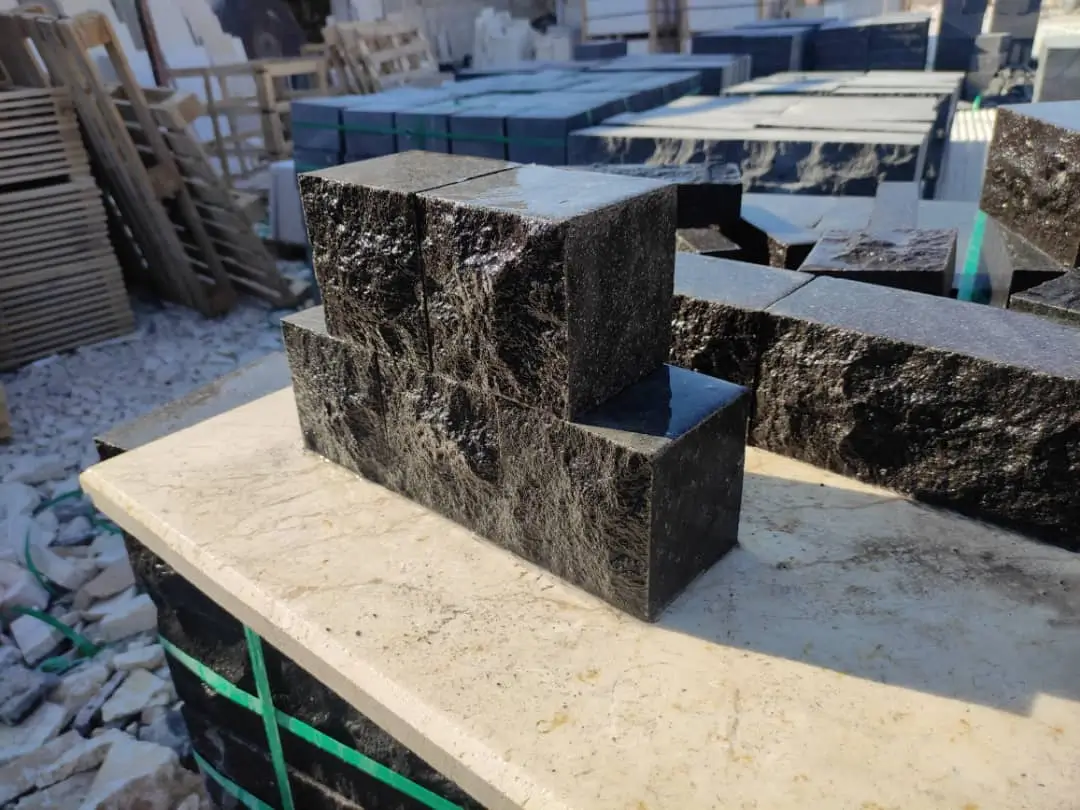
Sourcing consistency is where a lot of projects go sideways. Because limestone varies bed to bed, ordering across multiple deliveries risks color and density drift. At Citadel Stone, we inspect each batch for consistency during warehouse quality checks, and we recommend ordering your full quantity plus a 5-7% overage in a single run to hold color match across the field. Citadel Stone maintains warehouse inventory nationwide, which typically compresses lead times to 1-2 weeks against the 6-8 week import cycle most projects otherwise face.
- Use breathable penetrating sealers, never film-forming products
- Reseal every 2-3 years in traffic zones, 4-5 years residential
- pH-neutral cleaners only — acids etch calcium carbonate
- Order full quantity plus 5-7% overage in one run for color match
Where Limestone Cobblestone Beats and Loses to Alternatives
You should weigh limestone against granite and concrete honestly, because each wins in specific scenarios. Granite outperforms on raw hardness and abrasion resistance for the heaviest vehicular loads, but it costs more and reads colder in tone. Concrete pavers cost less upfront but lack the natural patina and tend toward a uniform, manufactured appearance that ages less gracefully.
Limestone’s sweet spot is the combination of workability, warm natural color, and genuine durability at a mid-range price point. For pedestrian plazas, courtyards, garden paths, and light-to-moderate vehicular drives, it delivers a look and longevity that concrete can’t match and granite overshoots. Where you have constant heavy-truck traffic, granite setts earn the premium.
The USGS dimension stone data tracks how these materials perform across construction applications, and federal dimension stone production data confirms limestone’s steady standing among durable paving stones. Match the material to the actual load and aesthetic — don’t over-spec granite for a garden path or under-spec limestone for a loading dock.
- Granite wins on hardness for heavy continuous vehicular loads
- Concrete wins on upfront cost but ages less gracefully
- Limestone wins on warmth, workability, and mid-range value
- Match material to actual load — avoid over- and under-specifying
Order Limestone Cobblestone Pavers — Nationwide Delivery Available
Citadel Stone stocks limestone cobblestone pavers in standard square, rectangular, and irregular formats across cream, ivory, silver, grey, and charcoal ranges, with tumbled, honed, and natural-cleft finishes available to match your project. You can request sample units, absorption specifications, or thickness details before committing to a full order, and for custom cuts or non-standard formats our team can advise on lead times and quantity planning. Trade and wholesale enquiries move through a straightforward quote process — send your square footage, format preference, and finish, and you’ll receive pricing and availability for your region. Buyers weighing budget options will find our standard formats an affordable, cheap-to-ship route to buy quality stone compared to fragmented import sourcing. Nationwide delivery typically runs 1-2 weeks from regional warehouse inventory, and truck delivery scheduling accounts for your site access constraints. For a closer look at the broader supply picture and specification detail, working with established cobblestone suppliers is worth reviewing as you finalize your sourcing plan. Contractors and designers rely on cobblestone pavers vs natural stone, sourced from quarries across the Mediterranean and Middle East, for commercial work.
Related guides: limestone paver base preparation · cobblestone paver cost guide · cobblestone setts vs clay pavers · cobblestone setts on mesh · Joint Fill for Cobblestone Setts: Stone Dust vs Mortar · belgian block pavers.