

What the Numbers Reveal About Cobblestone Setts vs Clay Pavers
The cobblestone setts vs clay pavers decision looks straightforward until you start comparing compressive strength, absorption rates, and dimensional consistency side by side. Natural stone setts — particularly porphyry cobblestone and granite varieties — routinely test above 20,000 PSI in compressive strength, while quality clay pavers generally range between 8,000 and 12,000 PSI. That gap matters the moment you’re specifying for vehicular traffic, heavy equipment access, or any surface where point-load concentration is a real design factor.
Clay pavers do bring genuine advantages. Their through-body color means surface wear doesn’t expose a visually different substrate, and their dimensional uniformity simplifies installation geometry for large, flat runs. The trade-off is that manufactured uniformity can actually work against you in certain design contexts — more on that below.
Material Performance: Where Each One Excels
Natural stone setts derive their performance from geological compression over millions of years — a process no kiln replicates. Porphyry cobblestone, for instance, carries a water absorption rate below 1%, compared to clay pavers that typically absorb between 3% and 6% depending on firing density. Lower absorption directly translates to reduced efflorescence risk, better freeze-thaw resistance in colder regions, and longer color stability under UV exposure.
- Cobblestone setts: compressive strength 18,000–25,000+ PSI depending on stone type
- Clay pavers: compressive strength typically 8,000–12,000 PSI per ASTM C902
- Natural stone absorption: below 1% for dense igneous varieties like porphyry
- Clay paver absorption: 3–6% depending on ASTM C902 classification (SX, MX, NX)
- Slip resistance: both materials achieve adequate wet COF when properly textured, but cobblestone’s natural surface variation provides inherently varied grip geometry
- Color stability: natural stone holds pigment indefinitely; clay pavers fade at different rates depending on iron oxide concentration in the clay body
According to NSI granite cobblestone durability data, dense igneous setts consistently outperform manufactured paving units in long-term abrasion resistance — a performance characteristic that becomes visible after 15 or more years of heavy use. Clay pavers hold up respectably in pedestrian applications, but the surface wear rate accelerates noticeably in driveways or high-traffic commercial paths.
Installation Requirements: What Your Crew Needs to Know
Your base preparation is where the cobblestone setts vs clay pavers comparison gets genuinely complicated. Both materials are unbound-flexible systems when installed on compacted aggregate — but the stiffness differential between them changes how the base responds to load distribution.
Cobblestone setts, being heavier and more rigid individually, require a tighter compacted base to prevent rocking at individual unit joints. A minimum 6-inch compacted aggregate base is standard for pedestrian use; vehicular applications push that to 8–10 inches with a properly graded sub-base. Clay pavers, being lighter and more uniform, transfer loads across a wider area through the bedding layer — which makes them slightly more forgiving on imperfect sub-base preparation, though that’s not an excuse to cut corners on base depth.
- Cobblestone sett bedding: 1-inch nominal coarse sand or stone dust, screeded to ±3mm tolerance
- Clay paver bedding: same 1-inch nominal sand bed, but tighter dimensional tolerances make screeding faster
- Joint fill: polymeric sand works for both, but cobblestone’s irregular joint widths (typically 10–25mm) require a coarser sand gradation than clay paver joints (typically 3–5mm)
- Edge restraint: both systems require rigid edge restraint — cobblestone’s weight makes this even more critical on any graded run
- Compaction after laying: plate compaction is mandatory for both; cobblestone tolerates higher-frequency compaction without face damage if the plate has a rubber buffer
The detail that matters most and often gets skipped in field installations is verifying sub-base moisture content before compaction. Compacting a base that’s too wet locks in settlement potential — and that’s the failure mode you’ll be diagnosing two winters later when the surface has developed a washboard pattern.
Terrain and Drainage: How Slope Changes the Specification
Elevation changes and site grade are where your material choice gets tested in ways flat-site specifications never reveal. For sloped installations — anything above a 2% cross-fall — cobblestone setts have a meaningful structural advantage. Their mass and interlocking geometry resist creep under gravity load, which is the slow lateral migration that undermines flexible paving systems on grades over time.
Clay pavers on slopes require more aggressive edge restraint systems and, in steeper applications (above 5% grade), a mortar-set approach is often necessary rather than a sand-set unbound system. The lighter individual unit weight that makes clay pavers easy to handle also makes them more susceptible to displacement on grade when the restraint system is compromised.
- For grades 0–2%: both materials perform comparably with standard edge restraint
- For grades 2–5%: cobblestone setts recommended for vehicular use; clay pavers acceptable for pedestrian with heavy-duty restraint
- For grades above 5%: mortar-set specification recommended for either material; cobblestone’s higher density provides better adhesion surface for mortar bedding
- Drainage channel integration: cobblestone’s variable joint geometry allows more flexible drainage channel positioning than clay pavers’ uniform grid
- Low-lying sites with high water tables: specify cobblestone setts on a free-draining aggregate base with subsoil drainage; clay pavers in these conditions risk sub-base saturation and efflorescence migration
Grade management also affects your joint fill selection. On slopes, finer polymeric sand in clay paver joints can wash out gradually even with a proper cure — particularly if the surface carries sheet drainage from adjacent hardscape. Cobblestone joints, being wider, accommodate a coarser joint fill that anchors more securely under sustained water movement across the surface plane.
Design and Aesthetic Range: More Than Just Appearance
Your project’s visual language matters as much as its structural specification — and this is the dimension where the cobblestone setts vs clay pavers decision diverges most clearly. Cobblestone brings inherent variation: slight irregularities in surface texture, color depth that shifts across individual units, and a visual mass that reads as permanence in the landscape. That character doesn’t age out of style because it was never stylish — it’s archaic in the best sense, referencing street paving traditions that predate manufactured materials by centuries.
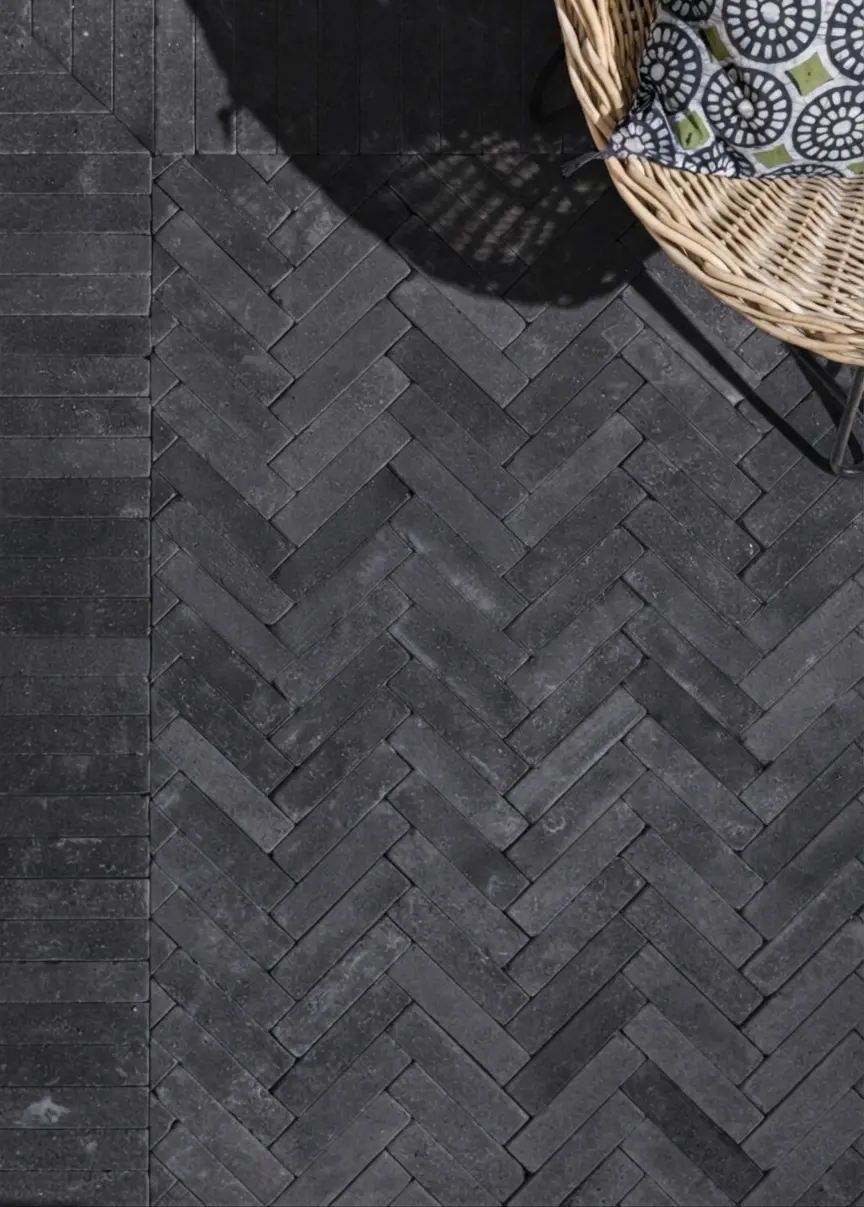
Clay pavers offer a different kind of visual language — clean, modular, and contemporary. Their dimensional precision enables pattern laying (herringbone, basketweave, running bond) with tight, consistent joints that read as intentional geometry. That precision is genuinely valuable in certain design contexts — contemporary residential, commercial streetscapes with linear design logic, or applications where the paving is meant to recede visually rather than anchor the space.
Browse our natural stone paving collection to compare cobblestone sett profiles, surface textures, and colorways across different geological sources — the range is wider than most specifiers initially expect.
Long-Term Maintenance: The Honest Comparison
Here’s what most specifiers miss when evaluating lifecycle cost: clay pavers are relatively straightforward to maintain but difficult to repair invisibly. Because manufactured clay pavers come in specific production runs, color-matching replacement units five years after installation is genuinely difficult — firing temperatures and clay body composition shift between production batches, and faded surface color on installed units means new units stand out visually even when the product code matches.
Cobblestone setts don’t have this problem. Natural stone variation means a replacement sett sourced from the same quarry will blend naturally — and even a sett from a similar geological formation will integrate well because the eye reads natural variation as acceptable in a way it doesn’t for manufactured units.
- Clay paver staining: sealed clay resists oil penetration well; unsealed clay absorbs oil quickly and is difficult to remediate
- Cobblestone staining: dense natural stone (porphyry, granite setts) resists staining without sealing; softer limestone setts benefit from penetrating sealer application every 3–4 years
- Weed growth: both systems are susceptible without polymeric joint fill; cobblestone’s wider joints can allow more root intrusion if joint maintenance is deferred
- Surface restoration: cobblestone can be lifted, base re-graded, and re-laid with the same units — clay pavers can too, but replacement units may not match
- Repair timeframe: both systems allow targeted unit replacement without full-section demolition — a significant advantage over monolithic concrete
According to USGS dimension stone production data, natural stone paving continues to gain specification share in commercial and institutional projects precisely because of this repairability advantage — a factor lifecycle cost models increasingly account for.
Cost and Supply Logistics: Planning Your Project Timeline
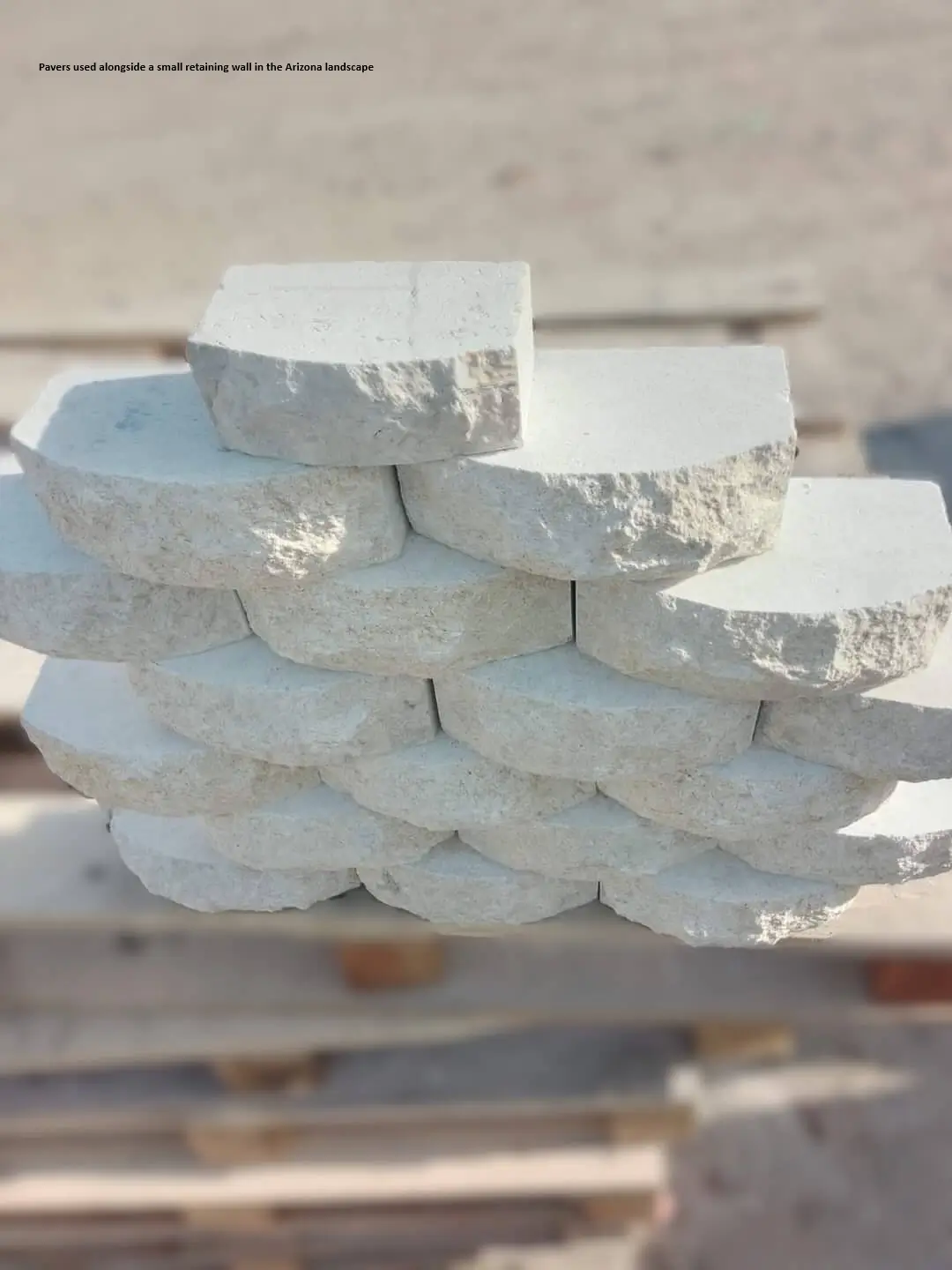
Natural stone setts carry a higher unit material cost than clay pavers in most markets — typically 20–40% more per square foot depending on stone type and source. Porphyry cobblestone from South American quarries occupies the mid-to-premium range; granite setts from domestic or European sources vary widely based on finishing specification. Clay pavers, being a manufactured domestic product, have more predictable and stable pricing with shorter lead times from regional suppliers.
The logistics calculation changes, though, when you factor in installation labor. Clay pavers install faster on flat, regular runs due to their dimensional consistency — your crew can lay roughly 30–40% more square footage per day compared to irregular cobblestone setts. On sloped or irregular sites, that efficiency advantage narrows considerably because grade management and edge restraint detailing dominate the timeline regardless of unit type.
- Cobblestone setts lead time: 2–6 weeks from warehouse for standard profiles; specialty sizes or exotic stone types may require 8–12 weeks
- Clay paver lead time: typically 1–3 weeks from regional distribution
- Truck access planning: both materials ship on pallets via flatbed; confirm your site’s truck access before finalizing delivery scheduling, especially for hillside or restricted-access projects
- Storage on site: both materials are stable in covered outdoor storage; cobblestone’s higher unit weight requires load-bearing consideration for truck access routes across soft ground
At Citadel Stone, we stock cobblestone setts across multiple profiles and stone types, which means warehouse availability is typically faster than import lead times suggest — verify current stock levels with our team before building your project schedule around a worst-case timeline.
Which Application Fits Which Material: Cobblestone Setts vs Clay Pavers
The cobblestone setts vs clay pavers choice becomes straightforward once you’re honest about the application’s real demands. Here’s how the decision maps across common project types:
- Residential driveways with vehicular load: cobblestone setts — the compressive strength and drainage geometry handle vehicle weight and oil exposure better over the long term
- Pedestrian plazas and commercial walkways: clay pavers work well on flat sites with uniform geometry; cobblestone is the better choice where visual permanence and heritage character are specified
- Sloped garden paths and hillside terraces: cobblestone setts — mass and interlocking geometry resist creep; mortar-set cobblestone for grades above 5%
- Contemporary residential patios: clay pavers excel where clean geometric patterns and tight joints are the design intent
- Heritage streetscapes and restoration projects: cobblestone setts are often specified to match existing or period-appropriate character — clay pavers are rarely appropriate in this context
- Pool surrounds: neither is the primary specification choice for wet-zone pool decks, but cobblestone setts with brushed or tumbled finish achieve adequate slip resistance for pool-adjacent areas
Your project’s site conditions — particularly grade, soil type, and drainage configuration — should influence this decision as much as aesthetics. On a flat, well-draining site with a contemporary design brief, clay pavers are a perfectly defensible specification. On a sloped site with heritage character requirements and heavy vehicular use, the cobblestone setts specification writes itself. The projects where specifiers get this wrong are the middle-ground cases — moderate slope, mixed traffic, ambiguous design brief — where pressure to reduce unit cost drives a clay paver spec that the site conditions don’t actually support.
The ASLA guidance on permeable paving materials is worth reviewing for projects where stormwater management is a formal project requirement — both materials can be specified in permeable configurations, though cobblestone’s wider joints provide more inherent drainage capacity in standard installation.
Making the Right Call on Cobblestone Setts vs Clay Pavers
Getting the cobblestone setts vs clay pavers decision right means resisting the temptation to default to whichever material is cheaper at the unit level. Lifecycle cost, site conditions, traffic loading, and design intent all carry more weight than the initial material price when you’re specifying something that’s meant to perform for 25 or 30 years. Your base preparation quality, joint fill selection, and edge restraint detailing will ultimately determine more of the installation’s longevity than the material choice itself — but choosing the right material for the actual site conditions is what makes those downstream details worth doing properly. As your project moves toward final specification, joint fill selection is a detail that deserves careful attention regardless of which paving unit you choose — joint fill options for stone setts covers the technical comparison between stone dust and mortar approaches in depth. Freeze-thaw cycling affects clay and natural stone pavers differently, and Citadel Stone’s cobblestone setts are selected for the dimensional stability that repeated thermal expansion demands.
Related reading: limestone cobblestone paving patterns · limestone paver base · Cobblestone Paver Cost Guide: What Drives the Price?.