
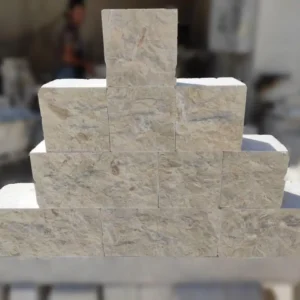
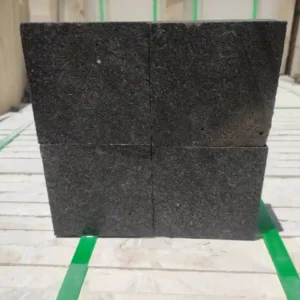
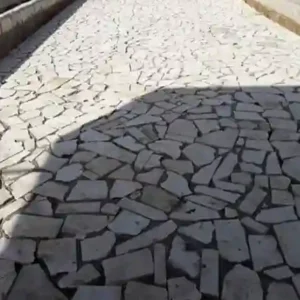
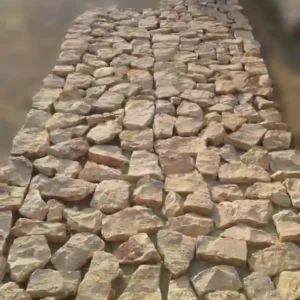
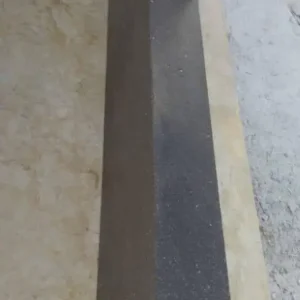
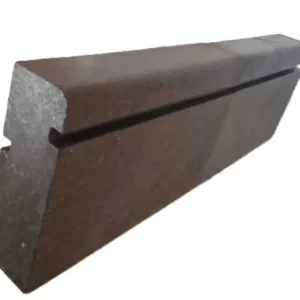
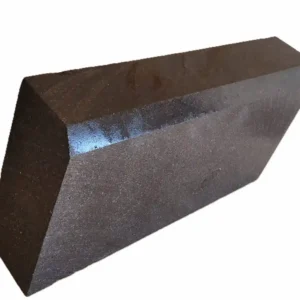
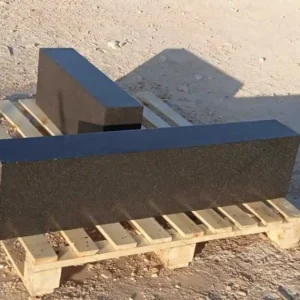
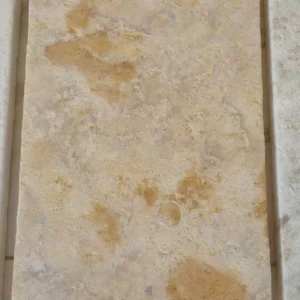
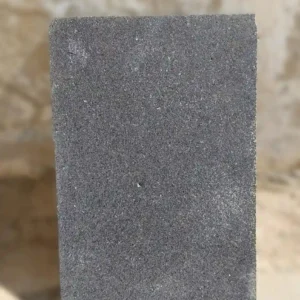
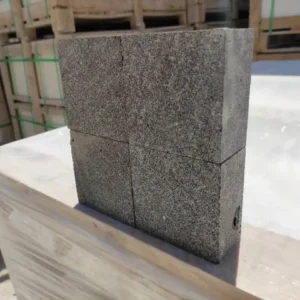
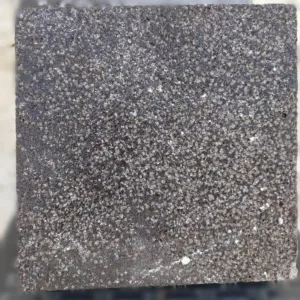

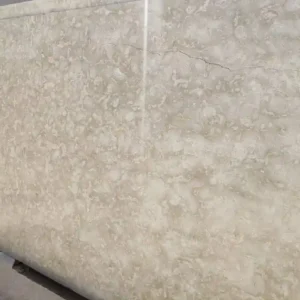
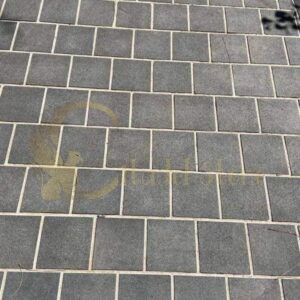

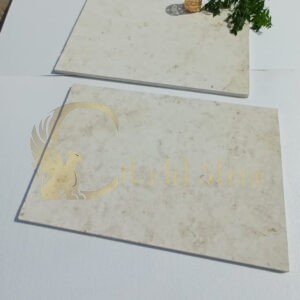
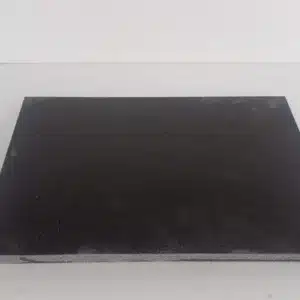



Specifying kerb blocks in Arizona starts with a code question, not a material one — and that distinction shapes every decision that follows. The International Building Code as adopted by Arizona municipalities sets minimum compressive strength thresholds, edge load tolerances, and subgrade preparation requirements that vary meaningfully between a Phoenix arterial road project and a private driveway in Flagstaff. Getting those structural parameters locked before you select a product profile or finish saves you from costly rework during inspection.
Arizona Building Code Compliance for Kerb Blocks
Arizona’s adopted amendments to the IBC don’t always mirror the base code directly, and that gap creates specification errors on projects that assume national standards apply without modification. For kerb block installations, the critical compliance checkpoints are subgrade bearing capacity, compressive strength of the unit itself, and the depth of bedding mortar or dry-set aggregate beneath the kerb. Most jurisdictions in the Phoenix metro area require a minimum compressive strength of 8,000 PSI for kerb units in roadway-adjacent applications — higher than the 6,000 PSI floor that some project managers carry over from out-of-state experience.
Load-bearing requirements also scale with intended use. A shared residential driveway edge in Scottsdale carries very different design loads than a commercial parking structure kerb that sees delivery truck wheel loads on a daily basis. Your structural engineer needs the unit weight, the cross-section geometry, and the bedding configuration before sign-off, not after the material is delivered.
Citadel Stone maintains detailed specification sheets for every kerb block format in its range, including compressive strength test results and dimensional tolerances — data your engineer needs to complete the load analysis without hunting through manufacturer portals.
Seismic and Structural Considerations in Arizona
Arizona sits within USGS Seismic Zone 2B in several counties, and while the state doesn’t carry the seismic profile of California, projects in the central mountain corridor and along fault-adjacent zones in the Verde Valley require seismic detailing that many flatland specifiers overlook. For block paving kerb stones in Arizona installations near mapped fault lines, the bedding layer and the base course both need to accommodate lateral displacement without unit fracture or full dislodgement.
The practical specification response to Zone 2B conditions includes:
- Compacted aggregate base minimum 6 inches depth in seismically mapped zones versus the standard 4-inch residential spec
- Flexible bedding sand layer of 1 inch nominal rather than rigid mortar for low-to-moderate seismic zones, allowing micro-movement without cracking the unit
- Unit length-to-width ratio kept below 4:1 to prevent rotational failure under lateral ground movement
- Expansion joint spacing reduced to 10 feet on centre in seismic adjacency zones compared to the standard 15-foot spacing in flat desert terrain
These aren’t conservative over-specifications — they reflect what happens when rigid installations meet ground movement that, while modest by West Coast standards, still introduces forces that a standard residential kerb detail can’t absorb.
Frost Line Depth, Elevation, and Thermal Performance
Arizona’s frost line depth varies more dramatically than most out-of-state specifiers expect. At Phoenix or Yuma elevations, the frost line is effectively zero — ground freezing is not a design consideration. Move to Flagstaff at 6,900 feet elevation, and you’re working with a frost line of 18 to 24 inches, which completely changes your base course specification, your drainage strategy, and your joint width calculations.
For kerb blocks in Arizona’s higher elevation communities, the base course must extend below the frost line or be designed with frost-tolerant granular fill that resists heave. The common failure mode at elevation is differential frost heave — the kerb unit lifts unevenly where base moisture is inconsistent, creating the stepped profile that signals installation failure within two or three winters.
Key thermal and frost performance specifications by elevation zone:
- Below 3,500 feet (Phoenix, Tucson, Yuma): frost line negligible, base course depth governed by traffic loads alone
- 3,500–5,000 feet (Prescott Valley, Globe): frost line 6–10 inches, base course minimum 8 inches compacted granular fill
- Above 5,000 feet (Flagstaff, Sedona rim areas): frost line 18–24 inches, free-draining base course mandatory, open-graded aggregate preferred over dense-graded
- All elevation zones: thermal expansion joints at 10–15 feet on centre depending on unit colour and solar exposure
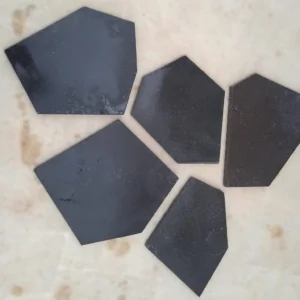
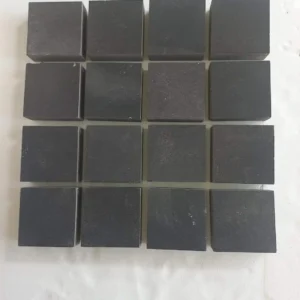
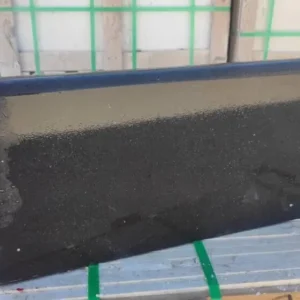
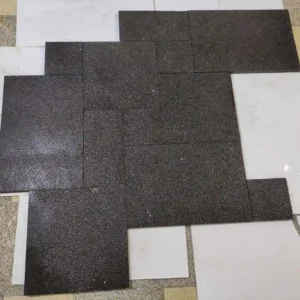
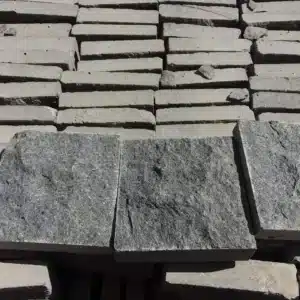
Charcoal bullnose kerb stones in Arizona high-elevation installations absorb significantly more solar radiation than light-coloured units, which accelerates the thermal expansion cycle and shortens the window between surface heating and evening contraction. That daily cycling compounds over seasons and is a primary contributor to joint opening failure if expansion allowances aren’t calculated for dark-tone units specifically.
Format Selection and Block Paving Kerb Stone Profiles
Your project’s edge containment requirements and traffic geometry determine which kerb block profile you actually need — and there are more format variables than most specs initially account for. Standard rectangular kerb units work for straight runs, but curved road edges and radius driveway entries require either purpose-made radius units or cut-to-curve field work that adds labour and creates more joint locations for long-term ingress points.
Block paving kerb stones in Arizona projects typically fall into three profile categories:
- Square-edge profiles for formal driveway boundaries and commercial parking containment where a clean vertical face is the design intent
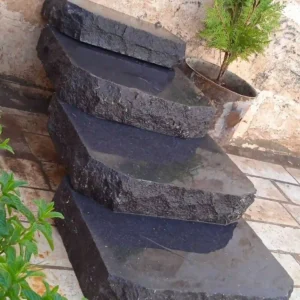
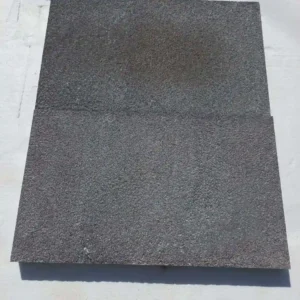
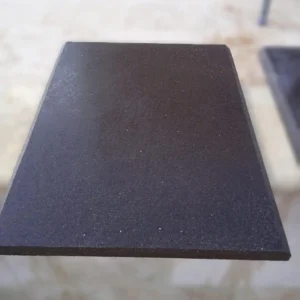
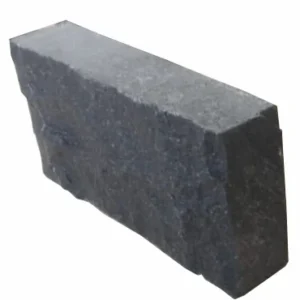
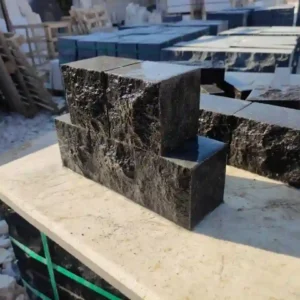
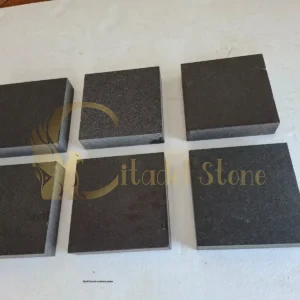
- Bullnose profiles — including charcoal bullnose kerb stones in Arizona — for pedestrian areas, residential garden edging, and anywhere a rounded top edge reduces trip-and-fall liability
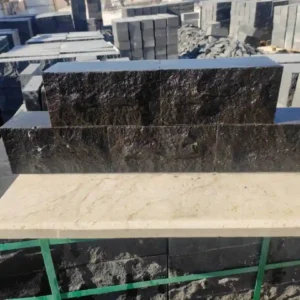
- Belgian block curb formats for heritage streetscape applications, high-end residential entries, and projects where the cobbled texture is an intentional design element rather than purely functional
The Belgian block curb profile deserves specific attention for Arizona projects because its wider base footprint distributes point loads across a larger bearing area, which is advantageous in expansive clay soils found in parts of the Phoenix basin. That wider bearing reduces differential settlement risk more effectively than a narrow-base rectangular unit on the same soil type.
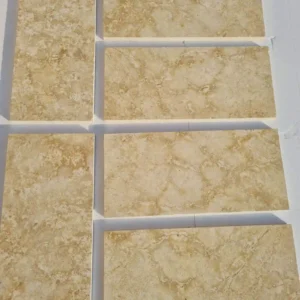
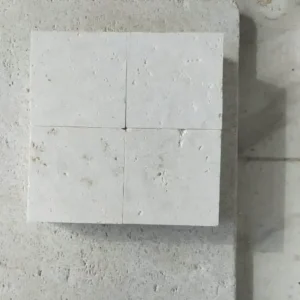
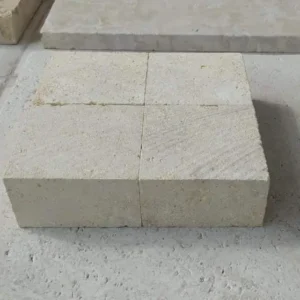
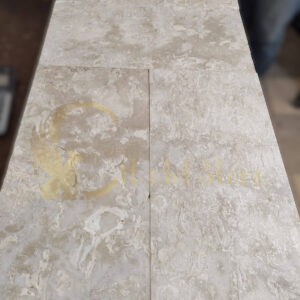
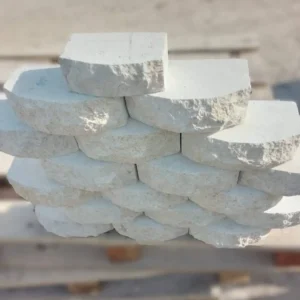
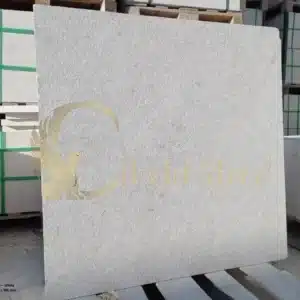
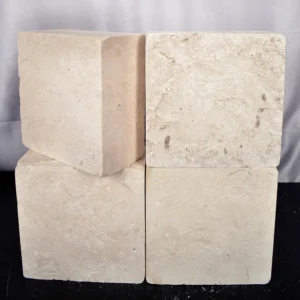
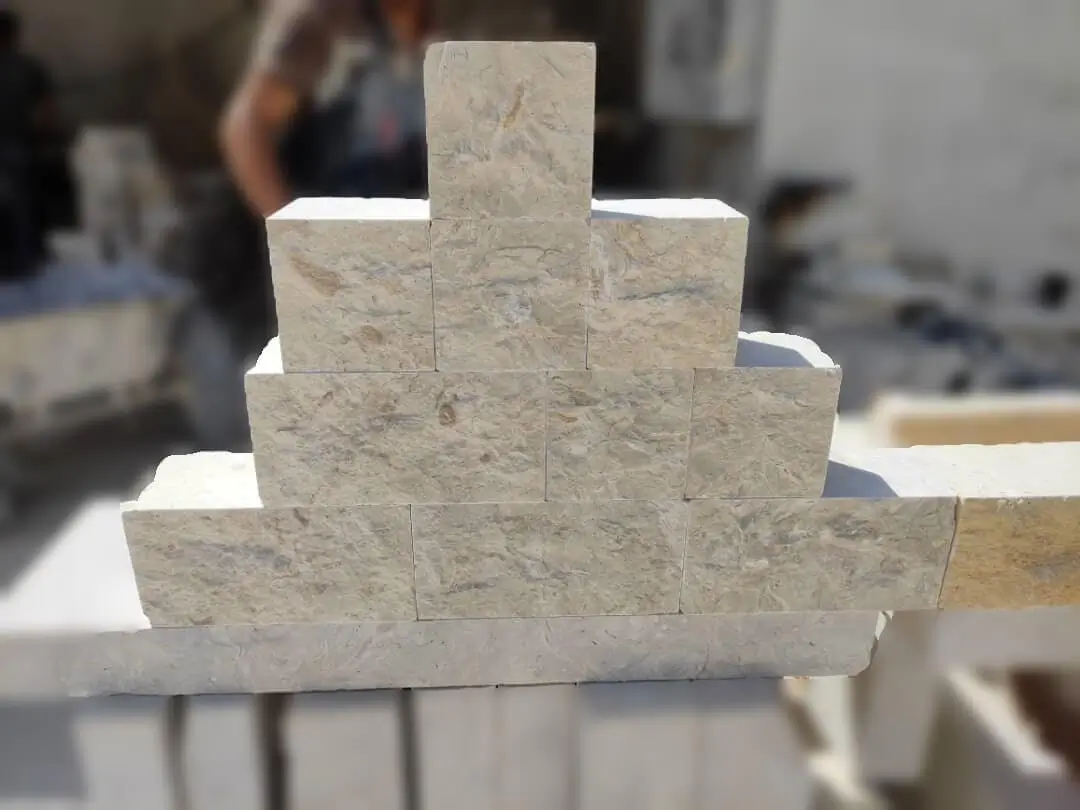
Citadel Stone stocks kerb blocks in standard formats including 200×100×65mm, 250×125×75mm, and radius-cut units in both square-edge and bullnose profiles. You can request format samples and dimensional drawings before committing to a specification, which is worth doing when your drawing set needs exact unit sizes confirmed for structural calculations.
Subgrade Preparation and Drainage for Arizona Soils
Arizona’s soil variability is one of the most underappreciated structural challenges in kerb block specification. Caliche hardpan — calcium carbonate-cemented soil layers that can be harder than weak concrete — appears across the state at depths ranging from 6 inches to several feet below grade. In Mesa, caliche layers at 12 to 18 inches are common enough that site investigation should always include a probe or test pit before finalising your base course design, because caliche actually changes your drainage strategy.
Caliche is nearly impermeable. When your kerb block installation sits above a caliche lens, surface water that infiltrates through joints has nowhere to go vertically — it migrates laterally under the base course and creates hydrostatic pressure zones that lift units or cause base course washout. The solution is a perimeter French drain or slotted pipe collector positioned below the base course, directing that lateral flow away from the installation footprint.
Effective subgrade preparation for Arizona kerb blocks requires:
- Subgrade compaction to 95% Modified Proctor density — standard for any load-bearing hardscape base
- Caliche layer identification and either mechanical scarification or drainage provision above the lens depending on depth
- Geotextile separation fabric between native soil and aggregate base in clay-bearing soils to prevent fines migration into the base course over time
- Minimum 2% cross-fall on the base course surface to direct bedding drainage toward the outer kerb edge
- Bedding layer — either 1-inch screeded sand or 1-inch open-graded aggregate — never compacted before kerb placement
Getting the subgrade right at this stage prevents the most common long-term failures you’ll encounter on Arizona hardscape projects. For projects requiring complementary stone elements and additional cost guidance, Kerb Blocks from Citadel Stone covers specification details and pricing structures that apply to similar site conditions across the state.
Colour, Finish, and Aesthetic Specifications
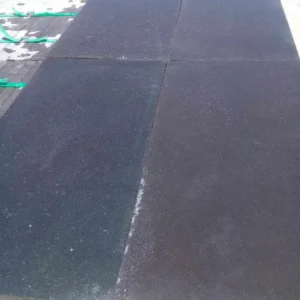
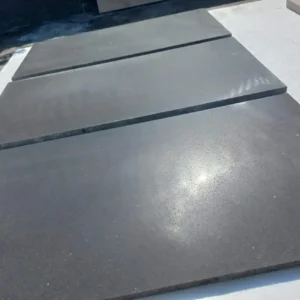
Colour selection for kerb blocks in Arizona isn’t purely aesthetic — it has measurable performance implications that belong in your spec document. Dark-tone units including charcoal bullnose kerb stones in Arizona can reach surface temperatures 40 to 60°F above ambient on peak summer afternoons in the low desert. That thermal loading affects both the unit’s thermal expansion behaviour and the comfort of any pedestrian zone adjacent to the kerb line.
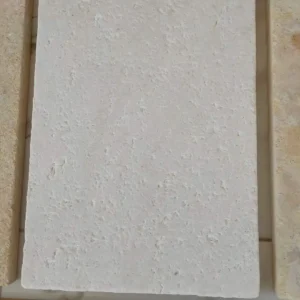
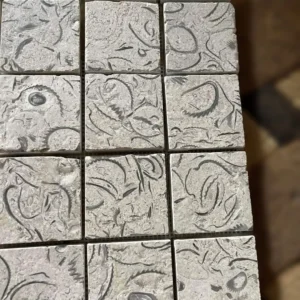
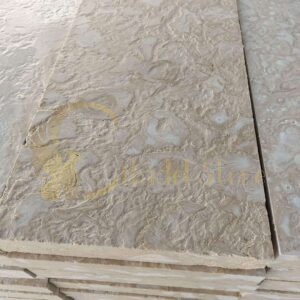
From a finish durability standpoint, tumbled or antiqued finishes on Belgian block curb units tend to disguise minor surface spalling better than honed or sawn faces — a practical consideration for high-vehicle-contact kerb locations where wheel scuffing is expected. Sawn faces look cleaner at installation but show wear more visibly over a five-year service period.
Finish performance comparison for Arizona conditions:
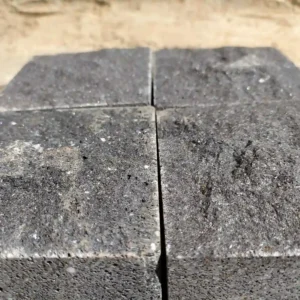
- Natural split face: highest slip resistance, most forgiving of surface weathering, preferred for pedestrian kerb transitions
- Sawn face: precise dimensional tolerance, easiest to lay to tight joint widths, shows surface wear more visibly
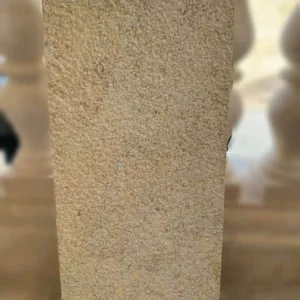
- Tumbled/antiqued: intermediate slip resistance, disguises wear well, suits heritage and residential streetscape styles
- Bullnose profiles: reduces trip liability at raised kerb edges, preferred for ADA-compliant kerb transitions
Installation Tolerances and Joint Management
The joint width and joint filling specification for kerb blocks in Arizona deserves more precision than most project documents give it. Standard polymeric sand works well in the low desert, but at elevations above 5,000 feet where freeze-thaw cycles occur, polymeric sand can fail by embrittlement within two or three seasons. At those elevations, a kiln-dried jointing sand with a flexible stabiliser performs more reliably across the temperature range.
Dimensional tolerance during installation directly affects long-term joint stability. Your laying tolerance should be ±3mm from string line on any 3-metre run — tighter than the ±5mm some contractors use for concrete block paving. The reason is that kerb blocks experience more lateral force from vehicle overrun and wheel contact than field pavers, and joint width variation above 5mm creates a leverage point where unit rocking begins.
Critical installation tolerances for Arizona kerb block projects:
- Laying tolerance: ±3mm from string line per 3-metre run
- Joint width: 2–4mm for sawn units, 4–6mm for tumbled and natural split units
- Level tolerance across adjacent units: maximum 2mm vertical offset at any joint to prevent trip hazard and comply with ADA surface requirements
- Bedding layer compaction: conducted after unit placement, not before — pre-compacted bedding causes differential settlement
- Expansion joints: 10mm open joint filled with flexible backer rod and polyurethane sealant at maximum 10-foot intervals in high-sun-exposure locations
Maintenance, Resealing, and Long-Term Performance
You can expect 20 to 30 years of structural performance from correctly specified and installed kerb blocks in Arizona when you maintain joint sand at above 90% fill depth and address any unit settlement within the first 12 months of installation. The first year is the most critical — base consolidation under traffic load is normal, and minor topping up of jointing sand before it becomes a structural gap is far cheaper than relevelling a settled section.
Sealing is optional for most kerb block formats in Arizona’s low desert, but it offers meaningful protection against oil penetration in driveway and parking applications. A penetrating silane-siloxane sealer applied after the first full year of service — once any base consolidation has completed — provides the best long-term protection without altering the surface texture or slip resistance profile. Avoid film-forming sealers on external kerb units because they trap moisture during the infrequent but intense monsoon rainfall events that Arizona receives between July and September.
Sourced from established quarry partners, each batch of kerb blocks that Citadel Stone processes through its warehouse is inspected for colour consistency and dimensional tolerance before it’s allocated to orders — a step that matters most when your project requires matched units across multiple truck deliveries on large-scale installations.
Buy Kerb Blocks — Wholesale from Citadel Stone
Citadel Stone supplies kerb blocks across Arizona in standard formats including 200×100×65mm, 250×125×75mm, and custom radius-cut units in square-edge, bullnose, and Belgian block curb profiles. Available finishes include natural split, sawn, tumbled, and charcoal-toned options to match both residential and commercial project aesthetics. You can request sample units and full specification documents — including compressive strength data and dimensional tolerances — before confirming your order, which gives your engineer the numbers needed for structural sign-off without delays.
Trade and wholesale enquiries are handled directly through Citadel Stone’s project team, who can confirm current warehouse stock levels, advise on lead times, and arrange staged truck deliveries to match your site programme. Lead times from warehouse stock typically run 1 to 2 weeks for standard formats across Arizona, including deliveries to Phoenix, Tucson, and Flagstaff project sites. For non-standard formats, custom radius units, or large-volume commercial contracts, contact Citadel Stone early to confirm production lead times and lock in material allocation before your installation window opens.
Beyond kerb block applications, your Arizona hardscape project may benefit from complementary stone features across the same site. Citadel Stone’s ashlar range pairs naturally with structured kerb edging on larger landscape schemes — Ashlar Stone Blocks in Arizona covers another dimension of Arizona stone specification that complements kerb block installations on commercial and residential projects. Architects and builders in Flagstaff, Sedona, and Yuma specify Citadel Stone Kerb Blocks for Arizona outdoor installations.