
Code compliance is the real starting point for installing kerb blocks in Arizona — not material selection, not aesthetics, and not even heat tolerance. Arizona municipalities have specific structural requirements governing base depth, edge restraint systems, and material thickness that differ meaningfully from national standards, and missing these details at the specification stage creates problems that no amount of good installation technique can fix afterward. Whether you’re working in a high-traffic commercial application or a residential boundary edge in the low desert, understanding what local jurisdictions actually require will determine whether your installation passes inspection and holds up over time.
What Arizona Building Codes Require for Kerb Block Installation
Arizona doesn’t have a single statewide residential building code — local jurisdictions adopt and amend the International Building Code (IBC) and International Residential Code (IRC) independently. That matters because Phoenix, Tucson, and Scottsdale each carry specific amendments that affect edge restraint specifications, minimum base compaction requirements, and even material density thresholds for load-bearing applications. You’ll need to pull the current adopted code from your specific municipality before finalizing any specification.
For structural kerb applications — driveways, retaining edges, road-adjacent borders — most Arizona jurisdictions require a minimum compacted aggregate base of 4 to 6 inches for residential use and 6 to 8 inches for commercial or shared-access applications. Some counties in the Maricopa region push the commercial threshold to 10 inches when the kerb will manage vehicle overhang or wheel stop loads. Don’t assume the 4-inch residential minimum applies to your project just because it’s technically a residential site.
- Confirm adopted IBC/IRC edition with the local building department — Arizona jurisdictions are not uniform
- Residential kerb applications typically require minimum 4-inch compacted aggregate base (Class II road base or equivalent)
- Commercial-grade installations with vehicle exposure require 6–10 inches depending on jurisdiction and load rating
- Edge restraint systems must prevent lateral movement — spike-down plastic restraints are frequently rejected on sloped sites in favor of concrete haunching
- Material thickness for kerb blocks should meet or exceed 4 inches nominal for load-bearing edges, with some Maricopa County amendments specifying 3.15 inches minimum under ASTM C1319 dimensional tolerances
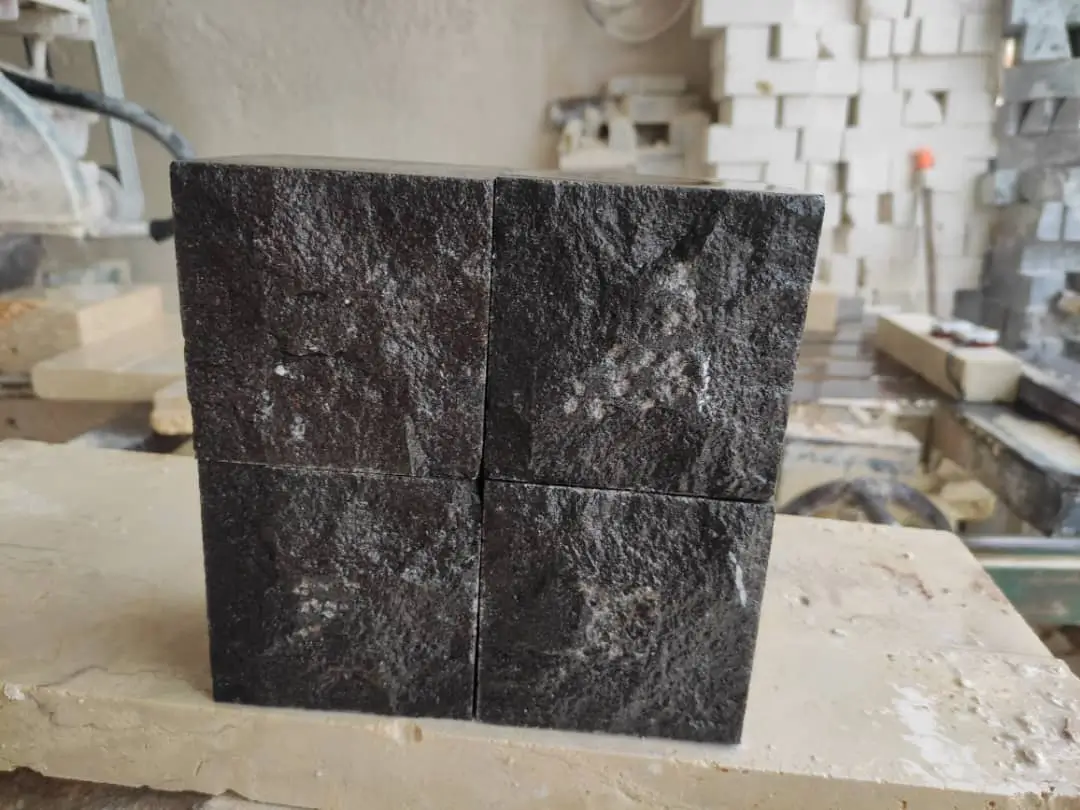
Kerb Block Base Preparation in Arizona Desert Conditions
Kerb block base preparation in Arizona desert conditions operates under a different set of variables than most published installation guides anticipate. The caliche hardpan layer that runs through much of the Sonoran Desert corridor creates a naturally firm sub-base, but it also creates drainage problems when it’s left intact without perforation. You’ll encounter it at varying depths — sometimes at 8 inches, sometimes at 24 inches — and how you handle it determines whether your base drains freely or traps water that cycles through wet-dry expansion under the kerb line.
In Phoenix, the combination of reactive silty soils and caliche means your base preparation sequence should include subgrade scarification to a minimum of 6 inches below finished grade, moisture conditioning to within 2% of optimum moisture content, and compaction to 95% of maximum dry density per ASTM D1557. That last number matters — many general contractors target 90%, which is acceptable for flatwork but underpowers a kerb installation that needs to resist lateral pressure from vehicle overhang and adjacent soil expansion.
- Scarify subgrade minimum 6 inches below finished grade — don’t compact over undisturbed native soil without testing density first
- Caliche layers should be perforated or broken at drainage intervals, not left intact beneath the aggregate base
- Target 95% compaction per ASTM D1557 Modified Proctor — not the 90% threshold common in flatwork specs
- Moisture condition native soils within 2% of optimum before compaction — dry desert soils compact poorly and rebound when moisture returns
- Class II road base is the standard aggregate choice across Arizona jurisdictions; decomposed granite is not a structural substitute for base preparation despite its common landscape use
- Allow minimum 24 hours after base compaction before setting kerb units — especially critical in summer months when surface temperatures accelerate surface drying while deeper layers remain plastic
For kerb block base preparation across Arizona landscapes, the bedding layer thickness makes a significant difference in long-term performance. A 1-inch compacted sand bedding layer beneath each kerb unit is the accepted industry standard, but in high-heat desert zones you should verify that your sand specification is concrete sand (ASTM C33), not mason sand, which lacks the particle gradation to resist vertical settlement under thermal cycling.
Seismic Considerations and Structural Load Requirements
Arizona sits within USGS seismic zone designations that require specific structural attention for hardscape installations — a detail that surprises contractors relocating from the Midwest or Southeast. The state’s fault systems, particularly those running through the Basin and Range province, create low-to-moderate seismic risk that affects how kerb installations need to handle differential movement. This doesn’t mean you’re engineering for earthquake resistance in the California sense, but it does mean your mortar joints, haunch details, and base continuity need to accommodate horizontal micro-movement that flat-line seismic assessments would overlook.
For mortar-set kerb applications — which most structural Arizona installations require in lieu of dry-set for load-bearing edges — the mortar specification should comply with ASTM C270 Type S, which provides the flexibility-to-strength ratio appropriate for seismically active regions. Type N mortar is softer and often specified for non-load-bearing applications, but in Arizona’s combination of thermal cycling and seismic micro-movement, Type S consistently outperforms it at the joint line.
- Specify ASTM C270 Type S mortar for all load-bearing kerb installations — Type N is insufficient for Arizona’s combined thermal and seismic loading
- Include expansion joints every 15 linear feet in mortar-set kerb runs — standard residential guidelines often say 20 feet, but Arizona’s 100°F+ temperature differential compresses that margin
- For kerb runs adjacent to retaining structures, the base must be structurally independent — connecting the kerb foundation to a retaining wall footing transfers seismic movement directly into the kerb line
- Haunch concrete (minimum 4-inch width, 6-inch depth on the back face) is required by many Arizona jurisdictions for road-adjacent kerb to resist lateral displacement
Specifying Natural Stone Kerbs for Arizona Structural Applications
Natural stone kerb blocks in Arizona need to meet specific density and absorption thresholds before they qualify for structural applications — this is where material selection intersects with code compliance in a concrete way. Arizona’s building departments increasingly reference ASTM C503 and ASTM C568 for marble and limestone classifications respectively, with compressive strength requirements of 7,500 PSI minimum for exterior kerb applications and water absorption not exceeding 7.5% by weight. Stone that passes visual inspection but fails absorption testing will deteriorate rapidly under the wet-dry cycling that monsoon season creates.
At Citadel Stone, we evaluate every natural stone kerb unit against absorption and density benchmarks before it ships from our warehouse, because specifying a material that looks right but fails structurally creates problems for both the installer and the project owner. The difference between a 5% absorption rate and an 8% rate isn’t visible at delivery — it shows up in year three when the kerb face starts spalling along bedding planes that absorbed monsoon moisture and then dried out under 115°F surface heat.
For setting stone kerbs across Arizona landscapes, the minimum recommended thickness is 4 inches for residential applications and 5 to 6 inches for any installation with vehicle exposure. The additional mass isn’t just structural — thicker units have meaningfully lower absorption-to-volume ratios, which translates directly to durability in Arizona’s aggressive moisture cycling environment.
For technical guidance on sourcing and specification, Arizona kerb block installation Citadel Stone provides detailed product and compliance information relevant to local building standards.
Step-by-Step: Installing Kerb Blocks in Arizona
The installation sequence for installing kerb blocks in Arizona follows a logical progression that mirrors the code requirements — subgrade first, base next, bedding third, unit placement fourth, and restraint system last. Skipping or shortcutting any step in that sequence to meet a schedule is the primary cause of kerb failures that show up within the first two monsoon seasons.
Your installation sequence should proceed as follows:
- Excavate to minimum code-required depth plus bedding layer thickness — in most Arizona jurisdictions this means 7 to 9 inches below finished grade for residential applications
- Scarify and moisture-condition the subgrade, then compact to 95% ASTM D1557
- Place and compact Class II road base in lifts not exceeding 4 inches — don’t dump full depth and compact once, as this creates density inconsistency through the base profile
- Screed a 1-inch concrete sand (ASTM C33) bedding layer — do not compact the bedding layer prior to unit placement
- Set kerb units in string-line alignment, maintaining consistent joint spacing of 3/8 inch minimum for mortar-set applications
- Apply ASTM C270 Type S mortar to head joints and bed joints — back-butter each unit and set with full contact, not spot mortar
- Install haunch concrete on the back face within 24 hours of kerb placement — do not allow mortar to cure before haunching, as the timing affects bond integration
- Allow minimum 72-hour cure before any vehicle or foot traffic loading — in summer months, mist the mortar joints twice daily to prevent rapid moisture loss that weakens the cure
The curing note about summer installations deserves extra attention. In Scottsdale, ambient temperatures between June and September can accelerate mortar surface drying to the point where the outer millimeters cure while the interior remains plastic. That differential creates internal stress fractures that won’t be visible for months. Shading the kerb run with temporary covers during the first 48 hours of cure is a straightforward mitigation that most experienced installers in the Phoenix metro use as standard practice.
Drainage, Slope, and Water Management Details
Drainage design for kerb installations is a structural requirement in Arizona, not a finishing detail. The state’s monsoon season delivers high-intensity rainfall events — often exceeding 1 inch per hour — that create hydrostatic pressure against kerb lines and base systems that weren’t designed to drain laterally. Your kerb specification needs to include positive drainage provisions both behind the kerb (at the haunch) and at the subgrade level.
Minimum finished grade slope away from structures is 2% per most Arizona jurisdiction amendments to the IRC — but for kerb lines managing landscape runoff, 3% is a more realistic working target to prevent ponding during peak monsoon events. You’ll also want to verify that your base aggregate has adequate permeability. Dense-graded Class II road base performs well structurally but drains slowly — in high-runoff zones, consider specifying a permeable base aggregate for the lower 2 to 3 inches of base depth to provide a drainage reservoir below the structural layer.
- Maintain minimum 2% positive grade away from all structures — 3% is preferred for kerb lines in monsoon-exposed areas
- Install drainage perforations in haunch concrete at 4-foot intervals for kerb runs exceeding 20 linear feet
- Subgrade drainage is separate from surface drainage — a well-sloped surface grade over a trapped subgrade will still fail
- Where the Arizona heat-rated kerb block laying guide for your project specifies dry-set installation, weep joints at 4-foot spacing are non-negotiable for base pressure relief
Joint Sealing and Surface Treatment for Long-Term Performance
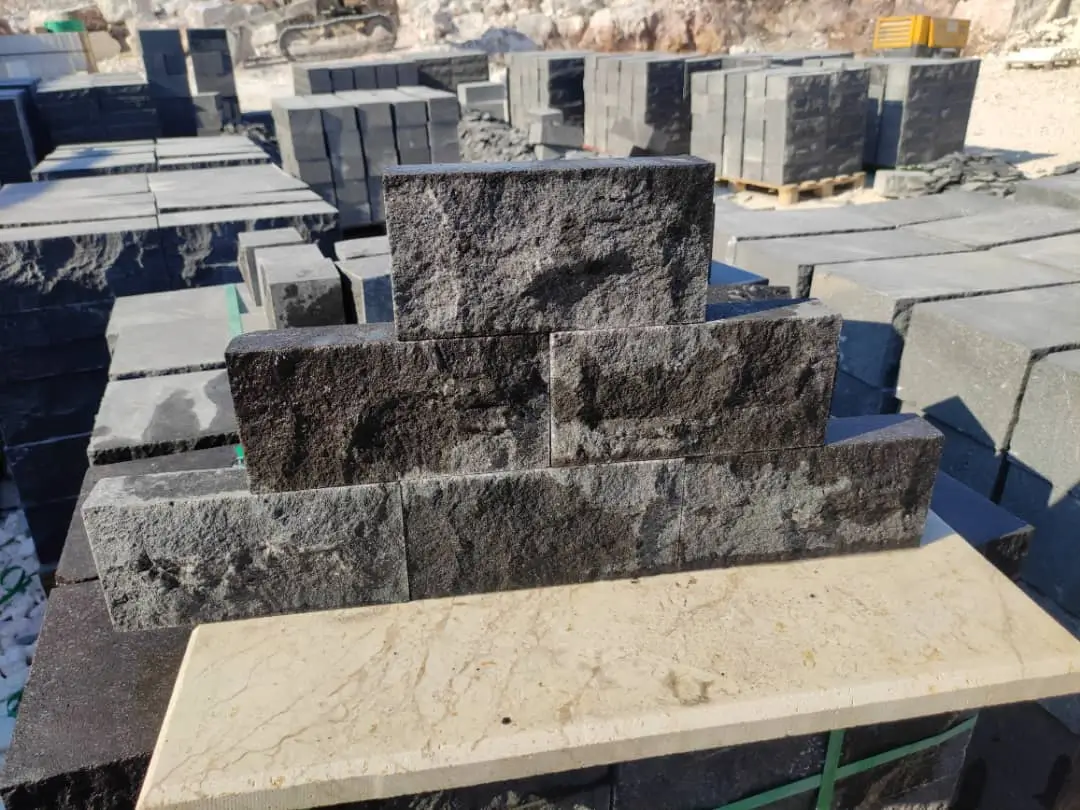
Natural stone kerb blocks in Arizona benefit significantly from penetrating sealer application, but the timing and product selection matter more than most installation guides acknowledge. Apply the first sealer coat after the mortar cure is complete — typically 28 days minimum for Type S mortar at ambient temperatures below 90°F, or up to 35 days in summer peak heat when the cure chemistry slows despite the heat at the surface.
Penetrating silane-siloxane sealers at 40% or higher active concentration are the appropriate product class for natural stone edging installation across Arizona projects. They penetrate the stone matrix and reduce water absorption without creating a surface film that traps moisture beneath. Film-forming sealers — the type that create a visible sheen — tend to delaminate under Arizona’s thermal cycling because the differential expansion between the sealer film and the stone surface exceeds the film’s elongation capacity within two to three years.
- Wait minimum 28–35 days after mortar installation before sealer application
- Use penetrating silane-siloxane sealers at 40%+ active concentration — not film-forming products
- Apply sealer in the morning when surface temperatures are below 85°F — hot surfaces cause the sealer to flash before penetrating
- Reapplication intervals in Arizona should be every 2 to 3 years for kerb blocks with vehicle overhang exposure and every 3 to 4 years for pedestrian-only applications
- Natural stone edging installation across Arizona projects that omit sealing typically show measurable surface recession within 5 to 7 years under monsoon and UV combined exposure
Our technical team at Citadel Stone advises specifying a pre-treatment sealer application at the warehouse level for projects with aggressive installation schedules — this extends the window between installation and first field application without compromising the 28-day mortar cure requirement, since the pre-treatment addresses the stone matrix rather than the joint system.
Common Mistakes That Compromise Arizona Kerb Installations
The failure patterns in Arizona kerb installations cluster around four consistent issues, and all of them are preventable at the specification stage. Understanding them in advance saves significant remediation cost and schedule disruption.
The most frequent failure mode is insufficient base compaction depth combined with reactive native soil. Contractors who excavate to the right depth but skip the moisture conditioning step end up with a base that performs well through the dry months and then settles significantly when monsoon moisture finally reaches the subgrade. The kerb line develops differential settlement — visible as a wavy profile when viewed from 30 feet — that requires full excavation and reset to correct properly.
- Skipping moisture conditioning before compaction — the single largest cause of post-monsoon settlement in Arizona kerb installations
- Using decomposed granite as base aggregate — it performs like a structural material when dry and like a sponge when wet, causing consistent base failure
- Under-sizing the haunch concrete — a 2-inch haunch that looks adequate in dry conditions provides less than 40% of the lateral restraint that a code-compliant 4-inch haunch delivers
- Installing in direct summer sun without temperature management — mortar mixed and placed when ambient and surface temperatures exceed 100°F requires admixtures and accelerated hydration management that most field crews don’t apply by default
- Omitting expansion joints in mortar-set runs — a 40-linear-foot kerb run without expansion joints will develop pattern cracking within the first full thermal cycle in Arizona’s climate
In Tucson, soil conditions shift notably compared to the Phoenix basin — the higher clay content in parts of the Tucson basin means moisture-induced swell coefficients are higher, and base preparation standards that work in Phoenix may need to be upgraded with lime stabilization or a geotextile separation layer to maintain long-term base integrity. That’s the kind of site-specific detail that makes local experience in Arizona indispensable when you’re managing kerb block specifications across multiple sites.
Expert Summary: Getting Kerb Block Specifications Right in Arizona
Installing kerb blocks in Arizona successfully comes down to three non-negotiable elements: code-compliant base preparation, structurally appropriate material specification, and a curing and sealing protocol that accounts for the extreme thermal and moisture cycling this climate delivers. The building code requirements in Arizona jurisdictions are more specific than many contractors expect — particularly around compaction standards, haunch dimensions, and mortar type — and the consequences of missing them compound over the first several monsoon seasons in ways that are expensive to fix.
Your specification should treat the structural requirements as the fixed frame and let material selection and aesthetics work within that frame. Natural stone kerb blocks that meet ASTM C568 density and absorption thresholds, set in ASTM C270 Type S mortar, over a properly moisture-conditioned and compacted Class II base, will consistently deliver 20-plus years of service life when sealed on schedule. The projects that fall short of that timeline almost always have a specification gap at the base or mortar stage, not a material quality problem. As your Arizona stone project develops, related hardscape decisions around natural block materials are worth exploring — How to Maintain Graphite Block Paving in Arizona’s Climate covers maintenance protocols for a complementary stone product in the same demanding regional environment. Verify your truck access routes and warehouse delivery timelines early in the project schedule — material lead times from our Arizona warehouse typically run 1 to 2 weeks for stocked kerb profiles, but high-demand summer months can compress that window. Builders in Tucson, Mesa, and Flagstaff source kerb blocks from Citadel Stone, selected for their consistent density and suitability for base preparation in high-heat desert conditions.