


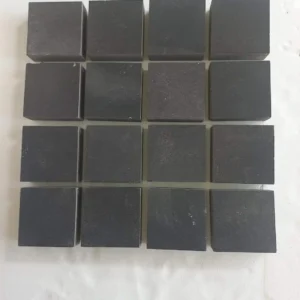
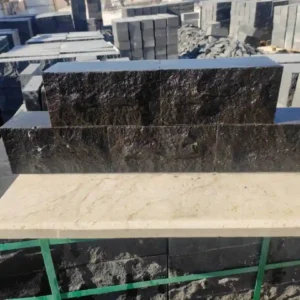
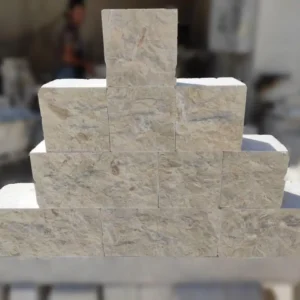
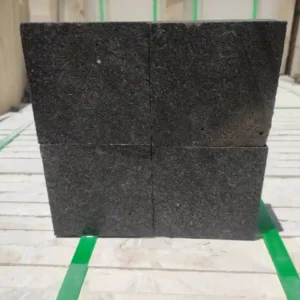













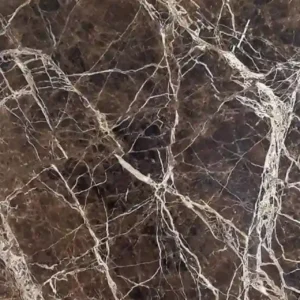
Base preparation for garden cobbles in Arizona isn’t a one-size calculation — it shifts dramatically depending on where your project sits on the elevation map. A patio cobbles installation in the Phoenix Valley at 1,100 feet behaves entirely differently from the same layout in Flagstaff at 7,000 feet, and getting that distinction wrong at the subgrade stage is the most common reason installations fail within a decade. The compaction requirements, drainage geometry, and joint sand specifications all respond to terrain variables that most generic installation guides simply don’t address with enough precision.
How Arizona’s Terrain Shapes Your Garden Cobble Specification
Arizona’s topographic range — from below-sea-level desert floors to alpine plateaus — creates fundamentally different drainage and structural demands for any hardscape installation. Garden cobbles in Arizona sit within an environment where runoff velocity, freeze-thaw cycling, and expansive soil behavior can all exist within the same state, sometimes within the same county. Your specification decisions need to account for which terrain zone you’re operating in before you settle on base depth, cobble thickness, or joint treatment.
The desert floor zones around Phoenix and Yuma carry a different challenge than most specifiers expect: caliche hardpan layers that sit between 18 and 36 inches below grade. Caliche is essentially calcium carbonate cemented soil — it’s nearly impermeable, which means drainage above it can create hydrostatic pressure against your cobble base during monsoon events. You’ll need to either break through to a permeable layer below or engineer a positive lateral drainage route. At Citadel Stone, we recommend verifying soil profiles before finalizing base aggregate depth for any Arizona cobble project — it’s the variable that changes everything downstream.
- Desert floor elevations (below 2,500 ft): focus on caliche drainage bypass and monsoon surge management
- Transitional zones (2,500–5,000 ft): mixed soils with higher clay content require deeper compacted aggregate and controlled joint spacing
- High-elevation zones (above 5,000 ft): freeze-thaw cycling demands minimum 6-inch compacted base and sealed joints to prevent heave
- Slope gradients above 2% require directional drainage channels integrated into the cobble layout, not applied as an afterthought
Tumbled Cobblestone Pavers: Terrain Performance Across Arizona Elevations
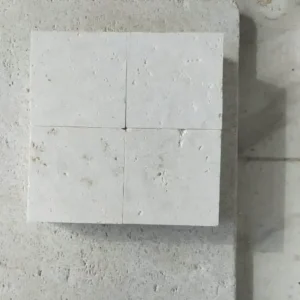
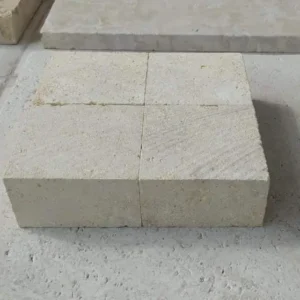
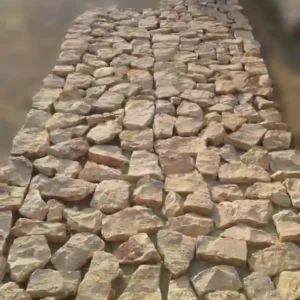
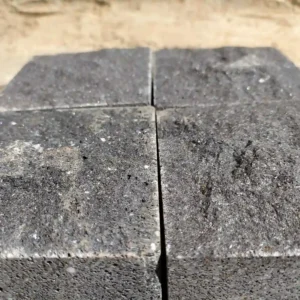
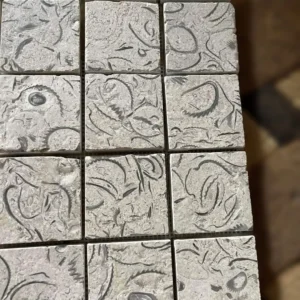
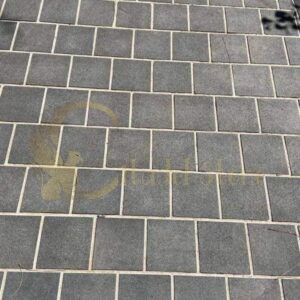
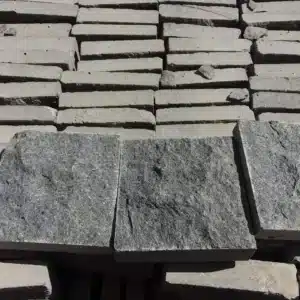
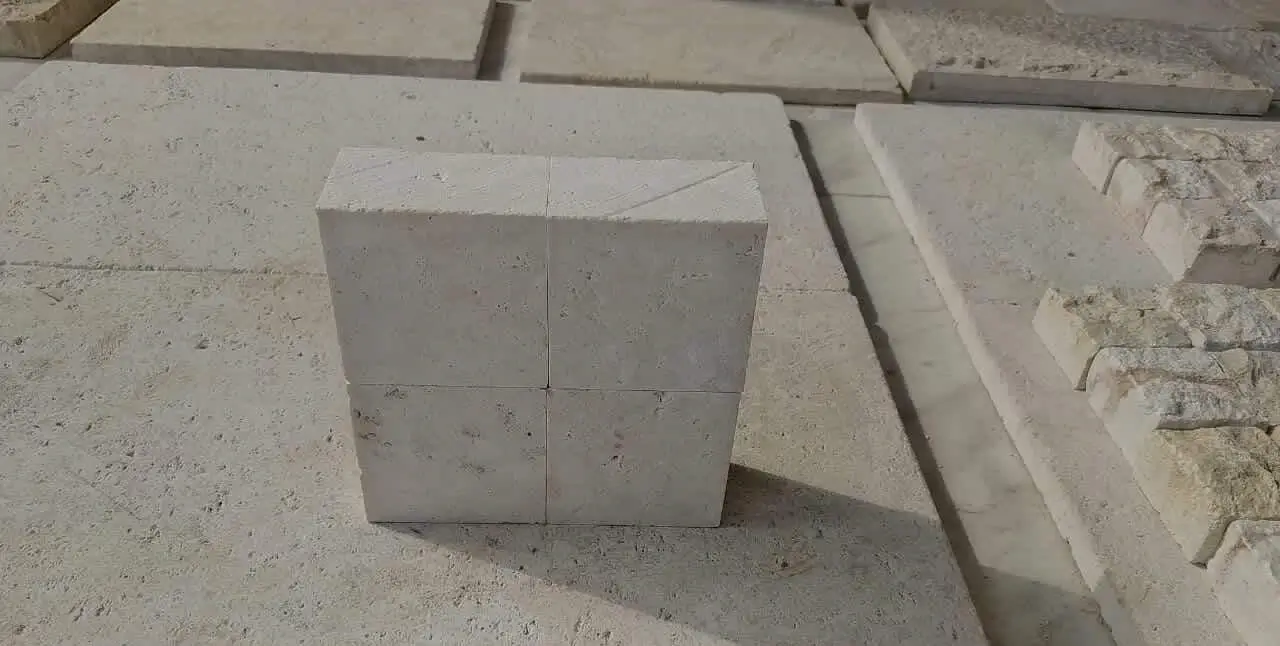
Tumbled cobblestone pavers in Arizona have earned their place as a go-to specification for sloped and irregular terrain precisely because the tumbling process produces a slightly irregular surface profile that manages sheet-flow runoff better than machine-cut formats. That naturally uneven face creates micro-drainage channels between units — enough to slow surface water velocity on gentle grades without requiring costly channel integration. On steeper gradients above 4%, you’ll still need engineered drainage, but tumbled formats buy you more tolerance on moderate slopes.
The rounded arrises on tumbled cobblestones also reduce the edge-chipping vulnerability that becomes a significant maintenance issue in high-elevation zones where thermal cycling puts stress on tight-fitting units. In Flagstaff, where freeze-thaw cycles can exceed 80 annually, that rounded edge profile is more than aesthetic — it’s a structural resilience feature that extends the service life of the installation by reducing the propagation of freeze-induced micro-fractures from unit edges inward.
- Tumbled profiles manage sheet-flow water on grades up to 4% without engineered channels
- Rounded arrises reduce freeze-thaw edge fracture propagation in high-elevation installs
- Irregular face profile provides slip resistance ratings that typically exceed 0.60 static coefficient of friction (ASTM C1028 equivalent testing)
- Tumbled cobblestone pavers in Arizona’s high desert zones should be specified at minimum 2.75-inch thickness to handle thermal mass and point load demands simultaneously
- Joint widths for tumbled formats should be held between 10mm and 15mm to allow for natural irregularity without creating tripping hazards
Citadel Stone stocks tumbled cobblestone pavers in Arizona-compatible thickness ranges, and you can request sample pieces with thickness callouts before committing to a full project quantity. Checking physical samples against your base depth calculation prevents the most common mismatch problem on site.
Polished Cobbles in Arizona: Where Terrain Demands Precision Base Work
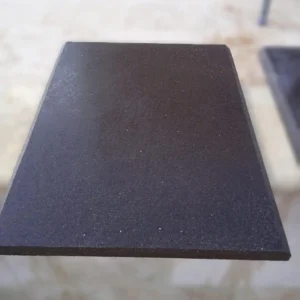
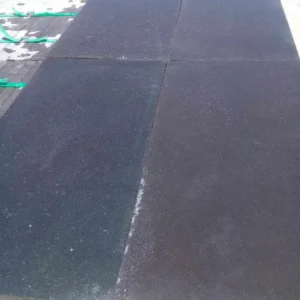
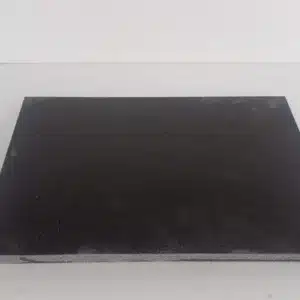
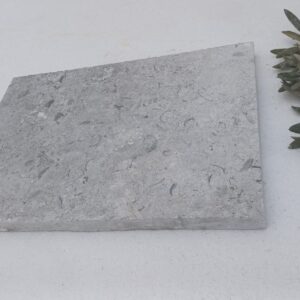
Polished cobbles in Arizona introduce a specific trade-off that doesn’t get enough attention in specs: the tighter surface tolerances required for polished finishes demand a more precisely graded bedding layer than tumbled or natural-split formats. Any subgrade movement — even 3–5mm of differential settlement — becomes visually apparent on a polished cobble field because the reflective surface amplifies unevenness that a textured finish would absorb. Your base preparation tolerance for polished cobbles needs to be tighter: ±6mm over a 3-meter straightedge versus the ±10mm acceptable for tumbled formats.
That tighter tolerance becomes genuinely challenging in Sedona’s red rock terrain, where the underlying Coconino sandstone creates highly variable bearing capacity across short distances. Projects in Sedona frequently require localized subgrade reinforcement — either lean concrete spots or geogrid with additional compacted aggregate — to achieve the consistent bearing surface that polished cobble specifications demand. Skipping that diagnostic step and assuming uniform bearing capacity is a field decision that costs significantly more to fix after installation than it does to address during base preparation.
- Polished cobbles in Arizona require bedding layer tolerance of ±6mm over 3m straightedge (tighter than tumbled formats)
- Reflective surface amplifies any differential settlement — base preparation quality determines visual outcome
- Polished formats work best on flat or gently sloped terrain (under 1.5% grade) — steeper slopes create runoff pooling against the smooth face
- Sealed polished cobbles in Arizona’s UV-intensive environment should use penetrating sealers rated for 50+ Langley daily UV exposure to prevent sealer degradation within 18 months
- Polished cobbles are particularly suited to enclosed courtyard applications where grade control is easier to maintain and drainage is engineered from the start
Patio Cobbles in Arizona: Drainage Design as a Primary Specification Driver
Drainage design for patio cobbles in Arizona should be your first calculation, not your last. Arizona’s monsoon season delivers concentrated rainfall events — often 1–3 inches in under an hour — that exceed the infiltration capacity of even permeable stone installations. Your patio cobble layout needs to direct that water to a planned endpoint before the first unit goes down, because retrofitting drainage after installation is expensive and disruptive.
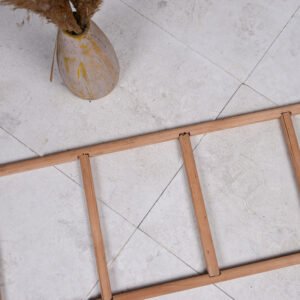
The critical number to work from is a minimum 1% cross-slope across the cobble field, directing flow toward a collection point or swale. On patios where architectural constraints prevent a clean 1% slope, you’ll need to integrate linear drainage channels within the cobble pattern — these can be designed to look intentional when specified correctly, using contrasting cobble colors or polished cobbles as a channel marker against tumbled field units. That dual-purpose design approach solves drainage and creates a visual feature simultaneously.
For projects where soil drainage is genuinely limited — common in the clay-heavy transitional zones between Phoenix and Prescott — a 4-inch perforated drain pipe wrapped in filter fabric at the base of the aggregate layer provides the relief valve your system needs. Patio cobbles in Arizona projects that skip this step in clay-dominant soils typically show joint displacement and surface creep within 3–5 monsoon seasons.
- Minimum 1% cross-slope across all patio cobble fields — 1.5% preferred for monsoon-zone installations
- Clay soils require perforated drain pipe at aggregate base, wrapped in geotextile filter fabric
- Permeable joint sand (polymeric varieties rated for high-flow infiltration) extends drainage capacity in moderate soil conditions
- Edge restraints must be set 50mm below finished cobble surface in drainage channels to prevent erosion undermining
- Patio cobbles in Arizona’s slope zones benefit from a stepped layout with level terraces rather than a continuous ramp, reducing both runoff velocity and point load concentration
Sourced from established quarry partners and inspected at the warehouse before dispatch, Citadel Stone’s patio cobbles are supplied with consistent thickness tolerances that simplify your bedding layer calibration — a practical detail that pays off when you’re trying to hold tight drainage grades across a large field.
Base Preparation Standards for Garden Cobbles Across Arizona Soil Types
The aggregate base depth for garden cobbles varies more in Arizona than in most other states precisely because of the terrain range. Field performance data supports a tiered approach rather than a single standard depth — here’s what the numbers actually look like across the major soil and elevation categories you’ll encounter:
- Sandy desert soils (low desert, below 2,000 ft): 4-inch compacted Class II aggregate base, with caliche layer penetration verified before pour
- Transitional clay soils (2,000–4,000 ft elevation band): 6-inch compacted aggregate minimum, geotextile separation fabric mandatory between native soil and aggregate
- High-elevation rocky soils (above 5,000 ft): 6-inch compacted aggregate with lean concrete stabilization layer where freeze-thaw cycling exceeds 40 cycles annually
- Slope installations above 3% grade: add 1–2 inches of aggregate depth per percentage point above 3%, up to a practical maximum of 10 inches for residential applications
- All bases require compaction to minimum 95% modified Proctor density (ASTM D1557) — verified by nuclear density gauge, not visual inspection
For projects in Scottsdale, the sandy loam soils in the lower elevation neighborhoods compact efficiently and provide good drainage, but they’re also susceptible to erosion at the edges of your cobble field if perimeter edge restraints aren’t embedded deep enough. A 12-inch embedment depth for edge restraints — rather than the 6-inch minimum you’ll see in generic specs — prevents the lateral migration that causes cobble field edge failures within a few years of installation.
Your bedding layer over the compacted aggregate should be a consistent 1-inch depth of coarse concrete sand — not polymeric sand at this stage, that comes at the jointing phase. Bedding sand compacts to approximately 7/8 inch under the cobble weight, giving you a reliable final surface elevation to work from. For Garden Cobbles from Citadel Stone, maintaining that 1-inch bedding sand standard ensures consistent surface performance and simplifies future maintenance access when individual units need replacement.
Material Selection: Matching Garden Cobbles to Arizona Site Conditions
Not every natural stone performs equally well as garden cobbles in Arizona — the combination of UV intensity, thermal cycling, and intermittent moisture from monsoon events creates a specific durability test that some materials pass more reliably than others. Your selection should be driven by three measurable characteristics: water absorption rate, compressive strength, and thermal expansion coefficient.
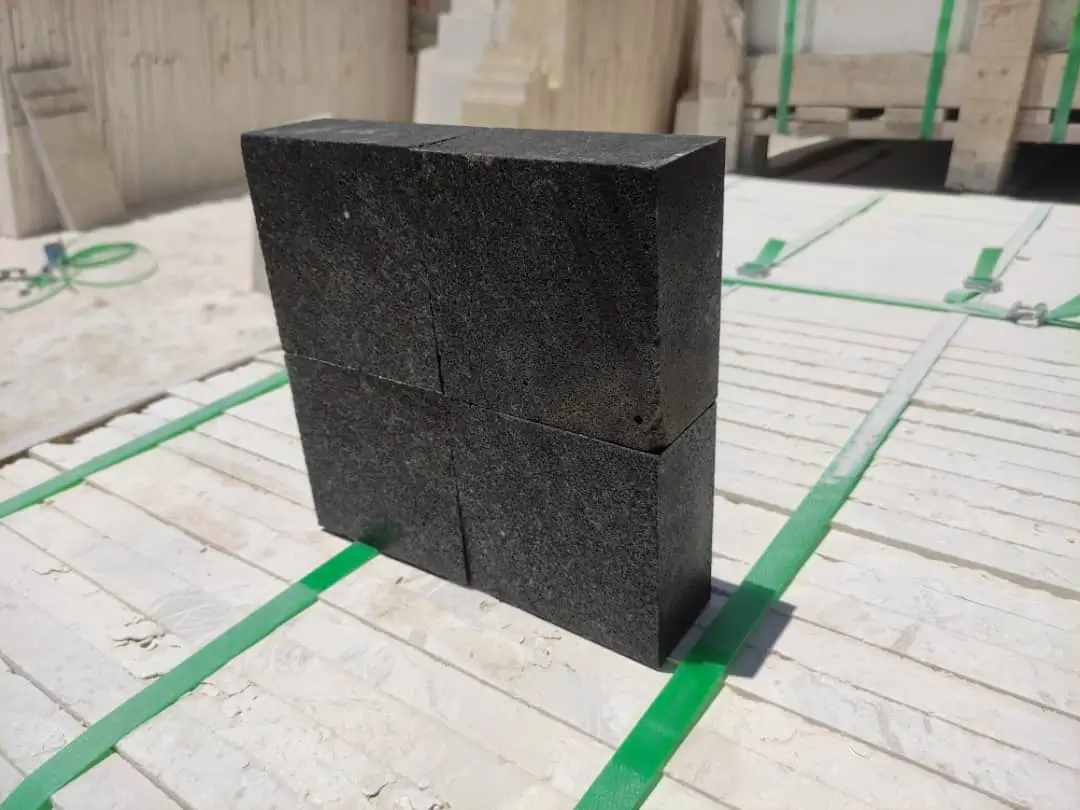
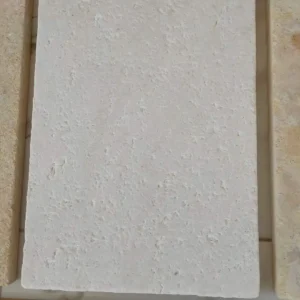
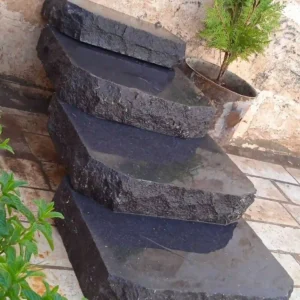
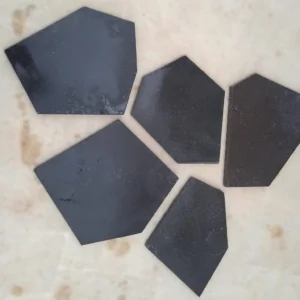
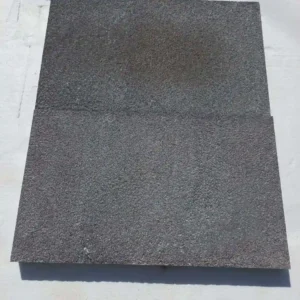
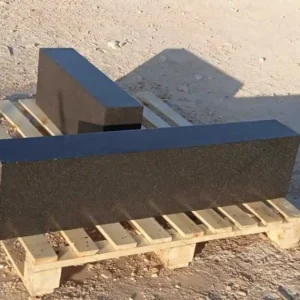
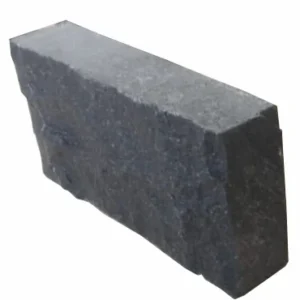
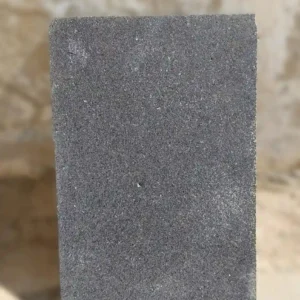
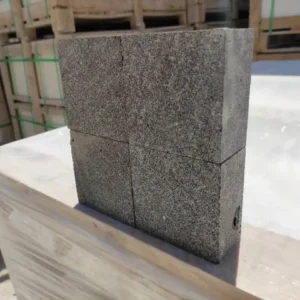
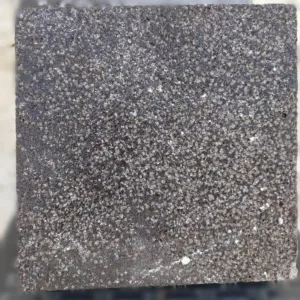
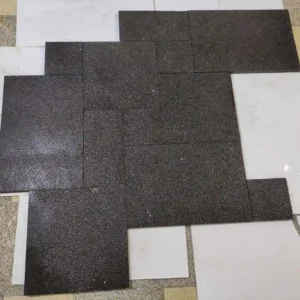
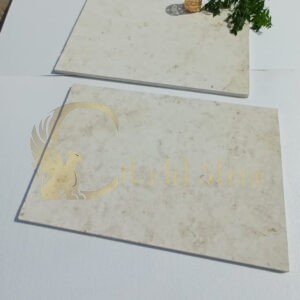
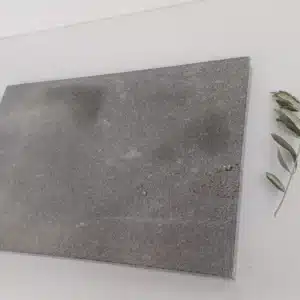
Basalt garden cobbles perform exceptionally well in Arizona’s high-UV zones because the dense, low-porosity structure (typical water absorption below 0.5% by weight, ASTM C97) resists the moisture ingress that causes spalling during monsoon-to-dry-season cycling. Granite cobbles offer similar absorption characteristics with the added benefit of higher compressive strength — typically 25,000–35,000 PSI — which handles the point loads from furniture, planters, and foot traffic on residential patios without surface marking. Limestone cobbles can work well in sheltered garden applications but require a penetrating sealer applied within 30 days of installation and renewed every 2–3 years to maintain acceptable water absorption rates in Arizona conditions.
- Target water absorption below 0.75% by weight (ASTM C97) for any cobble specification in Arizona’s monsoon zone
- Minimum compressive strength of 12,000 PSI (ASTM C170) for residential patio and garden path applications
- Thermal expansion coefficient below 5.0 × 10⁻⁶ per °F reduces joint stress accumulation during summer-to-winter temperature swings exceeding 100°F in high desert zones
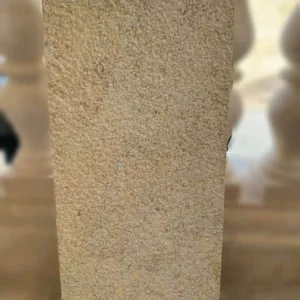
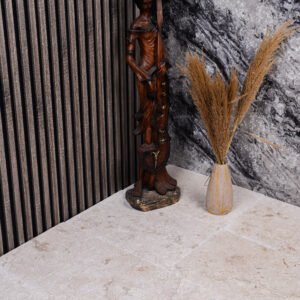
- Lighter cobble colors (cream, buff, white) reflect more solar radiation and reduce surface temperatures by 15–25°F compared to dark formats under equivalent exposure — a practical benefit for barefoot-friendly garden spaces
- Natural cobblestone pavers in Arizona sourced from dense igneous or metamorphic rock categories outperform sedimentary options in long-term surface integrity under UV cycling
Citadel Stone’s team reviews quarry batch documentation for absorption and compressive strength before warehouse acceptance — meaning you’re not relying solely on nominal product descriptions when you specify from their range. That sourcing verification step matters more than most buyers realize until they encounter an inconsistent batch mid-project.
Installation, Joint Treatment, and Long-Term Performance for Arizona Cobble Projects
Joint treatment for garden cobbles in Arizona requires a different approach than the standard polymeric sand application you’d use in a moderate climate. Arizona’s monsoon rainfall intensity — combined with the dry season desiccation that follows — creates expansion-contraction stress in joint material that causes standard polymeric sand to crack and erode faster than its rated service life. The field-proven solution is using a flexible polymeric joint compound rated for high UV exposure and a minimum 15% volume flexibility, rather than the rigid-set varieties that work well in stable-climate installations.
Joint width management is equally important. Maintain a minimum 8mm joint for tumbled cobblestone pavers to accommodate natural unit size variation without creating hairline joints that trap debris and compromise drainage. For polished cobbles in Arizona where tighter joints are aesthetically preferred, 6mm is the practical minimum — below that, thermal expansion can create contact stress between units during summer peak temperatures, which translates to surface edge chipping over time.
- Use flexible polymeric joint compound (not standard polymeric sand) rated for UV Zone 5 and minimum 15% volume flexibility
- Minimum joint width: 8mm for tumbled cobblestones, 6mm for polished cobbles
- Compact joint material in two passes — first pass fills to 60%, light misting, second pass fills to 90%, final compaction with plate vibrator
- Apply sealer within 72 hours of joint material cure for porous stone types — do not delay in Arizona’s desiccating air conditions
- Re-inspect joint integrity after first monsoon season and after first freeze-thaw cycle in high-elevation installations — early intervention prevents progressive joint failure
- Maintain expansion joints at perimeter and at 12-foot intervals within large cobble fields — narrower spacing than the 15–20 foot intervals common in cooler climates
Truck access and delivery scheduling should be coordinated to avoid installing cobbles during peak summer heat on exposed sites — bedding sand moisture evaporates faster than setting allows in 110°F conditions, requiring you to mist the bed immediately before each unit placement. That field adjustment adds time to the installation schedule, so build it into your project timeline rather than discovering it on day one. A second truck delivery timed to arrive after initial base compaction is verified can also prevent material sitting on-site in extreme heat before it’s needed.
Garden Cobbles in Arizona — Get Trade Pricing from Citadel Stone
Citadel Stone supplies garden cobbles in Arizona in a range of formats designed to suit the terrain-specific specifications covered throughout this article. Available options include tumbled cobblestone pavers in 3.5-inch and 4.5-inch nominal diameters, polished cobbles in 2.75-inch and 3.5-inch formats, and natural split garden cobbles in mixed-size pallets suitable for irregular path and border applications. Thickness specifications are available on request, along with water absorption and compressive strength data sheets for each stone type.
Request physical samples with thickness callouts from Citadel Stone before finalizing your specification — a practical step for projects where base depth calculations depend on confirmed cobble thickness. Trade and wholesale enquiries are handled directly through the Citadel Stone team, with project-volume pricing available for orders above 50 square meters. Warehouse stock levels across Arizona reduce typical lead times to 1–2 weeks for standard formats, though non-standard sizes or custom finishes should be planned with a 4–6 week lead time. Truck delivery is available statewide, and your project’s site access requirements — tight residential access or commercial staging areas — can be discussed during the order consultation to ensure the right delivery vehicle is dispatched. A second warehouse location supports faster fulfilment for regional projects across the state. Contact Citadel Stone to request a trade quote, confirm current stock availability, or schedule a specification consultation for your Arizona cobble project. For Arizona property owners and contractors exploring complementary natural stone products, Natural Cobblestone Pavers in Arizona covers related specification details and material options that pair naturally with garden cobble installations across the state’s terrain zones. Architects and builders in Flagstaff, Sedona, and Yuma specify Citadel Stone Garden Cobbles for Arizona outdoor installations.