
Water First: Why Drainage Defines Cobble Performance
Garden cobbles maintenance Arizona yards demand starts well before any sealing schedule or joint sand replacement — it starts with how your installation handles water. The monsoon season delivers 2.5 to 3 inches of rainfall in concentrated bursts across much of the state, and that kind of hydraulic loading on a flat or poorly graded cobble field will displace joint material, undermine base layers, and create surface settlement that no amount of routine upkeep can correct. Getting the drainage geometry right from the beginning is the single biggest factor in how long your cobbles actually perform.
The interaction between Arizona’s dual rainfall personality — long dry stretches followed by intense monsoon pulses — creates a specific maintenance challenge that flat installations handle poorly. Your base compaction can settle during dry months, then face saturation stress within hours of a storm cell arriving. Understanding that dynamic shapes every maintenance decision you’ll make over the life of the installation.
Monsoon Mechanics: What Storm Water Does to Cobble Joints
Arizona’s North American Monsoon season — roughly mid-June through September — doesn’t behave like steady Eastern rainfall. It arrives fast, drops hard, and retreats. Rainfall intensity in the Tucson basin regularly exceeds 1 inch per hour during peak cells, and the Phoenix metro area sees similar events. That intensity matters because cobble joints under hydraulic pressure don’t just lose sand — they lose it directionally, creating channels that concentrate future flow. Caring for garden cobbles in Arizona means accounting for this directional erosion pattern rather than treating joint loss as uniform across the field.
Here’s what that means for your maintenance schedule: after every significant monsoon event, you should inspect joint fill depth rather than waiting for your annual or biennial service cycle. A joint that’s dropped from 85% fill to 60% fill won’t look alarming, but it’s already allowing lateral movement at the base course.
- Inspect joint depth after any rainfall event exceeding 0.75 inches in a single hour
- Look for surface pooling patterns — they reveal drainage gradient failures before visible settling appears
- Check perimeter edges first — water exits the field at boundaries and carries joint material with it
- Areas adjacent to downspouts require more frequent joint sand replenishment than field center positions
- Document water flow patterns by photographing the surface during or immediately after a storm event
Base Preparation and Drainage Infrastructure
The base layer beneath your garden cobbles in Arizona functions as both structural support and drainage management. A properly designed base uses a minimum 4-inch compacted crushed aggregate layer — but in areas with heavy clay content or high monsoon exposure, 6 inches is the defensible minimum. The critical variable most installations get wrong is the cross-slope gradient: 1% minimum, 2% preferred, directing water away from structures and toward planned collection points.
In Sedona, the red rock clay soils present a specific challenge — they expand significantly when wet and contract sharply during dry periods, which destabilizes any base layer that doesn’t account for that movement cycle. Your aggregate base in clay-heavy zones needs to extend at least 18 inches in depth to truly isolate the cobble field from soil heave at the surface level.
- Use angular crushed aggregate (not rounded gravel) for better interlock and drainage without lateral migration
- Install a geotextile fabric between native soil and aggregate base to prevent fines migration upward
- Slope the base layer itself — not just the finished surface — to prevent subsurface water pooling
- Include a perforated drain pipe at the low end of large cobble fields (over 400 square feet) to handle peak monsoon flow
- Compact base material in 2-inch lifts rather than all at once — this produces measurable density improvement
Joint Sand Maintenance: The Annual Cycle
Stone cobble upkeep in the AZ desert climate means treating joint sand as a consumable, not a permanent component. Plan to replenish joint material every 12 to 18 months in high-rainfall zones and every 24 months in Yuma-area installations where monsoon intensity is lower and rainfall totals run below 3 inches annually. Yuma‘s extreme aridity actually presents the opposite problem from Sedona — you’re managing wind erosion of joint fill rather than hydraulic loss, which means a polymer-stabilized joint sand performs better there than standard silica fill.
The joint fill target is 90 to 95% capacity — measured from the top of the aggregate base to just below the wearing surface of the cobble. Under-filled joints allow cobbles to rock under foot traffic, which accelerates edge chipping on natural stone. Over-filled joints create a reservoir for organic debris that promotes biological growth in the humid months following monsoon activity.
At Citadel Stone, we recommend sweeping polymer-stabilized joint sand across the surface dry, compacting lightly with a plate compactor, then misting — not flooding — the surface to activate the polymer binder. The flooding approach washes the activating polymer down below the effective depth before it sets.
Sealing Protocols for Arizona Water and UV Exposure
Natural cobblestone care across Arizona requires a sealing strategy that addresses two simultaneous stressors: UV degradation from approximately 300 clear days per year, and moisture intrusion from concentrated monsoon rainfall. These two demands pull in slightly different directions when it comes to sealer selection. UV-protective sealers tend to use acrylic or urethane carriers that resist surface oxidation but can trap moisture if applied over stone that hasn’t fully dried after a rain event.
The timing rule that field performance consistently validates: never seal within 72 hours of rainfall, and test surface moisture with a plastic sheet test before applying any penetrating or film-forming sealer. Lay a 12-inch square of plastic sheeting flat on the cobble surface, tape the edges, and leave it for 16 hours. Condensation on the underside means residual moisture is still present — sealing over that condition traps moisture and causes spalling in porous cobble material.
- Apply penetrating sealers in low-heat morning conditions — surface temperatures above 90°F cause solvents to flash before full penetration occurs
- Re-seal every 2 to 3 years in the Phoenix metro area; every 3 to 4 years in higher-elevation zones with less UV intensity
- Avoid film-forming acrylic sealers on cobbles with surface texture — they trap debris in texture valleys and create a maintenance burden
- Silane-siloxane penetrating sealers offer the best moisture resistance without altering surface appearance on natural stone
- Apply two light coats rather than one heavy coat — the second coat penetrates where the first coat left surface irregularities
Flagstaff Elevation: Freeze-Thaw Considerations
The water management story in northern Arizona carries an additional dimension that Sonoran Desert maintenance guides typically miss. Flagstaff sits at 6,900 feet elevation and experiences genuine freeze-thaw cycling — averaging over 100 frost days per year. In that environment, water that infiltrates cobble joints or migrates beneath the base layer doesn’t just drain away; it freezes, expands, and physically displaces stone from position. The standard Arizona monsoon garden cobble maintenance model doesn’t translate directly to Flagstaff installations — you need a northern Arizona specification that accounts for freeze-thaw stress on top of monsoon hydraulic loading.
Your sealing schedule at Flagstaff elevations should prioritize early-fall application before the first frost cycle. Penetrating sealer applied in September creates a hydrophobic barrier that limits water infiltration during freeze events. Joint sand selection should also shift to a polymer-stabilized product with a lower freeze-thaw permeability rating than standard silica fill.
Biological Growth and Post-Monsoon Cleaning
The post-monsoon maintenance phase for natural cobblestone care across Arizona includes a biological growth window most homeowners underestimate. Following monsoon activity, surface temperatures moderate and residual moisture creates conditions favorable for algae, moss, and lichen establishment — particularly in shaded areas or on north-facing surfaces that don’t benefit from Arizona’s intense solar drying effect.
Your post-monsoon cleaning protocol should include a dilute sodium hypochlorite rinse (3% solution) applied to any biological growth within 2 to 4 weeks of the season ending. Allowing lichen in particular to establish through a full winter cycle makes removal significantly more difficult — lichen secretes oxalic acid that etches stone surfaces, creating micro-porosity that accelerates future biological colonization. Don’t let the cleaning task drift into winter. You can reach out to the Citadel Stone cobbles for Arizona yards resource for guidance on appropriate cleaning chemistry for specific stone types before applying any chemical treatment.
- Use pH-neutral stone cleaners for routine post-storm cleaning — avoid muriatic acid on cobbles unless professionally supervised
- Pressure washing is acceptable at 1,200 PSI maximum — higher pressure drives water below the surface and can displace joint fill
- Apply biological growth inhibitor treatments in late September before ground temperatures drop below 50°F, which reduces treatment effectiveness
- Shaded areas require cleaning inspection twice as frequently as sun-exposed surfaces
Drainage Retrofits for Existing Installations
Garden cobbles maintenance for Arizona yards sometimes means correcting drainage problems that were built into an original installation. The good news is that cobbles are more forgiving of retrofit drainage work than mortared stone or poured concrete — you can extract individual units, regrade the base, and reset them without visible evidence of the repair when the work is done carefully.
The diagnostic step is a simple elevation survey after a rainfall event. Mark any area where water stands for more than 20 minutes after rain stops — those zones indicate either base settlement or insufficient surface gradient. A hand level and 6-foot straight edge will identify low spots faster than any visual inspection. Stone cobble upkeep in the AZ desert climate becomes dramatically more manageable once surface drainage follows your intended path rather than finding its own.
- Retrofit French drain channels can be cut between cobble rows without major disruption to the field layout
- Channel drains installed at the low end of a cobble field handle peak monsoon flow without requiring full base reconstruction
- Surface regrading through selective base layer adjustment under individual cobbles corrects minor gradient issues cost-effectively
- Citadel Stone’s technical team can assist with drainage assessment for installations experiencing repeated post-monsoon displacement
Material Selection: Dense Cobbles Reduce Maintenance Frequency
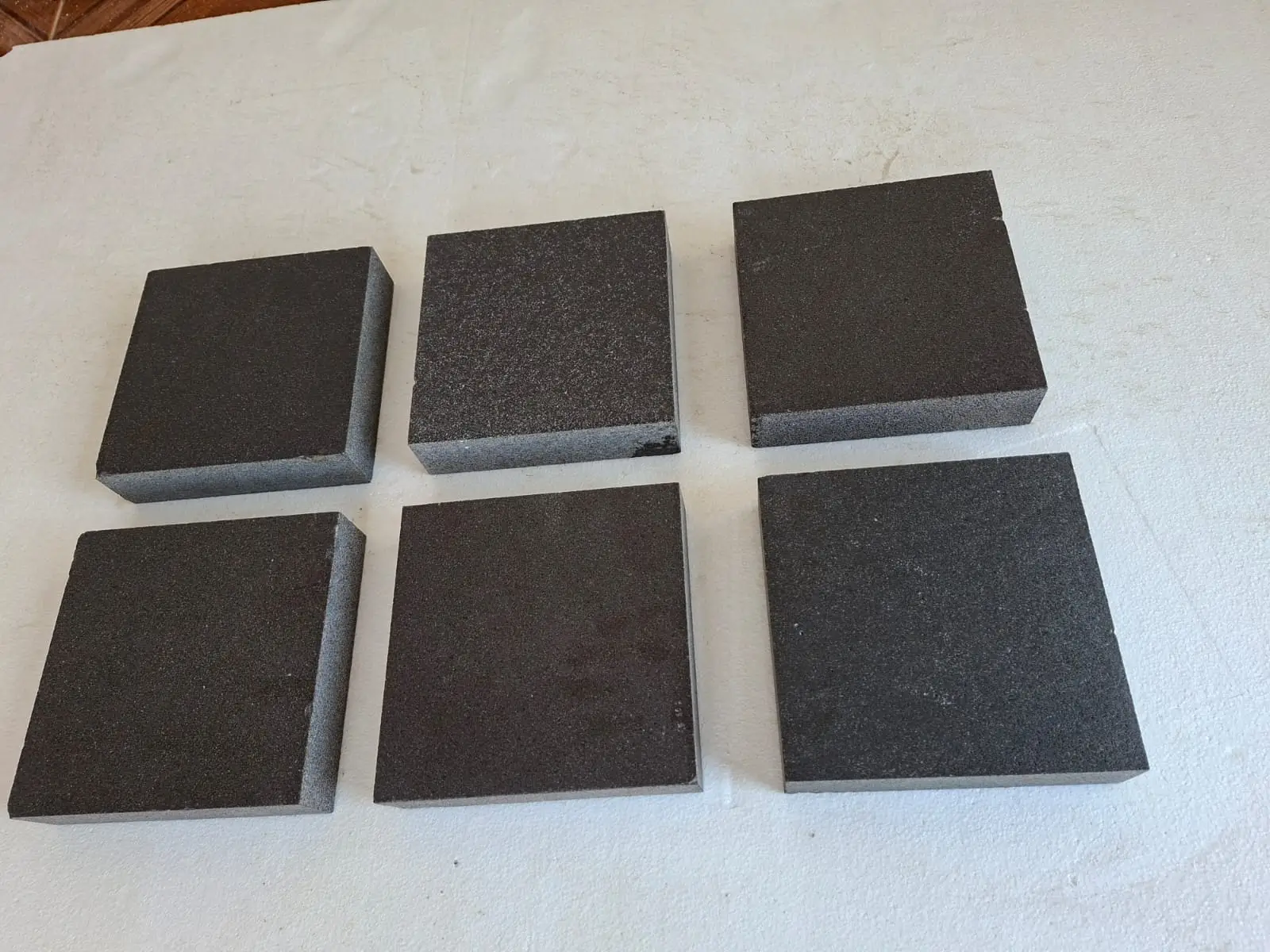
The maintenance burden on any cobble installation is directly tied to the material’s absorption rate. Natural cobbles with an absorption rate below 0.75% — typical of dense basalt and harder limestone varieties — require less frequent sealing and resist biological colonization more effectively than more porous options. Higher-porosity materials absorb monsoon moisture quickly and hold it longer, extending the biological growth window and increasing sealer degradation rates. Caring for garden cobbles in Arizona starts with selecting dense material that resists the absorption cycles monsoon seasons impose.
Cobble thickness also affects maintenance frequency in ways that aren’t always obvious from product specifications. Thicker cobbles (2.5 to 3 inches nominal) provide greater thermal mass, which moderates the surface temperature swings that stress both sealer films and joint material. The daily temperature differential in Arizona hardscape — from pre-dawn lows to midday peaks — creates a thermal cycling stress on the joint-cobble interface that thinner material handles less effectively over time. Warehouse stock at Citadel Stone includes dense cobble options sized specifically for Arizona hardscape applications, and verifying availability before committing to project timelines prevents scheduling delays during peak season demand.
Parting Guidance
Effective garden cobbles maintenance for Arizona yards comes down to treating water management as the central organizing principle of your care schedule rather than a seasonal afterthought. Your cleaning, sealing, and joint fill protocols all perform better when the drainage infrastructure beneath and around the cobble field is working correctly. Address gradient problems before they become displacement problems, and your maintenance intervals will stretch predictably rather than compressing after every storm cycle.
As you refine your approach to cobble care, selection decisions upstream of installation have a direct impact on how much maintenance your site ultimately requires. How to Choose Garden Cobbles in Arizona walks through the density, absorption, and sizing criteria that determine long-term performance in Arizona’s specific climate conditions — worth reviewing before specifying materials for any new work. Builders in Tucson, Chandler, and Scottsdale specify Citadel Stone garden cobbles for their dense mineral composition, which generally reduces joint displacement caused by caliche soil expansion beneath Arizona hardscape surfaces.