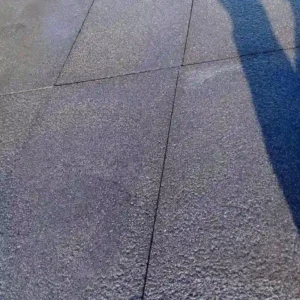
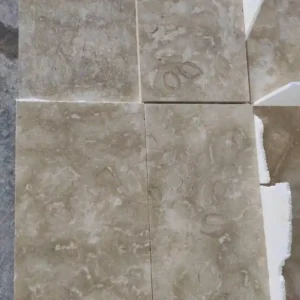

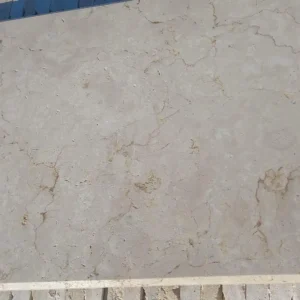
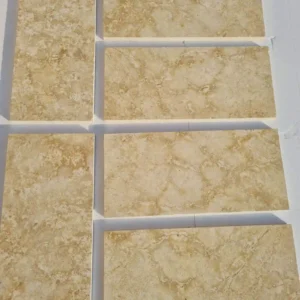
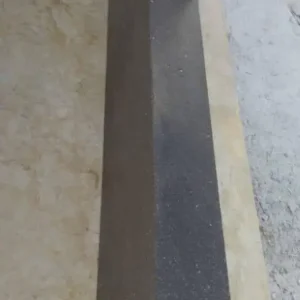
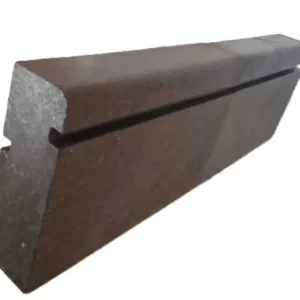
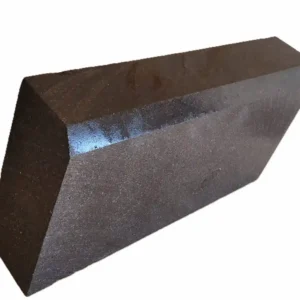
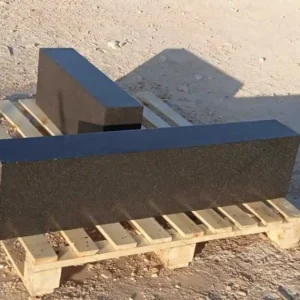

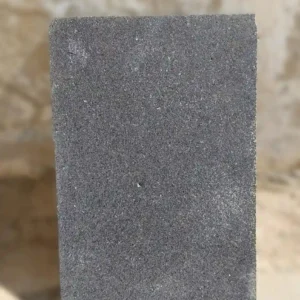
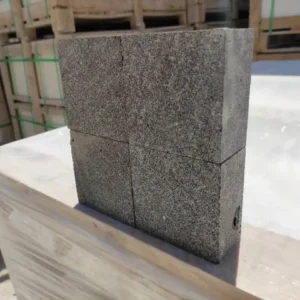
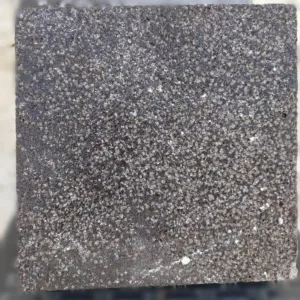
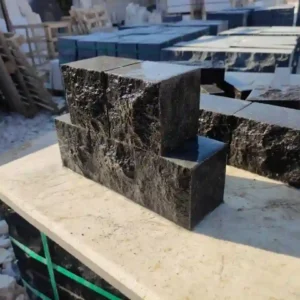
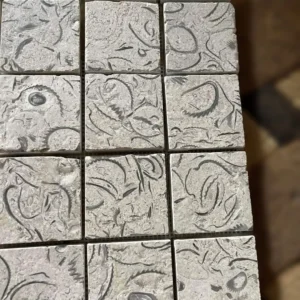
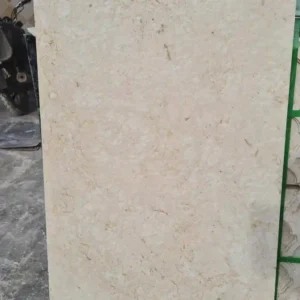
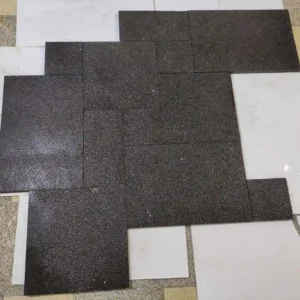
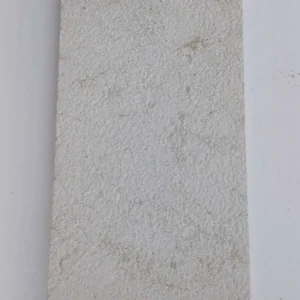

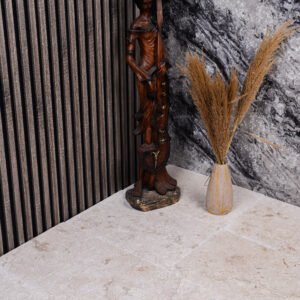
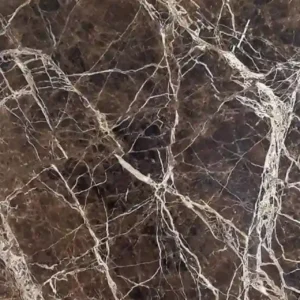
Drainage geometry — not surface hardness — is the specification variable that determines whether black limestone cobbles in Arizona succeed or fail at the five-year mark. The interlocking profile of cobble setts creates a jointing network that either channels water away efficiently or holds it against the sub-base, and in Arizona’s monsoon-driven rainfall patterns, that distinction directly affects long-term structural integrity. Understanding how cobble geometry interacts with your site’s drainage plan before you finalize any spec is the difference between a surface that holds up through decade after decade and one that starts rocking and settling after the third wet season.
How Arizona Rainfall Patterns Shape Cobble Selection
Arizona’s hydrology is genuinely unusual, and it catches designers off guard more often than it should. The state doesn’t receive consistent rainfall — it receives intense, short-duration events concentrated in the July-through-September monsoon window, with a secondary pattern of winter precipitation in the northern elevations. In Phoenix, a single monsoon cell can deposit two inches of rain in under 45 minutes on a surface that has been bone-dry for weeks. That cycle of extreme saturation followed by rapid evaporation is far more structurally demanding than the gradual, sustained rainfall that most standard paving specifications are written around.
Black limestone cobble setts in Arizona need to be evaluated through this lens. A material that drains adequately in a mid-Atlantic climate may behave very differently when it’s absorbing a flash-flood-intensity event on an unprepared base. The key performance factor isn’t absorption rate in isolation — it’s the combination of surface runoff velocity, inter-joint drainage capacity, and sub-base permeability working as a coordinated system.
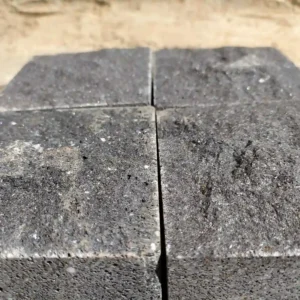
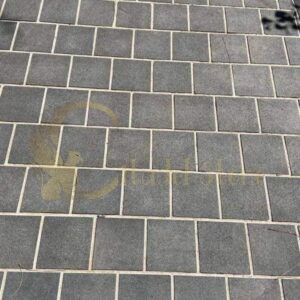
- Cobble sett profiles create natural drainage channels at every joint line, outperforming flush-laid slabs in rapid-onset rainfall events
- Black limestone’s dense crystalline matrix limits water absorption to roughly 0.4–0.8% by mass, reducing hydrostatic uplift pressure on the base
- The irregular surface topography of natural cobbles promotes sheet flow rather than ponding, which is critical in high-intensity rainfall zones
- Joint sand stabilization becomes essential — unstabilized joints lose material in high-velocity surface runoff, destabilizing the entire field
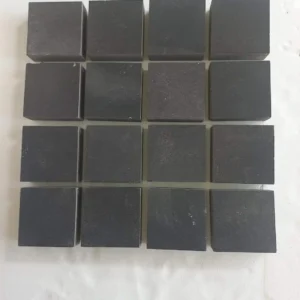
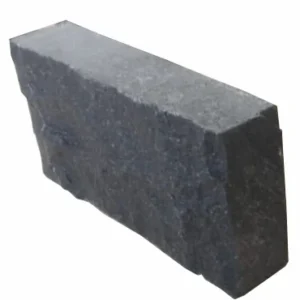
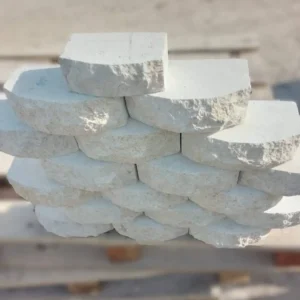
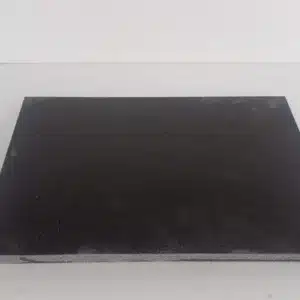
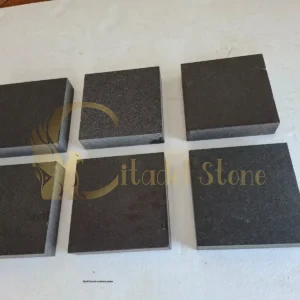
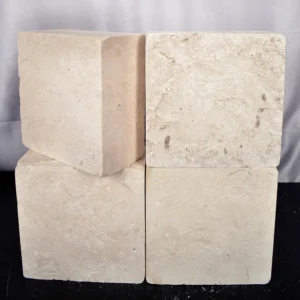
Citadel Stone stocks black limestone setts in Arizona in standard formats including 100×100mm, 200×100mm, and mixed-size cobble packs, with each batch inspected at the warehouse for dimensional consistency before dispatch.
Material Properties: Black Limestone Performance Profile
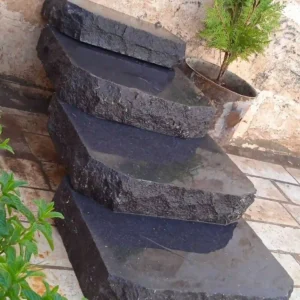
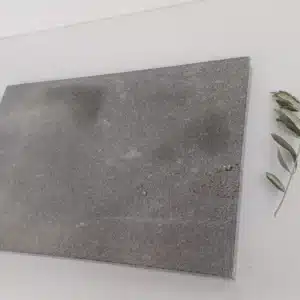
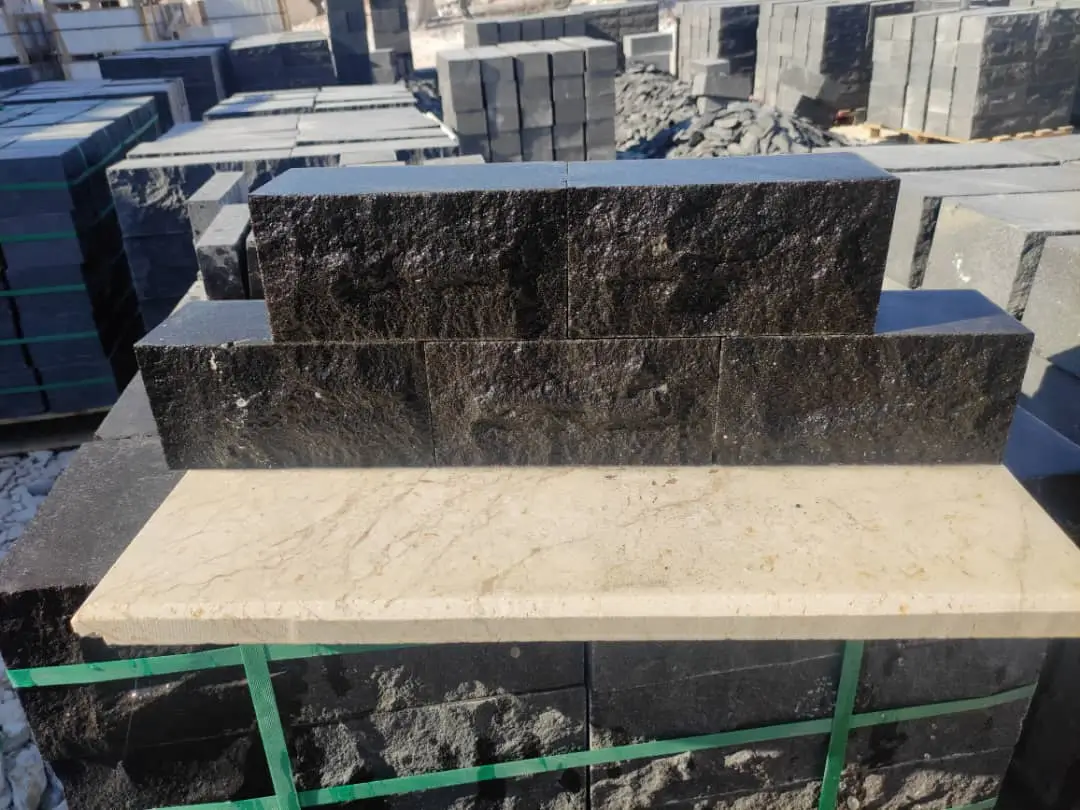
The term “black limestone” covers a meaningful range of material, so it’s worth being precise about what you’re actually specifying. The material that performs well in Arizona’s conditions is a dense, low-porosity calcium carbonate stone with a distinctive dark grey to near-black coloration derived from organic carbon content distributed through the matrix. Compressive strength typically runs between 10,000 and 15,000 PSI depending on quarry source and formation depth — comfortably above the thresholds required for residential driveway and commercial pedestrian applications.
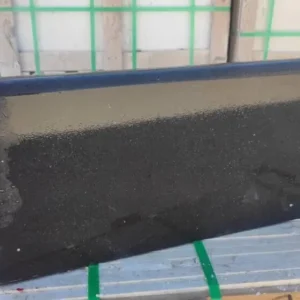
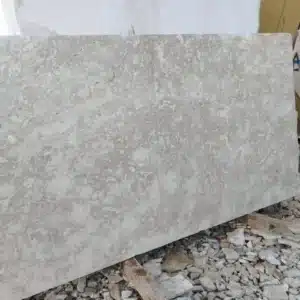
Blue limestone setts in Arizona refer to the same material family — the “blue” descriptor reflects the surface tone visible in freshly cut or recently rained-upon stone, while “black” describes the dried appearance. You’ll encounter both terms in supplier catalogs and they’re often the same product. What matters specificationally is the density and absorption classification, not the color descriptor used in the sales literature.
- Water absorption below 1% (ASTM C97) classifies the material as low-absorption, making it appropriate for freeze-thaw exposure in Flagstaff-elevation projects
- Thermal expansion coefficient of approximately 4.5–5.5 × 10⁻⁶ per °F requires expansion joint planning at 12–15 foot intervals in full-sun installations
- Flexural strength above 2,800 PSI provides adequate resistance to point loading from vehicle traffic when set on a correctly prepared base
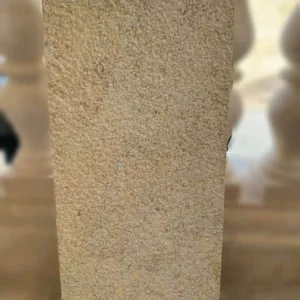
- Surface hardness of 3–4 on the Mohs scale means black limestone cobble setts in Arizona resist the abrasion of grit-laden surface runoff better than softer sandstone alternatives
- The dark coloration absorbs more radiant heat than light-colored stone — relevant for thermal mass calculation in shaded versus unshaded settings
For projects requiring non-standard formats or split-face cobble profiles, Citadel Stone’s technical team can advise on lead times and minimum order quantities from current quarry allocation.
Sub-Base Design for Arizona Drainage Conditions
The sub-base specification for black limestone cobbles in Arizona diverges meaningfully from what you’d use in a lower-rainfall, more stable climate. Two factors drive this: the flash-flood intensity of monsoon events and the expansive soil profiles common across central and southern Arizona. Getting both right simultaneously requires a layered approach rather than a single-depth specification.
In Tucson, expansive clay soils are widespread, and hydrostatic pressure during monsoon saturation creates uplift forces that can displace an improperly anchored cobble field within a single season. The standard recommendation of a 4-inch compacted aggregate base simply isn’t sufficient in these conditions — you’re looking at a minimum of 6 inches of compacted Class II base aggregate over a properly graded and compacted subgrade, with a geotextile separation layer when clay content exceeds 30%.
- Grade the subgrade to a minimum 1.5% slope toward designated drainage outlets before any base material is placed
- Use angular crushed aggregate (¾-inch minus) rather than rounded gravel — angular material interlock resists lateral movement under saturation
- Install a 1-inch bedding layer of coarse sand or grit above the compacted base — avoid fine sand, which migrates into the aggregate under hydraulic pressure
- Perforated drain tile at the perimeter of the cobble field is worth the additional cost on any installation larger than 200 square feet
- Black limestone edging setts should be set in a concrete haunch at perimeter runs to prevent lateral creep during soil movement events
The bedding layer depth tolerance matters more than most installers acknowledge. Keeping bedding depth between 1 inch and 1.25 inches — not the 1.5 inches some generic guides suggest — reduces settlement differential when the base cycles through wet and dry phases.
Format and Sizing: Black Limestone Setts for Arizona Projects
Format selection directly affects both drainage performance and installation efficiency, and the two most common sizes each have a distinct role. Black limestone setts 100×100mm in Arizona are the format of choice for tight-radius curves, border patterns, and areas where precise pedestrian grip matters — the smaller unit size creates more joint lines per square foot, which increases aggregate drainage capacity proportionally. That’s genuinely useful in areas where concentrated runoff from an adjacent surface discharges onto the cobble field.
Black limestone setts 200×100mm in Arizona work better for larger field areas, driveways, and commercial pedestrian plazas. The rectangular format supports herringbone and running bond patterns that distribute load more efficiently across the jointing network, and fewer joints means faster installation labor on large-scale projects. The trade-off is reduced drainage joint density, which you can compensate for with a coarser bedding material and closer-spaced drain tile.
- 100×100mm cobble setts: recommended for pedestrian paths, garden edging, pool surrounds, and decorative border work
- 200×100mm setts: appropriate for driveways, commercial walkways, and large patio fields requiring vehicular-rated performance
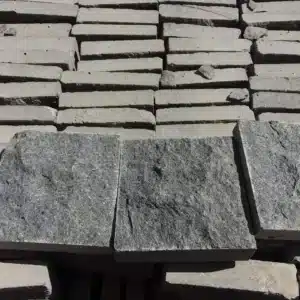
- Mixed cobble packs (random sizes 60–150mm): deliver the most natural visual texture and highest joint-to-surface-area ratio for maximum drainage in residential landscape settings
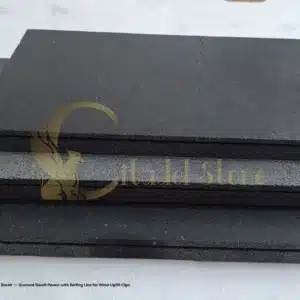
- Thickness specification of 50mm (nominal 2-inch) handles standard passenger vehicle loads; 60–80mm thickness is required for delivery vehicle or light commercial traffic
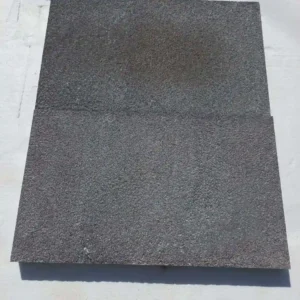
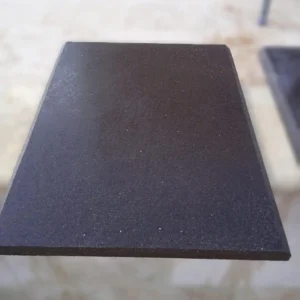
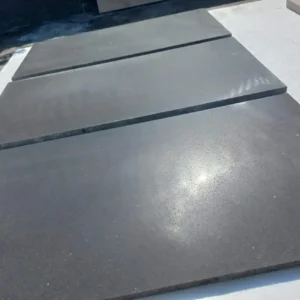
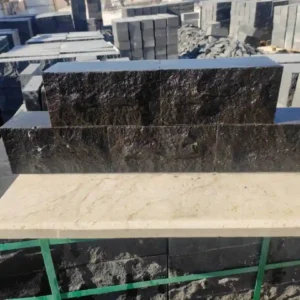
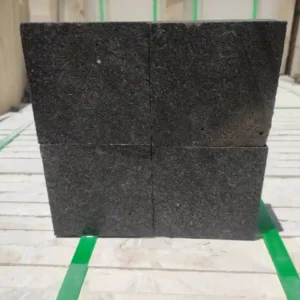
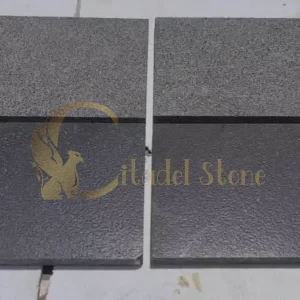
- Black limestone cobble setts in Arizona are available in sawn base / natural split top finish — the sawn base ensures consistent bedding contact while the split top provides slip resistance rating above R11
Installation Sequencing and Joint Management
The installation sequence for black limestone cobble setts in Arizona has one non-negotiable constraint: never lay cobbles in direct midday sun during summer months without accounting for thermal expansion in your joint spacing. Surface temperatures in Arizona’s low desert routinely reach 140–160°F on dark stone during peak hours, and cobble units laid tight in the morning cool can bind and arch by midafternoon. Spec your dry joints at 8–12mm rather than the 5mm that works fine in a temperate climate.
Joint sand selection is a decision point that has long-term drainage implications. Standard kiln-dried jointing sand works in protected installations, but for black limestone setts in Arizona exposed to surface runoff — which describes most exterior installations across the state — a polymer-stabilized jointing compound prevents the joint material from washing out during monsoon events. Washed-out joints are the primary cause of cobble rocking and edge chipping in field installations across the Southwest.
- Begin laying from a straight edge or fixed boundary — do not work from the center outward on irregular sites
- Check for consistent bedding contact by tapping each cobble with a rubber mallet and listening for hollow sound — rebed any units that don’t make full contact
- Compact the laid field with a plate compactor and a rubber pad before filling joints — this seats the sawn base properly in the bedding layer
- Apply joint compound in two passes after compaction: first pass fills the joint two-thirds, second pass after light watering brings it to within 3mm of the surface
- Allow 48 hours cure time before trafficking the surface — 72 hours in shaded or high-humidity conditions that slow polymer set
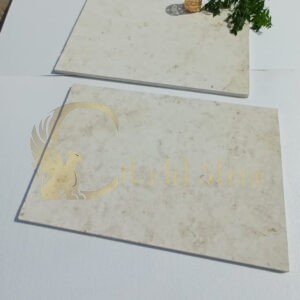
For projects where you can request sample tiles or thickness specifications from Citadel Stone before committing, the team can provide pre-cut samples in both 50mm and 60mm thickness for on-site review and client approval. A second warehouse inspection batch is available on request for volume orders where consistent color banding across the full supply is a project requirement.
Maintenance and Sealing Schedule for Arizona Conditions
Sealing black limestone cobbles in Arizona requires you to balance two competing objectives: protecting the stone from the UV degradation that bleaches surface carbon content over time, while preserving the open-joint drainage performance that makes cobble setts a functional choice for high-rainfall events. A film-forming sealer applied over the entire surface — including joints — partially defeats the drainage advantage you specified the cobble format to achieve.
The correct approach is a penetrating impregnator applied to the stone units only, stopping short of full joint saturation. This protects the stone matrix from the alkaline mineral deposits that Arizona’s hard water creates during repeated wet-dry cycling without sealing the joint channels. In Flagstaff, the freeze-thaw cycling at higher elevation introduces an additional failure mode — water trapped in surface pores expands during freezing and creates spalling — making penetrating sealer application non-optional at that elevation.
- Apply penetrating impregnating sealer within 30 days of installation and repeat every 2–3 years depending on UV exposure intensity
- Avoid solvent-based sealers on black limestone — they can lift the surface carbon layer and create patchy discoloration that’s difficult to reverse
- Water-based silane-siloxane formulations rated for calcium carbonate substrates are the appropriate chemistry for this material
- Re-sand joints annually after the monsoon season — inspect for any areas where polymer compound has degraded or washed clear
- Efflorescence from calcium leaching is normal in the first 18 months and does not indicate a material defect — treat with diluted muriatic acid solution (1:10) if cosmetic appearance requires it
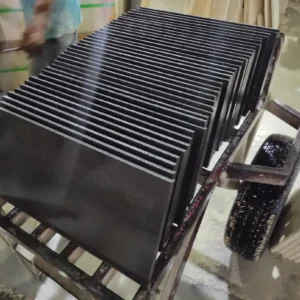
Truck delivery of cobble packs directly to site simplifies logistics significantly on projects over 500 square feet — palletized black limestone setts can be positioned close to the installation zone, reducing the double-handling that damages sawn base faces and contaminates the bedding layer. For large commercial orders, a second truck delivery can be scheduled to align with phased installation programmes, keeping site storage manageable across multi-week projects.
Specifying Black Limestone Edging Setts and Border Details
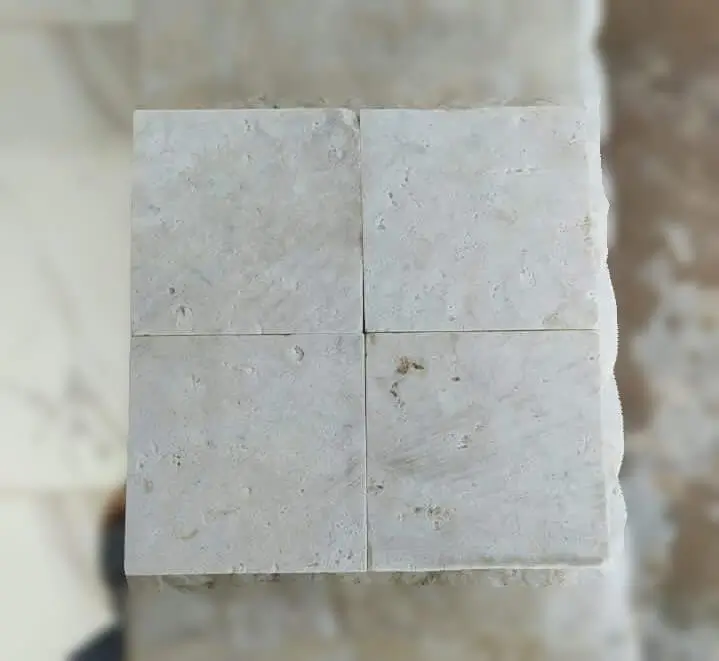
The edging detail is where a lot of otherwise solid cobble installations come undone over time. Black limestone edging setts in Arizona need to serve two functions simultaneously: acting as a physical restraint that prevents lateral spread of the cobble field during thermal cycling and soil movement, and functioning as a drainage boundary that directs surface runoff toward the intended collection point. Treating the edge purely as a visual border detail is a specification gap that shows up as creeping misalignment within three to five years.
The standard approach is to set perimeter edging setts in a lean concrete haunch — a 3:1 ballast-to-cement dry mix compacted around the outside face of the edge units. This locks the boundary against lateral displacement without waterproofing the sub-base profile. The edging setts themselves should be the same 50mm or 60mm thickness as the field cobbles, laid with the longest dimension perpendicular to the field edge rather than parallel — this orientation resists the outward thrust of thermal expansion far more effectively.
- Set edging setts before laying the field — don’t try to retrofit the edge restraint after the field is down
- Allow concrete haunch to cure for 24 hours minimum before beginning field installation against it
- Leave 10mm weep gaps in the haunch at 18-inch intervals to allow sub-base drainage to exit at the perimeter
- Black limestone setts near me in Arizona searches often surface projects where the original installer skipped the haunch — field inspection of those sites consistently shows lateral displacement of 15–25mm within the first two years
- On sloped sites, add a second row of edging setts at the downslope boundary to resist the cumulative creep from both thermal movement and gravity
Base preparation standards vary depending on soil composition and expected traffic loads, and getting cobble sett specification details right before ordering saves costly adjustment mid-project. For projects requiring complementary stone elements, Black Limestone Cobbles from Citadel Stone covers specification details that apply to similar site conditions across Arizona’s diverse soil profiles.
Request Black Limestone Cobbles Pricing — Citadel Stone Arizona
Citadel Stone supplies black limestone cobble setts in Arizona in the formats most commonly specified for residential and commercial projects: 100×100mm, 200×100mm, and random mixed cobble packs in 50mm and 60mm thicknesses. Sourced from established quarry partners, each batch is inspected for dimensional consistency and color banding before it reaches warehouse inventory, so you’re not sorting through variable material on site.
You can request samples in your preferred format and finish before committing to a full project order — particularly useful for client presentations where visual approval is required. Trade accounts and wholesale enquiries for volume pricing are handled through Citadel Stone’s commercial team, with lead times typically running one to two weeks from confirmed warehouse stock. For projects with non-standard requirements — custom cut edging profiles, specific thickness tolerances, or mixed-format orders — the team can advise on quarry lead times and phased delivery scheduling to match your installation programme. Citadel Stone ships black limestone cobble setts across Arizona, including to major project markets in Scottsdale, Mesa, and the broader Phoenix metro region. Contact Citadel Stone directly to request a current price schedule, arrange sample delivery, or discuss specification support for your project.
As you finalize your Arizona stone project scope, complementary hardscape applications may intersect with your cobble specification decisions. Citadel Stone supplies natural stone across the same regional drainage and soil conditions covered in this guide — Large Square Paving Slabs in Arizona explores how larger-format natural stone performs across those conditions for projects where slab and cobble formats are combined. Homeowners in Flagstaff, Sedona, and Yuma source Black Limestone Cobbles through Citadel Stone for Arizona residential and commercial installations.