
Locking in your black limestone cobble cost Arizona budget before you break ground is smarter than you might think — and the timing of your purchase matters almost as much as the material itself. Most buyers focus entirely on square footage pricing, but the real variable that separates a well-budgeted Arizona cobble project from an overrun one is understanding how seasonal installation windows affect every line item, from adhesive and mortar costs to labor scheduling and warehouse availability. Prices for black limestone cobble in Arizona typically range from $8 to $22 per square foot for material alone, but that spread reflects more than just finish grade — it reflects when and how the material gets to your site.
Why Installation Timing Drives Your True Cost
Your material quote and your final project cost are two different numbers in Arizona, and the gap between them widens or narrows depending on when you schedule installation. Black limestone cobble behaves predictably as a material — what doesn’t behave predictably is the mortar bed, the polymeric joint sand, and the setting adhesives that hold it all together. Each of those products has a temperature sweet spot, and Arizona’s seasonal swings push you outside that window more often than you’d expect.
The ideal installation window for black limestone cobbles runs from late October through early April in the low desert — roughly the period when ambient temperatures stay between 50°F and 85°F during working hours. That range allows mortar and adhesive to cure at the rate the manufacturer calibrated them for, which directly affects joint integrity and long-term performance. Outside that window, your labor costs climb because crews need to start earlier, work shorter shifts, and sometimes apply cooling misters or curing blankets to manage surface temperature on the stone itself.
- Mortar and thin-set adhesives lose open time rapidly above 90°F — you’ll see installers working in 20-minute batch cycles instead of 40-minute cycles, nearly doubling mixing labor
- Polymeric joint sand activates prematurely in high surface temperatures, creating weak bond zones that fail within 2–3 seasons
- Black limestone’s dark surface can reach 140–160°F in direct summer sun, which affects not just comfort but actual material handling and placement precision
- Fall and spring installations benefit from stable overnight temperatures that allow full mortar cure without thermal shock from rapid cooling
Understanding Black Limestone Cobble Pricing in Arizona
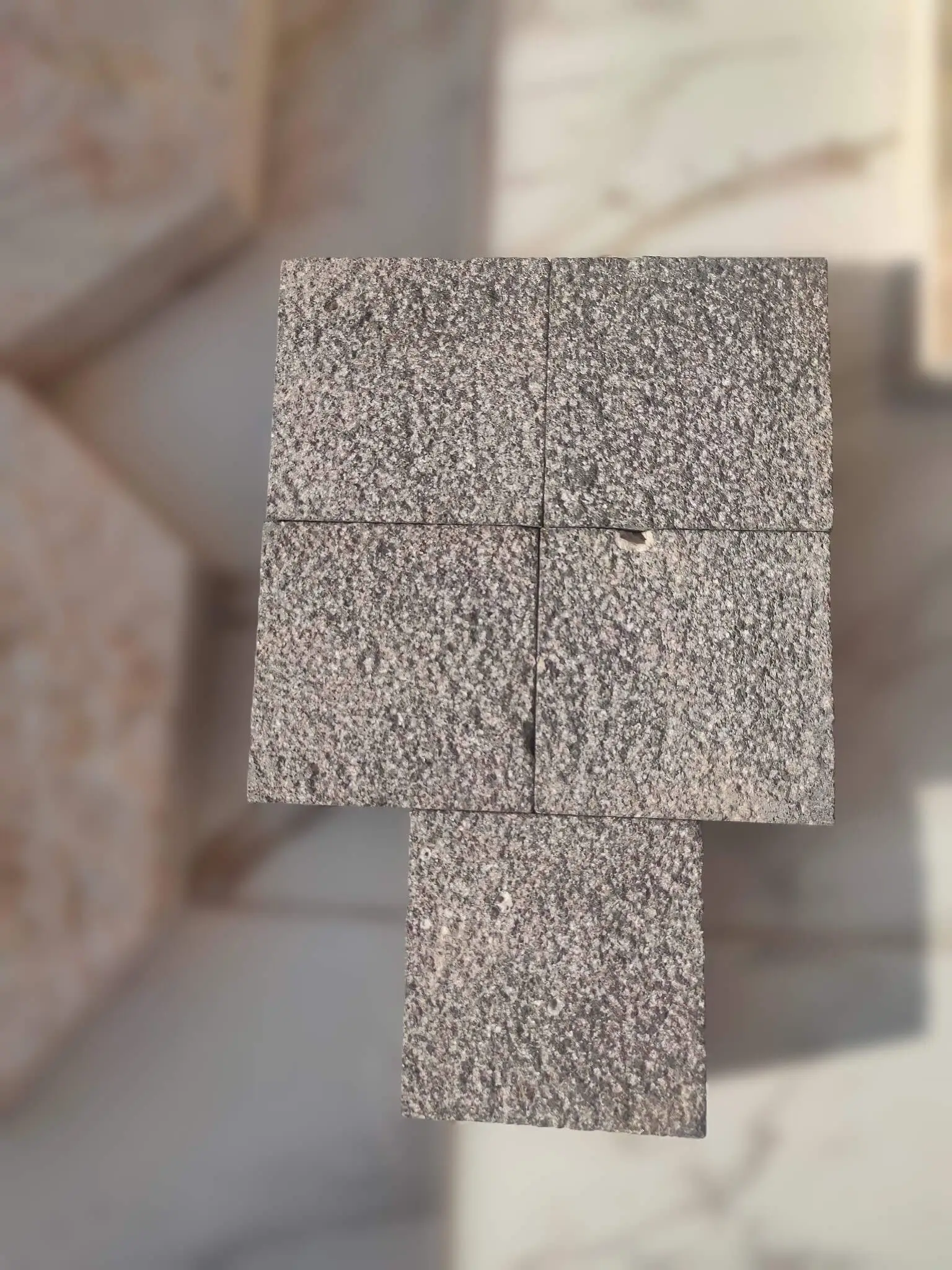
Black limestone cobble pricing for Arizona homeowners varies more than most material comparisons suggest, and the reason comes down to source quarry, finish type, and — critically — import lead time. Material priced at $8–$11 per square foot typically covers tumbled cobble in standard 4×4 or 4×8 nominal sizes from established import channels. The $14–$22 range reflects hand-split or sawn-face cobble in larger formats, thicker profiles (2.5 to 3 inches), or tighter color consistency grading.
Your true material cost also includes freight from the distribution warehouse to your site. Truck delivery rates in Arizona vary significantly by region — a job in the Phoenix metro receives material very differently than a rural project outside the metro core. Factor $150–$350 in delivery cost for a standard pallet order, though larger truck loads of 4+ pallets often absorb that cost into per-unit pricing when ordered through a stocking supplier.
- Tumbled black limestone cobble: $8–$12 per sq ft (material only, standard sizes)
- Sawn-face or honed cobble: $13–$18 per sq ft (tighter dimensional tolerance, cleaner aesthetic)
- Thermal-finish cobble in large format (6×9 or custom): $17–$22 per sq ft
- Installation labor: $6–$14 per sq ft depending on pattern complexity and seasonal timing
- Base preparation (compacted aggregate + sand layer): $2–$5 per sq ft additional
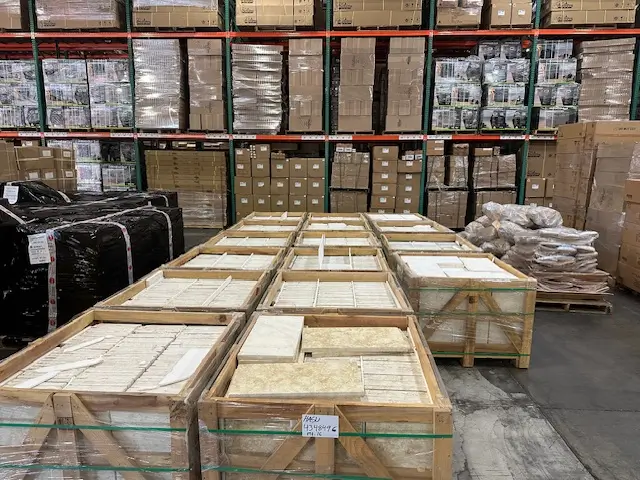
At Citadel Stone, we track warehouse stock levels through both peak season and off-season cycles, and the pattern is consistent — buyers who confirm material availability in September for an October start avoid the mid-winter stock gaps that affect import replenishment cycles. Getting your order confirmed before the fall installation rush pays dividends in both price stability and scheduling certainty.
Seasonal Windows and Scheduling Strategy
Arizona’s climate creates three distinct installation zones across the calendar year, and your approach to black limestone cobble cost planning should map directly to which zone your project falls in. This natural cobble stone budget guide for AZ projects treats these windows not just as comfort considerations — they’re budget tools that control labor efficiency, adhesive performance, and material waste.
The prime window (October through March) offers the most favorable conditions for all aspects of cobble installation. Morning temperatures in the low desert sit between 45°F and 65°F, which gives crews full working days without the productivity losses that summer scheduling forces. Mortar maintains proper open time, joint sand activates correctly, and your black limestone cobble stays cool enough to handle without protective gloves — a detail that sounds minor until you’ve watched a four-person crew slow to half speed because the stone surface is too hot to place quickly.
In Sedona, elevation adds a meaningful variable — at roughly 4,350 feet, the prime installation window extends slightly longer than Phoenix metro, and spring freeze-thaw risk requires you to spec a higher-density cobble (absorption rate under 3%) to avoid surface spalling. That specification choice affects your material cost upward by 15–20% but pays back in longevity in that climate zone.
- October–March (prime window): Full-day installation capacity, standard mortar mixes, lowest labor premium
- April–May (transition window): Morning-only installation recommended after 9 AM surface temperatures exceed 80°F; plan for 60% productivity compared to winter rates
- June–September (restricted window): Pre-dawn starts (5–7 AM) required for adhesive-set work; mortar cooling costs add $1.50–$3.00 per sq ft to installation
- November–February in high elevation: Monitor overnight lows — cobble installation should halt when overnight temps drop below 35°F without thermal protection
Morning vs. Afternoon Work — What It Costs You
The shift from morning-only to full-day installation capability represents a real cost swing that any honest natural cobble stone budget guide should account for explicitly. During the April–May transition window and the September–October recovery period, experienced Arizona installers split their cobble work between morning setting and afternoon finishing tasks — grout work, sealing prep, edge detail — because the direct-sun surface temperature on black limestone climbs above usable range by mid-morning.
Field performance data shows that adhesive failure rates increase significantly when surface temperatures exceed 95°F during placement. The adhesive skins over before the cobble seats properly, creating a void beneath the stone that only reveals itself 12–18 months later when settlement begins. That outcome won’t appear at inspection — which is exactly why specifying seasonal timing restrictions in your contract protects both parties.
- Before 10 AM in summer months: Viable for mortar-bed and thin-set work in most Arizona low-desert locations
- 10 AM–2 PM in summer: Surface temperatures typically 115–145°F on exposed black limestone — avoid adhesive placement during this window
- After 3 PM: Surface begins cooling; late-afternoon installation requires checking ambient temperature drop rate to avoid thermal shock cracking in fresh mortar
- Scheduling premium for restricted-hours crews: Typically 15–25% above standard labor rates
For projects in Yuma, where summer temperatures routinely exceed 110°F and the low desert receives minimal elevation relief, the summer restricted window effectively runs May through October. Affordable limestone cobble paving in Arizona’s hottest markets requires honest scheduling conversations — a project scoped for July installation in Yuma carries a materially different labor budget than the same project in November.
Base Preparation and Its Budget Impact
Base preparation specification directly controls the long-term performance of black limestone cobbles in Arizona, and it’s the line item most buyers underestimate when assembling a project budget. Arizona soils — particularly the expansive clay subsoils common across the central and northern parts of the state — move seasonally, and that movement transfers directly to your cobble surface if the base isn’t engineered to compensate.
The standard specification for black limestone cobble in Arizona calls for a 4-inch compacted Class II road base over native soil, with a 1-inch bedding sand layer above that. In soil conditions with a plasticity index above 15, increase the compacted base to 6 inches and consider a geotextile separation layer between native soil and aggregate. That upgrade adds $1.80–$2.60 per square foot but eliminates the differential settlement pattern that turns a beautiful cobble installation into a trip-hazard liability within 5 years.
- Standard base specification: 4-inch compacted aggregate + 1-inch bedding sand — suits most low-desert projects
- Expansive soil upgrade: 6-inch aggregate + geotextile + 1-inch sand — required for clay-heavy or caliche-interrupted profiles
- Drainage slope: Minimum 1.5% slope away from structures — black limestone’s natural absorption rate makes drainage critical to prevent subsurface saturation
- Edge restraint: Aluminum or steel edging required at all perimeter transitions — cobble sets without restraint migrate laterally over 3–5 years
Citadel Stone Arizona cobble pricing
Thickness, Grade, and What It Means for Cost
Black limestone cobbles in Arizona are typically available in 1.5-inch, 2-inch, and 2.5–3-inch nominal thicknesses, and the choice matters more than most buyers realize when comparing per-square-foot prices. Thinner cobbles (1.5 inch) cost less per unit but demand more precise base preparation — a variation of more than 3/8 inch across a 10-foot run will produce lippage that’s both aesthetically problematic and a liability issue. Thicker cobbles tolerate slightly less precise base prep and perform better under point-load applications like vehicle traffic or heavy furniture.
The finish grade — tumbled, sawn, thermal, or hand-split — also creates meaningful pricing bands within the stone cobble material costs across Arizona. Tumbled cobble has a more forgiving slip profile (important for Arizona pool surrounds where wet surfaces are a concern) while sawn and honed finishes offer tighter dimensional consistency for pattern work. For driveways, the thermal finish provides the best combination of slip resistance and durability under the compressive and thermal stress Arizona vehicle traffic creates.
- 1.5-inch thickness: Best for pedestrian-only applications, lower material cost, requires precision base prep
- 2-inch thickness: General-purpose specification, handles light vehicle traffic, most commonly stocked finish
- 2.5–3-inch thickness: Driveway and heavy-use applications, higher material cost but significantly reduced breakage during installation and service life
- Tumbled finish: Rounded edges reduce lippage visibility, natural slip resistance rating above 0.6 BPN (British Pendulum Number)
- Thermal finish: Flame-textured surface, highest grip rating — specify for pool decks or entry grades with water exposure
Flagstaff Elevation and Freeze-Thaw Budget Adjustments
High-elevation Arizona projects require a fundamentally different material specification than low-desert installations, and the cost difference is significant enough to address directly. Flagstaff, sitting above 6,900 feet elevation, experiences genuine freeze-thaw cycling — 100+ freeze events per year in a typical winter — and that changes everything about how you select and budget black limestone cobble for those projects.
The cobble specification for Flagstaff should require an absorption rate below 2.5% (testable per ASTM C97) and a compressive strength above 14,000 PSI. Not all black limestone sources meet both criteria — which is why specifying a tested, quarry-certified product matters more in high-elevation installations than in Phoenix metro where freeze-thaw isn’t a design factor. Expect a 20–30% premium on material that meets freeze-thaw-rated specifications compared to standard import cobble.
- Required absorption rate for freeze-thaw climates: Below 2.5% (ASTM C97 test method)
- Minimum compressive strength: 14,000 PSI for reliable freeze-thaw resistance
- Installation window in Flagstaff: May through September (avoid late-fall mortar work that cures into first freeze)
- Joint sand selection: Polymer-modified joint sand is non-negotiable at high elevation — standard joint sand migration in freeze-thaw cycles leaves voids that accelerate surface damage
- Budget adjustment: Add 25–40% to standard low-desert material cost for freeze-thaw-rated cobble in Flagstaff projects
Sealing, Maintenance, and Long-Term Cost of Ownership
Total cost of ownership for black limestone cobbles in Arizona extends well beyond the initial installation, and sealing is the maintenance line item that most directly controls how that cost evolves over time. Black limestone is a naturally porous material — absorption rates typically run 3–6% depending on quarry source and density grade — and Arizona’s UV intensity accelerates the surface oxidation that shifts the color from deep charcoal-black toward a faded gray over 5–8 years without sealing.
The sealing schedule for low-desert Arizona installations should be biennial at minimum, with an initial penetrating sealer applied 28–30 days after installation once mortar has fully cured. Rushing that initial application — sealing before the mortar off-gasses — traps efflorescence beneath the surface and creates a white haze that’s extremely difficult to resolve without stripping and resealing. The first seal is also your opportunity to apply a color-enhancing penetrant that deepens the black tone and provides the long-term protection that determines whether you’re resealing every 2 years or every 5.
- Initial sealer application: 28–30 days post-installation, penetrating silane-siloxane formula
- Color-enhancing option: Impregnating sealer with enhancer deepens natural black tone, reduces long-term UV fade
- Maintenance interval — low desert: Every 2–3 years depending on UV exposure and traffic
- Maintenance interval — shaded or covered installations: Every 4–5 years is typically sufficient
- Annual sealing cost estimate: $0.60–$1.20 per sq ft amortized across the maintenance cycle
Our technical team at Citadel Stone has reviewed stone samples from projects sealed and unsealed under identical Arizona exposure conditions after a 7-year period — the sealed installations retained 85–90% of original surface depth and color, while unsealed material showed measurable surface erosion and significant color shift. That comparison is the most compelling argument for treating sealing as a capital cost rather than an optional maintenance task.
Getting Black Limestone Cobble Cost Right in Arizona
Every element discussed in this overview connects back to a single discipline — timing your decisions as carefully as you time your installation. The buyers who get the best value on black limestone cobble cost in Arizona are the ones who confirm material from the warehouse in September, schedule installation for November or December, and build their labor contract around a morning-start schedule with realistic productivity rates. They’re not necessarily spending less per square foot — they’re eliminating the cost overruns that come from rushed procurement, summer labor premiums, and adhesive failures that require remediation within the first three years.
Your project specification should also account for the full performance picture: base depth matched to your soil conditions, cobble thickness matched to your use case, and a sealing plan that starts at day 28 and runs on a biennial schedule. Affordable limestone cobble paving in Arizona rewards deliberate pre-project decisions — none of those choices are complicated, but they need to be made before the project starts rather than reactively after something goes wrong. For the installation methodology that supports this specification work, How to Install Black Limestone Cobbles in Arizona provides a detailed field guide that complements the cost and timing decisions covered here.
At Citadel Stone, we source black limestone cobble directly from quarry-certified suppliers and maintain warehouse stock across multiple grades and thicknesses specifically to support the October–April installation window that Arizona projects depend on. Checking warehouse availability before you finalize your project schedule is a step that costs nothing and protects your timeline from the supply gaps that affect imported natural stone during peak demand periods. Buyers in Flagstaff, Gilbert, and Yuma sourcing black limestone cobbles from Citadel Stone can compare slab thickness and finish options before committing to a full project order.