
Base saturation failure — not surface spalling or joint erosion — is the silent killer of black limestone cobble installations across Arizona. Installing black limestone cobbles in Arizona demands that you resolve drainage geometry before you commit to a single line of base aggregate, because monsoon-season water delivery in this state is nothing like the slow-soak rainfall patterns most installation guides are written around. You’re dealing with 1.5- to 2-inch rain events compressed into 45-minute windows, and that changes every calculation from compaction depth to edge restraint specification.
Why Drainage Defines Every Decision When Installing Black Limestone Cobbles in Arizona
Arizona’s dual precipitation personality creates a challenge that catches out even experienced installers. The low desert receives the bulk of its annual moisture in two concentrated windows — the North American Monsoon (roughly July through mid-September) and winter Pacific frontal systems in December through February. What you get between those windows is months of near-zero precipitation followed by intense, rapid-onset events that test your drainage design immediately and without warning.
The monsoon pattern across Phoenix and surrounding metro areas delivers short-duration storms with intensity rates that can exceed 2 inches per hour at peak. Your base system needs to handle that surge without allowing water to pond beneath the cobble layer, where hydrostatic pressure will undermine even a well-compacted aggregate bed. Think of it as designing for a drainage event, not an average daily rainfall figure.
- Design surface cross-slope at a minimum 1.5% — 2% is more reliable for cobble layouts where joint gaps are irregular
- Install perforated French drain laterals in any zone where adjacent grade directs runoff toward the cobbled surface
- Maintain a minimum 12-inch compacted aggregate base in flood-prone areas; standard residential guidelines of 6 inches are inadequate for monsoon-intensity drainage loads
- Specify geotextile fabric separation between native soil and aggregate to prevent fine-particle migration during saturation events
- Keep outfall elevations at least 4 inches below finished cobble surface to prevent backflow during sustained rain periods
How Black Limestone Performs Under Moisture Stress
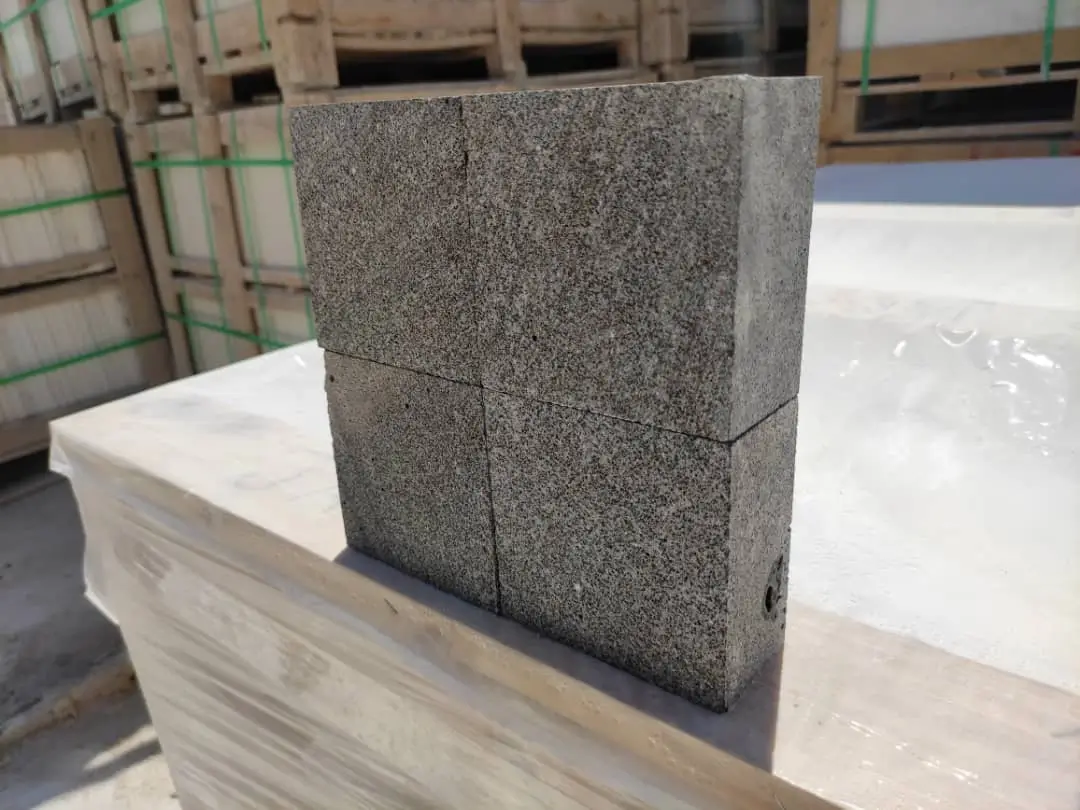
Black limestone’s performance under cyclic wetting and drying is directly tied to its porosity classification. Dense, tight-grained black limestone — the variety that performs best in Arizona conditions — typically registers water absorption rates below 3% by weight per ASTM C97, which means it resists the moisture intrusion that could otherwise accelerate surface scaling during rapid saturation-to-desiccation cycles. That’s a fundamentally different behavior than the higher-absorption limestone varieties sometimes substituted on value-engineered projects.
Properly specified black limestone cobbles in Arizona maintain their dimensional stability even through repeated monsoon-season soaking followed by days of 105°F drying. The stone’s mineral composition — predominantly calcite with low internal porosity — allows surface moisture to evaporate without drawing soluble salts upward, which is the mechanism behind the efflorescence problems that plague inferior limestone selections in hot, low-humidity climates. Natural stone cobble paving across Arizona performs most reliably when material selection begins with verified absorption and density data rather than visual inspection alone.
- Specify limestone with absorption below 3% (ASTM C97) for Arizona outdoor applications
- Verify flexural strength above 1,500 PSI to handle vehicle loading without micro-fracturing during thermal cycling
- Compressive strength should exceed 8,000 PSI — denser stone resists moisture-driven deterioration over long service cycles
- Natural stone cobble paving across Arizona performs best when material density exceeds 160 lb/ft³, ensuring adequate mass to resist frost action at higher elevations
Base Preparation: The Layer Sequence That Handles Arizona Water
The base preparation sequence for black limestone cobble installation steps in Arizona differs from standard national guidance in two meaningful ways: aggregate depth and drainage layer specification. Standard residential installation guides often reference a 4- to 6-inch compacted aggregate base. In Arizona’s monsoon corridor, you need to recalibrate to 8 inches at minimum for pedestrian-only applications and 12 inches for any surface that accepts vehicle traffic, even occasional driveway use.
Your layer sequence from subgrade up should follow this order: compacted native soil or engineered fill (achieving 95% modified Proctor density), non-woven geotextile fabric, 8–12 inches of 3/4-inch clean crushed aggregate compacted in 4-inch lifts, 1-inch bedding layer of coarse concrete sand (not stone dust — more on that shortly), and then your cobbles. The sand bedding layer is where most field errors occur in high-moisture climates. Getting these black limestone cobble installation steps in Arizona right from the ground up is what separates installations that last decades from those that require costly remediation after the first monsoon season.
- Use ASTM C33 concrete sand for bedding, not limestone dust or decomposed granite — fine-particle bedding media compact under moisture and cause cobble settlement
- Compact aggregate base in maximum 4-inch lifts using a plate compactor — single-pass deep compaction leaves voids that collapse under saturation
- Confirm subgrade CBR (California Bearing Ratio) above 5% before base installation; soft native soils require stabilization treatment or deeper aggregate sections
- Install perimeter edge restraint before spreading bedding sand to prevent lateral migration during compaction and during first monsoon season
Joint Design and Water Management Through the Cobble Surface
Here’s what most specifiers miss when designing cobble joints for Arizona conditions: tight-jointed installations that look premium in dry conditions become hydraulic failures during monsoon events. Your cobble joints are functional drainage pathways, and eliminating them in pursuit of a seamless aesthetic actually directs surface water to the perimeter edge restraints at higher velocity — often causing erosion at exactly the points where your base is most vulnerable to undermining.
The recommended joint width for desert-rated limestone cobble pavers in AZ projects is 3/8 to 1/2 inch, filled with polymeric sand that maintains permeability while resisting weed growth and joint erosion under high-velocity runoff. Standard dry-packed jointing compounds wash out during monsoon events even when initially well-installed — polymeric sand with an ASTM D6748 washout resistance rating is the appropriate specification.
For your project’s technical foundation, Arizona black limestone cobbles Citadel Stone provides detailed material specifications and sourcing information that can help you finalize your selection before mobilizing for base preparation.
- Minimum joint width of 3/8 inch allows adequate surface infiltration to reduce peak runoff velocity
- Polymeric sand activation requires moisture — schedule installation to avoid rain for 24 hours post-activation
- Re-joint within first season if monsoon runoff causes joint erosion exceeding 1/4 inch depth — early re-treatment is far cheaper than base repair
- Avoid epoxy-grouted joints in full-sun locations — thermal cycling between 80°F and 160°F surface temperatures causes grout fracture within 2–3 seasons
How Slope and Elevation Change Your Specification
Arizona’s elevation range creates meaningfully different installation conditions across the state. Projects in Tucson — sitting at approximately 2,400 feet — experience occasional freeze events in January and February that Phoenix-based projects don’t encounter. At that elevation, you need to verify your cobble specification addresses ASTM C99 freeze-thaw resistance in addition to the standard heat and moisture metrics. Desert-rated limestone cobble pavers in AZ must be evaluated against the full elevation profile of the project site, not just the regional climate average.
Sloped installations present a different challenge: when your cobbled surface carries monsoon runoff along its length rather than cross-draining it, you’re exposing your base to sustained concentrated flow. For slopes exceeding 5%, you should install cobble-grade check dams or channel drain interrupts every 15–20 linear feet to break up flow energy and reduce the risk of bedding sand displacement beneath the cobble layer.
- Slopes of 2–5%: standard cross-slope drainage sufficient with adequate outfall
- Slopes of 5–8%: add channel drain intercepts every 20 feet; increase bedding layer compaction by 10% over standard specification
- Slopes above 8%: consult a licensed civil engineer — cobble installations on steep grades in high-intensity rainfall zones require structural edge anchoring and engineered drainage solutions
- At elevations above 4,500 feet, freeze-thaw cycling requires cobble with documented ASTM C99 compliance; standard black limestone marketed for desert use is not automatically rated for freeze environments
Installation Sequencing in Arizona Heat
Scheduling black limestone cobble installation in Arizona requires you to work around two constraints simultaneously — thermal stress on mortar and bedding materials, and the monsoon calendar. The practical installation window that avoids both complications runs from October through April. Summer installations between June and September create problems at every stage: sand bedding exposed to 150°F ground temperatures loses moisture before cobbles are set, adhesive bedding systems can fail within the first curing cycle, and pre-mixed polymeric sand may partially activate before jointing is complete.
Desert-rated limestone cobble pavers in AZ should be wetted on their undersides before placement during any installation where ground or air temperatures exceed 90°F. This isn’t an optional step — it’s the difference between cobbles that bond properly to bedding and cobbles that rock within the first season. Dry-faced stone draws moisture out of bedding sand faster than the bonding process can complete, leaving you with a loose installation that feels solid on day one but develops movement within six months.
- Pre-wet cobble undersides with a light misting when ambient temperature exceeds 90°F
- Install in morning hours during summer months — afternoon installation in direct sun creates surface temperatures that interfere with setting bed performance
- Cover completed sections with shade cloth for 24–48 hours post-installation during hot weather to slow moisture loss from bedding sand
- Do NOT install during forecasted rain events — fresh bedding sand requires 24 hours of undisturbed curing before its first moisture exposure
Sealing Protocols for Long-Term Durability
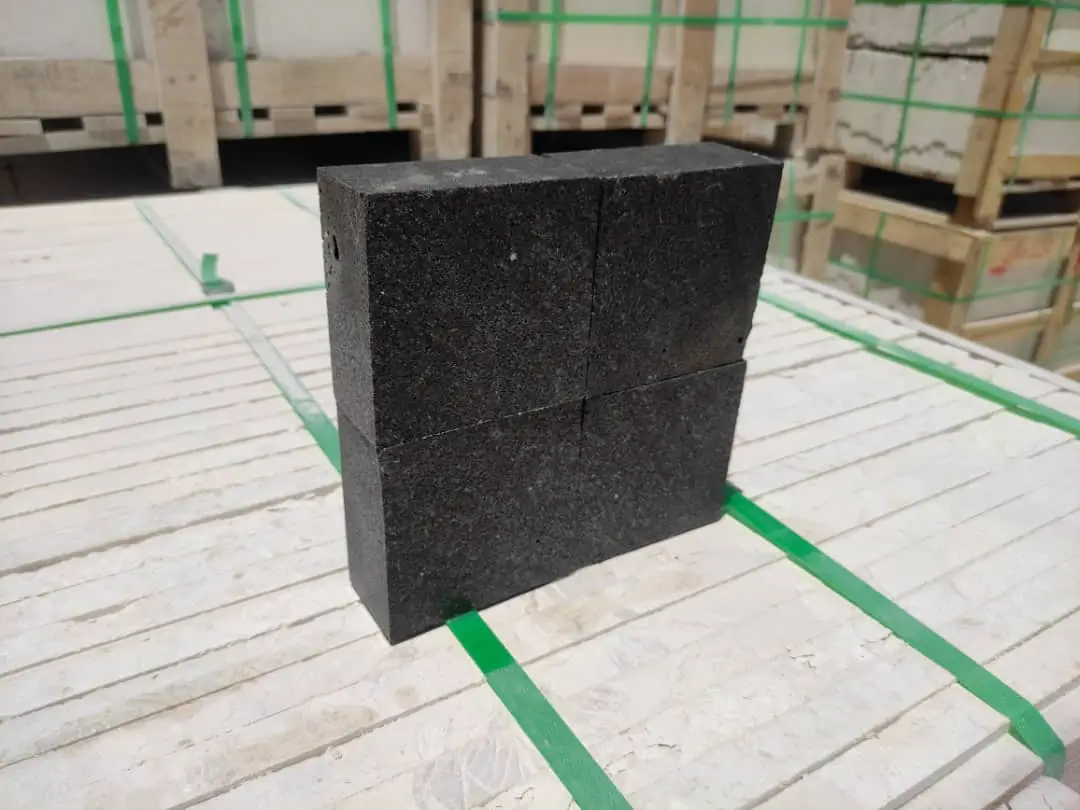
Sealing black limestone cobbles in Arizona addresses two distinct threats that require different product responses. The first is UV-driven surface fading — prolonged high-UV exposure at Arizona latitudes bleaches the iron-bearing minerals that give quality black limestone its depth of color. A penetrating impregnator sealer with UV stabilizers, applied 30 days after installation (allowing full moisture evaporation from the base), protects against this process without altering the stone’s natural texture.
The second threat is moisture-driven efflorescence during monsoon season. This occurs when water infiltrating through joints dissolves calcium carbonate from within the stone matrix and deposits white salt crystals on the surface as the water evaporates. Minimizing this substantially requires a penetrating silane-siloxane sealer that reduces moisture uptake without creating a film that traps migrating salts below the surface — a common error with topical film sealers that actually worsens efflorescence long-term.
In Scottsdale, where high-end residential and commercial projects demand consistent aesthetic performance year-round, how to lay stone cobbles in Arizona landscapes — particularly in relation to sealing — is a specification question that comes up repeatedly. Understanding how to lay stone cobbles in Arizona landscapes correctly, including sealer chemistry and application timing, directly affects the 2–3 year re-seal interval that maintains protective performance through the UV exposure and moisture cycling that characterize the Sonoran Desert climate.
- Apply first sealer coat no sooner than 28–30 days post-installation — residual base moisture must fully evacuate before sealing
- Use penetrating impregnator sealers (silane-siloxane chemistry) for outdoor cobble applications — avoid acrylic topical sealers that peel under UV exposure
- Clean surfaces with a pH-neutral stone cleaner before each re-seal application — acid-based cleaners damage limestone’s calcium carbonate structure
- Inspect sealant integrity annually before monsoon season — spot-treat any areas showing water absorption to prevent joint sand washout
Material Logistics and Project Timing
Your warehouse stock verification should happen before you finalize installation dates, not after. Black limestone cobbles sourced from overseas quarries carry lead times of 8–12 weeks from order to delivery — a timeline that’s incompatible with the installation windows that avoid both peak heat and active monsoon season. At Citadel Stone, we maintain warehouse inventory of black limestone cobbles in Arizona, which typically reduces your project lead time to 1–2 weeks and allows you to plan around the October–April installation window without committing to a summer rush schedule.
Truck delivery logistics affect your base preparation schedule directly. A standard flatbed truck delivering cobbles to a residential driveway requires a minimum 12-foot clearance width and 14-foot vertical clearance. Verify these dimensions against your access route before scheduling delivery — a truck that can’t reach your staging area adds material handling labor that significantly impacts project cost. For large commercial projects in tight urban locations, coordinate with your supplier on crane-off or conveyor delivery options.
- Order a minimum 10% material overage above calculated square footage — cobble installations generate 8–12% cut waste on typical curved or irregular layouts
- Verify warehouse availability at least 6 weeks before your target installation start date
- Confirm truck access dimensions before scheduling delivery — especially relevant for projects with gated entries, low overhead obstructions, or unpaved access roads
- Store delivered cobbles on a flat, dry surface covered with breathable tarps — ground contact storage without vapor barrier leads to moisture staining on lower pallet layers
Professional Summary: Getting Your Arizona Cobble Installation Right
Installing black limestone cobbles in Arizona is fundamentally a water management challenge that happens to also involve stone selection, heat performance, and aesthetic specification. Every structural decision you make — base depth, joint width, slope management, sealing chemistry — traces back to how your installation will perform during that first major monsoon event. Get the drainage geometry right before you place a single cobble, and the rest of the specification decisions fall into a logical sequence.
The material itself, when properly specified with verified density and low absorption characteristics, will outlast most alternative surface materials in Arizona’s demanding climate cycle. Your long-term maintenance commitment is straightforward: inspect joints annually, re-seal every 2–3 years, and clear drainage outfalls before each monsoon season. Beyond the cobble surface itself, your overall stone project will benefit from thinking through related hardscape details — How to Maintain Cobblestone Edging in Arizona’s Climate covers another dimension of Arizona stone maintenance that directly complements what you’ve implemented with your cobble installation. Homeowners in Tucson, Scottsdale, and Peoria rely on Citadel Stone black limestone cobbles, each batch selected for density suited to Arizona heat cycles and monsoon-season drainage demands.