
Cobblestone edging maintenance in Arizona’s climate demands more than a seasonal rinse and a fresh bag of joint sand — the real challenge is that desert conditions attack stone borders from multiple directions simultaneously. You’re dealing with alkaline soil chemistry that wicks into porous stone, thermal cycling that shifts even well-set cobbles by fractions of an inch over a season, and monsoon pulses that flush fine stabilizer out of joints faster than most homeowners expect. Understanding these dynamics before they become visible problems is what separates a border that holds its line for fifteen years from one that needs resetting every third summer.
Why Desert Landscape Design Makes Cobblestone Edging Work Harder
Arizona’s dominant landscape traditions — Sonoran desert xeriscape, contemporary Southwest minimalism, and Spanish Colonial revival — all lean heavily on natural stone borders to define plant beds, gravel fields, and hardscape transitions. The aesthetic logic is sound: cobblestone edging carries an organic texture that softens the hard geometry of decomposed granite fields and complements the warm ochre and terracotta tones that run through most Chandler residential developments. That visual compatibility, though, means the edging is often asked to perform in zones where plant roots push laterally, irrigation drip lines run directly alongside the border, and decorative gravel exerts slow, constant lateral pressure.
Desert xeriscaping in particular places cobblestone edging at the boundary between two very different moisture environments — a plant zone that receives scheduled irrigation and a surrounding dry gravel field that doesn’t. That transition zone is where you’ll see the most joint degradation and the most frequent heaving, because moisture gradients drive differential soil movement under the base. Your maintenance strategy has to account for this edge-zone stress, not just treat the stone surfaces themselves.
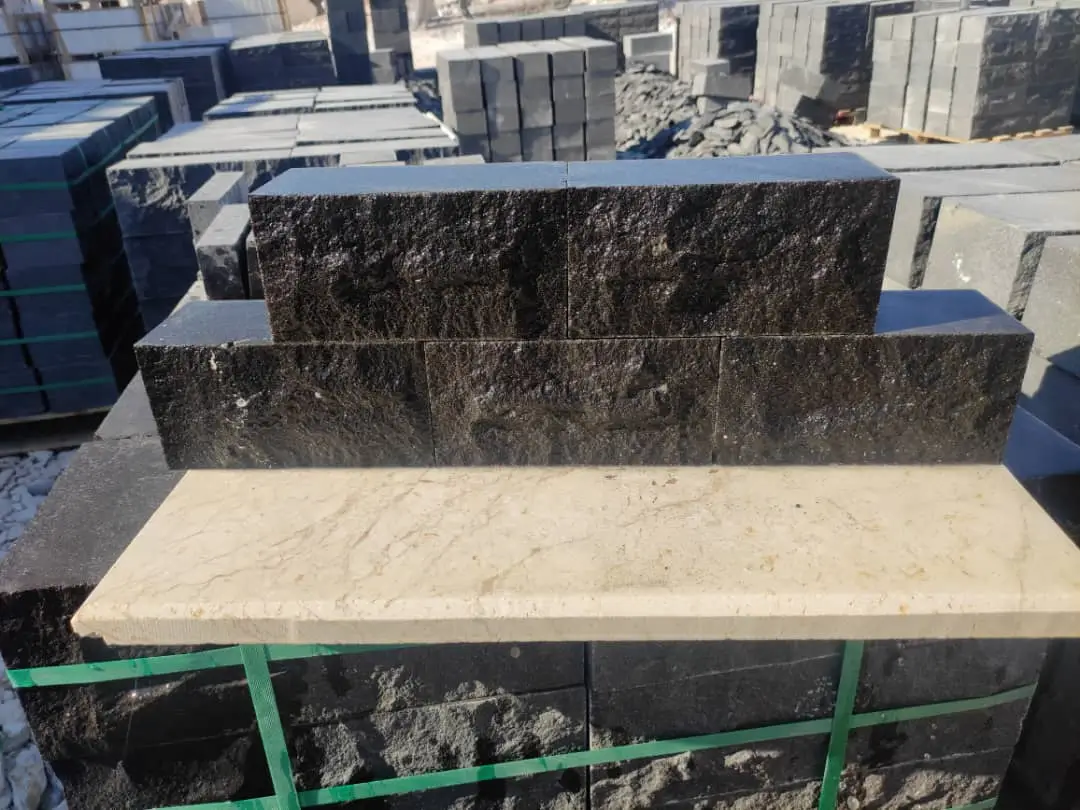
Cleaning Natural Stone Edging in Arizona Conditions
Surface maintenance starts with understanding what’s actually on the stone, because Arizona’s deposits aren’t uniform. Caliche dust, iron oxide from native soil, and calcium carbonate efflorescence each require a different cleaning approach — and confusing them leads to etching, staining, or inadvertent sealer breakdown. Cleaning natural stone edging in Arizona means identifying your deposit type before reaching for a pressure washer or acidic cleaner.
- Caliche crust (white-grey mineral buildup) responds to diluted white vinegar solution at a 1:10 ratio — never full-strength acid on unsealed stone
- Iron staining from Arizona red clay soil requires oxalic-acid-based poultice, applied and left covered for 24 hours before removal
- Biological growth (algae, lichen) in shaded irrigated borders needs a diluted sodium hypochlorite solution at 3–5%, followed by a thorough rinse
- Efflorescence — the white salt bloom that emerges after monsoon season — should be dry-brushed first, then treated with a purpose-formulated efflorescence cleaner, not acid
- Pressure washing is acceptable at 800–1,200 PSI; anything above 1,500 PSI risks eroding mortar joints and dislodging smaller cobbles
Schedule a full cleaning pass in late October, after monsoon season ends and temperatures drop below 95°F. Cleaning in peak summer heat causes cleaning solutions to evaporate before they can dwell properly, and rinsing hot stone too quickly can drive soluble salts deeper into the pore structure rather than flushing them out. Proper cleaning natural stone edging in Arizona also means protecting adjacent soil from runoff during the treatment process.
Joint Stability and the Monsoon Problem
Here’s what most homeowners discover the hard way: standard polymeric sand is not equally effective across Arizona’s monsoon belt. The issue isn’t the product — it’s the application window. Polymeric sand requires a cure period of 24–48 hours without rain to activate properly. Schedule your joint sand replacement in late April or early May, before monsoon season arrives in late June. A joint refill done in July has a high probability of washing out before it cures.
Desert climate cobblestone upkeep across Arizona requires you to treat joint stability as a structural concern, not just an aesthetic one. Joints that drop below 80% fill depth allow cobbles to rock under foot traffic and irrigation line maintenance, which accelerates the rocking-loosening cycle. Check joint depth annually — a simple depth probe at ten representative points along your border gives you a reliable sample. In areas receiving consistent drip irrigation, check twice yearly.
- Target joint fill depth: no less than 85% of the cobble height
- Use polymer-modified jointing compound rated for temperatures up to 130°F for Arizona desert installations
- Pre-dampen joints before adding new sand to reduce air pockets and improve compaction
- After filling, compact with a hand tamper — a rubber mallet creates surface compaction only, not depth consolidation
- Mist the completed surface with a fine spray — do not flood — and keep traffic off for 48 hours minimum
Resetting Stone Border Edging After Soil Movement
Resetting stone border edging in AZ yards is a task most people defer too long. The moment you see three or more adjacent cobbles tilting in the same direction, the base underneath has already shifted enough to require attention. Waiting until the stones are visibly heaved means the base repair becomes significantly more labor-intensive — you’ll excavate more, re-compact more, and replace more joint material than if you’d caught the movement at the two-cobble stage.
The reset process for cobblestone edging maintenance in Arizona follows a specific sequence that accounts for the region’s caliche sub-base conditions. In Mesa, caliche hardpan commonly sits at 12–18 inches below grade, which is a mixed blessing: it limits how deep the base can settle, but it also forces surface water to migrate laterally rather than drain vertically, accelerating base erosion at the edges of planted zones.
- Remove affected cobbles and set aside — keep them in original orientation for reinstallation
- Excavate base material to a minimum depth of 6 inches, or until you reach stable, undisturbed caliche or compacted sub-base
- Add clean 3/4-inch minus crushed granite base, not recycled concrete aggregate — the lime leach from recycled concrete accelerates efflorescence
- Compact in 3-inch lifts to a minimum 95% Proctor density before laying setting bed material
- Use a 1-inch sand setting bed, screeded level, for final cobble placement
- Allow 72 hours before jointing to let the setting bed stabilize under Arizona’s temperature swings
Sealing Schedules That Actually Work in Arizona
The standard recommendation of resealing every two to three years doesn’t translate cleanly to Arizona’s UV intensity. Sealer breakdown happens at the 18-month mark in full-sun south-facing exposures at lower desert elevations, while a north-facing border in a shaded Gilbert yard might hold a quality seal for 30–36 months. The variable to track isn’t calendar time — it’s sealer performance, which you can test with the simple water bead test.
Drip a tablespoon of water on the cobblestone surface. If it beads into a rounded droplet with a contact angle above roughly 90 degrees, the sealer is still active. If the water spreads flat and absorbs within 30 seconds, you’re past the protection threshold and should reseal before the next monsoon season. At Citadel Stone, we advise clients to run this test every spring, regardless of when the last application was — it eliminates the guesswork and catches early sealer failure before moisture intrusion begins.
- Use a penetrating impregnating sealer rated for exterior natural stone, not a topical film-forming product — film sealers trap moisture in Arizona’s thermal cycling conditions and blister
- Apply at ambient temperatures between 50°F and 85°F — early morning in summer months is your best window
- Two thin coats outperform one heavy coat; allow 4 hours between applications
- Do not seal freshly cleaned stone — wait 48 hours after cleaning to ensure complete surface drying
- In irrigated zones, extend the sealer application 6 inches beyond the cobblestone border onto the adjacent soil to reduce capillary moisture migration
For detailed product guidance and regional ordering information, Citadel Stone Arizona stone edging care covers the specific material specifications our technical team recommends for Arizona’s climate zones.
Color Palette and Material Matching for Arizona Landscapes
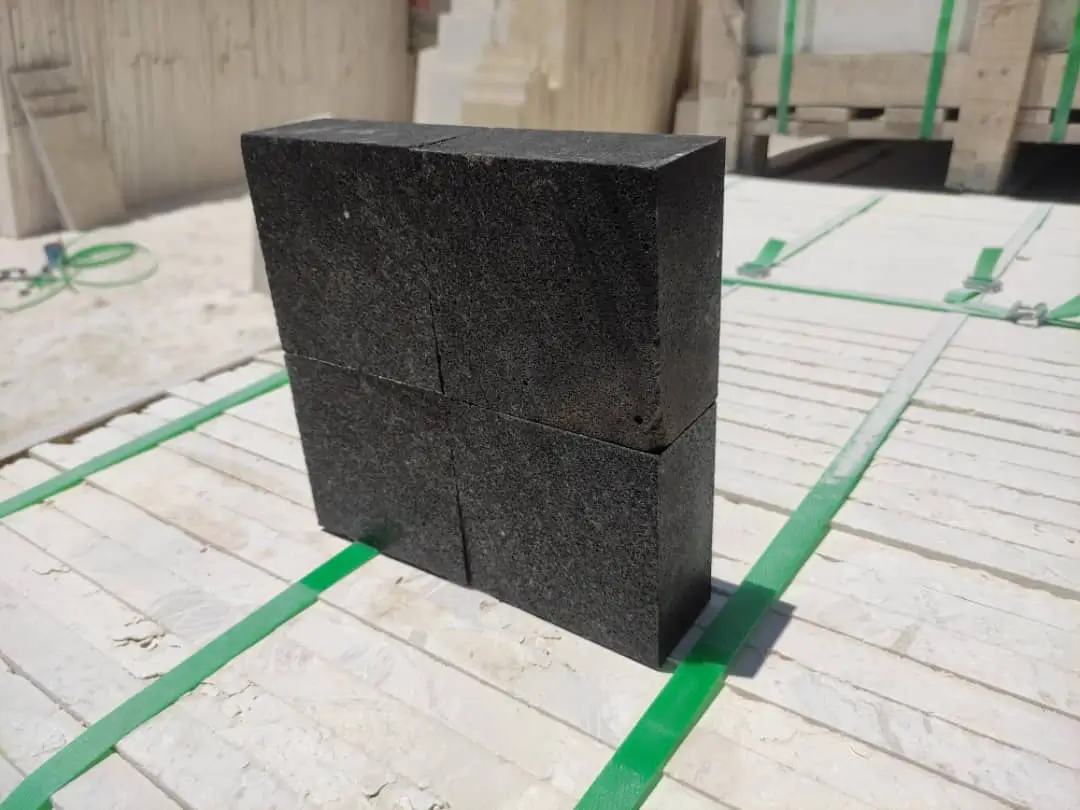
Arizona’s architectural palettes run from warm sandstone and buff limestone tones through darker basalt and charcoal granite, and the cobblestone edging you maintain has to age gracefully within that context. Material selection influences maintenance frequency in ways that aren’t always obvious upfront. Lighter cobblestones — buff limestone and white quartzite — show efflorescence and iron staining more visibly, requiring more frequent surface cleaning, typically twice yearly versus once for darker basalt borders.
The practical implication for maintenance is that matching your edging material to the surrounding palette isn’t purely an aesthetic decision — it’s a serviceability decision. A dark basalt cobblestone border alongside a reddish decomposed granite field will mask minor staining between annual cleanings, reducing visible maintenance cycles. In contrast, a white limestone border in the same setting will show mineral deposits clearly within one monsoon season, requiring you to commit to a twice-yearly cleaning schedule to maintain the design intent. Effective desert climate cobblestone upkeep across Arizona begins at the material selection stage, long before the first cleaning pass.
Managing Irrigation Impact on Cobblestone Edging
Irrigation systems are the single largest accelerant of cobblestone edging maintenance needs in Arizona landscapes, yet the design relationship between drip lines and stone borders rarely gets addressed during installation. Drip emitters should be positioned a minimum of 8 inches from the base of any cobblestone edging run. Emitters placed directly against the border create localized saturation that softens the base material, promoting settlement on a concentrated 18-inch section rather than distributing moisture evenly.
The more insidious problem is irrigation overspray from rotary heads reaching cobblestone borders in mixed planting zones. Rotary overspray delivers large water volumes in short pulses, which is exactly the condition that flushes joint sand most aggressively. In Gilbert residential landscapes with HOA-maintained common areas, overspray onto cobblestone borders is one of the most consistent causes of premature joint failure that our technical team encounters. Adjusting head arc coverage is a simpler fix than annual joint replacement.
- Audit irrigation head coverage every spring — rotary heads drift in arc coverage over time
- Install a 2-inch gravel buffer strip between drip emitters and cobblestone edging in high-volume irrigation zones
- Check soil moisture at the base of cobblestone edging after each irrigation cycle during the first season — you’re establishing whether the base zone is staying appropriately dry
- In xeriscaping zones, match irrigation scheduling to plant water requirements, not calendar schedules, to minimize over-saturation near borders
Arizona Monsoon-Ready Stone Garden Edging Care
Arizona monsoon-ready stone garden edging care isn’t about making the stone impervious to storm events — it’s about ensuring drainage geometry is correct so storm water moves through and away from the border without pooling. The average Arizona monsoon event delivers 0.5–1.5 inches of rain in under 30 minutes, which overwhelms typical desert drainage capacity. Your cobblestone edging needs a positive grade of at least 2% away from structures, with no low points along the border run that could collect and hold water.
Pre-monsoon preparation, ideally completed in late May or early June, should follow a systematic checklist rather than a reactive approach after the first storm. Citadel Stone maintains warehouse stock of polymer jointing compound year-round specifically because the pre-monsoon window is when demand peaks across Arizona — and delaying your joint repair until after the first significant storm means starting the season with compromised joints. A second warehouse location serving the East Valley ensures material availability during the weeks leading up to monsoon onset, when demand spikes across the region.
- Inspect and clear all drainage channels adjacent to cobblestone borders before June 15
- Top up joint sand to full depth (85% minimum) before monsoon onset
- Check that no cobbles are sitting proud of adjacent grade by more than 1/2 inch — proud cobbles deflect storm water into the base rather than over it
- Verify that downspout splash zones do not direct concentrated flow toward cobblestone edging runs
- After each significant storm event (over 0.5 inches), inspect joints and reapply sand to any sections that flushed out within 48 hours
Practical Maintenance Priorities for Long-Term Cobblestone Performance
Cobblestone edging maintenance in Arizona’s climate rewards consistency far more than reactive repair. The materials perform exceptionally well in desert conditions when you respect the thermal cycling, manage moisture at the base level, and match your sealing and jointing schedule to Arizona’s actual seasonal calendar rather than generic national guidelines. Your design choices — material tone, border placement relative to irrigation, and grading at installation — determine how much annual maintenance you’re committing to for the life of the installation.
The practical takeaway is straightforward: schedule two inspection passes annually, pre-monsoon in late May and post-monsoon in October, and address joint depth, sealer integrity, and drainage geometry at each pass. Catching a three-cobble shift before it becomes a twelve-cobble heave saves you a half-day reset project. Resetting stone border edging in AZ yards early, before damage compounds, is consistently the more cost-effective path. When you’re planning a new border or tackling a full reset, the installation fundamentals matter as much as the maintenance practices — How to Install Cobblestone Edging in Arizona provides the technical foundation that makes long-term maintenance manageable.
Builders in Mesa, Peoria, and Gilbert rely on Citadel Stone cobblestone edging that holds joint integrity across Arizona’s seasonal freeze-thaw shifts and intense summer heat cycles.