
Base preparation depth and edge restraint specifications in Arizona aren’t just best practices — they’re increasingly reflected in municipal grading ordinances and HOA structural standards that govern how installing cobblestone edging in Arizona gardens must perform long-term. The gap between a compliant installation and a failed one usually comes down to what happens below grade, not above it — and experienced crews who’ve worked through an Arizona monsoon season know that soil displacement prevention, drainage compliance, and load transfer verification aren’t optional checkboxes.
Arizona Code Requirements for Stone Edging
Residential landscape edging in Arizona falls under several overlapping regulatory layers — county grading ordinances, International Residential Code (IRC) amendments adopted at the state level, and local municipality standards that vary significantly between jurisdictions. You’ll need to pull the applicable code from your specific county before specifying materials, because what satisfies Maricopa County grading requirements doesn’t automatically satisfy the more stringent standards that apply to hillside lots in parts of Pima County.
The IRC requires that any hardscape edging adjacent to structures maintain a minimum 2% slope away from foundations over the first 10 feet. For cobblestone border installations near garden walls or building perimeters, that means your base grading must be set before material placement, not corrected afterward with shimming. Arizona’s amended IRC chapters also require that edging systems adjacent to drainage swales be evaluated for load-bearing compatibility with the swale’s design flow rate.
- Maricopa County requires a grading permit for any landscape alteration that redirects drainage over 100 square feet
- Flagstaff applies additional frost depth standards — base compaction must account for frost heave up to 18 inches in some elevation zones
- Hillside overlay districts in multiple Arizona cities add slope stability review requirements for stone edging on grades exceeding 15%
- HOA structural standards in master-planned communities may exceed base code — always request the CC&Rs before finalizing specifications
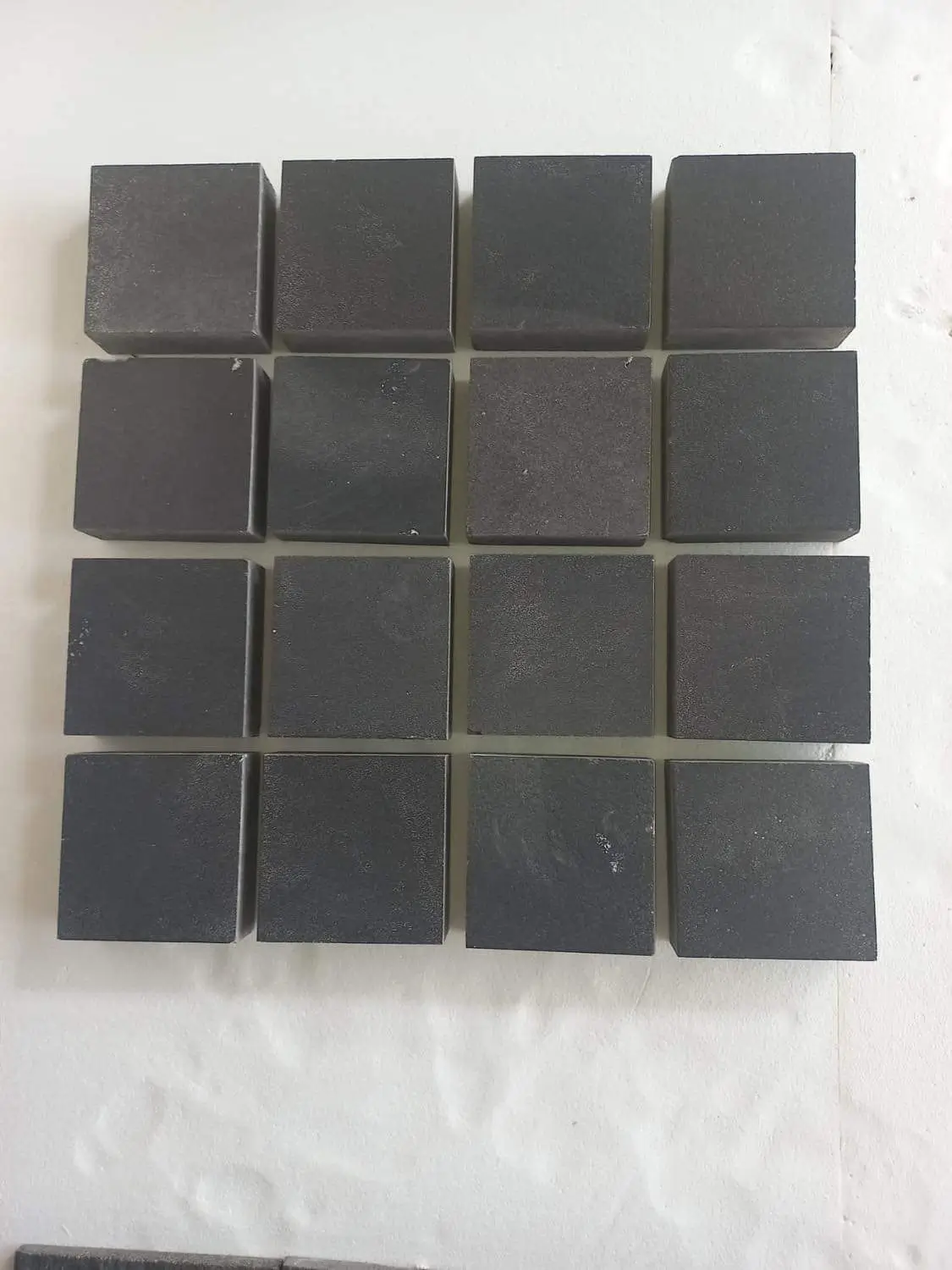
Base Depth and Compaction Standards
The standard recommendation of 4 inches of compacted aggregate base works fine in stable, sandy loam. In Arizona’s caliche-heavy soils — which dominate much of the Phoenix basin and extend into Yuma’s agricultural fringes — you’re dealing with a material that behaves unpredictably when saturated. Caliche has a compressive strength that rivals weak concrete in dry conditions, but it can soften and crack along natural fault lines during monsoon saturation events, displacing edging stones that looked perfectly set six months earlier.
Your base specification needs to account for the actual soil profile, not the generic one. Cobblestone pathway edging across Arizona landscapes performs best when the base depth is determined after a probe test — a simple 3-foot rod driven by hand tells you whether you’re hitting caliche at 8 inches or 30 inches. That depth informs whether you need 4 inches of base or 6, and whether crusher fine or 3/4-inch minus aggregate is the right call for your drainage layer.
- Desert soils with caliche at 12 inches or less: 4-inch crushed aggregate base with 2-inch bedding sand is typically sufficient
- Sandy loam profiles without caliche: 6-inch base required to compensate for lower lateral stability
- Expansive clay soils (rare in low desert, more common in higher elevation zones): 8-inch base with geotextile fabric separator is the minimum defensible specification
- Compaction standard: 95% Proctor density minimum for base layers under load-bearing edging
- Bedding sand layer: 1 to 1.5 inches of coarse concrete sand, screeded level — do not use decomposed granite as a substitute in code-reviewed installations
At Citadel Stone, we recommend specifying base depth in your project documentation before ordering material — knowing your soil profile affects how much aggregate you’ll need alongside your cobblestone order, and it avoids the common situation where a delivery truck arrives with edging stone but the base material calculation is off by half a yard.
Frost Line Considerations in Arizona
Most low-desert installations in the Phoenix metro and Yuma corridor operate at a frost depth of essentially zero — the IRC frost map shows less than 6 inches of frost penetration for elevations below 2,000 feet. That changes dramatically once you move north. In Flagstaff, which sits at 6,900 feet, the frost depth reaches 18 to 24 inches, and the Arizona Department of Transportation’s regional standards for Coconino County reflect that reality in pavement base requirements that inform residential edging practice as well.
Frost heave doesn’t just lift stones — it rotates them. A cobblestone edging course that’s perfectly plumb in October can be angled 15 degrees outward by March if the base wasn’t taken below the frost line. For high-elevation Arizona projects, your base must extend at least 2 inches below the published frost depth for that elevation zone, and the aggregate gradation should include no material that retains water — which rules out decomposed granite as a primary base component at elevations above 5,000 feet.
- Elevations below 2,500 feet: Frost depth non-critical, standard base specifications apply
- Elevations 2,500–5,000 feet: 8-inch minimum base depth, drainage-focused aggregate
- Elevations above 5,000 feet: Base depth must clear frost line with 2-inch margin; geotextile barrier recommended between subgrade and base
- Freeze-thaw cycle rating: Specify cobblestone with ASTM C1195 absorption below 3% for freeze-thaw exposed installations
Seismic Considerations for Edging Systems
Arizona sits within a seismically active zone — the state experiences moderate seismic activity primarily along the Basin and Range fault systems that run through the central and southern portions. The USGS hazard maps show peak ground acceleration values of 5–10% g for much of metropolitan Arizona, which doesn’t trigger structural engineering review for residential edging, but it does inform how you should approach edge restraint systems for larger cobblestone installations adjacent to walls or grade changes.
Natural stone border installation in Arizona on hillside lots or adjacent to retaining structures benefits from a flexible restraint approach rather than rigid mortar beds. Mortared cobblestone edging looks cleaner but transfers seismic movement directly to the stone, causing fracture at the joint rather than movement at the base. Dry-set installations with polymeric sand joints allow minor lateral displacement that can be reset without material replacement — which is a significant advantage in Sedona‘s red rock country, where lot topography creates complex seismic response patterns that differ from flat urban sites.
- Dry-set cobblestone with polymeric sand outperforms mortared systems in seismic zones by allowing controlled micro-movement
- Edge restraint spikes should be 10-inch minimum length in seismically active zones — standard 6-inch spikes pull free under lateral loading
- Avoid rigid concrete haunching directly against freestanding walls where fault proximity is flagged in your county’s geohazard maps
- Consult the Arizona Geological Survey’s fault trace maps before specifying permanent edging adjacent to grade changes greater than 4 feet
Material Thickness and Load Specification
Cobblestone edging in Arizona residential applications typically runs 3.5 to 4 inches nominal thickness for standard garden borders. That’s adequate for pedestrian loading and light landscape equipment — a standard 21-inch walk-behind mower with full bag runs about 80 pounds per wheel, which falls well within the bearing capacity of a properly bedded cobble at that thickness. The specification challenge comes when the edging doubles as a wheel stop for vehicles, which is more common in desert garden layouts than in other regions.
Desert garden stone edging that Arizona homeowners choose for driveway-adjacent beds needs to meet a different load threshold. Vehicle wheel-stop applications require a minimum 4-inch nominal cobblestone thickness, a 6-inch compacted aggregate base, and lateral restraint on both sides of the edging course — not just the garden side. Edge restraints on the paving side prevent horizontal displacement under repetitive wheel loading, which is the failure mode you’ll encounter after 3–5 years without it. Specifying Arizona cobblestone edging from Citadel Stone in vehicle-adjacent applications means selecting from the 4-inch-plus product range and confirming the base specification before installation begins.
- Garden border, pedestrian only: 3.5-inch nominal cobblestone, 4-inch base
- Garden border adjacent to vehicle areas: 4-inch nominal minimum, 6-inch base, bilateral edge restraint
- Driveway wheel stop function: 4.5-inch minimum, concrete haunching on vehicle side, polymeric sand on garden side
- Point load testing standard: ASTM C170 compressive strength — specify 8,000 PSI minimum for vehicle-adjacent applications
Drainage and Slope Compliance
Arizona’s monsoon season delivers rainfall intensity that can exceed 2 inches per hour — and cobblestone edging that doesn’t account for drainage direction becomes a dam rather than a border. The most common code citation in Arizona landscape inspections involves edging systems that redirect sheet flow toward structures, which violates the IRC’s Section R401.3 surface drainage requirements as adopted by Arizona municipalities.
Your edging installation must maintain a positive drainage path on both sides of the course. In practice, that means the garden bed grade behind the edging should slope away from structures at no less than 1/4 inch per foot, and the paved area in front must maintain its designed cross-slope. Installing cobblestone pathway edging across Arizona landscapes on a perfectly level grade is asking for a monsoon problem — the stone acts as a low dam that pools water against whatever is upslope of it.
Sedona’s red rock runoff generates high-velocity sheet flow during intense rain events, and edging systems there are often required to incorporate drainage gaps or permeable joint spacing that allows water to pass through rather than redirecting it. The city’s stormwater management standards specifically reference landscape edging as a contributing factor in nuisance flooding complaints, and local inspectors are trained to look for edging placement that conflicts with approved drainage plans.
- Minimum cross-slope on paved surface adjacent to edging: 1.5% (3/4 inch per foot)
- Garden bed grade behind edging: 2% minimum slope away from structures
- Permeable joint spacing for high-flow areas: every 4 to 6 linear feet, leave a 1/2-inch open joint to allow sheet flow passage
- Avoid edging placement that intersects a natural swale path — redirect around it or design an engineered drainage channel integration
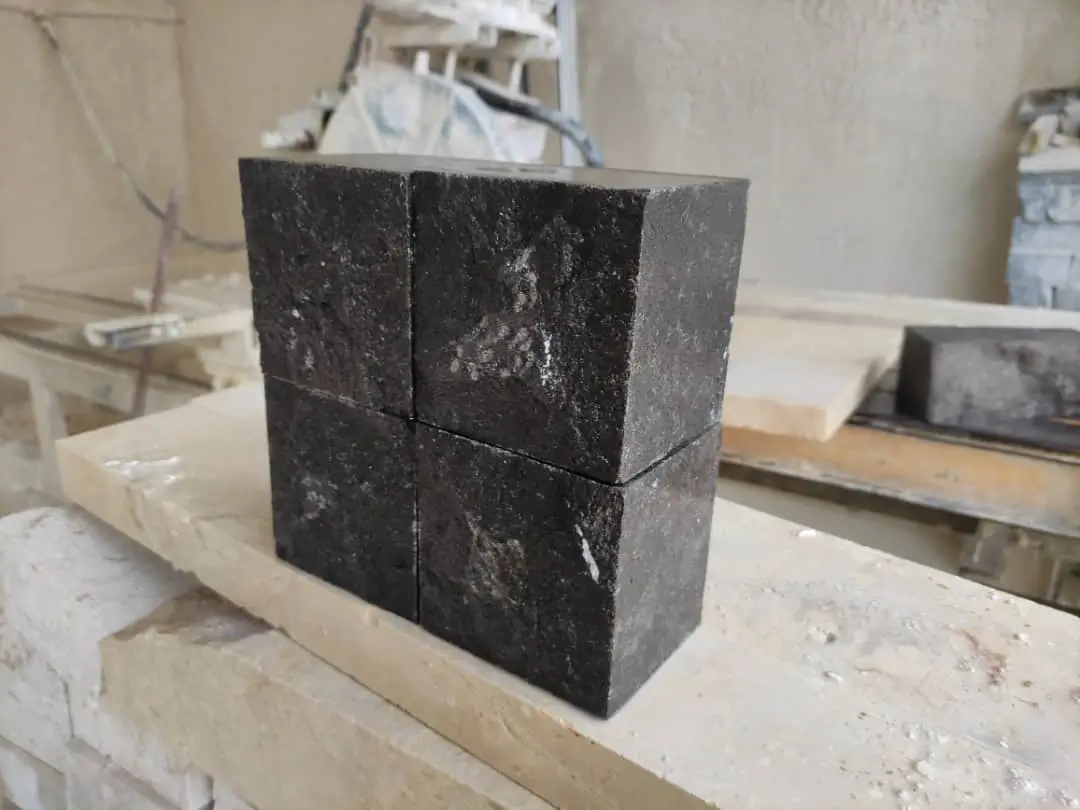
Material Selection for Arizona Conditions
Cobblestone selected for installing cobblestone edging in Arizona gardens needs to score well on three performance axes simultaneously: thermal stability, absorption rate, and splitting resistance. Arizona heat-resistant stone garden borders aren’t just about surface temperature — they’re about how the stone behaves through the daily thermal cycling from 70°F at sunrise to 115°F surface temperature by early afternoon. Materials with high absorption rates saturate during monsoon season and then crack when that moisture is driven out rapidly by post-storm heat spikes.
Basalt and quartzite perform best for low-desert applications below 3,000 feet elevation — both exhibit absorption rates below 1%, making them essentially impervious to the saturation-and-drying stress cycles that shorten the life of softer stones. Granite cobblestone in the 2–3% absorption range is also appropriate and widely available through Arizona supply networks. What you want to avoid is limestone or sandstone cobblestone in high-sun, low-desert installations — both materials absorb significantly more moisture and spall faster under Arizona’s thermal stress conditions unless they’re sealed on a rigorous biennial schedule.
Warehouse stock availability matters here. Citadel Stone maintains consistent cobblestone inventory in Arizona, which means your project doesn’t face the 6–8 week lead times associated with quarry-direct imports. For time-sensitive projects where the garden is being staged for a seasonal planting, having material available from a local warehouse rather than waiting on a supply truck from an out-of-state distribution center can determine whether the installation happens before or after monsoon season.
- Basalt cobblestone: Best overall performance for low-desert, absorption under 1%, excellent thermal stability
- Quartzite cobblestone: Outstanding splitting resistance, suitable for all Arizona elevation zones
- Granite cobblestone: Good all-around performer, widely available, absorption 1–3%, appropriate for most residential applications
- Limestone cobblestone: Use only at elevations above 4,000 feet and with biennial sealing commitment
- Sandstone cobblestone: Not recommended for exposed Arizona edging — spalling risk within 5–8 years in low desert
Installation Sequence and Field Technique
The installation sequence for cobblestone edging in Arizona gardens follows a logic that experienced field crews know but that often gets compressed under schedule pressure — and the compressing always shows up in callbacks. Set your string lines first, then excavate to base depth, then compact, then set edge restraints, then place bedding, then lay stone. The single step that gets skipped most often is re-compacting the bedding sand after it’s screeded. Foot traffic during string line setup or material staging will create soft spots that appear as settled stones 90 days after installation.
In Yuma, where soil temperatures at 4 inches depth can exceed 110°F during summer installation windows, bedding sand dries and shifts faster than in higher-elevation zones. Dampening the sand slightly before screeding — not saturating it, just moisture-conditioning it — prevents the sand from dusting and moving under cobblestone placement. This is a field adjustment that doesn’t appear in any manufacturer specification sheet but makes a measurable difference in joint consistency on hot-weather projects.
- Excavation: Set depth from finished grade back to bottom of base layer — measure from the finished paved surface grade, not existing ground
- Compaction: Two passes minimum with plate compactor — first pass at 90% Proctor, second pass to 95%
- Edge restraint: Stake on both sides before placing bedding sand — restraints shift if placed after stone is laid
- Bedding sand: 1 to 1.5 inches only — thicker beds compress unevenly and create rocking stones
- Stone placement: Start from a fixed corner and work outward — never start in the middle of a run
- Jointing: Polymeric sand requires two passes with a plate compactor at reduced speed after installation, then activation watering within 30 minutes
Final Recommendations
The structural case for cobblestone edging in Arizona is straightforward when you’ve done the regulatory homework upfront. Pull your county grading requirements, check your elevation zone against frost depth maps, confirm your soil profile with a probe test, and specify material thickness based on actual expected loading — not the generic residential default. These aren’t bureaucratic steps; they’re the framework that determines whether the installation performs for 20 years or requires a costly reset after the first severe monsoon season.
Keep your project documentation organized — base depth calculations, compaction records, and material specifications should travel with the project file, not stay in someone’s head. When county inspectors or HOA architectural review boards ask questions post-installation, having the specification rationale documented is the difference between a quick approval and a drawn-out dispute. For ongoing performance beyond installation, How to Maintain Cobblestone Walkways in Arizona’s Climate provides practical guidance on joint sand replenishment, sealing schedules, and post-monsoon inspection protocols that extend the useful life of any cobblestone system installed to Arizona standards.
Contractors in Flagstaff, Chandler, and Yuma specify Citadel Stone cobblestone edging for its consistent edge profile and suitability for the caliche-heavy ground conditions common across Arizona desert garden beds.