
Thermal Cycling: The Hidden Force Behind Cobblestone Walkway Failures
Cobblestone walkway maintenance in Arizona’s climate demands a fundamentally different approach than anywhere else in the country — not because of heat alone, but because of the relentless mechanical stress caused by temperature cycling. A Phoenix installation can swing 40–50°F between a summer night and midday, and that daily expansion-contraction cycle accumulates micro-fatigue in your joint material faster than UV exposure or foot traffic ever could. Understanding this cycling dynamic is the foundation of every maintenance decision you’ll make.
Natural cobblestone expands at roughly 3.5 to 5.5 × 10⁻⁶ per °F depending on the specific stone composition. Over a 50°F daily swing, a 10-foot run of cobblestone walkway will move approximately 0.02 to 0.03 inches. That sounds minor until you multiply it by 365 cycles per year — and then by the fact that monsoon season introduces rapid thermal shocks when cool rain hits 160°F surface stone. Your joints absorb every one of those cycles, and they fail quietly long before you notice the problem above grade.
Joint Stabilization for Cobblestone Paths Across Arizona
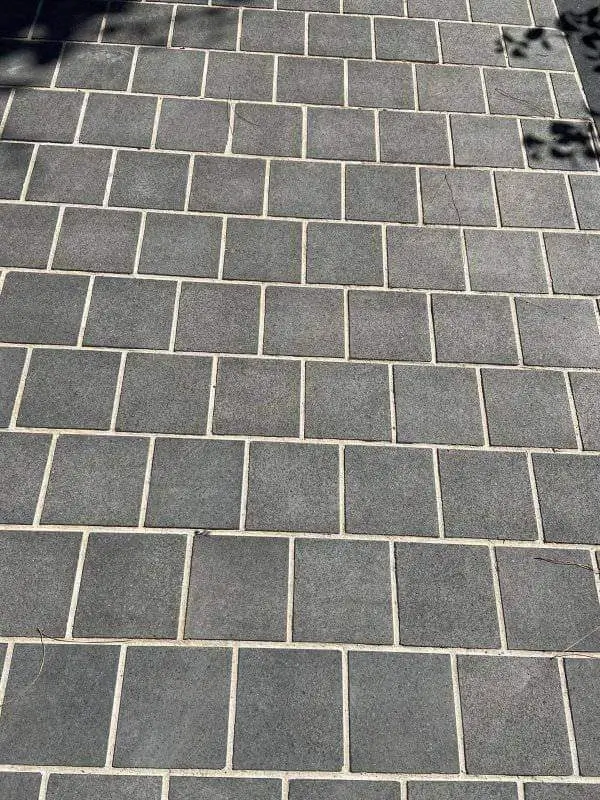
Joint sand is your walkway’s most vulnerable component, and in Arizona it degrades through three mechanisms simultaneously: thermal cycling that pumps fine particles upward, monsoon washout that evacuates loosened material in hours, and UV-accelerated binder breakdown in polymer-modified sands. Standard polymeric sand formulated for moderate climates typically carries a heat activation ceiling around 130°F — a temperature your cobblestone joints in Phoenix will exceed by June every single year.
Effective joint stabilization for cobblestone paths across Arizona requires products rated for continuous service above 140°F. High-temperature polymeric sand blends, available from specialty stone suppliers, use acrylic binders with glass-transition temperatures above that threshold. You’ll also want to evaluate joint depth — cobblestone installations with joints shallower than 1.25 inches provide insufficient mechanical interlock, meaning the stone units begin rocking under load as the base breathes through thermal cycles.
- Inspect all joints in early spring before peak heat season — look for surface crazing or sand loss exceeding 20% of joint depth
- Use a polymer-modified jointing compound rated for desert climates, not standard contractor-grade polymeric sand
- Repack joints when depth drops below 75% of the stone thickness — waiting for visible gaps means the base is already compromised
- After monsoon events, check for joint washout within 72 hours while soil is still workable for tamping
Understanding Thermal Expansion and What the Numbers Mean for Your Walkway
Thermal expansion calculations aren’t just academic — they directly tell you where to cut expansion gaps and how often to inspect them. For cobblestone walkway maintenance in Arizona’s climate, the design temperature range you should engineer against isn’t the comfortable 70–100°F that outdoor living brochures show. The real range runs from roughly 28°F on a cold December night in Tucson to 175°F+ on the surface of dark-jointed cobblestone in August. That’s a potential 147°F total range against which your installation must flex and recover without cracking its border restraints or heaving individual stones.
The math matters here. Using a mid-range thermal expansion coefficient of 4.5 × 10⁻⁶/°F and a 147°F operational range, a 20-foot run expands approximately 0.16 inches at maximum heat relative to its coldest-winter state. Most edge restraint systems allow only 0.05 to 0.08 inches of flex before cracking. This is precisely why annual inspection of border conditions is essential — not just the field stones — because the perimeter is where thermal stress concentrates and fractures first.
Monsoon-Season Stone Path Upkeep on AZ Properties
The monsoon window between July and September creates a maintenance challenge that’s genuinely unique to Arizona — it’s the combination of thermal shock and hydrostatic intrusion happening simultaneously. Monsoon-season stone path upkeep on AZ properties starts well before the first storm cell rolls in. Your pre-monsoon checklist should be completed by late June because you won’t have time to react once the season begins.
Surface sealing is your primary line of defense, but the application window is narrow. Sealers applied to stone that’s above 95°F surface temperature cure too rapidly, trapping outgassing vapor below the film and creating bubble defects within weeks. Your target application temperature is 70–85°F surface, which in most of Arizona means early morning applications in May or early October. Attempting sealer application at midday in September after a rain — when the stone is still warm — is one of the most common field mistakes that leads to premature sealer failure.
- Complete a thorough joint inspection and repack no later than mid-June
- Apply penetrating sealer in cool morning conditions — stone surface temperature below 90°F is essential
- Clear drainage channels around the walkway perimeter to prevent sheet flow from undermining the base during heavy storm events
- After significant monsoon events exceeding 1 inch of rain, walk the path looking for any stones that have shifted more than 1/8 inch from adjacent units
Diligent monsoon-season stone path upkeep on AZ properties also means documenting baseline joint depths before the season so you have a measurable reference when assessing post-storm sand loss. A simple photo log taken at the same joints each year gives you trend data that visual inspection alone cannot provide.
Caring for Cobblestone Walkways in Arizona Heat — What Actually Degrades
Caring for cobblestone walkways in Arizona heat is less about cleaning frequency and more about understanding which degradation mechanisms are actually at work. The stone itself — if you’re working with dense basalt, granite-based cobblestone, or properly quarried limestone — will outlast most other walkway materials in heat exposure. What fails is the system around it: the base, the joints, the sealer, and the edge restraint.
Thermal fatigue at the base level is the slow-burn problem most homeowners don’t catch until it’s expensive. Decomposed granite base material, popular in Arizona landscaping, performs adequately in dry conditions but migrates under repeated wet-dry cycling during monsoon season. A properly compacted Class II base aggregate or crusher-run material at 95% Proctor density will resist that migration significantly better. Your compaction spec matters as much as your stone selection for cobblestone walkway maintenance in Arizona’s climate.
In Scottsdale, where many cobblestone installations sit adjacent to irrigated turf areas, capillary moisture migration is an additional factor. Irrigation water wicks laterally under the walkway base, creating localized saturation zones that soften the sub-base during peak heat when the stone above is pushing maximum thermal load downward. Creating a positive separation between irrigation zones and walkway edge restraint — at least 12 inches — dramatically reduces base softening in these installations. Caring for cobblestone walkways in Arizona heat means accounting for these micro-climate conditions at the installation boundary, not just at the stone surface.
The Sealing Schedule Your Cobblestone Walkway Actually Needs
The standard recommendation of “seal every 2–3 years” was calibrated for moderate climates. In Arizona, UV radiation intensity and thermal cycling accelerate sealer degradation to the point where an 18-month inspection cycle is a more defensible standard. You’re not necessarily resealing every 18 months — you’re evaluating. A simple water bead test on a clean, cool stone surface tells you whether the sealer is still performing: if water absorbs within 30 seconds, a fresh application is needed.
Penetrating sealers outperform topical film sealers for cobblestone walkway maintenance in Arizona’s climate because they don’t create a surface film that can delaminate under thermal cycling. Silane-siloxane formulations at 40% active solids concentration provide excellent water repellency without changing the stone’s natural appearance — which matters for the aesthetic character of cobblestone installations. Film-forming acrylics can look good initially but will peel at joint interfaces within 12–18 months under Arizona thermal stress.
- Use a penetrating silane-siloxane sealer with minimum 40% active solids content
- Apply only when stone surface temperature is between 50°F and 85°F — morning applications work best
- Allow 48-hour cure time before any moisture exposure, including irrigation overspray
- Two thin coats outperform one heavy coat — allow full absorption before the second pass
- Never apply sealer over damp stone — the pores need to be open to accept penetrating chemistry
At Citadel Stone, we recommend verifying that the sealer chemistry you select is specifically tested for high-UV environments — not all penetrating sealers carry the same UV stability, and the difference becomes visible within the first Arizona summer. Checking warehouse stock of the correct sealer formulation before your scheduled maintenance window prevents having to substitute products at the last minute when weather conditions are marginal.
Base Conditions and Thermal Heave: The Problem Below the Surface
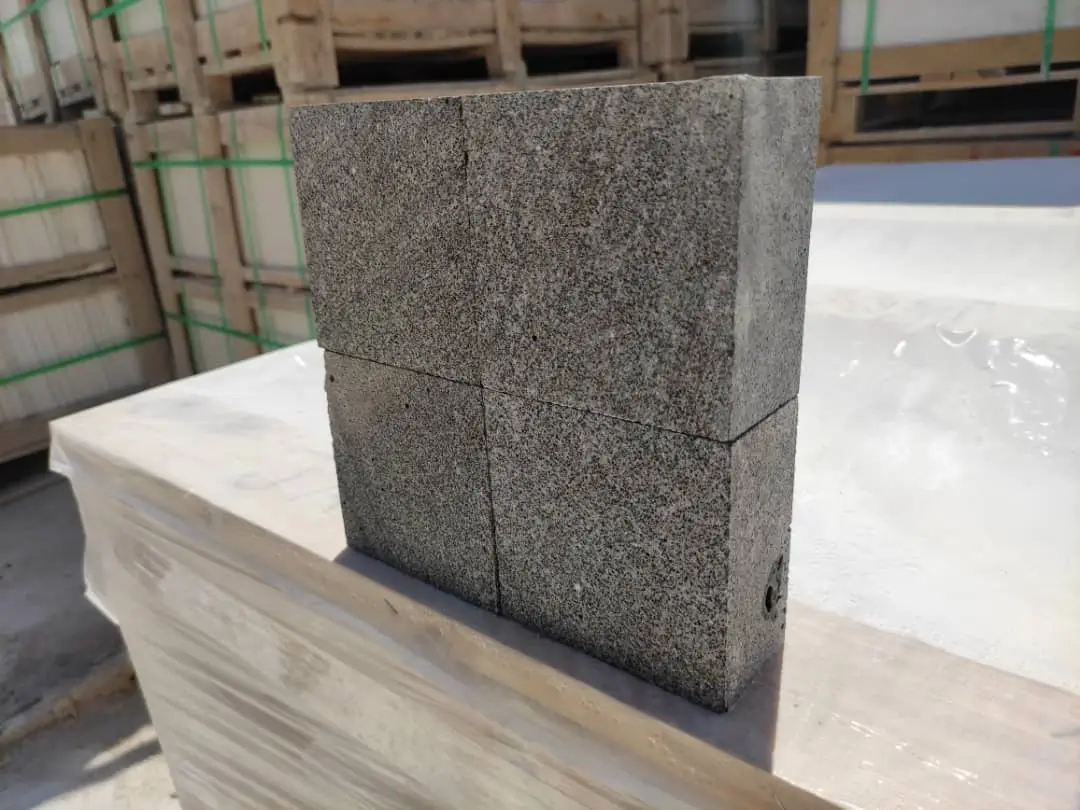
Thermal heave in cobblestone walkways is often misdiagnosed as frost heave, but in Arizona the mechanism is fundamentally different. At elevations ranging from 2,300 to 3,000 feet in Tucson residential areas, winter nights can drop to the upper 20s, creating genuine freeze-thaw conditions on the stone surface and in the upper inch of jointing material — even if ground frost is rare. The heave you see isn’t from soil freezing but from clay-bearing sub-soils expanding with moisture uptake during monsoon season and then contracting during the long dry period through spring.
Your cobblestone walkway in Arizona needs a base assembly that accounts for this moisture-driven dimensional change in native soils. A minimum 4-inch compacted aggregate base on stable soils, or 6 inches on expansive clay soils, provides enough structural mass to resist minor sub-soil movement. If your soil report shows plasticity index above 15, you’re in territory where a geotextile separation fabric between native soil and base aggregate is no longer optional — it prevents clay migration into the base aggregate that gradually destroys your compaction over three to five monsoon seasons.
- Specify Class II base aggregate (3/4-inch crushed aggregate) at minimum 4-inch depth for standard conditions
- Increase to 6 inches on soils with plasticity index above 15 — common in low-desert Arizona
- Install non-woven geotextile fabric at the native soil interface when clay content exceeds 30%
- Set 1-inch bedding sand depth — thicker bedding allows more settlement variation under thermal cycling
For your ongoing maintenance approach, probing the base every two to three years with a ground-penetrating tool or simply by lifting a border stone at a corner gives you early warning of base migration before you develop visible surface displacement. Catching a 1/4-inch differential early costs far less than releveling a 40-square-foot section after the base has consolidated unevenly through multiple heat-and-moisture cycles. For material selection guidance and supply planning, Citadel Stone walkway stone for Arizona provides detailed product information to match stone type with your specific base and climate zone conditions.
Arizona Summer Cobblestone Walkway Care Tips for High-Cycle Seasons
The practical Arizona summer cobblestone walkway care tips that make the biggest difference aren’t glamorous — they’re about timing and consistency. Surface cleaning during summer should happen in early morning before thermal stress builds, because applying any water-based cleaner to stone above 130°F surface temperature creates rapid evaporation that leaves mineral deposits concentrated on the surface. Those deposits aren’t just cosmetic — they can initiate efflorescence cycles that indicate sub-surface moisture pathways you need to investigate.
Efflorescence on cobblestone is a maintenance signal, not just a staining issue. White salt deposits appearing consistently at the same joint locations mean water is finding a path through your base and carrying dissolved minerals upward through the stone. In a properly functioning installation, efflorescence should diminish after the first year. Persistent or recurring deposits after year two tell you that either your drainage geometry has changed — a common result of adjacent landscaping growing and redirecting surface flow — or your joint material has developed channels from thermal cycling.
- Clean stone surfaces in early morning before temperatures exceed 85°F to prevent cleaning solution flash-evaporation
- Use pH-neutral cleaners on sealed cobblestone — acidic cleaners degrade silane-siloxane sealers with repeated use
- Address efflorescence deposits with diluted white vinegar solution (1:10) no more than twice per year — more frequent use can etch stone surfaces
- Inspect for rocking stones after every significant temperature swing exceeding 40°F in a 24-hour period — these typically occur in late September and early March
What Long-Term Cobblestone Walkway Performance Requires in Arizona
The installations that perform well through 20-plus Arizona seasons share a common trait: the maintenance program was designed around the thermal cycling reality of the desert, not adapted from generic stone care guides written for temperate climates. Cobblestone walkway maintenance in Arizona’s climate is a system-level discipline — joints, base, sealer, and drainage all need to be in sync with each other and with the specific expansion-contraction demands of your desert environment. The stone itself is durable; it’s the supporting system that determines longevity.
For projects planning new installations alongside their maintenance upgrades, understanding proper installation fundamentals goes hand-in-hand with long-term upkeep strategy. How to Install Cobblestone Walkway in Arizona covers the foundational details that directly impact how manageable your ongoing maintenance will be — because the easiest walkway to maintain is one that was installed correctly from the start. Sourced direct from quarries in Turkey, the Mediterranean, and beyond, Citadel Stone cobblestones used in walkways across Phoenix, Scottsdale, and Gilbert maintain dimensional stability through Arizona’s intense summer heat cycles.