

Why Drainage Defines Cobblestone Walkway Success in Arizona
Base saturation failure — not surface wear — is the primary reason cobblestone walkway installations in Arizona’s desert regions underperform, and understanding that distinction changes every decision you make from excavation onward. To install cobblestone walkway Arizona desert projects correctly, your drainage architecture needs to be locked in before a single stone touches the ground. Arizona’s monsoon season delivers intense, short-duration rainfall events that routinely produce 1–2 inches in under an hour, and that hydraulic load hitting an improperly graded base will shift your cobblestones faster than any surface traffic ever could. The difference between a 25-year installation and one that needs releveling in three years almost always traces back to how seriously the drainage design was taken at the start.
Arizona Precipitation Patterns and Your Installation Plan
Arizona’s water story is more complicated than most out-of-state specifiers expect. The desert isn’t simply dry — it cycles between extreme drought and sudden, violent precipitation in ways that stress hardscape systems far more than gradual, consistent rainfall does. The North American Monsoon season, running roughly July through September, brings convective storms that drop intense rain on baked, compacted soil with almost zero absorption capacity. Water doesn’t soak in — it runs across the surface, pools, and then forces itself laterally into any weak point in your base system.
Beyond monsoon season, winter frontal systems bring slower, sustained rainfall that actually penetrates deeper into the soil profile. That moisture creates expansion pressure in clay-rich soils that many installers in Chandler encounter during late-season projects — the soil swells upward subtly, enough to displace cobblestones that weren’t properly set in adequate bedding sand depth. Following the right cobblestone walkway installation steps in Arizona means accounting for both rainfall types, not just the dramatic monsoon events everyone focuses on.
Site Evaluation and Slope Assessment Before You Break Ground
Your site evaluation determines whether the entire project succeeds or becomes a recurring maintenance obligation. Start by establishing your finished surface elevation relative to adjacent structures, lawn edges, and the natural drainage path your property already uses. Arizona’s caliche layer — that calcium carbonate hardpan found at varying depths across the valley — creates a perched water table effect that most homeowners never anticipate. Monsoon water infiltrates through the topsoil, hits the caliche, and then travels horizontally with nowhere vertical to go.
The minimum cross-slope for a cobblestone walkway in this region is 1.5%, but pushing to 2% gives you meaningful buffer during heavy storm events. For a natural stone path setup AZ homeowners rely on long-term, you want the surface water moving positively toward a defined collection point — a drainage swale, a permeable zone, or a connected storm drainage system — not just sheeting off wherever the terrain allows. Map your slope with a transit level or digital inclinometer before excavation, and stake your drainage outlets clearly so they don’t get buried during base work.
Excavation Depth and Subgrade Preparation for Desert Conditions
Standard cobblestone walkway excavation specs often cite 8–10 inches of total depth, but Arizona desert installations routinely call for 10–14 inches when monsoon drainage is a primary concern. The extra depth isn’t about frost protection — it’s about creating enough aggregate volume to handle rapid water infiltration during high-intensity rainfall without the base becoming unstable. Your excavation needs to mirror your planned cross-slope exactly at the subgrade level; a flat subgrade with a sloped surface creates inconsistent bedding sand thickness that causes differential settling.
- Excavate to a consistent depth across the full walkway footprint, checking every 4–5 feet with a story pole or grade board
- Remove any disturbed soil that cannot be compacted back to 95% Standard Proctor density — do not try to reuse loose fill
- Identify caliche zones and either break through or route drainage around them, depending on depth
- Install perforated drain tile at the subgrade perimeter when the walkway sits adjacent to a structure foundation
- Compact subgrade with a plate compactor in multiple passes — at least 3 overlapping passes before adding base material
Projects in Peoria frequently encounter expansive clay pockets within the top 18 inches — especially in neighborhoods developed on older agricultural land. Those pockets need to be over-excavated and replaced with clean crushed aggregate rather than just compacted in place, because clay expansion under seasonal moisture creates heave pressure that no cobblestone setting bed can resist long-term. Proper Arizona desert-rated cobblestone walkway base preparation starts with identifying and correcting these soil conditions before a single lift of aggregate goes in.
Base Material Selection and Compaction Layers
The aggregate base for laying cobblestone walkways across Arizona landscapes should be 3/4-inch crushed angular granite — not rounded river gravel, not decomposed granite, and certainly not screenings alone. Angular aggregate interlock is what gives your base its load-distributing capacity and its resistance to lateral displacement under hydraulic pressure. Decomposed granite is popular aesthetically, but it loses structural integrity when saturated, which is exactly the condition you’re designing against.
Build your base in compacted lifts. Each lift should be no more than 4 inches loose before compaction, which produces roughly 3 inches of compacted depth. For a 12-inch total base depth, that means three separate lift sequences, each fully compacted before adding the next. Skipping lift compaction and dumping the full depth in one go produces a base that looks solid until the first significant rainfall event — then it settles unevenly.
- First lift: 3/4-inch crushed angular granite, 4 inches loose, compacted to 3 inches
- Second lift: same material, 4 inches loose, compacted to 3 inches
- Third lift: either continue with 3/4-inch material or transition to clean coarse sand bedding layer at the top
- Bedding sand layer: 1 inch of washed concrete sand, screeded level, not compacted before stone placement
- Verify total compacted base depth with a probe rod at multiple points before screeding bedding sand
At Citadel Stone, we consistently advise against using polymeric sand as your bedding material — it’s a jointing product, not a base product, and substituting it creates drainage obstruction that counteracts everything your base design is trying to accomplish.
Selecting Cobblestone for Arizona Desert-Rated Performance
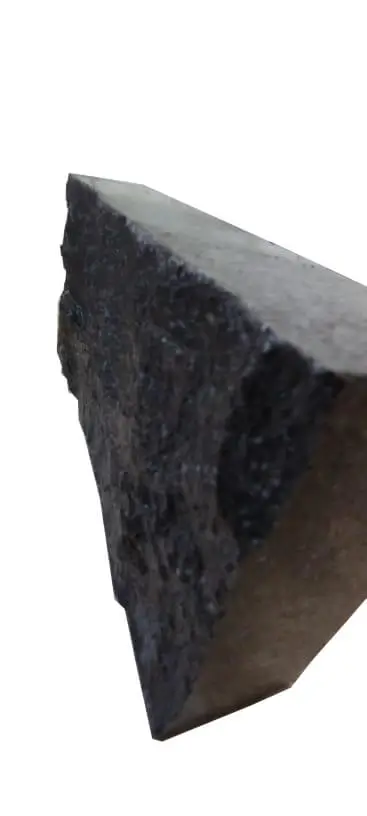
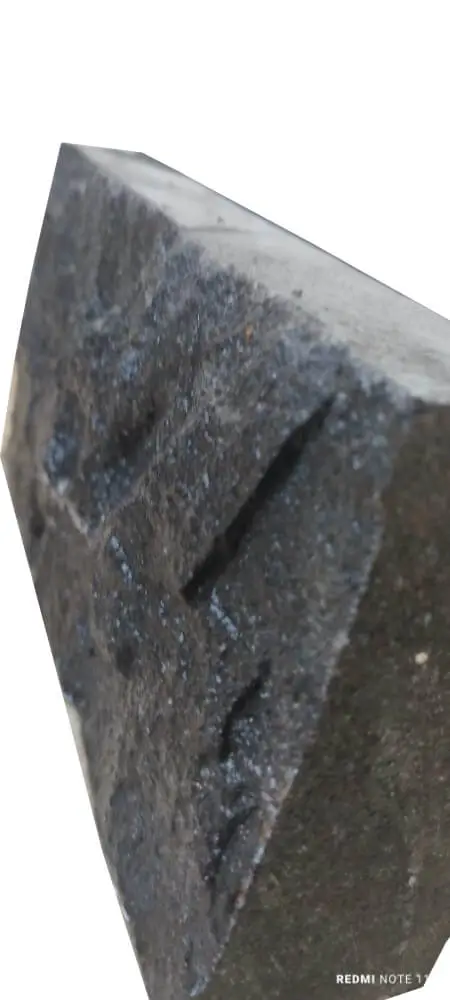
Cobblestone selected for a natural stone path setup AZ homeowners rely on performs best when the stone has an absorption rate below 3% by weight, measured to ASTM C97. High-absorption natural stones trap moisture in the stone body itself, and when that moisture heats rapidly under Arizona’s summer sun, the thermal stress cycles accelerate spalling and surface scaling. Dense basalt, granite cobblestone, and certain quartzite varieties all fall comfortably below the 3% absorption threshold and handle Arizona desert-rated cobblestone walkway base preparation demands without significant degradation.
Thickness matters more than most homeowners initially think. Walkway cobblestones should be a minimum of 2.5 inches thick for pedestrian-only applications, and 3–3.5 inches when the walkway receives any occasional vehicle crossings near driveway aprons. Thinner cobblestones concentrate point loads on the bedding sand in ways that cause individual stones to tip and rock — which then accelerates joint sand loss, which then accelerates drainage problems. You can find Arizona cobblestone walkway stone from Citadel Stone in thickness ranges appropriate for residential and light commercial applications across the state.
Installation Sequence and Pattern Layout for Drainage Performance
The laying pattern you choose directly affects how surface water moves across your cobblestone walkway. Running bond and herringbone patterns both channel water differently, and in Arizona desert conditions, herringbone at 45 degrees to the walkway axis tends to distribute runoff more evenly across the surface rather than concentrating it along joint channels. That even distribution reduces the velocity of water at any single joint, which slows joint sand erosion during heavy monsoon rainfall. These pattern decisions are a core part of the cobblestone walkway installation steps in Arizona that separate long-lasting work from projects that require early remediation.
- Establish a working line perpendicular to your starting edge and snap chalk lines every 3–4 feet as layout guides
- Start laying from the center of the walkway outward, not from an edge — this keeps your pattern symmetric and avoids accumulating small cuts at the high-visibility entry points
- Check your surface slope with a 4-foot level every 6–8 stones to catch bedding sand inconsistencies before they become a problem
- Maintain joint widths between 3/8 inch and 5/8 inch for optimal polymeric sand retention during rain events
- Use a rubber mallet and beating board to set stones, not direct mallet strikes — direct strikes fracture stone edges and create irregular joint gaps
For project areas where the walkway surface sits below the surrounding landscape — a common scenario in tiered desert gardens — you’ll need to install a perforated edge drain at the low side before cutting in your soldier course border. The edge drain intercepts water migrating from the adjacent planting beds before it can undermine your cobblestone base, and it’s far easier to install before the stones are in than after.
Jointing and Sealing for Monsoon Season Resilience
Joint sand selection is your last line of defense against moisture infiltration, and in Arizona desert conditions, polymeric sand formulated for hot-climate applications outperforms standard polymeric sand significantly. Standard formulations soften in surface temperatures above 140°F — which Arizona cobblestone surfaces routinely exceed in July and August — causing the joint to lose its binding structure right when monsoon storms hit. Hot-climate polymeric sand formulations maintain cohesion at surface temperatures up to 160°F and recover from saturation events without washing out.
Activation is critical and frequently mishandled. Polymeric sand requires a precise moisture application — enough water to fully hydrate the polymer binders without washing the sand out of the joints. In Arizona summer heat, you’re working against rapid evaporation that can pull moisture out of the joint before activation is complete. Schedule jointing work for early morning during summer months, and mist the surface lightly during the activation period if ambient temperatures are above 100°F. A single truck delivering your stone to the site on a mid-July afternoon means you’re setting up for a challenging installation window — plan your sequencing accordingly.
- Apply polymeric sand in two passes: first pass fills joints to 85% capacity, second pass tops them off after vibration settling
- Use a plate compactor with a rubber pad to vibrate sand into joints before final sweep — skipping this step leaves voids that wash out in the first rainfall
- Blow off excess sand with a leaf blower on low setting before applying activation water
- Apply activation water in a gentle, even spray — a hose-end nozzle on mist setting works better than a standard spray pattern
- Allow 24 hours before foot traffic and 72 hours before any significant water exposure
Sealing your cobblestone walkway with a penetrating silane-siloxane sealer — not a film-forming acrylic — after joint sand has fully cured reduces moisture absorption into the stone body by 60–70% and doesn’t trap water vapor that would otherwise cause spalling in thermally stressed stone. Reapply every 3–4 years in desert environments, where UV degradation cycles through sealers faster than in temperate climates.
Edge Restraints and Perimeter Drainage Details That Matter
Edge restraints on cobblestone walkways in Arizona serve a dual purpose most people overlook: they keep the cobblestone field tight under lateral pressure, and they define the hydraulic boundary that controls where surface water goes. Flexible polyethylene edge restraints staked every 8–10 inches handle the thermal expansion cycling your cobblestone field undergoes without cracking. Concrete edging, while structurally superior, transmits thermal movement directly into the field and can cause localized cobblestone displacement along the edge course during extreme heat events.
The perimeter detail where your cobblestone walkway meets a concrete driveway or sidewalk deserves careful attention in a monsoon-prone environment. Install a channel drain or slot drain at that transition point so water sheeting off the concrete doesn’t pond against your cobblestone edge restraint. In Tempe, where older neighborhoods often have moderately sloped lots with hardscaping already in place, that transition drainage detail is frequently the first thing to fail and the last thing homeowners think to address until they have cobblestone heave along the entire driveway interface. Confirming your perimeter drainage layout is another non-negotiable step when you install cobblestone walkway Arizona desert projects near existing structures.
Your Action Plan for a Long-Lasting Cobblestone Walkway
Getting a cobblestone walkway installation right in Arizona means treating drainage as the load-bearing concept it truly is — every material choice, every base thickness decision, and every joint detail should trace back to how water moves through and around the installation. The critical steps covered here — site slope assessment, deep aggregate base with proper lift compaction, dense low-absorption stone selection, hot-climate polymeric sand, and perimeter drainage details that intercept monsoon runoff before it undermines your base — each reinforce the others. Cutting any one of them short creates a vulnerability the Arizona climate will eventually expose.
As you move into project planning, verify warehouse stock availability on your stone selection early — popular cobblestone profiles in desert-appropriate densities do move quickly during the spring and fall installation seasons when contractors across the valley are placing orders simultaneously. A second confirmation of warehouse inventory before your scheduled installation date eliminates last-minute substitutions that compromise your material specifications. If you run into surface irregularities after your installation is complete or experience joint washout after the first monsoon season, consider reviewing related guidance on laying cobblestone walkways across Arizona landscapes after the fact: Flat Cobblestone Problems in Arizona? Here Is How to Fix It walks through the specific remediation steps for the most common post-installation issues desert walkways face. Proper execution from day one reduces the chance you’ll need those fixes, but it’s a resource worth having before monsoon season tests your work. Builders in Tucson, Mesa, and Flagstaff specify Citadel Stone cobblestones for walkway base systems designed to handle Arizona’s dramatic thermal cycling and seasonal monsoon drainage demands.