






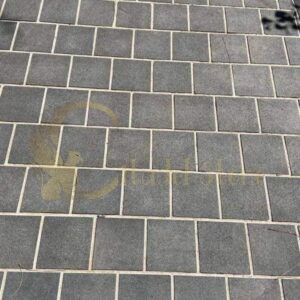




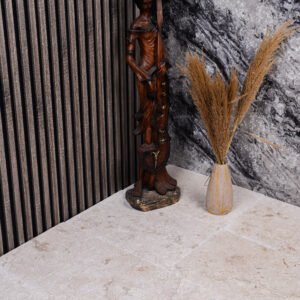
Base composition beneath large square paving slabs in Arizona determines long-term performance more decisively than material hardness or surface finish. The same 24×24 slab that performs flawlessly in a well-drained Phoenix courtyard will rock, tip, and joint-crack within two seasons when set over unexcavated expansive clay without proper subgrade treatment. The gap between a 10-year installation and a 25-year one almost always traces back to what happens below the finished surface, not above it.
What Arizona Soil Conditions Mean for Large Square Paving Slabs
Arizona sits on a complex mosaic of soil types that behave very differently under heavy stone. Caliche — that dense calcium carbonate hardpan layer — appears frequently across the low desert valleys, and your excavation plan needs to account for it specifically. In many Phoenix-area sites, caliche shows up between 12 and 30 inches below grade, and while it sounds like a problem, a well-prepared caliche layer actually functions as an excellent natural sub-base when you scarify the top 2–3 inches and recompact to 95% Proctor density before placing aggregate.
The challenge shifts dramatically in areas with expansive clay soils, which are common in parts of the Tucson basin and some northern elevation zones. Clay-heavy subgrades can exert upward pressures exceeding 2,000 psf during wet cycles, and large square patio slabs — with their broad contact area — amplify the heave effect compared to smaller unit pavers. Over-excavate by a minimum of 8 inches in confirmed clay zones, replace with non-expansive crushed aggregate, and install perimeter drainage before your base course goes down.
- Caliche hardpan: scarify and recompact rather than fully removing — preserves natural bearing capacity
- Expansive clay zones: minimum 8-inch over-excavation with engineered fill replacement
- Sandy desert soils: excellent drainage but require compacted DG or crushed aggregate base to prevent settlement
- Fill soils on new construction lots: always request geotechnical data — fill compaction varies widely and can settle unevenly under large-format stone
- Decomposed granite native soil: good drainage but low cohesion — needs a minimum 4-inch compacted base above it
Choosing the Right Format: Square, Rectangle, and Hexagon Pavers for Arizona Projects
Format selection goes beyond aesthetics — it directly affects how your installation handles differential movement in unstable soil zones. Large square patio pavers in the 18×18 to 24×24 inch range distribute point loads broadly, which is an advantage on stable compacted bases but a liability on marginally prepared ground. The larger the slab, the less tolerance for subgrade inconsistency. A 1/4-inch hollow beneath a 12×12 paver is barely noticeable; beneath a 24×24 slab, that same void creates a visible tilt and a tripping hazard.
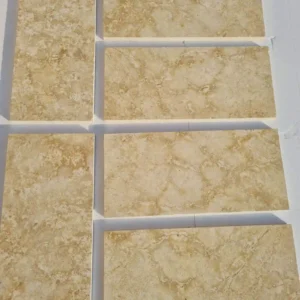
Large rectangle outdoor pavers — particularly the popular 12×24 and 16×32 formats — introduce a different consideration: directional movement. Large rectangle paver stones expand and contract along their long axis more noticeably than square units, so your expansion joint layout needs to account for orientation relative to the dominant solar exposure. Joints running perpendicular to the long axis of large rectangle stone pavers should be set at 10-foot intervals in full-sun installations, tightening to 8 feet in areas with significant east-west heat cycling.
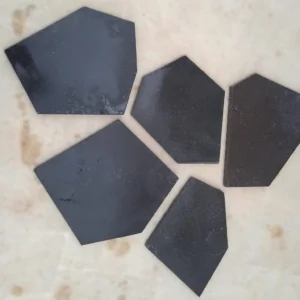
Large hexagon pavers in Arizona installations are less common in residential patios but gaining traction in commercial courtyards and high-end landscape design. Their geometry naturally creates omnidirectional load distribution, which actually compensates for minor subgrade irregularities better than right-angle formats. The trade-off is cutting complexity at borders and transitions — budget for 15–20% additional material and labor when specifying hexagonal units for anything other than a simple field installation.
- Large square patio slabs (18×18 to 24×24): best on well-prepared, stable bases — minimal tolerance for voids
- Large rectangular paving slabs (12×24, 16×32): require directional expansion joint planning
- Large hexagon pavers: superior load distribution on marginal subgrades, higher cutting waste at borders
- Mixed-format patterns using square and rectangle units together: require consistent thickness tolerance (±1/8 inch) to maintain flush surfaces
Material Types Worth Specifying for Large Square Stone Pavers in Arizona
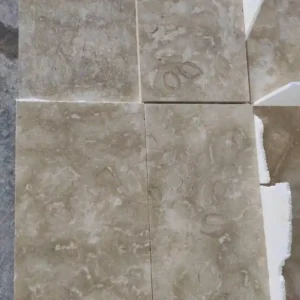
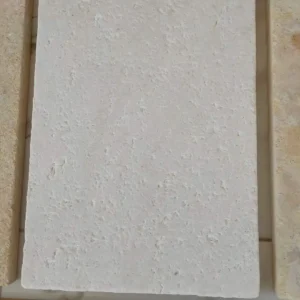
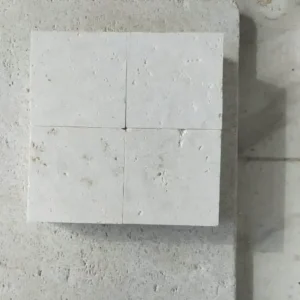
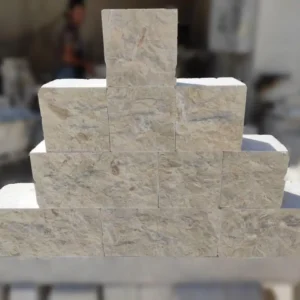
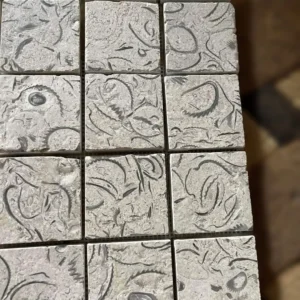
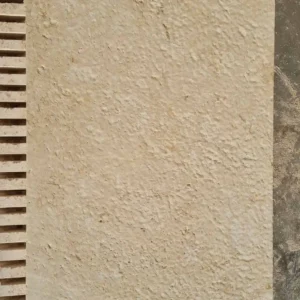
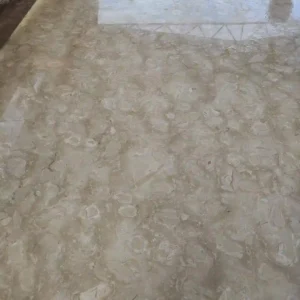
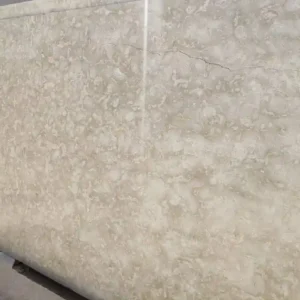
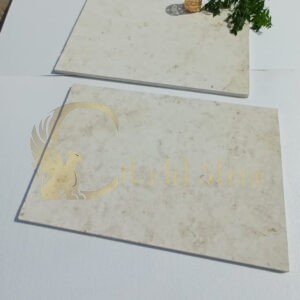
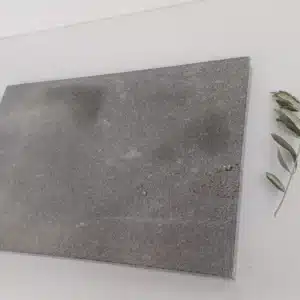
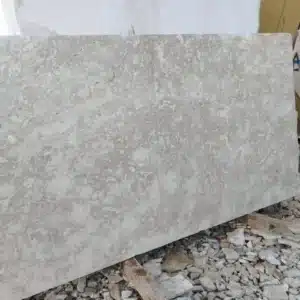
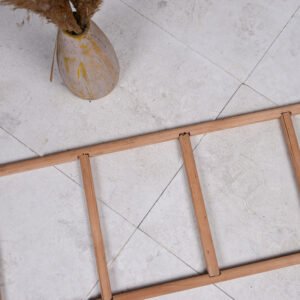
Natural stone dominates the high-performance tier for large square stone pavers in Arizona, and within that category, travertine, limestone, and basalt each bring distinct performance profiles that match different site conditions and design goals. Travertine’s interconnected pore structure — a natural drainage feature — makes it genuinely superior in areas where surface water pooling is a concern, and its thermal mass properties mean surface temperatures run 15–25°F cooler than dense concrete pavers under identical afternoon sun exposure.
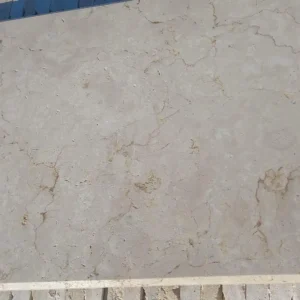
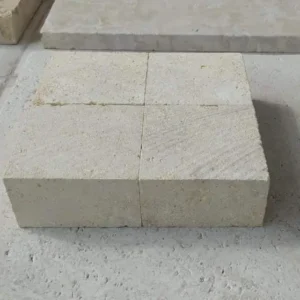
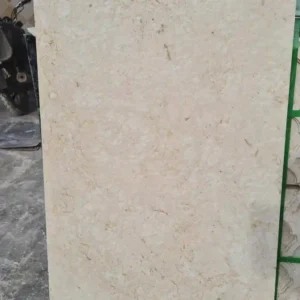
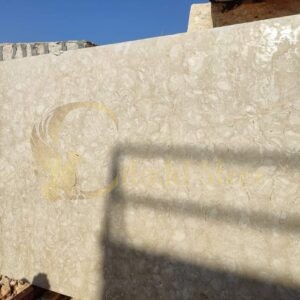
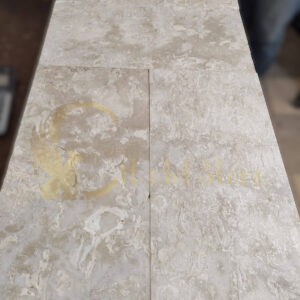
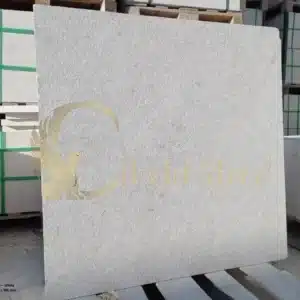
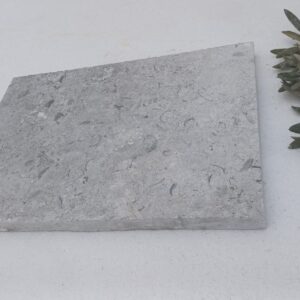
Limestone-based large square patio stones deliver excellent compressive strength — typically 8,000 to 14,000 PSI depending on density classification — and perform well in the alkaline soil conditions common across much of Arizona. The material’s natural pH compatibility with local soils means you won’t see the surface etching that some silica-rich stones develop over time in high-calcium soil environments. Citadel Stone sources limestone from established quarry partners and inspects each batch for color consistency and structural integrity before it reaches project sites.
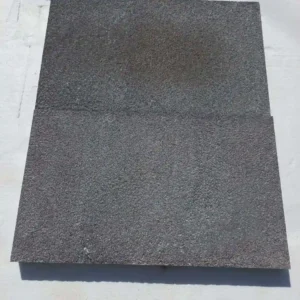
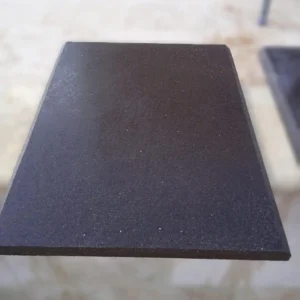
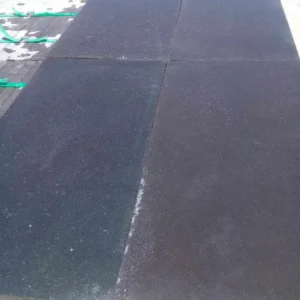
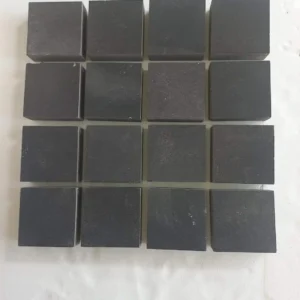
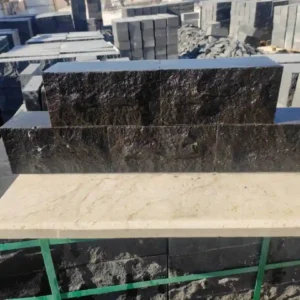
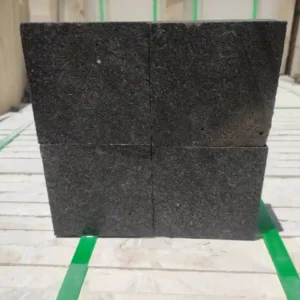
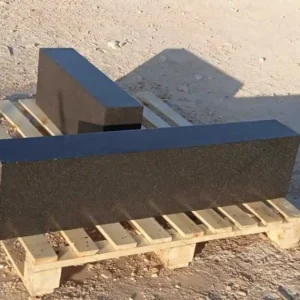
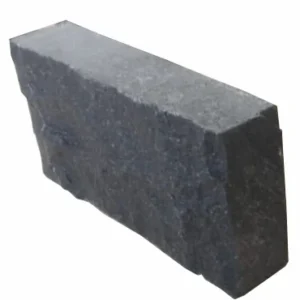
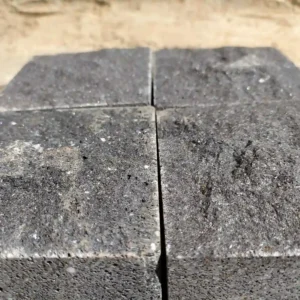
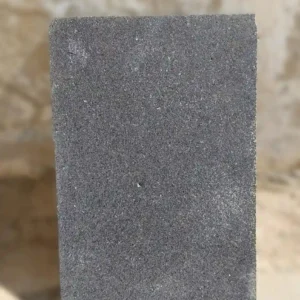
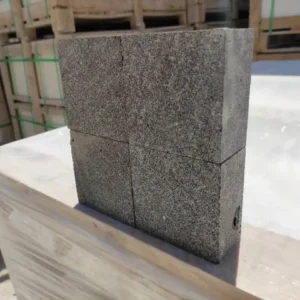
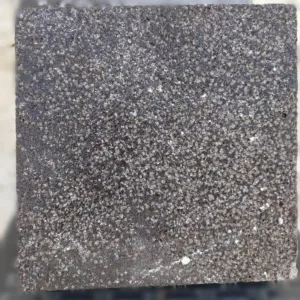
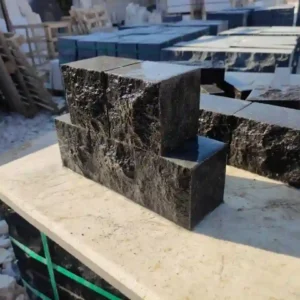
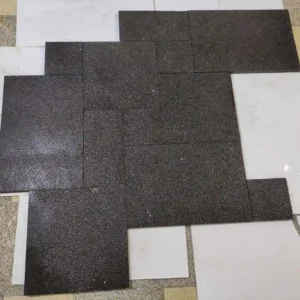
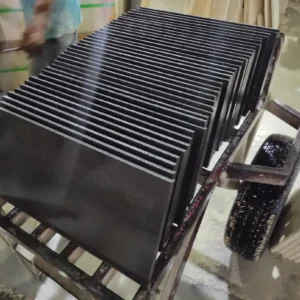
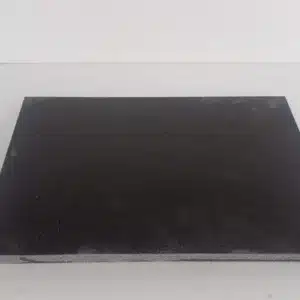
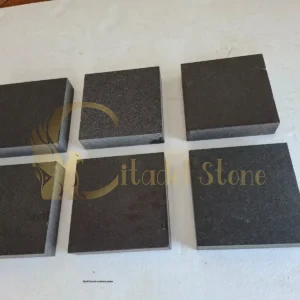
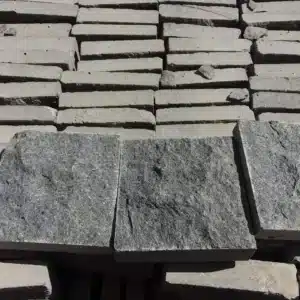
Basalt brings the highest density and compressive strength to the large square paver category — exceeding 20,000 PSI in tested specimens — making it the specification choice for driveways, heavy-traffic commercial plazas, and any application where vehicular loads or concentrated point loads are a regular factor. Its dark coloration does absorb more heat than lighter stone, so basalt large square patio stones in full-sun residential settings benefit from a light sandblasted or bush-hammered finish that reduces surface temperature while improving slip resistance ratings toward the ASTM C1028 minimum of 0.60 static COF for outdoor pedestrian surfaces.
- Travertine: best for drainage-sensitive areas, thermal comfort priority zones, pool surrounds
- Limestone: reliable choice for alkaline soil sites, wide color range, good compressive performance
- Basalt: specify for vehicular and heavy-traffic areas, high compressive strength, requires finish selection for heat management
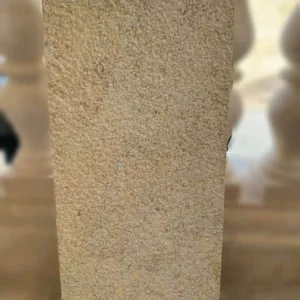
- Sandstone: attractive in Sedona-style desert modern aesthetics but requires dense-grade specification (minimum 7,500 PSI) for large format use
Base Preparation Standards for Large Rectangular and Square Patio Pavers
The base preparation spec that works in Illinois doesn’t translate directly to Arizona — and this is where projects get into trouble. Arizona’s dramatic wet-dry cycles, combined with the soil types described above, demand a base system built for volume change tolerance, not just load bearing. For large rectangular patio pavers and large square patio pavers alike, the standard specification starts at a minimum 4-inch compacted Class II road base, but in clay-affected or fill-soil zones, 6 inches is the defensible minimum.
Projects in Chandler frequently encounter silty clay loam in residential subdivisions built on former agricultural land, and field experience in that area shows that under-prepared bases account for the majority of large-format slab callbacks within the first three years. The fix — over-excavating, placing geotextile fabric before aggregate, and compacting in 2-inch lifts to 95% modified Proctor — adds cost upfront but eliminates the far more expensive repair cycle later. For long-term maintenance information on product-specific care cycles, Large Square Paving Slabs from Citadel Stone covers the climate-adjusted maintenance schedules and sealer selection guidance that apply specifically to Arizona conditions.
Your bedding layer choice matters too. A 1-inch screeded sand bed remains the standard for large square paving slabs installed dry-laid, but in areas with confirmed expansive soil or high clay content within 36 inches of finish grade, a dry-mortar bed (3:1 sand to cement, unactivated) provides better resistance to differential heave than loose sand while still allowing some vapor transmission through the joint system.
- Standard stable soil base: 4-inch compacted Class II road base + 1-inch screeded sand bed
- Clay or fill soil base: 6-inch compacted aggregate + geotextile separation fabric + 1-inch dry mortar bed
- Compaction requirement: 95% modified Proctor density throughout base layer
- Bedding layer tolerance: ±1/8 inch across the screeded surface before slab placement
- Perimeter edge restraint: always required for large format installations — no exceptions
Drainage, Slope, and Joint Design for a Large Square Paver Patio
Arizona’s monsoon season delivers intense rainfall events — sometimes 1–2 inches per hour — across a ground surface that in summer is typically bone dry and relatively non-absorptive. Your large square paver patio needs surface drainage geometry that handles sheet flow from those events without letting water pond at slab edges or infiltrate in concentrated volumes at joints. The minimum surface slope for any paved outdoor area is 1/8 inch per foot away from structures; for large-format installations with wide joints, 1/4 inch per foot is the better design target.
Joint width for large square paving slabs in Arizona should run wider than the conventional 1/8-inch recommendation found in generic installation guides. A 3/16 to 1/4-inch joint accommodates the thermal cycling range — surface temperatures on dark natural stone in Phoenix can swing from near-freezing in January predawn to 140°F-plus on a July afternoon — while still providing enough sand fill stability to prevent rocking. Polymeric sand in Arizona’s dry desert climate performs reliably in joint widths up to 1/2 inch, but follow activation instructions carefully: Arizona’s low ambient humidity means the curing window is shorter and the re-wetting requirement for proper hazing removal is critical.
For projects where permeability matters — water harvesting landscapes, permeable paving compliance zones, or low-water-use designs common in Scottsdale — open joints filled with crushed granite fines allow measurable infiltration while maintaining slab stability. This approach works well over sandy or decomposed granite subgrades but should not be used over clay-dominant soils where surface infiltration will accelerate subgrade swelling.
Sealing and Long-Term Maintenance for Large Square Patio Stones
Sealing protocols for large square patio stones in Arizona differ from what you’d spec in a humid climate. The low relative humidity and intense UV exposure here degrade silane-siloxane penetrating sealers faster than the manufacturer’s published recoat intervals suggest. Field performance data on travertine and limestone large square patio slabs across Arizona shows that a biennial sealing schedule — not the triennial interval listed on most product data sheets — maintains effective stain and water resistance in full-sun applications.
Efflorescence management deserves specific attention for Arizona projects. The alkaline soils and mineral-rich irrigation water common across most of the state accelerate the salt migration process that produces white surface deposits on natural stone. Specifying a breathable penetrating sealer rather than a film-forming topcoat allows moisture vapor to escape without carrying dissolved salts to the surface — the single most effective efflorescence prevention measure available without changing the stone itself.
- Sealing schedule: biennial recoat for full-sun installations in Arizona’s desert zones
- Sealer type: penetrating silane-siloxane for travertine and limestone; impregnating fluoropolymer for basalt and dense stone
- Efflorescence prevention: breathable penetrating sealers outperform film-forming coatings in alkaline soil zones
- UV degradation: high-altitude sites above 4,500 feet (Flagstaff region) see accelerated sealer breakdown — recoat annually
- Cleaning protocol: pH-neutral cleaners only — avoid acidic cleaners on limestone and calcium carbonate-based stones
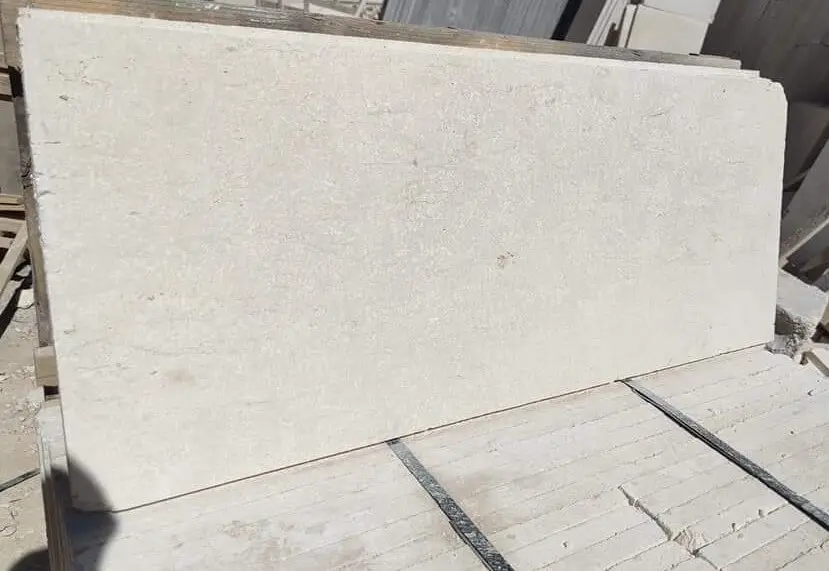
Elevation and Climate Zone Variables for Large Rectangular Stone Pavers
Arizona’s elevation range — from 70 feet above sea level at Yuma to over 7,000 feet in the White Mountains — creates performance environments that are genuinely distinct, and your specification for large rectangle stone pavers needs to reflect which zone your project occupies. The low desert below 2,000 feet (Phoenix metro, Yuma, most of the Sonoran desert corridor) never sees freeze-thaw cycles, so your primary durability concern is UV degradation, thermal expansion, and summer monsoon drainage.
Projects at middle elevations — roughly 3,500 to 5,500 feet, including parts of the Prescott valley and some Tucson basin neighborhoods — fall into a transitional zone that gets occasional hard freezes without the sustained freeze-thaw cycling of true mountain climates. Large rectangular paving slabs in this zone should meet ASTM C1262 freeze-thaw durability at the 50-cycle minimum, with absorption rates below 3% for travertine and limestone products.
High-elevation sites in Flagstaff and the surrounding Coconino Plateau experience genuine freeze-thaw cycles — sometimes 40 to 60 per season — that require full freeze-thaw resistant stone specification, tighter joint management, and a sealing schedule that accounts for moisture infiltration risk during spring snowmelt. Large rectangular paving slabs and large square patio slabs at these elevations should be specified at 1.5-inch minimum thickness, with joint sand replaced with a flexible polymeric product rated for freeze-thaw exposure.
Request Large Square Paving Slabs in Arizona from Citadel Stone
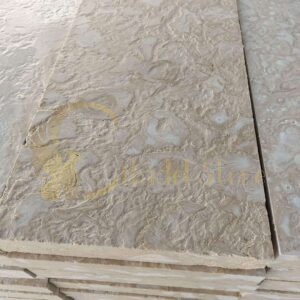
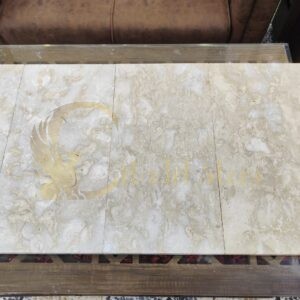
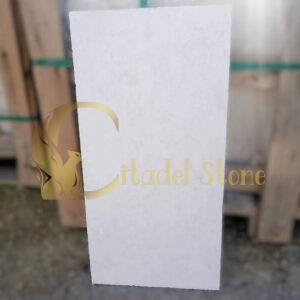
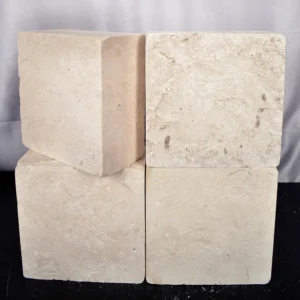
Citadel Stone stocks large square paving slabs in Arizona in standard formats including 18×18, 20×20, 24×24, and 16×16 inch sizes, available in travertine, limestone, and basalt across multiple finish options — honed, tumbled, sandblasted, and brushed. Large rectangular patio pavers are available in 12×24 and 16×32 formats from warehouse inventory, with custom cuts available on longer lead times for non-standard project dimensions. Samples and full thickness specifications are available before committing to your material order — particularly useful for projects where color-matching to existing hardscape is a requirement.
Citadel Stone ships large square patio stones and large rectangular stone pavers across Arizona from regional warehouse inventory, with standard lead times of 1–2 weeks for stocked formats. Truck delivery is coordinated directly with your project schedule, and the team can advise on staging and truck access requirements for tight residential sites or phased commercial installations. For trade accounts and wholesale enquiries, project consultation on quantities, thickness selection, and base specification is part of the standard service — not an add-on.
Your project specification starts with an accurate site assessment: soil type, drainage geometry, expected traffic loads, and elevation zone. Bring those details to the quote conversation and you’ll leave with a material spec that matches your actual site conditions rather than a generic recommendation. Beyond large square paving slabs in Arizona, your property may benefit from exploring the full range of complementary large-format stone options — Large Paving Slabs in Arizona provides additional guidance on formats and specifications available for Arizona projects from the same Citadel Stone team. Homeowners in Flagstaff, Sedona, and Yuma source Large Square Paving Slabs through Citadel Stone for Arizona residential and commercial installations.