

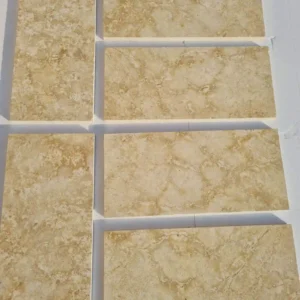
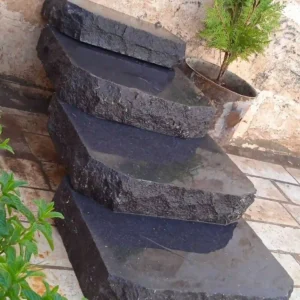
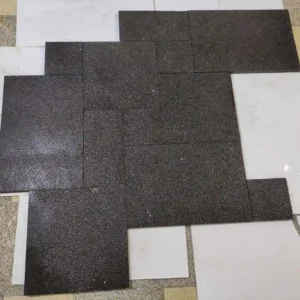
50 Years Of Manufacturing & Delivering The Highest-Quality Limestone & Black Basalt. Sourced & Hand-Picked From The Middle East.

Escrow Payment & Independent Verifying Agent For New Clients

Contact Me Personally For The Absolute Best Wholesale & Trade Prices:

USA & Worldwide Hassle-Free Delivery Options – Guaranteed.

Large Paving Slabs in Arizona

Large paving slabs in Arizona are typically specified at 24"×24" or larger formats, and sourcing them locally versus importing through out-of-state distributors carries meaningful cost implications that contractors often underestimate at the budgeting stage. Freight distance is one of the primary drivers of price variation for oversized stone — heavier slabs incur higher per-pallet shipping costs, and those figures shift noticeably depending on whether material is pulled from regional warehouse stock or routed through a national distribution hub. Citadel Stone Large Paving Slabs in Arizona are available across a range of finishes and thicknesses, with specification support for both residential and commercial scopes across the Phoenix metro, Tucson, and Scottsdale markets. Understanding how slab thickness interacts with Arizona subgrade conditions — and how that affects both material selection and base depth requirements — is a critical decision point covered in detail below. Citadel Stone offers Large Paving Slabs in multiple finishes and thicknesses for Arizona projects across Phoenix, Tucson, and Scottsdale.

See & Feel the Quality – Free Arizona Stone Samples

Our stones are made for the Arizona sun. See how the colors hold up in your specific light.

Design Your Arizona Home with a Local Stone Expert

Get personalized advice on the best stone for Arizona's climate and your design style.

Premium Natural Stone — All Sizes & Thicknesses Available

From standard cuts to fully custom dimensions — our limestone, granite, basalt & shellstone
are cut to your exact specifications. Residential or commercial, we’ve got you covered.

Get Your Free Arizona Stone Quote

Transparent Pricing for Your Arizona Project

Elevate Your Arizona Property with Premium Stone, Priced for Value.

Unlock $10,000 Worth of Deals on Beautiful Paver, Tiles & Cobble Setts—For Free!

Invest in Arizona’s Landscape: Stone That Lasts a Lifetime.

100% Happiness Guarantee

Trust 50 Years of Expertise. Invest in Quality Limestone Tiles

Custom-Cut for Your Arizona Project: Any Size, Any Finish.

No-Obligation Consultation: Get Expert Advice for Your Arizona Home.

The Stone Supplier Trusted by Arizona's Leading Architects & Designers.

Trusted by Top Stone Experts Around the Globe

Arizona's Most Diverse Selection of Limestone Tiles.

Elevate Your AZ Property with Limestone Built for the Desert. Our expansive collection of limestone tiles brings timeless beauty and proven durability to both residential and commercial spaces across Arizona. As the state’s leading supplier, we offer a diverse palette of colors and finishes—from cool, light tones that reflect the sun to rich, earthy textures that complement the Southwest landscape. Transform your environment with limestone that stands up to the Arizona heat while providing the sophisticated aesthetic you desire.

Explore Arizona-Tough Alternative Stones

Product NameDescriptionPrice per Square Foot
Travertine TilesBeautiful natural stone with unique textures$8.00 - $12.00
Marble TilesLuxurious and elegant, available in various colors.$10.00 - $15.00
Granite TilesExtremely durable and perfect for high-traffic areas.$7.00 - $12.00
Slate TilesRich colors and textures; ideal for wet areas.$6.00 - $10.00
Porcelain TilesVersatile and low-maintenance, mimicking natural stone.$4.00 - $8.00
Ceramic TilesAffordable with a wide variety of designs.$3.00 - $6.00
Quartzite TilesStrong and beautiful, resistant to stains.$9.00 - $14.00
Concrete PaversCustomizable for patios; durable and cost-effective.$5.00 - $9.00
Glass TilesStylish, reflective, and brightening.$15.00 - $25.00
Composite TilesEco-friendly options made from recycled materials.$5.00 - $10.00

Incredible Prices for Top-Quality Stone—Shop Citadel Stone Today!

Table of Contents

Freight cost is the variable that quietly breaks Arizona stone budgets — and large paving slabs in Arizona are one of the heaviest line items you’ll encounter in any hardscape specification. The weight-to-value ratio of large format stone pavers in Arizona means that sourcing decisions made early in the design phase can shift your installed cost per square foot by 30 to 50 percent before a single slab hits the ground. Understanding why that gap exists, and how to work within Arizona’s regional supply dynamics, is the first thing any serious specifier needs to nail down.

Arizona sits at a genuine crossroads in the stone supply chain. You’re far enough from Gulf Coast ports and Pacific Coast container facilities that import freight adds real money to every pallet, yet close enough to productive Southwest quarry regions that domestic material can be competitively priced when you know where to look. The projects that come in on budget are almost always the ones where the buyer locked in material sourcing before finalizing the design scope — not after.

How Freight Distance and Regional Pricing Shape Your Budget

The freight reality for large paving slabs in Arizona is straightforward once you understand the map. Most imported natural stone — Portuguese limestone, Italian travertine, Brazilian quartzite — moves through Los Angeles or Long Beach, then travels overland to Arizona distribution points. That final leg, typically 300 to 450 miles depending on your job site, adds $180 to $320 per pallet in trucking costs alone. For a 2,000-square-foot patio project using 2-inch nominal slabs, you can be looking at $4,000 to $8,000 in freight before any material margin is applied.

Domestic sourcing changes the math considerably. Arizona and the surrounding Four Corners region produce usable flagstone, sandstone, and some limestone products that move shorter distances. The trade-off is consistency — regional quarry output tends to vary more in thickness and shade from batch to batch, which creates challenges when you’re trying to maintain a uniform look across large patio squares or expansive large garden slabs in Arizona. For projects where aesthetic uniformity matters, the premium for imported product with tighter quality control often pays for itself in reduced installation labor and waste.

  • Import freight from West Coast ports adds $180–$320 per pallet for Arizona job sites
  • Domestic Southwest quarry material reduces transport cost but introduces thickness and shade variability
  • Projects over 1,500 square feet benefit most from locking in warehouse stock before design finalization
  • Freight cost per square foot drops significantly when you order full truck quantities rather than partial loads
  • Lead times from regional inventory typically run 1–2 weeks versus 6–8 weeks for imported stock orders

Citadel Stone maintains warehouse inventory across Arizona specifically to compress that import timeline. You can request current stock availability and thickness specifications before committing to a design — that’s the kind of pre-purchase verification that prevents the expensive redesign scenarios when a specified slab turns out to be on a 10-week backorder.

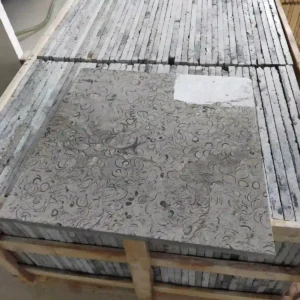
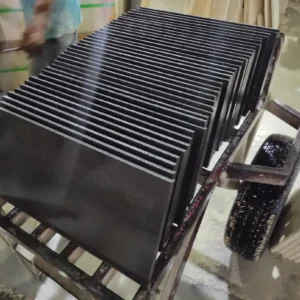
Warehouse facility storing large paving slabs in Arizona within protective wooden crates.

Material Options and Format Selection for Arizona Projects

Large outdoor stone pavers for Arizona applications generally fall into three performance tiers, and the format you select determines how each tier behaves under desert conditions. The terminology matters here because it affects both specification writing and purchasing conversations — large patio flags in Arizona, large format stone pavers in Arizona, and large paver tiles in Arizona are often used interchangeably in sales contexts but represent meaningfully different products in the field.

True large patio flags run 24 inches and above in their shortest dimension, with 24×24, 24×36, and 36×36 formats being the most commonly stocked sizes. Large paver squares in the 18×18 range occupy a middle tier that’s easier to handle on site but doesn’t deliver the same visual impact. Large paver tiles — typically 12 to 18mm in thickness — are engineered specifically for pedestal systems and elevated deck applications, where structural loading calculations differ from conventional sand-set installations.

Limestone and Travertine Performance Characteristics

Limestone remains one of the most specified materials for large outdoor paving slabs in Arizona, and for good reason. Compressive strength in the 6,000 to 12,000 PSI range handles typical residential and light commercial traffic without issue, and the material’s natural color palette — cream, ivory, silver, buff, and warm grey tones — reflects rather than absorbs solar radiation. That thermal performance distinction matters significantly in a market where surface temperatures on dark concrete can hit 160°F in July.

Travertine brings a different performance profile. The interconnected pore structure that gives travertine its visual texture also creates natural drainage channels that improve slip resistance in pool deck and garden applications — a detail that often gets lost when specifiers focus purely on aesthetics. For large garden patio slabs in Arizona, travertine’s surface stays meaningfully cooler than comparable granite or basalt formats, though it requires more attentive sealing in areas with hard water.

  • Limestone: compressive strength 6,000–12,000 PSI, excellent reflectivity in cream and grey tones
  • Travertine: natural drainage pores improve slip resistance, cooler surface temperatures than dense stone
  • Granite: 15,000–25,000 PSI compressive strength, highest durability, darker shades absorb more heat
  • Quartzite: excellent hardness for high-traffic large landscape pavers in Arizona, limited color range in regional supply
  • Sandstone: regionally sourced, variable thickness, best for informal garden and stepping stone applications

Color and Shade Selection in Arizona’s Light Conditions

Arizona’s intense UV exposure creates a color selection dynamic that differs from what you’d encounter in the Pacific Northwest or the Southeast. Light-colored stone — cream limestone, ivory travertine, silver-grey slate — performs visually in ways that darker charcoal or graphite materials don’t. Dark stone absorbs significantly more heat, creating surface temperatures that limit barefoot usability in summer months and accelerate any sealant degradation that isn’t UV-stabilized.

The reflectivity advantage of lighter stone isn’t just comfort — it directly affects how your outdoor spaces function in summer. Projects in Scottsdale where large smooth paving slabs in light travertine or cream limestone have been installed consistently show surface temperature differentials of 25 to 35°F compared to adjacent concrete or dark stone surfaces under identical solar exposure. That’s a meaningful usability difference for any outdoor space designed for summer use.

Thickness and Structural Requirements for Large Format Stone

The thickness specification for large outdoor patio pavers is where most residential projects go wrong. The instinct is to specify the thinnest slab that passes the structural check — it’s lighter, it’s cheaper per unit, and it’s easier to handle on site. The problem is that large format stone behaves differently from smaller pavers under point loading, and the bending moment across a 36-inch span is substantially higher than across an 18-inch span at the same load.

For large patio slabs in Arizona residential applications with pedestrian and light furniture loading, 1.25 inches (30mm) is a defensible minimum on a well-compacted base. For driveway crossings, vehicle access areas, or any application where wheeled equipment will cross the surface, move to 2 inches (50mm) minimum. The extra thickness isn’t just about strength — thicker slabs are also more forgiving when minor base settlement occurs, and they’re less prone to the edge chipping that compromises the appearance of thinner large stone pavers over time.

  • Pedestrian patios and garden areas: 1.25-inch (30mm) minimum on compacted base
  • Driveway crossings and vehicle areas: 2-inch (50mm) minimum, bed depth adjusted accordingly
  • Pool decks with pedestal systems: 0.75 to 1 inch (20–25mm) engineered tile format
  • Commercial and public-access applications: consult structural engineer, typically 2.5 to 3 inches
  • Edge support within 3 inches of any unsupported edge is mandatory to prevent breakage under lateral load

Sourced from established quarry partners, each batch of large stone paving slabs in Arizona that moves through Citadel Stone’s inventory is inspected for thickness consistency before it ships — the tolerance range is tighter than most import distributors apply, which directly affects how much grinding and shimming your installer has to do on site.

Base Preparation for Arizona Soil Conditions

Arizona soil conditions introduce base preparation challenges that don’t appear in standard paver installation guides written for the Midwest or East Coast. The three main variables you’ll encounter across the state are expansive clay soils, caliche hardpan layers, and decomposed granite subgrade — and each requires a different approach to base preparation for large paving slabs.

Expansive clay is the most problematic. Clay soils in Arizona’s valley areas absorb monsoon moisture and expand with enough force to displace sand-set slabs and crack mortared installations. The correct response isn’t just deeper compaction — it’s removing expansive material to a minimum of 8 inches and replacing it with crushed angular aggregate before any setting bed is placed. Attempting to seal over or compact through expansive clay adds labor and materials while leaving the fundamental problem in place.

Projects in Mesa frequently encounter caliche hardpan at 18 to 30 inches below finish grade. That hardpan, when properly scarified and re-compacted, actually provides an excellent structural sub-base for large landscape pavers in Arizona — it’s dense, stable, and not significantly moisture-sensitive. The challenge is drainage: caliche is essentially impermeable, so you need to design lateral drainage paths rather than relying on percolation. Missing that detail leads to standing water under the base course during monsoon events, which destabilizes the setting bed regardless of how well it was compacted initially.

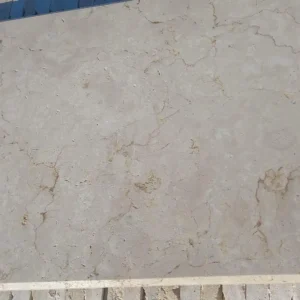
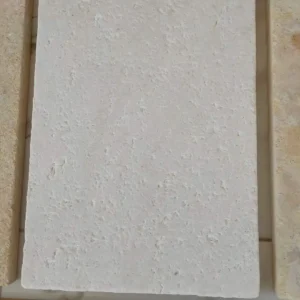
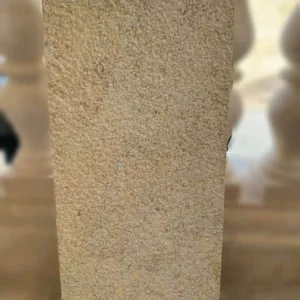
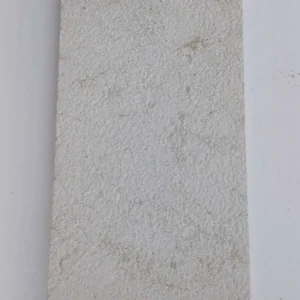
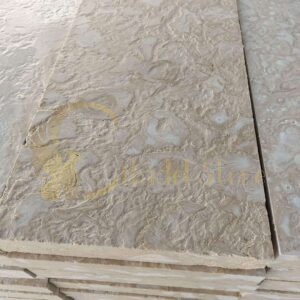
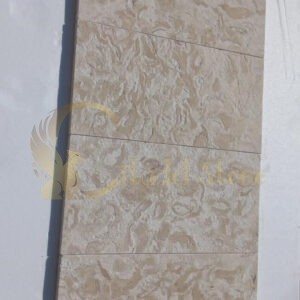
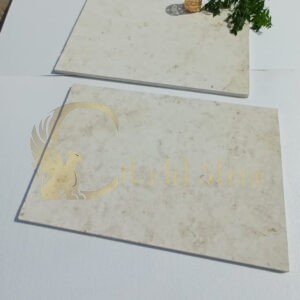
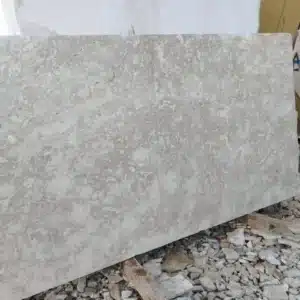
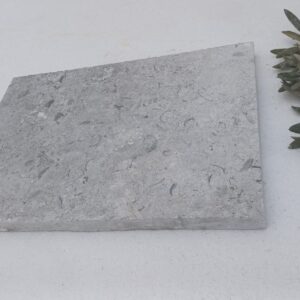
Close-up view of a textured, off-white stone slab with a rough surface.

Setting Bed and Joint Options for Large Slabs

The setting bed choice for large outdoor slabs in Arizona comes down to a straightforward trade-off between flexibility and long-term stability. Sand-set installations accommodate minor base movement without transferring stress to the slab, but they require regular joint sand maintenance — particularly after monsoon events that wash fine material from open joints. Mortar-set installations on a concrete sub-base eliminate joint maintenance but create a rigid system that concentrates any sub-base movement into crack stress at the slab or mortar interface.

For most Arizona residential patios using large garden pavers or large patio stones, a hybrid approach using a dry-pack mortar setting bed with polymeric sand joints hits the right balance. The dry-pack bed provides a stable, adjustable surface during installation, and polymeric sand resists the washout that standard joint sand experiences during heavy monsoon rainfall. Joint width for slabs over 24 inches should be maintained at a minimum of 3/8 inch to accommodate the thermal expansion cycles these surfaces experience between winter mornings and midsummer afternoons — a range that can span 80 to 100°F in Phoenix and surrounding communities.

  • Sand-set: flexible, accommodates movement, requires seasonal joint sand maintenance
  • Mortar-set on concrete: rigid, eliminates maintenance, concentrates movement stress
  • Dry-pack hybrid: best combination of stability and adjustment tolerance for large format stone
  • Polymeric sand joints: resist monsoon washout better than standard joint sand
  • Minimum joint width: 3/8 inch for slabs over 24 inches in desert heat climates
  • Expansion joints at perimeter and every 15 feet in field runs to manage thermal cycling

Sealing and Maintenance Protocols for Desert Conditions

The sealing frequency that works in coastal climates doesn’t translate to Arizona — UV intensity and thermal cycling accelerate sealant breakdown faster than the 3-to-5-year schedules often printed on product containers. For projects requiring complementary stone elements and ongoing maintenance planning, Large Paving Slabs from Citadel Stone covers sealing schedules and maintenance specifications that apply directly to Arizona’s desert climate conditions, including product-specific guidance for limestone and travertine formats.

In practice, penetrating impregnator sealers applied to large patio paving slabs in Arizona need inspection at 18 months and reapplication at 24 to 30 months in Zones 9 and 10 exposure conditions. Topical sealers — acrylic, polyurethane, and epoxy-based products — break down even faster in high UV environments and tend to create surface whitening and peeling at year two or three. The penetrating impregnator approach protects without creating a surface film that the desert sun degrades visibly.

Projects in Flagstaff operate in a different sealing environment entirely. Elevation introduces genuine freeze-thaw cycling that demands a breathable impregnator — one that allows vapor transmission — rather than a vapor-barrier sealer. The wrong sealer choice in freeze-thaw conditions traps moisture in the stone’s pore structure, and the expansion pressure from repeated freezing causes spalling and surface delamination within two to three winters.

Application Contexts: Patios, Gardens, and Landscape Installations

Large natural pavers in Arizona serve applications that span from intimate residential courtyard gardens to expansive commercial plaza surfaces, and the specification requirements shift considerably across that range. Understanding which application category your project falls into determines format selection, thickness requirements, and joint treatment choices before you get into material type or color selection.

Residential patio applications — what most buyers mean when they search for large patio blocks or large patio squares in Arizona — typically involve areas between 300 and 2,000 square feet with pedestrian and light furniture loading. These projects are well-served by 24×24 or 24×36 formats in 1.25-inch to 1.5-inch thickness, with the larger format delivering the clean, contemporary aesthetic that’s dominated residential outdoor design specifications across Arizona for the past decade.

Garden and landscape applications introduce different constraints. Large garden paving slabs in Arizona set in planted areas need to accommodate root expansion and seasonal soil movement differently than patio surfaces. Wider joints — 3/4 inch to 1 inch — filled with decomposed granite or ground cover allow drainage and accommodate movement without requiring rigid base preparation. Large slabs for garden stepping paths perform best when set slightly below surrounding grade, which keeps edges from catching foot traffic and reduces trip hazard risk over time.

  • Residential patios: 24×24 or 24×36 formats, 1.25–1.5-inch thickness standard
  • Garden and landscape paths: wider joints, lower set height, flexible base preferred
  • Pool deck surrounds: travertine or tumbled limestone for slip resistance and heat management
  • Commercial plazas: 2-inch minimum thickness, engineered base design, mortar-set installation
  • Driveway borders and yard pavers in Arizona: 2-inch to 2.5-inch thickness for vehicle proximity areas
  • Outdoor kitchen and dining areas: tighter joints, sealed surface for ease of cleaning

Sourcing Verification and Material Authentication in Arizona

The Arizona stone market has a counterfeit and misrepresentation problem that experienced buyers have learned to navigate but new buyers often encounter the hard way. Material sold as natural limestone occasionally turns out to be reconstituted aggregate or low-density manufactured product — visually similar at point of purchase, dramatically different in field performance. Verifying authentic material before your purchase is not optional for projects where long-term performance matters.

Authentic large format stone pavers in Arizona should come with documentation that traces material origin — quarry source, country of origin, and material classification. Physical verification steps include water absorption testing (natural limestone absorbs water noticeably and quickly; dense manufactured product often beads), edge inspection for consistent crystal structure rather than uniform aggregate distribution, and thickness measurement across multiple points on the same slab. Thickness variation greater than 3mm across a single large slab indicates either quarry variability or reconstituted material cast in molds.

You should also verify warehouse stock physically matches sample tiles — batch-to-batch color and shade variation in natural stone is real, and a sample approved six months before delivery may not match the batch that arrives on the truck. Requesting that your supplier pull comparative photos of the specific warehouse lot before shipping is a reasonable ask for any project where color consistency drives the aesthetic specification.

  • Request material origin documentation: quarry source, country, material classification
  • Perform water absorption test: natural stone absorbs quickly, manufactured product often doesn’t
  • Inspect edges for consistent crystal structure versus uniform aggregate distribution
  • Measure thickness variation across each slab: greater than 3mm suggests quality control issues
  • Request warehouse lot photos to verify color match to approved samples before truck dispatch
  • Ask for test reports to ASTM C503 (marble) or ASTM C568 (limestone) classification standards

Buy Large Paving Slabs in Arizona — Wholesale from Citadel Stone

Citadel Stone stocks large paving slabs in Arizona in standard formats including 24×24, 24×36, and 36×36 — available in limestone, travertine, and quartzite across cream, ivory, buff, silver-grey, and charcoal shade ranges. Thickness options run from 1.25-inch (30mm) for residential pedestrian applications through 2-inch (50mm) for vehicle-adjacent and commercial specifications. You can request sample tiles and full thickness specification sheets before committing to a quantity order — that’s a standard part of the pre-purchase process for wholesale and trade accounts.

Trade and wholesale enquiries receive pricing structured around full pallet and full truck quantities, which is where the per-square-foot cost on large paving slabs for sale in Arizona becomes genuinely competitive relative to retail alternatives. For projects requiring custom cuts — L-shapes, curved radius edges, or non-standard formats — Citadel Stone’s team can advise on fabrication lead times and minimum order requirements. Delivery coverage extends across Arizona with standard lead times of one to two weeks from warehouse inventory for in-stock product.

To get current pricing, confirm stock availability, or schedule a material consultation for your project, contact Citadel Stone directly with your format, thickness, quantity, and delivery location. Beyond large outdoor paving slabs, your Arizona project may also benefit from related hardscape materials — Granite Driveway Slabs in Arizona covers another dimension of Arizona stone specification that’s worth reviewing if your project includes driveway or heavy-traffic surfaces. Homeowners in Flagstaff, Sedona, and Yuma source Large Paving Slabs through Citadel Stone for Arizona residential and commercial installations.

Why Arizona’s Builders Choose Citadel Stone?

Free AZ Comparison: Citadel Stone vs. Other Suppliers—Find the Best Value!

FeaturesCitadel StoneOther Stone Suppliers
Exclusive ProductsOffers exclusive Ocean Reef pavers, Shellstone pavers, basalt, and white limestone sourced from SyriaTypically offers more generic or widely available stone options
Quality and AuthenticityProvides high-grade, authentic natural stones with unique featuresQuality varies; may include synthetic or mixed-origin stone materials
Product VarietyWide range of premium products: Shellstone, Basalt, White Limestone, and moreProduct selection is usually more limited or generic
Global DistributionDistributes stones internationally, with a focus on providing consistent qualityOften limited to local or regional distribution
Sustainability CommitmentCommitted to eco-friendly sourcing and sustainable production processesSustainability efforts vary and may not prioritize eco-friendly sourcing
Customization OptionsOffers tailored stone solutions based on client needs and project specificationsCustomization may be limited, with fewer personalized options
Experience and ExpertiseHighly experienced in natural stone sourcing and distribution globallyExpertise varies significantly; some suppliers may lack specialized knowledge
Direct Sourcing – No MiddlemenWorks directly with quarries, cutting unnecessary costs and ensuring transparencyOften involves multiple intermediaries, leading to higher costs
Handpicked SelectionHandpicks blocks and tiles for quality and consistency, ensuring only the best materials are chosenSelection standards vary, often relying on non-customized stock
Durability of ProductsStones are carefully selected for maximum durability and longevityDurability can be inconsistent depending on supplier quality control
Vigorous Packing ProcessesUtilizes durable packing methods for secure, damage-free transportPacking may be less rigorous, increasing the risk of damage during shipping
Citadel Stone OriginsKnown as the original source for unique limestone tiles from the Middle East, recognized for authenticityOrigin not always guaranteed, and unique limestone options are less common
Customer SupportDedicated to providing expert advice, assistance, and after-sales supportSupport quality varies, often limited to basic customer service
Competitive PricingOffers high-quality stones at competitive prices with a focus on valuePrice may be higher for similar quality or lower for lower-grade stones
Escrow ServiceOffers escrow services for secure transactions and peace of mindTypically does not provide escrow services, increasing payment risk
Fast Manufacturing and DeliveryDelivers orders up to 3x faster than typical industry timelines, ensuring swift serviceDelivery times often slower and less predictable, delaying project timelines

Extra Benefits

Choosing Citadel Stone offers unique advantages beyond premium stone quality:

Exclusive Access to Durable Stones

Citadel Stone specializes in unique, regionally exclusive stones, sourced directly from the Middle East.

Transparent Pricing – No Hidden Costs

With no middlemen, Citadel Stone provides direct, transparent pricing that reduces unnecessary costs.

Flexible Customization for Bespoke Projects

Tailor your order to precise specifications, from sizes to finishes, ensuring your project aligns perfectly with your vision.

Streamlined Delivery & Reliable Stock Availability

Benefit from fast production and delivery timelines, designed to minimize delays and ensure reliable availability.

The Preferred Stone Supplier for Luxury AZ Developments.

Scale Your Vision: We Support Arizona's Largest Projects with Reliable, Fast Delivery.

With unlimited tiles, pavers, cobble setts, curbstones, and the fastest delivery options, What’s not to love? Say goodbye to unnecessary hassles!

Leading AZ Stone Suppliers are Loving Citadel Stone!

Don’t Settle for Less. Source the Best Stone for Your Local Stone Expert.

DanielOwner
Thank you, Kareem. We received the order. The stones look great!
FrankOwner
You are a good businessman and I believe a good person. I admire your honesty, this is why I call you a good businessman.
Gemma C
Gemma CPrivate Project
Undoubtedly the price was the reason that we chose Citadel stone, in addition to the fact that you offer a white limestone that is hard to source. Your products are very good value for money by comparison with other companies. You have helped at every stage of the process and have been quick and reliable in your responses. It was a big risk for us to pay everything up front including shipping and not know the quality. You did make me feel that I could trust you and your company however and we are very happy with the tiles. They appear to have been finished to a very high quality of smoothness and I can't wait to see them once they have been laid. We need to see now how easy they are to fit and maintain, yet you also sealed them before shipment so we think that they will be very durable. Our building project has been delayed for a few months now so it may be sometime before we see them laid, but I promise that I will send photos as soon as we have them down. Thank you so much Kareem and your team, you have done a great job. I am hoping that we can pay for, and receive our second shipment in the not too far future, so that we can finish everything off. Wishing you well. Gemma
Molly McK
Molly McKPrivate Project
I appreciate the quality of product and care for the custom order in packaging each crate to minimize breakage as well as the flexibility with the order to help us make the most of shipping. The timely communications are impressive from the beginning and throughout the process. It's reassuring to have gone through one order to know what the process will be like in the future. I am glad to have had some guidance through the importing process and recommendations for shipping partners to assist. It's incredible to think about the journey the stone traveled to get to our site and I'm grateful to have made it to the next stage of the project relatively smoothly and with from what I can tell

Frequently Asked Questions

If your question is not listed, please email us at [email protected]

What factors drive the cost of large paving slabs for Arizona projects?

Material cost for large paving slabs in Arizona is shaped by stone type, slab thickness, surface finish, and — critically — freight origin. Slabs sourced from regionally stocked inventory avoid the surcharges tied to long-haul trucking or import container logistics, which can add a meaningful percentage to the delivered unit price. Labor cost for installation also rises with slab size due to equipment requirements, so factoring in both material and handling costs together gives a more accurate project budget from the start.

For pedestrian outdoor applications such as patios and walkways in Arizona, large paving slabs are commonly specified at 1.25″ to 2″ thick. Vehicular or high-load applications — driveways, pool surrounds with heavy foot traffic — typically call for slabs at 2″ or greater to handle compressive stress without risk of cracking. The appropriate thickness also depends on base preparation: thinner slabs demand a more precisely graded and compacted substrate to distribute load evenly.

Arizona’s caliche-heavy soils and expansive clay zones present real challenges for large format paving installations. Caliche layers can create drainage impediments beneath the base course, leading to water retention that undermines slab stability over time if not properly addressed during excavation and sub-base preparation. In expansive soil areas — more common in the Tucson basin than the Phoenix valley — a deeper aggregate base with a geotextile separation layer is often recommended to accommodate seasonal soil movement without cracking the slab surface.

Large format paving slabs work well for Arizona pool decks, provided the stone finish is selected carefully. A brushed, honed, or sandblasted surface texture provides adequate slip resistance when wet — polished finishes are generally avoided in wet deck environments for this reason. Stone types with lower porosity, such as dense granite or basalt, also resist the chemical exposure common around pools better than more porous limestone or sandstone alternatives.

In Arizona’s desert environment, the primary maintenance concern for large paving slabs is sealer integrity. Penetrating sealers protect porous stones from dust, mineral staining, and moisture intrusion, but UV exposure at Arizona’s elevation and sun intensity accelerates sealer breakdown — typically requiring reapplication every two to three years rather than the five-year intervals that may apply in milder climates. Joint sand should also be inspected annually, as thermal expansion and contraction cycles can gradually displace jointing material between large format slabs.

Citadel Stone’s large paving slabs are stocked in a practical selection of standard sizes, finishes, and thicknesses — meaning specifications can be confirmed and orders fulfilled without the extended lead times associated with import-to-order supply models. Arizona professionals benefit from Citadel Stone’s established freight routes across the state, which support predictable material scheduling for projects in Phoenix, Tucson, Scottsdale, and surrounding markets. That distribution consistency translates directly into tighter project timelines and fewer budget disruptions tied to material delays.