
Installing large paving slabs in Arizona demands a level of thermal engineering precision that most installation guides completely skip over. The desert Southwest experiences daily temperature swings of 40°F to 60°F in some inland valleys — and that cycling, repeated hundreds of times per year, creates cumulative mechanical stress at every joint interface and beneath every slab. Understanding how to manage that thermal movement, not just the heat itself, is what separates installations that look great in year three from those that are still performing in year twenty-three.
Why Thermal Cycling Is the Real Challenge in Arizona
Most people assume Arizona’s primary installation challenge is sustained high heat. The actual engineering problem is the rate and frequency of temperature change. In areas like Yuma, summer days can hit 115°F while nighttime lows drop into the mid-60s — a differential of 50°F or more occurring twice daily. Natural stone expands and contracts with every one of those cycles. A 24-inch large paving slab in a typical limestone or basalt has a thermal expansion coefficient of roughly 3.5–5.0 × 10⁻⁶ per °F. Over a 50°F swing, that translates to approximately 0.005 to 0.006 inches of dimensional change per linear foot. Across a 20-foot run of large format paving slabs, you’re looking at cumulative movement of nearly an eighth of an inch — every single day.
That number matters because it tells you exactly where failure happens. Joints that are undersized, grout that is too rigid, or slabs set with full-mortar beds that don’t allow movement will eventually crack — not from a single catastrophic load, but from ten thousand small fatigue cycles compressing and releasing the same interface. Your specification needs to account for this from the base preparation upward.
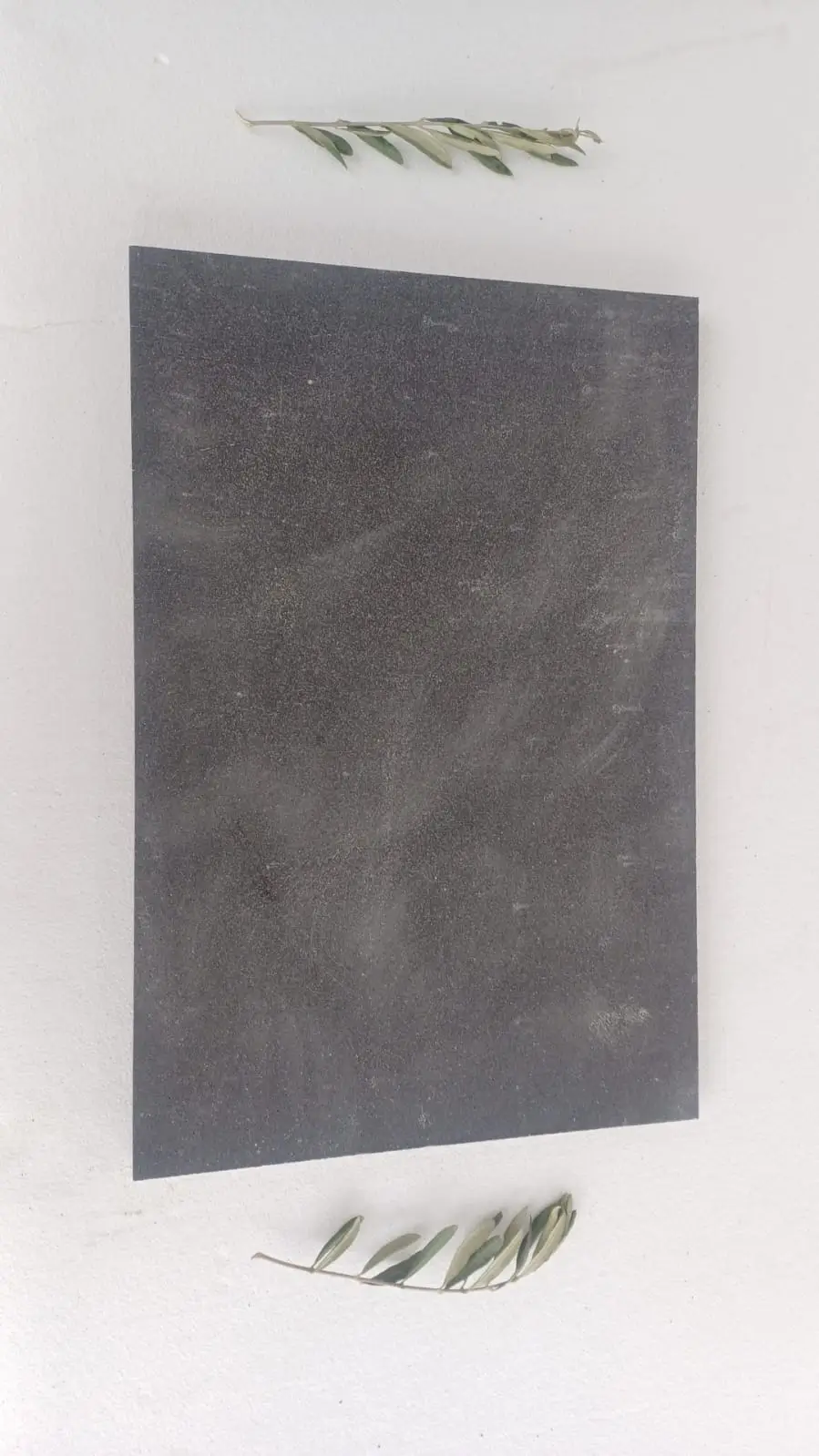
Large Slab Base Preparation Across Arizona Climates
Your base system is doing two jobs simultaneously in Arizona: providing structural load distribution and creating a thermal buffer between the slab and the native soil. The mistake most residential installers make is treating base preparation as a single-spec exercise — the same 4-inch compacted aggregate base they’d use anywhere. In Arizona’s thermal cycling environment, that’s not enough for installing large paving slabs in Arizona.
For large paving slabs in Arizona, the recommended base specification breaks down like this:
- Minimum 6-inch compacted Class II aggregate base for pedestrian applications, 8–10 inches for vehicular or heavy-use areas
- Compaction to 95% Modified Proctor density — this is non-negotiable because under-compacted bases shift with thermal heave in the underlying soil
- 1-inch to 1.5-inch bedding layer of coarse concrete sand (ASTM C33) — never limestone screenings alone, which can migrate under thermal stress
- Geotextile fabric at the sub-base interface in sandy or caliche-prone soil conditions to prevent base contamination over time
- Minimum 1% slope across the entire base surface for drainage — water trapped under large format slabs during monsoon season accelerates thermal damage exponentially
Projects in Mesa regularly encounter caliche hardpan within 18 to 24 inches of the surface. Caliche is actually excellent news for base stability — it provides a near-concrete sub-base that doesn’t compress under load. The issue is drainage: caliche is nearly impermeable, so you need weep channels or a perimeter french drain to prevent water from pooling above the layer. Thermal cycling combined with trapped moisture is what causes even well-installed large paving slabs to shift.
Joint Sizing and Thermal Expansion Calculations
The single most under-engineered detail in large format paver installations is joint width. Standard residential installation guides often specify 3/16-inch or 1/4-inch joints across the board. For large paving slabs in Arizona’s thermal cycling environment, that calculation has to be done project-specifically.
Here’s the field formula that actually works: multiply your slab length in inches by the thermal expansion coefficient of your specific stone (typically 3.5–5.5 × 10⁻⁶ per °F for most natural stones) by your expected temperature differential. For a 24-inch slab in Yuma with a 55°F daily swing, the calculation produces movement of approximately 0.005 to 0.007 inches per slab. Add a 25% safety factor and round up to your nearest standard joint size. In this example, a 3/8-inch joint is the minimum defensible specification — not the 1/4-inch that gets used on most residential jobs.
Joint material selection is equally critical. Rigid cement grout has a coefficient of thermal expansion that doesn’t match most natural stones, which means it cracks under differential movement. Arizona climate-rated large paving slab methods require careful joint material specification. For large slab applications in Arizona, specify:
- Polymer-modified, unsanded joint filler for joints under 3/8 inch
- Sanded polymer joint compound for 3/8-inch to 1/2-inch joints
- Flexible backer rod with sealant for joints exceeding 1/2 inch or at any structural transition (wall, curb, or grade change)
- Dedicated expansion joints at maximum 15-foot intervals in continuous runs — not the 20-foot interval recommended in general guides written for moderate climates
Selecting the Right Slab Thickness for Arizona Applications
Thickness decisions for large paving slabs in Arizona come down to three intersecting factors: anticipated point load, span across the aggregate base, and the thermal mass requirements of the specific installation. Thicker slabs carry more thermal mass, which moderates surface temperature spikes but also means greater absolute dimensional change per thermal cycle.
The practical specification thresholds break down as follows:
- 1.25 inches (30mm): Pedestrian-only patios and pool decks with full-mortar or thin-set bed installation — requires a rigid, stable sub-base
- 1.5 to 2 inches (40–50mm): Mixed pedestrian and light vehicle traffic, suitable for most Arizona residential driveways and courtyard applications
- 2.5 to 3 inches (60–75mm): Heavy vehicle access, equipment staging areas, and commercial driveways — provides adequate flex resistance under point loading
For detailed project-specific guidance and product specifications, our large slab installation Arizona resource provides material selection charts keyed to Arizona’s specific load and climate conditions.
Desert Paving Slab Material Performance Under Temperature Cycling
Not all stone performs equally through Arizona’s thermal cycling regime. The key material properties you need to evaluate aren’t just compressive strength — they’re thermal expansion coefficient consistency, absorption rate, and inter-crystalline bond strength after repeated heating and cooling. Applying proven Arizona climate-rated large paving slab methods at the material selection stage prevents the most costly downstream failures.
Limestone and basalt are the two material families that consistently outperform others in Arizona thermal cycling applications. Dense limestone (absorption rate under 0.5% per ASTM C97) expands uniformly with temperature change, meaning you won’t see differential stress between the surface and core of the slab. Basalt is even more thermally stable, with a very low coefficient of expansion and excellent bond strength between mineral grains — it doesn’t micro-crack under daily cycling the way some sedimentary materials can over a decade of use.
Travertine requires more careful specification. Its characteristic voids, if unfilled, collect water during monsoon season. When that water heats rapidly on a 115°F day, steam pressure can cause spalling at the void edges — a problem that looks like material failure but is actually an installation error. If you specify travertine for Arizona large slab projects, fill the voids with a resin-based compound and apply a penetrating sealer before installation, not after.
Installation Technique: What the Field Actually Demands
The how to lay large stone slabs in Arizona process differs from cooler climate installation in ways that printed guides consistently understate. Setting time for mortar and adhesive is dramatically affected by substrate temperature. In summer, your setting bed surface temperature on a sun-exposed concrete slab can reach 140°F before you’ve placed your first paver. Standard thinset mortars lose workability in under 10 minutes at that temperature.
The practical field solutions that actually work for desert paving slab installation AZ homeowners trust:
- Pre-wet the sub-base and setting bed surface with a fine mist 10–15 minutes before placing slabs — this drops surface temperature by 20–30°F and extends workability without compromising the mortar bond
- Schedule mortar work for before 9 a.m. or after 4 p.m. during summer months — this isn’t just a comfort recommendation, it’s a bond-strength specification requirement
- Use extended-open-time thinset rated for high-temperature applications (look for mortars tested to ANSI A118.4 at elevated temperatures)
- Never slide large slabs into position — the mortar ridges created by back-buttering collapse under lateral movement, creating voids that become failure points during thermal cycling
- Set each slab with a rubber mallet and check for hollow spots immediately using a tap test — large format slabs with voids beneath them crack under point loading even if the surrounding mortar appears sound
In Gilbert, where residential large slab installations have expanded significantly in recent years due to new development, the most common field callback issue is hollow-spot failures that develop within the first two summers. These cases almost always trace back to afternoon summer installation without temperature management protocols — a direct consequence of skipping the desert paving slab installation practices AZ homeowners trust most.
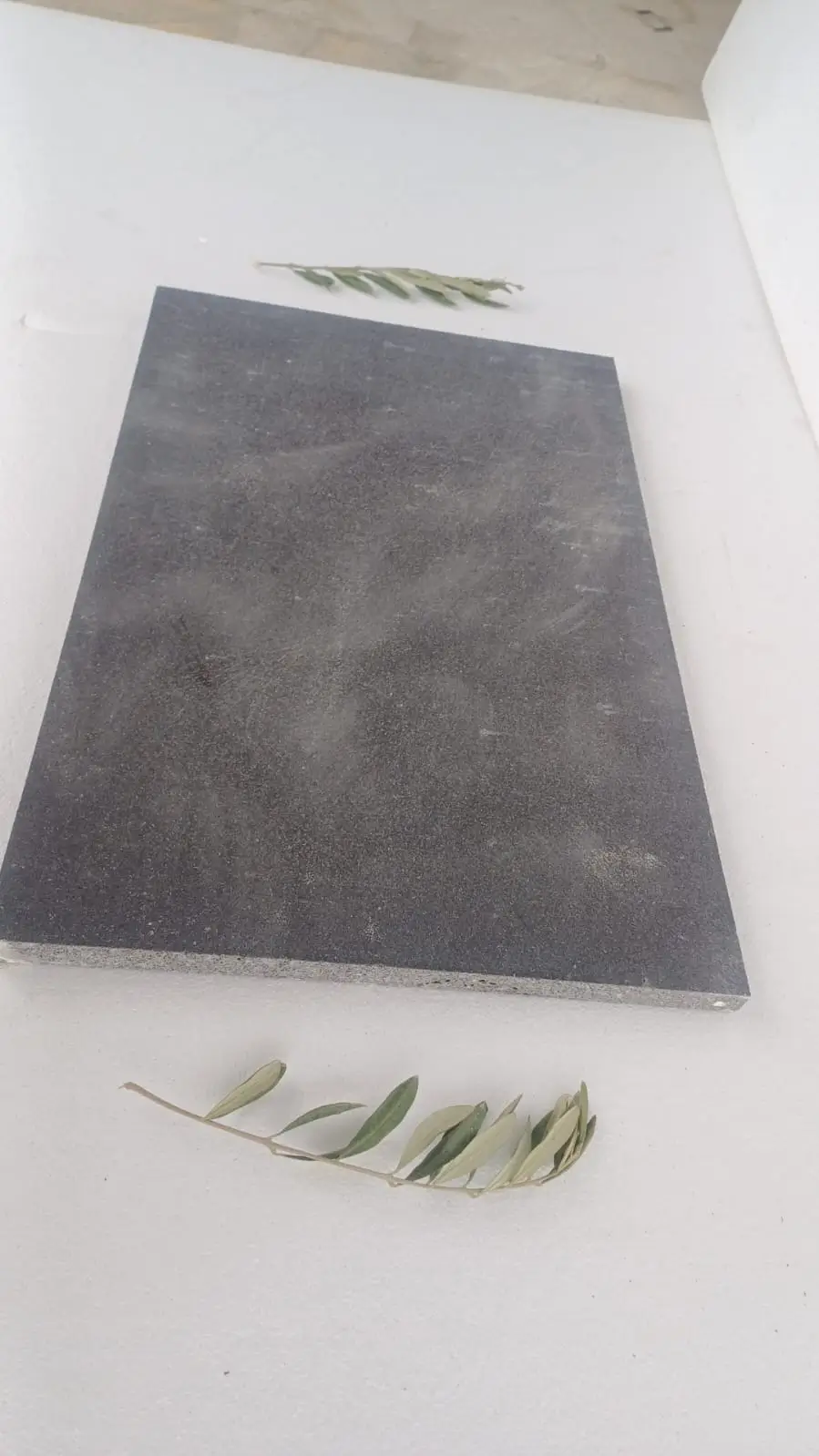
Sealing and Surface Protection for Arizona’s Climate Extremes
Sealing large paving slabs in Arizona serves a different primary function than it does in wet climates. In Arizona, the dominant threat isn’t freeze-thaw spalling from water absorption — it’s UV degradation of mineral binders and the infiltration of monsoon water into a thermally stressed joint system. Your sealer choice needs to address both.
Desert paving slab installation protocols for AZ homeowners should include a penetrating silane-siloxane sealer as the base treatment for all natural stone large format slabs. This type of sealer doesn’t form a surface film that can trap heat and delaminate — it bonds within the stone’s pore structure and remains stable through the 140°F surface temperatures that Arizona stones regularly reach. Topcoat film-forming sealers, regardless of their marketing claims, routinely fail on Arizona horizontal surfaces within 18 months under direct UV exposure.
The resealing schedule for large paving slabs in Arizona should be every 24 to 36 months rather than the 36 to 48 months often recommended in general product literature written for moderate climates. UV intensity in the Sonoran Desert is substantially higher than the national average, which degrades even quality sealers faster than the manufacturer’s base testing conditions.
At Citadel Stone, we recommend conducting a water bead test annually — pour a small amount of water on the slab surface and observe how quickly it absorbs. If absorption begins in under 60 seconds, your sealer coverage has dropped below effective protection threshold and resealing should be scheduled before the next monsoon season.
Ordering, Delivery, and Project Logistics in Arizona
Large format paving slabs present logistical challenges that smaller pavers don’t — weight per unit, breakage risk in transit, and the need for equipment access at the installation site. Your project planning needs to account for these before material is ordered.
A standard 24×24-inch large paving slab at 1.5-inch thickness weighs between 55 and 75 pounds depending on stone density. A truck delivering a 1,000-square-foot project load — roughly 250 slabs — is carrying 14,000 to 19,000 pounds of material. Your site access needs to accommodate a flatbed truck safely, which means checking overhead clearance, driveway load ratings if material needs to be staged near the installation area, and whether a forklift or telehandler will be needed for final positioning.
Citadel Stone maintains warehouse inventory of large format natural stone in Arizona, which means lead times for most standard specifications run 1 to 2 weeks rather than the 6 to 8-week import cycle that applies to special-order material. Verifying warehouse availability before finalizing your project schedule prevents the most common timeline disruption on large slab projects — material delays discovered after the large slab base preparation across Arizona sites is already complete.
One detail worth planning for: large paving slabs require dedicated staging space near the installation area. Stacking more than five slabs on uncompacted soil can cause the lower slabs to crack under the stack weight — especially in summer when the soil is dry and unstable. Confirm your staging plan with your delivery coordinator before the truck arrives.
Expert Summary: Installing Large Paving Slabs in Arizona
Installing large paving slabs in Arizona is fundamentally a thermal engineering exercise wrapped in a construction project. The material you select, the joint widths you specify, the base depth you build, and the installation timing you enforce all need to be calibrated to Arizona’s thermal cycling reality — not to generic national installation standards written for climates with a 30°F daily swing, not a 55°F one.
The installations that perform across two and three decades in Arizona share a consistent set of decisions: oversized joints filled with flexible material, deep aggregate bases compacted to 95%, penetrating sealers reapplied on a desert-specific schedule, and installation timing that respects mortar workability limits under high substrate temperatures. None of those are complicated choices — they just require making them deliberately rather than defaulting to the standard spec.
For ongoing performance guidance once your project is complete, How to Maintain Square Paving Slabs in Arizona covers the long-term maintenance protocols that keep large format stone installations performing through Arizona’s demanding seasonal cycles. Homeowners in Phoenix, Tucson, and Chandler rely on Citadel Stone for large paving slabs selected specifically for desert base compaction requirements and extreme heat expansion tolerances.