Escrow Payment & Independent Verifying Agent For New Clients
Contact Me Personally For The Absolute Best Wholesale & Trade Prices:
USA & Worldwide Hassle-Free Delivery Options – Guaranteed.
$2.30
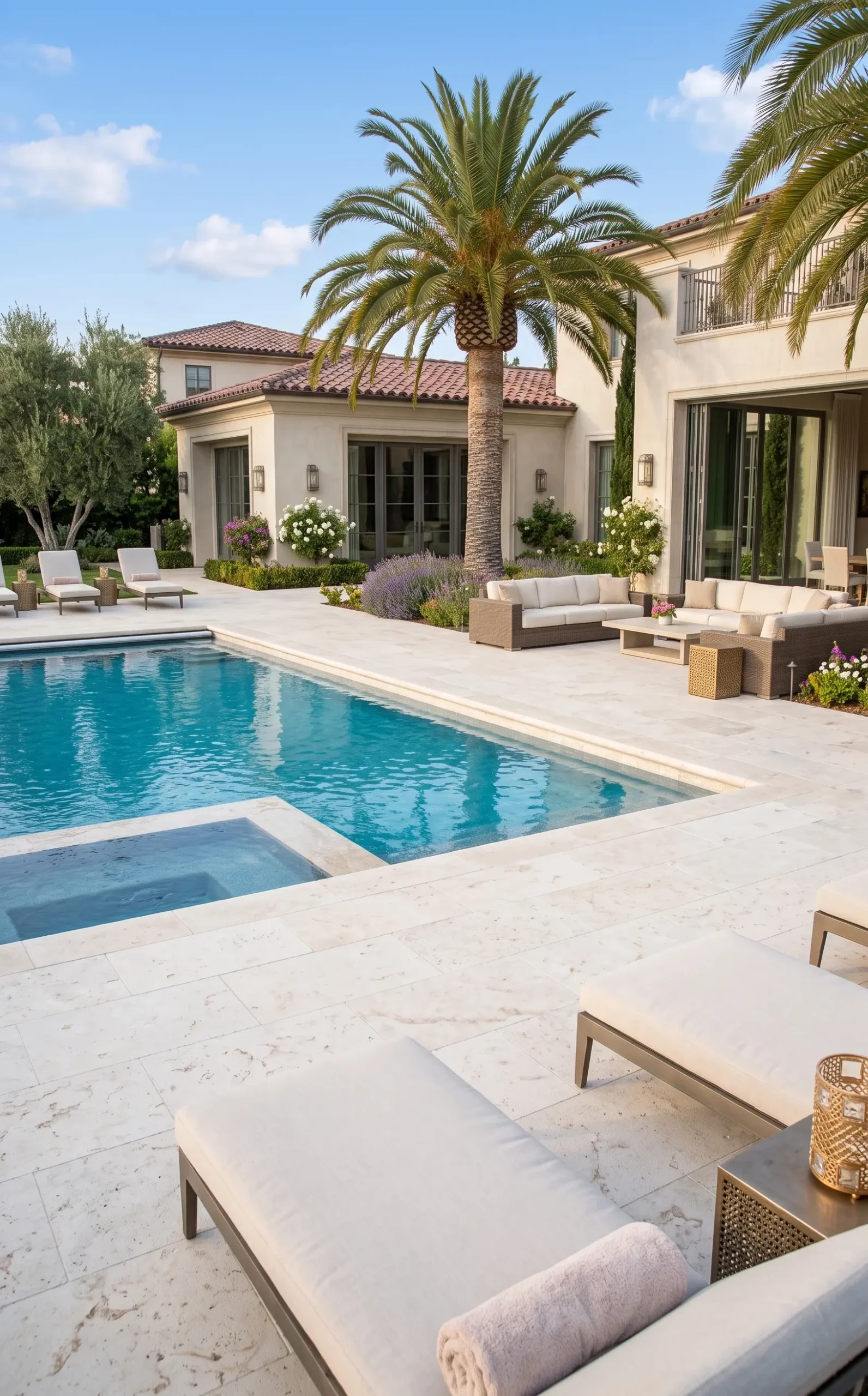
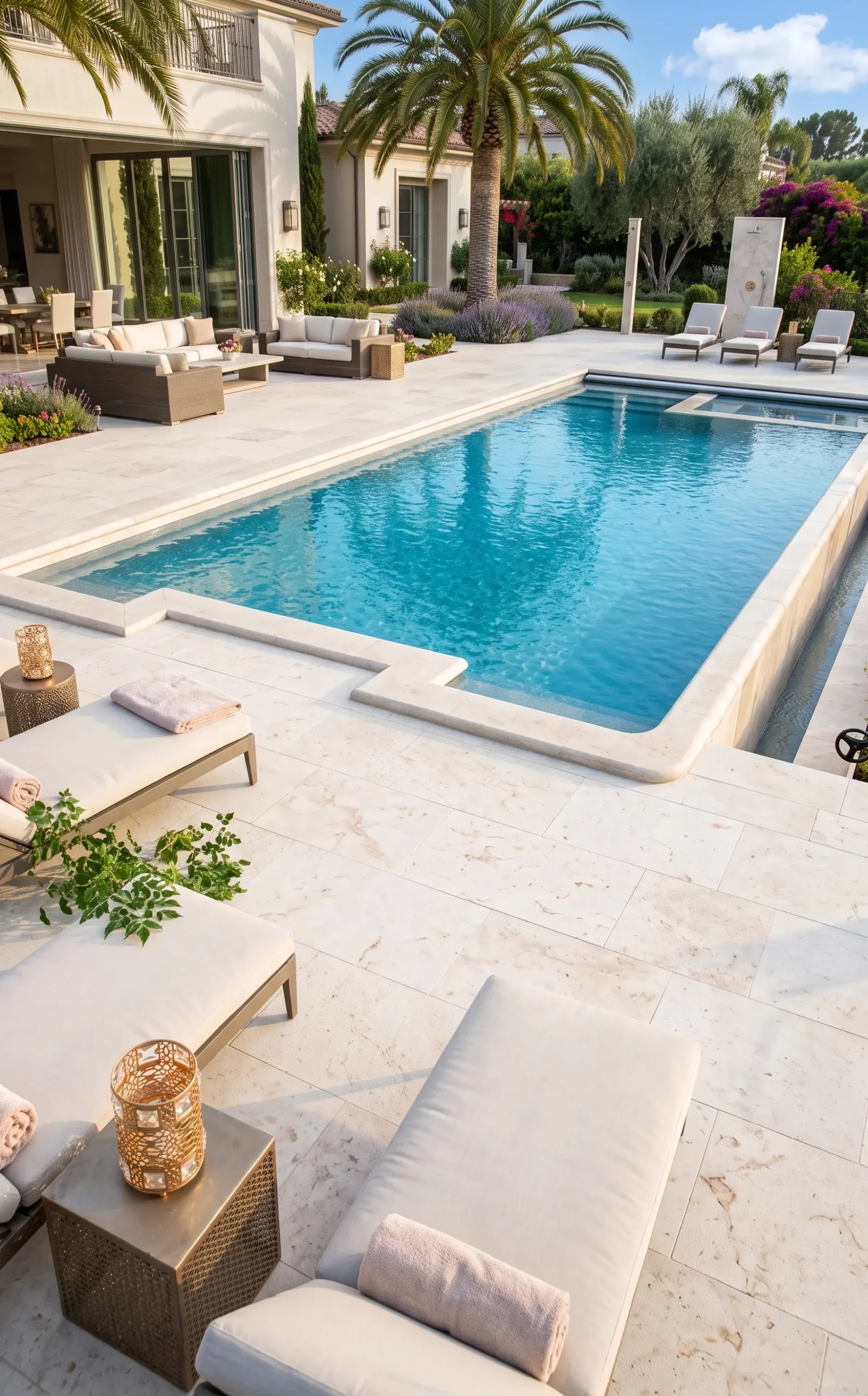
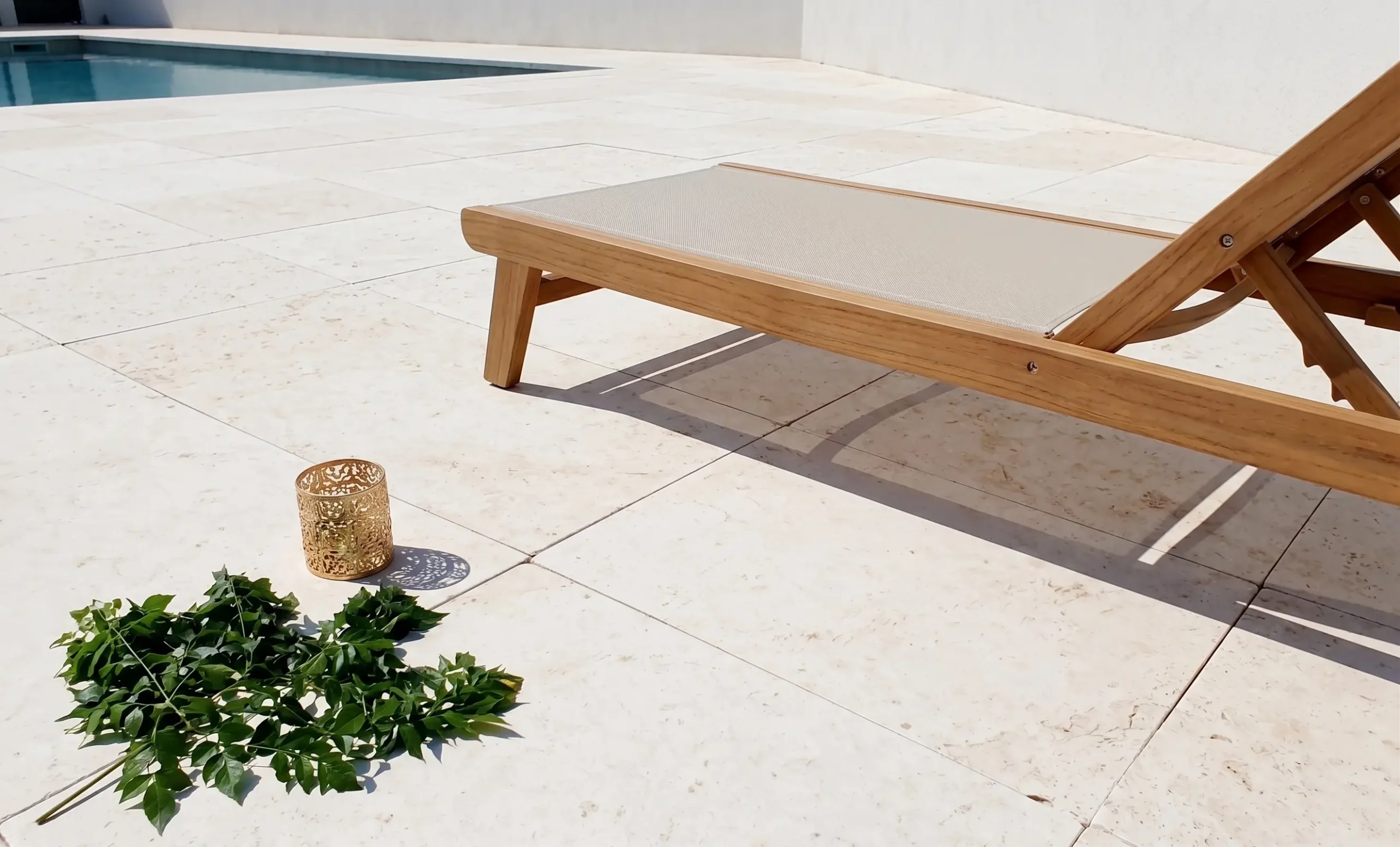
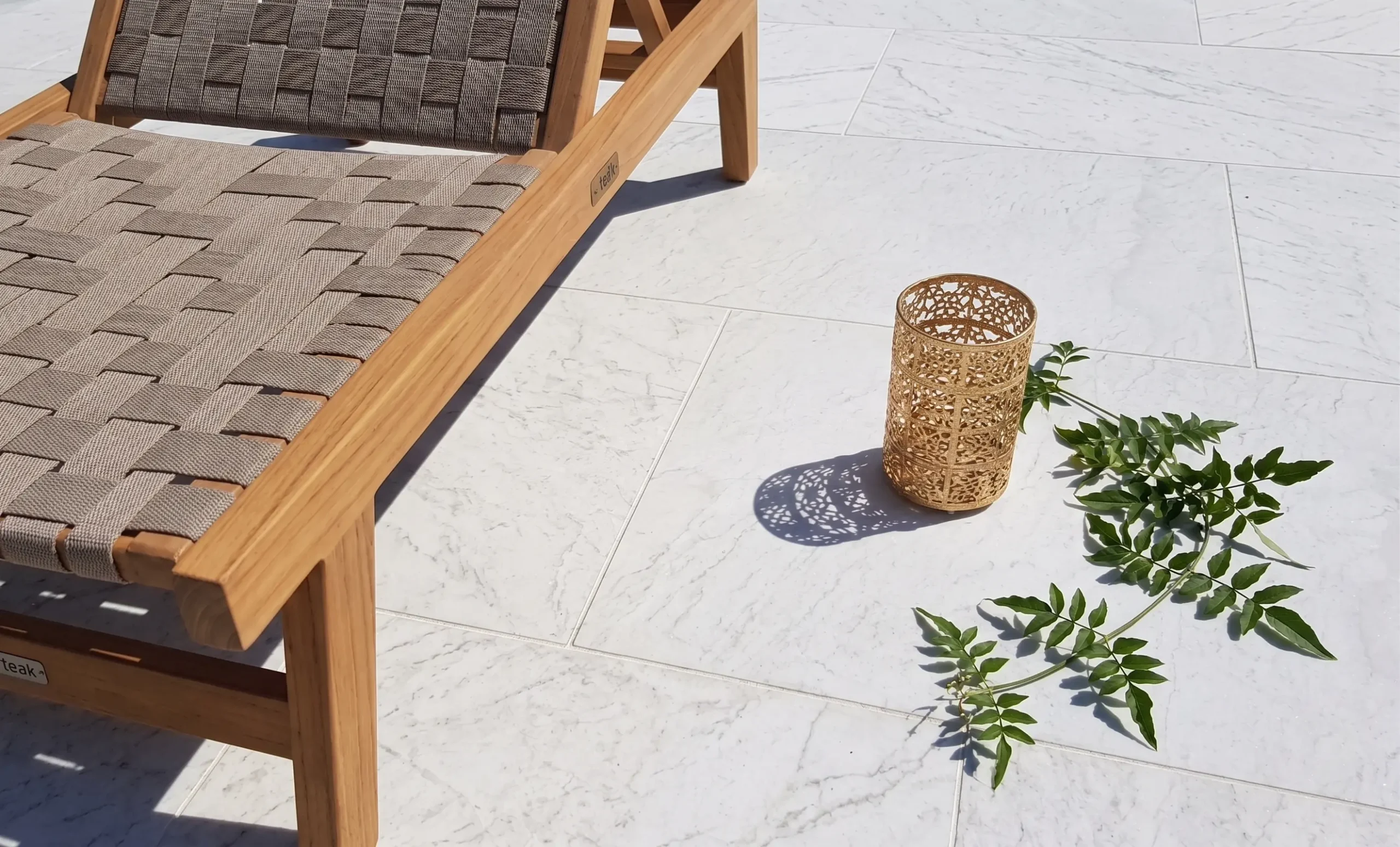
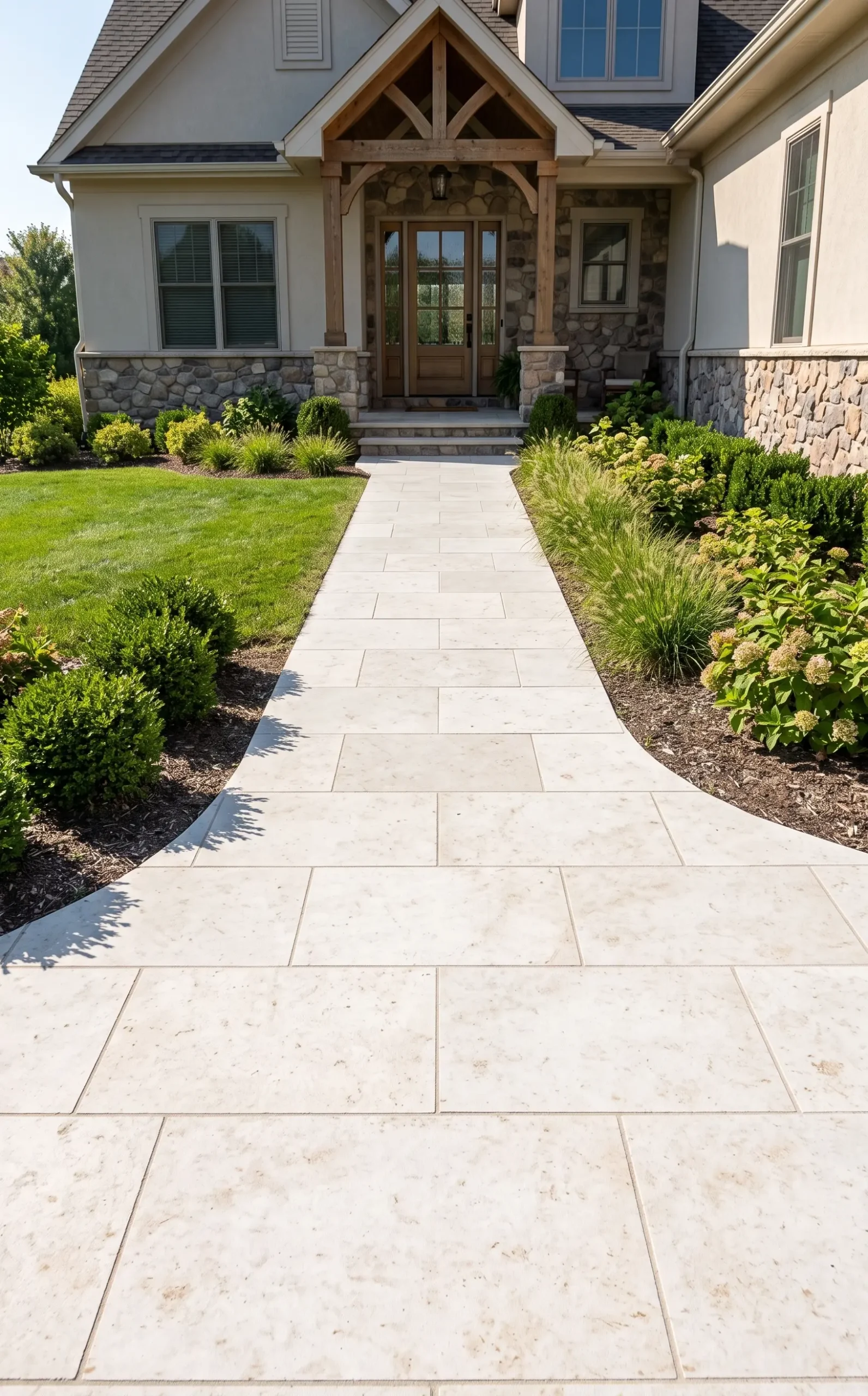
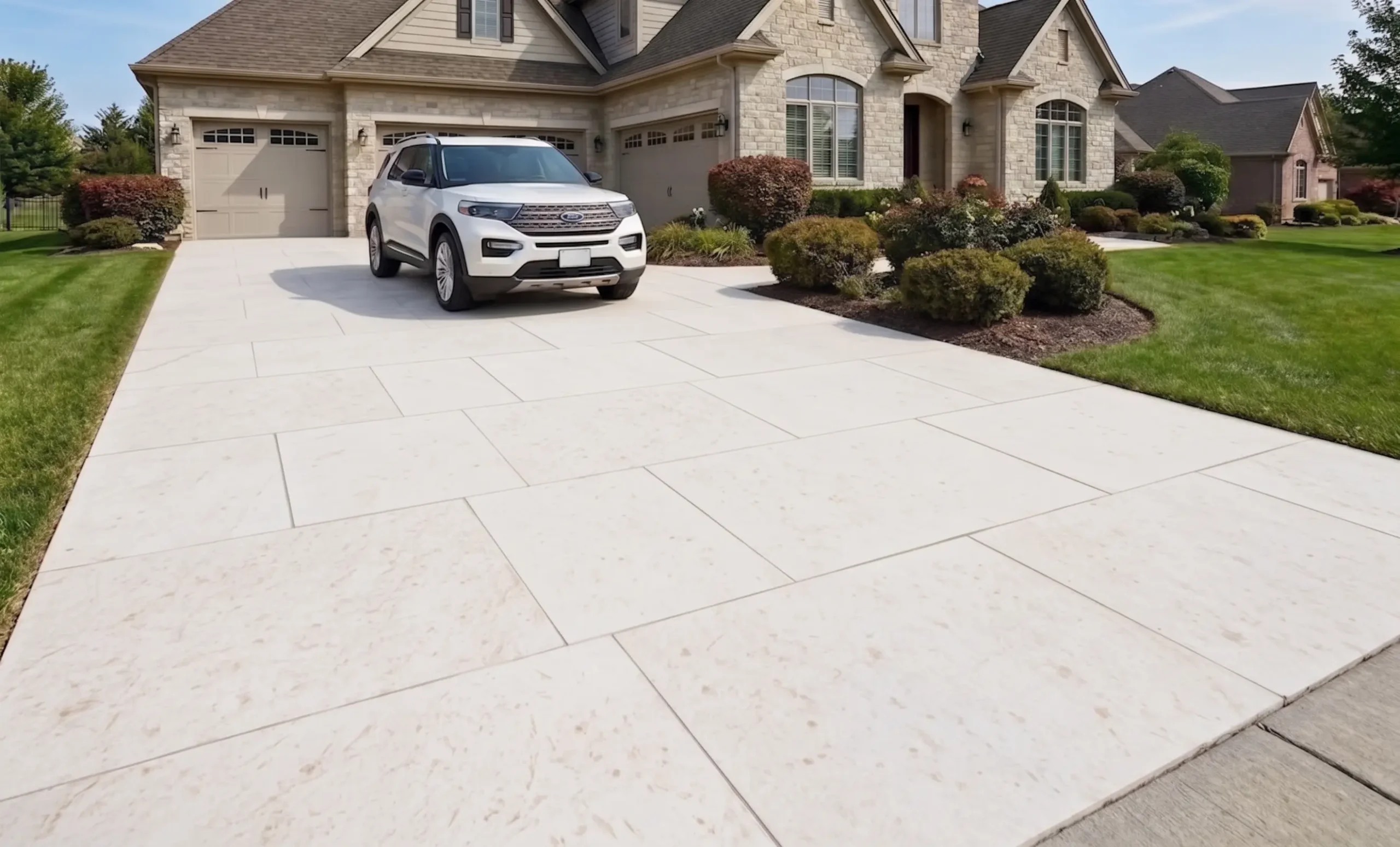
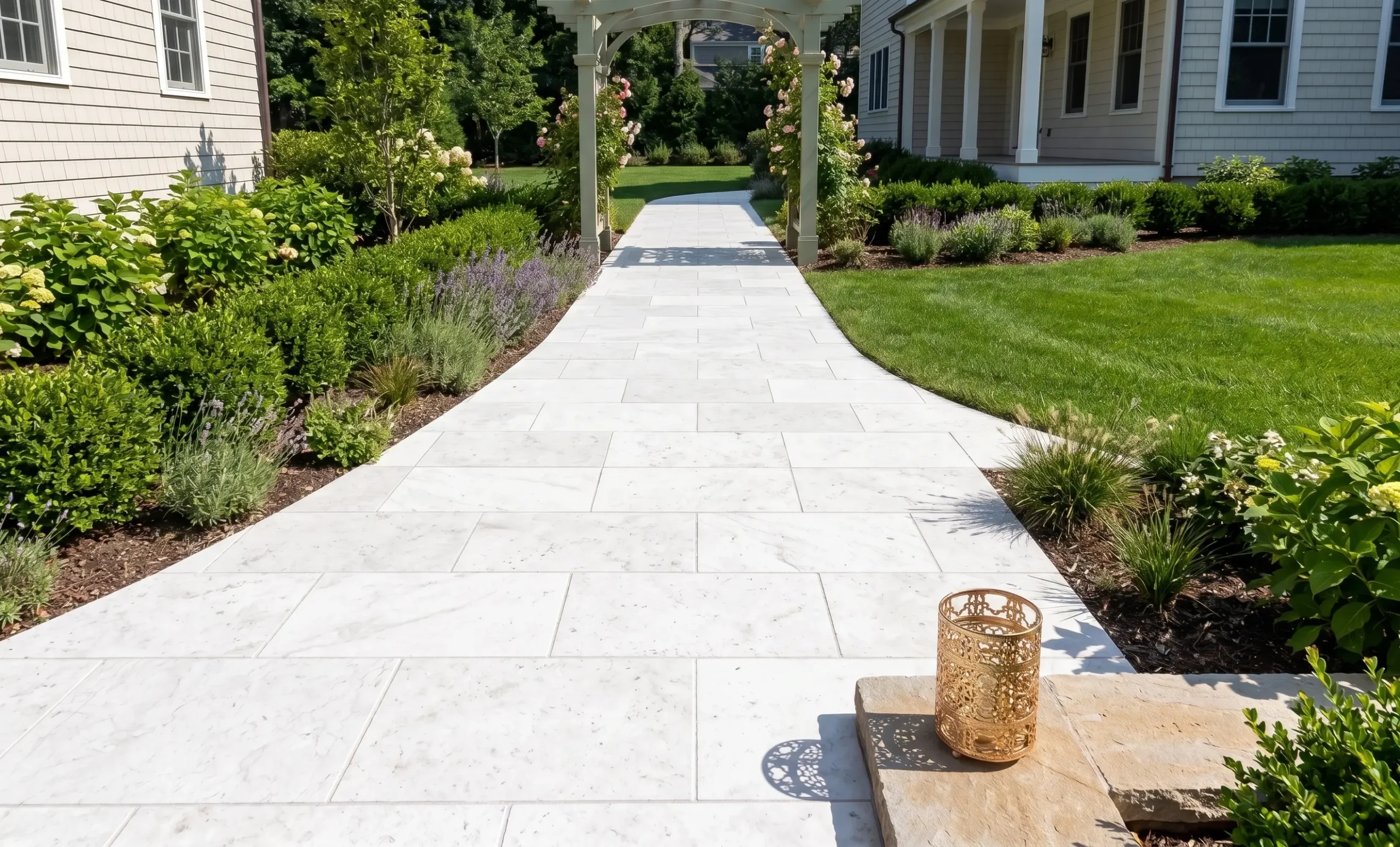
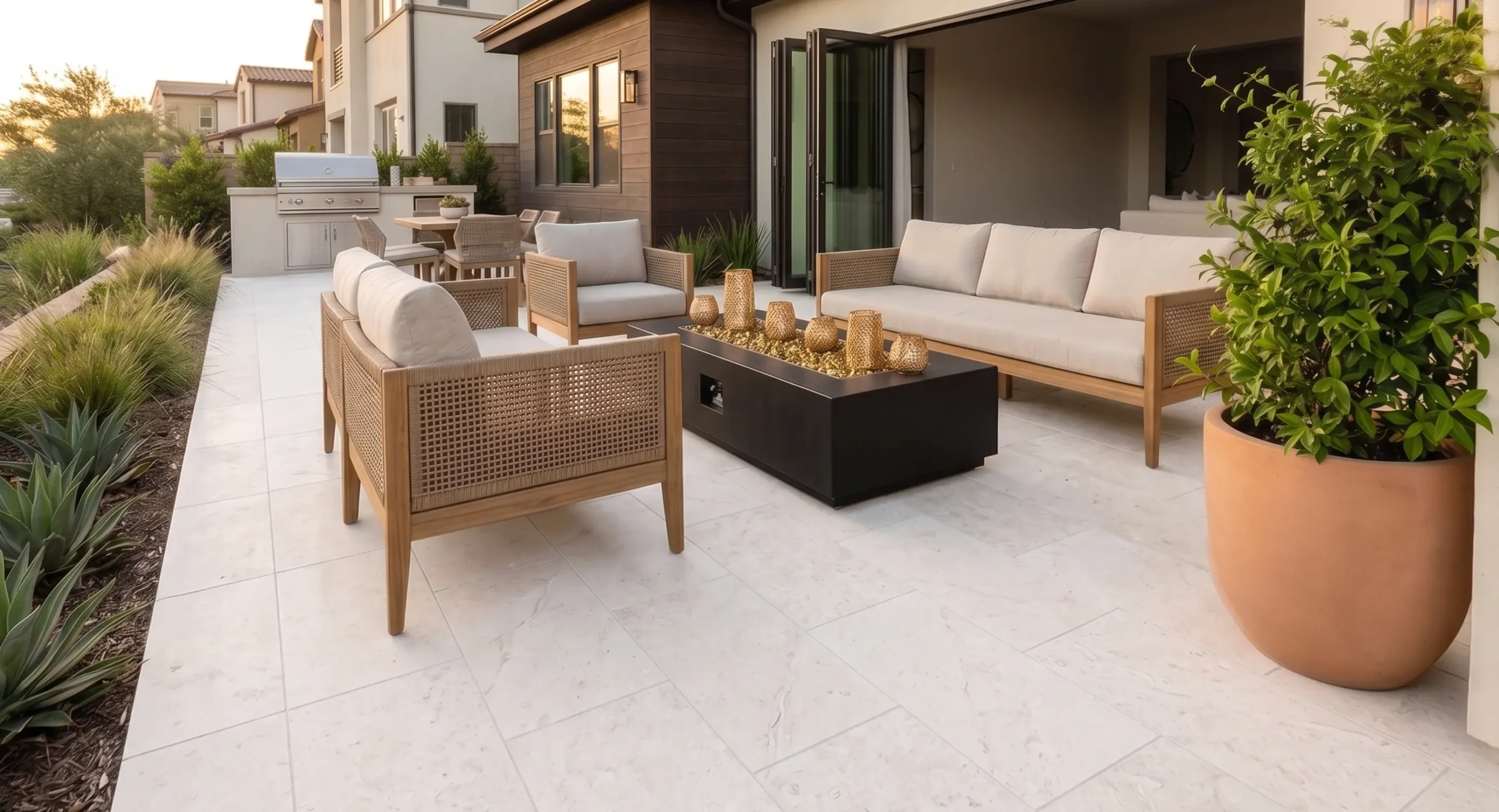
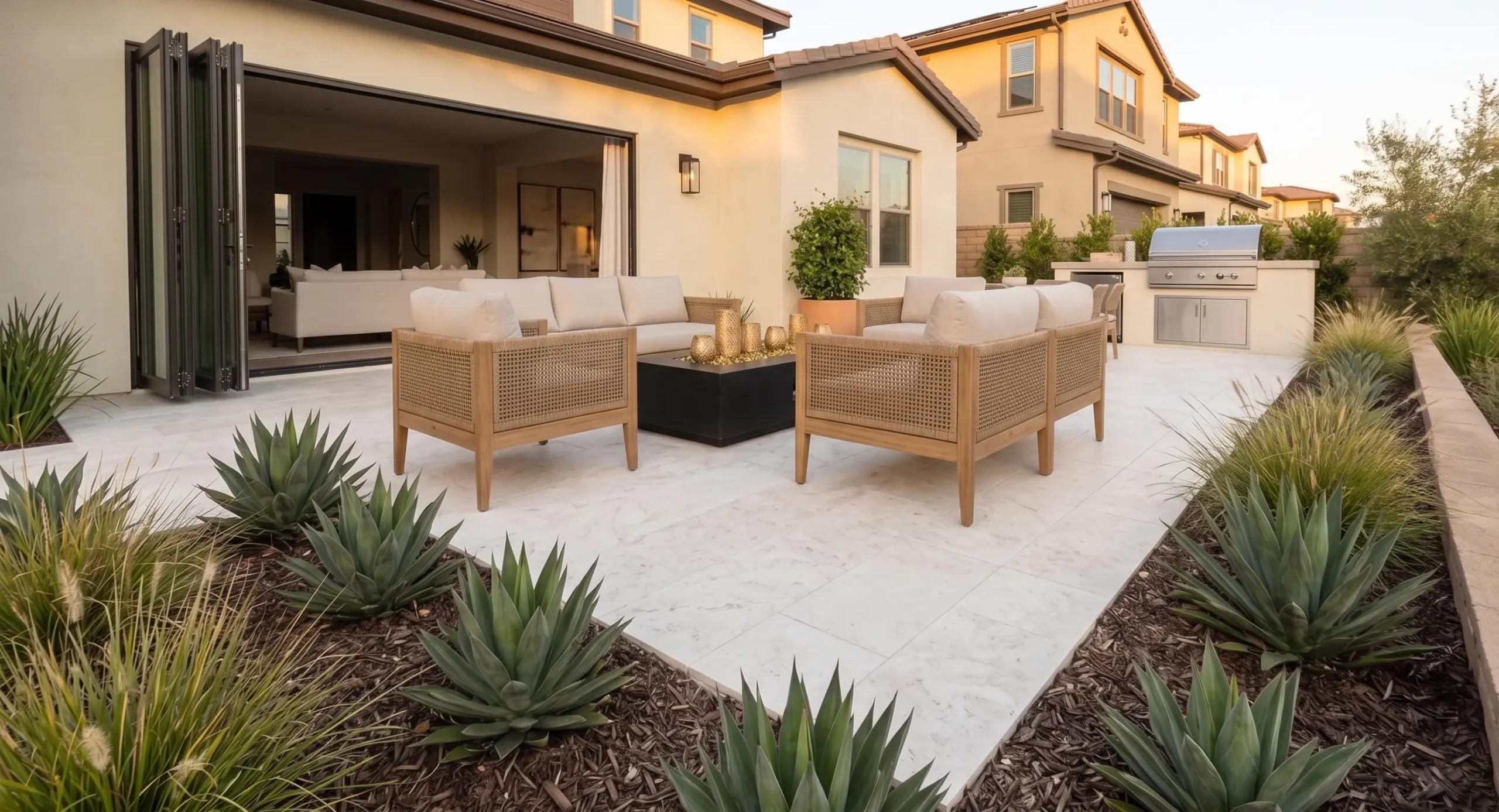
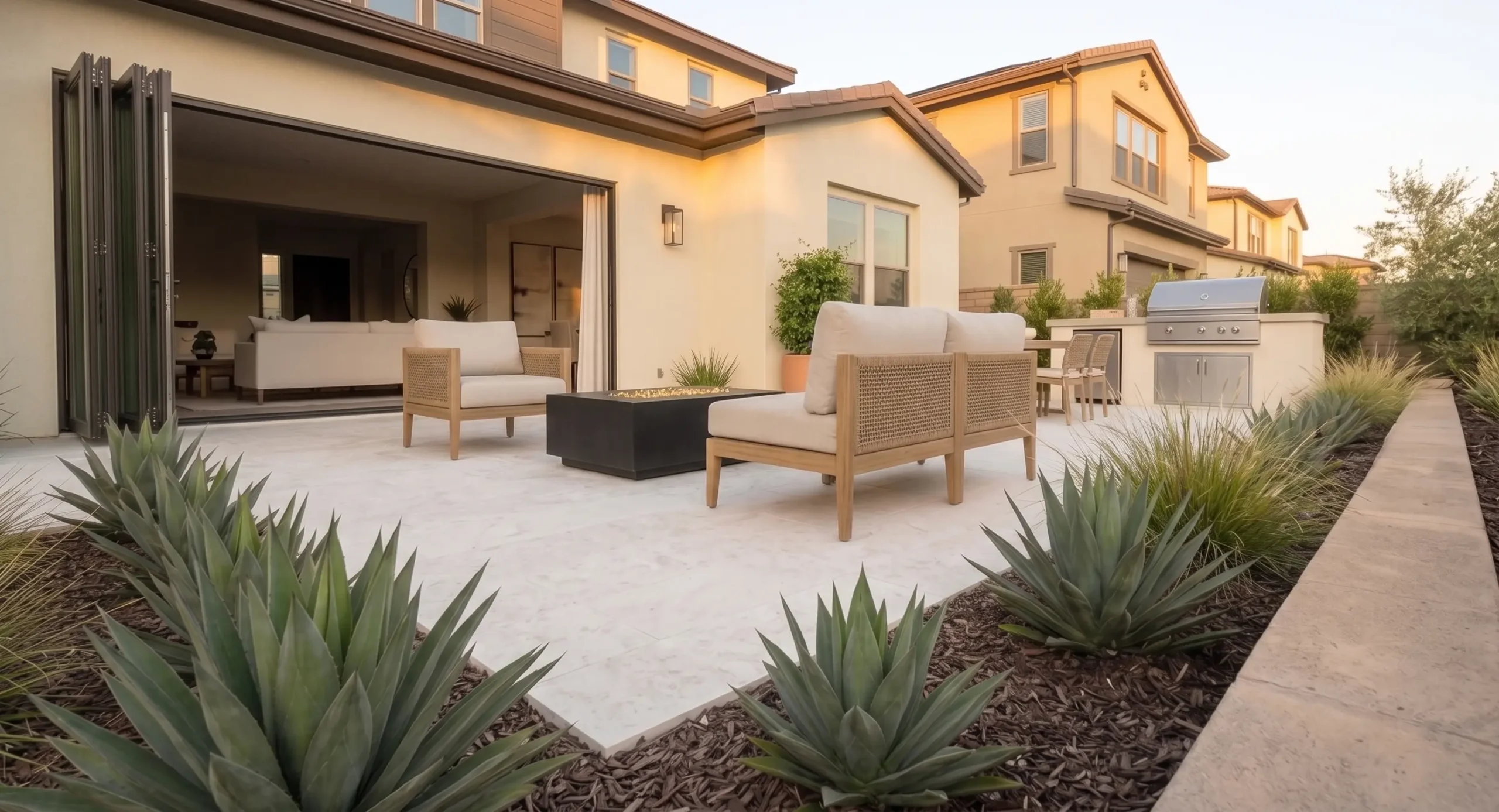
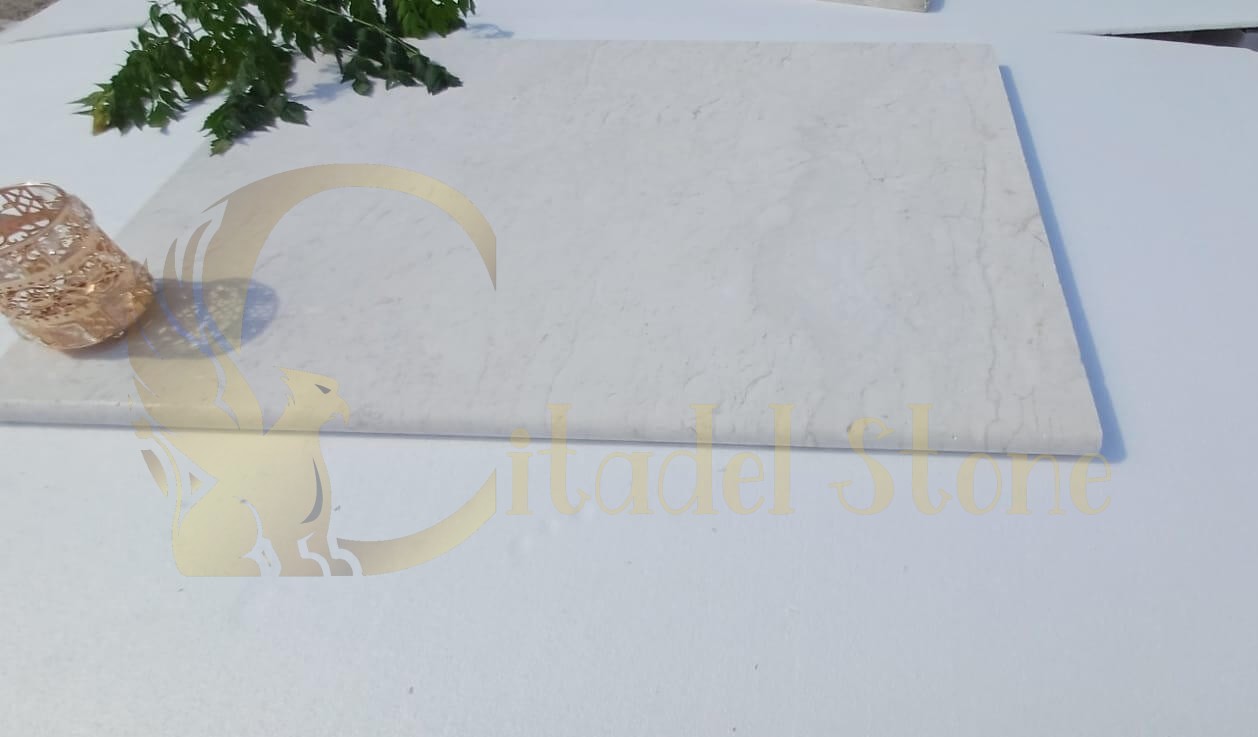
Citadel White Limestone Polished Large Format 36″ × 24″ is the natural-stone specification of choice for projects across the United States that demand both authentic natural material and architectural scale — luxury residential entrance halls, grand living rooms in coastal Florida and Southern California estates, hotel lobbies across destination resort markets, hospitality reception areas in flagship commercial properties, museum and cultural-facility floors, and the sheltered exterior architectural settings where polished limestone bridges the indoor-outdoor transition. Covered terraces, loggias, atriums with overhead protection, porticos, and sheltered warm-climate outdoor entertaining spaces all use this format to maintain visual material continuity from interior through covered exterior — one of the defining design moves of contemporary warm-climate architecture.
The 36-by-24-inch format is genuinely large by natural-stone standards — at the upper end of paver dimensions and weighing in at over 60 pounds per piece at 3cm thickness. This is statement architectural specification, not standard residential paving. The format reads as deliberately architectural at first sight: the floor anchors the space with material weight and presence, the polished surface amplifies natural and artificial light across the broad installation plane, the natural variation across pieces gives the floor authentic stone character at every viewing distance, and the format scale matches the architectural scale of the grand interior and sheltered exterior settings it is designed for. Where smaller polished limestone formats can read as residential or domestic, the 36-by-24-inch reads as architectural and ceremonial — equally appropriate to a grand entrance hall or to a covered terrace that extends the architectural vocabulary of the building outward.
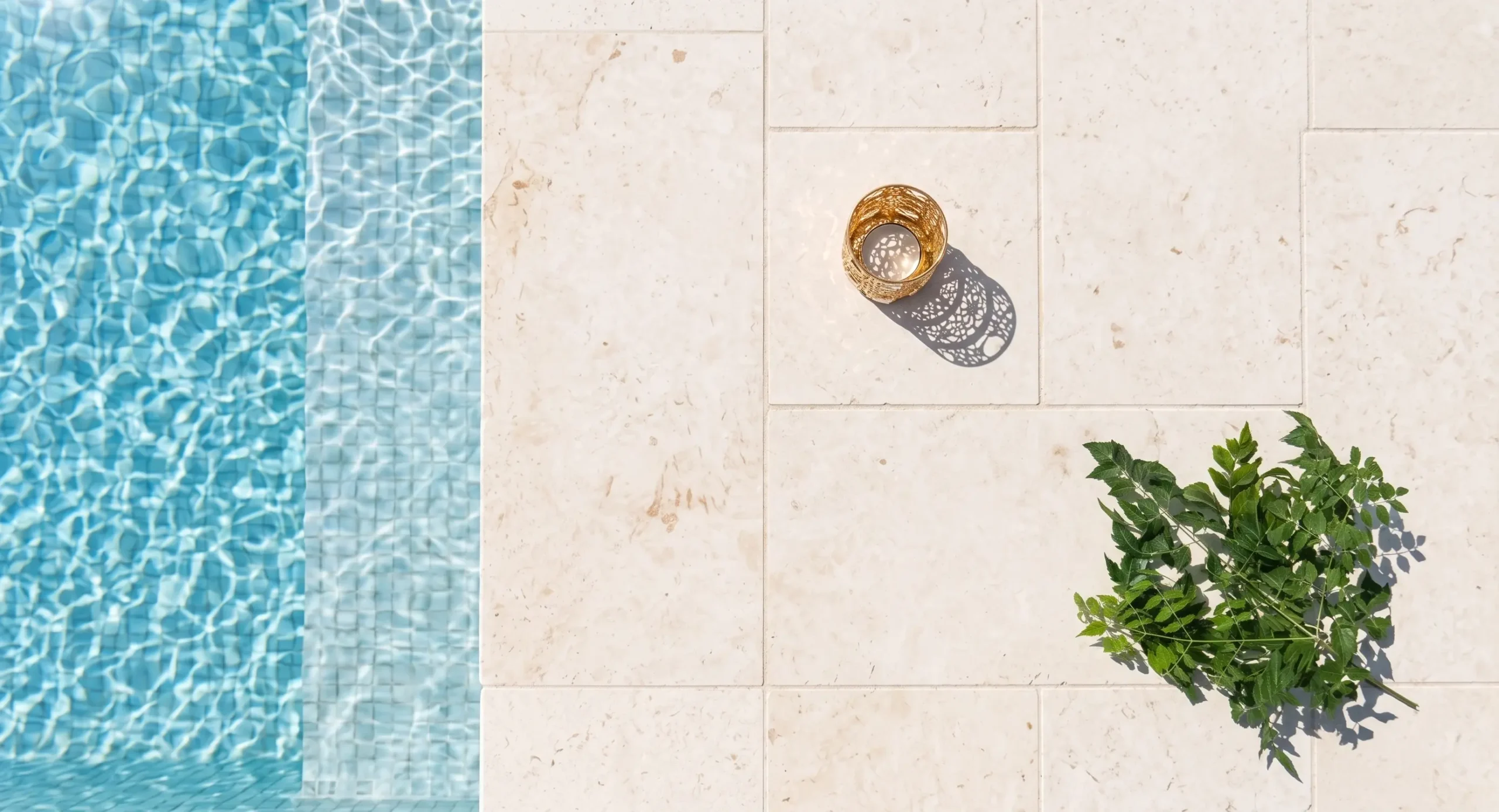
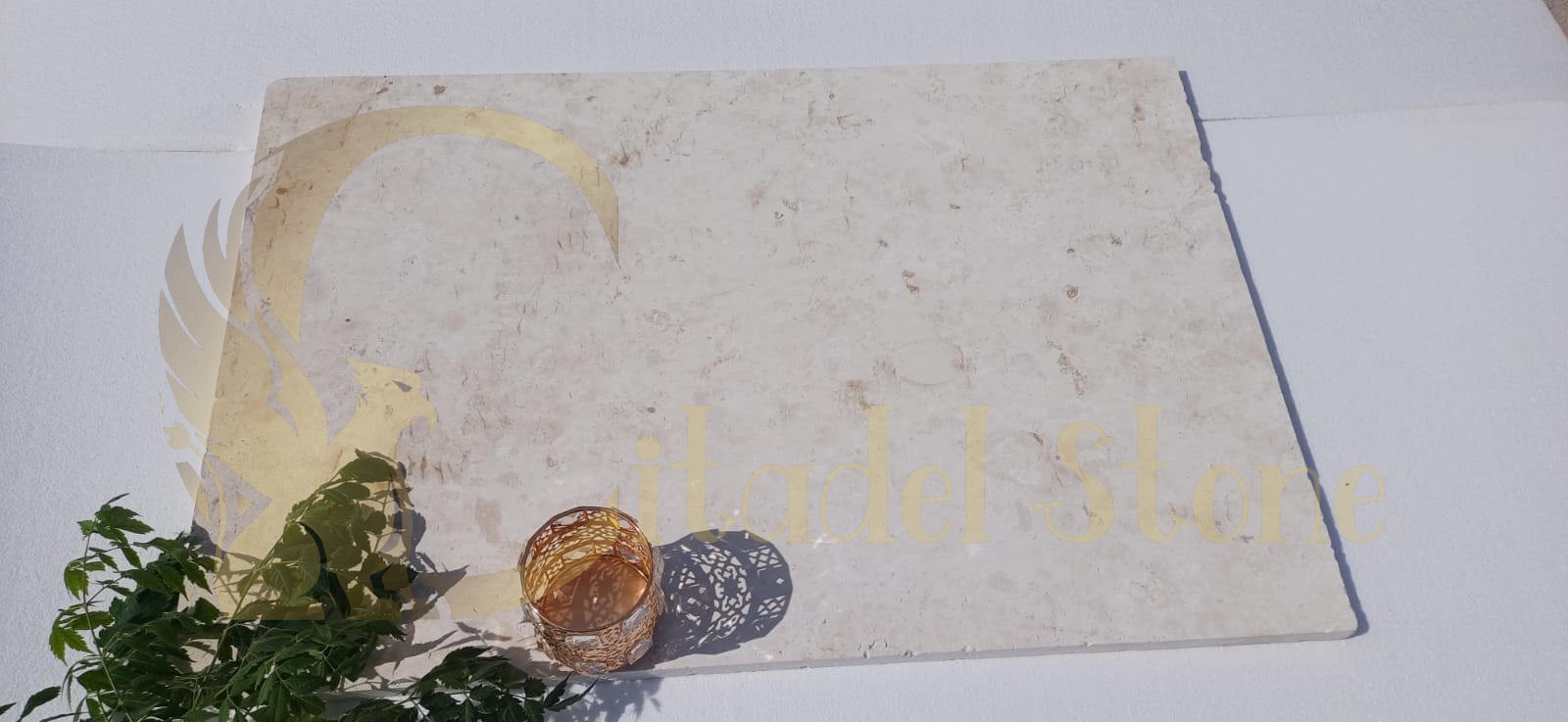
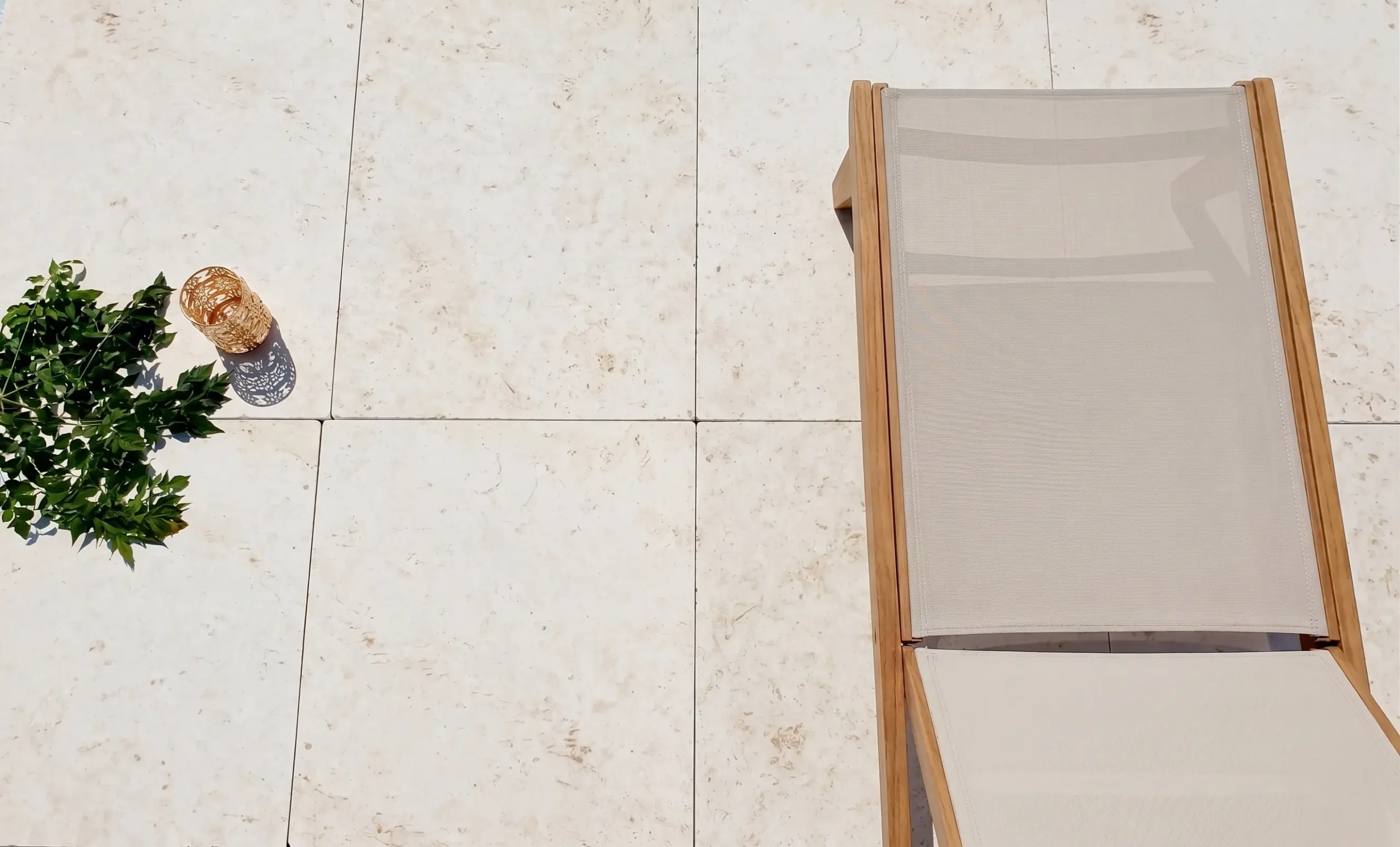
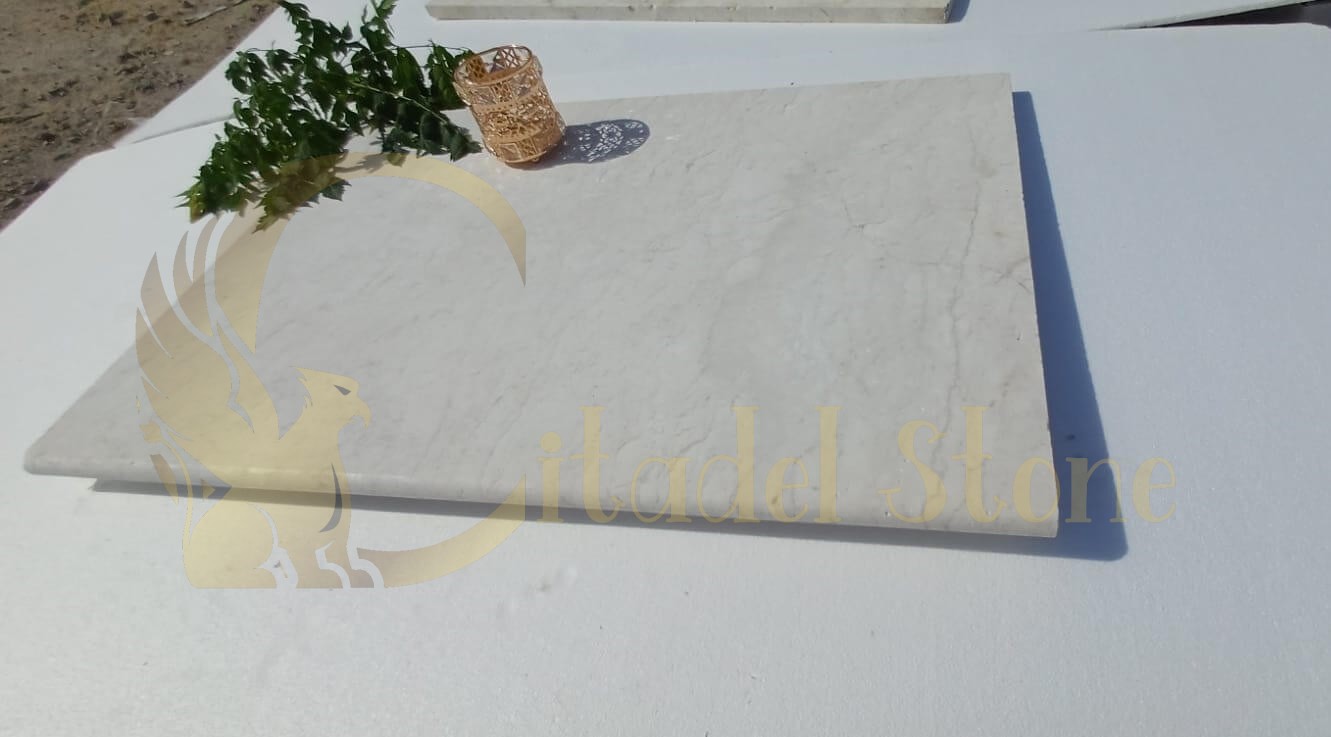
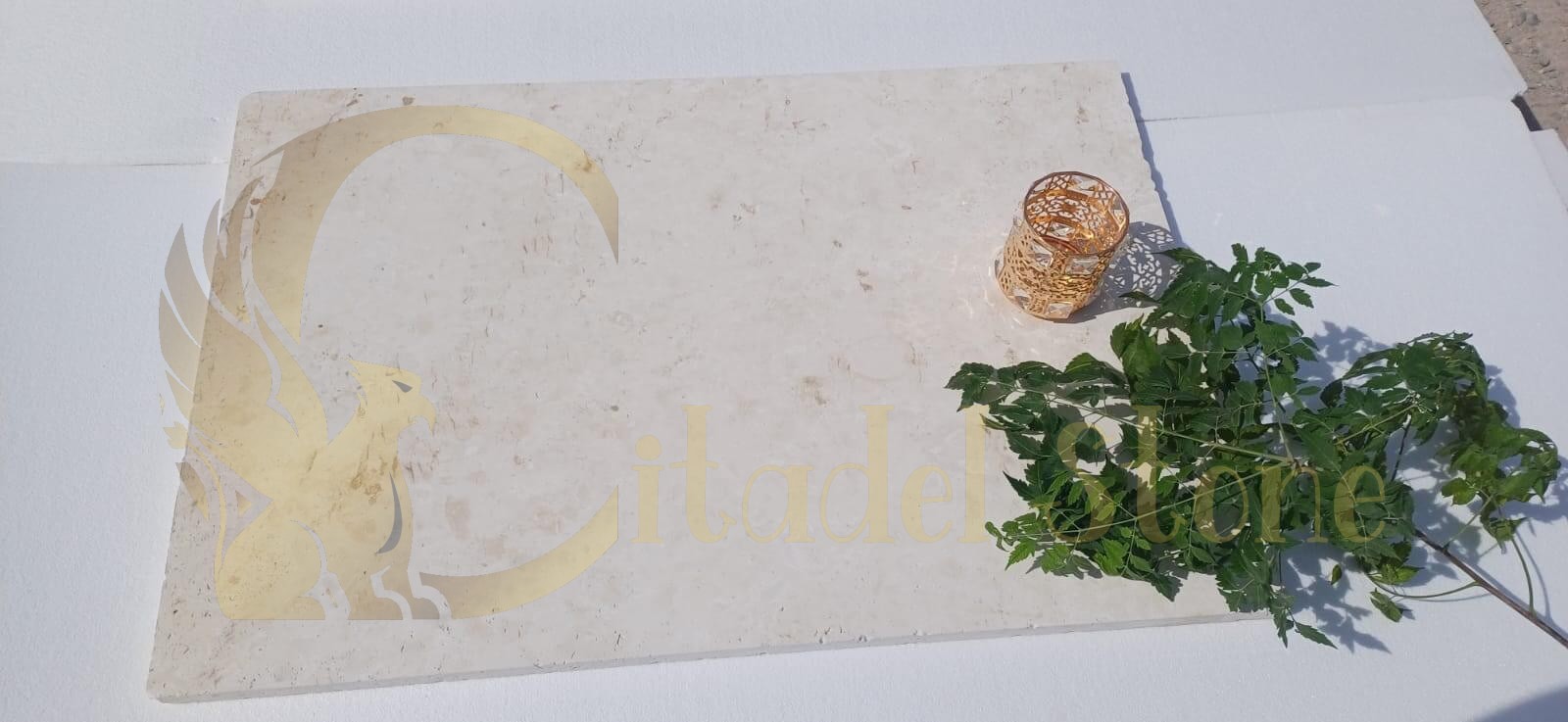
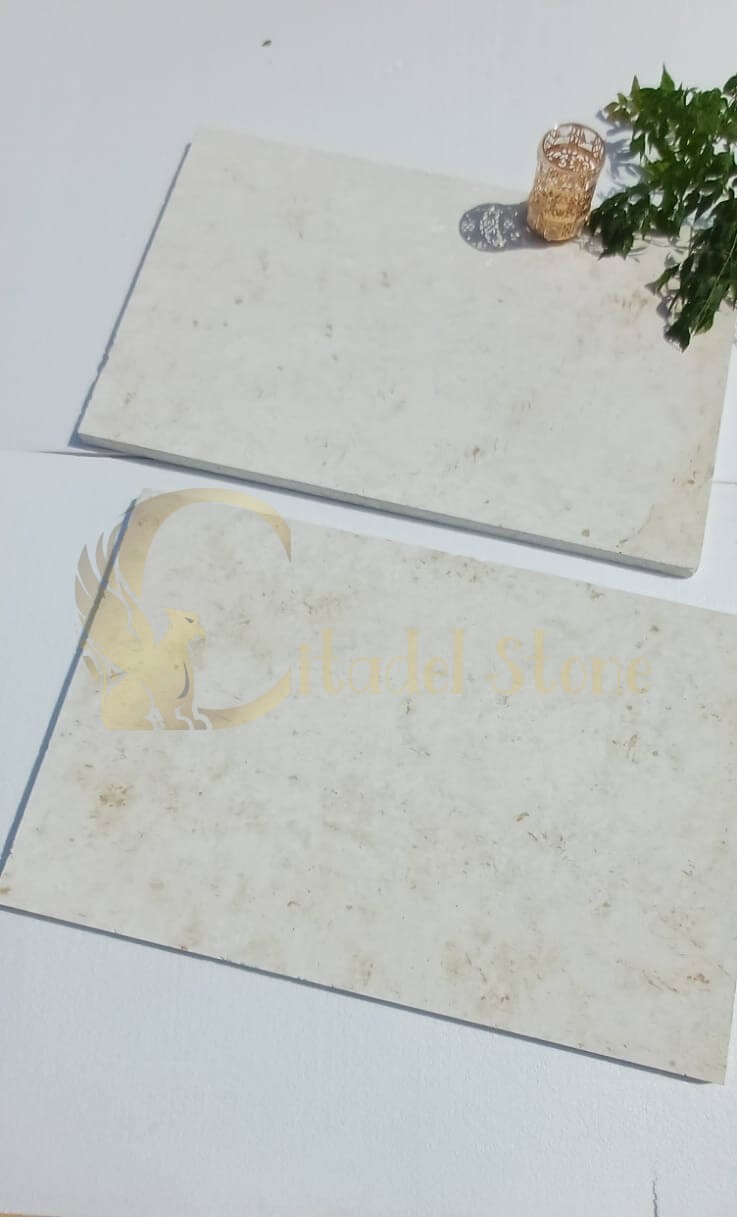
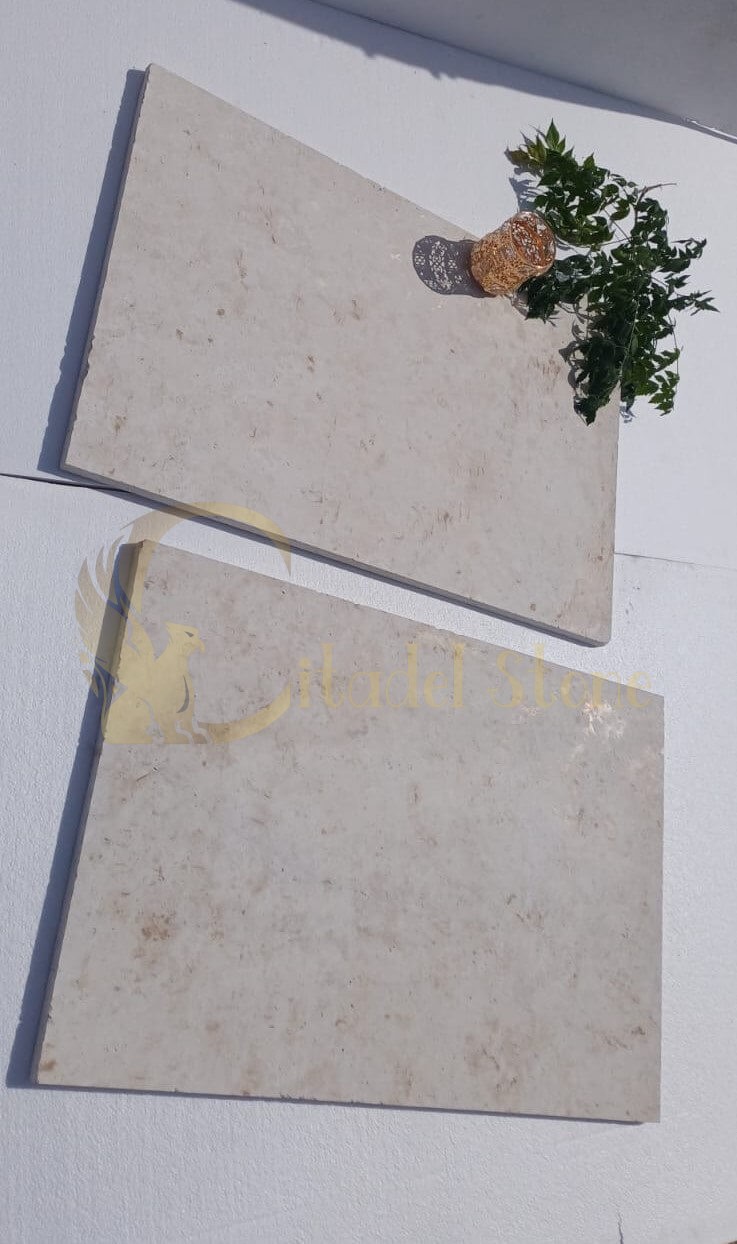
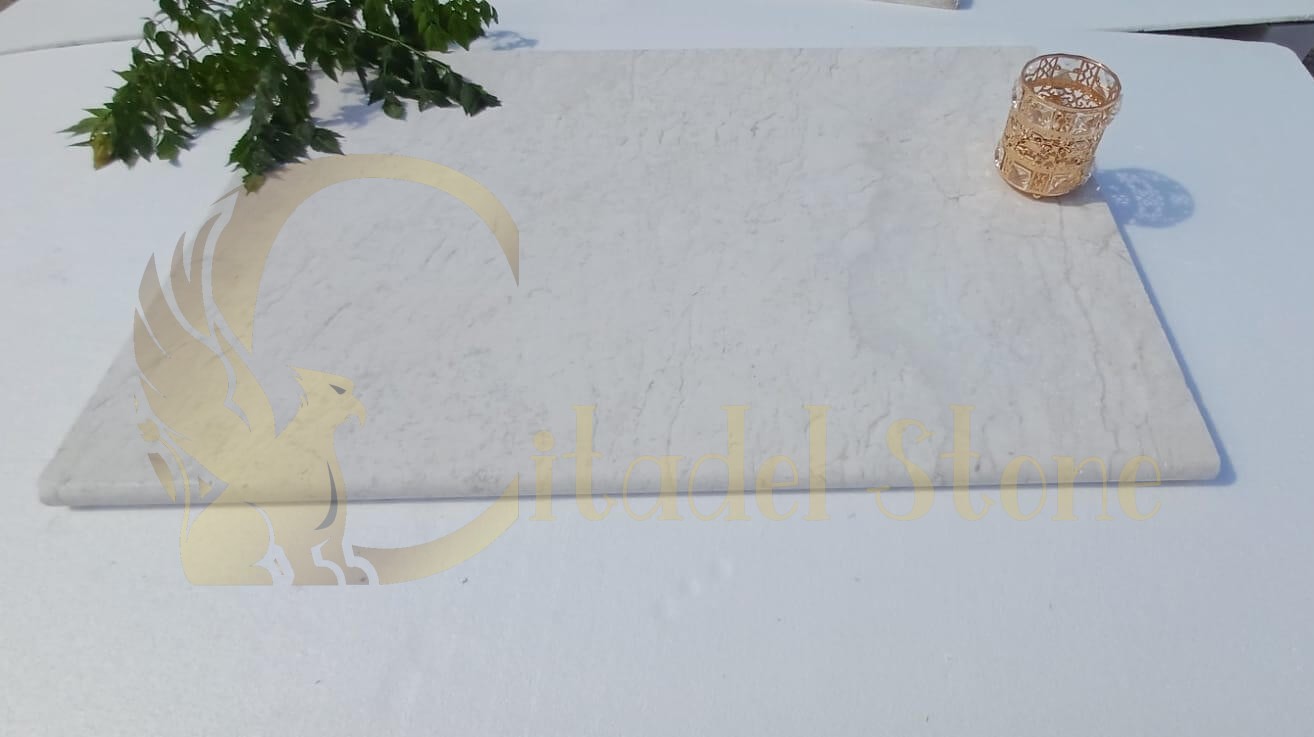
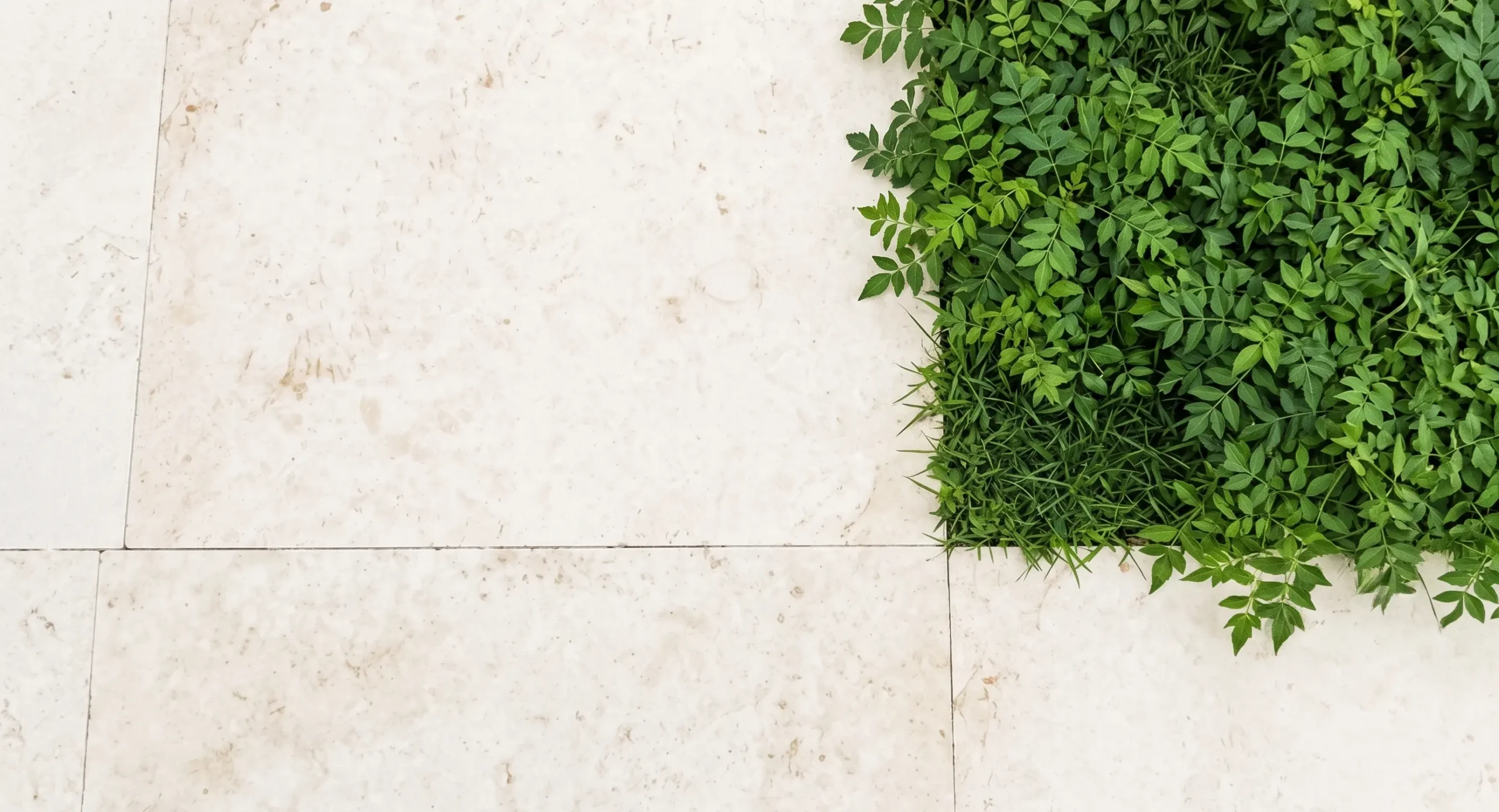
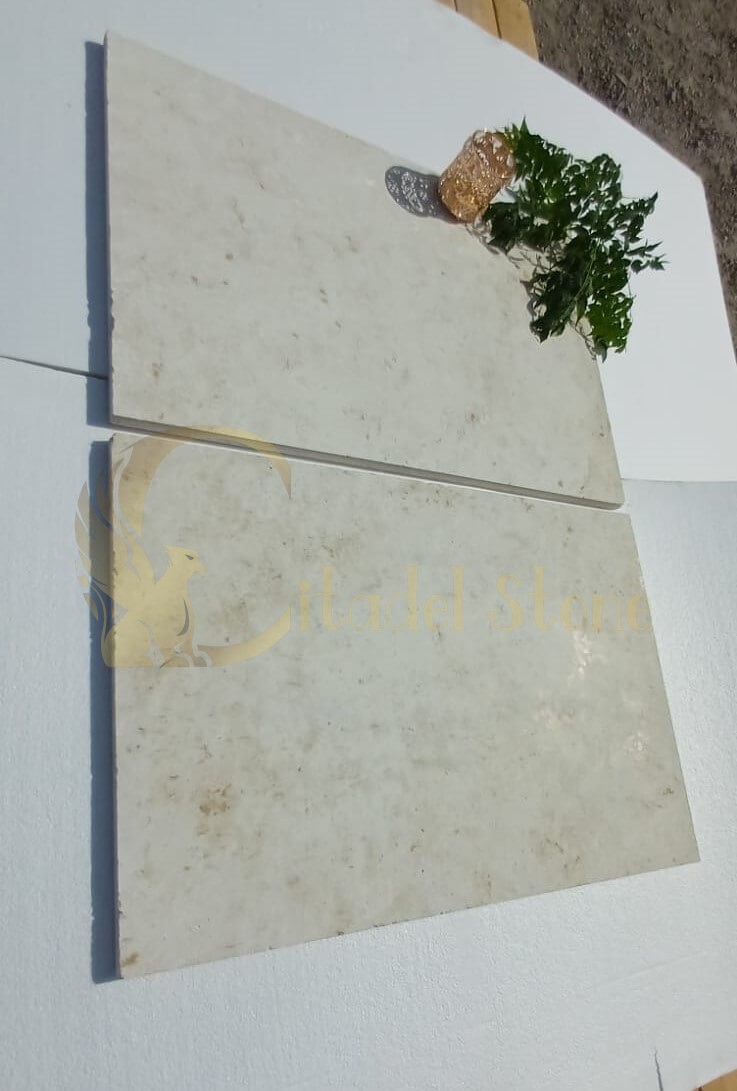
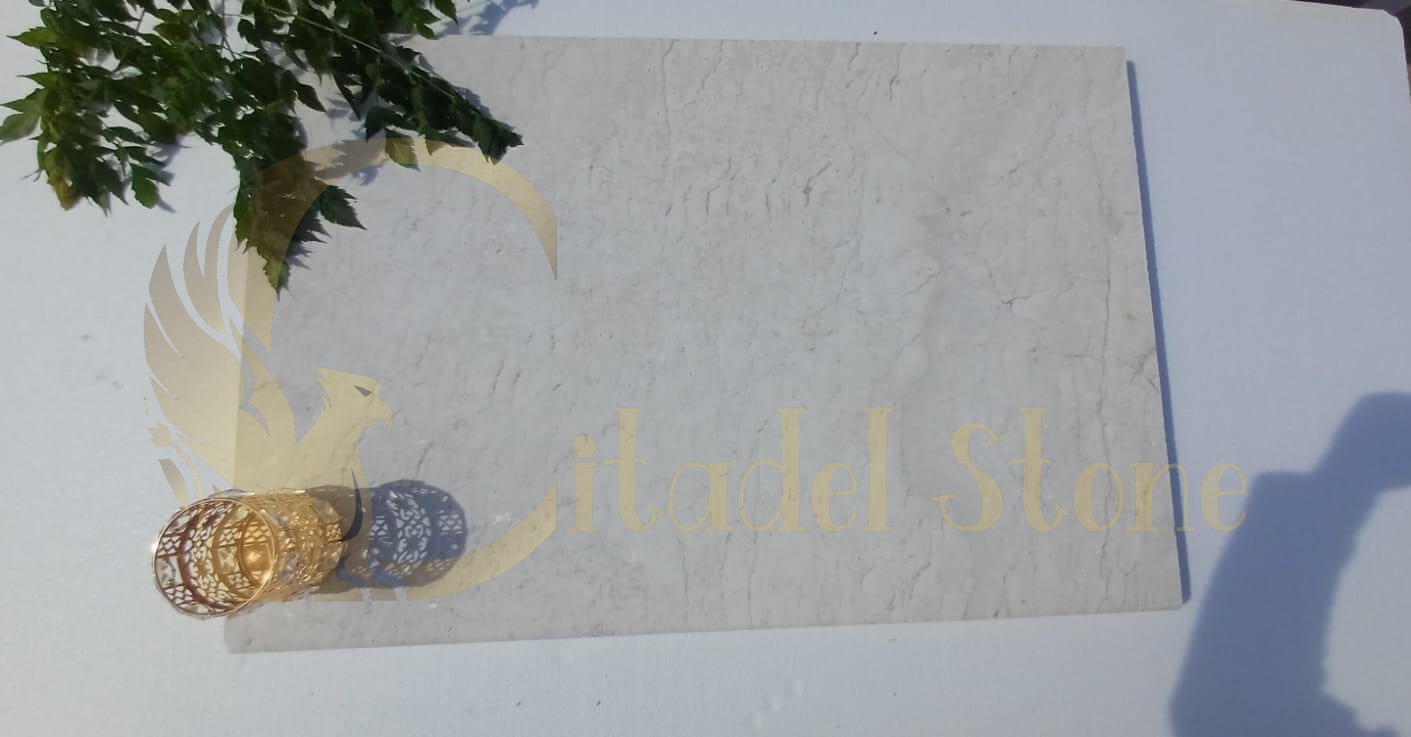
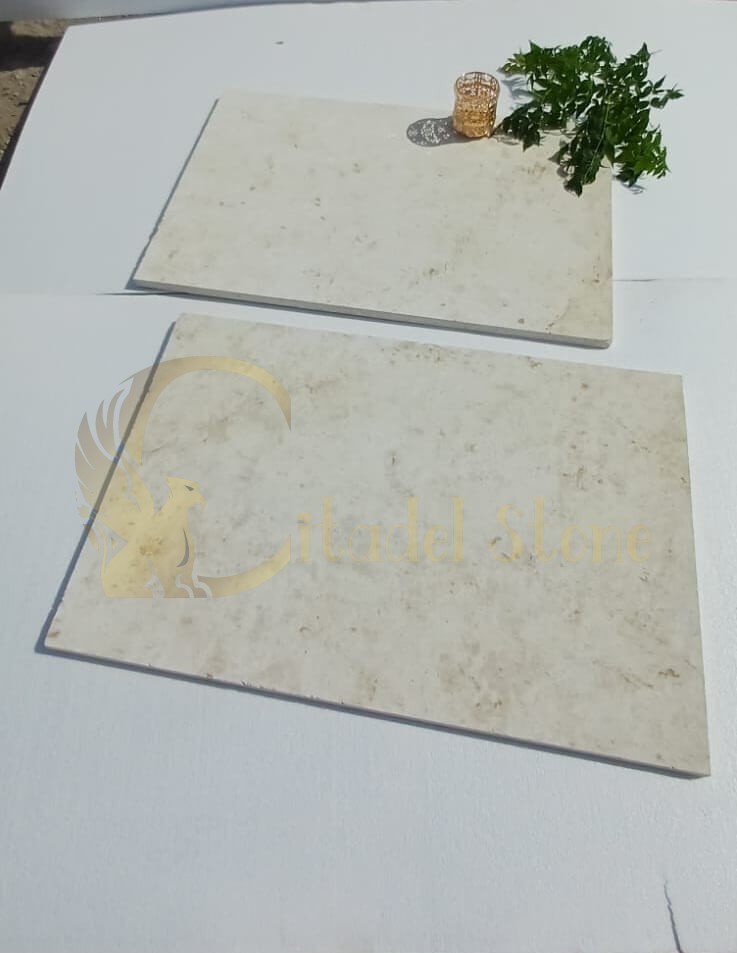
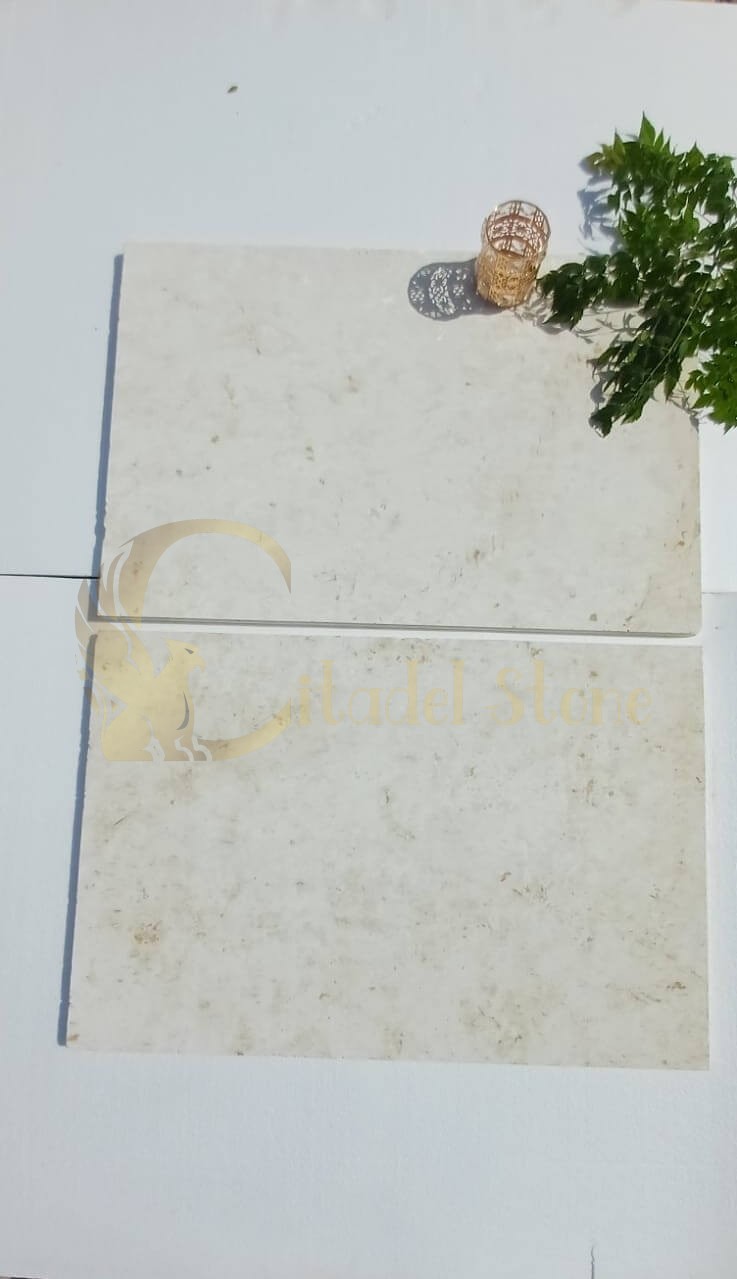
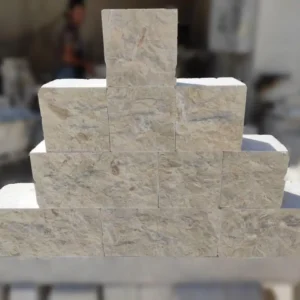
Citadel Stone’s white limestone is hand-quarried from exclusive Middle Eastern deposits and selected at the source for the colour consistency, fine grain, and structural integrity that distinguish polish-grade limestone from standard commercial-grade material. The colour reads as a warm pale cream with subtle natural variation between pieces — soft enough to provide a luminous neutral foundation for any interior or sheltered exterior design vocabulary, distinctive enough to read as genuine natural stone rather than manufactured uniform-tone alternatives.
Polish-grade selection at large format is meaningfully more demanding than standard selection because the polished surface reveals any structural inconsistency in the stone. Every block destined for polishing at this format is inspected at the quarry for veining stability, freedom from significant inclusions, and the structural integrity required to take and hold a high polish across the full 36-by-24-inch face. Pieces that pass selection are processed in our own finishing facilities through multi-stage progressive polishing — coarse, medium, fine, very fine, and extra-fine abrasive stages followed by a final buffing pass that produces the luminous mirror-bright finish.
The polished finish on natural limestone delivers four distinct effects, all of which are amplified at the 36-by-24-inch format compared to smaller polished formats. The warm pale-cream tone intensifies under polish, becoming richer and more saturated than it appears on honed or natural surfaces of the same stone. The light-reflective surface amplifies both natural and artificial light across the installation, brightening interior and sheltered exterior spaces and making rooms feel larger and more open. The polished surface displays the subtle natural variation across pieces at greater visual scale, giving the floor depth and movement that smaller formats cannot achieve. And the surface gains the silky-smooth tactile quality that distinguishes polished natural stone underfoot from any other surface treatment available in natural materials.
At the architectural scale of the 36-by-24-inch format, these effects combine to produce an installation that reads as a single architectural composition rather than a tiled floor. Grout lines at the format scale are visually subordinate to the polished surface area, and properly matched grout colour with narrow joints (1/8 to 3/16 inch) produces a near-continuous surface plane that emphasises the polished material rather than the modular structure of the installation.

Sealing is essential for every white limestone installation without exception, and the polished large-format specification is no different. The polished surface is smoother and visually denser than honed or natural finishes of the same stone, but the underlying material is still porous sedimentary limestone with characteristic water absorption behaviour. The polish refines the surface; it does not seal the material. A quality penetrating natural stone sealer applied at installation and reapplied at scheduled intervals throughout the service life of the floor is the critical specification element.
For interior floor installations in dry conditioned environments, initial sealer application is performed within thirty days of installation completion, after grout has fully cured. Reapplication every three to five years under normal residential use is typically sufficient, with the timing confirmed by the standard limestone water-bead test described in the maintenance section. For commercial interior installations subject to higher-frequency cleaning protocols and heavier foot traffic, the reseal interval moves to every two to three years.
For sheltered exterior installations — covered terraces, loggias, atriums with overhead protection, porticos, and similar partially-protected outdoor architecture — sealing follows the exterior protocol of annual reapplication, scheduled before the wettest season in the project’s climate. This is non-negotiable for sheltered exterior installations. The polished surface is more vulnerable than honed or natural finishes to weather-driven degradation if sealing lapses, and the annual schedule is the threshold for reliable long-term performance.
For bathroom and wet-area installations — uncommon at this large format but specified occasionally in luxury master bathroom projects — annual reapplication is recommended for the first three years after installation.
Citadel Stone supplies specific sealer recommendations and application guidance with every order and will not supply this material to customers who have not understood and accepted the sealing requirement. Skipping the sealing protocol on polished limestone produces predictable, progressive surface staining that becomes increasingly difficult to address over time.
Interior installations are not climate-sensitive in any meaningful way. The polished large-format limestone performs identically in any conditioned indoor environment regardless of the building’s external climate, and projects in cold-climate USA states routinely specify this finish and format for interior luxury work without concern. Interior installation is the primary use case for this specification and the optimal application across the entire United States market — from Maine to Hawaii, the interior performance is consistent.
Sheltered exterior installations are climate-sensitive and require careful specification. The polished finish at this large format is appropriate for sheltered exterior settings in warm climates — Florida, the Gulf Coast, Hawaii, Southern California, Arizona, and equivalent international warm-climate markets — including covered terraces, loggias, atriums with overhead weather protection, porticos, and other partially-protected outdoor architecture. In these conditions, the polished surface delivers the visual continuity from interior to exterior that defines contemporary warm-climate design, with annual sealing as the maintenance commitment.
For cold-climate sheltered exterior installations, the same polished finish can be specified but requires more attentive maintenance — annual sealing without exception, careful drainage planning to prevent water sitting on the surface, and acceptance that the polished surface will show weather effects over time more readily than warm-climate installations. For fully exposed exterior installations in any climate, polished is not the right specification — honed or natural-finish alternatives in the same stone family are the appropriate choices, providing more weather-resilient surfaces with similar visual character. For severe cold-climate exposed exterior installations, Citadel basalt at a comparable large format is the most weather-resilient choice and is recommended without reservation.

The six application sections below address the architectural settings — both interior and sheltered exterior — where the 36-by-24-inch polished white limestone format performs at its best. Each reflects the architectural scale of the format and the dual interior-exterior specification range.
Grand residential interior flooring is one of the principal applications for this specification. The format scale matches the architectural scale of luxury residential entrance halls, formal living rooms, dining rooms, and the open-plan great rooms that define contemporary luxury residential design. At 36 by 24 inches, each piece anchors a substantial portion of the floor area, allowing the polished surface to read continuously across the room rather than as a busy modular grid. The warm pale-cream tone provides the luminous neutral foundation that allows interior architecture and furnishings to take centre stage, while the polished surface bounces natural and artificial light through the room to amplify the perceived spatial volume. The format is particularly effective in homes with tall ceilings, where the floor scale needs to match the architectural vertical to feel proportionally correct, and in homes with extensive natural light, where the polished surface returns daylight back into the room through reflection. Sealing follows the residential interior schedule of every three to five years, with felt pads under all furniture legs and entrance matting at all exterior doorways as the standard practical measures.
Hotel and resort lobby flooring represents one of the largest commercial applications of polished large-format limestone. The combination of properties is purpose-suited to the hospitality lobby environment: authentic natural material communicates investment and considered design at first impression, the warm pale-cream tone reads as inviting and luxurious rather than the cool clinical character of polished marble or porcelain, the light-reflective polished surface amplifies the lobby lighting design, the architectural-scale format matches the visual scale of grand lobby spaces, and the restorability of polished natural stone provides multi-decade service life with periodic professional refurbishment. Five-star hospitality properties across the warm-climate United States, Caribbean resort markets, and equivalent international destinations specify this format and finish for entrance lobbies, registration areas, and the public-realm flooring that defines the brand experience at arrival. Commercial sealing schedules apply — every two to three years rather than every three to five — with professional cleaning protocols and dedicated maintenance staff using only pH-neutral natural-stone products.
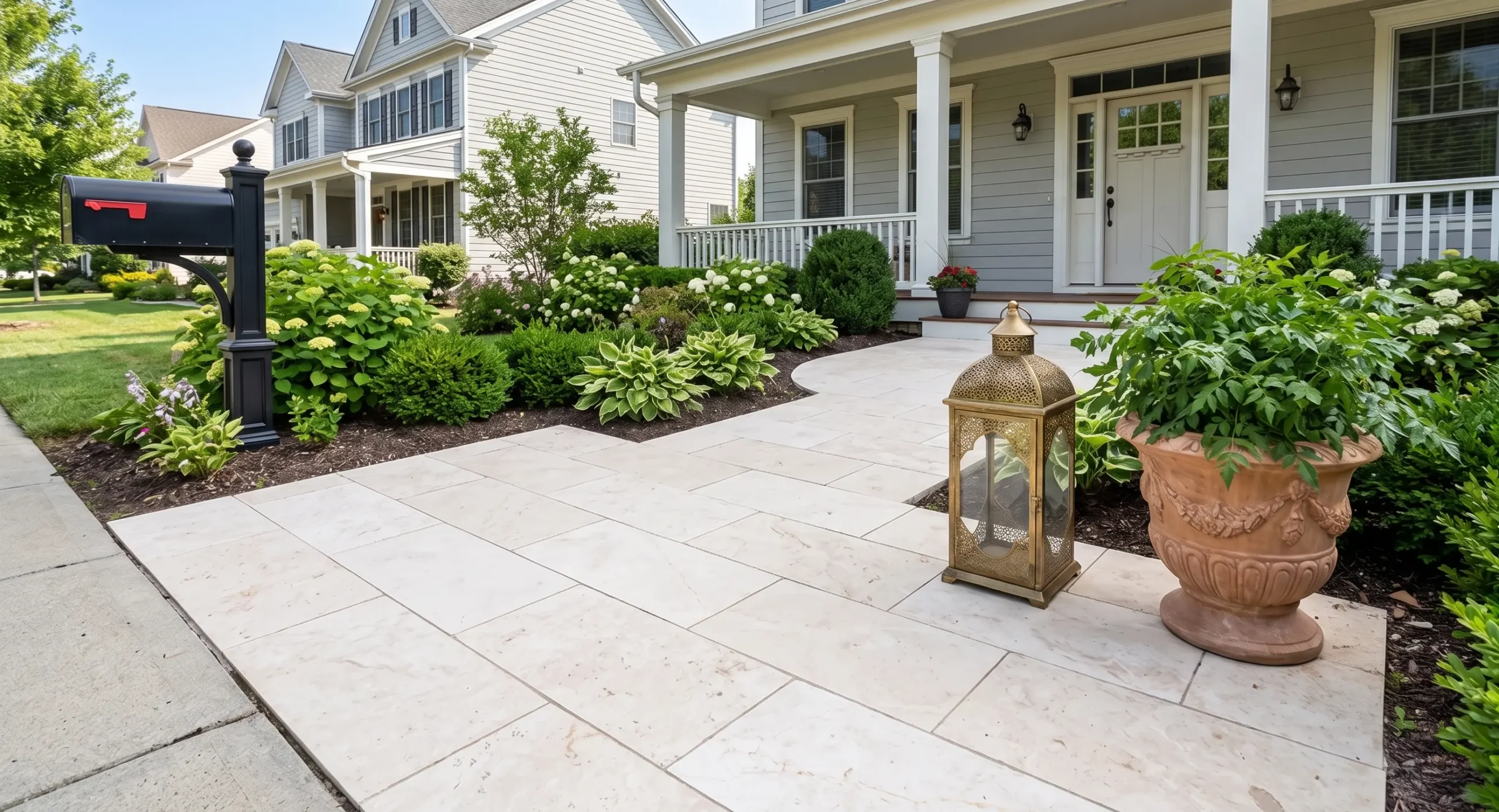
Sheltered exterior installations are the application that defines the dual interior-exterior character of this product. Covered terraces extending from interior living rooms or great rooms, loggias bordering courtyard architecture, atriums with overhead weather protection, porticos at building entrances, covered outdoor entertaining spaces in luxury residential and resort architecture, and the indoor-outdoor transition spaces that have become central to contemporary warm-climate design all use this format. The visual move is powerful: the same polished material continues from interior across the threshold to exterior, creating visual material continuity that links the conditioned interior to the protected exterior as a single architectural composition rather than two separate spaces. The specification requirements are straightforward: annual sealing without exception, drainage falls designed to move water off the surface rather than pool on it, and orientation of the exterior portion within the sheltered envelope rather than under direct rain exposure. In coastal Florida resort architecture, Gulf Coast luxury residential, Hawaiian destination hospitality, and equivalent warm-climate settings worldwide, the sheltered exterior application of this format is one of the most visually impactful specifications available in natural stone.
Beyond hotel lobbies specifically, this format serves the broader category of hospitality and corporate reception architecture: restaurant entry environments in luxury hospitality, retail showroom floors in flagship retail properties, corporate reception areas in premium commercial buildings, professional services reception environments where the floor communicates the firm’s positioning, and the public-realm interiors of luxury commercial development. The 36-by-24-inch format scale reads as appropriately architectural for these commercial reception environments, where the floor is part of the first impression created for visitors and clients. The polished surface character communicates the right qualities — investment, considered design, authentic natural material — without the cool clinical character that polished marble can read as in business reception environments. For commercial projects that extend the reception material onto sheltered exterior approach paths, plaza entrances, or covered building forecourts, the same format and finish flows naturally across the threshold with the annual exterior sealing schedule applied to the exterior portion.
Museum, gallery, and cultural-facility flooring is a specialty application for this format where the architectural neutrality and substantial scale of the installation support the exhibition mission of the facility. The pale-cream polished surface reads as a neutral background for exhibits, sculpture, and architectural display, while the format scale reads as appropriately architectural for the public-realm interior of cultural institutions. Lobby spaces, gallery floors, and the connecting corridors of museum and cultural-facility architecture all use this format and finish. Specifications for cultural-facility floors typically include additional requirements around abrasion resistance, sound performance, and maintenance protocols that are best discussed during the consultation process; Citadel Stone provides facility-specific specification documentation on request.
While more commonly associated with horizontal flooring at room scale, the 36-by-24-inch format also serves statement master bathroom floor installations in luxury residential work, where the format scale matches the architectural scale of large master bathrooms and en-suite environments. The warm pale tone, polished surface, and architectural-scale format combine to create bathroom floors that read as spa-quality material refinement appropriate to the largest luxury bathroom installations. Wet-area sealing protocols apply — annual reapplication for the first three years after installation, with attention to the management of acidic personal-care products that would etch the polished surface over time. Underfloor heating installations are particularly effective with this combination of polished surface, natural-stone thermal conductivity, and architectural-scale format, producing the silky-smooth warm-underfoot experience that defines luxury bathroom design.

| Property | Value | Notes |
|---|---|---|
| Stone Classification | Bioclastic Limestone | Sedimentary rock formed from compressed marine deposits over geological time. |
| Origin | Middle East | Hand-quarried from Citadel Stone’s exclusive Middle Eastern white limestone deposits. |
| Surface Treatment | High-Gloss Polished | Multi-stage progressive abrasion followed by fine buffing to mirror finish. |
| Format | 36″ × 24″ | Architectural large-format paving; metric equivalent 90 × 60 cm. |
| Thickness | 3 cm (1-3/16 in) | US standard paver thickness; supports interior and sheltered exterior installations. |
| Density | 2.30 – 2.55 g/cm³ | Standard density range for premium polished-grade limestone. |
| Water Absorption | 2.0 – 3.5% | Porous sedimentary stone; sealing mandatory for every installation. |
| Compressive Strength | 30 – 55 N/mm² | Suitable for residential and commercial interior flooring, sheltered exterior. |
| Mohs Hardness | 3 – 4 | Standard limestone hardness; avoid abrasive contact and dragging heavy items. |
| Slip Resistance (Dry) | Moderate | Suitable for dry interior areas and sheltered exterior settings. |
| Slip Resistance (Wet) | Low | Not recommended for fully exposed wet-walking surfaces or pool decks. |
| Acid Sensitivity | High | Highly sensitive to citric acid, vinegar, wine, and acidic cleaning products. |
| Light Reflectivity | High | Amplifies natural and artificial light across the installation. |
| Restorability | Excellent | Polished surface can be professionally re-honed and re-polished to original finish. |
| Sealing Requirement | Essential | Penetrating sealer; reapplied every 3–5 years interior, 2–3 years commercial, annually sheltered exterior and wet-area. |
| Optimum Climate (Interior) | Any | Performs identically in any USA climate as an interior surface. |
| Optimum Climate (Sheltered Exterior) | Warm, Tropical, Subtropical | Cold-climate sheltered installations require more attentive sealing maintenance. |
| Fully Exposed Exterior | Not Recommended | Honed or natural-finish alternatives in the same stone family are appropriate specifications. |
This product is supplied at the 36″ × 24″ × 3cm format. Each piece is substantial — approximately 60 to 70 pounds — and requires appropriate handling, lifting equipment for large installations, and an experienced installation team familiar with large-format natural-stone work. Custom thicknesses are available on request for specific project requirements.
| Specification | Value |
|---|---|
| Face Dimensions (Imperial) | 36″ × 24″ |
| Face Dimensions (Metric) | 90 × 60 cm |
| Thickness (Imperial) | 1-3/16 in (commonly referenced as 1-1/4 in) |
| Thickness (Metric) | 3 cm |
| Coverage (per piece) | 6.0 sq ft (0.54 sq m) |
| Approximate Weight (per piece) | 60 – 70 lbs |
| Pieces per Pallet (typical) | 18 – 24 pieces |
| Pallet Coverage (typical) | 108 – 144 sq ft |
| Recommended Cutting Waste Allowance | 8 – 15% depending on layout complexity |
| Custom Thicknesses Available | 2 cm (wall cladding), 4 cm and 5 cm (heavy loading) on request |
| Custom Face Dimensions | Available on request for bespoke architectural projects |
The comparison below positions White Limestone Polished Large Format 36″ × 24″ against the four materials most often considered as alternatives for luxury large-format interior and sheltered exterior flooring: polished marble, large-format porcelain, polished granite, and engineered quartz slab.
| Property | This Stone | Polished Marble | Porcelain LF | Polished Granite | Engineered Quartz |
|---|---|---|---|---|---|
| Natural Material | Yes | Yes | No (manufactured) | Yes | No (manufactured) |
| Visual Authenticity | True Natural | True Natural | Engineered Print | True Natural | Engineered |
| Visual Warmth | Warm Cream | Cool/Variable | Synthetic | Cool/Variable | Engineered |
| Mohs Hardness | 3 – 4 | 3 – 4 | 7 – 8 | 6 – 7 | 7 |
| Water Absorption | 2.0 – 3.5% | 0.1 – 1.0% | <0.5% | 0.1 – 0.5% | <0.1% |
| Acid Sensitivity | High | High | None | Low | None |
| Sealing Required | Essential | Yes | No | Recommended | No |
| Light Reflectivity | High | Very High | Variable | Very High | Variable |
| Restorability | Excellent | Excellent | None | Good | None |
| Interior Suitability | Excellent | Excellent | Excellent | Excellent | Excellent |
| Sheltered Exterior | Warm-Climate, Sealed | Conditional | Excellent | Excellent | Conditional |
| Fully Exposed Exterior | Not Recommended | Not Recommended | Excellent | Excellent | Conditional |
| Heritage Authenticity | Centuries | Millennia | Modern | Centuries | Modern |
Polished white limestone at large format occupies a distinctive position in the luxury flooring market: it offers the warm soft character of a sedimentary stone with the surface refinement and light-reflective quality of polished marble, at a more accessible price point than premium marble varieties and with the same multi-decade lifespan and full restorability. Against porcelain, it offers authentic natural material identity that no print reproduction can replicate. Against polished granite, it offers warmer tone and softer visual character. The sealing protocol and acid sensitivity are the genuine trade-offs for authentic natural-material specification.

Installation of large-format polished limestone is a specialty operation that should be specified to a tile contractor experienced with architectural-scale natural-stone work. The substantial weight of each piece (60 to 70 pounds at this format and thickness) requires appropriate handling equipment, two-person lifting protocols, and careful sequencing to avoid damage during placement. Substrate flatness tolerance is more demanding for large-format polished limestone than for smaller formats — the substrate must be flat within 1/8 inch over a 10-foot run for residential installations and 1/16 inch over 10 feet for commercial work, because any substrate irregularity becomes visible across the large polished surface.
Adhesive selection is a high-quality flexible large-format-and-heavy-tile mortar specifically formulated for natural stone and rated for the piece weight, ideally a non-staining white formulation. Standard thinset is not appropriate for this format. Grout joints should be kept narrow (1/8 to 3/16 inch) to maintain visual continuity across the floor, with grout colour matched closely to the warm pale-cream stone tone.
Pre-installation sealing is essential and is not optional. A penetrating sealer applied to the stone before grouting prevents grout haze and grout colour from absorbing into the porous limestone surface — this step is particularly important at large format because grout staining on a 36-by-24-inch piece is far more visually disruptive than on smaller formats and is difficult or impossible to reverse after the fact.
For sheltered exterior installations, additional installation considerations apply. The substrate must be properly waterproofed and drained, with appropriate falls (1 to 2 percent) directing water off the surface rather than allowing it to pool. Expansion joints at appropriate intervals accommodate the thermal expansion cycles of exterior installations. Edge details at the building threshold must be properly designed to prevent water tracking back into the interior.
For wet-area installations, full waterproofing system requirements apply: a fully waterproofed substrate, sealed transitions at every wall-to-floor junction, and verified pre-installation sealing of every piece including edges.
The maintenance of large-format polished limestone is straightforward but disciplined. Daily care consists of dust-mopping or soft-brush sweeping to remove abrasive grit, which is the primary cause of micro-scratching on any polished surface. Weekly cleaning uses a pH-neutral natural-stone cleaner with a microfibre mop. Acidic cleaners must be avoided absolutely; vinegar, citrus-based products, bleach, and standard household tile cleaners will etch the polished surface permanently.
Spills should be addressed immediately, particularly wine, fruit juice, coffee, oils, and any acidic substances. The combination of high acid sensitivity and visible polished surface means that even brief contact with acidic spills can produce visible dull spots that remain after cleaning. Felt pads under furniture legs are essential, heavy furniture must never be dragged across the polished surface, and entrance mats at all exterior doorways are mandatory for maintaining the polished finish over time.
For sheltered exterior installations, additional maintenance considerations apply. Annual washdown with clean water and a soft brush removes accumulated atmospheric pollution, pollen, and biological growth — typically scheduled before the resealing application each year. Particular attention to the wet-season transition is important: the surface should be inspected before extended wet weather and resealed if sealer testing indicates degradation.
Sealer testing is the foundation of long-term maintenance — the water-bead test (a droplet of water beading on the surface rather than darkening the stone as it absorbs) confirms the sealer is performing. When the bead test fails, resealing is required promptly. The labour of resealing a typical residential floor at this format is modest — generally half a day’s professional work — and is the difference between a floor that ages beautifully across decades and one that progressively absorbs incidental staining.
Over the lifetime of the installation, the polished finish may eventually require professional restoration. This is a routine service available from stone-restoration specialists in most US cities and involves re-honing the surface to remove accumulated wear, addressing any deep scratches or etching, and re-polishing to original mirror finish. The ability to fully restore the surface — not refinish or repair, but return to original quality — is one of the principal long-term value advantages of polished natural limestone over manufactured alternatives at any format scale.
Both products use the same hand-selected Middle Eastern white limestone and the same multi-stage polishing process. The difference is the format scale and the resulting installation character. Standard formats (12″ × 12″, 18″ × 18″, 24″ × 24″, 12″ × 24″) read as residential or contemporary commercial paving and are appropriate for the broad range of luxury residential and hospitality interior applications. The 36″ × 24″ large format reads as architectural-scale specification and is appropriate for grand residential interiors, hotel lobbies, museum and cultural-facility floors, and the sheltered exterior architectural settings where the format scale matches the architectural composition. Practically, the large format is more demanding to handle, transport, and install, but produces a visual outcome that smaller formats cannot achieve. For most residential and standard commercial work, standard formats are the appropriate choice; for grand-scale architectural work across interior and sheltered exterior settings, the 36-by-24 is the specification of choice.
Sheltered exterior installations are exterior settings that are protected from direct weather exposure by overhead structure — covered terraces, loggias, atriums with overhead weather protection, porticos, deep building eaves, pergolas with weather-resistant roofing, and equivalent partially-protected outdoor architecture. The defining characteristic is that the installation receives reduced direct rainfall, reduced freeze-thaw moisture exposure, and reduced solar weather degradation compared to fully exposed exterior settings. Fully exposed exterior installations — open patios, uncovered terraces, exposed pool decks, fully exposed driveways and walkways — are different from sheltered exterior and are not appropriate for the polished finish; for those settings, the honed or natural-finish alternatives in the same stone family or Citadel basalt are the appropriate specifications. The sheltered exterior category is precise and the distinction matters for long-term performance.
Yes — natural limestone is an excellent thermal conductor and works well with hydronic and electric radiant floor heating systems. The 36-by-24-inch format and 3cm thickness combination distributes heat evenly across the installation plane and stores thermal mass effectively, producing comfortable warm-underfoot surfaces in heated interior settings. The installation requires appropriate flexible adhesive specifically formulated for natural stone with underfloor heating to accommodate the thermal expansion cycles, and the substrate must be designed to integrate the heating system with proper insulation behind the heating elements. For underfloor heating installations specifically, the polished surface combined with the heated stone produces the silky-warm-underfoot quality that defines luxury bathroom and bedroom floor design.
Both polished limestone and polished marble are valid specifications for hotel lobby applications, with similar maintenance characteristics, similar restorability, and similar architectural-scale visual outcomes. The choice between them is primarily aesthetic and brand-positioning. Polished marble tends toward cool tones with veining as the primary character — a sophisticated, traditional luxury aesthetic associated with classical hospitality design. Polished white limestone delivers warm pale-cream tones with subtle natural variation rather than dramatic veining — a quieter, more contemporary, more transitional luxury aesthetic. For coastal, tropical, resort, and contemporary luxury hospitality projects, polished white limestone often reads as more geographically appropriate and design-current. For classical luxury hospitality with traditional design vocabulary, polished marble may be the more historically resonant choice. Pricing positioning is generally comparable, with polished limestone typically at a slightly more accessible price point than premium marble varieties.
Coverage practical minimum is approximately 108 to 144 square feet, which represents one pallet of the 36-by-24-inch format at standard packing. For projects below this coverage, a less-than-pallet order can be arranged but the per-square-foot cost increases significantly due to handling and shipping economics. Most projects ordering this format are residential entrance halls and great rooms (typically 200 to 600 square feet of coverage), commercial reception areas (typically 400 to 1,500 square feet), hotel lobby installations (typically 1,500 to 5,000 square feet or more), and sheltered exterior architectural projects (variable depending on the terrace or loggia dimensions). For projects below the pallet minimum, Citadel Stone can recommend alternative formats in the same stone or coordinate with adjacent format selections to achieve cost-effective shipping.
Standard 36″ × 24″ × 3cm polished format is normally available for delivery to most United States destinations within four to six weeks of order confirmation — slightly longer than standard formats because of the additional production care required for large-format polish-grade selection. Custom thicknesses, project-specific colour matching, and large commercial orders typically require eight to fourteen weeks from order confirmation to delivery. For trade accounts, hospitality projects, and orders above three pallets, dedicated production runs are coordinated through the Citadel Stone trade support team with structured pricing reflecting volume. Free physical samples are dispatched ahead of full orders on request to confirm the colour, polish quality, and surface character at the actual large-format scale before commitment.
Citadel Stone provides a free consultation service for every White Limestone Polished Large Format project regardless of scale. The consultation includes review of the project scope and architectural intent, suitability assessment for the specific application setting (interior, sheltered exterior, or both), substrate and installation requirements review specific to the large-format specification, sealer specification and reapplication schedule appropriate to the application type, coverage and quantity take-off with appropriate waste allowance for the large format, and discussion of any project-specific specification considerations. Consultation is available by email, telephone, and video call, and is staffed by experienced natural stone specialists who understand the technical and architectural demands of large-format polished limestone specification across interior and sheltered exterior applications.
For architects, interior designers, hospitality groups, museum and cultural-facility specifiers, and contractors working on luxury residential and architectural commercial projects across the United States, Citadel Stone provides dedicated trade support. This includes priority technical advice during specification development, lead-time guarantees on committed orders, custom thickness and dimension development for project-specific requirements, presentation sample boards for client meetings, large-format sample pieces shipped to project sites for in-context evaluation, and structured pricing for sustained trade volumes. Trade accounts are opened on request and require a single project reference to activate.
Free physical samples of White Limestone Polished are dispatched to specifiers and homeowners alike on request. The polished surface quality, the warm pale-cream tone, and the architectural scale of the large format are most accurately understood in physical form — photography flattens the dimensional weight of the format and cannot reproduce the light-reflective character of the polished surface. For large-format projects, larger sample pieces (typically half-size 18″ × 12″ samples) can be supplied on request to allow the surface character to be assessed at appropriate viewing scale before commitment to the full installation. To request a sample, a quote, or a project consultation, contact Citadel Stone directly using the form on this page or the email address provided.
Product specifications and pricing are subject to change. Contact Citadel Stone for current stock availability and project-specific recommendations.
Citadel Stone’s White Limestone Polished Large Format 36″ × 24″ brings hand-selected Middle Eastern white limestone into the architectural-scale paver format that defines statement design across luxury residential, commercial, and hospitality projects in the United States. Each piece is prepared through multi-stage progressive polishing to a luminous high-gloss surface — a process that opens the stone’s crystalline structure, intensifies the warm pale-cream tone, and produces the light-reflective quality that makes polished natural limestone the historic specification of luxury architecture. The 36-by-24-inch format is the format of grand architecture across both interior and sheltered exterior settings: hotel and resort lobbies, luxury residential entrance halls, statement living rooms, hospitality reception areas, museum and cultural-facility floors, covered terraces and loggias, sheltered courtyards, and the indoor-outdoor transition spaces that define contemporary warm-climate architecture. The 3cm thickness is the US natural-stone trade standard for premium paving. Sealing is essential throughout the lifetime of the installation and is the single most important specification consideration for any limestone surface. This format is appropriate for interior installations anywhere in the USA and for sheltered exterior installations in warm climates; for fully exposed exterior applications and severe cold-climate exposed work, alternative finishes in the same stone family or Citadel basalt are the appropriate recommendations.
Price: $2.30 per sq. ft.
Total: $2.30