




Why a White Cobblestone Driveway Fits Arizona’s Architectural Landscape
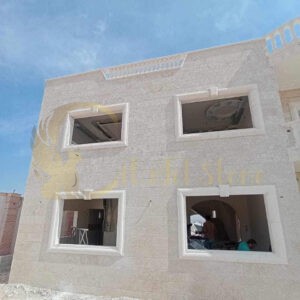
The specification choice that most designers get wrong on a white cobblestone driveway in Arizona isn’t the stone itself — it’s ignoring how the material interacts with the region’s dominant design vocabulary. Arizona’s built environment pulls from Spanish Colonial Revival, Territorial Adobe, and contemporary desert-modern architecture, and white cobblestone reads fluently across all three traditions when you understand its tonal range. The warm ivory cast of quality white limestone cobbles doesn’t compete with Santa Fe ochres or Sedona red-earth tones — it grounds them.
Desert-modern estates in particular have driven serious demand for white paver driveway in Arizona installations over the last decade. The clean horizontal geometry of cobblestone laid in running bond or fan patterns echoes the low-profile rooflines and bleached masonry walls that define the style. You’re not fighting the landscape — you’re extending it.
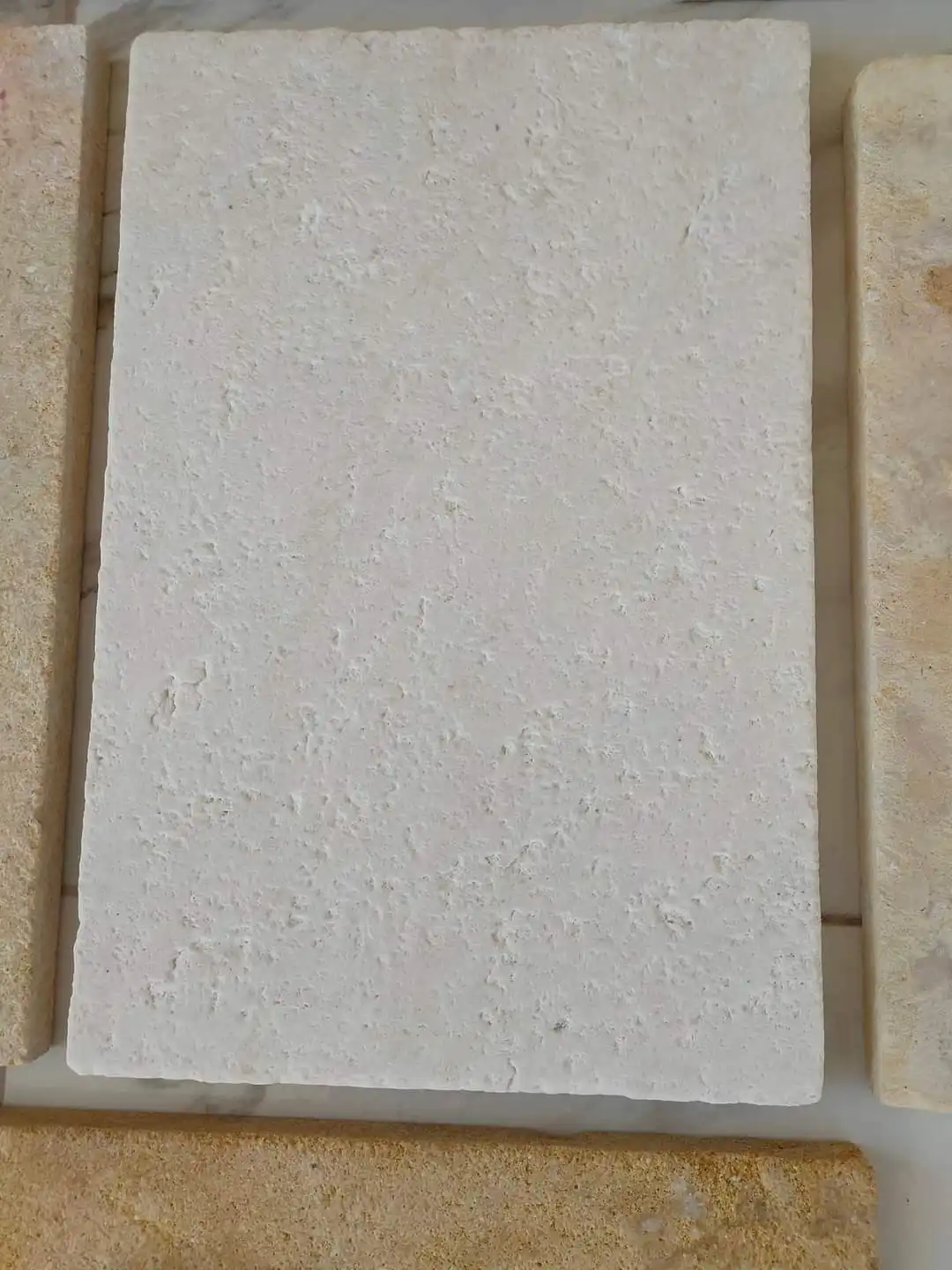
Selecting the Right White Stone Driveway Material for Your Color Palette
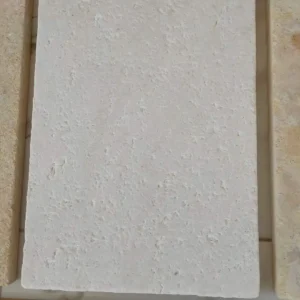
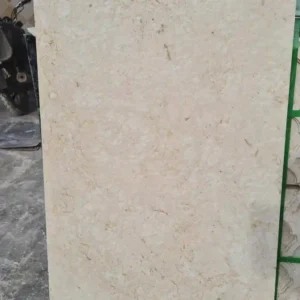
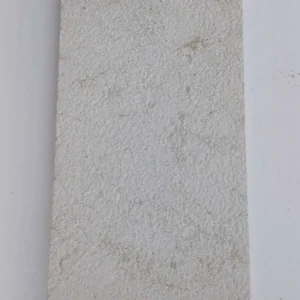
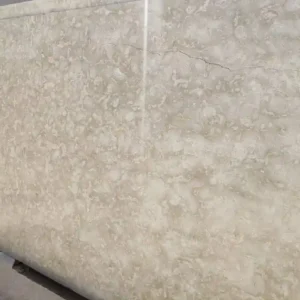
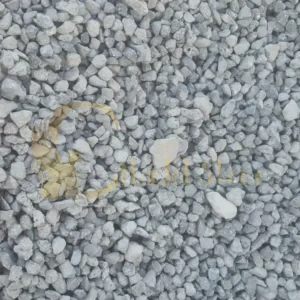
Not all white cobblestones read the same under Arizona’s intense UV exposure, and that distinction matters enormously when you’re matching stone to an existing façade or landscape plan. White outdoor paving in Arizona spans a spectrum from bright quartzite whites — which can look clinical next to warm stucco — to the creamy buff-whites of tumbled limestone that age gracefully in desert sun.
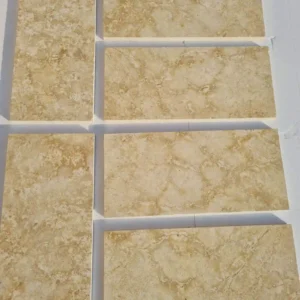
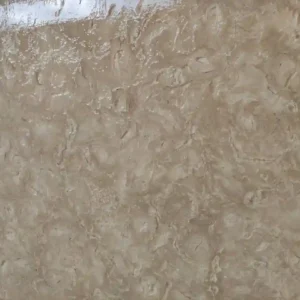
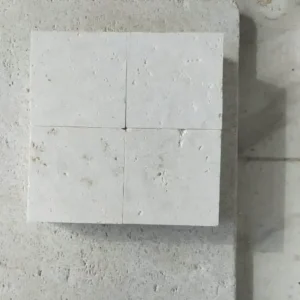
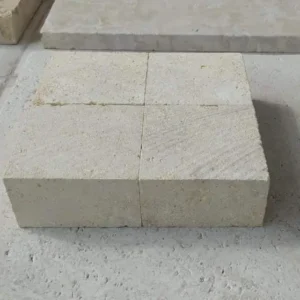
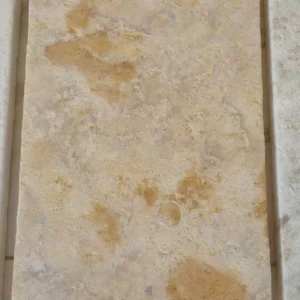
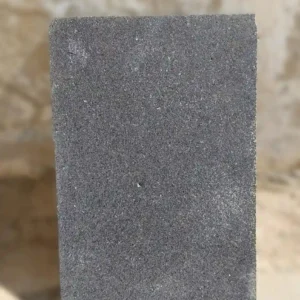
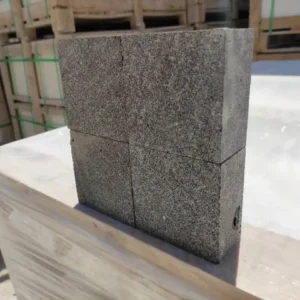
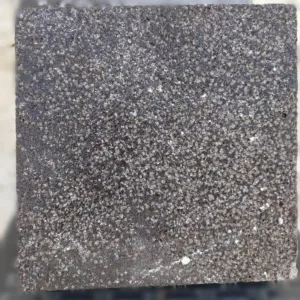
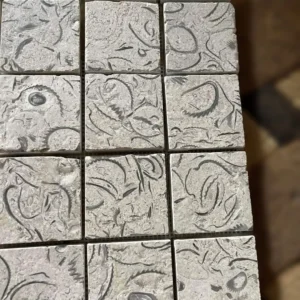
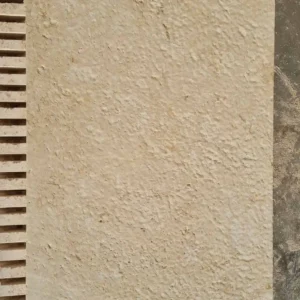
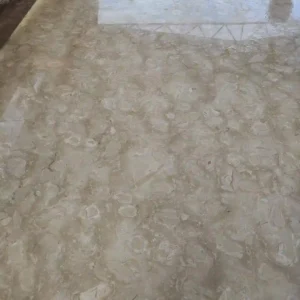
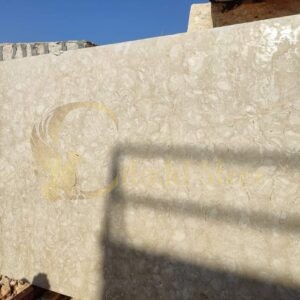
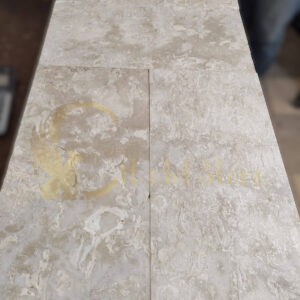
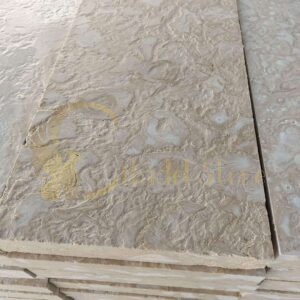
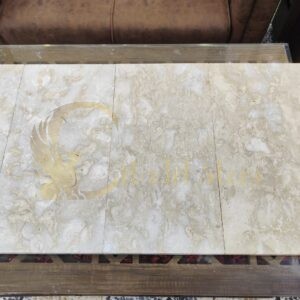
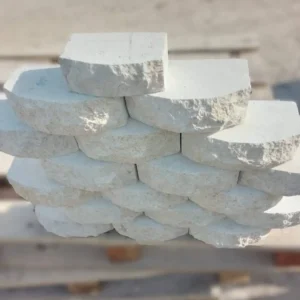
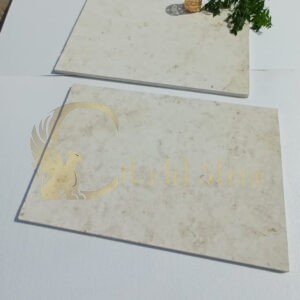
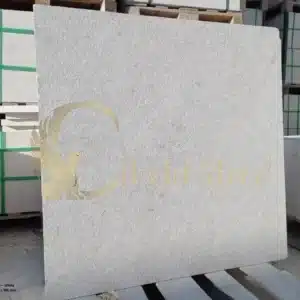
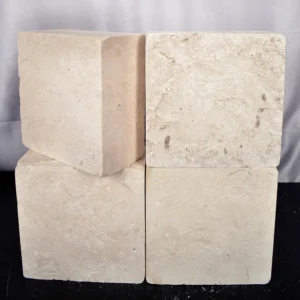
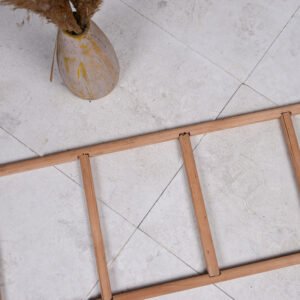
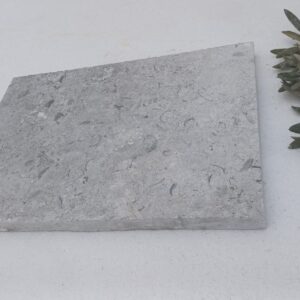
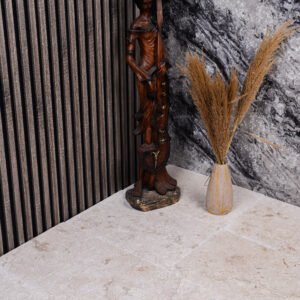
For most residential projects across Scottsdale‘s estate corridors, a tumbled white limestone cobblestone in the 4×8 or 6×9 inch nominal range delivers the best tonal balance — warm enough to harmonize with desert plantings and earthen wall finishes, yet light enough to provide meaningful surface reflectance. White rock pavers in this category typically show a visible sedimentary grain that adds visual texture at ground level, which prevents the flat, monotonous look you can get from machine-cut alternatives.
- Quartzite whites reflect aggressively and can create glare on flat driveways facing west
- Tumbled limestone whites develop a soft patina that blends with native decomposed granite borders
- Honed travertine whites read more formal — appropriate for symmetrical classical approaches
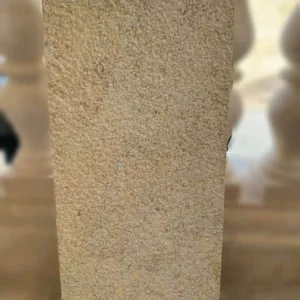
- Sandstone whites carry warm tan undertones that work best against red clay soil and terracotta elements
Citadel Stone stocks white cobblestone driveway material in tumbled limestone and honed limestone finishes, with standard sizes ranging from 4×8 through 6×12 inches in 2-inch and 2.375-inch thickness. Requesting sample tiles before committing to a bulk order is worth the lead time — color consistency between warehouse batches varies, and matching an existing section later is far harder than getting it right at the specification stage.
Thermal Performance and Base Preparation for White Outdoor Paving in Arizona
Arizona’s desert floor reaches sustained air temperatures above 110°F from June through August, and unshaded paving surfaces can exceed 160°F at peak exposure. Your base preparation strategy for a white cobblestone driveway in Arizona needs to account for differential thermal expansion between the stone surface and the compacted aggregate beneath it — a factor that catches many residential contractors off guard.
Dense-graded aggregate base compaction to 98% Standard Proctor is your non-negotiable starting point. In the Phoenix metro valley, the native caliche and sandy loam profiles actually offer good load-bearing capacity when properly stabilized, but moisture infiltration during monsoon season creates localized heaving if your base isn’t at full compaction depth. For a standard residential driveway carrying passenger vehicles, you’re looking at a minimum 6-inch compacted base — push that to 8 inches if the project sits in a drainage swale or low-lying lot position.
- Specify polymeric sand joints at 3/8 inch minimum width — standard 1/4-inch joints close completely under thermal expansion and pop cobbles
- Run expansion joints every 12–15 feet perpendicular to the driveway’s long axis, not the 20-foot intervals typical in cooler climates
- Allow 1/8-inch thermal gap at all structure interfaces — cobbles butted hard against a foundation or garage apron will buckle by mid-summer
- Bedding sand layer should be 1-inch nominal, screeded to ±3/16-inch tolerance before laying
The white stone edging blocks in Arizona that anchor your cobblestone field face their own specification demands. Concrete edging restraints are fine for static residential loads, but in expansive soil zones — particularly in the Tucson basin clay pockets — steel pin-reinforced plastic restraints at 24-inch intervals outperform poured concrete edge beams that crack when the ground moves seasonally.
White Paving Edging in Arizona: Design and Structural Function
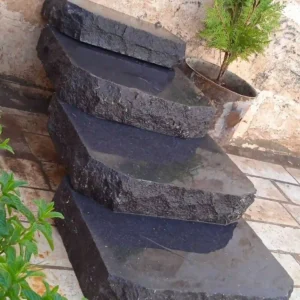
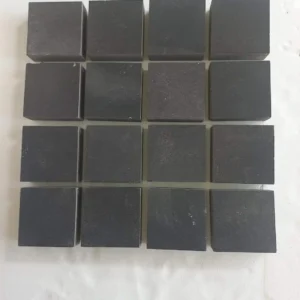
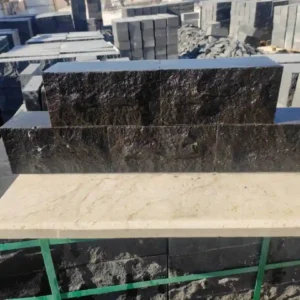
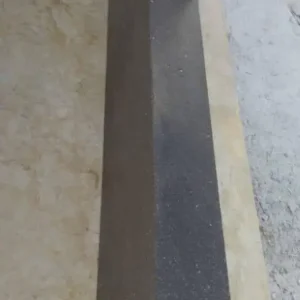
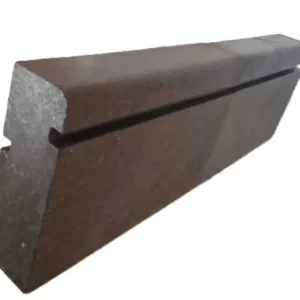
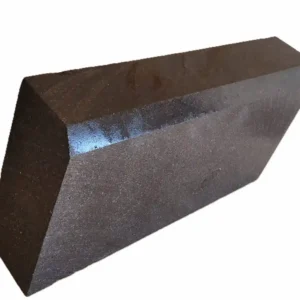
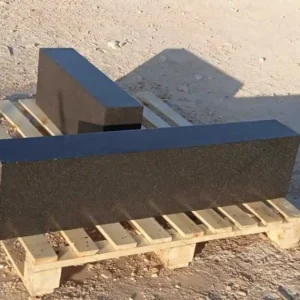
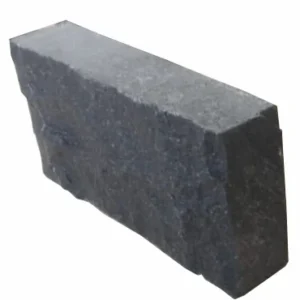
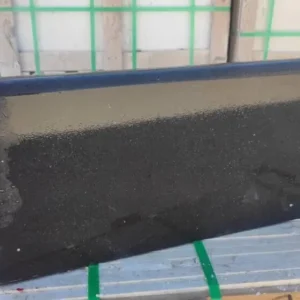
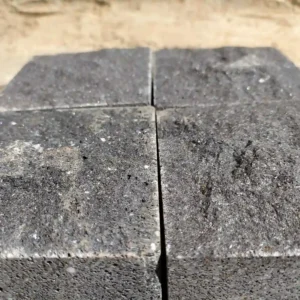
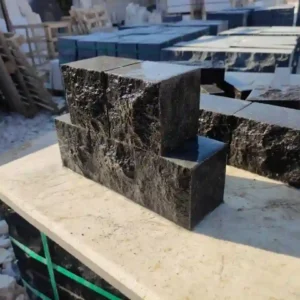
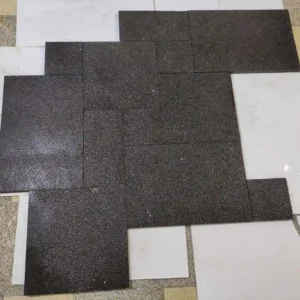
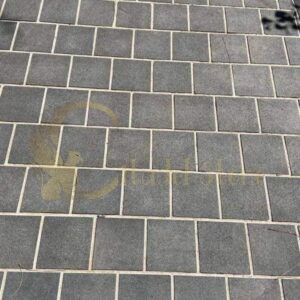
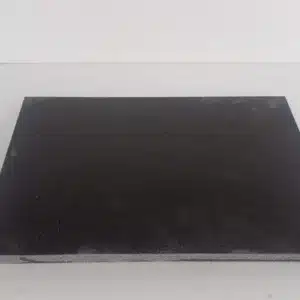
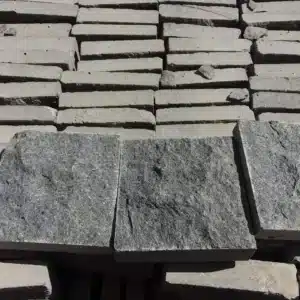
Edging on a white cobblestone driveway serves two roles simultaneously — it’s a structural restraint and a visible design element, and the best specifications treat it as both rather than defaulting to a functional afterthought. In Arizona’s desert-modern residential work, the cleanest approach pairs the white cobble field with a slightly darker natural stone edging course — a dark basalt or grey granite soldier course sets the white field off visually while providing a harder wearing edge that handles lawn equipment and vehicle tire contact better than the cobble itself.
For traditional and Spanish Colonial Revival properties in Tucson’s historic districts, a flush-set limestone border block in a contrasting cut finish — say, a sawn-edge block alongside tumbled field cobbles — introduces the architectural formality those façades demand without disrupting material continuity. White stone edging blocks in the 4×8×4-inch format give you enough mass for structural restraint while keeping the profile low enough to maintain a clean sight line. White paving edging in Arizona’s desert-modern context reads best when the border material is sourced from the same quarry pull as the field cobble, ensuring tonal consistency across the full driveway width.
- Edging blocks should be set in a concrete haunch a minimum 2 inches below the finished cobble surface to prevent undermining
- On curved driveway approaches, radius cuts on the edging course matter — dry-stack field-cut edging creates irregular gaps that collect debris and weaken joint integrity
- White stone edging blocks in Arizona’s monsoon corridors need a 2% cross-fall away from the driveway centerline to manage surface water to swale positions
Slip Resistance Specifications for White Rock Pavers in Arizona
Tumbled white limestone cobblestones have an inherent surface texture advantage over honed formats — the mechanical tumbling process creates micro-roughness that registers a Dynamic Coefficient of Friction (DCOF) of 0.60–0.72 on most tested limestone varieties, which comfortably exceeds the ANSI A137.1 minimum of 0.42 for exterior surfaces. That’s a meaningful safety margin for driveway entries that double as pedestrian access paths. White rock pavers in tumbled finishes consistently outperform honed alternatives on this metric across comparable Arizona installations.
The slip resistance story changes after sealing, which is where specifications frequently fall short. Penetrating sealers that don’t alter surface texture preserve your DCOF rating — topical film-forming sealers can drop it below 0.50 when wet, particularly on smoother white limestone formats. For a white paver driveway in Arizona that receives both vehicle and foot traffic, specify a penetrating silane-siloxane sealer applied at 200–250 sq ft per gallon, reapplied every 24–36 months depending on UV exposure intensity and traffic frequency.
For projects requiring complementary stone elements and detailed sealing specifications, the following resource covers specification details that apply to similar Arizona site conditions and helps you align sealer selection with the correct stone finish: White Cobblestone Driveway from Citadel Stone. Getting your sealer chemistry matched to your specific cobblestone format before installation — not after — is the kind of detail that separates a 25-year installation from one that needs remediation at year eight.
Installation Patterns That Maximize Visual Impact
The pattern you choose for your white cobblestone driveway does more design work than the stone color alone. Running bond — the simplest pattern — reads clean and contemporary, which suits desert-modern properties well. Fan and radius patterns introduce movement and organic geometry that works particularly well on curved approach driveways framed by native saguaro and palo verde plantings.
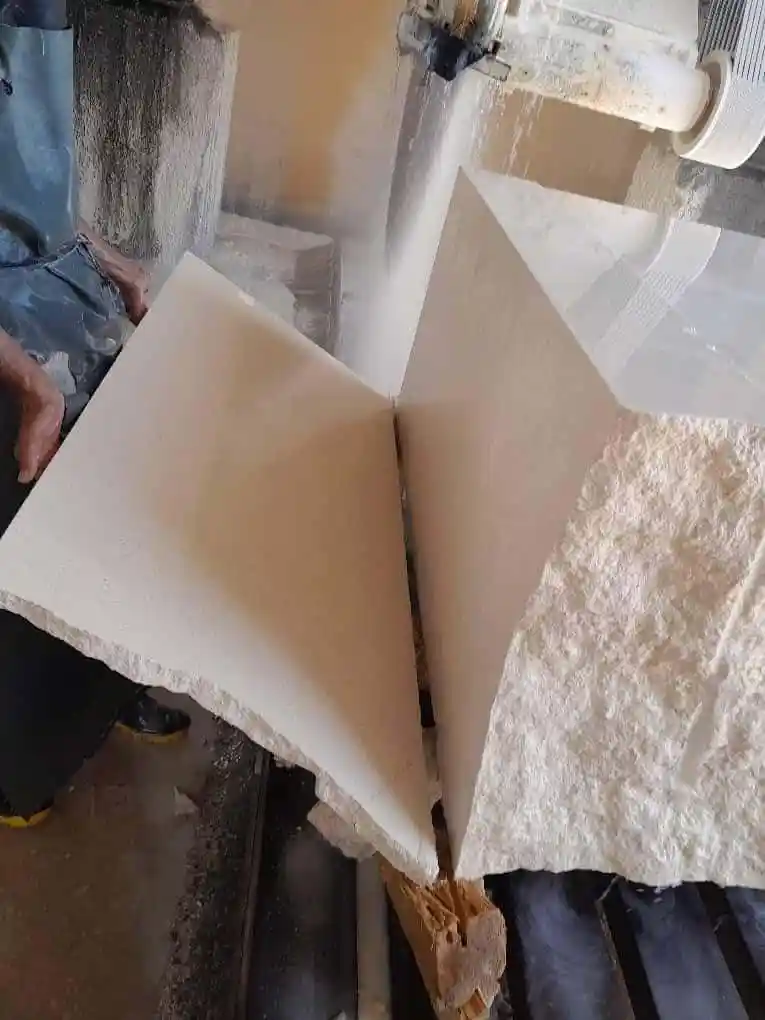
Herringbone at 45 degrees is the structural workhorse of the group — it distributes point loads laterally across more stone units than running bond, which is worth specifying on driveways that will see frequent heavy vehicle access. The trade-off is cut waste at borders, which runs 12–18% higher than running bond on straight driveways. On a white stone driveway project, that waste factor is worth calculating before you finalize your order quantity from the warehouse, because matching replacement cobbles from a different quarry pull later is genuinely difficult when you’re working with natural white stone.
- Running bond: lowest cut waste, clean contemporary lines, ideal for straight approaches
- Herringbone 45°: best structural performance under vehicle loads, 12–18% higher cut waste
- Herringbone 90°: easier to cut and lay than 45°, slightly less load distribution efficiency
- Fan/radius pattern: highest labor cost, most visually distinctive — worth the investment on prominent curved entries
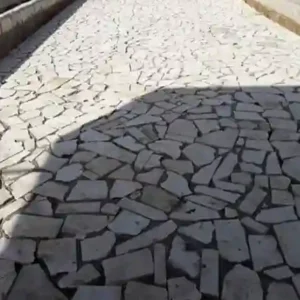
- Random/irregular cobble: lower material cost, authentic historic character — requires skilled installation to manage height variation
Long-Term Maintenance for White Stone Driveways in Arizona’s Climate
The desert environment is actually kinder to white cobblestone than many specifiers assume — the low relative humidity keeps biological growth minimal, and the absence of freeze-thaw cycling eliminates the most common mechanical failure mode seen in northern installations. Your primary maintenance focus in Arizona shifts to UV degradation of joint sand, sealer longevity, and periodic sand replenishment.
Polymeric sand joints in unshaded Arizona driveways typically require inspection and top-up every 3–5 years. UV exposure breaks down the polymer binders in the upper 3–5mm of the joint, leading to surface erosion — not structural failure, but it creates a pathway for weed establishment and debris infiltration. A leaf blower pass followed by a damp cure of fresh polymeric sand every few years is all the routine maintenance most white outdoor paving in Arizona requires.
In Flagstaff, the calculus changes — the elevation introduces genuine freeze-thaw cycling, which means your joint sand specification and sealer reapplication schedule should follow the more demanding northern climate protocol: annual sealer inspection and biennial polymeric sand top-up as a minimum. White outdoor paving in Arizona’s higher elevation zones earns its longevity through more proactive maintenance than the low desert equivalent.
- Inspect joint sand depth annually — top up where erosion has exposed more than 1/4 inch of cobble edge
- Re-apply penetrating sealer when water no longer beads on the surface — typically every 24–36 months in the Phoenix-Scottsdale metro
- Clean oil stains within 24 hours using a pH-neutral degreaser — alkaline cleaners etch white limestone quickly
- Avoid pressure washing above 1,500 PSI — it dislodges polymeric sand and can fracture soft limestone faces
Buy White Cobblestone Driveway Wholesale — Arizona Delivery
Citadel Stone supplies white cobblestone driveway material to residential, commercial, and landscape contracting projects across Arizona, with warehouse inventory maintained in standard formats to support both immediate and scheduled project timelines. Available formats include tumbled limestone cobbles in 4×8, 4×6, and 6×9 inch face sizes, with 2-inch and 2.375-inch thickness options to match your structural specification. White paving edging in Arizona formats — soldier-course blocks and radius-cut border units — are stocked alongside the field cobble to simplify single-source procurement.
Requesting material samples and full technical data sheets before committing to a bulk order is a step worth the lead time when color consistency between production batches affects your project’s aesthetic outcome. For projects requiring custom cuts, non-standard radii, or mixed format specifications, Citadel Stone’s technical team can advise on production lead times, which typically run 2–4 weeks for custom pulls versus the 1–2 week window for warehouse stock orders. Truck delivery covers the full Arizona market, from the greater Phoenix metro through regional centers, so your site access constraints and delivery scheduling can be confirmed at the quotation stage. Trade and wholesale enquiries are handled directly — contact Citadel Stone to discuss project quantities, pricing structure, and whether current warehouse stock levels support your installation timeline. As you plan your Arizona stone project, related hardscape applications can inform your material and pattern decisions — Walking Stone Pavers in Arizona explores how Citadel Stone materials perform across complementary pedestrian paving contexts in the same region. Homeowners in Flagstaff, Sedona, and Yuma source White Cobblestone Driveway through Citadel Stone for Arizona residential and commercial installations.