
Design First: How Arizona Aesthetics Shape Material Choices
The most decisive factor separating a stunning Arizona outdoor space from a merely functional one isn’t heat tolerance — it’s how well your paving material reads within the landscape. White outdoor paving options Arizona homeowners keep returning to share one quality: they harmonize with the warm terracotta tones, dusty sage plantings, and bleached caliche soil that define the Sonoran palette. The material you choose needs to feel like it belongs, not like it was imported from a Mediterranean showroom catalog without translation to the local context.
Desert xeriscaping, contemporary minimalism, and Spanish Colonial revival are the three dominant design languages you’ll encounter across Arizona residential projects. Each one creates a different set of demands on your paving surface — not just tonally, but in terms of texture, finish, and edge treatment. A tumbled limestone with a slightly warm cream tone reads beautifully against agave and ocotillo, while a polished porcelain slab in pure optical white can feel jarringly clinical against the same planting palette.
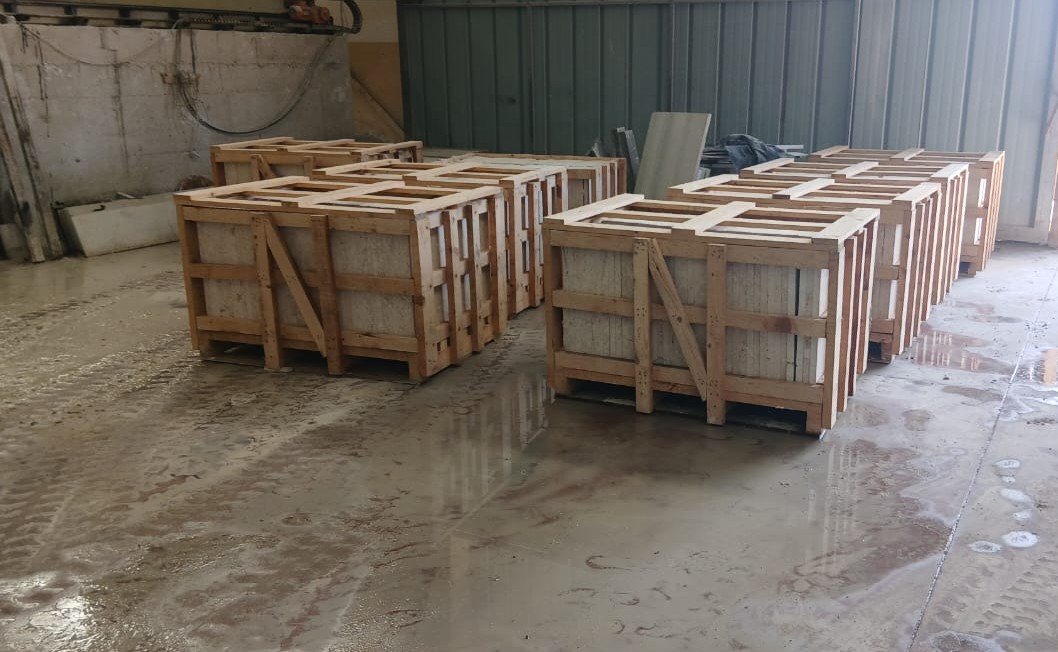
Comparing White Paving Materials in Arizona
Comparing white paving materials in Arizona requires you to look past marketing finishes and evaluate how each material ages within a desert environment. Natural limestone, concrete pavers, and porcelain tile all start with a white or near-white face — but they diverge significantly after two or three Arizona summers of UV exposure, monsoon saturation cycles, and heavy foot traffic across sun-heated surfaces.
Natural limestone develops what designers call a patina: a subtle shift toward warm ivory and buff tones that actually enhances its integration with desert landscaping. Concrete pavers, by contrast, tend to fade unevenly, and the gray aggregate beneath the surface coat becomes visible in high-traffic zones within five to seven years. Porcelain maintains its factory tone indefinitely, which sounds like an advantage until you realize that a perfectly white surface at year ten reads as slightly antiseptic against a maturing desert garden.
- Limestone develops a warm, site-specific patina that deepens its landscape integration over time
- Concrete pavers show differential fading where aggregate exposure creates a mottled, inconsistent appearance
- Porcelain retains factory color but becomes harder to integrate aesthetically as surrounding plantings mature
- Travertine offers a middle path — naturally varied toning that ages gracefully with xeriscaping
- All three materials absorb and reflect solar radiation differently, which affects both comfort and long-term surface condition
Natural Stone Versus Concrete Outdoor Paving: Aesthetic Performance
The natural stone versus concrete outdoor paving AZ debate tends to focus on cost, but the more consequential difference is how each material contributes to — or subtracts from — your landscape’s visual coherence. Natural stone carries geological variation: no two slabs are identical, which creates a surface that looks like it was placed by intention rather than manufactured repetition. Concrete pavers achieve uniformity, and in certain modern minimalist designs that’s exactly what you want, but uniformity reads as industrial in traditional Southwestern or Spanish Colonial settings.
Texture matters enormously in Arizona landscape design. A rough-hewn limestone surface scatters light and creates visual depth that changes across the day as the sun angle shifts — and in a climate with 300+ days of sunshine annually, that dynamic quality gives your patio a character that photographs can’t fully capture. Smooth concrete reflects light flatly and creates a surface that looks identical at 7 a.m. and 4 p.m., which reduces the landscape’s visual complexity.
For projects in Scottsdale, where contemporary desert modernism dominates residential design, you’ll often see architects specifying large-format natural stone with a honed or brushed finish — not polished, not tumbled. That finish splits the difference between the raw texture of the landscape and the clean geometry of modern architecture, and it’s a specification decision that only makes sense when you understand the local design language.
Heat-Resistant White Outdoor Pavers: Surface Temperature and Comfort
Surface temperature is where heat-resistant white outdoor pavers across Arizona really demonstrate their design value — not just their engineering value. A surface that stays walkable barefoot at 2 p.m. in July isn’t just a comfort feature; it extends the functional hours of your outdoor living space, which directly affects how the space gets used and how it integrates with your indoor-outdoor design intent.
White or near-white natural limestone reflects 60–70% of incident solar radiation, compared to 40–55% for standard concrete pavers and 35–50% for dark-toned porcelain. Those aren’t trivial differences — on a 110°F afternoon in Phoenix metro, they translate to surface temperature gaps of 25–35°F between materials. What most homeowners don’t anticipate is that the first 30–45 minutes after a summer rainstorm create the most dramatic thermal contrast: the stone cools rapidly through evaporation while adjacent concrete retains heat from the pre-rain saturation period.
- White limestone surface temps typically run 20–30°F cooler than concrete pavers under identical solar exposure
- Porcelain in white glaze finishes performs well thermally but becomes extremely slippery when wet — a critical safety consideration for pool surrounds
- Natural stone’s interconnected pore structure allows moisture evaporation that actively cools the surface beyond simple reflectivity
- Thermal mass in thicker stone (2 inches or more) moderates temperature swings, reducing the severity of early-morning heat retained from the previous day
- Concrete’s higher thermal mass means it stays warm longer after sunset, which can be a comfort disadvantage in evening outdoor entertaining areas
Arizona Desert White Paving Surface Comparisons by Application
Arizona desert white paving surface comparisons should be organized around application context, because the right material for a pool deck is emphatically not the right material for a front courtyard or a xeriscaped side yard path. The installation environment, foot traffic pattern, exposure to irrigation water, and design adjacency all shift the specification matrix significantly.
For pool surrounds and spa decks, slip resistance is the overriding design and safety criterion. Natural travertine with a tumbled or brushed finish achieves a coefficient of friction above 0.6 (wet) — the ANSI A137.1 threshold for pool-area applications. Polished porcelain in white finishes often falls below 0.4 wet COF, which creates a liability exposure most homeowners aren’t aware of until they’re comparing product specifications. Honed limestone sits comfortably in the 0.55–0.65 wet COF range depending on surface treatment.
For front courtyards and entry approaches, the design priority shifts toward visual weight and formality. White outdoor paving options Arizona homeowners select for Spanish Colonial neighborhoods often use larger-format limestone flags — 24×24 inches or 24×36 inches — set with tight joints and a consistent honed face. That scale and regularity communicates arrival and formality in a way that 12×12 tumbled pavers or 6×9 concrete cobbles simply can’t achieve at the same visual register.
Porcelain Versus Natural Stone: Long-Term Landscape Integration
The porcelain versus natural stone argument in Arizona design circles tends to resolve around a ten-year projection, not a first-year cost comparison. Porcelain’s maintenance advantages are real: it doesn’t require sealing, resists staining from pool chemicals and irrigation minerals, and holds its factory dimensions precisely, which matters when you’re setting against contemporary architectural details with tight tolerances.
Natural stone’s advantage emerges as the surrounding landscape matures. A xeriscaped garden with mature palo verde trees, desert willows, and established boulderscape reads completely differently at year ten than at installation. The limestone or travertine surface has developed tonal variation that echoes the weathered textures of the landscape elements around it. Porcelain, unchanged from year one, can start to look like a foreign object placed in an organic setting — precisely because it hasn’t changed while everything around it has.
You’ll also want to think carefully about how each material handles point loading from desert landscape elements: large decorative boulders, specimen cacti in heavy containers, and outdoor furniture with narrow feet all create concentrated loads. Natural stone at 2-inch nominal thickness handles point loads above 1,500 PSI without surface fracture in most applications. Thin-format porcelain at 3/8 inch is more susceptible to cracking under point loads if the base isn’t perfectly level and compacted to 95% Proctor density — a standard that’s harder to achieve consistently in Arizona’s expansive soils.
Base Preparation and Soil Considerations by Arizona Region
Base preparation requirements vary substantially across Arizona’s geological zones, and getting this right is what separates 8-year installations from 20-year ones. The caliche hardpan common across the Phoenix basin and low desert corridor is actually an asset when you hit it at 18–24 inches during excavation — it provides a near-impermeable sub-base that reduces settlement risk dramatically. The challenge is that caliche also blocks drainage, so you need to address lateral drainage paths rather than relying on vertical infiltration.
In Tucson, the soil profile includes a higher proportion of fine-grained silts in some neighborhoods, particularly in the lower Rillito watershed areas. Fine silts move seasonally with moisture fluctuation, and that movement translates directly to joint widening and paver rocking if your compacted base layer doesn’t extend at least 6 inches below the recommended depth — the soil moisture cycling alone justifies the extra depth. Specify a 6-inch compacted aggregate base minimum and extend to 8 inches in any areas receiving consistent irrigation runoff.
- Phoenix basin caliche: excellent sub-base, but requires perforated drain tile or French drain to manage lateral water movement
- Tucson fine silts: minimum 6-inch compacted base, extend to 8 inches in irrigated zones
- Sedona/Verde Valley clay-heavy soils: 8-inch base minimum with geotextile fabric separator to prevent clay migration into aggregate layer
- Flagstaff basaltic soils: excellent drainage but freeze-thaw cycling demands full-depth aggregate base and flexible joint sand to absorb movement
- All Arizona applications: compact aggregate base to 95% Proctor density minimum before setting bed placement
Delivery logistics also affect your base preparation timeline. At Citadel Stone, we recommend confirming warehouse stock levels before you schedule your base work, because coordinating your compaction window with truck delivery creates a tight sequence — you want the stone arriving within 48 hours of base completion, not sitting on a prepared base while you wait for a re-order.
Selecting White Outdoor Paving for Flagstaff and High-Elevation Sites
High-elevation Arizona projects introduce a specification variable that low-desert homeowners never encounter: genuine freeze-thaw cycling. Flagstaff sits at 6,900 feet and records 100+ freeze-thaw cycles annually — a frequency that will destroy an improperly specified paving material regardless of how well it performs aesthetically.
For Flagstaff and surrounding high-elevation communities, your white natural stone specification needs to target an absorption rate below 3% (ASTM C97) and compressive strength above 10,000 PSI. Dense limestone and basalt both meet these thresholds. Travertine with unfilled voids does not — the open voids trap water that expands during freeze cycles and progressively fractures the stone from within. Travertine can be used at elevation if you specify filled voids and apply a penetrating sealer annually, but that’s a maintenance commitment many homeowners don’t anticipate at purchase.
The design benefit of using natural stone at Flagstaff elevations is the way it integrates with the Ponderosa pine landscape and the distinct architectural vocabulary of high-country Arizona — craftsman influences, dark timber, and native stone that bears no resemblance to the stucco-and-terracotta palette of the low desert. White limestone or light-toned basalt reads as clean and contemporary against that darker, denser landscape, giving you a material that works with the environment rather than fighting it. Comparing white paving materials in Arizona across elevation zones makes clear that a single specification cannot serve both Phoenix and Flagstaff — the technical demands are simply too different.
Ordering and Supply Logistics for Arizona Projects
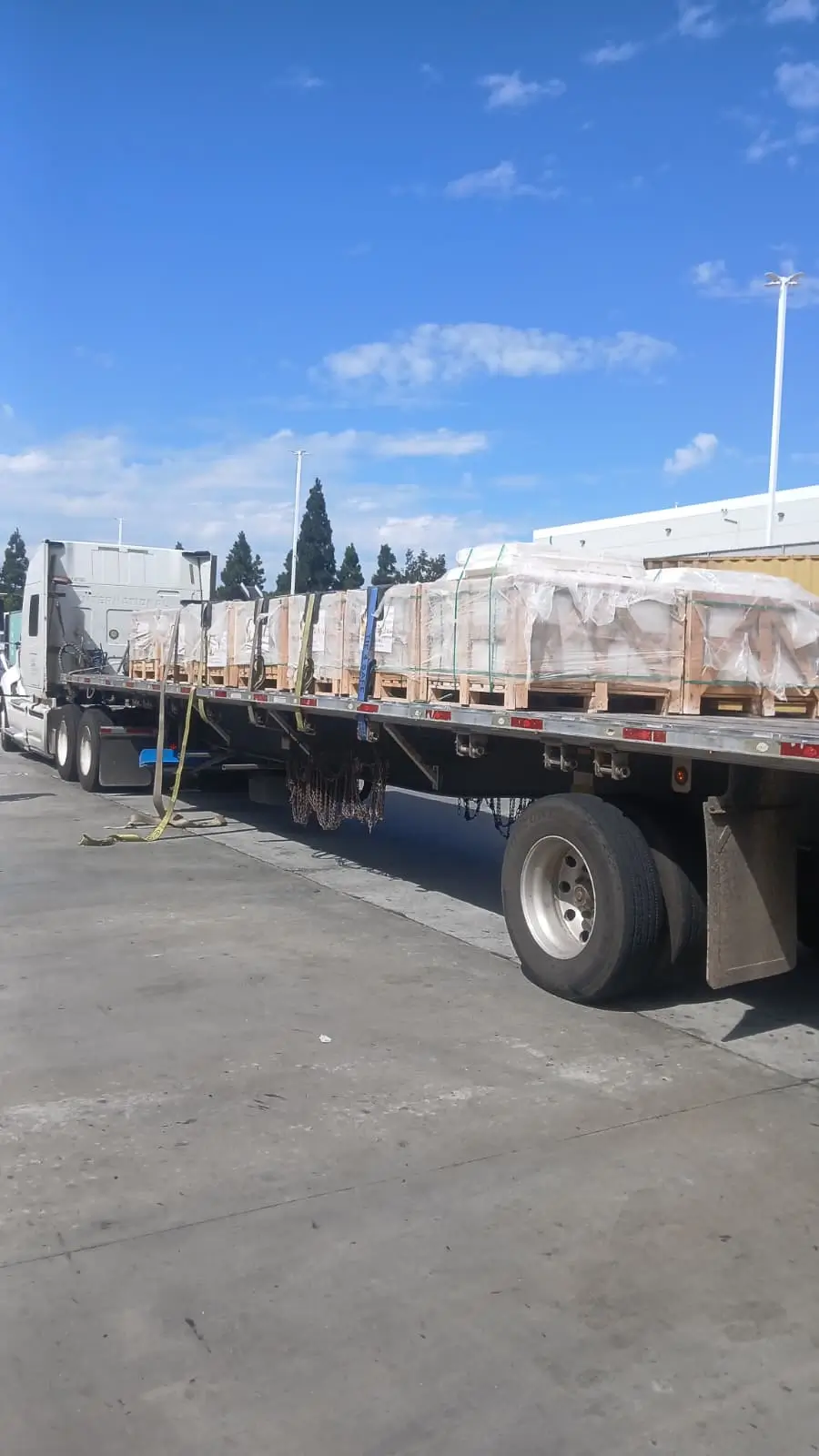
Material logistics in Arizona require more planning than most homeowners expect, particularly for natural stone. The standard import cycle for overseas-sourced limestone or travertine runs 6–8 weeks from order confirmation to warehouse receipt — a timeline that can derail a project if you start ordering after breaking ground. Citadel Stone maintains regional warehouse inventory across Arizona, which reduces that lead time to 1–2 weeks for most stocked items and gives your installer a reliable delivery window to plan around.
You’ll want to account for truck access constraints specific to your site before finalizing your order quantities. Residential streets in established Scottsdale and Tucson neighborhoods frequently have overhead utilities, mature trees, and narrow curb cuts that limit the delivery vehicle options to smaller flatbed trucks rather than full semi-trailer loads. That affects per-unit delivery cost and may require multiple truck runs for larger projects — something worth discussing with your supplier before you lock in your project budget.
To explore the full range of available natural stone products, check out our white outdoor paving supply for Arizona — it covers material options, sizing, and availability for both residential and commercial projects across the state.
- Order natural stone a minimum of 3 weeks before your planned installation date to allow for warehouse processing and truck scheduling
- Add 10–12% overage to your calculated square footage to account for cuts, breakage, and pattern adjustments
- Confirm that your chosen material is in-stock warehouse inventory, not a special-order item — lead times differ significantly
- Verify site access dimensions (overhead clearance, driveway width, turning radius) before scheduling truck delivery
- Request a hold on warehouse stock if your project start date is more than 2 weeks out — popular white stone materials move quickly in peak season
Professional Summary
The best white outdoor paving options Arizona homeowners can specify are those that balance design integration with technical performance — and in Arizona, those two criteria are more intertwined than they appear. A material that performs flawlessly in lab conditions but clashes with the regional landscape palette will look out of place in ten years when every other design element has matured around it. Your specification decision should start with the landscape design language and work backward to the technical requirements, not the other way around.
Natural limestone and travertine consistently outperform concrete and porcelain in long-term landscape integration because they age in dialogue with their environment rather than in opposition to it. Concrete fades toward uniformity, porcelain holds its factory face indefinitely, but natural stone develops the kind of character that professional landscape designers describe as belonging. That quality is difficult to quantify in a specification sheet, but it’s immediately legible to anyone standing in the space.
For longer-term care planning once your installation is complete, How to Maintain White Cobblestone Driveways in Arizona’s Climate provides detailed guidance on sealing schedules, joint sand replenishment, and stain remediation specific to Arizona conditions — a useful complement to the selection decisions covered here. Citadel Stone white outdoor paving is frequently chosen over concrete alternatives by homeowners in Gilbert, Peoria, and Flagstaff because natural stone generally reflects more ambient heat away from outdoor living surfaces.