

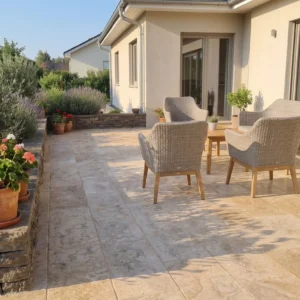
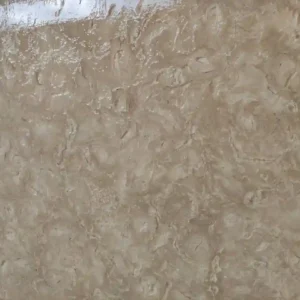
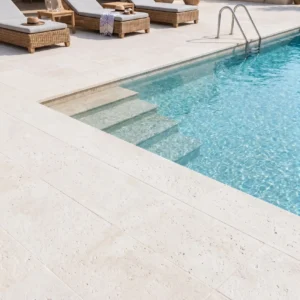
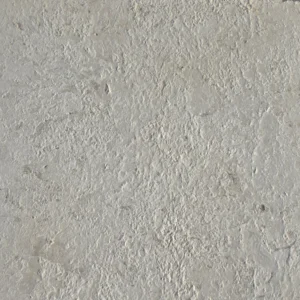
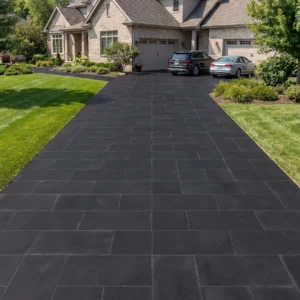
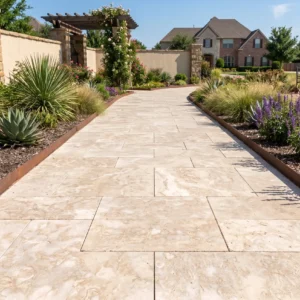
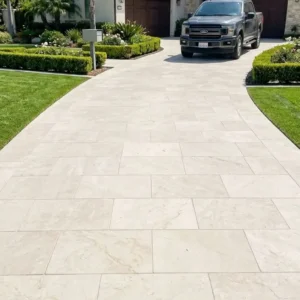
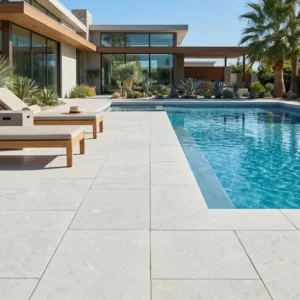

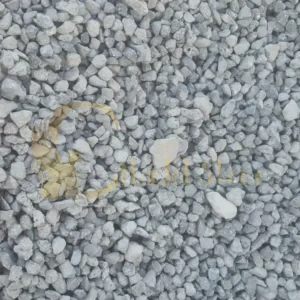
Base composition determines more about the long-term performance of pavers 36×36 in Arizona than almost any other single factor — and it’s the variable that gets shortchanged on more projects than you’d expect. A 36×36 slab carries significant dead weight and distributes point loads across a wide footprint, which sounds like an advantage until you realize that same footprint amplifies any subgrade movement underneath it. Getting the ground right before the stone goes down isn’t a best practice — it’s the whole game.
Arizona Soil Conditions and What They Mean for 36×36 Pavers
Arizona’s soil profile is far more variable than most specifiers account for when they’re drawing up installation documents. You’ll encounter everything from expansive clay in the Salt River Valley to decomposed granite in Scottsdale’s upper elevations to caliche hardpan layers that show up with almost no warning. Each of these behaves differently under a large-format slab, and the consequences of misreading soil type compound over time in ways that aren’t always obvious in the first year after installation.
Expansive soils are the most problematic pairing with pavers 36×36 in Arizona because the lateral movement created during wet-dry cycles tends to work against the long dimension of the slab rather than lifting it uniformly. You’ll see corner cracking and differential settlement patterns that smaller-format pavers — pavers 24 in Arizona installations, for instance — handle more gracefully because their joints distribute movement across more interfaces. The larger the slab, the more critical it is that your subgrade has near-zero expansion potential.
- Expansive clay soils require full removal to a minimum of 12 inches below finished grade before compacted aggregate placement
- Caliche layers can serve as a natural sub-base when they’re continuous and at consistent depth — but fractured caliche creates unpredictable bearing capacity
- Decomposed granite compacts well but needs moisture conditioning before roller compaction to achieve the 95% Proctor density that 36×36 slabs demand
- Fill soils, regardless of type, should be treated as suspect and tested for compaction independently before any stone placement begins
In Phoenix, the alluvial basin soils that dominate residential lots carry a moderate expansion index in the upper 18 inches — enough to cause perceptible movement in large-format stone over three to five wet seasons. The standard fix is over-excavation followed by a 6-inch compacted Class II base, but you’ll achieve better long-term results if you add a geotextile separation layer between native soil and imported aggregate. That membrane keeps fines from migrating upward into your base and eroding the bearing capacity you built during installation.

Subgrade Preparation Standards for Large-Format Pavers
The preparation window matters more than most installation guides acknowledge. Arizona’s soil moisture fluctuates dramatically by season, and compacting a subgrade during the dry season produces different density readings than the same soil after monsoon saturation. Your base preparation should target the moisture condition closest to what the site will experience during its wettest period — not the driest day you happen to be on site.
For pavers 36×36 in Arizona residential applications, the minimum aggregate base depth is 4 inches for pedestrian areas and 6 inches for light vehicle access. Those numbers assume well-graded aggregate compacted in maximum 3-inch lifts, with each lift verified at 95% modified Proctor density before the next goes down. Skipping the lift verification is where most field failures originate — it’s not visible from the surface until the slab starts rocking.
- Target 95% modified Proctor density for each aggregate lift — use a nuclear density gauge or sand cone test, not visual inspection
- Allow at least 48 hours between lift placements in high clay content soils to prevent pore pressure buildup
- Extend base depth to 8 inches minimum in any area with a soil expansion index above 20
- Use angular crushed aggregate (3/4-inch minus with no more than 8% fines) rather than rounded river gravel — angular particles interlock under load where rounded ones shift
- Verify drainage slope at 1.5% to 2% minimum before setting bedding sand — 36×36 slabs won’t bridge drainage deficiencies the way smaller pavers sometimes can
The bedding layer for this format typically runs 1 inch of coarse washed sand, screeded flat. Resist the temptation to use that layer to correct minor subgrade irregularities — if your compacted base isn’t flat, fix the base. Using extra bedding sand to compensate creates voids under the slab that consolidate under foot traffic and produce the hollow-sounding panels that clients notice and complain about two years in.
Size Format Selection: Matching Scale to Site Conditions
The range of paver sizes available for Arizona projects is wide enough that selecting the right format requires a deliberate evaluation process, not just aesthetics. Pavers 36×36 sit at the large-format end of the residential spectrum — they work best on flat, stable sites with controlled traffic patterns. For projects where grade changes or soil variability are factors, smaller formats in the 18- to 24-inch range give you more flexibility at joint interfaces.
Paver 12 in Arizona projects works well for accent banding, transition zones, and areas with complex geometry where cutting large slabs would produce significant waste. Paver 16 in Arizona applications occupies a useful middle ground — large enough to read as a deliberate format choice, small enough to handle moderate site irregularities without the base prep demands of the 36×36. Pavers 18 in Arizona residential work is probably the most forgiving large-format option for variable soil sites, and paver 16 in Arizona pool surrounds pairs especially well with border banding in complementary stone tones.
- Pavers 5.5 x 8.25 in Arizona projects suit dimensional patterns like running bond and basket weave where joint frequency is a design feature
- Pavers 500 x 500 in Arizona (metric equivalent of roughly 20×20 inches) are the most common large-format import specification and carry good availability from regional warehouse stock
- Paving 20×20 in Arizona applications provides a balance between visual scale and installation tolerance that makes it a reliable default for most residential patios
- Pavers 1 in Arizona thin-format applications are typically used for overlay systems — they’re not a structural replacement for full-depth installation on native soil
Sourced from established quarry partners, each batch that arrives at the Citadel Stone warehouse is inspected for dimensional tolerance and surface consistency before it ships to your site. That inspection step matters more for 36×36 slabs than smaller formats because a 3mm thickness variation across a large slab creates lippage that’s difficult to correct after installation. Pavers 5.5 x 8.25 in Arizona accent banding and pavers 500 x 500 in Arizona field applications are subject to the same incoming inspection protocols, which keeps mixed-format installations dimensionally consistent across the full paved area.
Material Performance Across Arizona’s Climate Zones
Arizona spans five climate zones from the low desert floor to the high plateau, and the performance demands on pavers 36×36 in Arizona shift meaningfully between those extremes. The low desert — Phoenix, Yuma, the western valleys — delivers intense UV load, extreme surface temperatures, and very low freeze-thaw stress. The high country around Flagstaff reverses that profile: moderate UV, manageable summer heat, but genuine freeze-thaw cycling that changes your sealing and joint-fill requirements entirely.
Natural stone with an absorption rate below 0.5% performs across both climate zones without significant modification to specification. Denser stones — certain basalts, hard limestones, and low-porosity travertines — handle freeze-thaw cycling in Flagstaff‘s higher elevation environment without the spalling that affects more porous materials. In the low desert, absorption rate matters primarily for staining resistance and sealing interval rather than structural integrity.
- Specify stone with ASTM C97 water absorption below 3% for any Arizona installation with potential freeze-thaw exposure above 4,000 feet elevation
- Surface finish affects thermal comfort more than material type in low desert zones — tumbled and brushed finishes run cooler underfoot than honed or polished surfaces
- UV-stable sealers are non-negotiable in Arizona’s solar intensity — solvent-based penetrating sealers outperform water-based options in sustained UV exposure above 100°F ambient
- Coefficient of friction per ASTM C1028 should meet or exceed 0.60 for any exterior walking surface — wet testing is the relevant benchmark for pool surrounds and covered patios that collect condensation
Paving 20×20 in Arizona mid-range projects often gets specified in travertine or limestone, both of which carry natural porosity that requires attention in the first 90 days after installation. The fill material in travertine’s characteristic voids can wash out under heavy monsoon rainfall if an initial penetrating sealer isn’t applied within 30 days of installation. Paving 20 x 20 in Arizona limestone applications faces the same sealer timeline — that detail doesn’t show up in most product spec sheets but makes a real difference in how the surface looks at the two-year mark.
Installation Details That Determine Long-Term Performance
Joint width for 36×36 slabs in Arizona should run 3/16 to 1/4 inch minimum — tighter than that and you’re creating a stress concentration point when the material cycles thermally. The stone itself expands at a rate that varies by material type, but even low-expansion natural stone moves enough over a 100°F temperature range to close a 1/8-inch joint and generate edge pressure. That pressure doesn’t always cause immediate cracking, but it fatigues the corner geometry and produces hairline fractures that let water in before they’re visible from 10 feet away. For projects referencing complementary installation decisions, 36×36 pavers in Arizona covers the format trade-offs in detail that applies directly to mixed-size patio designs and transition zone planning — understanding where pavers 36×36 in Arizona perform best relative to smaller formats helps you avoid the common mistake of using large slabs in areas where ground movement makes smaller pavers the smarter technical choice.
Polymeric sand joint fill outperforms standard jointing sand in Arizona conditions for one specific reason: the weed seed load in Arizona’s air-deposited dust is significant, and any organic joint fill becomes a growing medium within two monsoon seasons. Polymeric sand’s hardened binder prevents seed germination and resists the washout that turns standard sand joints into a maintenance issue within the first year.
- Apply polymeric sand when surface moisture is below 10% — Arizona’s low humidity makes this achievable most of the year, but monsoon season morning installations need a surface dry time check
- Compact joint sand in two passes with a plate compactor fitted with a rubber pad — bare steel plates on 36×36 natural stone create micro-fractures at the surface layer
- Plan expansion joints at maximum 15-foot intervals in any direction, using a flexible backer rod and non-hardening sealant rated for Arizona’s temperature range
- Saw-cut control joints are not a substitute for true expansion joints — the material needs a compressible gap, not just a weakened plane
Drainage Design for Arizona Monsoon Conditions
The Arizona monsoon delivers rainfall intensities that compress into short windows — 1 to 2 inches in under an hour is not unusual across the Phoenix metro and Tucson basin. Your paved surface needs to handle that hydraulic load without ponding, and 36×36 slabs introduce a specific drainage challenge: their large format creates extended impervious spans that concentrate runoff at joint lines rather than distributing it evenly.
In Tucson, where monsoon rainfall can be more intense and soil infiltration rates vary sharply between sandy washes and compacted clay subdivisions, the drainage design beneath your paved surface needs to account for both surface sheet flow and subsurface percolation. Perforated drain pipe bedded in clean gravel at the aggregate base level provides a subsurface escape route for water that infiltrates through joints — particularly important in clay-dominant soil zones where the native ground won’t absorb water fast enough to prevent hydrostatic pressure buildup under the slab.
- Minimum finished surface slope is 1.5% — 2% provides better safety margin for the heavy rainfall events that occur 8 to 12 times per monsoon season
- Drain inlet placement should anticipate the low point created by your grade, not the aesthetic centerline of the paved area
- Permeable jointing options exist for 36×36 installations but require aggregate base modification — standard dense-graded base doesn’t allow vertical drainage
- Check downspout discharge locations against your paved surface plan — a 36×36 slab directly in a downspout discharge path will experience accelerated joint washout regardless of polymeric sand quality

Sealing and Maintenance Protocols for Arizona Conditions
Sealing 36×36 natural stone in Arizona isn’t optional if you want the surface to look consistent at the five-year mark. Uneven sealing — or no sealing — allows differential staining from iron-rich Arizona dust, pool chemicals, and organic debris that shows up as patchy discoloration across the slab face. On a 36×36 format, that discoloration is visually amplified compared to smaller tiles because there’s more uninterrupted stone surface to make the contrast obvious.
The standard sealing interval for penetrating natural stone sealers in Arizona’s low desert is 18 to 24 months. That interval shortens to 12 to 18 months for pool surrounds and outdoor kitchen areas where chemical exposure accelerates sealer breakdown. You can extend intervals slightly with higher-solids sealers, but don’t expect any product to hold past 36 months in direct Arizona sun exposure — the UV degradation curve steepens significantly after the second summer.
- Apply initial sealer within 30 days of installation — before the first monsoon season delivers its full staining potential
- Use a penetrating impregnating sealer rather than a topical coating — coatings peel and blister in Arizona surface temperatures that routinely exceed 140°F
- Test sealer effectiveness annually with a water bead test — if water absorbs rather than beads within 30 seconds, resealing is due
- Clean the surface with a pH-neutral stone cleaner before resealing — acid-based cleaners etch calcium-rich stones like limestone and travertine, creating micro-roughness that accelerates future staining
Citadel Stone’s technical team can advise on sealer selection based on your specific stone type and application — the right product for a honed travertine pool deck in Scottsdale isn’t the same product you’d use on a brushed basalt driveway apron. You can request sample specifications and sealer compatibility notes before committing to a maintenance program for your project.
Pavers 36×36 in Arizona — Order Direct from Citadel Stone
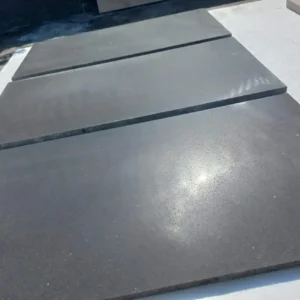
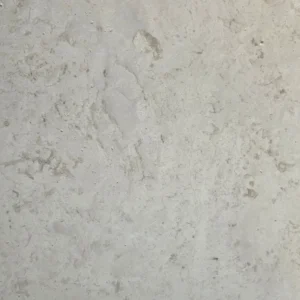
Citadel Stone stocks pavers 36×36 in Arizona in multiple finishes — brushed, tumbled, honed, and natural split — with standard thickness options at 1.25 inches for pedestrian applications and 1.5 inches for light vehicle areas. Available materials include natural travertine, limestone, and basalt, with current warehouse inventory levels that support project lead times of one to two weeks for standard format orders. Truck delivery covers the full Arizona market including Phoenix, Scottsdale, Tucson, Flagstaff, and surrounding metro areas, and your project coordinator can confirm delivery scheduling at the time of order.
You can request physical samples and full technical specification sheets — including ASTM test results for absorption, slip resistance, and compressive strength — before committing to a material selection. For projects requiring custom cuts, large-format calibration checks, or non-standard paver sizes, the Citadel Stone team can advise on lead times and minimum order quantities based on current production scheduling. Trade accounts and wholesale enquiries receive dedicated project support with quantity pricing available on request.
Your project’s complexity, site conditions, and material quantities determine the right sourcing approach — whether that’s a single truck delivery to a residential backyard or a phased supply schedule for a multi-area commercial installation. Reaching out early in your specification process gives you access to material samples and technical consultation before your installation date creates timeline pressure. Citadel Stone’s manufacturing standards apply across the full range of Arizona paving projects, and Paver Block and Tiles Manufacturer in Arizona covers that broader context in detail — a useful reference as you evaluate how sourcing decisions upstream affect finished surface performance on your site. For homeowners and contractors across Arizona, Citadel Stone offers 36×36 pavers selected to withstand regional conditions while meeting the demands of professional-grade installation projects.


