

The scale shift from small-format pavers to large-format slabs like 36×36 changes the visual grammar of an outdoor space more than almost any other design decision — and in Arizona’s desert landscape, that shift carries specific aesthetic weight. The debate around 36×36 versus small format pavers Arizona isn’t just about personal taste; it’s about how each format reads against stucco walls, saguaro silhouettes, decomposed granite beds, and the expansive horizontal geometry that defines Southwestern architecture. Getting that alignment right is what separates a patio that photographs beautifully from one that actually belongs to its landscape.
How Paver Scale Shapes Landscape Design in Arizona
Arizona’s dominant architectural traditions — from the clean horizontal planes of desert modernism to Spanish Colonial courtyards and Territorial-style ranch homes — each respond differently to paver scale. Large-format 36×36 slabs reinforce the low, wide aesthetic of contemporary desert architecture. Their expansive faces echo the boulder fields and mesa formations native to the region, creating a visual coherence that smaller brick-pattern pavers simply can’t match in those settings.
Smaller format pavers, typically 12×12, 16×16, or the classic 4×8 brick module, carry a different energy. They introduce texture and rhythm through their joint lines, which suits more ornate landscapes — Tuscan-inspired gardens, traditional Southwestern courtyard designs, or plantings with heavy visual complexity. In xeriscaping contexts with bold agave clusters and ornamental grasses, small-format pavers can add structural contrast without competing with the planting palette.
- 36×36 slabs complement low-slung modern architecture and open desert vistas by extending clean horizontal planes
- Small-format pavers create visual rhythm suited to traditional courtyard layouts and detail-rich planting schemes
- Fewer grout lines with large-format slabs reduce visual noise, letting stone veining and color variation do the design work
- Small-format brick patterns draw the eye downward and inward, useful for intimate garden spaces and shaded ramadas
Format Choice and Desert Xeriscaping Integration
Desert xeriscaping in Arizona presents a specific design challenge: the hardscape has to carry visual weight in a planting palette that is often sparse by design. Decomposed granite, dry-stacked boulder borders, and widely spaced succulents leave a lot of open ground. In that context, a 36×36 slab reads as a deliberate surface — a confident material statement rather than a modular grid.
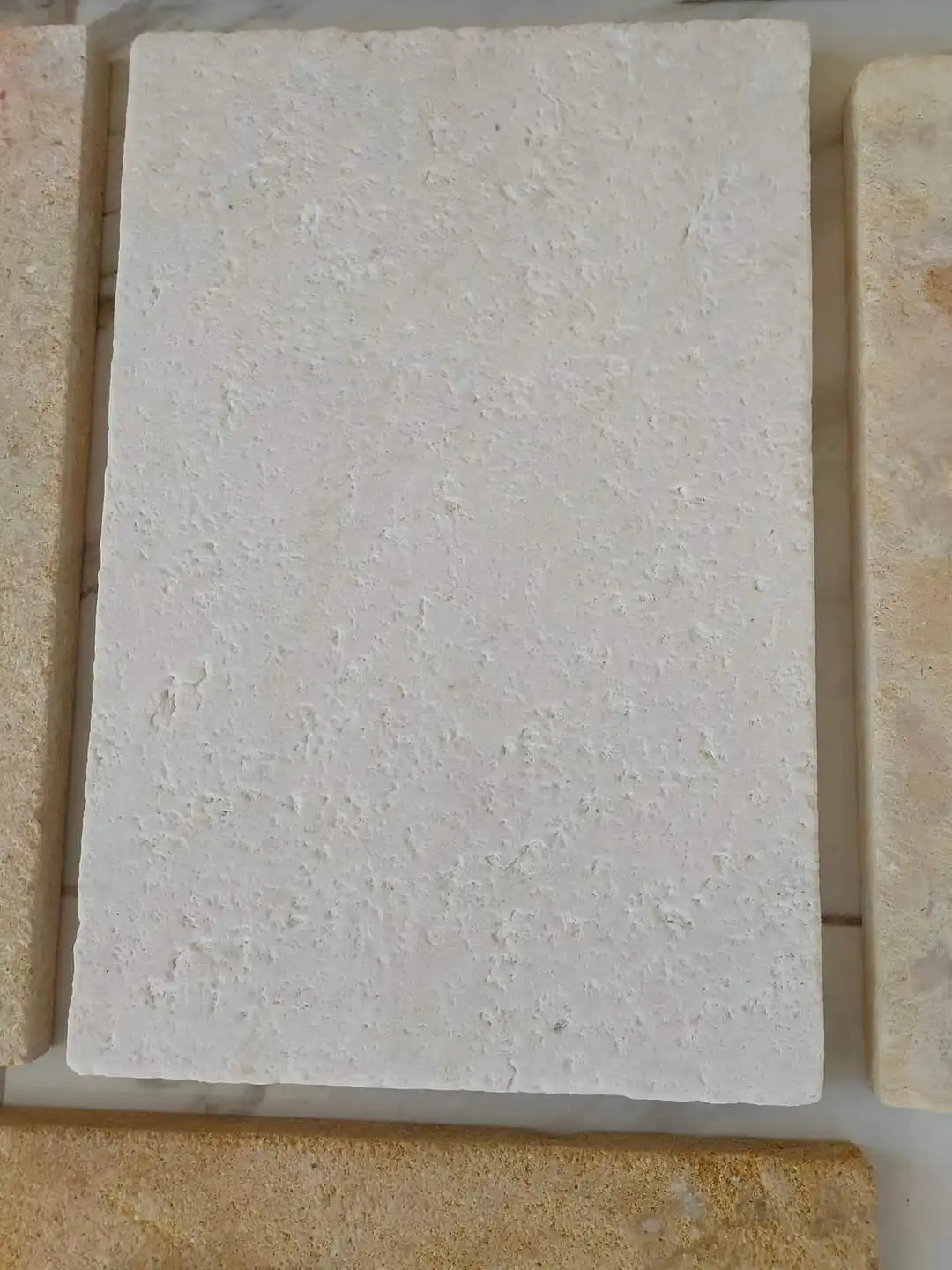
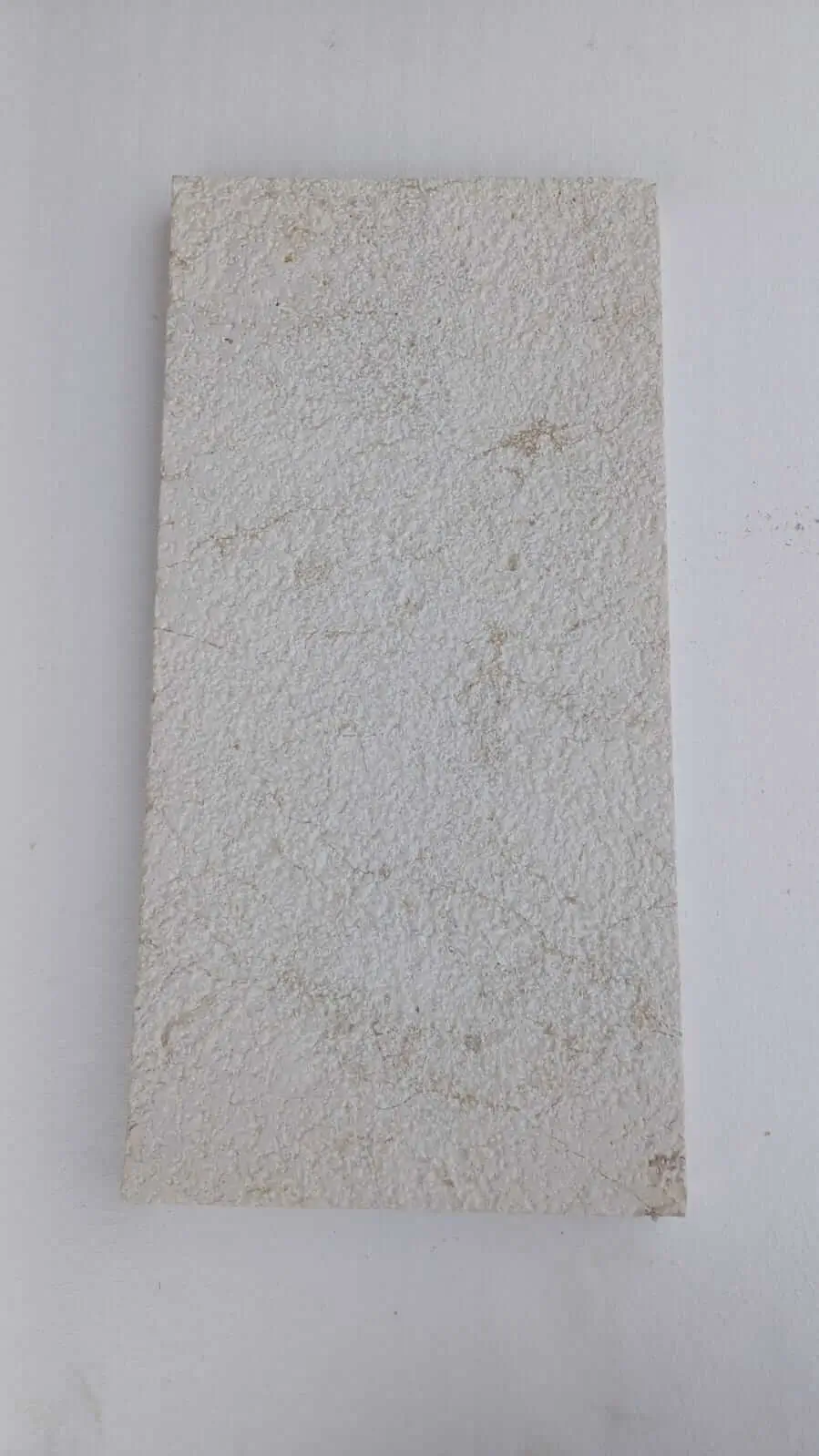
Large format stone paving options in Arizona xeriscaping work particularly well when the slab color draws from the natural desert palette. Warm buff travertine, cream limestone, or sandy sandstone in oversized slabs mirror the tonality of the surrounding desert floor and create transitions between planted zones and walking surfaces that feel geological rather than constructed. This is the quality that landscape architects in the Valley have been exploiting for the last decade — the ability of large-format natural stone to look like it was always there.
Smaller format pavers can get lost in low-density xeriscaping. Their joint lines multiply across the surface and create a visual busyness that competes with the deliberate simplicity of desert plant arrangements. That said, if your design includes a dense planting perimeter — Mexican bird of paradise, Texas sage, or palo verde overhang — smaller pavers provide textural counterpoint that prevents the hardscape from reading as too austere.
Color Palette, Stone Type, and Regional Aesthetic Fit
Arizona’s regional color story runs through warm earth tones: terra cotta, sandstone tan, dusty rose, ochre, and the grey-green of desert flora. Both large and small format natural stone can honor that palette — the format question is really about how the material’s color and veining are displayed.
With 36×36 slabs, each piece becomes a canvas. The veining pattern in a travertine or limestone slab at that scale is fully legible — you can see the geological story of the stone, and in a quality slab, that story is genuinely beautiful. At Citadel Stone, we source these large-format slabs directly from quarries in Turkey and the Mediterranean, and part of the quality assessment we conduct before warehouse stocking is specifically about veining consistency — whether the color variation across a lot is cohesive enough to read well when laid on a large patio surface. A mismatched lot of 36×36 slabs stands out far more than a mismatched lot of 12×12 pieces, so selection quality at the source matters enormously.
The outdoor stone slab sizing guide principle that professionals use is straightforward: the larger the format, the more demanding the material quality requirements. A small imperfection in a 12×12 paver disappears into the joint pattern. The same imperfection in a 36×36 slab is a visual anchor point. Expect your supplier to have reviewed and curated the material — not just shipped it from a container.
- Large slabs display full veining patterns — select lots where veining direction is consistent for best visual results
- Small format pavers allow color blending across pieces, creating a mosaic-like visual richness that suits certain design styles
- Warm-toned travertine and limestone in 36×36 format align well with Arizona’s earth-tone architectural palette
- Tumbled small-format pavers in sandstone or travertine complement rustic and Spanish Colonial aesthetics
Spatial Geometry: Matching Format to Patio Dimensions
The oversized paver size comparison AZ homeowners trust often comes down to a practical geometry question: does the format fit the space without excessive cutting? A 36×36 slab in a narrow side-yard corridor requires cuts on every run — that’s waste, added labor cost, and potential for inconsistent joint widths that undermine the clean look you’re going for. In spaces narrower than 12 feet, small-format pavers typically deliver better visual outcomes and lower material waste.
For open patio spaces of 400 square feet or more — the backyard patios common to newer builds in Gilbert and similar East Valley communities — 36×36 slabs hit their stride. The ratio of full pieces to cut pieces stays favorable, and the expansive plane effect reads as designed rather than oversized. Below 200 square feet, the format can overwhelm the space, making the patio feel like it’s wearing clothes that don’t fit the body.
Here’s a practical threshold that experienced installers use: divide your patio’s shortest dimension in inches by 36. If you get 4.0 or higher, large-format slabs will work geometrically without disproportionate cutting. Below 3.0, reconsider — the cut waste will exceed 25% and the visual result will show it. Applying this outdoor stone slab sizing guide across Arizona projects consistently helps homeowners avoid costly mid-project format changes.
Structural Requirements: What Each Format Demands from Your Base
Large-format slabs are less forgiving of base imperfections than small-format pavers. A 36×36 slab bridging over a soft spot in a sand-set base will crack — not immediately, but within two to three thermal cycles. The same soft spot under a 12×12 paver results in a rocking paver that’s easy to reset. This isn’t a reason to avoid large-format stone; it’s a reason to build the base properly from the start.
For 36×36 versus small format pavers Arizona installations, a compacted aggregate base of 6 inches minimum — 8 inches in areas with expansive clay soils — combined with a dry-set mortar screed layer delivers the rigidity the format requires. Projects in Mesa frequently encounter caliche hardpan at 18–24 inches below grade, which actually functions as an excellent natural sub-base when the upper soil layer is properly excavated and replaced with compacted aggregate. You get structural stability that many other regions have to engineer artificially.
Small-format pavers are more forgiving in flexible sand-set systems and work well with the standard 4-inch compacted aggregate base typical of residential walkway and patio applications. Their interlocking joint geometry distributes loads laterally in ways that large slabs cannot replicate. For driveways or areas with vehicular access, small-format interlocking pavers retain a structural advantage that 36×36 mortar-set slabs don’t fully match without a concrete sub-slab.
- 36×36 slabs require a minimum 6-inch compacted aggregate base with dry-set mortar screed — do not use loose sand beds
- Small-format pavers tolerate flexible sand-set systems and are more forgiving of minor base settlement
- Vehicular applications favor small-format interlocking pavers or require a poured concrete sub-slab for large-format stone
- Arizona’s clay-heavy soils in some zones require base depth increases of 2–3 inches beyond standard recommendations
Thermal Performance and Surface Temperature in Arizona Conditions
Arizona’s summer surface temperatures push 160–175°F on dark concrete — a threshold where barefoot comfort becomes a genuine specification requirement, not an afterthought. Natural stone in both large and small formats outperforms concrete in surface temperature, but the format affects thermal mass in ways worth understanding for outdoor spaces where family use peaks in morning and evening hours.
Arizona large-format natural stone patio tiles in light travertine or cream limestone reflect more solar radiation per surface area due to reduced joint coverage. The grout lines in small-format installations absorb heat differently than the stone surface itself, and in a dense joint pattern, the cumulative effect of those darker grout lines measurably increases average surface temperature. For barefoot patios in Chandler and similar low-desert communities where summer patio use extends from early morning through evening, this thermal difference between formats is not trivial — surface temperature differentials of 8–12°F have been recorded between light travertine slabs and matching small-format installations with standard grey grout.
The Arizona large-format natural stone patio tiles advantage in thermal performance is most pronounced with lighter stone colors. Dark basalt or charcoal limestone in 36×36 format will absorb more heat than a medium-tone small-format travertine installation — color and material albedo dominate over format in the thermal equation when the contrast is extreme.
Installation Logistics, Material Handling, and Lead Times
The practical reality of working with large format stone paving options in Arizona projects extends beyond design and into logistics. A 36×36 natural stone slab at 2-inch nominal thickness weighs between 140 and 160 pounds — that’s a two-person carry minimum, and a three-person carry on any installation requiring overhead obstacles or tight access. Your contractor’s crew size needs to account for this from the first day of the bid.
Truck access to your delivery site matters more with large-format material. A flatbed delivery of 36×36 slabs requires offloading with mechanical assistance — either a forklift pad or a truck-mounted crane. For properties with restricted access, this can add a logistical layer that small-format bagged or palletized pavers don’t require. Confirm with your supplier that truck access dimensions are assessed before scheduling delivery, not on the day of.
For clients comparing Citadel Stone large slab pavers Arizona, warehouse availability at time of order is a key planning factor — large-format slabs typically have longer replenishment cycles than standard-format material, so confirming warehouse stock depth before finalizing your project schedule protects your timeline. Our technical team can verify lot consistency and available quantity before you commit to a specification.
- 36×36 slabs require two to three-person handling teams — factor this into installation labor quotes
- Truck delivery of large-format material requires mechanical offloading capability at the site
- Warehouse stock levels for large-format slabs should be confirmed at project planning, not at order placement
- Small-format pavers offer simpler logistics with standard pallet delivery and hand-carry installation
Maintenance Expectations Across Both Formats
Maintenance requirements differ meaningfully between large and small format installations, and the delta compounds over the life of the installation. Small-format installations accumulate more total joint length — in a 500-square-foot patio, a 12×12 grid generates roughly 10 times the linear joint footage of a 36×36 layout. Each of those joints is a potential weed germination point, a moisture ingress path, and a periodic maintenance task.
Polymeric sand in small-format joints requires refreshing every 3–5 years in Arizona’s UV-intense environment — the binding agents degrade faster under constant solar exposure than in moderate climates. Large-format mortar-set installations don’t share this maintenance cycle, though they introduce their own requirement: periodic inspection for crack propagation in mortar joints, particularly in the first two years as the base fully settles and consolidates.
Sealing schedules are similar across both formats for natural stone — a penetrating silane-siloxane sealer applied every 2–3 years maintains stain resistance and reduces moisture infiltration in Arizona’s monsoon season. The difference is that resealing a 36×36 installation goes faster per square foot because surface prep requires less joint masking. You’ll typically spend 20–25% less time on a large-format reseal of the same area.
Parting Guidance on 36×36 Versus Small Format Pavers in Arizona
The decision between 36×36 versus small format pavers Arizona ultimately resolves around the scale and character of your landscape, not a single performance metric. Large-format slabs deliver their best value — visually and structurally — in open patios attached to contemporary or desert modern architecture, where the clean expansive surface reinforces the horizontal design language that Arizona’s landscape demands. Small-format pavers earn their place in courtyards, traditional garden settings, high-complexity planting contexts, and any installation where logistical constraints make large-slab handling impractical.
Your project will benefit from mapping both format options against your specific landscape style before making a material commitment. The format you choose will define the aesthetic register of the space for the next two decades — it deserves the same analytical attention you’d give to the stone species or color selection. For the technical side of executing either option on the ground, How to Install Large Format Pavers in Arizona covers the base preparation, setting methods, and joint detailing that determine long-term performance in Arizona conditions.
Citadel Stone’s 36×36 format slabs, direct from quarries in Turkey, the Mediterranean, and beyond, are selected by homeowners in Peoria, Sedona, and Mesa for their reduced grout line count and cleaner finished appearance.