Basseterre keeps its heart Georgian: the Circus — the roundabout the island insists is Piccadilly’s tropical cousin, ringed by verandahed merchant houses with the Berkeley Memorial clock at its center — and Independence Square a block east, the old parade ground turned park where the capital’s history, from its darkest chapters to its proudest, is layered in the same ground. The little capital’s civic core is a working heritage district with cruise-age duties, and its stone runs the federation’s public face. Here is the Circus guide.
The Georgian-core ensemble
The core’s value is its coherence: merchant architecture — stone ground floors, shuttered timber uppers on the hurricane-Georgian logic — ringing the Circus and square, the clocktower as the town’s navigational heart, and conservation running the living-town balance: banks and businesses trading behind heritage frontages, the ensemble-first discipline governing signage, surfaces and repairs, and the capital’s daily traffic negotiating a street plan drawn for carriages.
Independence Square’s layered ground
The square carries the island’s whole story in one park: laid out for markets and musters, site of the slave market in the town’s darkest ledger, renamed and reclaimed at nationhood, today the capital’s green room — fountain at center, cathedral at east, lunch benches under old trees. Its keeping runs memorial-grade care on the stewardship register: paths and settings maintained with the dignity layered history demands, interpretation added on the legible-modern principle, ceremonial ground — independence anniversaries center here — on the civic-event specification, and the daily park kept generous: the square serves memory best by serving the living well.
- Respect the existing geometry, since the square is the organizing element.
- Match paving modules to the Georgian frontages rather than to a modern grid.
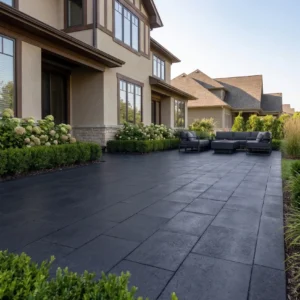
- Keep the palette restrained so the buildings remain the subject.
- Detail crossings and thresholds carefully, because this is civic ground.
Cruise-day duty
Port Zante lands the ships two blocks from the Circus, and the core runs the cruise-arithmetic disciplines through Georgian streets: excursion flows on the railway-and-tour economy marshalling at the port’s edge, pedestrian surges sharing carriage-width pavements with the capital’s business day, wayfinding threaded to the Circus clock, and the public-duty surfaces absorbing both audiences — the Kittitian-bustle register at its most concentrated. The core’s craft is Charlestown’s lesson at capital volume: keep the town working while the world walks through it.
The market-town under the heritage
Behind the postcard runs a Caribbean market capital: the public market’s produce mornings on working-grade floors, the small-premises economy in the side streets, minibus terminals moving the island’s villages through town on the island-capital logic, and the freed-land growth feeding new commuter traffic into old geometry. The civic stone serves the working town first; the heritage district that forgets its market forgets its point.
- Specify for market day loading as well as for pedestrian use.
- Design service points into the paving grid rather than adding them later.
- Choose a finish that survives spills and a regular wash down.
- Keep repairs liftable, since a working market cannot close for long.
Storm, salt and the seafront capital
Basseterre fronts its bay with the storm ledger open: hurricane histories written in rebuilt frontages, the waterfront’s working-harbor craft at capital scale, drainage engineered for the ghauts that empty through town — the mountain’s rains transit the capital — and repairs banked into the core’s fabric on conservation manners. The Georgian heart has taken the Atlantic’s worst for two centuries; its maintenance culture is the reason it is still the postcard.
Serving the capital’s core
Circus-and-square work blends the cluster’s civic registers: heritage-matched repairs in the ensemble, public-duty ground for the cruise-and-market day, memorial-grade care in the square, and storm-honest engineering throughout — landed on the federation supply line and served by the islands’ supply guide at capital standard: documented, dignified, durable. The clock strikes over the Circus, the ships glow at Port Zante, the market opens at dawn — and the federation’s public face rests, as it has for two centuries, on ground that knows its job.
Living upstairs: the return of the Main-Street flat
The Georgian core’s upper floors are its quiet opportunity: the timber stories above Basseterre’s trading ground floors — once merchants’ residences, lately storage and vacancy — returning to life as flats, offices and studios, and the conversion genre carries the capital’s next chapter. The pattern’s logic is the hurricane-Georgian inheritance put back to work: stone ground floors keep the commerce, timber uppers resume the living, and the building’s original section — shop below, household above — turns out to be exactly what heritage districts worldwide are trying to re-create. The conversions’ craft is mostly circulation and services: separate street entrances threaded into the facade rhythm without falsifying it, stairs renewed in the sacrificial-timber tradition, services risers routed with the discreet-retrofit wisdom, and the balconies and verandahs — the type’s glory — restored to the evening life they were drawn for.
The urban dividends compound: residents upstairs put eyes on the core’s evenings, the after-five economy gains its walking customers, buildings maintained for habitation weather storms better than buildings maintained for storage, and the conservation ledger improves — occupied fabric is funded fabric. The ground craft supports quietly: rear courts and side steegjes upgraded as the flats’ arrival spaces on working-heritage stone, refuse and cycle stores designed into yards rather than pavements, and the thresholds’ two-audience duty — shopfront by day, front door by night — detailed once, properly.
For owners of core buildings the arithmetic increasingly closes: the upper floors’ conversion rents against the works, the building’s insurance and upkeep spread across two incomes, and the heritage consent process rewards exactly this use. The capital’s Georgian streets were always meant to be lived over; the return upstairs is restoration in the truest sense — the buildings resuming their whole original job.
What protection applies in the capital
Basseterre works under a statutory regime rather than a style guide. The Development Control and Planning Act defines a listed building as one included in a list under the National Conservation and Environment Protection Act, requires publicity including public notice and a comment period for applications affecting listed buildings, allows the Board to designate environmental protection areas, and gives ninety days for a decision after which an undecided application is deemed refused.
- Establish the listing status of every frontage on the scheme before designing.
- Expect a public notice and comment period rather than a quiet approval.
- Build the ninety day decision window into the program.
- Treat a silent application as refused, since that is the statutory position.
- Keep interventions reversible where listed fabric is involved.
Specifying for a public square that never closes
Civic ground has to be defensible on paper as well as underfoot. The Natural Stone Institute testing program provides the criteria: ASTM C97 for absorption and bulk density, C170 for compressive strength, C880 for flexural strength, C1353 for abrasion resistance and ANSI A326.3 for slip resistance as dynamic coefficient of friction. On a town square subject to vehicle loading and heavy foot traffic, all five matter.
- Read compressive and flexural strength first, since vehicles cross this ground.
- Meet the slip benchmark across the whole public route, not only at steps.
- Specify high abrasion resistance where cruise crowds funnel through.
- Hold the test data, because a public realm claim will ask for it.
A capital that fills and empties by ship
Basseterre swings between a quiet market town and a crowded arrival port several times a week, and the ground plane has to carry both. Specifying for the quiet version produces a surface that fails within a season; specifying only for the crowds produces something that feels municipal when the town is itself.
- Specify to the peak crowd rather than to the average day.
- Keep the detailing domestic in scale so the town still reads as a town.
- Zone the ground so worn routes can be replaced without touching the square.
- Plan maintenance for days when no ship is alongside.
Georgian town stone around the Circus and Independence Square
The capital is a Georgian town doing a modern job. Confirm the listing position, specify to the tested standards a public realm demands, keep the palette restrained, and design so repairs can happen between ships. Our St. Kitts and Nevis stone supply guide sets out the formats, finishes and lead times that suit this federation. Basseterre has been rebuilt after fire and hurricane more than once, and the paving laid now is the version the next century inherits.