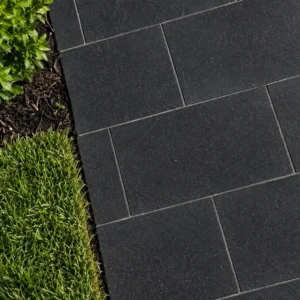
Tortola’s spine climbs into another climate: the ridge country around Sage Mountain where trade clouds snag on the peaks, temperatures run genuinely cooler, and the territory’s highest properties live amid fern gullies and mahogany shade that feel continents from the beach below. Ridge living is the BVI’s altitude privilege — dual-coast views, natural air conditioning, rainforest gardens — carried on mountain-road logistics and cloud-belt physics. Here is the heights’ guide.
The cloud-belt microclimate
The heights run their own weather: mist arriving as the trades lift, humidity feeding moss and fern where the coast grows cactus, rainfall multiplied by elevation, and evening temperatures that justify fireplaces the shore would mock. The altitude-microclimate rules govern at territory scale — textured surfaces mandatory where cloud-damp lingers, the algae calendar running long, covered outdoor rooms earning their keep, and the cool-evening craft surprisingly relevant eleven hundred feet over the Caribbean.
Dual-horizon composition
Ridge lots sell geography itself: sunrise over the channel one way, sunset past Jost the other, and the crown compositions serve both — morning and evening terraces on opposite shoulders, the view-first discipline doubled, circulation flowing the household across the ridge with the sun. Stone carries the flow: stair-and-terrace sequences linking the shoulders, pale surfaces holding light in cloud-shade, and view edges engineered for summit wind on the exposure honesty every height demands.
- Keep the terrace geometry simple, because a ridge site already supplies all the drama needed.
- Set the paving tone against the sky rather than against the planting, since sky dominates the view.
- Shelter at least one seating area from the constant ridge breeze so the terrace is usable in wind.
- Use a matte texture that does not throw glare back at the house through the middle of the day.
Rainforest gardens, managed
Cloud-belt gardens grow like ambitions: the speed-of-green rules at altitude intensity, fern and philodendron claiming every damp margin, and the national-park adjacency — Sage’s protected forest as neighbor — setting both privilege and manners: seed rain from primary canopy, wildlife corridors respected, and garden palettes that converse with the mountain rather than suburbanizing it. Stone frameworks hold the line: firm paths through green enthusiasm, moss-tolerant textures chosen knowingly, drainage channelling mountain rain in celebration-grade runnels, and clearings held open by design where the forest would close them.
Mountain-road realities
Ridge addresses sit atop the territory’s steepest logistics: switchbacks that promote the transfer-point disciplines from option to law, crate weights set by what mountain bends allow, concrete-drive gradients that test every clutch, and works programs that respect cloud-season visibility on roads where mist is traffic. The compensations are real: build sites above the heat, crews working in mountain comfort, and the neighbor manners of ridge communities where everyone shares the same hard road.
Water from the sky’s first serving
The heights drink first: cloud-belt roofs harvest the territory’s most generous catch, springs seep where geology allows, and ridge cisterns on the catchment craft run abundant where coastal tanks count millimeters. Design leans into the privilege — generous storage in serviceable stone courts, overflow gardens fed by bounty, and the mountain habit of sharing: ridge water histories include neighbors’ dry-season hoses, and tank capacity built generous is community courtesy as much as household security.
- Design the terrace to feed clean runoff toward the cistern rather than away from it.
- Keep paving free of anything that sheds fine particles into collected water.
- Provide a first-flush arrangement so the dirtiest water never reaches storage.
- Detail overflow routes that discharge safely downslope rather than against a retaining wall.
The heights’ particular peace
What ridge living returns is the territory’s rarest amenity: silence layered over view — cloud-shadow moving on the channel, the charter fleet reduced to white flecks, evenings cool enough for the fire and still enough for it to matter. The stone package serves the peace: terraces composed for both horizons, gardens framed against the green tide, paths that hold in cloud-damp, and the territory supply guide delivering it all up the switchbacks with mountain patience. The beach crowd looks up and sees weather; the ridge looks down and sees everything.
The grip audit: keeping footing in the cloud belt
The heights’ microclimate writes a maintenance discipline the coast never needs: surfaces that live in cloud-drift, shade and rainforest humidity grow their slick film faster than anywhere else on the island, and the ridge household’s safety rests on an honest grip audit run as routine. The audit is simple and physical: walk the wet routes — steps, shaded paths, the terrace’s north edge, anywhere the sun reaches late — in the conditions that matter, after rain or in the morning damp, and note where feet hesitate. Those notes drive the calendar: algae’s first green shadow cleaned with pH-neutral methods before it matures into a surface; moss lifted from joints where the cloud belt seeds it; overhanging growth pruned where it holds the drip line over a walking surface; and the drainage kept ruthless, because standing damp is the film’s nursery.
Specification does the heavy lifting up front. The heights argue for the textured end of every finish range — bush-hammered treads on outdoor flights, brushed surfaces on shaded paths — laid with falls that shed the sky’s first serving fast, and lit for the fog evenings when depth perception shortens. Handrails belong wherever the audit hesitates twice; the mountain-road habit of judging conditions extends to the garden. Where a surface repeatedly fails its audit despite care, the answer is re-texturing or replacement from spares, not vigilance forever — the household that tiptoes its own steps has a specification problem wearing a behavior costume.
Run seasonally, the audit takes an hour and ages with the garden’s growth. Its reward is the cloud belt’s peace kept whole: the heights’ households live outdoors in weather the coast calls rain, and they do it on stone that was chosen, checked and kept honest for exactly that life. Footing is the ridge’s quiet luxury; the audit is its price, and it is small.
Where ridge sites sit in territory planning policy
Building high on Tortola is not a neutral choice in policy terms. The National Physical Development Plan restricts development on hillsides without geotechnical certification, prohibits it in ghut and watercourse buffer zones and in natural hazard areas covering landslides, flooding and storm surge, and concentrates growth in defined settlement areas with the countryside limited to small-scale residential, retail, tourism and utility uses. The plan describes a territory of roughly 153 square kilometers across more than sixty islands with about twenty-seven percent vegetation cover, which is why ridge lines are treated as a shared visual resource rather than as private backdrop.
- Get the geotechnical certification underway before the layout is committed to drawings.
- Keep cut and fill modest, since a ridge scar is visible from a very long distance.
- Respect ghut lines absolutely, because they carry the water that would otherwise carry the terrace.
- Expect scrutiny of anything that breaks a ridge silhouette from the main road.
- Design planting to recover the cut face within a couple of seasons rather than leaving raw ground.
A microclimate that is genuinely different
Ridge conditions do not match the coast a few hundred meters below. The regional climate profile for the territory gives an annual average near 1,150 mm with a wet season from May to November, monthly means above 100 mm from September to November and a November figure of 163.1 mm, alongside a mean annual temperature around 27.5 degrees Celsius, a mean maximum of 30.4 and a mean minimum of 22.8. Elevation shifts all of that downward in temperature and upward in exposure, which is exactly why people build there.
- Expect a genuinely cool evening and design a terrace that works after dark, not only at noon.
- Assume more wind and more driving rain than the coastal figures suggest.
- Allow for faster drying, which favors surfaces that do not stain when repeatedly wetted.
- Plan for cloud and mist at the top of the wet season, when a ridge sits inside the weather.
Getting material up a ridge road
The logistics of a high site are the quiet cost nobody quotes for. Ridge roads are steep, narrow and often single track with tight hairpins, which limits vehicle size long before it limits load weight. That constraint should shape the specification, not simply the delivery note.
- Size pallets to the truck that can actually reach the site, then work backward to the format.
- Avoid single units too heavy to carry the last stretch by hand if the truck stops short.
- Plan a lay-down area on the plot, because there is rarely anywhere to stand a pallet on the road.
- Deliver in more, smaller drops rather than one large one, and build that into the program.
- Confirm crane or telehandler access early, since a ridge plot may have only one workable position.
Ridge house stone that arrives intact and stays put
Height gives a house everything except an easy build. The specification that works up here is chosen for exposure, sized for the road, certified before it is drawn, and detailed so the ridge line looks much the same from below after the work is finished as it did before it started. Our British Virgin Islands stone guide sets out the formats, finishes and lead times that suit this territory. The view is the reason anyone builds on a ridge, so the stone should hold the terrace together and then get out of the way.