



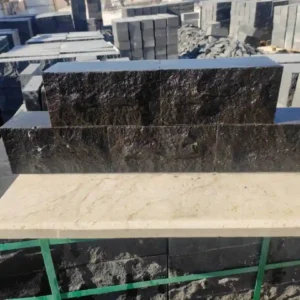
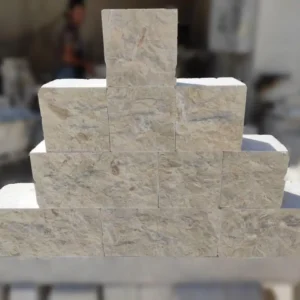
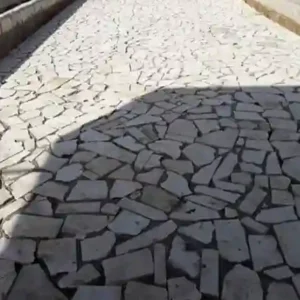









Designing cobble setts for Arizona conditions forces you to reconcile two competing structural demands simultaneously — managing surface runoff across grade transitions while anchoring each unit against lateral displacement on sloped terrain. The challenge isn’t the material itself; granite cobble setts in Arizona handle load conditions exceptionally well across the state’s varied terrain. The challenge is the terrain geometry underneath them, and that’s where most specifications fall short before a single sett is laid. For contractors pricing cobble setts for sale in Arizona, understanding these site variables is what separates a durable installation from a callback.
Arizona’s elevation range — from Yuma’s desert floor at roughly 140 feet to Flagstaff’s plateau at 6,900 feet — creates dramatically different site conditions across relatively short distances. Your base preparation protocol for a Scottsdale driveway and a Sedona hillside pathway aren’t interchangeable, even if you’re specifying the same 100×100 granite cobbles for both. The variables that matter most are drainage geometry, soil bearing capacity, and the freeze-thaw exposure at elevation — and each one affects your installation spec in measurable ways.
What Granite Cobble Setts Bring to Arizona Terrain
Granite cobble setts earn their reputation on sloped and variable terrain because the material’s physical properties align well with the demands Arizona topography creates. Compressive strength in the 19,000–25,000 PSI range means these units don’t deform under point loads even in demanding applications. Water absorption rates below 0.5% are equally important — on sloped sites where runoff concentrates at low points, a near-impervious surface unit prevents subsurface saturation from wicking upward through the sett body.
- Granite’s coefficient of thermal expansion sits around 4.4–8.0 × 10⁻⁶ per °F, which is lower than concrete — meaning joint spacing requirements are more forgiving in Arizona’s temperature swings
- Surface texture from flame-finishing or natural cleft provides friction coefficients above 0.6 wet, meeting ADA slip resistance thresholds even on moderate grades
- Unit weight in the 165–175 lb/ft³ range adds the ballast that helps resist creep on inclined installations without requiring mechanical edge restraint on every run
- Granite cobble setts in Arizona resist spalling from freeze-thaw exposure better than softer sedimentary alternatives, which matters significantly above 4,500 feet elevation
Citadel Stone sources granite cobble setts from established quarry partners with documented consistency checks — density, absorption rate, and dimensional tolerance are verified before stock reaches the warehouse. For Arizona projects where material returns mid-installation create real schedule and cost problems, that upstream quality control matters more than most buyers initially appreciate.
Elevation, Terrain, and Drainage: The Variables That Drive Base Design
Your base specification for cobble setts changes more with terrain gradient and elevation than with any other single factor. On flat desert sites, the conventional 6-inch compacted aggregate base handles standard residential loading adequately. On sloped sites — anything above a 2% grade — you need to think about your base as a drainage management system first and a structural platform second.
The reason is straightforward: water moving laterally through a granular base on a slope will undermine compaction over time. In Sedona, where the red rock terrain creates significant grade variation across residential lots, installers frequently encounter situations where surface runoff infiltrates at the uphill edge of a cobble sett installation and exits three feet lower having washed out fine aggregate. The fix isn’t more compaction — it’s intercepting that subsurface lateral flow with a properly positioned drainage layer or cut-off drain before it reaches your base.
- On grades between 2–5%: minimum 6-inch compacted Class II base with a geotextile separation fabric between native soil and aggregate
- On grades between 5–10%: increase base depth to 8 inches, introduce a perforated pipe drain at the uphill edge, and consider a permeable setting bed rather than a dense-graded material
- On grades above 10%: consult a geotechnical engineer before specifying — you’re in slope stability territory, not just paving territory
- At elevations above 5,000 feet, add 20–25% to your base depth to account for frost heave potential during winter months
The soil composition at elevation also changes your compaction targets. Decomposed granite — common in central Arizona — compacts well but loses density rapidly when saturated. Clay-heavy soils, which you’ll encounter more frequently in higher-elevation sites around Flagstaff, require proof-rolling and often subgrade stabilization before any aggregate goes down. Attempting to shortcut subgrade work on expansive soils is the most reliable way to guarantee a callback within two years.
Format Selection for Cobble Setts Driveway and Pedestrian Applications
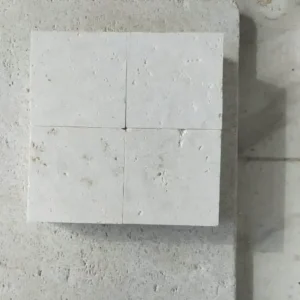
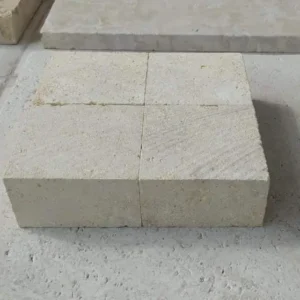
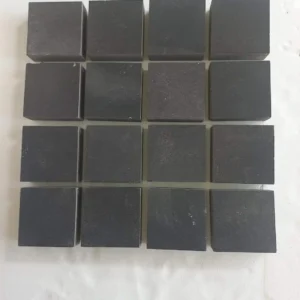
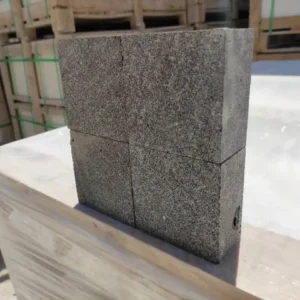
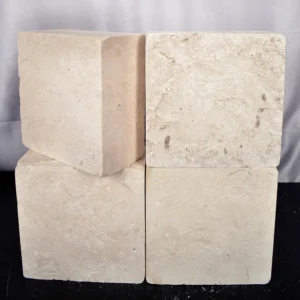
The 100×100 cobblestone format — sometimes called 4×4 cobblestone in the trade — is the workhorse dimension for Arizona driveway and pathway work. At 100mm × 100mm in plan, these units create the characteristic grid pattern that gives cobblestone installations their visual rhythm, and the compact format means you’re distributing load across a higher number of joints per square meter than larger-format pavers.
That load distribution characteristic is actually a structural advantage on sloped driveways. More joints mean more interlock — the lateral resistance of the installation as a whole increases because each unit is constrained on four faces by its neighbors. For cobble setts driveway applications in Arizona where vehicles make repeated turning movements on inclines, that interlock resistance is what prevents the creep pattern you see in single-unit paver systems where units gradually migrate downhill under repeated loading.
- 100×100 cobbles at 50mm depth handle standard passenger vehicle loading; 60–70mm depth for SUVs and light trucks on driveways
- 100×100 granite cobbles at 40mm depth are appropriate for pedestrian-only pathways where structural demand is lower
- For commercial vehicle access — delivery trucks or heavy equipment routes — step up to a minimum 80mm depth unit and increase your base specification accordingly
- Joint width should be maintained at 2–3mm for kiln-dried sand jointing, or 6–10mm if you’re using a permeable jointing material for drainage-forward designs
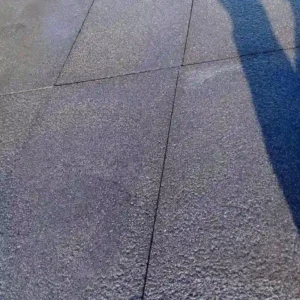
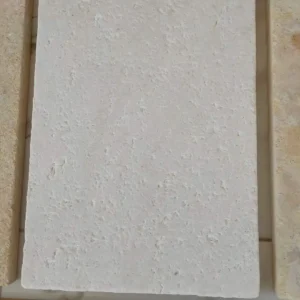
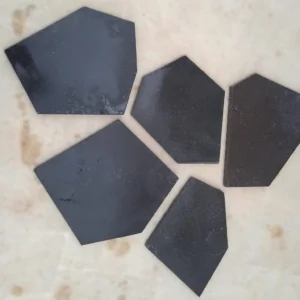
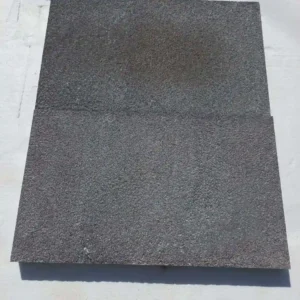
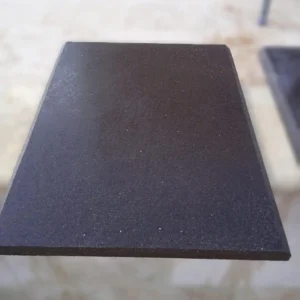
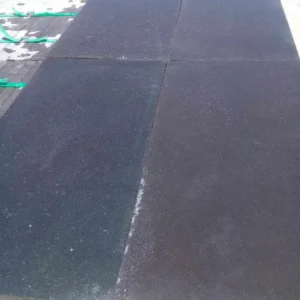
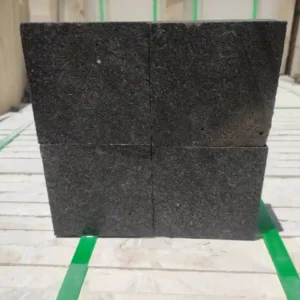
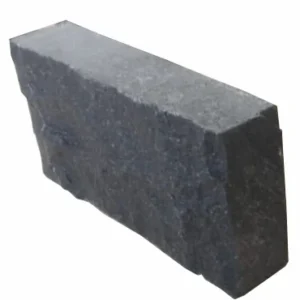
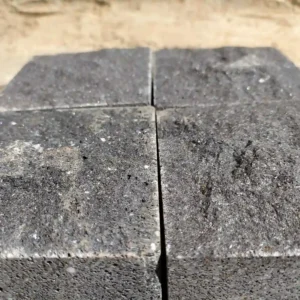
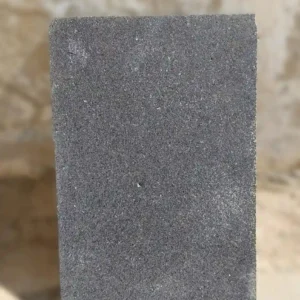
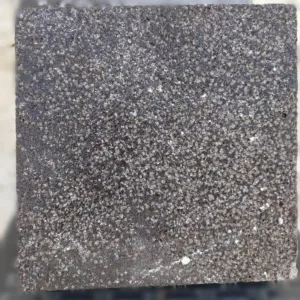
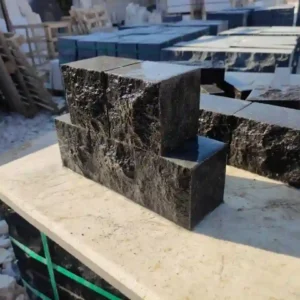
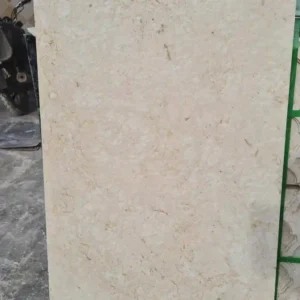
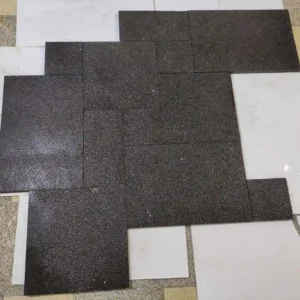
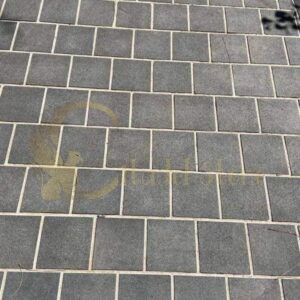
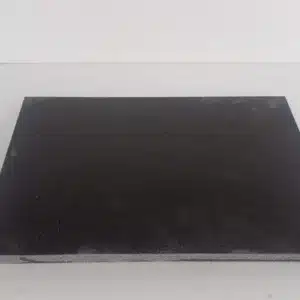
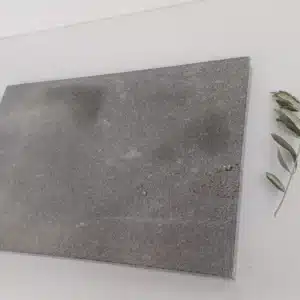
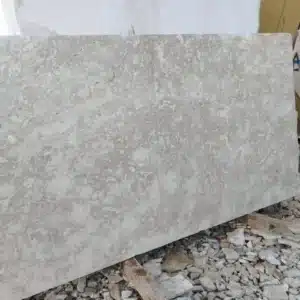
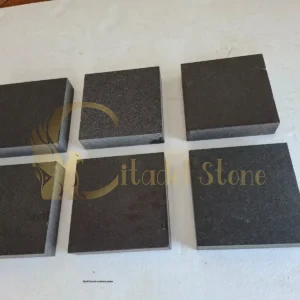
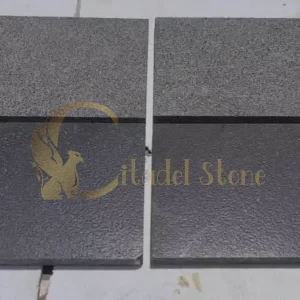
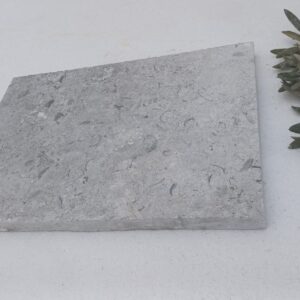
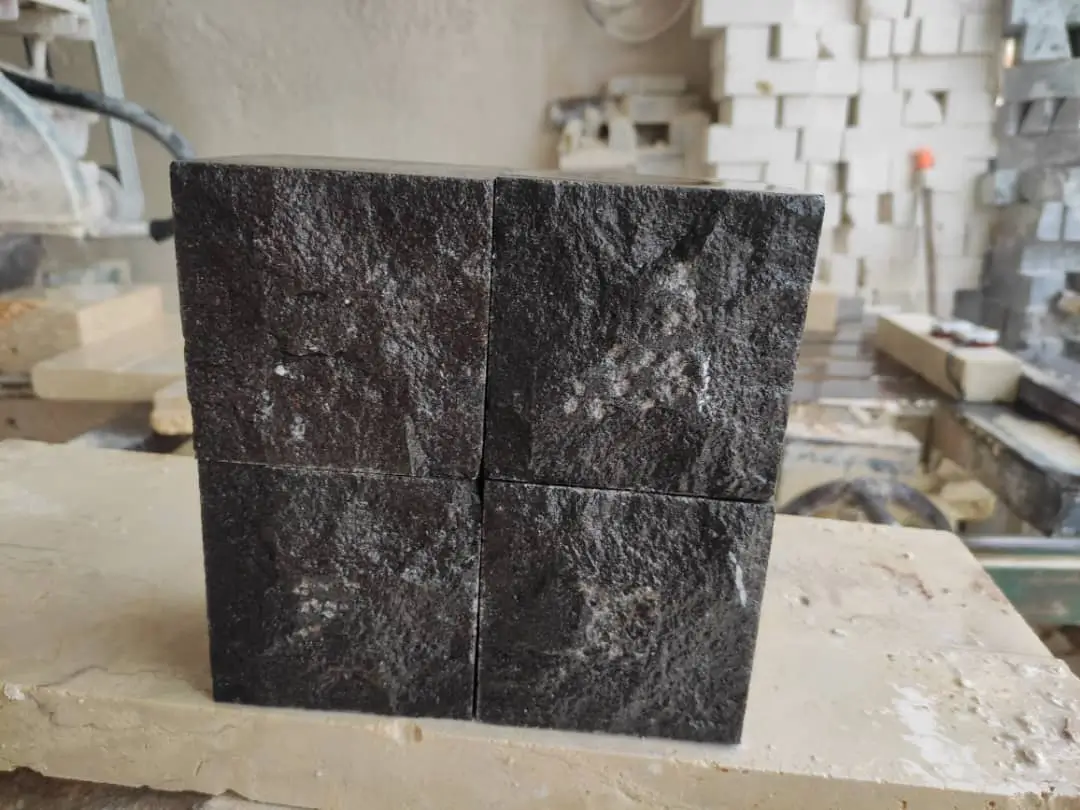
Grey cobble setts are the most specified colour in Arizona commercial work because neutral stone tones don’t clash with the regional palette of warm earth tones and desert landscaping. Dark grey cobble setts read more formal and work particularly well in Scottsdale contemporary residential projects where the contrast between stone paving and light stucco exteriors is part of the design intent. Both colour families are available from Citadel Stone in standard 100×100 formats — you can request physical samples before committing to a full project quantity to verify the colour reads correctly against your specific site materials.
Setting Bed Options for Variable Arizona Substrates
The setting bed is where most cobble sett specifications either succeed or create problems that show up two to three years after installation. In Arizona’s terrain-variable environment, you’re frequently dealing with substrates that move — either from clay expansion, freeze-thaw at elevation, or the thermal cycling that affects the upper 12 inches of soil in desert environments year-round.
For rigid installations on stable substrates, a screeded sharp sand setting bed at 25–30mm compacted depth remains the standard. The sharp sand conforms under seating pressure, distributes load across the full unit base, and allows minor adjustments during installation. For projects requiring detail line cuts around drainage infrastructure — which Arizona sloped sites almost always have — sharp sand tolerates the inevitable minor grade corrections without the brittleness you get with cementitious beds. Detailed installation sequencing that walks through base, setting bed, and jointing protocols is covered in the Cobble Setts for Sale from Citadel Stone installation guide, which is worth reviewing before your crew mobilizes on any sloped Arizona site.
- Sharp sand setting beds: best for stable, non-expansive soils; requires a well-drained base to prevent bed saturation
- Compacted stone dust (granite screenings): alternative for sites with excellent drainage where sand blowout from surface wash is a concern
- Open-graded permeable base with chip aggregate setting bed: appropriate when drainage is the primary design objective and some surface flex is acceptable
- Dry mortar bed (4:1 sand:cement): use on stable concrete sub-bases only — avoid on granular bases where differential settlement will crack the mortar matrix
At Citadel Stone, we recommend discussing your setting bed choice with our technical team before ordering, particularly on sloped sites. The setting bed depth affects your finished surface elevation relative to existing site features, and getting that calculation wrong before the base is compacted means rework.
Joint Sand and Surface Sealing Performance Across Arizona Climates
Joint integrity in cobble sett installations is a maintenance topic that most specifications address at the time of installation and then forget. In practice, Arizona’s terrain and climate create three distinct joint degradation mechanisms that require different management responses.
Surface wash on sloped sites progressively removes kiln-dried sand from joints on the downhill face of each unit. On a 5% grade with no surface drainage interception, you can lose measurable joint depth within 18 months of installation — particularly in Phoenix where monsoon rainfall delivers high-intensity precipitation in short durations. Polymeric sand is the correct jointing material for any sloped cobble sett application in Arizona; the polymer binder resists wash-out at rainfall intensities that standard kiln-dried sand cannot withstand.
- Apply polymeric sand in dry conditions with surface temperature below 90°F to prevent premature curing that traps moisture below the activated polymer layer
- Maintain joint fill at a minimum 90% depth — joints that drop below this threshold allow unit rocking, which progressively works joint material out from adjacent units
- Re-top joints every 3–4 years on sloped sites; flat installations can typically go 5–6 years between rejuvenation treatments
- At Flagstaff elevations, freeze-thaw cycling will heave some units in the first winter if joints aren’t fully consolidated — inspect and re-seat any proud units before the second frost season
Sealing granite cobble setts is a project-specific decision, not a universal requirement. Unfinished granite’s absorption rate is low enough that unsealed installations perform well in most applications. Sealing makes sense when you’re managing oil contamination risk in driveway applications, or when the client wants to enhance the natural colour contrast of dark grey cobble setts. Use a penetrating silane-siloxane sealer rather than a surface film sealer — film sealers trap moisture below the surface on textured granite and create delamination issues within two to three years.
Specifying Grey and Dark Grey Cobble Setts Across Arizona Project Types
Colour selection in cobble setts isn’t purely aesthetic in Arizona — it has practical implications related to surface temperature and reflectivity that affect user comfort on pedestrian surfaces. Grey cobble setts in Arizona’s low desert zones reflect considerably more solar radiation than dark alternatives, which translates to measurable differences in barefoot surface comfort in residential pool surrounds and courtyard applications.
Surface temperature differentials between light grey and dark grey granite under identical solar exposure in Phoenix can reach 15–20°F at peak afternoon conditions. For driveway and vehicular applications where barefoot contact isn’t a factor, dark grey cobble setts offer greater visual contrast with light-coloured surroundings and resist showing tire marks and oil staining more effectively than lighter alternatives. In Phoenix commercial streetscape and plaza work, the specification choice between grey and dark grey cobble setts often comes down to this practical temperature differential rather than purely architectural preference.
- Grey cobble setts: better reflectivity for pedestrian zones, courtyards, and pool surrounds where surface temperature matters
- Dark grey cobble setts: superior for driveways, commercial entrances, and areas where visual contrast and stain resistance are the priority
- Mixed-format installations using both shades create visual banding and can be used to direct pedestrian flow or define zone transitions
- Both granite cobble setts in Arizona require the same base and jointing specification — colour selection doesn’t affect structural requirements
For projects requiring custom quantities or non-standard pallet configurations, Citadel Stone’s team can advise on lead times and minimum order thresholds before you commit to a project schedule. Warehouse stock levels for standard grey and dark grey 100×100 formats are maintained for rapid dispatch, but specialty finishes or non-standard depths may require 2–3 weeks additional lead time from the distribution point.
Edge Restraint and Perimeter Detailing on Sloped Arizona Sites
Edge restraint is the most under-specified component in cobble setts installations on sloped terrain, and it’s where installations begin to fail from the perimeter inward. The physics are simple: gravity acts on every unit continuously, and without an adequate boundary condition at the downhill edge, interlock alone cannot prevent progressive lateral migration over time.
Concrete kerbing cast in-situ provides the most reliable edge restraint for cobble setts driveway applications on Arizona sloped sites. Precast plastic restraints are adequate for flat or low-gradient installations but lack the mass to resist the cumulative lateral thrust from a full driveway run on grades above 3%. Your concrete edge restraint should be cast at least 150mm deep and 100mm wide, keyed into a stable base, and cured fully before you begin laying units adjacent to it.
- Uphill edges on sloped sites need restraint as much as downhill edges — hydrostatic pressure from sub-base drainage can push units uphill if the uphill boundary isn’t fixed
- Where cobble setts meet asphalt or concrete at grade transitions, a cast-in-place concrete header course at least 200mm wide prevents differential settlement at the junction
- Soldier course borders — a single row of setts laid perpendicular to the field pattern — serve both aesthetic and structural functions at perimeters
- For commercial projects, structural steel edging embedded in concrete provides the most durable long-term perimeter solution when heavy truck traffic approaches the installation edge
Project Planning: Quantities, Delivery, and Logistics in Arizona
Accurate quantity takeoffs for cobble setts installations require accounting for cutting waste, which is higher in terrain-variable Arizona sites than on flat urban projects. Curved perimeters around landscape features, grade changes that require tapered cuts, and drainage inlet surrounds all consume material beyond the nominal square footage. A standard waste factor of 8–10% applies to straightforward rectangular installations; budget 12–15% for complex shapes or sites with significant grade change.
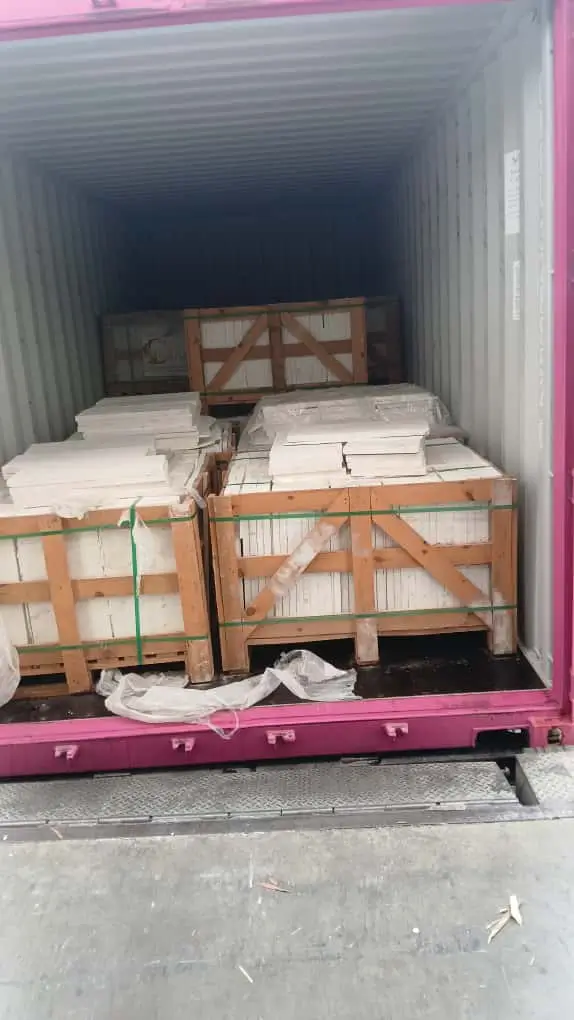
Delivery logistics for cobble setts in Arizona vary significantly by region. Desert valley sites — Phoenix, Scottsdale, Chandler, Mesa — typically have accessible truck routes and flat staging areas that allow full pallet delivery directly adjacent to the installation zone. Elevated or canyon-adjacent sites in Sedona and the Flagstaff region sometimes require off-road capable truck access or intermediate staging, which affects your delivery planning and potentially your unit price depending on final delivery point.
- Standard pallet sizes for 100×100 cobble setts: approximately 8–10 m² per pallet depending on sett depth — confirm with Citadel Stone at ordering stage
- Verify truck access dimensions for your site before scheduling delivery — low clearance, tight turns, and unstable shoulders are common on Sedona and Flagstaff residential sites
- Citadel Stone ships cobble setts across Arizona from regional warehouse inventory, typically achieving 1–2 week delivery for standard stocked formats
- For phased projects, partial pallet orders create additional handling costs — coordinate delivery schedules to receive full pallets where possible
Verifying warehouse stock levels before finalizing your project timeline is particularly important for larger volumes of dark grey cobble setts where demand from commercial contractors can temporarily reduce available inventory. Requesting a stock confirmation at the quotation stage prevents the schedule disruption of discovering a lead time extension after your base work is complete and your crew is mobilized.
Buy Cobble Setts for Sale in Arizona — Wholesale from Citadel Stone
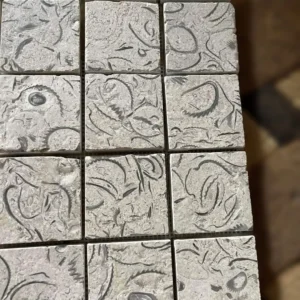
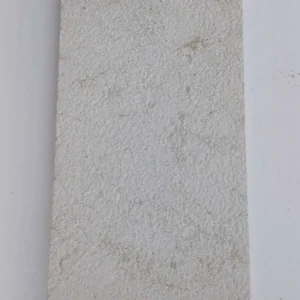
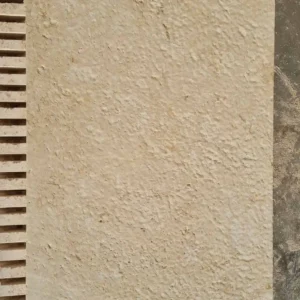
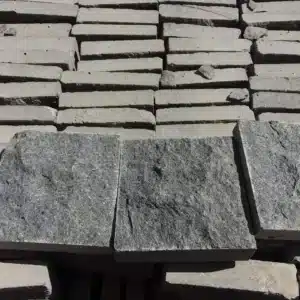
Citadel Stone stocks cobble setts in Arizona in the standard 100×100 format across multiple depth options — 40mm, 50mm, 60mm, and 70mm — to cover the full range of pedestrian, residential driveway, and light commercial applications. Both grey and dark grey granite finishes are maintained in warehouse inventory for rapid dispatch across the state. Available finishes include natural cleft, flame-textured, and sawn-top surfaces to match your project’s traction and aesthetic requirements.
Sample units are available directly from Citadel Stone before committing to your full project volume — a practical step for any specification that hasn’t used this material in this finish before. Trade and wholesale enquiries receive project-specific pricing based on volume, delivery location, and format mix. Lead times for standard stocked formats run 1–2 weeks from order confirmation; specialty depths or finishes may require additional production lead time, which Citadel Stone’s team will confirm at quotation stage.
For your Arizona project consultation — whether you’re pricing a residential driveway, a commercial streetscape, or a sloped pathway system — contact Citadel Stone with your square footage, sett depth requirement, and site delivery details. Your project can be quoted accurately with that information, and our team can advise on any terrain-specific specification considerations based on your site location. As you finalize your Arizona stone specification, it’s worth exploring complementary hardscape products from the same regional supplier — Paving Setts in Arizona covers related product options that may suit adjacent areas of your project. Citadel Stone supplies Cobble Setts for Sale to Arizona contractors working across Flagstaff, Sedona, and Yuma on residential and commercial sites.