

Granite cobble setts versus other natural stone options is a comparison that comes down to one variable most Arizona specifiers underestimate: how UV radiation degrades the surface chemistry of different stone types over time, not just how they perform under foot traffic load. The compressive strength numbers for granite, basalt, and limestone all look impressive on a data sheet — but surface integrity under Arizona’s UV index, which regularly exceeds 11 in Phoenix metro summers, separates materials that hold their specification for two decades from those that start disappointing clients within five years. Comparing stone sett materials in Arizona through this lens changes which specifications hold up and which ones don’t.
How Arizona’s UV Exposure Actually Affects Natural Stone
The distinction between air temperature and UV radiation is one that gets lost in most material comparison discussions. You’ll often hear specifiers cite ambient heat as the primary stressor — and they’re not entirely wrong — but the photochemical degradation that UV radiation causes on stone surfaces operates through a completely different mechanism. UV breaks down the mineral bonds in certain stone types at the surface level, causing what looks like weathering but is actually a gradual conversion of crystalline structure to a chalky, oxidized surface layer.
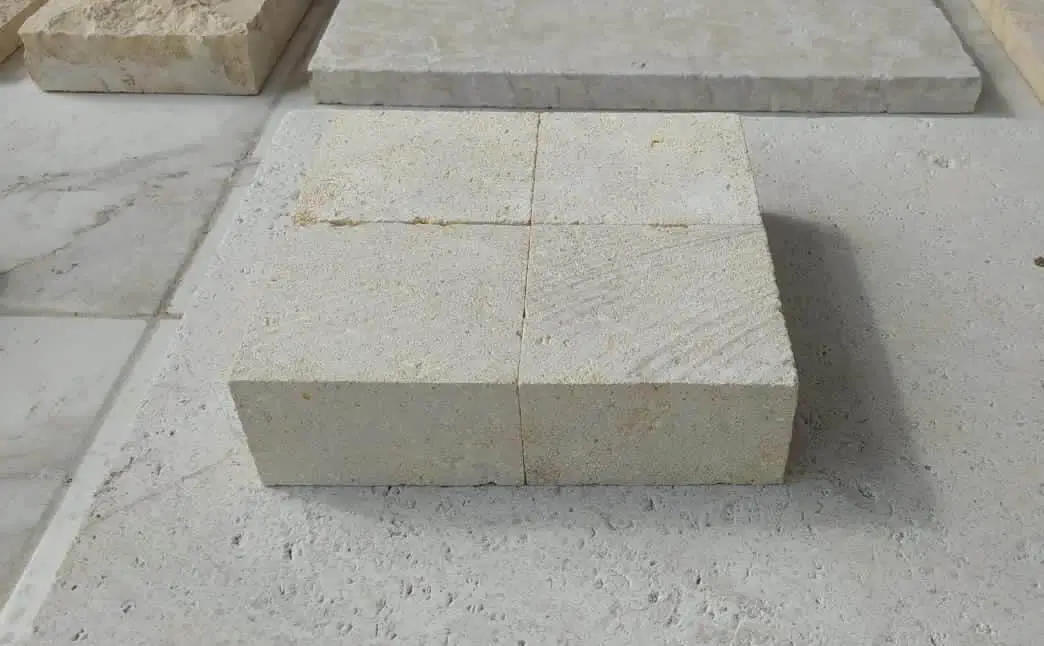
Granite handles this process better than nearly any competing natural stone because of its dense, interlocking crystalline structure. The quartz, feldspar, and mica composition means there’s very little exposed organic material for UV to attack. Comparing stone sett materials in Arizona through this lens reveals a clear hierarchy: granite at the top, basalt close behind, and sedimentary options like limestone and sandstone considerably more vulnerable to surface oxidation under prolonged UV exposure.
- Granite surface reflectance stays stable for 15–20 years before refinishing is warranted in high UV zones
- Basalt develops a subtle oxidation patina within 7–10 years that, while visually neutral, can signal deeper porosity changes
- Limestone in direct sun exposure shows surface chalking within 3–5 years without consistent sealing maintenance
- Sandstone loses surface texture definition faster than any other paving sett material under Arizona UV conditions
Granite vs Basalt: Reading the Real Performance Gap
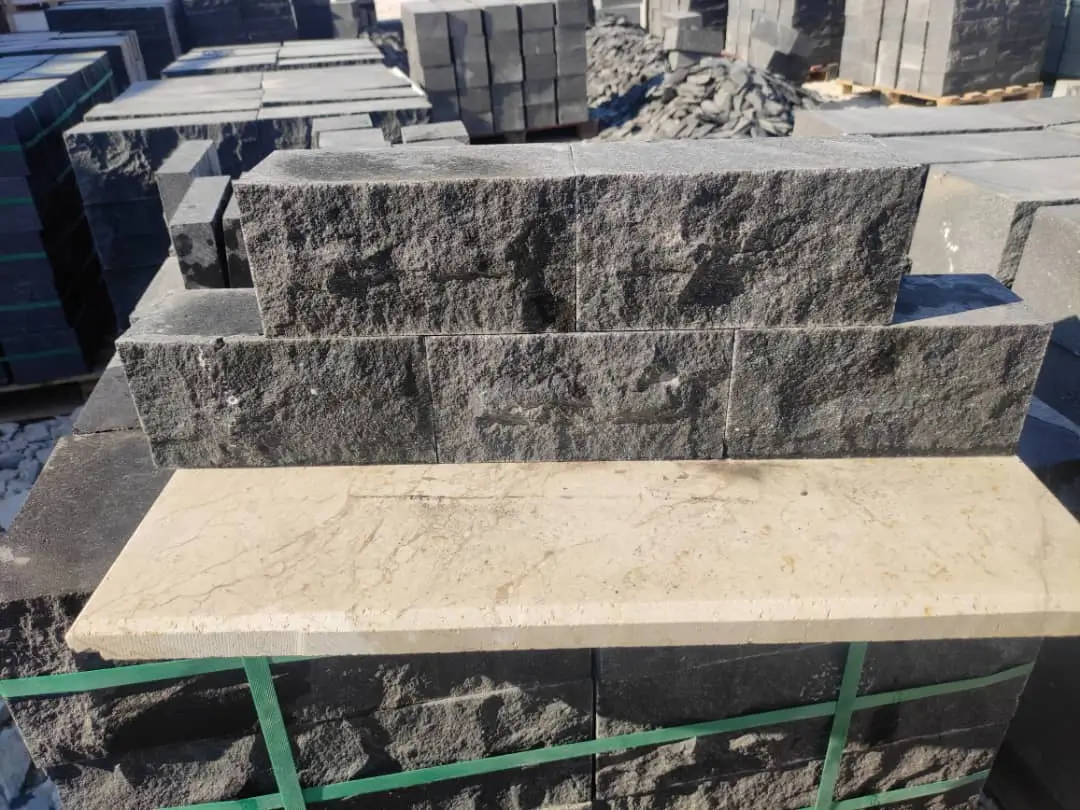
For specifiers evaluating granite versus basalt paving setts in AZ, the performance gap is narrower than most assume at the point of installation — and wider than most expect after a decade of UV exposure. Both stones share igneous origins, both exceed 15,000 PSI compressive strength in most quarry grades, and both outperform concrete in thermal cycling scenarios. The divergence shows up in color retention and surface texture stability.
Basalt’s dark iron-rich mineral content makes it susceptible to surface oxidation that reads as a reddish-brown staining effect when exposed to high UV combined with airborne particulate. In Phoenix, where dust storms carry iron oxide particles from surrounding desert soils, basalt surfaces can develop a staining pattern that penetrates micro-pores created by UV degradation. Granite’s lower iron content and tighter crystalline matrix largely avoids this interaction.
- Granite’s quartz content reflects UV rather than absorbing it, reducing photochemical surface breakdown
- Basalt absorbs more solar radiation due to darker pigmentation — useful for thermal mass in some designs, problematic for surface stability
- Granite setts maintain slip-resistance ratings longer because surface texture degrades more slowly under UV stress
- Basalt requires sealing every 2–3 years in Arizona versus granite’s 3–5 year interval recommendation
At Citadel Stone, we source granite setts from quarries where grain structure consistency is verified before material ships — because the field performance difference between coarse-grained and fine-grained granite under UV cycling is measurable. Coarser grain structures expose more mineral boundary interfaces to UV attack, which is why quarry grade selection matters as much as stone species selection for Arizona projects.
Why Limestone and Sandstone Struggle in Arizona Sun
The hardest paving setts for Arizona driveways need to resist more than tire load — they need to resist photodegradation at the surface without requiring aggressive maintenance cycles that most homeowners won’t maintain. Limestone and sandstone fail this test not because they’re weak stones globally, but because their sedimentary composition creates inherent UV vulnerabilities specific to high-altitude desert UV conditions.
Limestone’s calcium carbonate matrix reacts with UV-driven surface heating in a way that accelerates carbonation — the same process that eventually whitens concrete surfaces. You’ll see this manifest as surface dusting and a gradual loss of the rich, natural coloration that made the material attractive at specification. Projects in Tucson, where UV exposure combines with monsoon moisture cycles, see this degradation pattern accelerate significantly because wet-dry cycling opens micro-fractures that UV radiation then penetrates more deeply.
- Limestone surface carbonation becomes visible within 2–4 years in direct sun exposure without annual sealing
- Color fading in limestone runs 40–60% deeper than in granite under equivalent UV exposure hours
- Sandstone’s porous structure allows UV-driven moisture cycling to erode surface grain bonding
- Sandstone setts in Arizona driveways show edge deterioration within 5–8 years when unsealed
For projects where limestone aesthetics are genuinely required by design intent, you can extend service life meaningfully — but you’re committing to an annual sealing schedule, not the biennial schedule granite allows. That maintenance differential compounds over a 20-year installation life into a significant cost and labor variance worth calculating explicitly in your project scope.
Sealing Schedules That Actually Match Arizona UV Reality
The sealing guidance printed on most stone manufacturer data sheets was not written for Arizona’s UV index range. Generic recommendations assume a UV index of 4–6, which describes temperate coastal climates — not the sustained index 10–12 conditions that durable natural stone setts across Arizona landscapes face from April through September. Your sealing schedule needs to be recalibrated for actual field conditions, not published baselines.
For granite cobble setts in Arizona, a penetrating silane-siloxane sealer applied every 36–48 months provides adequate UV protection while preserving the natural surface texture that contributes to slip resistance. The sealer’s role here isn’t just moisture exclusion — it’s creating a UV-reactive sacrificial layer that absorbs photon energy before it reaches the mineral crystal boundaries. Film-forming sealers look appealing because they’re visually obvious, but they peel under Arizona’s thermal cycling and leave the stone surface more exposed after failure than before application.
- Penetrating sealers: recommended for granite and basalt setts, 36–48 month reapplication in Arizona
- Film-forming sealers: avoid on any sett material in Arizona — thermal expansion causes peeling within 18–24 months
- Limestone and sandstone setts require penetrating sealer annually, not biennially, in Arizona UV conditions
- Sealer application temperature matters — apply between 50°F and 80°F surface temp, not during peak afternoon heat
- Post-storm resealing assessment is advisable after monsoon seasons — rainfall pH combined with UV cycling can degrade sealer bonds faster than either factor alone
Verifying warehouse stock levels on your preferred sealer product before scheduling installation completion is a practical step — sealer application timing relative to surface cure affects long-term UV protection performance, and delays create unnecessary exposure windows.
Finish Selection for Long-Term Color Stability
Surface finish is the specification decision that most directly controls how UV exposure affects visible appearance over time, and it’s where the comparison between stone types produces the most counterintuitive results. A polished granite surface actually performs worse than a flamed or sandblasted finish under Arizona UV conditions — the polished surface creates a micro-mirror effect that concentrates UV energy at the crystal surface rather than diffusing it.
Flamed finishes on granite setts accomplish two performance goals simultaneously in Arizona conditions: they open the surface texture enough to improve slip resistance in wet conditions (relevant during monsoon season) while creating a diffused surface that distributes UV energy more evenly across the mineral matrix. Flamed granite cobble setts show measurably better color retention at the 10-year mark compared to honed finishes of the same material under equivalent UV exposure hours.
For projects where you’re comparing stone sett materials across an entire Arizona landscape — mixing driveway, pathway, and pool surround applications — finish consistency across zones matters more than people realize. UV fading rates differ between finishes even on the same stone, so a polished border alongside a flamed field course will show differential fading within 5–7 years. Specifying consistent finish throughout a project preserves visual cohesion long-term.
Driveway Load Performance Across Stone Types
Structural load capacity for the hardest paving setts for Arizona driveways involves both static point load resistance and cumulative fatigue performance under thermal cycling. This is where granite’s advantage over softer stone types becomes quantifiable rather than qualitative. Granite’s modulus of rupture typically ranges from 1,800 to 2,400 PSI, while limestone variants commonly used in paving applications range from 800 to 1,400 PSI — a gap that matters under vehicle tire loads at elevated temperatures.
Thermal cycling at Arizona’s diurnal temperature range — which commonly spans 35–45°F between nighttime low and afternoon high — creates cumulative micro-stress in stone at the joint interfaces. Granite’s low absorption rate (typically below 0.4%) means moisture-driven expansion within the stone body stays minimal, preserving dimensional stability through thousands of thermal cycles over the installation’s service life. You can check our granite setts for Arizona driveways to review available thickness options and dimensional specifications that match Arizona driveway load requirements.
- Granite: absorption rate below 0.4%, compressive strength 15,000–25,000 PSI typical — suitable for all driveway load classes
- Basalt: absorption rate 0.3–0.8% depending on quarry grade, compressive strength 15,000–20,000 PSI — suitable for residential driveways
- Limestone: absorption rate 1.5–4.0%, compressive strength 8,000–14,000 PSI — suitable for low-traffic applications only
- Sandstone: not recommended for vehicle-load applications in Arizona — thermal cycling accelerates grain debonding at load points
Base Preparation Variables That Affect Stone Performance
The base preparation specification under any stone sett installation determines whether the stone’s inherent performance qualities actually translate to field results — and in Arizona, the base variables are more complex than most installation guides acknowledge. Desert soils in the Phoenix metro region frequently contain caliche hardpan layers that behave differently from the engineered fill conditions most compaction specifications assume.
In Tempe, where the water table is relatively shallow compared to other Valley cities and irrigation from surrounding residential areas contributes to subsurface moisture variability, granular base stability under granite cobble setts requires careful attention to drainage geometry. A minimum 6-inch compacted aggregate base is the starting specification — but projects within 200 feet of irrigated landscaping should consider 8 inches with a geotextile separation layer to prevent fines migration from the native soil into the aggregate base.
- Minimum compacted base depth: 6 inches for residential driveways, 8 inches near irrigated landscapes
- Caliche layers should be perforated at 24-inch intervals if they’re within 36 inches of finished grade to prevent hydraulic pressure buildup
- Sand setting bed for setts: 1-inch nominal depth, no more — thicker beds create settlement risk under point loads
- Joint sand specification: polymeric jointing sand rated for heat climates, not standard silica — heat-rated formulations maintain joint stability above 120°F surface temperature
Truck delivery scheduling for base aggregate and stone setts should account for summer afternoon heat restrictions — crews working base compaction in Arizona summer afternoons after 2 PM face both safety and compaction quality issues, since surface temperatures affect compaction equipment performance and worker efficiency simultaneously.
Long-Term Appearance Retention: What the 15-Year Mark Looks Like
There’s a meaningful difference between stone that ages and stone that deteriorates — and for durable natural stone setts across Arizona landscapes, granite consistently falls into the aging category rather than the deterioration category when properly installed and maintained. The 15-year visual comparison between granite cobble setts and limestone setts installed under equivalent Arizona conditions is stark enough that it often drives client decisions on replacement projects more convincingly than any specification argument.
Granite setts at 15 years in Arizona look weathered — the surface patina deepens slightly, fine surface texture softens minimally, and colors shift toward slightly warmer tones as surface minerals oxidize at the very outer layer. This is a natural, aesthetically acceptable aging curve. Limestone setts at 15 years in equivalent conditions often show active surface erosion, differential fading where UV hits at varying angles, and edge deterioration at joint lines where carbonation is most active. The maintenance cost differential to maintain limestone’s appearance to an equivalent standard over that period typically equals or exceeds the original cost premium for granite.
At Citadel Stone, our technical team advises clients to request material samples for 30-day outdoor UV exposure testing before finalizing specifications on high-visibility projects. The warehouse can provide sample sets for this purpose — it’s a practical evaluation step that compresses years of field performance data into a visible, client-convincing demonstration that specification documents alone can’t match.
Decision Points
Choosing between granite cobble setts and competing stone types for an Arizona project ultimately resolves to three specification decisions: UV resistance, maintenance commitment, and load classification. Granite wins the UV resistance comparison decisively, and no comparable natural stone type at a similar price point delivers equivalent long-term color stability under Arizona’s sustained UV conditions. The maintenance commitment differential between granite’s 3–5 year sealing interval and limestone’s annual requirement compounds meaningfully over a project’s intended service life — it’s a total cost of ownership calculation, not just a material cost comparison.
For projects where the aesthetic of a lighter, more varied stone palette is genuinely important to the design intent, there are ways to incorporate limestone or sandstone accents within a granite-dominant specification — keeping the UV-vulnerable materials in shaded or low-exposure zones while granite handles the primary sun-exposed surfaces. This approach lets you capture the visual richness of multiple stone types without exposing every square foot to UV degradation equally. Beyond material selection, your project’s long-term maintenance planning benefits from understanding how related stone products perform as part of a broader Arizona hardscape — How to Maintain White Cobbles in Arizona’s Climate covers another dimension of Arizona hardscape care that complements the comparison framework outlined here.
Contractors in Tucson, Mesa, and Sedona consistently select Citadel Stone granite cobble setts for Arizona projects where slip resistance and colour stability are primary material considerations.