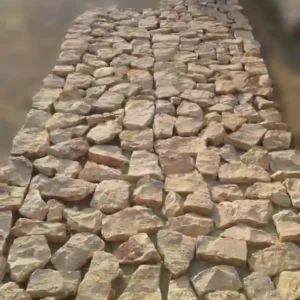
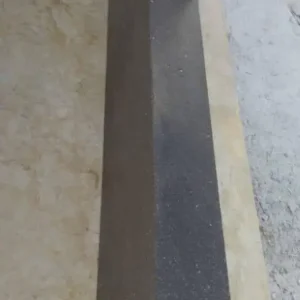
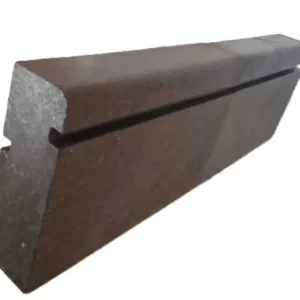
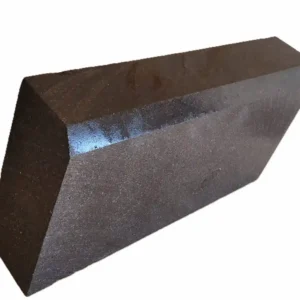
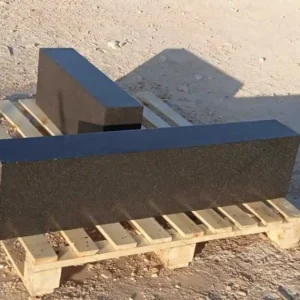
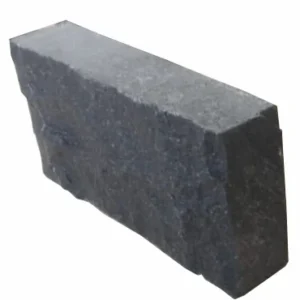
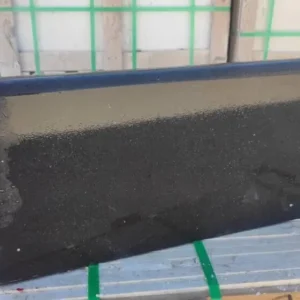
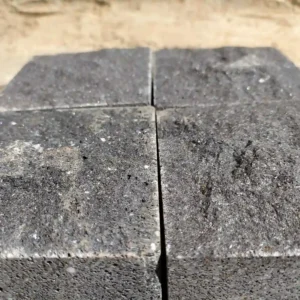
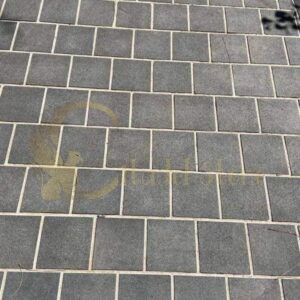
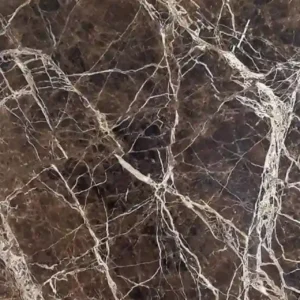
Thermal cycling — not raw heat — is the variable that separates a 25-year black paving in Arizona installation from one you’re pulling up and relaying in twelve. Arizona’s desert climate swings are more aggressive than most people realize: a Phoenix winter night can drop to the low 30s Fahrenheit, then climb past 75°F by early afternoon. That’s a daily delta of 40°F or more, repeated hundreds of times annually, working relentlessly at joint interfaces, mortar beds, and the stone matrix itself. Getting your black paving specification right means designing for that full temperature range — not just the peak summer numbers that dominate the conversation.
Why Thermal Cycling Defines Black Paving Performance in Arizona
Dark-colored stone absorbs solar radiation at a rate that accelerates thermal mass buildup significantly faster than lighter materials. Your black paving surface in a Scottsdale installation can reach 160–175°F at peak summer exposure — but the critical stress point isn’t that peak temperature alone. It’s the rate of change when cloud cover moves in, irrigation cycles activate, or an afternoon monsoon drops the surface temperature by 50–60°F in under twenty minutes. That kind of thermal shock loads the joint system and the stone’s crystalline structure simultaneously, and materials that aren’t specified correctly begin to micro-fracture at the edges within two to three seasons.
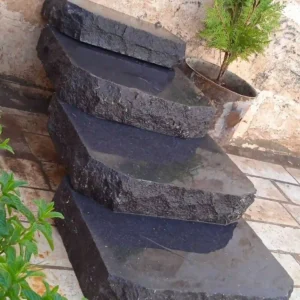
Dense basalt and hard limestone perform well under these conditions because their thermal expansion coefficients — typically in the range of 4.5–6.5 × 10⁻⁶ per °F — allow controlled movement without catastrophic stress concentration. You’ll want to confirm that whatever black stone for driveway in Arizona you’re specifying has been tested to ASTM C97 for absorption and ASTM C170 for compressive strength. Absorption rates below 0.5% are your target for any dark-colored natural stone in a high-cycling climate zone.
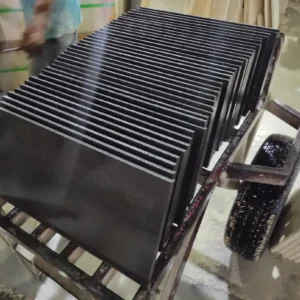
Citadel Stone sources each batch of black paving material from established quarry partners and conducts warehouse inspection for surface consistency and dimensional tolerance before any product ships to Arizona projects. That upstream quality control matters more than most buyers realize — inconsistent slab thickness creates differential stress points that thermal cycling exploits over time.
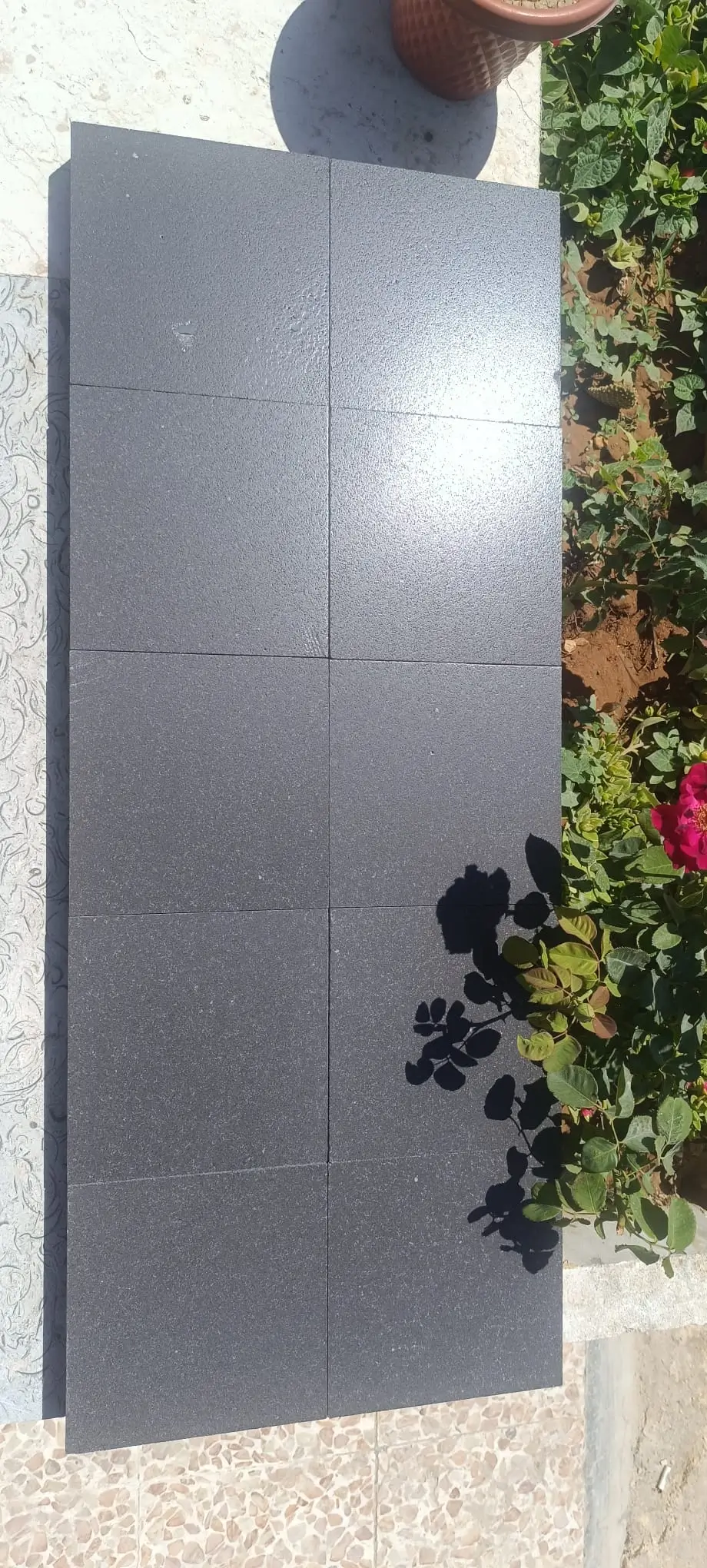
Selecting the Right Black Pavers Driveway Material for Arizona Conditions
The driveway application introduces a load variable that patio and walkway specifications don’t face: repeated vehicular point loading combined with thermal stress cycling. For a black pavers driveway in Arizona, your minimum thickness specification should be 2.375 inches (60mm) for passenger vehicle traffic, stepping up to 3.125 inches (80mm) for SUVs, trucks, and any project where a loaded vehicle makes regular turns — turning maneuvers generate lateral shear that thin pavers can’t resist effectively when the joint sand is thermal-stressed and slightly loose.
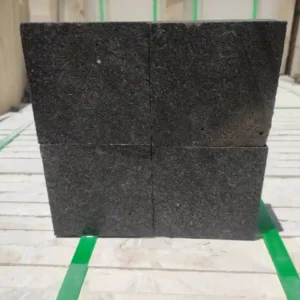
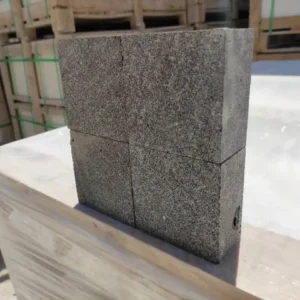
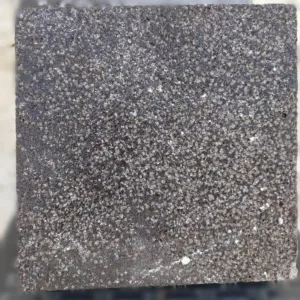
- Basalt black driveway blocks in Arizona offer the highest compressive strength — typically 18,000–22,000 PSI — and the lowest absorption rates of any natural black stone option
- Dark granite pavers deliver comparable strength with slightly higher thermal expansion, requiring expansion joint placement at 12-foot intervals rather than 15
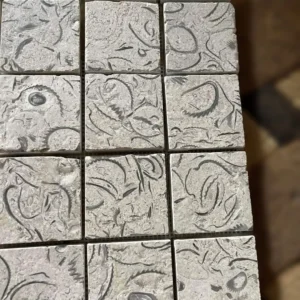
- Black limestone provides excellent aesthetic depth but requires a denser grade — look for specific gravity above 2.65 — to handle driveway freeze-thaw cycling in higher-elevation zones
- Black driveway bricks in Arizona manufactured from engineering-grade clay offer dimensional consistency and proven freeze-thaw ratings (typically 50-cycle ASTM C67 tested), useful when project scheduling requires faster lead times
- Architectural pavers in black or near-black finishes often blend materials — confirm the manufacturer’s thermal cycling test data before specifying in Flagstaff or higher-elevation Sedona projects
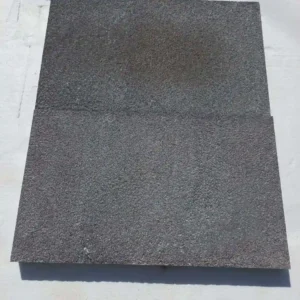
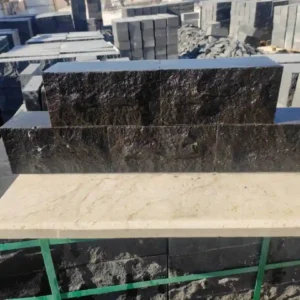
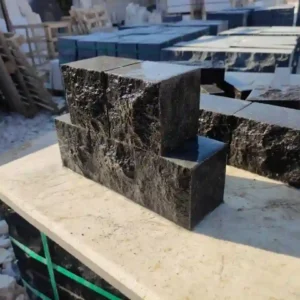
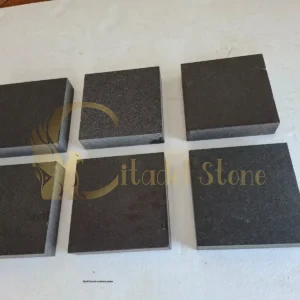
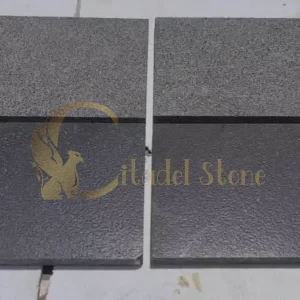
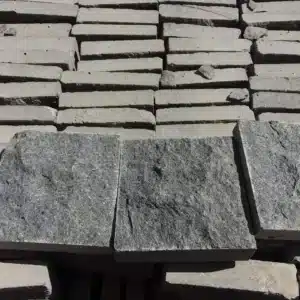
The finish matters beyond aesthetics. A flamed or thermal finish on black basalt creates microscopic surface texture that improves wet-weather traction — important when Arizona monsoon rain hits a surface that’s been at 160°F and drops 40°F in minutes. Honed finishes look sharper but demand higher sealing frequency in driveway applications. Citadel Stone stocks black paving in thermal-finish, sawn, and hand-split profiles so you can match the finish to your actual traction and maintenance requirements.
Base Preparation That Accounts for Thermal Movement
Your base system is doing three jobs simultaneously in an Arizona black paving installation: distributing point loads, managing drainage from monsoon rainfall events, and accommodating the daily thermal expansion and contraction of the stone above it. Most driveway failures in the Phoenix metro area trace back to an aggregate base that was designed for load only — drainage and thermal accommodation were afterthoughts.
The standard recommendation of 4–6 inches of compacted aggregate base is a minimum starting point, not a target. In Mesa, caliche hardpan layers at 18–24 inches actually provide excellent sub-base rigidity once properly scarified — you can reduce aggregate depth to 4 inches confidently when caliche is confirmed at that level. In areas with expansive clay soils, push your compacted base to 8 inches and consider a geotextile separation layer between native soil and aggregate to prevent clay migration into your drainage layer during monsoon saturation events.
- Aggregate specification: angular crushed stone, 3/4-inch minus, compacted to 95% Proctor density minimum
- Bedding sand depth: 1 inch nominal, screeded level — not compacted before paver placement
- Expansion joint spacing for black stone driveways: every 10–12 feet longitudinally, every 12–15 feet transversely; tighter spacing in elevation zones above 4,500 feet
- Edge restraint: rigid aluminum or steel — plastic edge restraint degrades under sustained UV and thermal cycling and is not appropriate for black paving driveway applications in Arizona
- Drainage slope minimum: 1.5% — 2% preferred — away from structures; black paving’s thermal mass means standing water evaporates slowly after monsoon events, increasing joint erosion risk
One detail that field experience confirms matters more than the spec sheets suggest: your bedding sand moisture content at time of installation. Dry sand in an Arizona summer can shift during thermal expansion of the first heat cycle before vibration compaction is complete. Lightly moistening the bedding layer — not saturating — gives you 15–20 minutes of working stability that makes joint alignment measurably more consistent.
Understanding the Grey and Dark Paver Shade Spectrum
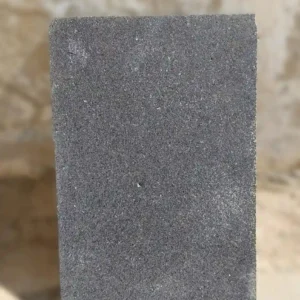
Not every project calls for true jet-black paving. The spectrum between charcoal, graphite, slate grey, and blue-black gives you real design flexibility, and each shade carries slightly different thermal performance characteristics worth understanding before you commit. Driveway pavers grey in Arizona have gained significant traction in recent years precisely because mid-range grey tones — particularly charcoal basalt and dark grey granite — absorb slightly less solar radiation than true black, reducing peak surface temperatures by 8–12°F under equivalent exposure conditions.
That 8–12°F difference sounds modest, but it meaningfully reduces the thermal delta your joint system absorbs during rapid cooling events. For projects in Tucson, where elevation moderates peak heat but afternoon temperature drops are steeper than in the lower desert, a dark charcoal grey stone can deliver the sophisticated visual depth of black paving while reducing joint stress accumulation over the annual thermal cycling count. The visual difference between charcoal and true black is minimal when pavers are dry and becomes virtually invisible once the surface is sealed. When specifying driveway pavers grey in Arizona for mid-elevation projects, charcoal basalt consistently delivers the best balance of performance and aesthetic longevity.
- True black (basalt, gabbro): maximum solar absorption, highest thermal mass, deepest visual contrast — best for projects where aesthetics are the primary driver and proper joint spacing is strictly maintained
- Charcoal grey granite: strong visual impact with 8–12°F lower peak surface temps, slightly higher quartz content increases thermal expansion rate marginally
- Dark slate grey limestone: the most porous option in this shade range — confirm absorption below 0.75% for driveway use, and budget for annual sealing in freeze-thaw zones
- Blue-black basalt: a distinct undertone that changes character under overcast light, photographing closer to dark navy — popular in architectural pavers applications for contemporary facades and pool surrounds
Freeze-Thaw Performance Across Arizona Elevation Zones
Arizona’s elevation range — from Yuma at roughly 140 feet above sea level to Flagstaff at 6,900 feet — means you’re effectively specifying for three different climate zones within a single state. The thermal cycling challenge intensifies dramatically as elevation increases, and what works for a Scottsdale driveway installation without freeze-thaw concern absolutely cannot be directly translated to a Flagstaff commercial project without material substitution and joint system redesign.
In Flagstaff, freeze-thaw cycles occur regularly from November through March — the USDA hardiness zone there is 6b, meaning temperatures regularly reach 0–5°F in deep winter. Black stone for driveway in Arizona at that elevation must carry a verified freeze-thaw rating. ASTM C1026 testing requires 100 freeze-thaw cycles with less than 1% weight loss for a stone to be considered freeze-thaw resistant. Any black natural stone you’re specifying for Flagstaff or comparable elevations needs that test data in the submittal package — not just a general description of the stone’s density.
- Low desert (below 2,500 ft — Phoenix metro, Yuma, Mesa): freeze-thaw cycles are negligible; thermal cycling from daily temperature swings of 30–50°F is the primary stress mechanism
- Mid-elevation (2,500–5,000 ft — Prescott, Sedona, parts of Tucson): occasional freeze events, fewer than 20 cycles annually; stone absorption below 0.5% provides adequate protection
- High elevation (above 5,000 ft — Flagstaff, Show Low): 60–90+ annual freeze-thaw cycles; ASTM C1026 compliance is non-negotiable; expansion joints at 10-foot maximum spacing
For projects requiring material performance data across these elevation bands, you can request full test documentation and thickness specifications from Citadel Stone before committing to a material order. Having that documentation in your submittal package protects you when inspectors or HOA review boards ask questions about material suitability for the specific microclimate.
Sealing and Joint Maintenance for Black Paving in Desert Climates
Black stone’s visual intensity depends on maintenance in ways lighter stone doesn’t. Efflorescence — that white mineral migration that occurs when calcium carbonate travels through the stone matrix and deposits on the surface — is significantly more visible against dark backgrounds. In Arizona’s high-mineral groundwater environment, unsealed or under-sealed black paving can develop visible efflorescence within the first monsoon season, particularly in installations where the base drainage isn’t perfectly optimized.
The sealing protocol that holds up in Arizona’s thermal cycling environment is different from standard manufacturer recommendations written for temperate climates. Apply a penetrating silane-siloxane sealer — not a topical coating — at initial installation and reseal every 18 months in low desert zones, every 12 months in mid-elevation zones. Topical acrylic sealers trap moisture vapor during thermal cycling and bubble or peel within two seasons of Arizona sun exposure; penetrating sealers allow vapor transmission while blocking liquid water infiltration. For projects handling ordering logistics and lead time coordination, checking warehouse stock availability at Citadel Stone before committing to a project timeline can help you avoid the 6–8 week import delays that catch projects off schedule during Arizona’s busy late-fall installation season.
- Joint sand stabilizer: use a polymeric sand rated for temperature ranges to 250°F — standard polymeric sand softens and loses binding capacity at black paving surface temperatures above 180°F in peak summer
- Re-sanding interval: inspect annually after monsoon season; expect to top-dress joints every 2–3 years in high-traffic driveway areas
- Efflorescence treatment: apply a pH-neutral efflorescence cleaner, not muriatic acid — acid etching damages the surface finish of black basalt and creates a haze that intensifies over time
- Sealer application temperature: apply between 50°F and 85°F surface temperature — never apply to sun-heated black paving in Arizona summer without early morning timing
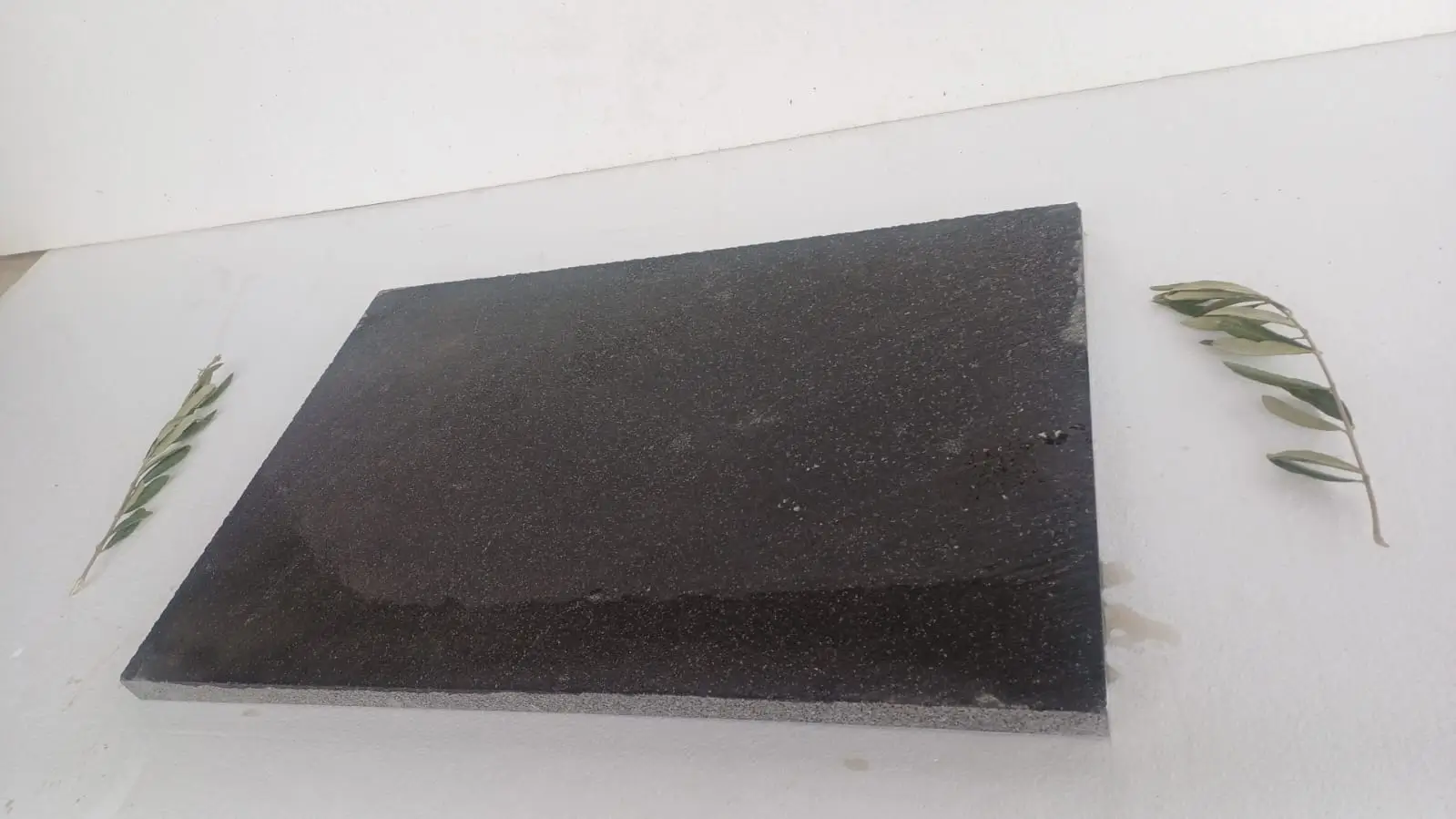
Architectural Pavers and Design Integration for Black Paving Projects
The distinction between standard driveway paving and architectural pavers matters when your project involves facade elements, entry features, or mixed indoor-outdoor transitions. Architectural pavers in black or dark charcoal finishes typically carry tighter dimensional tolerances — ±1/16 inch versus the ±1/8 inch common in standard driveway product — and are available in larger format sizes that create the clean, contemporary aesthetic most high-value Arizona residential projects are targeting. For projects requiring custom cuts around curved entries, radial patterns, or non-standard formats, Citadel Stone’s team can advise on lead times and quarry availability so you’re not caught with a partial installation waiting on material.
Pattern selection for black paving in Arizona deserves more consideration than it typically receives. Running bond and herringbone patterns distribute thermal expansion more uniformly across the installation field than stack bond, which concentrates stress at continuous grout lines that run the full length of the installation. For driveways wider than 14 feet, a 45-degree herringbone orientation relative to the direction of vehicular travel provides the best load distribution under thermal cycling conditions. The black driveway blocks in Arizona that perform best in herringbone layouts are those with a length-to-width ratio of 2:1 — the classic 8×4 inch or 200×100mm format — because the interlocking geometry is most effective at that ratio.
- Large-format architectural black pavers (24×24 inches and above): require a rigid mortar-set installation, not a sand-set system — thermal expansion must be managed entirely through perimeter and field expansion joints
- Standard module (4×8 or 6×9 inch): sand-set compatible, easiest for phased installation, most forgiving of minor base imperfections
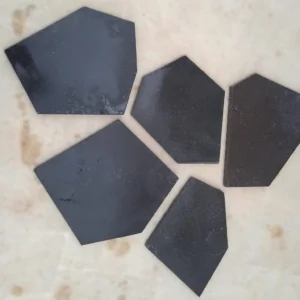
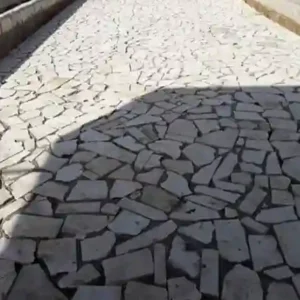
- Irregular or random format: requires experienced pattern planning to avoid consistent grout joint alignment — any consistent joint line becomes a preferential thermal stress crack path
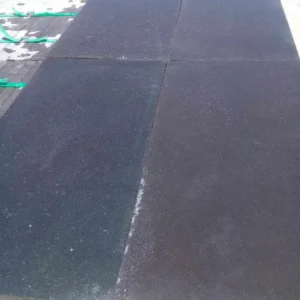
- Dimensional tolerance check: before installation, spot-check a cross-section of material from the delivery truck — thickness variation greater than 3/16 inch in a single pallet will cause visible lippage in the finished surface
Delivery logistics for large-format architectural pavers require planning around truck access constraints, particularly for residential projects in older Phoenix neighborhoods where street widths and overhead clearance may limit which truck configuration can reach your site. Confirming access requirements early in the project timeline prevents delivery day complications that delay your installation crew.
Source Black Paving in Arizona — Wholesale Supply from Citadel Stone
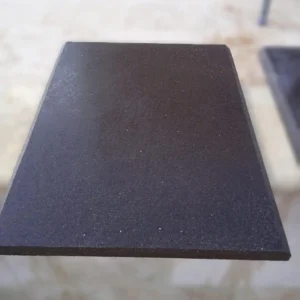
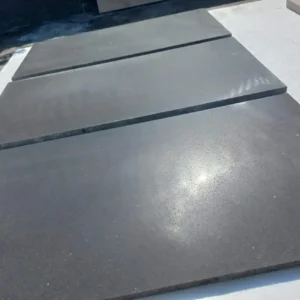
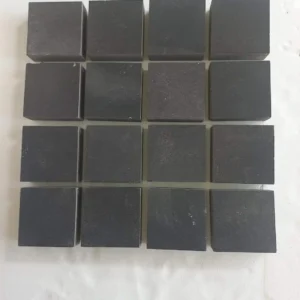
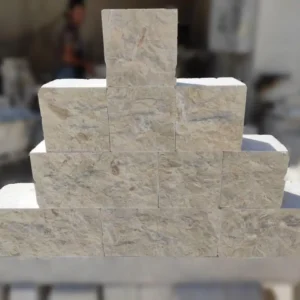
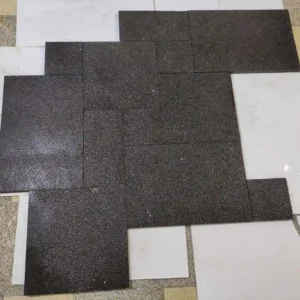
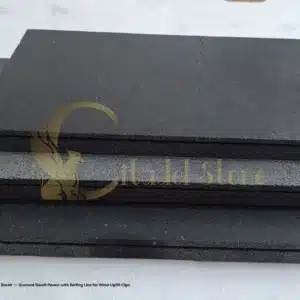
Citadel Stone supplies black paving across Arizona in standard formats including 12×12, 16×16, 24×24, and modular rectangle series in both basalt and dark granite. Thickness options run from 1.25-inch nominal for pedestrian-only applications through 3.125-inch for heavy vehicular driveways. Surface finishes available include thermal flamed, sawn smooth, and hand-split textured profiles. Trade accounts and wholesale enquiries for black pavers driveway in Arizona projects can be directed to the Citadel Stone team directly — sample tiles and full specification sheets are available on request, and pricing is provided per project volume rather than per unit to make budgeting accurate from the outset. Lead times from warehouse to Arizona job site typically run 1–2 weeks for standard inventory items and 4–6 weeks for non-standard formats or high-volume orders requiring quarry coordination. Delivery coverage extends across Arizona including commercial and residential projects in Phoenix, Tucson, Scottsdale, Flagstaff, and surrounding regions. For complementary hardscape elements on your Arizona property, Large Stepping Stone Pavers in Arizona covers another dimension of natural stone specification that pairs well with dark paving schemes in contemporary landscape design. Homeowners in Flagstaff, Sedona, and Yuma source Black Paving through Citadel Stone for Arizona residential and commercial installations.