
Code Compliance Shapes Black Paving Upkeep Arizona Desert Projects First
Arizona’s building code environment directly controls how your black paving installation performs over decades — and most homeowners discover this only after a failed inspection or a cracked field stone. Black paving upkeep Arizona desert conditions demand starts not with a cleaning schedule but with a structurally sound base that meets the International Building Code adoptions Arizona enforces at the county level. Your Maricopa County project, for example, must comply with base compaction requirements that specify a minimum 95% Proctor density for residential hardscape over native soil — a threshold that directly affects whether your black stone surface cracks, settles, or holds flat across summer thermal cycles.
Arizona has adopted IBC 2018 with state amendments, and those amendments include specific provisions for exterior hardscape load paths in high-sun exposure zones. Your base depth spec can’t simply mirror a northern climate standard — the native expansive clay soils across much of the Phoenix metro require a minimum 6-inch compacted Class II aggregate base for pedestrian-rated black paving, stepping up to 8 inches where vehicular access is anticipated. Getting that depth wrong is the structural failure most homeowners trace back to an under-specified installation, not the surface material itself.
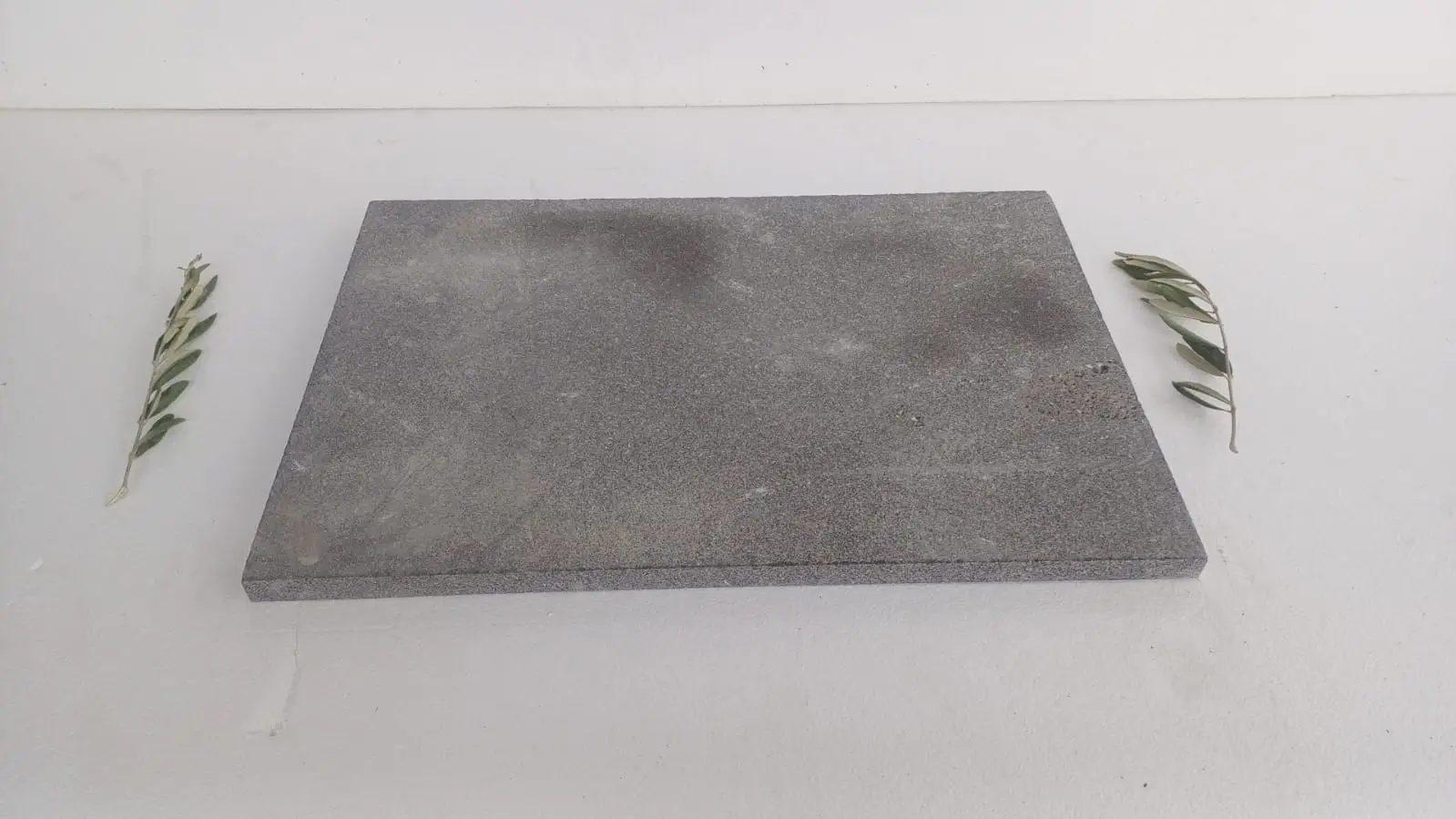
Base Depth, Edge Restraint, and Material Thickness Requirements in Arizona
Edge restraint isn’t optional in Arizona — it’s a structural requirement that local building officials in Gilbert and surrounding municipalities increasingly inspect before issuing final approvals on outdoor hardscape. Without a properly anchored perimeter restraint system, black pavers migrate laterally under thermal expansion pressure, opening joints that collect debris and accelerate surface degradation. Your restraint system should be staked at 12-inch intervals into the compacted aggregate base, not the native soil, so the whole assembly moves as a unified structural layer rather than pulling apart at the perimeter.
Material thickness is where the code and performance requirements converge for black paving. For pedestrian applications, a 1.25-inch nominal thickness is the practical minimum, but Arizona’s thermal mass reality pushes most experienced specifiers toward 1.5 to 2 inches for any black stone surface exposed to direct southern or western sun. The additional thickness isn’t about aesthetics — it’s about the material’s capacity to distribute point loads without fracturing at joint edges, and it also provides the structural depth required under Maricopa County’s hardscape guidelines for residential installations over native expansive soil.
- Minimum base depth: 6 inches compacted aggregate for pedestrian zones over expansive clay
- Vehicular-rated installations require 8-inch base with geotextile separation fabric beneath
- Edge restraint staking: 12-inch centers, anchored into aggregate layer not native soil
- Nominal paver thickness: 1.5 to 2 inches recommended for black stone in full-sun Arizona exposure
- Compaction standard: 95% Proctor density minimum per IBC 2018 Arizona amendments
- Joint width: 1/8 to 3/16 inch for polymeric sand systems, never zero-joint on black stone
Thermal Expansion and Joint Specification for Arizona Black Stone
Black paving absorbs solar radiation at a rate that creates surface temperatures 40 to 60°F above ambient air temperature on clear Arizona summer days — that’s a physical reality your joint specification has to accommodate, not fight. The thermal expansion coefficient of dense basalt-type black stone runs approximately 3.0 to 4.5 × 10⁻⁶ per °F, which sounds manageable until you calculate cumulative movement across a 20-foot run with a daily temperature swing of 80°F from pre-dawn lows to mid-afternoon highs. That single run can see 0.10 to 0.14 inches of dimensional change daily during peak summer, which is exactly why expansion joints placed every 10 to 12 feet — not the 20 feet you’ll find in generic residential specs — are the correct standard for maintaining dark paving across Arizona.
Polymeric sand rated for high-UV environments is non-negotiable for black paving upkeep Arizona desert conditions require. Standard polymeric sand formulations begin breaking down above 140°F surface temperature, which your black stone will routinely exceed. Look for products specifically rated to 200°F surface exposure — they’re available from specialty hardscape distributors and hold the joint integrity that prevents the weed intrusion and lateral migration that undermine long-term performance. Plan to inspect and top-dress joints annually, typically in April before monsoon season stresses the system.
Sealing Black Stone Surfaces in Arizona: Frequency, Product Selection, and Timing
Sealing black stone surfaces in Arizona follows a different logic than the general guidance you’ll find in product data sheets written for moderate climates. The UV index in the Phoenix metro regularly exceeds 11 — extreme category — from April through September, and that UV exposure degrades most penetrating sealers within 18 to 24 months rather than the 3 to 5 year intervals the labels advertise. Your maintenance schedule for black paving should target a resealing cycle of 18 months at most, with a thorough inspection at 12 months to evaluate sheen retention and water-bead performance.
Solvent-based penetrating sealers with a silane-siloxane chemistry perform measurably better than water-based alternatives on dense black stone in Arizona’s climate. The solvent carrier drives deeper penetration into the stone’s pore structure — typically 3 to 6mm compared to 1 to 2mm for water-based products — which provides meaningful protection against the efflorescence and salt crystallization that can compromise dark stone’s visual density over time. Efflorescence appears first at joints and low points where water migrates during monsoon season, which makes sealer selection a structural protection decision as much as a cosmetic one. This is a core principle of sealing black stone surfaces in Arizona that separates well-maintained installations from those that show premature wear.
- Reseal cycle: 18 months maximum in full-sun Arizona exposure, not the 3-5 years listed on temperate-climate product labels
- Sealer chemistry: silane-siloxane penetrating formula, solvent-based carrier for density and deep penetration
- Application temperature: apply sealer when stone surface is below 90°F — early morning in summer months
- Avoid sealing within 48 hours of anticipated rain or immediately after monsoon saturation
- Two-coat application on new or freshly cleaned black stone, single maintenance coat on sound sealed surfaces
- Let first coat absorb fully before second application — typically 2 to 4 hours in Arizona’s low humidity
Monsoon-Season Paving Care AZ Homeowners Trust: Drainage and Post-Storm Protocol
Arizona’s monsoon season — officially June 15 through September 30 — delivers rainfall intensities that can reach 3 to 4 inches per hour in localized cells, and that hydraulic load is what stress-tests every design decision you’ve made in your black paving installation. The monsoon-season paving care AZ homeowners trust starts with surface drainage slope: a minimum 1.5% cross-slope away from structures, ideally 2%, is the standard your installation should hit. Anything less creates ponding conditions that saturate the aggregate base and introduce hydrostatic pressure beneath the stone that contributes to settlement and joint failure.
Post-storm cleaning protocol matters more than most homeowners realize. After a significant monsoon event, the combination of fine particulate soil, organic debris, and elevated humidity creates ideal conditions for biological staining — particularly algae and lichen — on black stone surfaces. Flush the surface within 24 hours of a major storm using a 1,500 to 2,000 PSI pressure wash at a 25-degree fan angle, keeping the nozzle at least 12 inches from the surface to avoid joint sand displacement. Follow immediately with a pH-neutral stone cleaner — never muriatic acid on dark stone, as it causes irreversible bleaching of the mineral matrix. You can explore our Arizona dark paving maintenance range for cleaning and sealing products formulated specifically for dark stone in high-UV desert environments.
Arizona Black Outdoor Stone Cleaning Tips That Protect Long-Term Appearance
The cleaning chemistry mismatch is the most common maintenance error on black paving — and it’s entirely avoidable. Alkaline degreasers intended for concrete or clay pavers will leave a residue film on dense black stone that dulls the surface and creates uneven light reflectance visible at low sun angles. Arizona black outdoor stone cleaning tips consistently point to the same correction: use products with a pH between 6.5 and 8.0 for routine maintenance, stepping up to a dedicated stone-safe poultice for oil or organic staining events. In Chandler, where many residential black paving installations back up to desert landscaping, organic staining from iron-rich soil runoff during monsoon events is a recurring challenge — a 10% hydrogen peroxide solution applied as a dwell-and-rinse treatment addresses it without damaging the stone’s mineral composition.
Pressure washing frequency should scale with your installation’s sun and traffic exposure. Lightly trafficked pool decks and courtyard installations in shaded conditions can follow an annual deep-clean schedule. Fully exposed driveways and entry sequences with black paving benefit from a biannual clean — once in April ahead of peak UV season and once in October after monsoon season concludes. The October clean is critical because it removes the biological and mineral deposits that monsoon season introduces before they can mineralize into the surface during the dry winter months.
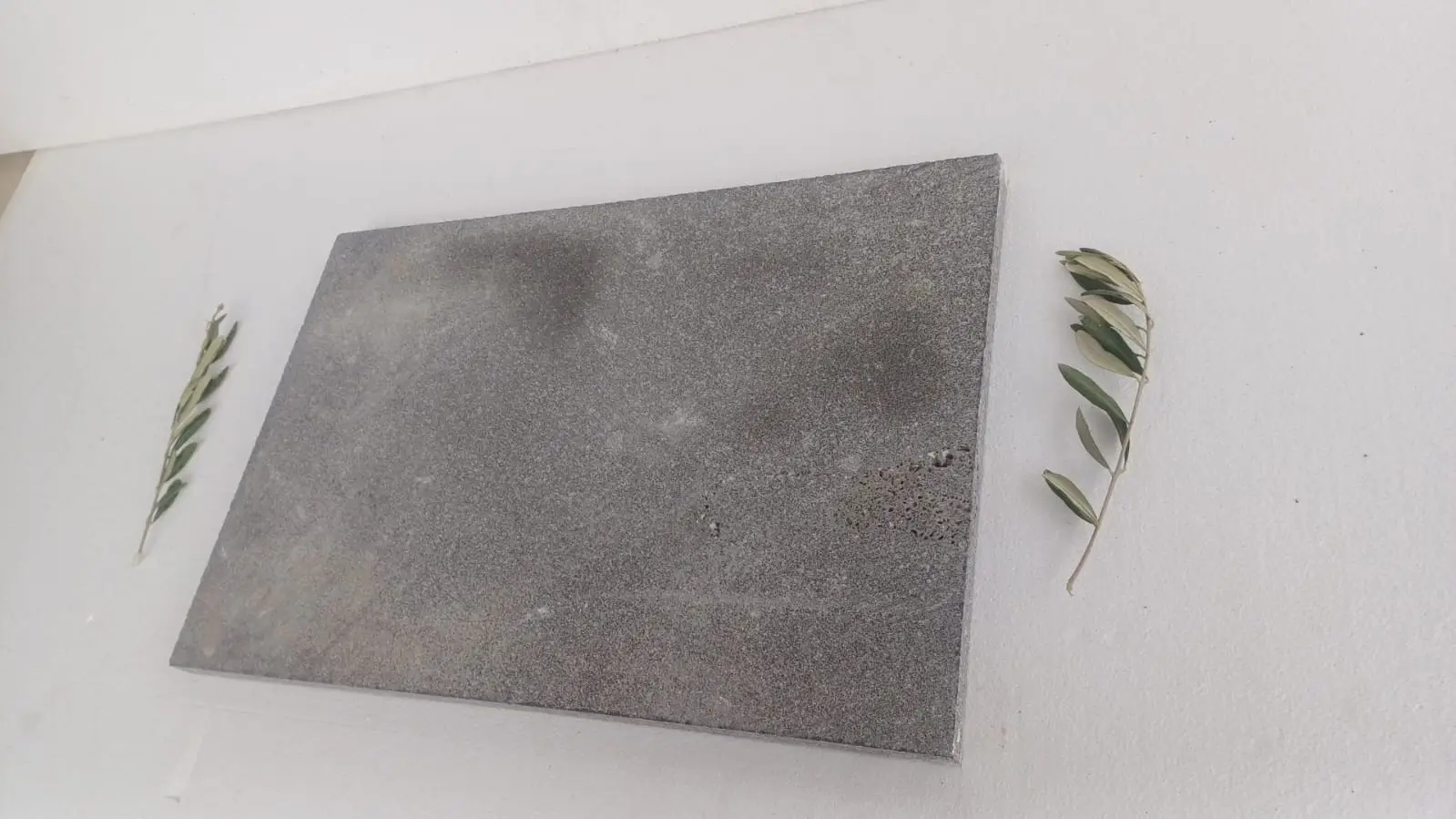
How Black Paving in Arizona Performs Across Product Types and Surface Finishes
Not all black paving performs identically under Arizona conditions, and the surface finish decision affects your long-term maintenance burden significantly. Flamed or thermal-finish black basalt has a micro-textured surface that provides ASTM C1028 slip resistance coefficients above 0.6 — the residential safety threshold — even when wet during monsoon events, and that texture also reduces surface temperature by 8 to 12°F compared to a honed finish of the same material. The trade-off is that the open texture requires more frequent sealing because the increased surface area accelerates sealer depletion. Maintaining dark paving across Arizona with a flamed finish demands a disciplined resealing schedule, but rewards you with significantly better thermal performance in open exposures.
Honed black granite and polished basalt formats deliver a visual depth that most homeowners specify for decorative pool decks and entry sequences — but in full Arizona sun exposure, polished black stone surfaces routinely reach 175°F at mid-afternoon. At Citadel Stone, we recommend reserving polished-finish black paving for shaded installations or eastern exposures that receive limited afternoon sun, where surface temperature stays manageable and the sealer system can maintain effective protection across a standard 18-month cycle. For open western and southern exposures, a sawn-top or flamed finish provides the same visual drama with significantly more forgiving maintenance requirements.
- Flamed/thermal finish: ASTM C1028 slip coefficient above 0.6 wet, surface temp 8-12°F lower than honed
- Honed finish: excellent visual depth, requires more frequent sealing in full-sun exposure
- Polished finish: best reserved for shaded applications due to extreme surface temperature accumulation
- Sawn-top finish: the practical compromise — strong visual contrast with manageable maintenance in exposed Arizona installations
- Thickness consistency: specify ±1/8 inch tolerance for large-format black paving to ensure flush installation without lippage
Ordering, Lead Times, and Warehouse Logistics for Arizona Black Paving Projects
Project timing for black paving upkeep Arizona desert installations includes a logistics dimension most homeowners underestimate. Specialty black stone formats — particularly large-format slabs above 24 × 24 inches — often carry 6 to 8 week lead times when sourced through import channels. Citadel Stone maintains warehouse inventory of high-demand black paving formats across Arizona, which typically reduces your lead time to 1 to 2 weeks and eliminates the project delay risk that comes with ordering direct from overseas quarries without a local buffer stock. Confirming warehouse availability before finalizing your installation schedule is a straightforward step that protects your project timeline.
Truck access and delivery coordination deserve attention for residential projects with constrained site access. Black stone in 2-inch thickness running 24 × 24 format weighs approximately 27 to 30 pounds per piece — a full pallet runs 2,000 to 2,400 pounds. Your delivery requires a truck with liftgate capability if site conditions prevent direct pallet placement near the work area, and you should confirm the driveway or street access can accommodate a standard delivery truck before scheduling. In Peoria, where many newer subdivisions have restricted street widths and utility easements close to the curb, coordinating the delivery logistics early prevents costly redelivery fees and schedule disruption.
The Bottom Line on Black Paving Upkeep Arizona Desert Installations Require
Sustained performance from black paving upkeep Arizona desert environments demand comes down to getting three things right: a structurally compliant base built to Arizona’s adopted code standards, a sealing and cleaning schedule calibrated to actual desert UV and monsoon exposure rather than temperate-climate product guidance, and a material selection matched to your specific installation’s sun angle and traffic load. These aren’t abstract recommendations — they’re the maintenance framework that separates 10-year installations from 25-year ones. For homeowners planning complementary natural stone features alongside their black paving, How to Choose a Cobble Patio in Arizona covers another dimension of Arizona hardscape specification worth reviewing as you develop the full outdoor scope.
Homeowners in Yuma, Mesa, and Tempe have found that Citadel Stone black paving maintains its deep coloration season after season when cleaned and resealed following Arizona’s monsoon cycles.