
Base preparation failures account for nearly 80% of premature cobble patio deterioration in Arizona — and the culprit isn’t heat, it’s water movement. Choosing a cobble patio in Arizona means confronting a drainage geometry problem that most homeowners don’t recognize until after installation. The state’s monsoon season delivers 2–4 inches of rain in under 90 minutes across much of the Sonoran Desert, and that hydraulic load has to go somewhere. Your cobble selection, your joint spacing, and your base profile all need to work together as a unified drainage system, not just an aesthetic surface layer.
Why Drainage Defines Your Cobble Choice
Arizona’s precipitation pattern is deceptive. Yuma averages less than 3 inches of annual rainfall, yet nearly half of that falls in violent late-summer bursts that overwhelm poorly designed hardscape surfaces. In the Phoenix metro corridor and across the central highlands, monsoon events routinely exceed 1-inch-per-hour intensity — a threshold that turns a level cobble patio into a temporary retention pond if your base profile doesn’t channel flow away aggressively. Your cobble material choice directly affects how water moves through and off the surface.
Natural cobble stone performs differently from machine-cut pavers in drainage scenarios because the irregular geometry creates natural channel gaps between units. Those gaps aren’t aesthetic accidents — they’re functional drainage pathways when you design your joint fill strategy correctly. The material’s inherent surface texture also affects sheet flow velocity, which matters when you’re calculating how fast a 2-inch rain event drains off a 600-square-foot patio before ponding reaches your threshold slab elevation.
- Joint gap width between 0.5–1.0 inches allows surface infiltration without sacrificing bedding integrity
- Permeable aggregate fill in joints reduces runoff velocity by 30–40% compared to solid-filled joints
- Surface cross-slope of 1.5–2.0% toward a designated drain channel is the functional minimum for monsoon events
- Cobble profiles with natural surface relief of 0.25–0.5 inches improve traction and slow sheet flow simultaneously
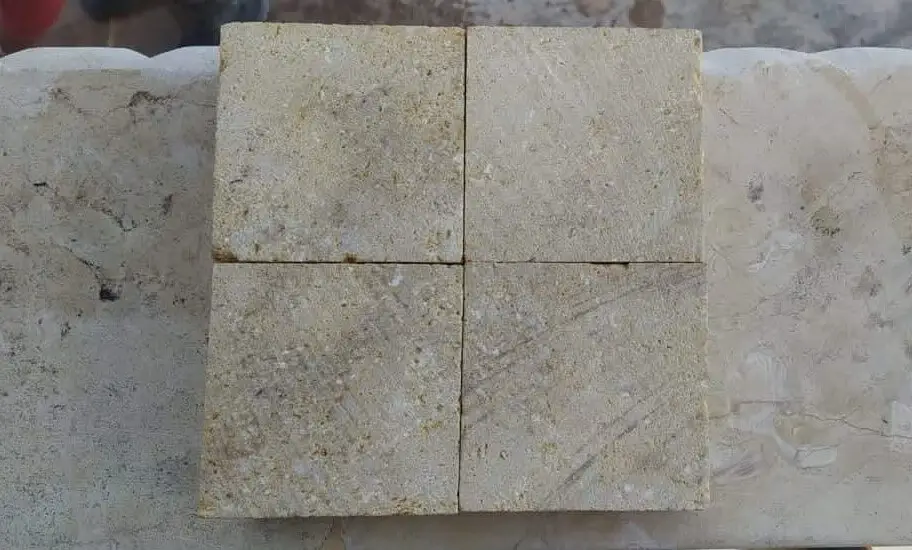
Monsoon-Ready Base Preparation for Cobble Patios
The base system beneath your cobble patio does more drainage work than any surface treatment you’ll ever apply. Arizona’s native soils — particularly the expansive caliche-rich clays common across Mesa and the east valley — have hydraulic conductivity rates below 0.1 inches per hour in their undisturbed state. That means nearly all monsoon infiltration has to travel laterally through your aggregate base before finding a drain outlet. Your base profile has to accommodate that lateral flow, or you’ll have hydrostatic pressure building beneath your cobble units within the first wet season.
Design your aggregate base in two distinct layers. The lower compaction layer — typically 6–8 inches of Class II road base compacted to 95% Modified Proctor — creates structural load support. The upper drainage layer — a 2-inch bed of clean angular gravel (3/8-inch to 1/2-inch gradation) — provides the hydraulic conductivity your lateral drainage design depends on. Don’t substitute decomposed granite for the upper drainage layer; its fines content migrates under hydrostatic pressure and reduces permeability within two monsoon seasons.
- Excavate a minimum of 10–12 inches below finished cobble surface elevation in native soil zones
- Install perforated drain pipe at the base perimeter sloped at 1% minimum toward a positive outlet
- Compact native sub-base to 90% Modified Proctor before placing any aggregate
- Confirm sub-grade drainage slope of 0.5% or better before aggregate placement begins
- Geotextile fabric at the native soil interface prevents fines migration into your drainage aggregate over time
Material Selection Based on Water Behavior
Different natural stone types respond to moisture cycles in ways that affect your cobble patio’s long-term performance beyond just drainage. Arizona’s combination of monsoon saturation and extended dry periods creates a repeated wet-dry cycling stress that porous stones handle differently from dense ones. Cobble stone patio pricing in Arizona often reflects these material performance differences — denser, lower-absorption stones typically carry a premium that’s justified by reduced long-term maintenance costs in high-intensity rainfall zones.
Basalt cobble, with its dense crystalline structure and absorption rate below 0.5%, handles Arizona’s moisture cycling with minimal dimensional change. Limestone cobble performs well in most applications but requires sealing in high-infiltration zones because its absorption rate of 3–8% allows capillary moisture migration that accelerates joint sand displacement over time. Granite cobble sits between the two — absorption rates of 0.5–1.5% and excellent freeze-thaw performance for projects reaching into the Sedona red rock country where elevation introduces occasional freeze cycles that the low desert doesn’t see.
- Basalt: absorption below 0.5%, ideal for flood-prone drainage zones and pool-adjacent applications
- Limestone: absorption 3–8%, requires penetrating sealer reapplied every 2–3 years in monsoon zones
- Granite: absorption 0.5–1.5%, excellent wet-dry cycling performance at all Arizona elevations
- Quartzite: absorption 0.4–1.0%, high slip resistance when wet — worth specifying for sloped patio installations
For an accurate comparison of cobble stone patio pricing in Arizona across these material types, consult a supplier who inventories multiple stone families — material cost differences of $4–8 per square foot between stone types don’t tell the whole story when your drainage budget shifts significantly with each material’s base requirements.
Thickness, Load, and Drainage Geometry
Cobble thickness selection isn’t just a structural question in Arizona — it’s a drainage geometry decision. Thicker cobble units (3.5–4 inches) create a deeper surface relief profile that channels water more aggressively in sheet flow conditions, but they also raise your finished surface elevation relative to adjacent grade. That elevation relationship controls whether your cobble patio sheds water onto adjacent landscape or receives runoff from it. Getting that relationship wrong is the single most common design error in natural stone outdoor patio budget planning across Arizona projects.
Standard residential cobble patio applications work well with 2.5–3.5-inch nominal thickness. Structural engineering input is required when placing cobble in a vehicle overhang zone — the point load distribution through a cobble surface differs from interlocking concrete pavers because cobble units don’t have mechanical interlock. Under vehicle loads, unbound cobble can rotate under point pressure, creating joint displacement that accelerates drainage pathway degradation. For pedestrian-only applications, the 2.5-inch minimum handles Arizona’s freeze-thaw exposure at elevation without excessive added weight on your base system.
Joint Design for Arizona’s Moisture Cycles
Your joint strategy is where drainage performance and long-term structural integrity intersect, and most specifications undervalue this detail. Cobble joints in Arizona’s climate need to accommodate two competing demands: they must allow enough surface drainage flow during monsoon intensity peaks, and they must resist joint sand displacement from that same high-velocity water. Standard polymeric sand works adequately in mild climates, but Arizona’s combination of UV degradation, thermal cycling, and intense rainfall velocity accelerates polymeric sand breakdown to a 5–7 year replacement cycle instead of the 10–12 years manufacturers quote for temperate zones.
In higher-elevation installations where the combination of red-soil runoff, monsoon intensity, and elevation creates particularly aggressive joint conditions, specifiers have moved toward hybrid joint systems — a lower layer of compacted stone dust topped with a thin cap of resin-bonded aggregate. This system allows the drainage permeability of a loose-fill joint while resisting surface displacement. It’s a more expensive install but eliminates the 5-year re-sanding cycle that adds to natural stone outdoor patio budget planning across Arizona for owners who don’t anticipate maintenance costs at purchase.
- Standard polymeric sand: adequate for protected patio zones with minimal sheet flow velocity
- Flexible epoxy joint compound: best for drainage channels and zones with concentrated runoff
- Resin-bonded aggregate cap: highest performance, adds $1.50–2.50 per square foot to joint costs
- Loose stone dust only: avoid in any zone receiving concentrated monsoon sheet flow
Sizing Your Cobble Patio and Estimating Coverage
The Arizona cobblestone patio square footage cost guide calculation has a drainage-specific wrinkle that flat material estimates miss entirely. Your drainage infrastructure — perimeter trench drains, subsurface drain pipe, cleanout access points — adds to total project area in ways that affect how you calculate material quantities. A 500-square-foot cobble patio with a perimeter drain channel requires 20–30 linear feet of additional drain grating that typically matches or complements your cobble surface material. Factor that channel material into your square footage estimates from the start.
When sourcing affordable cobble patio materials across Arizona, work with these realistic coverage assumptions: natural cobble in 2.5–3.5-inch thickness typically covers 55–65 square feet per ton for larger format units (6–10-inch average dimension) and 70–85 square feet per ton for smaller rounded river cobble (3–5-inch average dimension). Waste factors of 8–12% apply to natural cobble installations — higher than cut-stone pavers because the irregular geometry creates more unusable edge material at perimeter cuts. Don’t let a supplier quote you 5% waste on natural cobble; that number comes from machine-cut paver installation data and will leave you short on material.
For current per-square-foot and per-ton pricing specific to Arizona projects, Citadel Stone Arizona cobble patio pricing provides current material cost ranges that reflect actual warehouse stock and regional delivery logistics rather than national averages that rarely match local market conditions.
Slope and Drainage Performance in Arizona’s Extreme Heat Zones
Thermal expansion in cobblestone patio materials adds a dimension to drainage design that most Arizona specifications don’t address directly. Natural stone expands at rates between 3.0–5.5 × 10⁻⁶ per °F depending on mineral composition. Over a 400-square-foot patio surface experiencing 140°F surface temperatures in Yuma’s summer peak versus a 65°F winter morning, cumulative linear expansion across the patio width can reach 0.3–0.5 inches in dense basalt and up to 0.8 inches in higher-expansion limestone. That dimensional change directly affects your joint width — and joint width directly affects your drainage pathway geometry.
Designing fixed drainage channel widths without accounting for thermal expansion means your drain inlet geometry changes seasonally. In summer, compressed joints reduce drainage capacity exactly when monsoon events demand maximum throughput. Specify expansion joints every 12–15 feet in cobble patio installations, filled with closed-cell backer rod and flexible polyurethane sealant — not sand. These expansion joints don’t just protect structural integrity; they maintain consistent drainage geometry across seasonal temperature swings. It’s a detail that rarely appears in generic specification templates but pays dividends every monsoon season.
- Thermal expansion accounts for 0.3–0.8 inches of linear movement across a standard residential patio width
- Expansion joints every 12–15 feet maintain consistent joint geometry and drainage capacity year-round
- Closed-cell backer rod with polyurethane sealant outperforms sand-filled expansion joints in UV and thermal cycling
- Drain inlet sizing should assume 15–20% reduced flow capacity from joint compression during peak summer temperatures
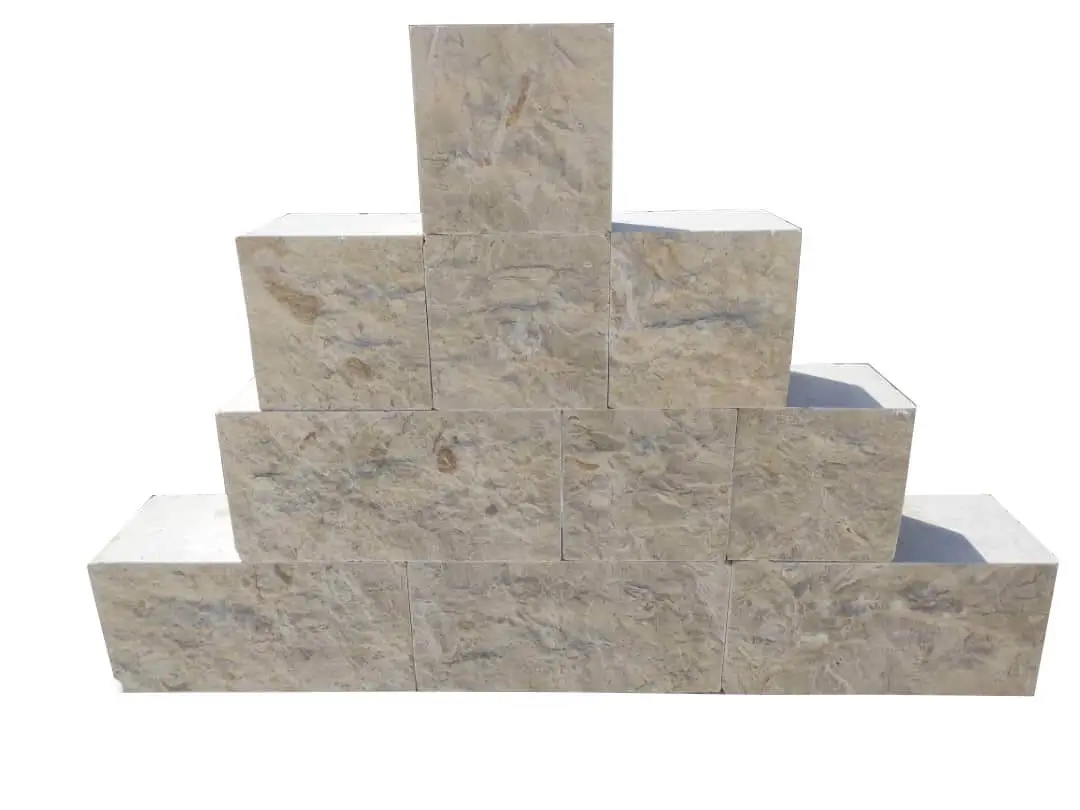
Sealing and Moisture Control Across Arizona Climates
Sealing a cobble patio in Arizona isn’t about aesthetics — it’s moisture management strategy. An unsealed porous cobble surface in a high-rainfall-intensity zone absorbs the initial burst of a monsoon event at a rate that temporarily exceeds drainage outlet capacity, creating hydrostatic pressure at the stone-to-base interface. That pressure doesn’t cause immediate visible damage, but repeated over 10–15 monsoon seasons, it wicks fine aggregate particles upward through the base system and into your joint fill — a process called pumping that gradually undermines bedding stability.
At Citadel Stone, we recommend penetrating silane-siloxane sealers for cobble applications rather than film-forming topical sealers. Film formers trap moisture that enters through unsealed joint edges, which in Arizona’s monsoon conditions creates a pressurized moisture layer beneath the sealer film. Penetrating sealers allow vapor transmission while blocking liquid water infiltration — the functional difference that matters in a climate that cycles between saturation and drought. Apply sealer within 30 days of installation and reapply on a 24–30 month schedule in high-UV zones; UV degradation of silane-siloxane chemistry accelerates measurably above 3,000-foot elevation.
- Penetrating silane-siloxane: correct sealer class for cobble in Arizona’s wet-dry cycling climate
- Film-forming topical sealers: avoid in monsoon zones due to moisture entrapment risk
- Initial application within 30 days prevents capillary staining from soil contact during early exposure
- Reapply every 24–30 months at low desert elevations; every 18–24 months above 3,500 feet
- Test sealer performance with a water droplet test — beading below 10mm diameter indicates adequate coverage
Ordering, Warehouse Logistics, and Arizona Supply Planning
Your project timeline depends heavily on understanding how cobble stone moves through the supply chain in Arizona. Natural cobble isn’t a stocked commodity the way concrete pavers are — most suppliers carry limited warehouse inventory of specific stone types, and popular sizes in basalt or quartzite move quickly during the fall and spring installation peaks when Arizona’s outdoor project season is in full swing. Confirm warehouse stock levels before finalizing your project start date, because a 3-week material delay mid-project leaves your base system exposed to potential rain events that compromise compaction.
Truck access to your site affects delivery cost and scheduling more than most homeowners anticipate. A standard flatbed truck delivering palletized cobble requires a 14-foot clearance height and a turn radius that most residential cul-de-sacs don’t accommodate without careful staging. If your site has restricted access — narrow driveways, low-clearance gates, or soft soil adjacent to the delivery path — discuss this with your supplier before scheduling. Re-delivery fees and material damage from improper offloading add real cost to an otherwise on-budget project. Our technical team at Citadel Stone regularly helps Arizona clients — including those in Peoria where newer subdivisions often have constrained delivery corridors — map their delivery logistics before a truck rolls, which eliminates the field surprises that inflate final project costs.
Expert Summary
Choosing a cobble patio in Arizona comes down to treating every decision — material type, thickness, joint strategy, base profile — as part of an integrated drainage system rather than a series of independent specifications. The monsoon season exposes every weak point in that system within its first year, so the design decisions you make before installation determine whether your patio is still performing well in year 15 or showing joint displacement and base settlement by year 5. Material absorption rates, expansion coefficients, and joint fill chemistry aren’t abstract specifications — they’re direct determinants of drainage performance under the hydraulic loads Arizona delivers annually.
For those moving into the construction phase after finalizing their material selections, How to Install a Cobble Patio in Arizona provides the field-level sequencing detail that turns sound design decisions into a correctly executed installation. Understanding both the selection criteria and the installation sequence — whether your project is in the low desert or at elevation near Flagstaff — gives you the full picture before committing to a contractor or a budget. Citadel Stone helps homeowners in Flagstaff, Peoria, and Tempe understand cobble patio square footage costs by offering material samples and detailed product specifications before any purchasing commitment.