














Base depth is the variable that separates successful square block paving in Arizona from the installations that need resetting within three years — and terrain dictates that specification more than any other factor. The state’s dramatic elevation changes, from the Sonoran Desert floor near Yuma to the ponderosa highlands above Flagstaff, mean your drainage geometry and subgrade engineering can’t follow a one-size-fits-all template. Choosing square block paving without accounting for slope, caliche layers, and localized runoff patterns is the most common specification error on residential and commercial projects alike.
How Arizona’s Terrain Shapes Square Block Paving Design
Arizona’s topography doesn’t do gradual. You get abrupt grade transitions, alluvial fan formations that shift drainage pathways seasonally, and caliche hardpan that behaves unpredictably under load when it finally does get saturated. In the mid-elevation zones around Sedona, for instance, the combination of red clay soil and steep canyon-adjacent grades creates lateral water movement that undermines bases built to flatland standards. Your aggregate base needs to be thicker on the upslope edge of any patio installation in these zones — typically 8 to 10 inches compacted rather than the standard 6 inches — to handle both the structural load and the water that migrates horizontally before it drains vertically.
Drainage geometry also shifts based on where you sit on the elevation ladder. Projects on alluvial fans near Phoenix benefit from naturally fast-percolating sandy soils, but those same soils settle differentially under heavy point loads, which means your square paver bricks in Arizona need a bedding layer of consistent coarse sand — never decomposed granite as a bedding medium — to absorb minor movement without cracking the joint pattern. The grade you establish at installation should be 1.5% minimum away from any structure, and on irregular terrain, you’ll want to cross-slope at 2% to intercept sheet flow before it channels under the pavers.
Material Properties That Matter for Arizona Block Paving
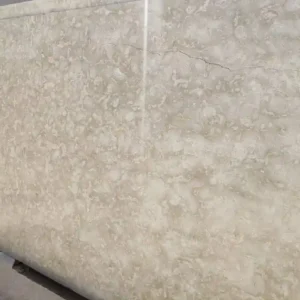
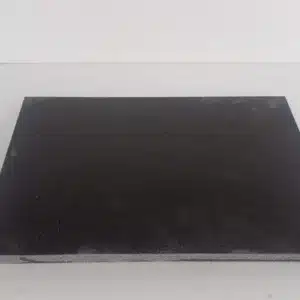
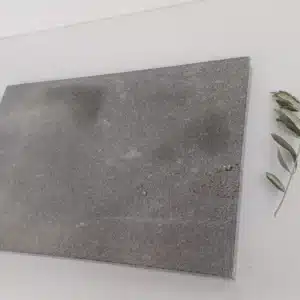
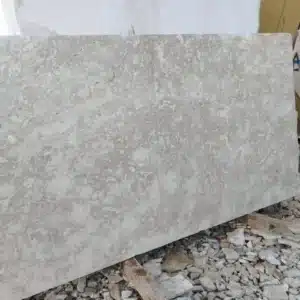
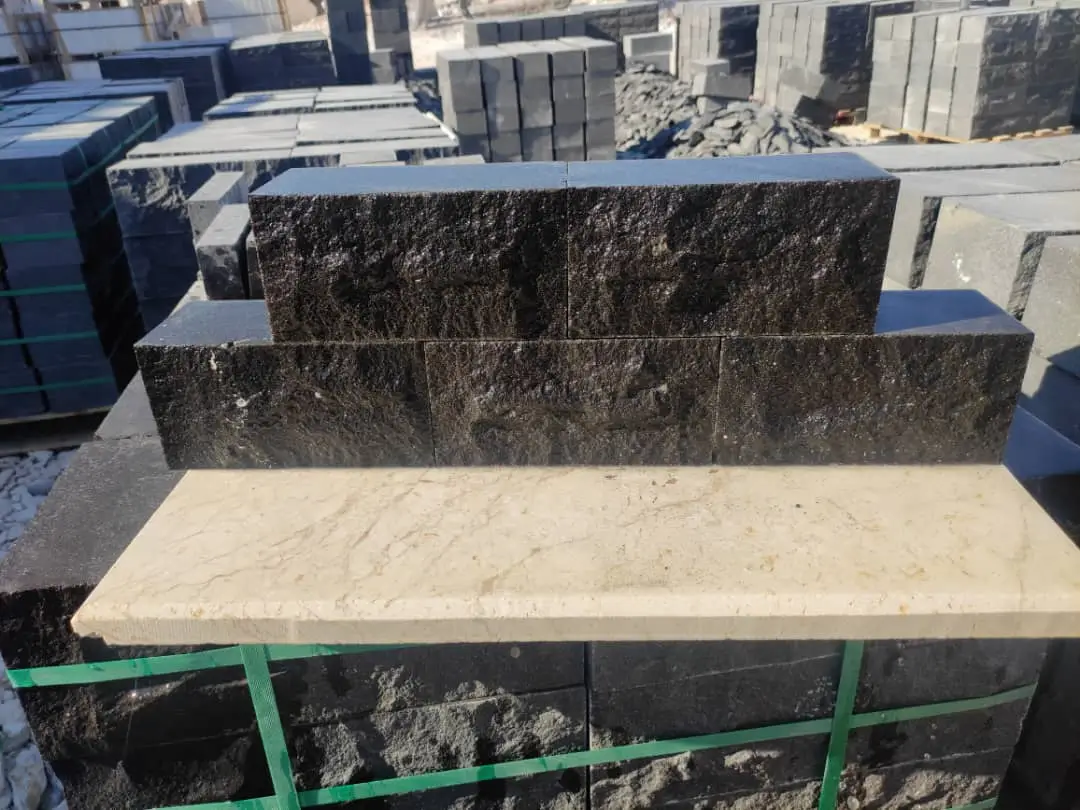
Square brick pavers in Arizona perform very differently depending on their absorption rate and density. Natural stone units with absorption below 3% — dense limestone, basalt, and certain quartzite varieties — resist the wetting-drying cycling that Arizona’s monsoon season delivers in concentrated bursts. That cyclical saturation followed by rapid evaporative drying is actually harder on porous materials than sustained moisture exposure, because the evaporation pulls soluble salts toward the surface and deposits them at the pore openings, eventually spalling the face over several seasons.
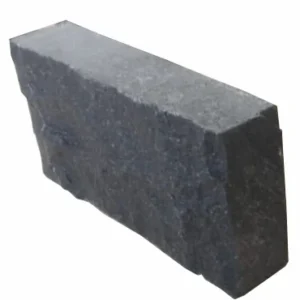
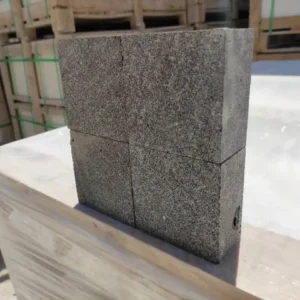
Compressive strength for square block paving units intended for pedestrian patios should land above 8,000 PSI, and for vehicular applications you want nothing below 12,000 PSI. These aren’t conservative numbers — they’re the thresholds where field performance consistently holds past the 15-year mark in Arizona’s thermal cycling range. Square cobblestone pavers in Arizona tend to carry higher inherent density than standard manufactured concrete blocks, which gives them an edge in both load distribution and surface hardness against point loads from furniture legs and foot traffic concentrations.
- Absorption rate below 3% for desert monsoon resistance
- Compressive strength 8,000 PSI minimum for pedestrian applications
- Compressive strength 12,000 PSI minimum for vehicular surfaces
- Consistent unit thickness tolerance within ±1/8 inch for stable bedding
- Thermal expansion coefficient compatibility with jointing material
Citadel Stone sources square block paving units from established quarry partners, and every batch goes through dimensional and absorption checks before warehouse release — that consistency in unit thickness is what makes bedding layer calibration reliable on site.
Base Preparation Across Arizona’s Varied Soil Profiles
Soil type governs your base specification more than surface load in most Arizona residential projects. The desert southwest has three dominant soil profiles that each demand a different approach: sandy alluvial soils common in the Phoenix metro, expansive clay soils found at mid-elevations in the Prescott corridor, and the caliche-bound profiles that appear statewide at varying depths.
Sandy alluvial soils compact well but need adequate confinement at the edges — without proper edge restraints, your square patio blocks will migrate outward over time, opening joints and allowing the bedding sand to pump out. A solid edge restraint system, either concrete haunching or steel edging pinned at 12-inch intervals, is non-negotiable on these soil types. Expansive clay soils are the more demanding challenge: you’ll need to overexcavate by 4 to 6 inches beyond your target base depth and replace with imported compactable aggregate before you lay your structural base. In Flagstaff, where clay content is higher and freeze-thaw cycles add a secondary heave mechanism, that replacement depth often reaches 10 to 12 inches total — significantly more than the low-desert standard.
- Sandy alluvial soils: 6-inch compacted aggregate base with perimeter edge restraints
- Expansive clay soils: 4–6 inch over-excavation and full aggregate replacement minimum
- Caliche profiles: mechanical scarification where caliche layer is within 12 inches of finish grade
- All soil types: geotextile fabric between native soil and aggregate base on slopes above 5%
Caliche, when it sits more than 18 inches below finish grade, can actually serve as an excellent natural load-bearing layer. The issue arises when it’s shallower — it forms a barrier to vertical drainage, creating a perched water table during monsoon events that saturates your base from below. Scarifying the caliche with a roto-hammer or excavator-mounted ripper before placing aggregate allows that water to escape. Skipping this step is the single most common base failure mechanism on Arizona patio projects.
Square Block Paving Formats and Application Matching
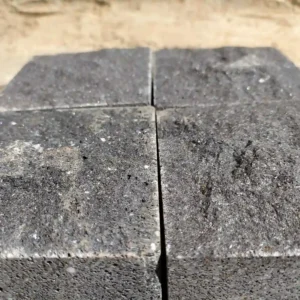
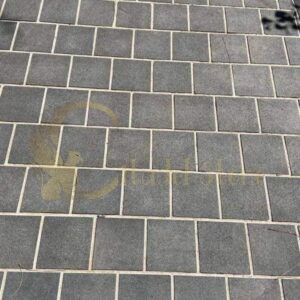
Format selection for a square block patio in Arizona comes down to matching unit size to both the scale of the space and the structural demands of the application. Smaller formats — 4×4 inch and 6×6 inch units — give you tighter joint spacing and better accommodation of minor substrate movement, which is useful on irregular terrain where perfect base uniformity is hard to achieve. Larger formats — 12×12 inch and 16×16 inch units — read better visually in open spaces and reduce the total joint length, which means less maintenance over time, but they demand a flatter, better-compacted base to avoid rocking.
Square brick pavers in Arizona for patio applications work particularly well in grid and running bond patterns, both of which allow you to maintain consistent expansion joint placement. Here’s what most specifiers miss on larger residential patios: expansion joints need to occur every 10 to 12 feet in Arizona’s temperature range, not the 15 to 20 feet you’ll see in generic installation guides written for moderate climates. The thermal delta between a shaded morning surface and an afternoon peak in direct sun can exceed 60°F on a dark-toned paver, and that movement is cumulative across a large field. Undersizing your expansion joint frequency is how you get mid-field cracking at year five that requires pulling and resetting an entire section. For a closer look at how these square block paving options compare with alternative formats, square block paving options Arizona breaks down the decision criteria that apply to similar terrain conditions — including how unit size and joint frequency interact with Arizona’s thermal range. Getting the joint pattern right from the start avoids the most expensive repair scenario on any block paving project.
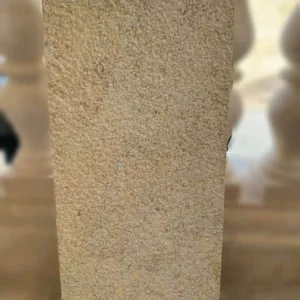
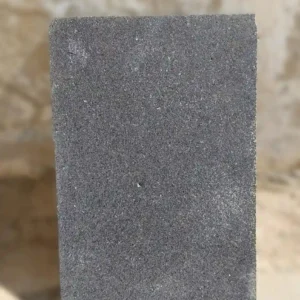
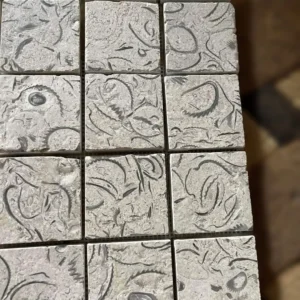
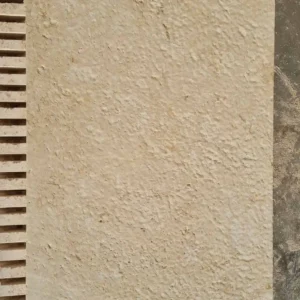
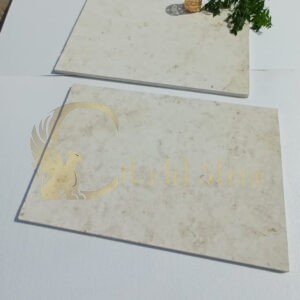
Square bricks for patio applications also come in tumbled and honed surface variants, and in Arizona the finish choice has real functional implications beyond aesthetics. Tumbled surfaces present a lower slip risk when wet, which matters during the monsoon months, while honed surfaces are easier to clean but show etching from mineral-heavy irrigation water over time. You can request surface samples from Citadel Stone to evaluate finish under your specific lighting and irrigation conditions before committing to full project quantities.
Drainage Design and Slope Management for Paved Areas
Drainage design for square block paving in Arizona isn’t just about directing water off the surface — it’s about managing the velocity and volume of that water once it leaves the paved area. Arizona’s monsoon precipitation arrives in high-intensity bursts, often exceeding one inch per hour, and a 400-square-foot patio can shed over 250 gallons per hour during a moderate storm event. Where that water goes — and how fast — determines whether your surrounding landscape stays intact and whether you develop erosion channels along the patio perimeter.
Channel drains integrated at low points in the paving field are more effective than relying entirely on surface slope for large patio areas. The permeability of the joint filling material also plays a role: polymeric sand with a controlled permeability rating allows a percentage of rainfall to infiltrate through joints and relieve surface sheet flow, which reduces the peak runoff velocity that does the most erosion damage. On projects near mesa edges or hillside sites around Scottsdale’s McDowell Sonoran Preserve corridor, a full drainage swale at the downslope patio edge is worth the additional civil engineering cost.
- Minimum 1.5% surface slope away from all structures
- 2% cross-slope on irregular terrain to intercept sheet flow
- Channel drains at all low points in fields larger than 300 square feet
- Permeable polymeric joint sand to manage peak runoff velocity
- Drainage swales on any downslope edges adjacent to landscaping or hardscape transitions
- Outlet velocity dissipators where drainage exits onto natural grade
Square Cobblestone Pavers in Arizona: Long-Term Performance Expectations
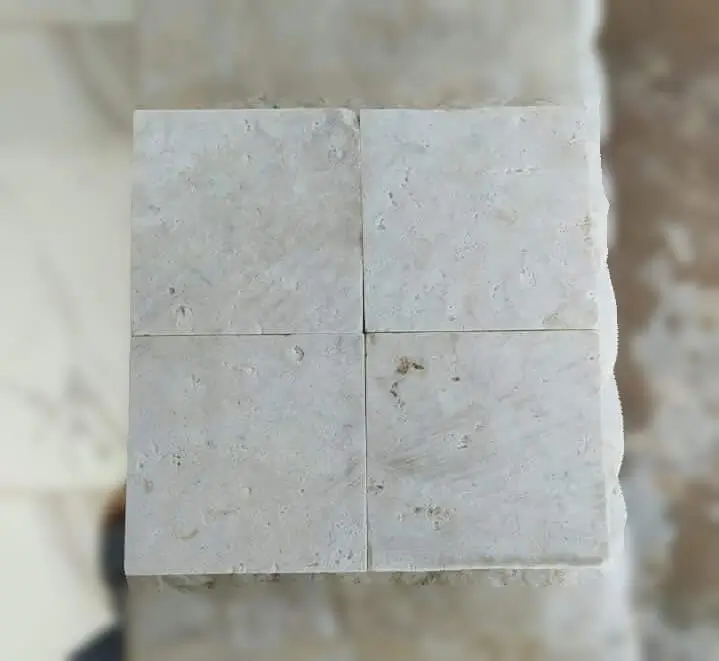
Square cobblestone pavers in Arizona have a compelling performance history on projects that get the base and drainage right. The format’s dimensional regularity gives them a structural advantage over random-size flagstone in high-traffic areas, because load transfer from unit to unit is more predictable when joints are consistent. That predictability means your edge units aren’t carrying disproportionate load, which is where random-format stones tend to fail first.
Realistic longevity expectations for properly installed square cobblestone pavers in Arizona patio applications run 20 to 30 years before any significant resetting or replacement is needed, provided the base stays intact and drainage isn’t compromised by changes in adjacent grading. The most common mid-life intervention is joint sand replenishment at years 5 to 8, when initial compaction and weathering have reduced joint fill to below 80% of the channel depth. Letting joints deplete below that threshold allows unit rocking, which accelerates edge wear and eventually loosens adjacent units in a progressive pattern.
Projects in Mesa frequently encounter the caliche hardpan at 18 to 24 inches below grade, and when that layer is mechanically perforated before base installation, square cobblestone paver installations in those zones consistently outperform installations on more permeable soils — the caliche acts as a rigid platform once drainage through it is established. That counterintuitive performance advantage is worth communicating to clients who are skeptical about the additional base preparation cost.
Sealing and Maintenance Protocols for Arizona Block Paving
Sealing protocols for square block paving in Arizona should account for UV degradation of sealer films, which is more aggressive at Arizona’s solar angle and elevation than manufacturer testing conditions typically reflect. Most penetrating sealers rated for 5-year reapplication cycles in moderate climates need reapplication at 3 to 4 years in the Phoenix metro and even sooner in high-elevation Flagstaff applications where UV intensity is higher. Verifying your sealer’s actual condition is straightforward: perform a simple water bead test annually — when water stops beading and begins absorbing within 30 seconds, your sealer has depleted and needs reapplication.
Surface cleaning before resealing is a step that significantly affects sealer bond quality, and in Arizona it needs to address two specific contaminants that aren’t as prevalent in other climates: efflorescence from mineral-rich groundwater and iron staining from irrigation water. Efflorescence requires a diluted muriatic acid wash followed by thorough neutralization before sealing. Iron staining needs an oxalic acid-based product — standard degreasers won’t touch it. Sealing over either contaminant traps them under the film and accelerates sealer failure, which doubles your maintenance frequency.
- Annual water bead test to assess sealer condition
- Penetrating sealer reapplication every 3–4 years in low-desert Arizona
- Efflorescence treatment with diluted muriatic acid before any sealer application
- Iron stain treatment with oxalic acid-based cleaner for irrigation-affected surfaces
- Joint sand top-up at years 5–8 to maintain 80%+ channel fill
- Edge restraint inspection annually in expansive clay soil zones
Source Premium Square Block Paving — Citadel Stone Supply
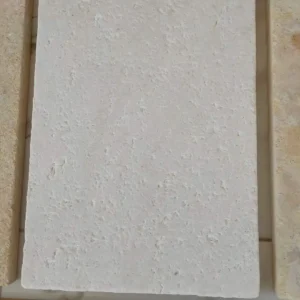
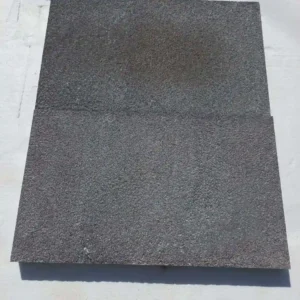
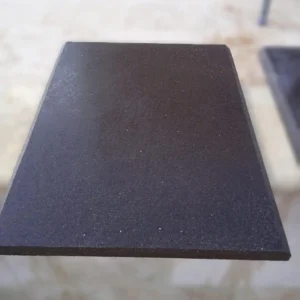
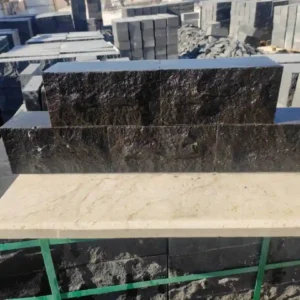
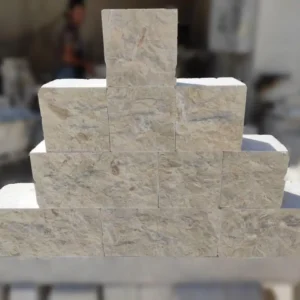
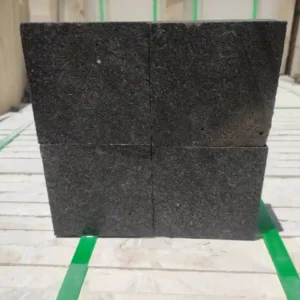
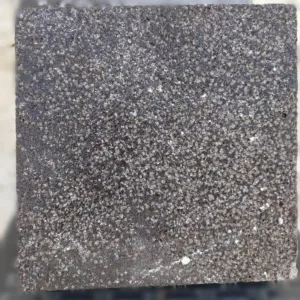
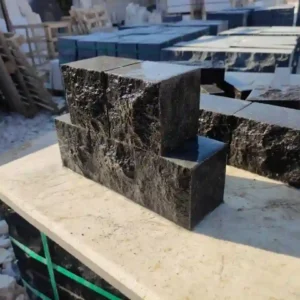
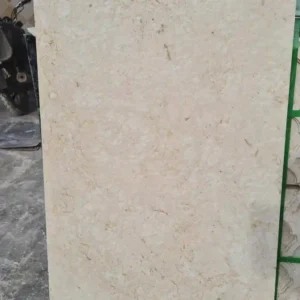
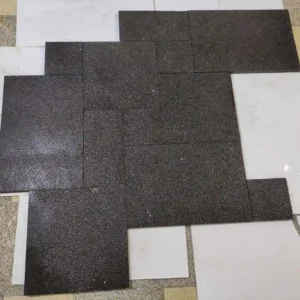
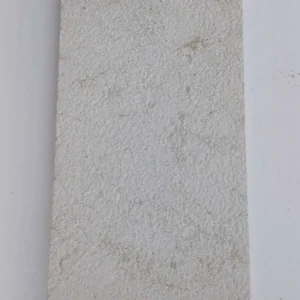
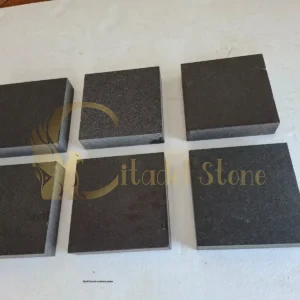
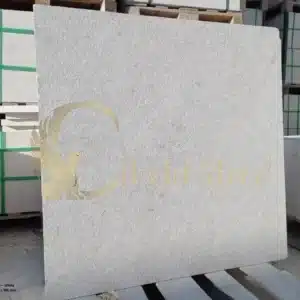
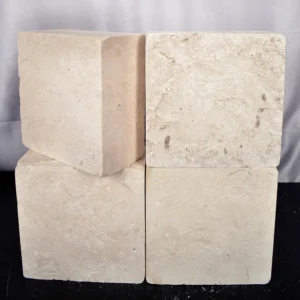
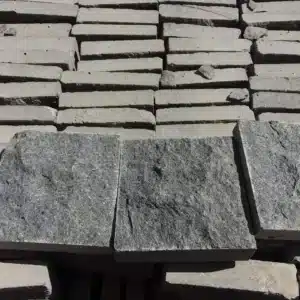
Citadel Stone stocks square block paving units in standard formats including 4×4, 6×6, 8×8, 12×12, and 16×16 inch nominal sizes, with thickness options from 1.25 inch to 2.375 inch to match pedestrian and light vehicular load requirements across Arizona projects. Available finishes include natural split, tumbled, and honed surfaces, with stone varieties spanning dense limestone, basalt, and quartzite — each suited to different aesthetic directions and performance specifications. Your project’s specific format, finish, and volume requirements can be confirmed with Citadel Stone’s technical team before you finalize your specification documents.
For trade accounts and wholesale enquiries, Citadel Stone offers project-specific pricing on quantities above 500 square feet, with lead times from warehouse inventory typically running 1 to 2 weeks for standard formats across Arizona. Truck delivery covers the full state, including high-elevation destinations — though your site’s truck access constraints should be confirmed in advance for projects on steep or narrow residential driveways, as delivery vehicle turning radius and axle weight matter on those approach routes. Sample tiles are available on request so you can verify color consistency, surface finish, and dimensional tolerance against your project drawings before ordering. Square brick patio applications across Arizona’s varying elevations and soil profiles benefit from that material verification step before quantities are committed.
Your project’s broader stone selections may extend beyond the patio surface itself — Citadel Stone’s range covers a wide scope of outdoor hardscape materials suited to Arizona conditions, and Square Outdoor Pavers in Arizona covers additional specification details for outdoor paving contexts relevant to the region’s climate and terrain. For Arizona projects requiring precision and longevity, Citadel Stone supplies square cobblestone pavers suited to the region’s climate, terrain, and the practical demands of modern landscape and hardscape design.