
Square block paving cost in Arizona starts with a variable most homeowners don’t factor early enough — the soil beneath the project. Before a single paver gets set, the ground composition in your specific Arizona location can swing your total installation budget by 30% or more. Caliche layers, expansive clay pockets, and loose alluvial sand all require different base preparation strategies, and those strategies carry real dollar differences that show up in both material quantities and labor hours.
Why Arizona Soil Conditions Drive Your Paving Budget
Arizona isn’t a monolithic desert — the ground composition shifts dramatically across the state, and that variability is the most underestimated pricing factor in any square block paving cost estimate. Caliche, the calcium carbonate hardpan layer common throughout central and southern Arizona, creates a mixed situation: it’s a nightmare to excavate through, but once you’re past it, you sometimes have a remarkably stable sub-base. The problem is getting there. Mechanical removal of dense caliche can add $3–$6 per square foot to your site preparation costs before any base aggregate or pavers are priced.
In contrast, the loose sandy soils found in parts of the low desert require deeper aggregate bases to prevent differential settlement. You’re typically looking at a minimum 6-inch compacted base in stable soil, jumping to 8–10 inches in sandy or poorly graded material. That extra base depth adds aggregate volume, compaction passes, and labor — all of which feed directly into your final square block paving cost in Arizona.
Material Cost Ranges for Square Block Paving in Arizona
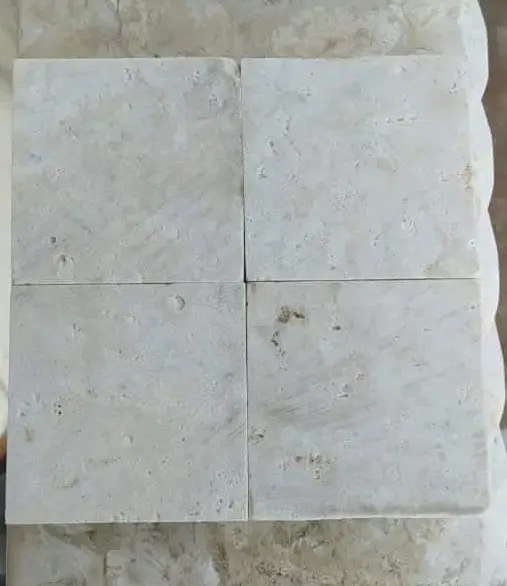
Natural stone square block paving materials in Arizona typically fall into three pricing tiers. Understanding which tier fits your project starts with knowing what you’re actually comparing — density, finish, and dimensional tolerance all vary significantly between options. Natural stone paving pricing across Arizona varies not just by material type but by sourcing logistics, which means getting clear on your tier early protects your budget downstream.
- Entry-level natural stone (tumbled limestone, basic travertine): $8–$14 per square foot material only
- Mid-range dimensional stone (honed basalt, filled travertine, standard limestone): $14–$22 per square foot material only
- Premium natural stone (select basalt, precision-cut limestone, specialty finishes): $22–$35 per square foot material only
- Concrete block paving (for comparison): $4–$9 per square foot material only
Domestic quarry stone and imported material carry different lead times and freight costs, both of which influence your final delivered price. For projects where budget certainty matters, verifying warehouse stock levels before locking in a project timeline is worth the extra call.
Installation Labor Costs and What Affects Them
Labor for square block paving in Arizona runs $8–$18 per square foot installed, with that range driven almost entirely by site conditions rather than the paver material itself. The soil work — excavation, base preparation, compaction — accounts for a larger share of labor cost than most homeowners expect when they start budgeting. Block paving material costs AZ homeowners face often look reasonable on paper until the site prep invoice arrives.
Projects in Mesa frequently encounter caliche hardpan at 18–24 inches, which presents both a challenge and an opportunity. Experienced installers who work regularly in the East Valley know to probe for caliche depth before quoting — if it’s at 18 inches, it can sometimes serve as a load-bearing layer, potentially reducing aggregate base requirements. That kind of site-specific knowledge is what separates an accurate quote from a ballpark guess.
- Standard soil excavation and base prep: $3–$5 per square foot
- Caliche excavation (mechanical removal required): $5–$10 per square foot
- Sandy soil stabilization (geotextile fabric + additional aggregate): $2–$4 per square foot added
- Paver setting and jointing: $5–$8 per square foot
- Sealing (first application): $1.50–$3 per square foot
Subgrade Preparation: Where Arizona Projects Diverge from National Averages
National cost guides for outdoor paving installation budget in Arizona almost always understate subgrade preparation costs because they’re built on assumptions about average American soil conditions. Arizona’s ground isn’t average. The presence of expansive clay in certain elevation zones — particularly in transitional areas between 2,500 and 4,500 feet — creates soil that swells significantly with moisture and contracts in dry periods. This shrink-swell cycle will systematically undermine any paving installation that isn’t designed to accommodate it.
For clay-heavy subgrades, your specification needs to include either soil replacement with crushed aggregate or the installation of a geosynthetic separation layer. Soil replacement runs $4–$7 per square foot for material and labor combined, depending on excavation depth. Geotextile fabric adds roughly $0.50–$1.00 per square foot but doesn’t fully address the heave risk — it primarily prevents aggregate migration into the clay. In serious shrink-swell zones, both measures together are the correct call, not a choice between them.
You can explore your specific material options and get a sense of what’s currently available at regional stock levels through Arizona square block paving from Citadel Stone, where product specifications and availability align with the realities of Arizona’s diverse site conditions.
Project Size and Total Budget Ranges for Arizona Homeowners
The outdoor paving installation budget in Arizona that makes sense for your project depends heavily on scope and access. Smaller courtyard or entry projects benefit less from economies of scale — your truck delivery cost is relatively fixed regardless of whether you’re ordering 200 or 800 square feet, so the per-unit economics improve as project size grows.
- Small project (100–300 sq ft, entry or side yard): $2,500–$8,000 total installed
- Medium project (300–700 sq ft, patio or driveway apron): $7,000–$18,000 total installed
- Large project (700–1,500 sq ft, full driveway or courtyard): $16,000–$40,000 total installed
- Premium large project (complex patterns, premium stone, challenging soil): $35,000–$65,000+
These ranges reflect typical Arizona desert-rated square paving stone expenses, incorporating site preparation, materials, labor, and a single sealing coat. They don’t include drainage modifications, retaining elements, or step construction, which add cost if your site has grade changes.
How Regional Soil and Access Conditions Shift Costs Across Arizona
The state’s geography creates real pricing variation that goes beyond just material freight. In Sedona, the iconic red rock terrain means your excavation often hits decomposed granite and sandstone formations at shallow depths. That can actually be advantageous — decomposed granite compacts exceptionally well as a base layer and may reduce your aggregate import requirements. However, the terrain also means truck access to some sites is limited, which affects delivery logistics and may require smaller loads at higher freight cost per ton.
The low desert conditions around Yuma present a different challenge. Yuma’s soils tend toward loose sandy loam and fine alluvial material in many areas, particularly near agricultural zones. The high water table in irrigated areas can create subgrade saturation issues that a standard base preparation spec won’t address. For projects near irrigated land, your spec should include a minimum 8-inch base with a 4-inch crushed aggregate drainage layer below it, which adds approximately $3–$5 per square foot to your subgrade costs compared to stable high-desert sites. Understanding these regional differences is central to building an accurate outdoor paving installation budget in Arizona — what applies in one corner of the state can be the wrong call entirely in another.
Stone Selection, Density, and Long-Term Cost Impact
Choosing between stone types affects not just your upfront square block paving cost but your long-term maintenance budget. Denser, lower-porosity natural stones require less frequent sealing and resist the surface degradation that Arizona’s intense UV exposure accelerates. A material that costs $18 per square foot but requires sealing every 18 months will cost more over a 20-year horizon than a $24-per-square-foot material sealed every 3 years.
- High-density basalt: excellent UV resistance, low maintenance sealing cycle (every 3–5 years), higher upfront cost offset by longevity
- Filled travertine: moderate density, requires diligent sealing every 18–24 months in Arizona conditions, mid-range upfront cost
- Dense limestone: strong compression ratings, requires sealing every 2–3 years, good long-term value when properly specified
- Porous limestone: lower upfront cost, higher long-term maintenance burden, not recommended for high-traffic Arizona applications
At Citadel Stone, we recommend evaluating density and water absorption rate (per ASTM C97) before making a final material selection — not just surface appearance. Materials with water absorption above 3% require more aggressive maintenance protocols in Arizona’s dust and UV environment, which your 10-year cost projection should reflect. Our technical team reviews these specifications with customers before orders ship from the warehouse, catching mismatches before they become field problems.
Getting Accurate Quotes: What to Give Your Contractor
The quality of your square block paving cost quote depends entirely on what information you give the contractor at the outset. Vague project descriptions produce vague — and usually low — estimates that balloon once excavation reveals actual soil conditions. Protecting your budget starts with arming your bidders with specifics.
- Provide a scaled site plan with exact square footage — don’t estimate, measure
- Request a soil probe or test pit before finalizing quotes, especially in areas with known caliche or clay issues
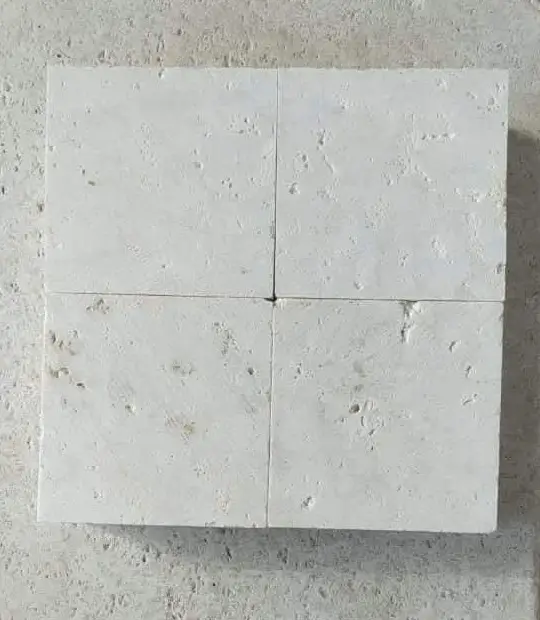
- Specify the stone material, finish, and nominal thickness you want priced — don’t let contractors substitute unknown equivalents
- Ask for line-item quotes separating excavation, base prep, material, setting, and sealing — lump-sum quotes hide the variables that will surprise you
- Confirm truck access dimensions for your site before delivery is scheduled — narrow gates or soft ground can complicate delivery logistics significantly
- Ask about lead times from the warehouse so material arrival aligns with your installation schedule
Contractors who are unwilling to provide line-item quotes or who don’t ask about soil conditions before bidding are flagging their own inexperience with Arizona-specific site challenges. Block paving material costs AZ homeowners face are easiest to control when every line of the quote is visible and defensible. A well-prepared bid protects both parties.
Your Action Plan for Square Block Paving Cost in Arizona
The decisions that determine whether your square block paving cost comes in on budget or runs over are almost all made before installation day. Your soil investigation, your material specification, your base preparation depth, and your contractor selection all lock in the outcome before the first paver touches the ground. Arizona’s varied geology means there’s no universal spec — what works in the high desert around Sedona differs meaningfully from what’s needed in Yuma’s sandy low-desert soils or in Mesa’s caliche-prone East Valley terrain.
Start with a site assessment, get line-item quotes from contractors who ask smart questions about your ground conditions, and select your stone based on density and long-term maintenance cost — not just initial price. Natural stone paving pricing across Arizona rewards buyers who evaluate total lifecycle cost rather than material cost alone, and that discipline starts at the planning stage, not after installation is underway. For design inspiration that helps you think through layout before you finalize your budget, 8 Square Block Driveway Design Ideas for Arizona covers practical layout approaches that align with real Arizona installation constraints. Homeowners in Tucson, Chandler, and Peoria rely on Citadel Stone for square block paving selected for its density and dimensional consistency, both factors that directly influence long-term material and labor cost estimates across Arizona.