





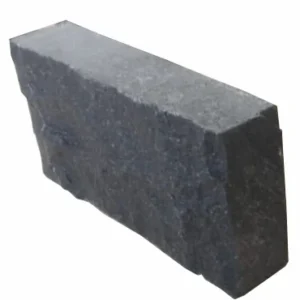

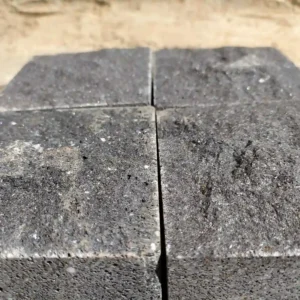
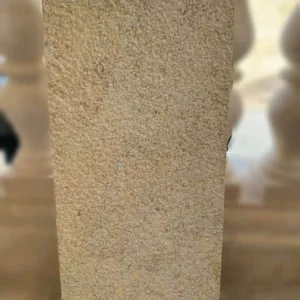

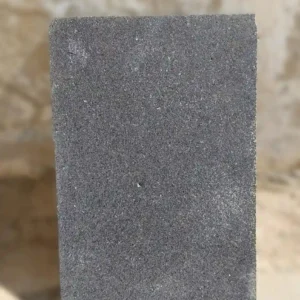









50 Years Of Manufacturing & Delivering The Highest-Quality Limestone & Black Basalt. Sourced & Hand-Picked From The Middle East.

Escrow Payment & Independent Verifying Agent For New Clients

Contact Me Personally For The Absolute Best Wholesale & Trade Prices:

USA & Worldwide Hassle-Free Delivery Options – Guaranteed.

Square Patio Slabs in Arizona

Square patio slabs in Arizona face a mechanical stress challenge that many homeowners underestimate: the sustained force of monsoon-season wind gusts, which can exceed 60 mph across the Phoenix Basin and Sonoran Desert corridor, combined with wind-driven debris impact and sudden pressure differentials that can compromise poorly bedded slab installations. A slab's resistance to lateral shifting and surface fracture under these conditions depends heavily on material density, dimensional consistency, and the integrity of the setting bed — not just aesthetic finish. Citadel Stone Square Patio Slabs in Arizona are available in a range of thicknesses and surface treatments designed to meet the structural demands of Arizona outdoor environments, with specification support for both residential and commercial scopes. What's often overlooked is how slab geometry interacts with mortar bed design during storm events — a critical variable addressed in detail in the guidance sections below. Citadel Stone offers Square Patio Slabs in multiple finishes and thicknesses for Arizona projects across Phoenix, Tucson, and Scottsdale.

See & Feel the Quality – Free Arizona Stone Samples

Our stones are made for the Arizona sun. See how the colors hold up in your specific light.

Design Your Arizona Home with a Local Stone Expert

Get personalized advice on the best stone for Arizona's climate and your design style.

Premium Natural Stone — All Sizes & Thicknesses Available

From standard cuts to fully custom dimensions — our limestone, granite, basalt & shellstone
are cut to your exact specifications. Residential or commercial, we’ve got you covered.

Get Your Free Arizona Stone Quote

Transparent Pricing for Your Arizona Project

Elevate Your Arizona Property with Premium Stone, Priced for Value.

Unlock $10,000 Worth of Deals on Beautiful Paver, Tiles & Cobble Setts—For Free!

Invest in Arizona’s Landscape: Stone That Lasts a Lifetime.

100% Happiness Guarantee

Trust 50 Years of Expertise. Invest in Quality Limestone Tiles

Custom-Cut for Your Arizona Project: Any Size, Any Finish.

No-Obligation Consultation: Get Expert Advice for Your Arizona Home.

The Stone Supplier Trusted by Arizona's Leading Architects & Designers.

Trusted by Top Stone Experts Around the Globe

Arizona's Most Diverse Selection of Limestone Tiles.

Elevate Your AZ Property with Limestone Built for the Desert. Our expansive collection of limestone tiles brings timeless beauty and proven durability to both residential and commercial spaces across Arizona. As the state’s leading supplier, we offer a diverse palette of colors and finishes—from cool, light tones that reflect the sun to rich, earthy textures that complement the Southwest landscape. Transform your environment with limestone that stands up to the Arizona heat while providing the sophisticated aesthetic you desire.

Explore Arizona-Tough Alternative Stones

Product NameDescriptionPrice per Square Foot
Travertine TilesBeautiful natural stone with unique textures$8.00 - $12.00
Marble TilesLuxurious and elegant, available in various colors.$10.00 - $15.00
Granite TilesExtremely durable and perfect for high-traffic areas.$7.00 - $12.00
Slate TilesRich colors and textures; ideal for wet areas.$6.00 - $10.00
Porcelain TilesVersatile and low-maintenance, mimicking natural stone.$4.00 - $8.00
Ceramic TilesAffordable with a wide variety of designs.$3.00 - $6.00
Quartzite TilesStrong and beautiful, resistant to stains.$9.00 - $14.00
Concrete PaversCustomizable for patios; durable and cost-effective.$5.00 - $9.00
Glass TilesStylish, reflective, and brightening.$15.00 - $25.00
Composite TilesEco-friendly options made from recycled materials.$5.00 - $10.00

Incredible Prices for Top-Quality Stone—Shop Citadel Stone Today!

Table of Contents

Square patio slabs in Arizona face a mechanical stress profile that most installation guides underestimate — wind-driven debris, monsoon-force precipitation, and hail impact create point loads and lateral displacement forces that determine whether your layout holds for two decades or starts shifting after the third storm season. The base depth, joint specification, and slab thickness you choose for square patio slabs in Arizona have to account for these dynamic loads, not just static weight distribution. Getting that calculation right from the start is what separates a durable installation from an expensive redo.

Wind, Storm, and Hail Performance for Square Patio Slabs in Arizona

Arizona’s storm events deliver a combination of forces that flat paving rarely gets credit for handling. Monsoon winds in the low desert can exceed 60 mph, and when those gusts carry gravel, debris, or hail, your slab surface takes direct impact. Field performance data on square patio slabs across Arizona climates shows that slabs with a compressive strength above 8,000 PSI handle repeated hail impact without surface spalling — thinner, lower-density options tend to micro-fracture at the surface after three or four significant hail events, which then accelerates water infiltration and undermines the base.

The lateral displacement issue is the one most installers miss. High wind creates uplift pressure on exposed slab edges, particularly at patio perimeters where there’s no retaining border. You’ll want to spec a minimum 2-inch nominal thickness for any exposed-edge installation, and in areas like Flagstaff where storm frequency and freeze-thaw cycles compound the stress, moving to 2.5-inch thickness across the full field is a sound call. The additional weight per unit — roughly 18 to 22 lbs per square foot at that thickness — provides passive resistance to wind uplift without any mechanical fastening.

Citadel Stone stocks square patio slabs in Arizona in standard 2-inch and 2.5-inch thicknesses, with format options ranging from 12×12 to 24×24 nominal dimensions, so you can match the slab mass to your specific exposure conditions without compromising layout geometry.

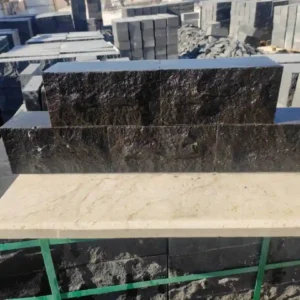
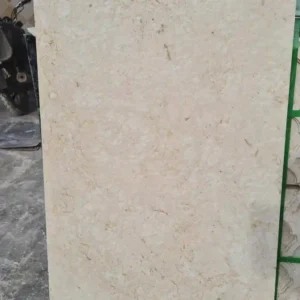
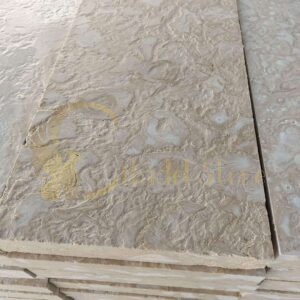
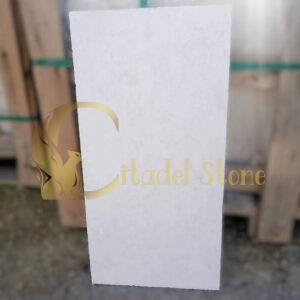
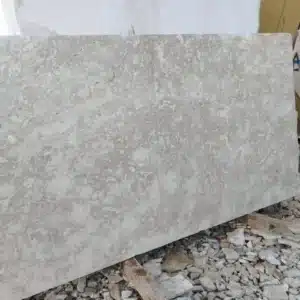
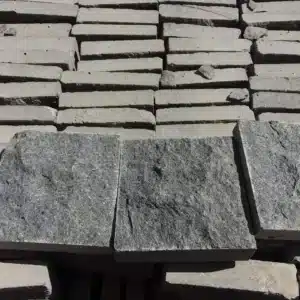
A pale beige stone slab rests on stacked material with metal straps.

Choosing the Right Material for Storm-Resistant Square Paver Patios

Natural stone square pavers for patio installations in Arizona perform differently under storm stress depending on their mineral composition and pore structure. Dense basalt and hard limestone consistently outperform softer sandstone variants when hail or wind-borne aggregate is the primary concern. Porosity is the other critical variable — materials with open, interconnected pore structures absorb storm moisture rapidly, and in installations without adequate cross-slope drainage, that moisture retention weakens the mortar bed or compacted aggregate base over multiple wet-dry cycles.

Square patio blocks in Arizona made from natural limestone in the 2.5 to 3.5% porosity range offer the best balance between drainage performance and structural integrity. You’re looking for a material that sheds surface water quickly during monsoon events but doesn’t act as a sponge that holds moisture against the base. At Citadel Stone, we recommend requesting porosity data sheets alongside compressive strength figures when you’re evaluating material options for storm-exposed Arizona patios — both numbers together tell you the real performance story.

  • Target compressive strength above 8,000 PSI for hail-exposed field areas
  • Specify porosity between 2.5% and 4% for optimal drainage without structural compromise
  • Prefer square patio bricks in Arizona with a natural cleft or textured finish — smooth polished surfaces develop water sheeting during heavy rainfall that increases displacement risk
  • Avoid materials with visible bedding plane orientation parallel to the surface — storm moisture penetrates those planes and causes delamination over time
  • Request batch consistency certificates from your supplier to confirm that porosity and density are uniform across the full delivery quantity

Sourced from established quarry partners, each batch Citadel Stone delivers is inspected for consistency in density and finish before it ships — a detail that matters when you’re relying on uniform drainage behavior across a large patio field.

Base Preparation and Drainage Engineering for Storm Loads

Your base system is doing two jobs during a storm event: absorbing the vertical load of heavy rainfall saturation and resisting the lateral creep that wind and thermal cycling create simultaneously. The standard 4-inch compacted aggregate base that works fine in mild climates is genuinely undersized for Arizona monsoon conditions. A minimum 6-inch compacted crushed aggregate base, with an additional 1-inch bedding layer of coarse sand, gives you the drainage capacity to move storm water laterally before it saturates the sub-grade.

In Phoenix, where caliche layers appear at unpredictable depths, you’ll sometimes hit a near-impermeable sub-grade at 12 to 18 inches. That caliche layer acts as a dam during heavy rainfall — water backs up in the aggregate base and the hydrostatic pressure pushes slabs upward from below. Scarifying the caliche surface and installing perforated drain pipe at the base layer perimeter before backfilling is the field fix that prevents this. It adds half a day to the installation, but it’s the detail that protects a square paver patio in Arizona through fifteen monsoon seasons.

Cross-slope specification matters just as much as base depth. A 2% minimum cross-slope on the finished slab surface moves storm water off the field before it can pond. Building to exactly 2% in a square pavers backyard layout is harder than it sounds — any variation in slab thickness across the batch will create flat spots. Check your delivery for thickness tolerance before you set your screed, not after you’ve laid three rows.

  • Minimum 6-inch compacted crushed aggregate base for monsoon-zone installations
  • 1-inch coarse sand bedding layer — never fine play sand, which migrates under hydrostatic pressure
  • 2% minimum cross-slope on finished surface, verified with a 4-foot level and digital inclinometer
  • Perforated drain pipe at base perimeter where caliche sub-grade is confirmed
  • Geotextile fabric between sub-grade and aggregate base to prevent fines migration during storm events
  • Expansion joint spacing at 12 to 15 feet — tighter than generic specs because Arizona’s thermal swing amplifies joint stress when combined with storm moisture

Square Patio Blocks and Format Selection for Arizona Backyards

Format selection for a square pavers backyard project in Arizona involves a trade-off that storm performance makes more consequential than in lower-stress climates. Larger format slabs — 24×24 and above — offer fewer joint lines for water infiltration, which is a genuine advantage during heavy rainfall. The downside is that larger formats amplify any base settlement into more visible lippage. A 24×24 slab that settles 3mm at one corner creates a trip hazard that a 12×12 grid distributes across multiple smaller differentials.

For most residential square pavers for patio installations in Arizona, the 16×16 and 18×18 formats hit the practical sweet spot. You get manageable joint frequency — around 0.75 linear feet of joint per square foot of field area — without the settlement sensitivity of the large formats. Commercial installations with engineered bases and higher traffic loads can justify the 24×24 format, but the base preparation requirements are proportionally more demanding. For projects requiring complementary stone elements, Square Patio Slabs from Citadel Stone covers specification details that apply across format sizes and site conditions in the region — including base tolerances, slab thickness selection, and joint width guidance for Arizona’s full climate range. Joint width should be held to 3/8 inch minimum to accommodate the thermal expansion range you’ll see across Arizona’s seasonal swing of 80°F or more between winter nights and summer afternoons.

Square patio bricks in Arizona — the smaller modular formats in the 4×8 and 6×6 range — are worth considering for heavily wind-exposed patio perimeters where you want to step down to a lower-mass unit that’s less susceptible to uplift. Running a border course of smaller-format units set in a mortar bed around the perimeter, then transitioning to the larger-format dry-set field, gives you the best of both approaches. Square patio blocks in Arizona installed this way also simplify future repair work, since perimeter units can be reset individually without disturbing the main field.

Joint Sealing and Storm Maintenance for Square Pavers

Polymeric sand in the joints of square pavers for patio areas in Arizona performs differently than the product data sheet suggests when storm conditions are the primary stress factor. Standard polymeric sand relies on a moisture-activated binder that cures over 24 to 48 hours — but Arizona monsoon storms can deliver 1 to 2 inches of rain within 30 minutes of joint installation completion. That rapid saturation before curing is complete washes binder out of the upper joint zone and leaves a surface that looks fine for the first season, then starts losing joint material progressively as each storm event removes more of the compromised matrix.

The practical solution is to delay polymeric sand installation until you have a confirmed 72-hour dry weather window — check forecast data carefully during monsoon season rather than assuming afternoon clearings will be consistent. For square patio slabs in Arizona that have been installed and are now showing joint erosion, a polymeric sand repair product applied dry and activated with a fine mist — rather than a full wet spray — gives you better control over binder retention in the joint upper zone. In Scottsdale, where dust storms precede monsoon events and deposit a fine silt layer on exposed surfaces, you’ll need to blow joints clean before any repair application or the binder bonds to the silt rather than the slab edges.

  • Use professional-grade polymeric sand with extended activation time — standard residential products activate too quickly for Arizona’s variable humidity
  • Allow 72-hour curing window minimum before the first rain exposure — do not rely on “quick-set” products during monsoon season
  • Seal slab surfaces with a penetrating silane-siloxane sealer annually — surface sealers that sit on top of the stone surface peel under thermal cycling and create a debris-collection surface
  • Inspect and refill joints after every major storm event in the first two years while the base is still settling
  • Reapply joint material every three to five years depending on storm frequency and traffic load
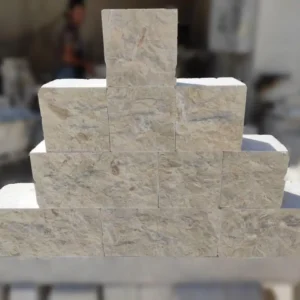
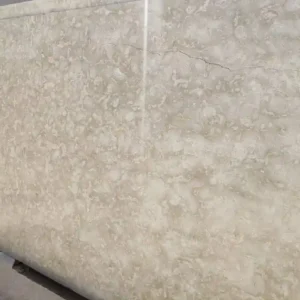
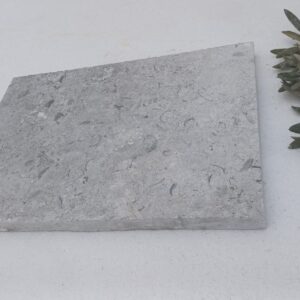
Close-up of light grey stone slabs with subtle veining patterns.

Colour, Finish, and Shade Options for Arizona Patio Slabs

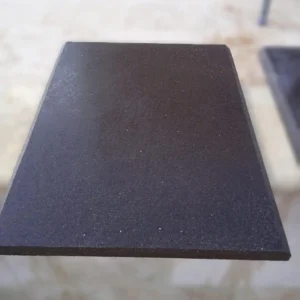
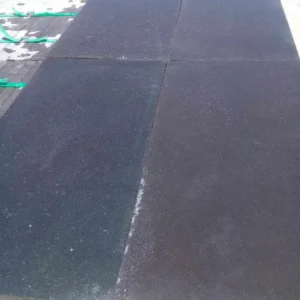
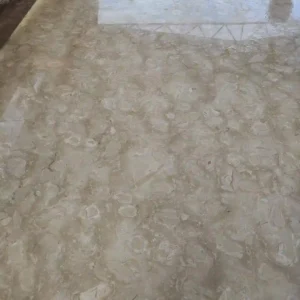
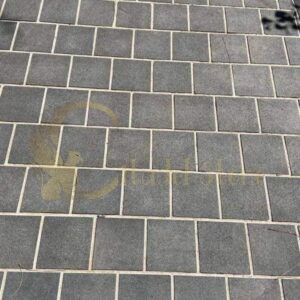
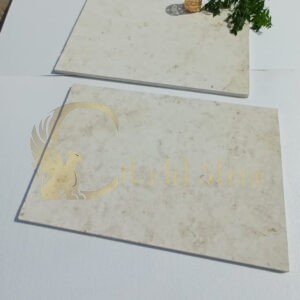
Colour selection for square patio slabs in Arizona goes beyond aesthetics when storm and UV exposure are the primary performance drivers. Dark grey and charcoal tones absorb more radiant energy, which means the slab surface reaches higher peak temperatures — but those darker materials also tend to be denser, higher-compressive-strength options that handle storm impact better. Cream, ivory, and light grey tones reflect more solar radiation and run cooler underfoot, but you’ll find more variability in density and compressive strength across that colour range because the lighter tones come from a wider range of quarry sources.

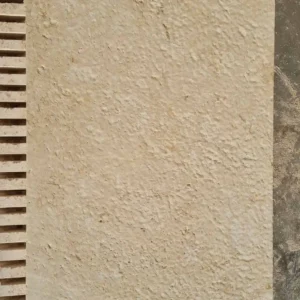
Finish selection has a direct bearing on storm performance. Tumbled and brushed finishes on square patio blocks in Arizona create a naturally textured surface that maintains slip resistance when wet — a critical safety consideration during monsoon rainfall when polished or honed surfaces become genuinely hazardous. The textured surface also disguises minor lippage from base movement better than a flat, uniform finish that makes every 1mm elevation differential visible. You can request sample tiles from Citadel Stone before committing to a full order, which lets you verify finish texture and shade consistency against your project conditions before the truck delivery arrives on site.

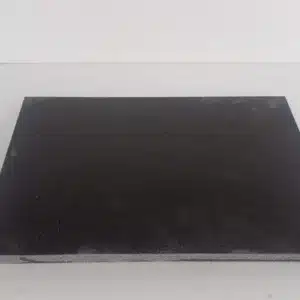
  • Dark grey and charcoal formats: denser, higher compressive strength, better storm impact resistance
  • Cream and ivory formats: lower thermal absorption, wider shade variation across batches — verify consistency before ordering full quantities
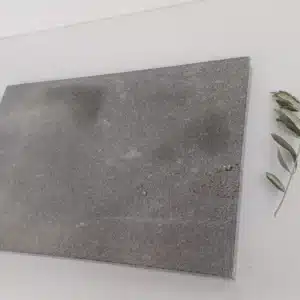
  • Silver and graphite tones: mid-range density, visually forgiving of weathering patina from storm mineral deposits
  • Tumbled finish: best all-round performance for wet-surface slip resistance and lippage concealment
  • Brushed finish: good texture retention, slightly more uniform appearance than tumbled
  • Avoid polished or honed finishes for outdoor patio field areas in monsoon-exposed sites

Buy Square Patio Slabs in Arizona — Wholesale from Citadel Stone

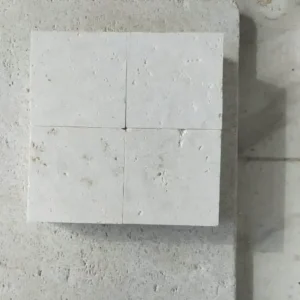
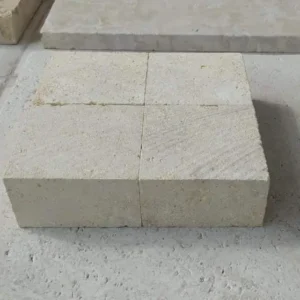
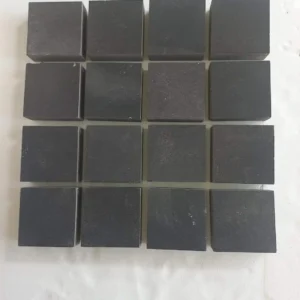
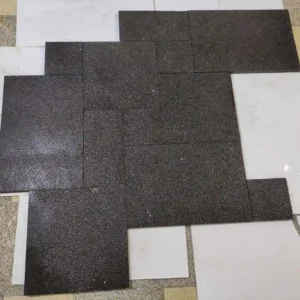
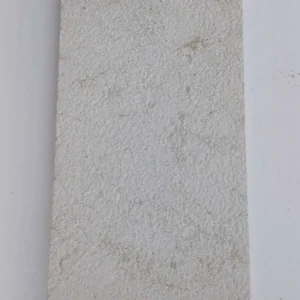
Citadel Stone supplies square patio slabs across Arizona in a range of formats, thicknesses, and finishes designed for the state’s specific climate and storm exposure conditions. Available sizes run from 12×12 through 24×24 nominal, in 2-inch and 2.5-inch thicknesses, with finish options including tumbled, brushed, and natural cleft. Colour ranges cover cream, ivory, light grey, silver, dark grey, charcoal, and graphite tones sourced from consistent quarry partners.

You can request sample tiles or full thickness specification sheets before placing your order — a step worth taking on larger projects where batch consistency across the full delivery quantity matters for drainage uniformity. For trade accounts and wholesale enquiries, Citadel Stone’s team can advise on project-specific lead times, format availability, and delivery logistics across Arizona. Warehouse stock typically supports 1 to 2 week lead times on standard formats, with truck delivery available statewide. Custom cut formats and non-standard thicknesses are available with additional lead time — contact the team early in your project timeline to confirm availability before you lock in installation scheduling.

For projects that extend beyond the patio into driveway or entry areas, your Arizona stone specification may benefit from reviewing related hardscape options — Square Driveway Pavers in Arizona covers how square format stone performs under vehicle loads and driveway-specific base requirements in the same regional conditions. Homeowners in Flagstaff, Sedona, and Yuma source Square Patio Slabs through Citadel Stone for Arizona residential and commercial installations.

Why Arizona’s Builders Choose Citadel Stone?

Free AZ Comparison: Citadel Stone vs. Other Suppliers—Find the Best Value!

FeaturesCitadel StoneOther Stone Suppliers
Exclusive ProductsOffers exclusive Ocean Reef pavers, Shellstone pavers, basalt, and white limestone sourced from SyriaTypically offers more generic or widely available stone options
Quality and AuthenticityProvides high-grade, authentic natural stones with unique featuresQuality varies; may include synthetic or mixed-origin stone materials
Product VarietyWide range of premium products: Shellstone, Basalt, White Limestone, and moreProduct selection is usually more limited or generic
Global DistributionDistributes stones internationally, with a focus on providing consistent qualityOften limited to local or regional distribution
Sustainability CommitmentCommitted to eco-friendly sourcing and sustainable production processesSustainability efforts vary and may not prioritize eco-friendly sourcing
Customization OptionsOffers tailored stone solutions based on client needs and project specificationsCustomization may be limited, with fewer personalized options
Experience and ExpertiseHighly experienced in natural stone sourcing and distribution globallyExpertise varies significantly; some suppliers may lack specialized knowledge
Direct Sourcing – No MiddlemenWorks directly with quarries, cutting unnecessary costs and ensuring transparencyOften involves multiple intermediaries, leading to higher costs
Handpicked SelectionHandpicks blocks and tiles for quality and consistency, ensuring only the best materials are chosenSelection standards vary, often relying on non-customized stock
Durability of ProductsStones are carefully selected for maximum durability and longevityDurability can be inconsistent depending on supplier quality control
Vigorous Packing ProcessesUtilizes durable packing methods for secure, damage-free transportPacking may be less rigorous, increasing the risk of damage during shipping
Citadel Stone OriginsKnown as the original source for unique limestone tiles from the Middle East, recognized for authenticityOrigin not always guaranteed, and unique limestone options are less common
Customer SupportDedicated to providing expert advice, assistance, and after-sales supportSupport quality varies, often limited to basic customer service
Competitive PricingOffers high-quality stones at competitive prices with a focus on valuePrice may be higher for similar quality or lower for lower-grade stones
Escrow ServiceOffers escrow services for secure transactions and peace of mindTypically does not provide escrow services, increasing payment risk
Fast Manufacturing and DeliveryDelivers orders up to 3x faster than typical industry timelines, ensuring swift serviceDelivery times often slower and less predictable, delaying project timelines

Extra Benefits

Choosing Citadel Stone offers unique advantages beyond premium stone quality:

Exclusive Access to Durable Stones

Citadel Stone specializes in unique, regionally exclusive stones, sourced directly from the Middle East.

Transparent Pricing – No Hidden Costs

With no middlemen, Citadel Stone provides direct, transparent pricing that reduces unnecessary costs.

Flexible Customization for Bespoke Projects

Tailor your order to precise specifications, from sizes to finishes, ensuring your project aligns perfectly with your vision.

Streamlined Delivery & Reliable Stock Availability

Benefit from fast production and delivery timelines, designed to minimize delays and ensure reliable availability.

The Preferred Stone Supplier for Luxury AZ Developments.

Scale Your Vision: We Support Arizona's Largest Projects with Reliable, Fast Delivery.

With unlimited tiles, pavers, cobble setts, curbstones, and the fastest delivery options, What’s not to love? Say goodbye to unnecessary hassles!

Leading AZ Stone Suppliers are Loving Citadel Stone!

Don’t Settle for Less. Source the Best Stone for Your Local Stone Expert.

DanielOwner
Thank you, Kareem. We received the order. The stones look great!
FrankOwner
You are a good businessman and I believe a good person. I admire your honesty, this is why I call you a good businessman.
Gemma C
Gemma CPrivate Project
Undoubtedly the price was the reason that we chose Citadel stone, in addition to the fact that you offer a white limestone that is hard to source. Your products are very good value for money by comparison with other companies. You have helped at every stage of the process and have been quick and reliable in your responses. It was a big risk for us to pay everything up front including shipping and not know the quality. You did make me feel that I could trust you and your company however and we are very happy with the tiles. They appear to have been finished to a very high quality of smoothness and I can't wait to see them once they have been laid. We need to see now how easy they are to fit and maintain, yet you also sealed them before shipment so we think that they will be very durable. Our building project has been delayed for a few months now so it may be sometime before we see them laid, but I promise that I will send photos as soon as we have them down. Thank you so much Kareem and your team, you have done a great job. I am hoping that we can pay for, and receive our second shipment in the not too far future, so that we can finish everything off. Wishing you well. Gemma
Molly McK
Molly McKPrivate Project
I appreciate the quality of product and care for the custom order in packaging each crate to minimize breakage as well as the flexibility with the order to help us make the most of shipping. The timely communications are impressive from the beginning and throughout the process. It's reassuring to have gone through one order to know what the process will be like in the future. I am glad to have had some guidance through the importing process and recommendations for shipping partners to assist. It's incredible to think about the journey the stone traveled to get to our site and I'm grateful to have made it to the next stage of the project relatively smoothly and with from what I can tell

Frequently Asked Questions

If your question is not listed, please email us at [email protected]

How do high winds and monsoon storms affect square patio slab installations in Arizona?

Wind-driven events in Arizona — particularly the haboobs and monsoon squalls common between July and September — generate lateral pressure and impact forces that can dislodge slabs installed without adequate bedding depth or edge restraint. Slabs with insufficient mass or a poorly compacted sub-base are especially vulnerable to shifting along joint lines. Specifying a denser natural stone at an appropriate thickness, combined with a properly prepared aggregate base, significantly reduces movement risk during severe weather events.

For residential patios in Arizona, a minimum slab thickness of 1.25 inches (roughly 30mm) is a common baseline for pedestrian-use areas, though exposed installations subject to wind load and occasional hail should use 1.5 inches or greater for added fracture resistance. Thicker profiles also perform better over expansive soils, which are prevalent across much of the Phoenix metropolitan area and can cause sub-base movement following monsoon rainfall. The right thickness ultimately depends on the stone type, sub-base preparation, and the specific load and exposure conditions of the site.

Harder natural stone varieties — such as granite and certain basalt types — offer meaningful resistance to impact from hail and wind-driven gravel, which is a realistic concern during Arizona storm seasons. Softer sedimentary stones like some sandstone variants are more susceptible to surface pitting or edge chipping under impact stress and may not be the best choice for fully exposed Arizona patios. Reviewing the Mohs hardness and absorption rate of a slab material before selection is a practical step that directly affects long-term storm resilience.

Arizona’s clay-rich and caliche soils require a compacted aggregate base of at least 4 to 6 inches to provide stable slab support and prevent differential settling after monsoon-season soil saturation. Without proper drainage slope and a graded sub-base, water trapped beneath slabs can erode the setting bed and amplify movement during the freeze-thaw cycles that occur at Arizona’s higher elevations. Cutting corners on base depth is one of the most common factors behind premature slab failure in Arizona outdoor installations.

After the monsoon season, it’s worth inspecting joint lines for sand or mortar displacement caused by wind-driven rain infiltration, as gaps left unaddressed allow moisture to work beneath the slab and accelerate sub-base erosion. Re-sanding joints with a polymeric sand product and re-applying a penetrating sealer where needed helps restore the installation’s weather resistance before the following storm season. Citadel Stone provides care guidelines specific to each stone type, which helps owners match their maintenance approach to the actual material installed rather than relying on generic advice.

Citadel Stone’s natural stone slabs are sourced and finished to consistent dimensional tolerances, which matters in practical terms when laying large square formats — uniform thickness across a batch means a level surface without excessive shimming or mortar adjustment on site. Backed by over 50 years of experience supplying natural stone to demanding residential and commercial projects, Citadel Stone maintains ready stock of Arizona-popular slab sizes and finishes at regional facilities, keeping lead times manageable for active project schedules. Arizona contractors and specifiers benefit from that inventory depth when sequencing material delivery around ground preparation and installation windows.