

How UV Exposure Affects Natural Garden Paving Slabs in Arizona
Surface albedo measurements taken on natural garden paving slabs after 18 months of Arizona sun exposure reveal a consistent pattern — lighter calcium carbonate stones lose between 12–18% of their original reflectance value when left unsealed, while denser igneous alternatives show less than 4% degradation over the same period. That’s the kind of material-specific data you need before specifying natural garden paving slabs for any outdoor project in this state, because the UV index in Phoenix and the surrounding valley regularly exceeds 11 — the highest classification on the WHO scale. Arizona’s solar radiation environment doesn’t just generate heat; it drives a photochemical weathering process that oxidizes mineral binders, bleaches iron-rich pigments, and degrades organic sealer components at a rate most mainland specifications never anticipate.
Understanding this mechanism changes how you approach material selection. Natural slabs for paving in Arizona that perform well in coastal or temperate climates may exhibit accelerated surface dusting and color migration within the first two Arizona summers if their porosity and mineral composition aren’t matched to high-UV conditions. Citadel Stone sources natural garden paving slabs from quarry partners whose geological formations are evaluated specifically for UV-stable mineral content — iron oxide concentration, silica binding matrix, and carbonate density all factor into which batches clear warehouse inspection for Arizona-bound projects.

Mineral Composition and Long-Term Color Stability in Arizona Sun
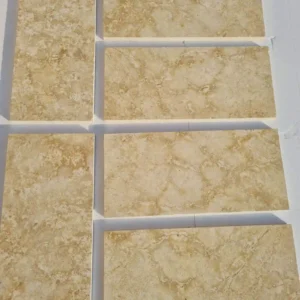
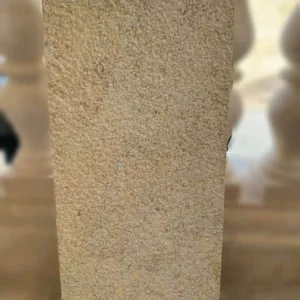
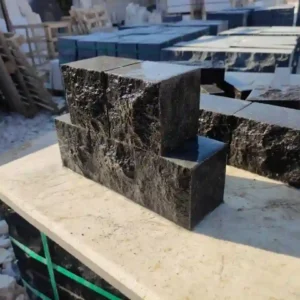
The single biggest misconception about stone coloured paving slabs in Arizona is that color variation is purely an aesthetic variable. It isn’t. Pigmentation in natural stone reflects mineralogical composition, and those same minerals determine how the slab responds to sustained UV bombardment. Iron-rich red and buff sandstones, for example, exhibit color through hematite and goethite — minerals that photobleach under prolonged UV exposure, shifting warm terracotta tones toward a chalky salmon within three to five years without protective sealing. Darker basaltic and silica-dominated slabs maintain their depth longer because their chromophores are embedded within a crystalline silicate matrix that UV photons penetrate less effectively.
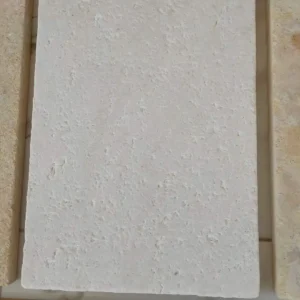
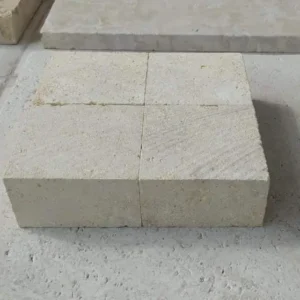
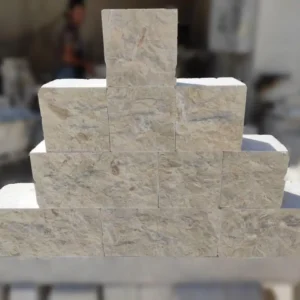
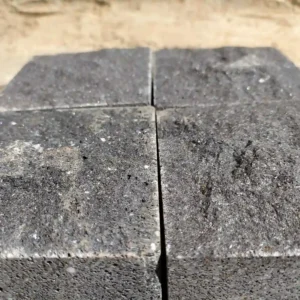
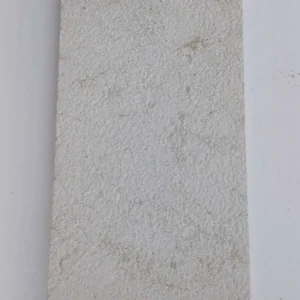
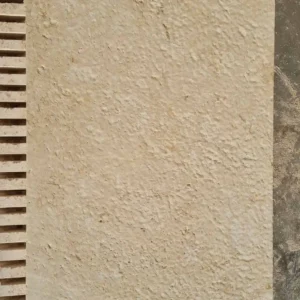
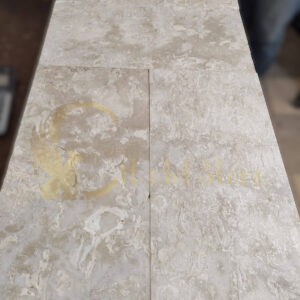
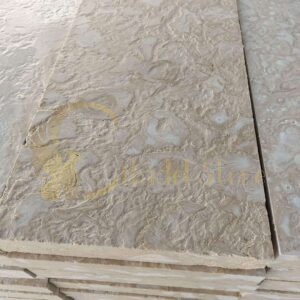
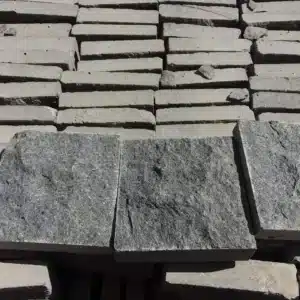
For garden slab stones in Arizona, this means your color selection and your maintenance commitment are directly linked. A riven finish paving slab in warm sandstone can look exceptional at installation and remain that way for 20+ years — but only if you apply a UV-inhibiting impregnating sealer every 24 to 36 months. The riven surface texture itself is an advantage here: the micro-relief creates shadow zones that reduce the flat-surface UV dose per square inch compared to a completely smooth garden slab. Field observation consistently shows that natural riven paving slabs outperform honed equivalents in color retention when both are left unsealed, purely because of that surface geometry effect.
According to Natural Stone Institute variety specifications, different stone families carry distinct structural porosities and mineral binder compositions that directly influence UV weathering rates — a distinction that becomes particularly significant in high-altitude Arizona installations above 5,000 feet where solar irradiance increases with reduced atmospheric filtration.
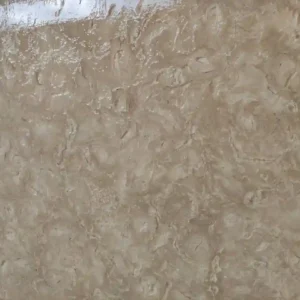
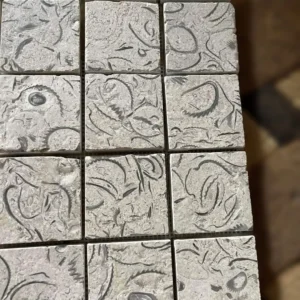
- Limestone and travertine slabs: moderate UV vulnerability due to calcium carbonate base — reliable performance with biennial sealing
- Sandstone slabs: highest UV color-shift risk in warm iron-oxide tones — prioritize UV-stable penetrating sealers applied within 30 days of installation
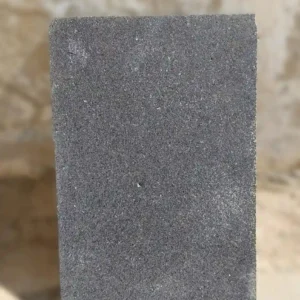
- Granite-matrix slabs: lowest UV degradation due to crystalline silicate structure — minimal sealing frequency required
- Riven natural paving slabs: surface texture geometry reduces effective UV dose — measurable advantage over smooth finishes in unsealed performance tests
- Smooth natural paving slabs: require the most rigorous sealing schedule — every 18–24 months in direct south-facing exposures
Riven vs Smooth Garden Slabs: Which Finish Holds Up in Arizona?
The finish debate between riven and smooth garden slabs in Arizona has a clearer answer than most specification guides acknowledge. Natural smooth paving slabs offer a refined, architectural aesthetic that suits contemporary outdoor garden settings in Scottsdale — the clean lines work beautifully against desert landscaping and modern pool surrounds. But smooth finishes concentrate UV exposure across an uninterrupted plane, and they show oxidation-driven surface dusting more visibly because there’s no texture to diffuse the discoloration.
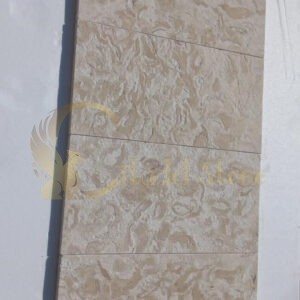
Riven natural paving slabs, split along their natural bedding planes, present a cleft surface that distributes UV exposure unevenly across peaks and recesses. This matters for two reasons: the shadow zones slow photochemical oxidation at the surface, and the natural cleft appearance visually absorbs the minor color variation that UV weathering introduces over time. For outdoor garden paving slabs in Arizona, a riven finish is the lower-maintenance choice over a 10-year horizon — not because it’s more durable in compressive terms, but because it ages more gracefully under sustained solar radiation.
The practical specification point is this: if your project brief calls for smooth garden slabs in an Arizona south-facing courtyard, budget for a UV-inhibiting sealer application at 18 months rather than 36, and choose a lighter stone tone that shows thermal expansion movement less dramatically. Riven finish paving slabs in mid-tone buffs and greys are the most forgiving specification for projects where maintenance schedules can’t be guaranteed.
Base Preparation and Drainage Requirements for Arizona Garden Paving
Arizona soils range from expansive clays in the Phoenix metro to decomposed granite and caliche hardpan in the Tucson basin — and each soil type creates a different failure mode for outdoor garden slabs if the base preparation isn’t calibrated correctly. Caliche, in particular, is a layer specifiers encounter on many Tucson and Yuma residential projects: it’s calcium carbonate cemented gravel and silt that can be nearly impermeable to drainage. Installing outdoor garden paving slabs over an unbroken caliche layer without drainage channels creates a perched water table condition directly under your stone. In Arizona’s monsoon season, that means rapid moisture pressure cycling — not a freeze-thaw problem here, but a wet-to-bone-dry saturation swing that works slab joints loose within two or three wet seasons.
For expansive clay soils common to the East Valley and parts of the Phoenix metro, your base aggregate depth should run a minimum of 6 inches of compacted Class II base material, with a 1.5% cross-slope minimum to direct water away from foundations. The standard 4-inch base that works fine in stable soils simply isn’t enough when clay content exceeds 30% and soil expansion coefficients are in play. Heavy duty flagstones in Arizona — particularly 2-inch nominal thickness material — provide the flexural strength to bridge minor substrate movement, but they won’t compensate for inadequate drainage over time. The base does that work. The ASLA guidance on permeable outdoor paving surfaces highlights how base permeability and drainage design interact with long-term paving stability — a consideration especially relevant to Arizona’s variable soil conditions and intense monsoon rainfall events.
- Caliche hardpan: requires mechanical scarification or drainage channels before base compaction — do not pave directly over impermeable caliche layers
- Expansive clay: minimum 6-inch Class II base, compacted in 2-inch lifts, with geotextile separation fabric between subgrade and aggregate
- Decomposed granite subgrade: excellent natural drainage, but requires a stabilizing compaction layer to prevent differential settlement under heavy duty flagstones
- Sandy alluvial soils: adequate drainage but low bearing capacity — consider 2.5-inch slab thickness for high-traffic back garden paving slabs areas
For landscaping projects requiring stone elements that complement your paving specification, Natural Garden Paving Slabs from Citadel Stone covers the thickness specifications and load-bearing requirements relevant to similar Arizona site conditions. Getting base preparation calibrated to your specific soil type at this stage is what separates a 10-year installation from a 25-year one.
Thickness Selection and Load Performance for Arizona Garden Use
Natural slabs for paving come in a wider thickness range than most residential specifications require — 20mm, 30mm, 40mm, and 50mm are all commercially available, but the decision point for Arizona garden applications comes down to two variables: the subbase condition you’re working with and the anticipated foot traffic pattern. For standard back garden paving slabs applications — patios, entertaining areas, garden paths — a 30mm nominal thickness over a properly prepared base handles pedestrian loads comfortably with a safety margin. Step up to 40mm when you’re specifying stone decking paving slabs for elevated deck structures or when the base is anything less than ideal.
Heavy duty flagstones in Arizona projects — the 50mm-range material — aren’t typically necessary for residential garden use, but they become relevant when you’re paving access routes that will see wheeled garden equipment, lightweight vehicles, or dense foot traffic at commercial garden and hospitality settings. The structural advantage of additional thickness isn’t purely compressive strength: thicker slabs have higher flexural resistance, which means they bridge minor point loads without the edge chipping that thinner material can exhibit when traffic isn’t evenly distributed.
A practical note on sizing: landscape slab stone in large format — 600mm × 900mm and above — requires thicker material proportionally because longer unsupported spans amplify point load stress at slab midpoints. For single flagstone elements used as feature stepping stones or entry pads in Arizona garden designs, a minimum 40mm thickness is advisable regardless of base quality, simply because single pieces can’t distribute loads across adjacent units the way a fully bonded field installation can.
- 20mm slabs: suitable for light-duty decorative applications only — not recommended for primary garden paving in Arizona due to thermal cycle stress
- 30mm nominal: appropriate for patios, dining areas, and garden paths over compacted aggregate base — the standard residential specification
- 40mm: recommended for elevated stone decking paving slabs, larger format pieces, and any application near pool surrounds
- 50mm and above: heavy duty flagstones rated for wheeled access, commercial foot traffic, and situations where subbase quality cannot be confirmed

Sealing Protocols and UV Protection for Outdoor Garden Slabs
Arizona’s UV environment accelerates sealer degradation faster than most product datasheets anticipate — those datasheets are typically calibrated for mid-latitude installations with UV indices in the 6–8 range, not the 10–12 range that Flagstaff and Phoenix register during summer months. The practical implication for natural stone slabs for garden installations is that you should treat UV index as a primary sealer selection criterion, not just the stone’s porosity rating.
Impregnating penetrating sealers with UV stabilizer additives are the correct specification for outdoor garden slabs in Arizona. Film-forming topical sealers that sit on the surface are categorically unsuitable for high-UV environments: they absorb UV energy directly, photodegrade at the surface, and begin peeling or hazing within 12–18 months. Penetrating sealers, by contrast, work within the stone’s pore structure where UV radiation doesn’t reach — their protective mechanism doesn’t depend on surface exposure resistance. According to USGS dimension stone production and use data, natural stone paving has consistently demonstrated superior long-term performance when maintenance protocols are matched to regional environmental conditions rather than generic manufacturer schedules.
The sealing frequency recommendation for Arizona outdoor garden paving slabs with quality penetrating sealers is 24 months for heavily UV-exposed south and west-facing installations, and 36 months for shaded or north-facing garden areas. In Flagstaff, where elevation above 6,900 feet means higher UV irradiance than valley locations despite cooler air temperatures, you should default to the 24-month schedule regardless of aspect. Test sealer efficacy annually with a water bead test: if water absorbs rather than beading on the surface, reapplication is due regardless of the calendar schedule.
- Apply first sealer coat within 30 days of installation — before the initial UV exposure cycle begins photochemical surface oxidation
- Allow 48–72 hours of dry weather before and after sealer application — Arizona’s monsoon season creates scheduling windows that matter
- Clean natural stone slabs for garden areas thoroughly before resealing — efflorescence salts must be neutralized first or they’ll trap moisture under the new sealer layer
- Two thin coats of penetrating sealer outperform one heavy application — allow 20–30 minutes between coats for the first application to partially cure
- Riven finish paving slabs require higher sealer volume per square foot than smooth slabs — factor 15–20% additional coverage into your material estimate
Choosing Stone Colors for Arizona’s Light Conditions and Garden Aesthetics
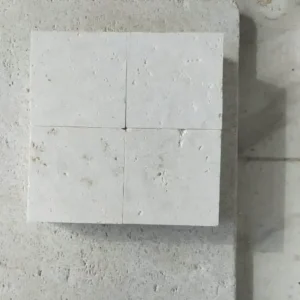
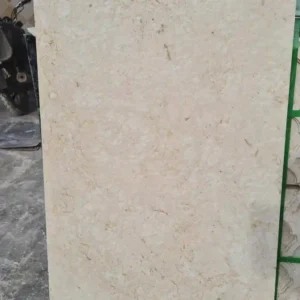
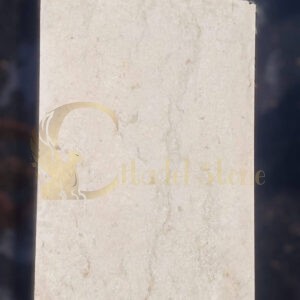
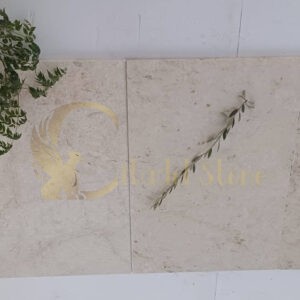
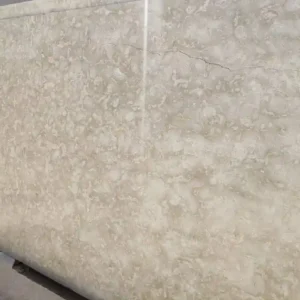
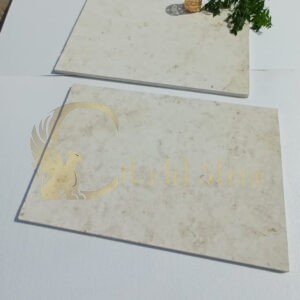
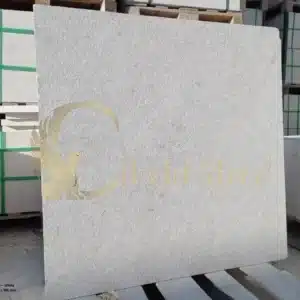
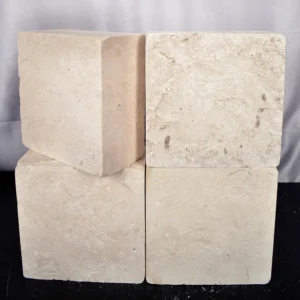
Arizona’s intense solar light quality — the high-UV, low-humidity atmosphere that makes the desert Southwest famous for photography — transforms stone colors in ways that surprise most specifiers seeing their first completed installation. Cream and buff natural garden paving slabs that appear warm and inviting in warehouse samples can read almost white under direct midday Arizona sun, which affects both the visual temperature of the space and the surface reflectance entering adjacent windows and living areas. This isn’t a product quality issue; it’s a lighting physics reality you need to account for in your specification process.
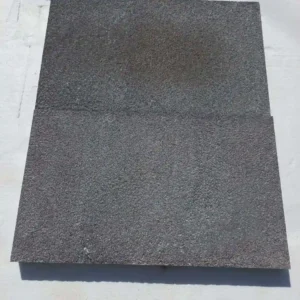
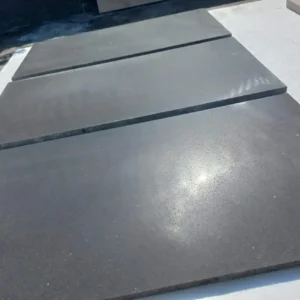
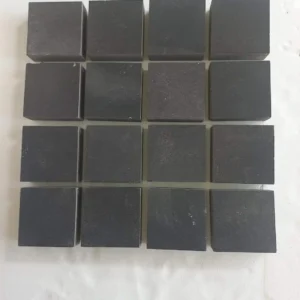
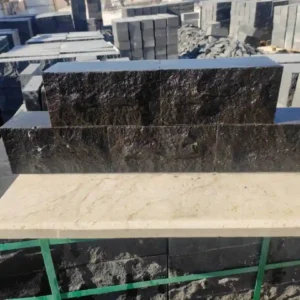
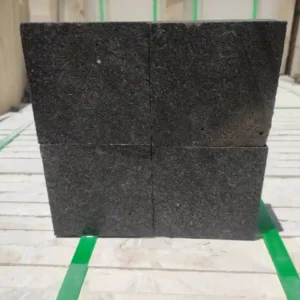
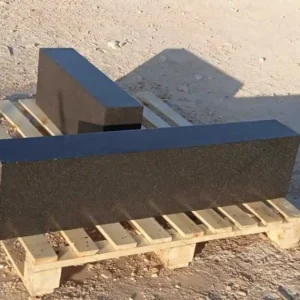
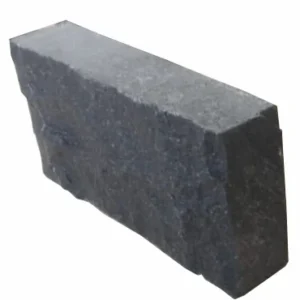
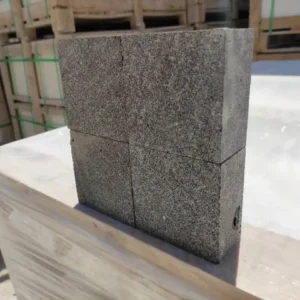
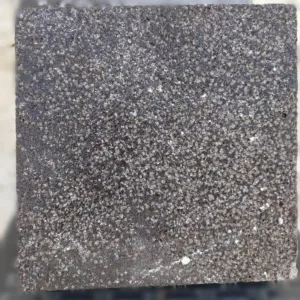
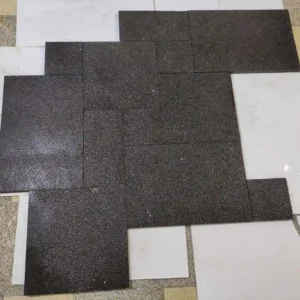
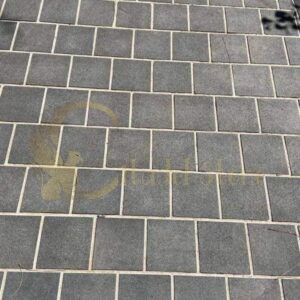
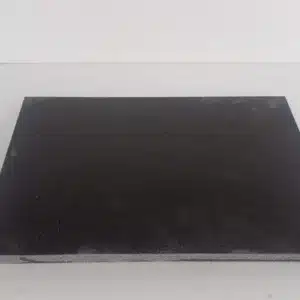
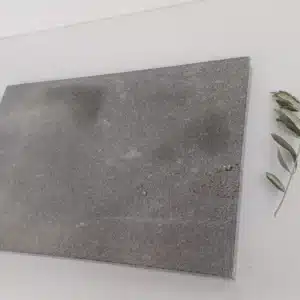
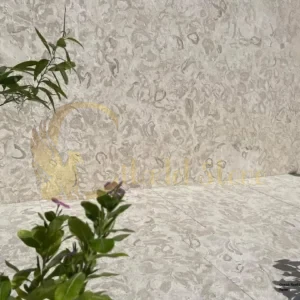
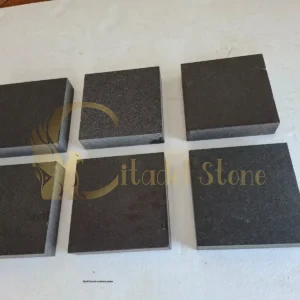
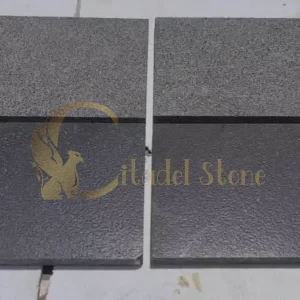
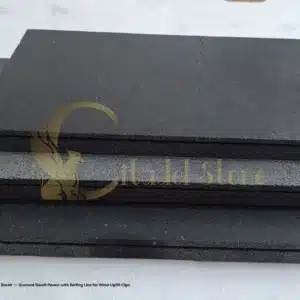
For residential garden paving in Scottsdale and the Phoenix metro, mid-tone stone colours — aged buff, weathered grey, tobacco brown — tend to maintain their intended visual character through Arizona’s extreme light range far better than very light or very dark extremes. Stone coloured paving slabs in the grey-to-charcoal range are increasingly popular for contemporary desert landscaping because they photograph well, contrast effectively with drought-tolerant planting, and don’t show the UV-driven color fade that warm iron-oxide tones exhibit. Dark grey riven natural paving slabs in the 600mm × 600mm format are among the most-specified formats for upscale Scottsdale garden and pool areas precisely because they hold their visual depth through Arizona’s lighting extremes.
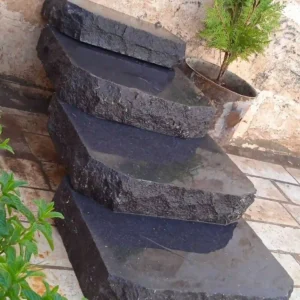
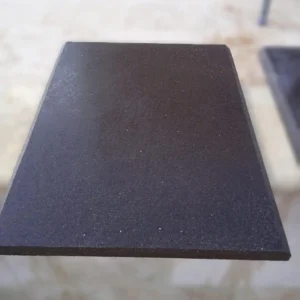
Very dark or black stone coloured paving slabs in direct sun do create high surface temperatures — this is a thermal mass consideration separate from the UV weathering discussion. But the UV performance of dark silica-rich stones is actually superior to lighter limestone options: the crystalline structure resists photochemical degradation more effectively, meaning the color you install is much closer to the color you’ll have a decade later. That’s a meaningful factor in total cost of ownership when you’re specifying high quality paving slabs in Arizona for a project where the aesthetic brief matters long-term.
Natural Riven, Flagstone, and Irregular Formats in Arizona Garden Design
Format selection for natural garden slabs in Arizona goes beyond aesthetics — the geometry of how pieces fit together affects joint width, drainage behavior, and thermal expansion management across the installed field. Regular square and rectangular formats — the standard stone flag stones in 600mm × 600mm or 600mm × 900mm — give you predictable joint lines and consistent expansion joint placement, which simplifies installation and makes the thermal movement math straightforward. In Phoenix, where installed stone surfaces can cycle between 50°F at winter night and 150°F+ surface temperature in summer afternoon sun, you’re dealing with a 100°F+ differential — and natural stone expands at approximately 3–5 × 10⁻⁶ per °F depending on mineral composition. For a 10-foot run of material, that’s meaningful movement.
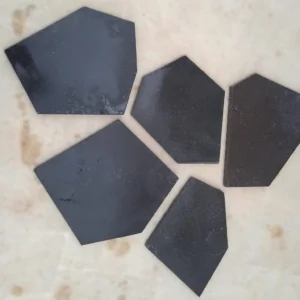
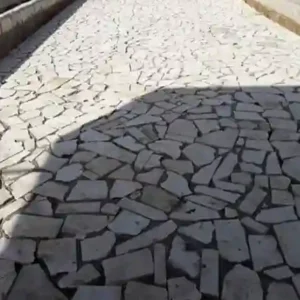
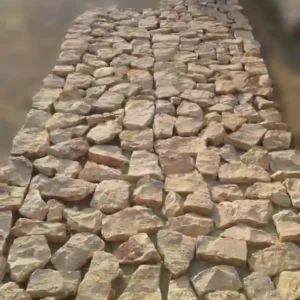
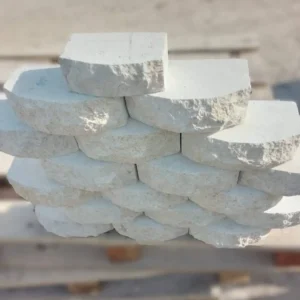
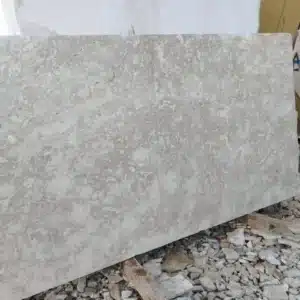
Irregular natural garden slabs — the random riven flagstone formats popular in organic garden design and traditional Southwest aesthetics — present more complex thermal movement dynamics because piece sizes vary. Tighter natural joint patterns typical of irregular flag laying actually perform better thermally than wide mortared joints, because the interlock of irregular edges provides physical restraint against lateral expansion. The trade-off is drainage: irregular joints can trap organic matter more readily than regular formats, requiring periodic jet washing to maintain flow-through performance during monsoon rainfall.
Single flagstone feature elements — stepping stones, focal pads, entry pieces — are a different specification category entirely. A single flagstone in Arizona placed as an isolated element must be bedded in full-contact mortar across its entire underside, with no voids. Isolated pieces without full mortar contact develop stress concentrations at edge zones when thermal cycling loads them unevenly, and edge chipping is the result. Citadel Stone’s team regularly advises on mortar specification for feature single flagstone installations, including flexible additive ratios that accommodate Arizona’s thermal movement demands.
- Regular square/rectangular formats: simplest expansion joint planning — install movement joints every 12–15 feet in both directions
- Irregular flagstone patterns: natural edge interlock provides thermal restraint — suit traditional and organic garden design aesthetics
- Large format slabs (900mm × 900mm+): require full mortar bed contact and closer point load monitoring — no spot-bedding on corner points only
- Natural garden slabs in natural riven finish: preferred for informal garden paths and stepping stone sequences where the organic aesthetic is part of the design intent
- Single flagstone elements: full mortar contact is non-negotiable in Arizona’s thermal cycling environment
Buy Natural Garden Paving Slabs for Your Arizona Project
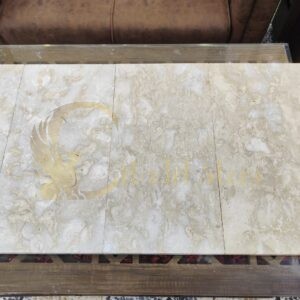
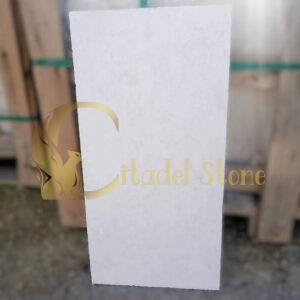
Citadel Stone stocks natural garden paving slabs in a range of formats, finishes, and thicknesses suited to Arizona’s UV and thermal demands — from 30mm riven buff flagstones in standard 600mm × 600mm and 600mm × 900mm sizes through to large-format 40mm smooth slabs for contemporary outdoor garden settings. Available finishes include natural riven, honed smooth, and sawn-edge formats across multiple stone tones: warm buff, silver-grey, charcoal, and natural sandstone colours. You can request sample pieces before committing to a full project order — samples are dispatched from warehouse stock and allow you to evaluate color under Arizona light conditions at your actual project location, which matters given how dramatically stone tone reads differently in desert sun versus indoor showroom lighting.
For trade and wholesale enquiries, Citadel Stone’s team can provide specification documentation, MSDS sheets, and thickness tolerance data to support project submissions. Lead times from regional warehouse inventory typically run 5–10 business days for standard formats, with truck delivery available across Arizona including metro Phoenix, Tucson, and outlying locations. Custom cuts and non-standard thicknesses carry longer lead times — contact Citadel Stone early in the specification process if your project requires fabricated pieces or matching existing installations. Projects with specific UV performance requirements or aggressive maintenance schedules can request technical consultation on sealer compatibility and resealing protocols at no additional charge.
Your Arizona garden hardscape project deserves stone selected for this specific climate — not generic paving pulled from a catalogue assembled for temperate conditions. As your project planning progresses, it’s worth exploring complementary Citadel Stone products for broader garden hardscape design: garden flagstones in Arizona covers additional format and material options that pair well with primary natural garden paving slab specifications. Stone selections for Arizona projects in Flagstaff, Sedona, and Yuma include Natural Garden Paving Slabs supplied direct from Citadel Stone.


