



















50 Years Of Manufacturing & Delivering The Highest-Quality Limestone & Black Basalt. Sourced & Hand-Picked From The Middle East.

Escrow Payment & Independent Verifying Agent For New Clients

Contact Me Personally For The Absolute Best Wholesale & Trade Prices:

USA & Worldwide Hassle-Free Delivery Options – Guaranteed.

Limestone Floor Tiles in Arizona

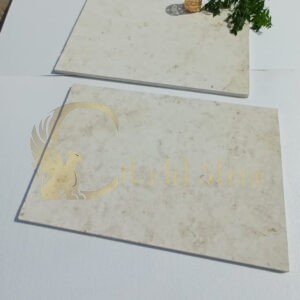
Limestone floor tiles in Arizona must meet more than aesthetic standards — local building codes, including those aligned with IBC structural loading requirements, directly influence minimum tile thickness, substrate specifications, and acceptable bond-coat systems for interior and exterior applications. A 3/4-inch minimum thickness is commonly specified for natural stone flooring in commercial occupancies, and Arizona's expansive clay soils introduce additional deflection concerns that influence subfloor engineering decisions. Citadel Stone Limestone Floor Tiles in Arizona addresses these compliance considerations directly, offering contractors and designers access to a curated selection of limestone formats — including 12x24, 16x16, and 24x24 tiles — in honed, brushed, and tumbled finishes held in regional inventory. What many specifiers underestimate is how variation in limestone density and surface porosity affects both the mortar system selection and long-term slip-resistance compliance under Arizona's commercial accessibility standards — a trade-off the full specification guidance below walks through in detail. Limestone Floor Tiles from Citadel Stone is available to Arizona contractors and designers serving Phoenix, Tucson, and Scottsdale.

See & Feel the Quality – Free Arizona Stone Samples

Our stones are made for the Arizona sun. See how the colors hold up in your specific light.

Design Your Arizona Home with a Local Stone Expert

Get personalized advice on the best stone for Arizona's climate and your design style.

Premium Natural Stone — All Sizes & Thicknesses Available

From standard cuts to fully custom dimensions — our limestone, granite, basalt & shellstone
are cut to your exact specifications. Residential or commercial, we’ve got you covered.

Get Your Free Arizona Stone Quote

Transparent Pricing for Your Arizona Project

Elevate Your Arizona Property with Premium Stone, Priced for Value.

Unlock $10,000 Worth of Deals on Beautiful Paver, Tiles & Cobble Setts—For Free!

Invest in Arizona’s Landscape: Stone That Lasts a Lifetime.

100% Happiness Guarantee

Trust 50 Years of Expertise. Invest in Quality Limestone Tiles

Custom-Cut for Your Arizona Project: Any Size, Any Finish.

No-Obligation Consultation: Get Expert Advice for Your Arizona Home.

The Stone Supplier Trusted by Arizona's Leading Architects & Designers.

Trusted by Top Stone Experts Around the Globe

Arizona's Most Diverse Selection of Limestone Tiles.

Elevate Your AZ Property with Limestone Built for the Desert. Our expansive collection of limestone tiles brings timeless beauty and proven durability to both residential and commercial spaces across Arizona. As the state’s leading supplier, we offer a diverse palette of colors and finishes—from cool, light tones that reflect the sun to rich, earthy textures that complement the Southwest landscape. Transform your environment with limestone that stands up to the Arizona heat while providing the sophisticated aesthetic you desire.

Explore Arizona-Tough Alternative Stones

Product NameDescriptionPrice per Square Foot
Travertine TilesBeautiful natural stone with unique textures$8.00 - $12.00
Marble TilesLuxurious and elegant, available in various colors.$10.00 - $15.00
Granite TilesExtremely durable and perfect for high-traffic areas.$7.00 - $12.00
Slate TilesRich colors and textures; ideal for wet areas.$6.00 - $10.00
Porcelain TilesVersatile and low-maintenance, mimicking natural stone.$4.00 - $8.00
Ceramic TilesAffordable with a wide variety of designs.$3.00 - $6.00
Quartzite TilesStrong and beautiful, resistant to stains.$9.00 - $14.00
Concrete PaversCustomizable for patios; durable and cost-effective.$5.00 - $9.00
Glass TilesStylish, reflective, and brightening.$15.00 - $25.00
Composite TilesEco-friendly options made from recycled materials.$5.00 - $10.00

Incredible Prices for Top-Quality Stone—Shop Citadel Stone Today!

Table of Contents

Specifying limestone floor tiles in Arizona demands a structural lens first — the material’s load path, base compatibility, and code compliance determine whether your installation survives inspection, not just the first summer. Arizona’s building departments across metro and rural jurisdictions have tightened their stone flooring requirements considerably over the past decade, and a beautiful limestone floor tile selection means nothing if it can’t pass a third-party structural review. What most specifiers underestimate is how local soil bearing capacity interacts with slab thickness requirements — and how that interaction shapes every tile format decision downstream.

Arizona Building Codes and Limestone Floor Tile Compliance

Arizona follows the International Building Code with state amendments, and flooring systems — particularly heavy natural stone — fall under specific load distribution requirements. Your limestone floor tile specification needs to account for dead load contributions, especially in upper-story applications where structural engineers routinely flag oversized tile formats. At 160–165 lbs per cubic foot, limestone adds measurable dead load, and anything over 24×24 inches in format typically requires an engineer’s sign-off in Maricopa and Pima counties.

The seismic design category for most of Arizona sits at SDC B or C depending on the specific jurisdiction, which means your tile installation system — specifically the mortar bed, uncoupling membrane, and grout joints — must accommodate lateral movement without cracking. This isn’t a theoretical concern. Installations that skip an uncoupling layer in seismic zones show hairline fractures within 18–24 months, and those cracks void most manufacturer warranties immediately. You’ll want to spec a high-performance uncoupling membrane like Schluter Ditra or equivalent rated systems for SDC applications whenever you’re working with large-format limestone floor tiles in Arizona.

  • Maricopa County requires a structural engineer’s letter for stone tile installations exceeding 6 lbs per square foot on wood-frame subfloors
  • Pima County’s amended IBC requires expansion joints every 20–25 linear feet in interior stone flooring — not the 30 feet some generic specs allow
  • Arizona does not have a frost line requirement for most low-desert zones, but Flagstaff and higher-elevation jurisdictions above 5,000 feet follow a 24-inch frost depth standard
  • ADA compliance under the Arizona Revised Statutes mirrors federal standards — slip resistance for wet areas requires a DCOF of 0.42 or higher (ANSI A137.1)
  • Commercial projects must meet ASTM C1028 or the updated ANSI DCOF standards — verify which version your local AHJ (Authority Having Jurisdiction) references

Citadel Stone’s technical team regularly assists specifiers in navigating these code requirements, drawing on hands-on experience with limestone floor tile installations across Arizona’s varied jurisdictional landscape. You can request thickness specifications and load data sheets to support your engineer’s review before committing to a format.

Citadel Stone distribution facility preserves limestone floor tiles in Arizona within wooden crates.

Structural Base Preparation for Limestone Floor Tiles in Arizona

The base system under your limestone floor tile is where Arizona’s specific soil conditions create real engineering challenges. Expansive clay soils — common across the Tucson basin and parts of the East Valley — generate vertical movement of up to 1.5 inches seasonally when moisture content shifts. That kind of heave destroys a rigid mortar bed installation with predictable consistency. Your base specification has to address soil stabilization before you ever discuss tile thickness.

For slab-on-grade applications, a 4-inch minimum concrete slab with a compressive strength of 3,500 PSI is the baseline — but in expansive soil zones, that slab needs post-tension engineering or a reinforced 6-inch pour with a vapor barrier rated at 10 perms or lower. Projects in Tucson sit on some of the most moisture-reactive soils in the state, and skipping the vapor barrier step on interior limestone floors there creates efflorescence problems within the first monsoon season.

  • Minimum slab flatness tolerance for limestone tile installation: FF 25 (floor flatness) with FL 20 (floor levelness) per ASTM E1155
  • Lippage control requires you to maintain slab flatness within 1/8 inch over a 10-foot straightedge before any large-format tile goes down
  • Modified thin-set mortar (ANSI A118.4) is the minimum specification for limestone bonding — unmodified mortars don’t provide adequate shear strength under thermal cycling
  • Back-buttering coverage must achieve 95% contact for wet areas and 80% minimum for dry interior applications per TCNA guidelines
  • Crack isolation membranes rated for 1/8-inch crack bridging reduce callback rates significantly in Arizona’s reactive soil zones

Brushed limestone tile in Arizona tends to perform better than polished formats in base-movement situations because the textured surface tolerates minor lippage without the optical glare that makes hairline differential settlement immediately visible. That’s a practical field observation worth building into your finish selection process early.

Thickness and Format Selection: What Arizona Load Requirements Demand

Tile thickness isn’t just a product spec — it’s a structural decision in Arizona’s commercial and high-end residential context. The standard residential limestone floor tile runs 3/8 to 1/2 inch nominal thickness, which handles foot traffic loads without issue. Commercial applications — hotel lobbies, retail floors, restaurant interiors — require you to step up to 5/8 inch or even 3/4 inch thickness when point loads from carts, chairs, or heavy equipment are in play.

Umbrian limestone floor tiles in Arizona have gained significant specification traction because the material’s natural density (approximately 155 lbs/cubic foot) and consistent quarry thickness make structural compliance straightforward. Umbrian limestone tiles in Arizona typically arrive at 20mm nominal, which sits in a comfortable zone for both residential and light commercial applications without triggering the engineer review threshold in most jurisdictions. For projects in Scottsdale‘s high-end resort sector, where aesthetic continuity across large floor plates matters, Umbrian limestone’s consistent cream-to-warm-grey palette also eliminates the batch variation issues that plague cheaper imported alternatives.

  • 12×24 format: handles residential dead loads comfortably on properly prepared concrete substrates
  • 24×24 format: requires FF 35 slab flatness and structural review for upper-floor wood-frame applications
  • 24×48 and larger: requires uncoupling membrane, expansion joints at 15-foot intervals, and engineer’s letter in most Arizona jurisdictions
  • Subway format (3×6, 4×12): structurally undemanding but requires precise grout joint alignment — horizontal coursing errors are highly visible in long corridors
  • Thickness tolerance per ANSI A137.1: ±3% — verify this against your installer’s tile saw capacity for field cuts

Limestone subway tile in Arizona has found a strong market in kitchen backsplash and bathroom wall applications, where structural requirements are less demanding but moisture management becomes the primary engineering concern. Grey limestone kitchen floor tiles in Arizona follow different thickness logic than wall tiles — a 10mm wall tile is appropriate, but you should never spec under 15mm for any floor application that will see regular foot traffic. Limestone subway tile in Arizona also presents grout joint alignment demands that reward experienced installers over generalist tiling crews, particularly in long corridor runs where any horizontal drift compounds visibly.

Slip Resistance, ADA Compliance, and Surface Finish Selection

Surface finish selection for limestone floor tiles in Arizona isn’t an aesthetic decision alone — it’s a code compliance and liability question. The DCOF (Dynamic Coefficient of Friction) requirements under ANSI A137.1 set a minimum of 0.42 for level interior wet areas, and Arizona’s commercial projects are routinely spot-checked during certificate of occupancy inspections. A polished limestone floor in a commercial bathroom fails that threshold consistently, which is why you need to build finish selection into your code review process from the design development phase.

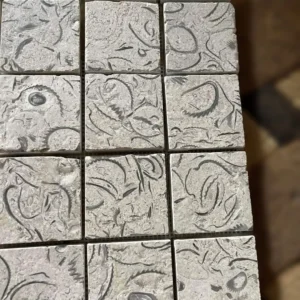
Fossil brushed limestone tile provides a naturally textured surface that typically achieves DCOF values in the 0.55–0.65 range, comfortably exceeding code minimums. Maravilla fossil brushed limestone tile in Arizona has become a specification standard in upscale hospitality projects precisely because it combines the tactile texture that passes ADA wet-area requirements with a visual warmth that polished materials can’t replicate. The fossil detailing in the stone’s surface also creates micro-drainage channels that reduce pooling in shower floors and pool surrounds. Fossil brushed limestone tile delivers that performance consistency across batches in a way that makes it a reliable default for wet-area specifications in Arizona’s hospitality and high-end residential sectors.

  • Polished finish: DCOF typically 0.30–0.38 — not suitable for wet or commercial floor applications without anti-slip treatment
  • Honed finish: DCOF typically 0.42–0.52 — passes code for interior dry areas, marginal for wet zones
  • Brushed or antiqued finish: DCOF typically 0.55–0.70 — preferred for wet areas and exterior transitional zones
  • Tumbled finish: DCOF 0.65+ — highest slip resistance but irregular lippage can create trip hazards in high-traffic circulation paths
  • Anti-slip sealers can raise DCOF by 0.05–0.10 points but require reapplication every 2–3 years in Arizona’s high-UV environment

Maravilla fossil brushed limestone tile in Arizona stands out in this performance bracket because quarry consistency means DCOF variation between batches stays within 0.05 points — a tighter tolerance than most natural stone alternatives. Sourced from established quarry partners, each batch Citadel Stone brings in goes through warehouse inspection for surface texture consistency and dimensional accuracy before it reaches your project site.

Limra, Avalon, Avondale, and Other Limestone Varieties for Arizona Projects

Arizona’s architectural range — from Scottsdale’s contemporary desert modernism to historic Tucson adobe renovations — demands a broader palette than most limestone suppliers stock. Understanding the structural and aesthetic distinctions between limestone varieties helps you match material to project type without over-engineering or under-specifying.

Limra tiles in Arizona represent one of the lighter-density limestone options, with a compressive strength around 7,000–9,000 PSI compared to the 12,000–15,000 PSI of denser varieties like Umbrian. That density difference matters in high-traffic commercial applications, where point load resistance and abrasion resistance determine long-term floor performance. Limra’s creamy white tone and fine grain make it visually compelling, but you should restrict it to lower-traffic residential applications or feature areas where aesthetic impact outweighs durability demands. Limra tiles in Arizona are best deployed as accent flooring or feature inlays rather than primary circulation surfaces in commercial environments.

  • Limra tiles: fine-grained Turkish limestone, cream-to-white palette, best for low-traffic residential interiors
  • Avalon limestone tiles: medium-density Belgian blue limestone, grey-dominant palette, strong commercial performance track record
  • Avondale limestone tiles: warm buff-grey tones, consistent veining, well-suited to Arizona’s warm desert palette preferences
  • Umbrian limestone: Italian origin, warm cream-grey with subtle movement, reliable dimensional consistency across quarry batches
  • Fossil brushed limestone: organic surface texture with embedded fossil details, premium hospitality and residential specification

Avalon limestone tiles in Arizona have performed particularly well in commercial flooring applications where grey limestone kitchen floor tiles and lobby floors need to balance visual sophistication with genuine durability. Avalon limestone tiles in Arizona carry a grey-dominant palette that reads as contemporary without the coldness of engineered stone alternatives. Avondale limestone tiles in Arizona offer a warmer alternative for residential projects where the cool grey of Avalon reads too industrial against warm interior palettes. Both varieties are available in standard warehouse stock from Citadel Stone, typically with lead times of 1–2 weeks for quantities under 500 square feet.

For projects requiring custom cuts or non-standard formats — particularly for the curved floor plans common in Scottsdale’s contemporary residential sector — Citadel Stone’s team can advise on lead times and coordinate with your fabricator on material allocation from confirmed warehouse stock before your project schedule commits. Avondale limestone tiles in Arizona are particularly well matched to the warm sandstone and terracotta tones common in Scottsdale’s desert-contemporary interiors.

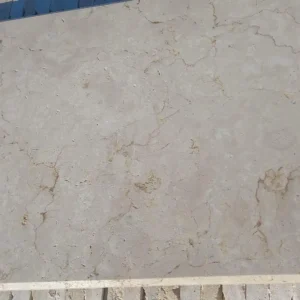
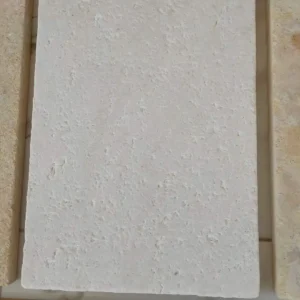
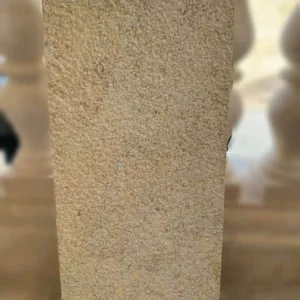
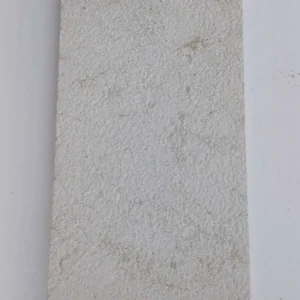
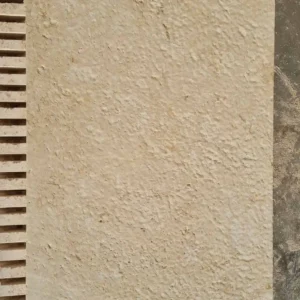
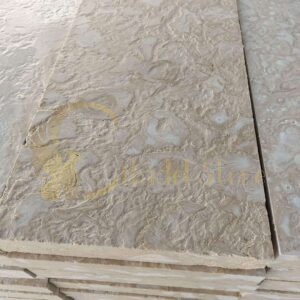
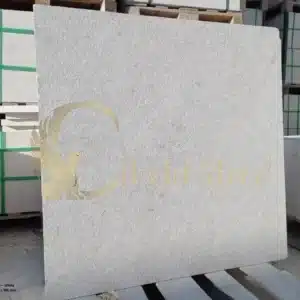
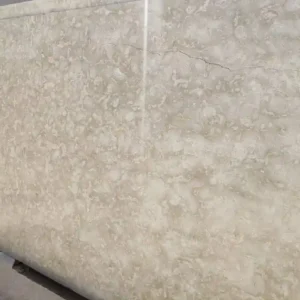
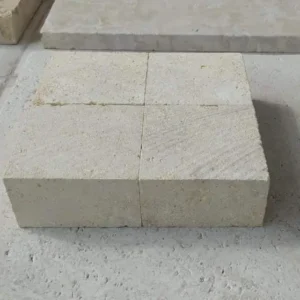
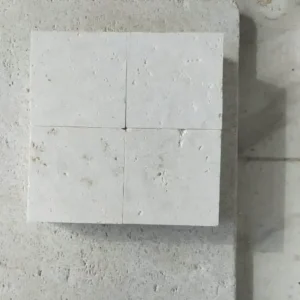
Close-up view of a rough-textured off-white limestone slab surface.

Installation Variables Across Arizona’s Elevation and Climate Zones

Arizona’s elevation range — from 70 feet above sea level in Yuma to over 7,000 feet in the White Mountains — creates installation variable shifts that generic product datasheets don’t capture. Mortar open time drops by roughly 15–20% for every 2,000-foot elevation gain because humidity levels fall and evaporation accelerates. Your installer needs to adjust batch sizes and working pace accordingly, especially on large-format tile where getting mortar coverage right before skinning occurs is already a narrow window.

Projects in Phoenix face the opposite challenge — summer installation in 110°F+ ambient temperatures means mortar can skin in under 10 minutes on sun-exposed slabs. That’s why Phoenix-area commercial installers routinely work night shifts for exterior limestone floor tile applications between June and September, and why your specification should include a mortar temperature window (50°F–90°F substrate temperature) as a contractual installation condition rather than a suggestion.

  • Low desert zones (Phoenix, Tucson, Yuma): heat management is the primary installation constraint — shade substrate before application, use extended open-time mortars
  • Mid-elevation zones (Sedona, Prescott, Payson): moderate installation conditions but monsoon humidity spikes require moisture-tolerant setting materials
  • High-elevation zones (Flagstaff, Show Low): frost line at 24 inches demands fully adhered waterproofing systems under any exterior or semi-exterior limestone floor tile application
  • Grout joint width should increase from 1/16 inch (interior climate-controlled) to 3/16 inch minimum for exterior applications across all zones
  • Thermal expansion joints in exterior limestone floor installations should be positioned every 8–10 feet in high-desert zones — not the 15-foot interior standard

Brushed limestone tile in Arizona’s exterior applications — pool surrounds, covered patios, outdoor dining — benefits from factory-applied impregnating sealer before installation in extreme heat zones. Heat-accelerated solvent evaporation during field-applied sealing in summer months creates uneven penetration that leads to patchy appearance within the first season. Specifying pre-sealed stone from the warehouse, or scheduling field sealing for cooler months, is a detail that separates installers who get callbacks from those who don’t. Truck delivery to these project sites — whether in low-desert Phoenix or high-elevation Flagstaff — is coordinated from Citadel Stone’s warehouse to keep your schedule intact across Arizona’s varied geography.

Sealing Protocols and Long-Term Maintenance for Arizona Limestone Floors

Arizona’s combination of high UV exposure, hard water, and dry conditions creates a specific maintenance context for limestone floor tiles that’s different from most other states. The hard water across most Arizona municipalities — with total dissolved solids regularly exceeding 500 mg/L — leaves calcium carbonate deposits on limestone surfaces that are visually indistinguishable from the stone itself, which makes cleaning protocol selection critical. Acidic cleaners that dissolve calcium scale also etch limestone surfaces, so you’re looking at a narrow window between effective and damaging.

For detailed sealing schedules and maintenance protocols specific to Arizona’s water chemistry and UV conditions, Limestone Floor Tiles from Citadel Stone covers the specification detail and maintenance schedules that apply directly to Arizona installation conditions. Getting the sealing interval right — typically every 2–3 years for interior applications and every 12–18 months for exterior — is what separates a 25-year installation from one that starts showing wear at year 8.

  • Penetrating impregnator sealers (silane-siloxane chemistry): correct choice for Arizona limestone — they don’t alter appearance and allow vapor transmission
  • Topical sealers: avoid on exterior limestone in Arizona — UV degradation and thermal cycling cause them to peel within 18 months
  • pH-neutral cleaners only (pH 7.0–9.0): any product outside this range risks etching or discoloring limestone surfaces over repeated use
  • Hard water stain removal: use a poultice with EDTA chelating agents — not vinegar or citrus-based products, which damage limestone
  • Annual inspection for grout joint integrity prevents moisture ingress that accelerates efflorescence in Arizona’s monsoon-affected zones

Limra tiles in Arizona require more frequent sealing than denser varieties because their higher porosity (typically 8–12% absorption rate versus 3–6% for Umbrian limestone) makes them more vulnerable to hard water penetration and monsoon moisture wicking. Schedule your sealing cycle based on the specific variety’s absorption characteristics, not a generic limestone maintenance calendar. Grey limestone kitchen floor tiles in Arizona present a particular maintenance consideration in hard-water zones — calcium deposits are less visible against grey tones but accumulate at the same rate, making annual inspection just as important as on lighter-coloured varieties.

Limestone Floor Tiles in Arizona — Get Trade Pricing from Citadel Stone

Citadel Stone stocks limestone floor tiles across multiple varieties, finishes, and format ranges suited to Arizona’s residential and commercial specification requirements. Available formats include 12×12, 12×24, 18×18, 24×24, and custom slab cuts in brushed, honed, polished, and fossil-brushed surface finishes. You can request sample tiles and full thickness specification sheets before committing to a format — a practical step when your engineer’s structural review depends on confirmed dimensional data.

Trade and wholesale enquiries receive dedicated technical support, including material allocation from confirmed warehouse inventory so your project schedule isn’t built on unconfirmed stock. Truck delivery coverage spans the full Arizona market — from metro Phoenix and Tucson through to Flagstaff, Sedona, Yuma, and regional commercial centers. Standard lead times from warehouse to site run 1–2 weeks for stocked varieties; specialty formats and custom cuts carry 3–5 week lead times depending on quarry availability. Contact Citadel Stone directly to confirm current stock levels, request a trade pricing schedule, or schedule a material consultation for your next limestone floor project.

When your project scope extends beyond floor tile into complementary limestone palette selections, Beige Cream Limestone in Arizona covers a complementary limestone palette option worth considering when your project calls for warmer cream tones alongside or instead of grey-dominant varieties. Citadel Stone supplies Limestone Floor Tiles to Arizona contractors working across Flagstaff, Sedona, and Yuma on residential and commercial sites.

Why Arizona’s Builders Choose Citadel Stone?

Free AZ Comparison: Citadel Stone vs. Other Suppliers—Find the Best Value!

FeaturesCitadel StoneOther Stone Suppliers
Exclusive ProductsOffers exclusive Ocean Reef pavers, Shellstone pavers, basalt, and white limestone sourced from SyriaTypically offers more generic or widely available stone options
Quality and AuthenticityProvides high-grade, authentic natural stones with unique featuresQuality varies; may include synthetic or mixed-origin stone materials
Product VarietyWide range of premium products: Shellstone, Basalt, White Limestone, and moreProduct selection is usually more limited or generic
Global DistributionDistributes stones internationally, with a focus on providing consistent qualityOften limited to local or regional distribution
Sustainability CommitmentCommitted to eco-friendly sourcing and sustainable production processesSustainability efforts vary and may not prioritize eco-friendly sourcing
Customization OptionsOffers tailored stone solutions based on client needs and project specificationsCustomization may be limited, with fewer personalized options
Experience and ExpertiseHighly experienced in natural stone sourcing and distribution globallyExpertise varies significantly; some suppliers may lack specialized knowledge
Direct Sourcing – No MiddlemenWorks directly with quarries, cutting unnecessary costs and ensuring transparencyOften involves multiple intermediaries, leading to higher costs
Handpicked SelectionHandpicks blocks and tiles for quality and consistency, ensuring only the best materials are chosenSelection standards vary, often relying on non-customized stock
Durability of ProductsStones are carefully selected for maximum durability and longevityDurability can be inconsistent depending on supplier quality control
Vigorous Packing ProcessesUtilizes durable packing methods for secure, damage-free transportPacking may be less rigorous, increasing the risk of damage during shipping
Citadel Stone OriginsKnown as the original source for unique limestone tiles from the Middle East, recognized for authenticityOrigin not always guaranteed, and unique limestone options are less common
Customer SupportDedicated to providing expert advice, assistance, and after-sales supportSupport quality varies, often limited to basic customer service
Competitive PricingOffers high-quality stones at competitive prices with a focus on valuePrice may be higher for similar quality or lower for lower-grade stones
Escrow ServiceOffers escrow services for secure transactions and peace of mindTypically does not provide escrow services, increasing payment risk
Fast Manufacturing and DeliveryDelivers orders up to 3x faster than typical industry timelines, ensuring swift serviceDelivery times often slower and less predictable, delaying project timelines

Extra Benefits

Choosing Citadel Stone offers unique advantages beyond premium stone quality:

Exclusive Access to Durable Stones

Citadel Stone specializes in unique, regionally exclusive stones, sourced directly from the Middle East.

Transparent Pricing – No Hidden Costs

With no middlemen, Citadel Stone provides direct, transparent pricing that reduces unnecessary costs.

Flexible Customization for Bespoke Projects

Tailor your order to precise specifications, from sizes to finishes, ensuring your project aligns perfectly with your vision.

Streamlined Delivery & Reliable Stock Availability

Benefit from fast production and delivery timelines, designed to minimize delays and ensure reliable availability.

The Preferred Stone Supplier for Luxury AZ Developments.

Scale Your Vision: We Support Arizona's Largest Projects with Reliable, Fast Delivery.

With unlimited tiles, pavers, cobble setts, curbstones, and the fastest delivery options, What’s not to love? Say goodbye to unnecessary hassles!

Leading AZ Stone Suppliers are Loving Citadel Stone!

Don’t Settle for Less. Source the Best Stone for Your Local Stone Expert.

DanielOwner
Thank you, Kareem. We received the order. The stones look great!
FrankOwner
You are a good businessman and I believe a good person. I admire your honesty, this is why I call you a good businessman.
Gemma C
Gemma CPrivate Project
Undoubtedly the price was the reason that we chose Citadel stone, in addition to the fact that you offer a white limestone that is hard to source. Your products are very good value for money by comparison with other companies. You have helped at every stage of the process and have been quick and reliable in your responses. It was a big risk for us to pay everything up front including shipping and not know the quality. You did make me feel that I could trust you and your company however and we are very happy with the tiles. They appear to have been finished to a very high quality of smoothness and I can't wait to see them once they have been laid. We need to see now how easy they are to fit and maintain, yet you also sealed them before shipment so we think that they will be very durable. Our building project has been delayed for a few months now so it may be sometime before we see them laid, but I promise that I will send photos as soon as we have them down. Thank you so much Kareem and your team, you have done a great job. I am hoping that we can pay for, and receive our second shipment in the not too far future, so that we can finish everything off. Wishing you well. Gemma
Molly McK
Molly McKPrivate Project
I appreciate the quality of product and care for the custom order in packaging each crate to minimize breakage as well as the flexibility with the order to help us make the most of shipping. The timely communications are impressive from the beginning and throughout the process. It's reassuring to have gone through one order to know what the process will be like in the future. I am glad to have had some guidance through the importing process and recommendations for shipping partners to assist. It's incredible to think about the journey the stone traveled to get to our site and I'm grateful to have made it to the next stage of the project relatively smoothly and with from what I can tell

Frequently Asked Questions

If your question is not listed, please email us at [email protected]

Do Arizona building codes impose specific requirements on limestone floor tile installations?

Arizona commercial and residential projects must comply with the International Building Code as adopted locally, which governs live load ratings, substrate deflection limits, and tile bond strength — all relevant to natural stone floor installations. For limestone specifically, the tile-setting system must account for the stone’s inherent density and any anticipated subfloor movement, particularly in areas with expansive soils. Contractors specifying limestone should verify that their mortar system meets ANSI A118.4 standards at minimum, and that substrate deflection does not exceed L/360 under design load.

Expansive clay soils — common across the Phoenix metro and parts of Tucson — can exert significant upward pressure on concrete slabs during moisture cycling, creating differential movement that puts grout joints and stone under stress. Limestone, being a relatively brittle natural stone compared to porcelain, is more susceptible to cracking if the substrate is not properly isolated or reinforced. Installing an uncoupling membrane between the slab and tile setting bed is a widely used mitigation strategy on sites with confirmed soil plasticity concerns.

Brushed and tumbled limestone finishes offer measurable slip-resistance advantages over honed or polished surfaces, which is a practical consideration for pool surrounds, covered patios, and exterior walkways subject to Arizona’s monsoon-season moisture. From a code compliance standpoint, the Americans with Disabilities Act and local accessibility ordinances often require wet-area flooring to achieve a minimum Dynamic Coefficient of Friction (DCOF) of 0.42 or higher — a threshold more reliably met by textured limestone surfaces. Honed finishes remain appropriate for covered or interior applications where moisture exposure is controlled.

Natural limestone floor tiles in Arizona generally range from approximately $4 to $15 per square foot for the material itself, depending on stone origin, slab thickness, surface finish, and format size — larger format tiles and hand-finished surfaces typically sit at the higher end of that range. Installation labor adds a separate cost layer, and in Arizona, the complexity of substrate preparation — particularly on sites requiring uncoupling membranes or crack-isolation systems — can meaningfully affect the overall per-square-foot installed cost. Budgeting for specification-grade setting materials is advisable, as cost savings on mortar or grout rarely justify the risk with natural stone.

Limestone is a calcium-carbonate-based stone that responds well to pH-neutral cleaning products; acidic cleaners — including many common household options — will etch the surface and compromise both appearance and sealer integrity over time. In Arizona’s low-humidity climate, limestone tends to maintain dimensional stability reliably, but UV exposure on exterior installations can gradually lighten certain limestone tones, which is worth considering during finish selection. Penetrating impregnator sealers are generally recommended over topical coatings for Arizona limestone floors, as they protect against surface contamination without creating a film that can delaminate under thermal cycling.

Decades of direct-source procurement experience mean Citadel Stone’s team evaluates limestone at the quarry level — assessing density consistency, vein structure, and finish integrity before a single tile reaches inventory, rather than relying solely on supplier-supplied certificates. This quarry-to-site traceability gives Arizona contractors a clearer picture of what they are specifying, reducing the risk of batch inconsistencies that can compromise visual continuity across large floor installations. Arizona professionals benefit from Citadel Stone’s regional stocking of high-demand limestone sizes and finishes, supporting project timelines without dependence on extended import cycles.