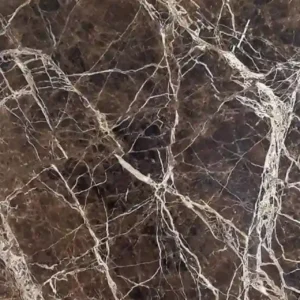
Water Drainage Realities That Shape Grey Limestone Specifications in Arizona
Drainage geometry determines whether your grey limestone in Arizona installation lasts a decade or three — and most project teams underestimate how aggressively Arizona’s monsoon cycles stress stone joints and base layers. The state’s bimodal rainfall pattern delivers the majority of annual precipitation in concentrated bursts between July and September, routinely dumping an inch or more in under an hour in the Phoenix metro. That hydraulic load doesn’t just wash surfaces — it saturates subgrades rapidly, undermines poorly compacted bases, and drives hydrostatic pressure into mortar joints that weren’t designed for it. Your specification needs to account for this before the first paver is set.
Compounding the drainage challenge is Arizona’s notorious caliche — the calcium carbonate hardpan found across the low desert — which creates a perched water table effect during heavy rainfall. In Phoenix, projects sited on caliche-heavy soils require deliberate perforated drainage channels beneath the aggregate base, or you’re essentially building a stone-topped bathtub. Grey limestone tiles installed over waterlogged subgrades develop lippage and joint failures within two to three seasons, regardless of stone quality.
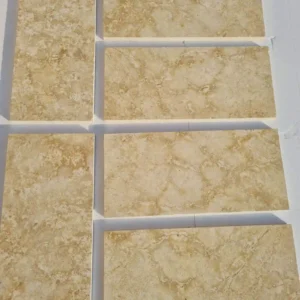
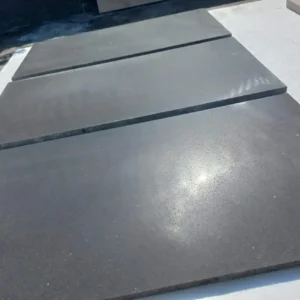
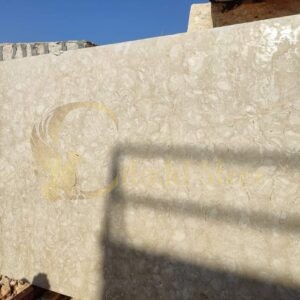
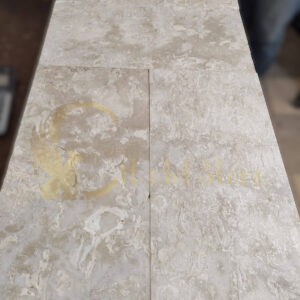
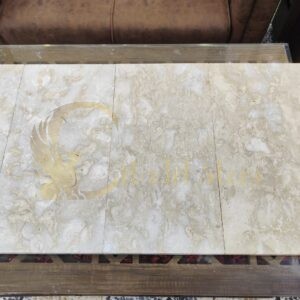
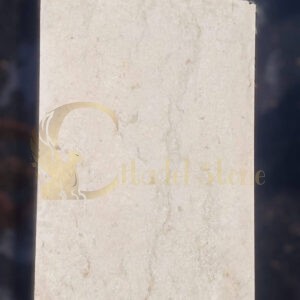
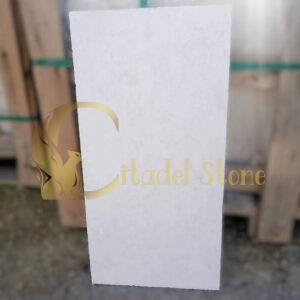
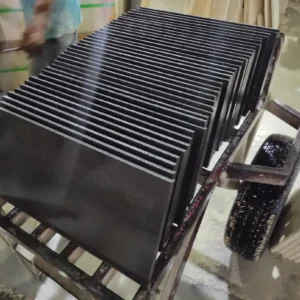
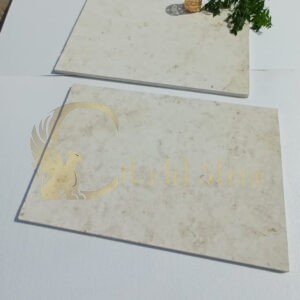
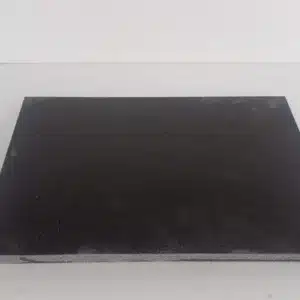
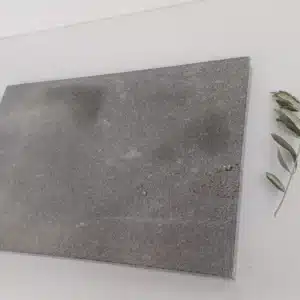
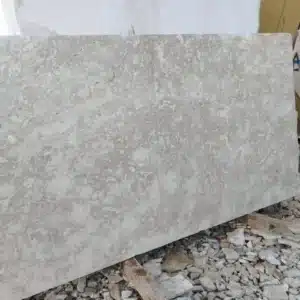
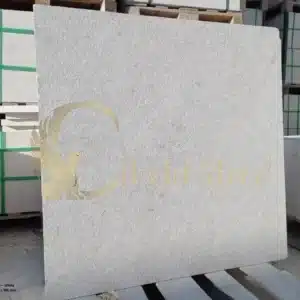
Citadel Stone stocks grey limestone tiles in Arizona in standard formats ranging from 12×24 to 24×24 inches and 16×24 slabs, with thickness options from ¾ inch nominal to 1¼ inch for heavier traffic applications. You can request material samples and technical data sheets before committing to a format — a step worth taking when drainage slope and format size need to coordinate.
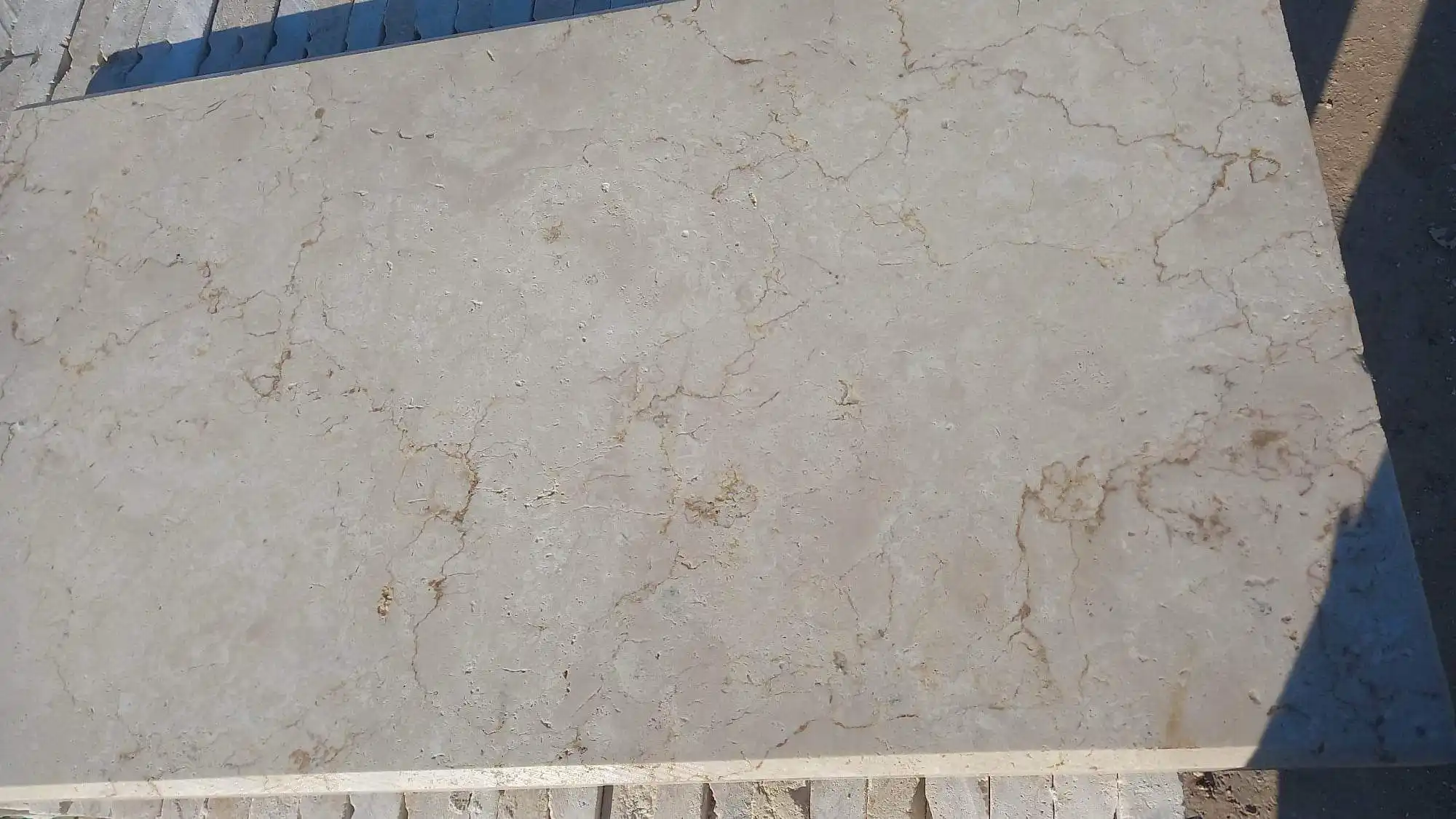
Grey Limestone Varieties and Their Real-World Performance Profiles
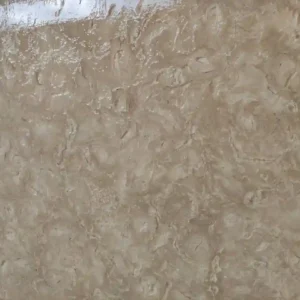
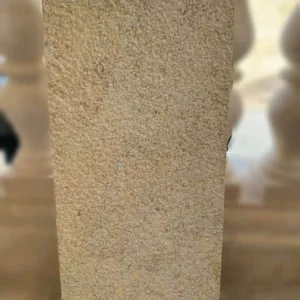
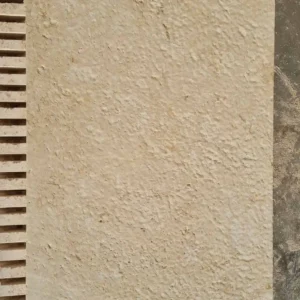
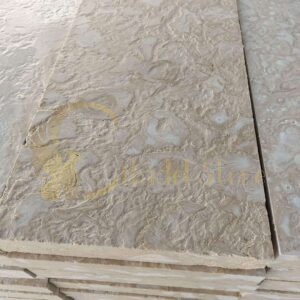
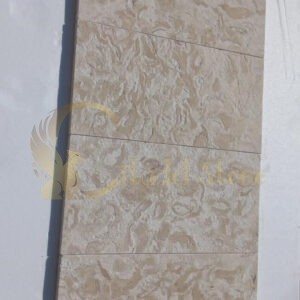
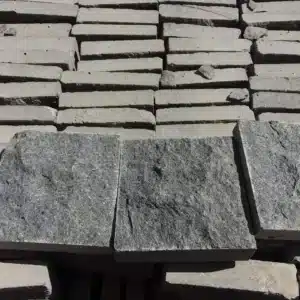
The phrase “grey limestone” covers a wider performance spectrum than most spec sheets reveal, and choosing the wrong variety for your Arizona drainage conditions can create problems no amount of skilled installation corrects. Agincourt grey tumbled limestone in Arizona projects offers a naturally aged texture with micro-surface relief that improves wet traction considerably — the tumbling process closes some surface pores while creating directional channels that move water off the face faster than a flat honed surface. For pool surrounds and covered patios in the Phoenix area, that texture difference matters more than aesthetics alone.
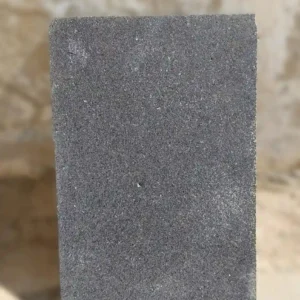
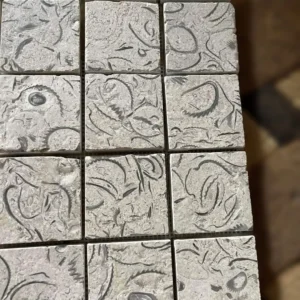
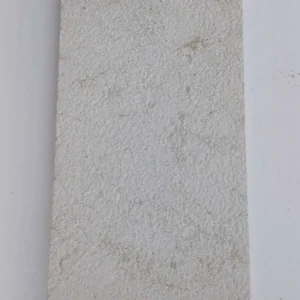
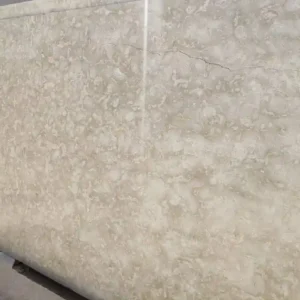
Ash grey limestone in Arizona applications reads cooler and more architecturally restrained than the warmer buff limestones — its consistent silver-grey tone holds well under direct UV without the pronounced yellowing you see in cream varieties over five-plus years of desert exposure. The material’s density sits in the 150–155 lb/ft³ range, which gives it solid freeze-thaw credentials for higher elevation projects. Dorsaf grey limestone in Arizona installations brings a more pronounced fossil matrix to the surface, with visible shell and organic inclusions that create natural anti-slip texture without mechanical grinding.
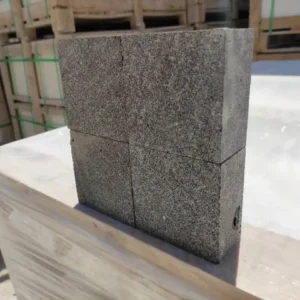
Fossil grey limestone in Arizona has built a strong track record in commercial applications precisely because its surface variation distributes wear more evenly than uniform-face stone — high-traffic zones don’t develop the polished “paths” that become slip hazards. German limestone in Arizona projects occupies a harder end of the limestone family, with compressive strength values typically above 12,000 PSI, making it appropriate for driveway aprons and areas with vehicular access where softer limestones would edge-chip under point loading from tires.
Honed vs. Tumbled Finishes — Drainage Performance Under Arizona Monsoon Conditions
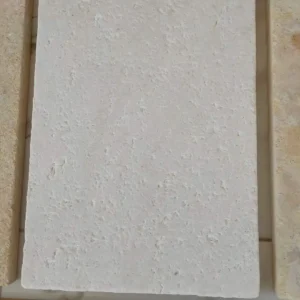
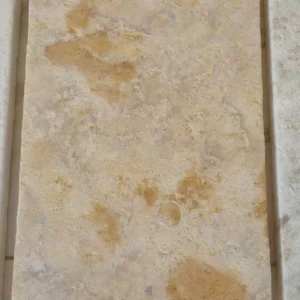
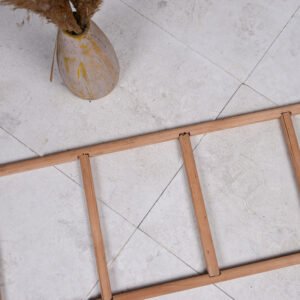
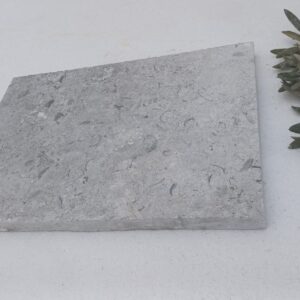
Grey honed limestone tiles in Arizona deliver a refined, low-sheen surface that reads elegantly in interior applications but requires more deliberate drainage slope design outdoors. A honed surface’s minimal texture offers less friction under wet conditions, so your installation slope must be precise — 2% minimum for covered areas, 2.5–3% for open exposures — with no low points where monsoon water pools between joints.
Grey tumbled limestone floor tiles in Arizona handle drainage more forgivingly because surface irregularity naturally distributes standing water toward joints. For outdoor living areas in Scottsdale’s foothills where rainfall intensity spikes during monsoon cells, tumbled formats give you an acceptable safety margin when slope tolerances aren’t perfectly achievable. The trade-off is cleaning — tumbled surfaces trap fine sediment in their relief, requiring periodic pressure washing after heavy storm events to prevent biological growth in the micro-depressions.
Specialty Grey Limestone Profiles for Demanding Arizona Applications
Ramon gray limestone in Arizona has earned a specific following among landscape architects working on Scottsdale estate projects — its tight grain structure and consistent mid-grey coloration photograph exceptionally well and maintains dimensional stability across Arizona’s 60°F seasonal temperature swings at elevation. The material sources from the Negev region, and its formation geology produces a particularly low-absorption coefficient — typically under 0.5% by weight — which directly correlates to better performance in Arizona’s wet-dry cycle conditions.
Ramon grey limestone in Arizona is sometimes specified interchangeably with Ramon gray, though the quarry produces subtle variation between extraction zones that shows up in vein pattern and background tone. For large-area installations, you’ll want to verify that your warehouse order pulls from a consistent quarry batch — color variation between pallets is manageable in smaller projects but becomes visually problematic across 2,000+ square foot installations without batch coordination. At Citadel Stone, we inspect incoming shipments against reference samples before warehousing to flag batch inconsistencies before they reach your project site.
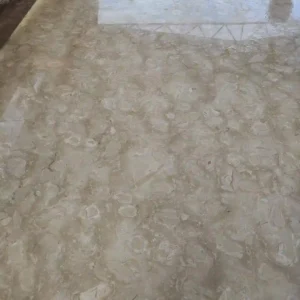
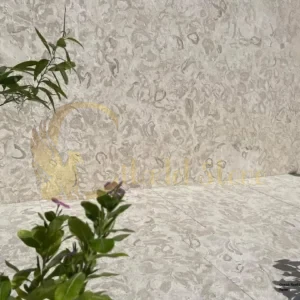
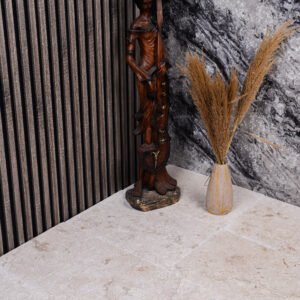
Taj grey limestone tiles in Arizona offer one of the more dramatic visual profiles in this material family — the surface exhibits a silver-grey base with subtle cream and charcoal veining that creates visual movement without the visual noise of heavily patterned stone. Taj grey limestone performs well in shaded outdoor applications where UV load is reduced, though you’ll want to verify sealer compatibility before specifying for full-sun pool deck use. For projects requiring custom cuts or non-standard format dimensions, Citadel Stone’s team can advise on lead times and fabrication requirements before you commit to a schedule.
Coping Stone Drainage Integration — Grey Lueders and Pool Perimeter Design
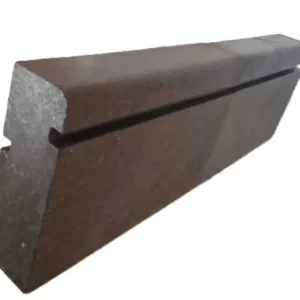
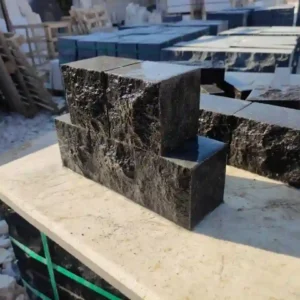
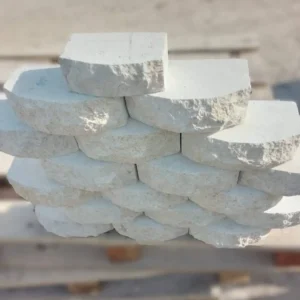
Grey lueders coping in Arizona pool installations solves a specific hydraulic problem that affects most pool perimeters in the desert southwest — the drip-edge geometry. Lueders limestone’s natural bedding planes allow coping profiles to be cut with a consistent 1.5-inch cantilever and drip groove that directs splash-out water away from the pool bond beam and deck surface, reducing the saturation cycle that degrades both mortar beds and adjacent decking.
The material’s Texas Hill Country origin means it arrives in Arizona with documented performance history across similar climate zones — high UV, significant seasonal temperature swing, and periodic heavy rainfall events. Lueders coping thickness for pool applications should be specified at 2 inches minimum, not the 1.5-inch nominal common in catalog listings, because the cantilevered section experiences both bending stress and thermal cycling stress simultaneously.
Base Preparation and Drainage Systems for Grey Limestone in Arizona
Base preparation for grey limestone installations in Arizona starts with a soil permeability assessment that most residential projects skip entirely. Arizona soils range from fast-draining sandy loam in the Sonoran Desert floor to near-impermeable clay-caliche profiles in the mid-elevation transition zones — and the base depth and drainage layer specification that works in one soil type fails catastrophically in another. Your aggregate base depth should be 6 inches minimum in sandy soils and 8–10 inches in clay-heavy profiles, with a perforated drain pipe at the base perimeter directing collected water to a suitable discharge point.
The bedding layer under grey limestone tiles deserves more attention than it typically receives. A standard dry-pack mortar bed at 1–1.5 inches provides the setting surface, but in areas with known caliche perched-water risk, a free-draining bedding aggregate (angular chip, 3/8 inch) over a geotextile separation layer performs better long-term than mortar bed over compacted base alone. The geotextile prevents fines migration upward into the drainage layer while allowing vertical water movement downward.
In Tucson, where monsoon rainfall averages 12–15 inches annually but arrives in intense bursts, outdoor grey limestone patio installations benefit from a linear drainage channel at the low end of the slope rather than relying entirely on joint infiltration. This channel intercepts the hydraulic load at the surface before it can overwhelm the joint drainage capacity — a detail that adds modest cost but eliminates the majority of post-monsoon maintenance issues.
Joint Spacing and Drainage Integration for Outdoor Grey Limestone
Joint spacing for grey limestone tiles in Arizona outdoor applications requires a site-specific calculation, not a generic 1/8-inch default. The material’s thermal expansion coefficient runs approximately 4.5–5.0 × 10⁻⁶ per °F, and with Arizona summer surface temperatures reaching 140–160°F on south-facing exposures, a 24-inch tile can expand 0.015–0.018 inches from cool morning to peak afternoon temperature. Multiply that across a 20-foot run and you’re looking at measurable cumulative expansion that requires proper joint accommodation.
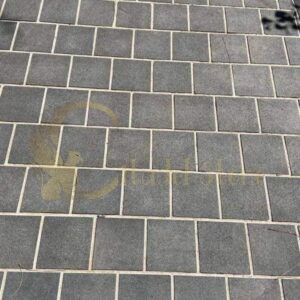
For drainage purposes, a 3/16-inch joint filled with polymer-modified sand allows adequate water infiltration in moderate storm events while resisting joint wash-out under high-velocity monsoon flow. In areas with direct roof drainage discharge nearby, increase joints to ¼ inch and use a coarser-grade joint sand to maintain infiltration capacity under concentrated flow. The goal is moving water through the joint surface fast enough that it doesn’t pond and create hydrostatic pressure against the tile edges.
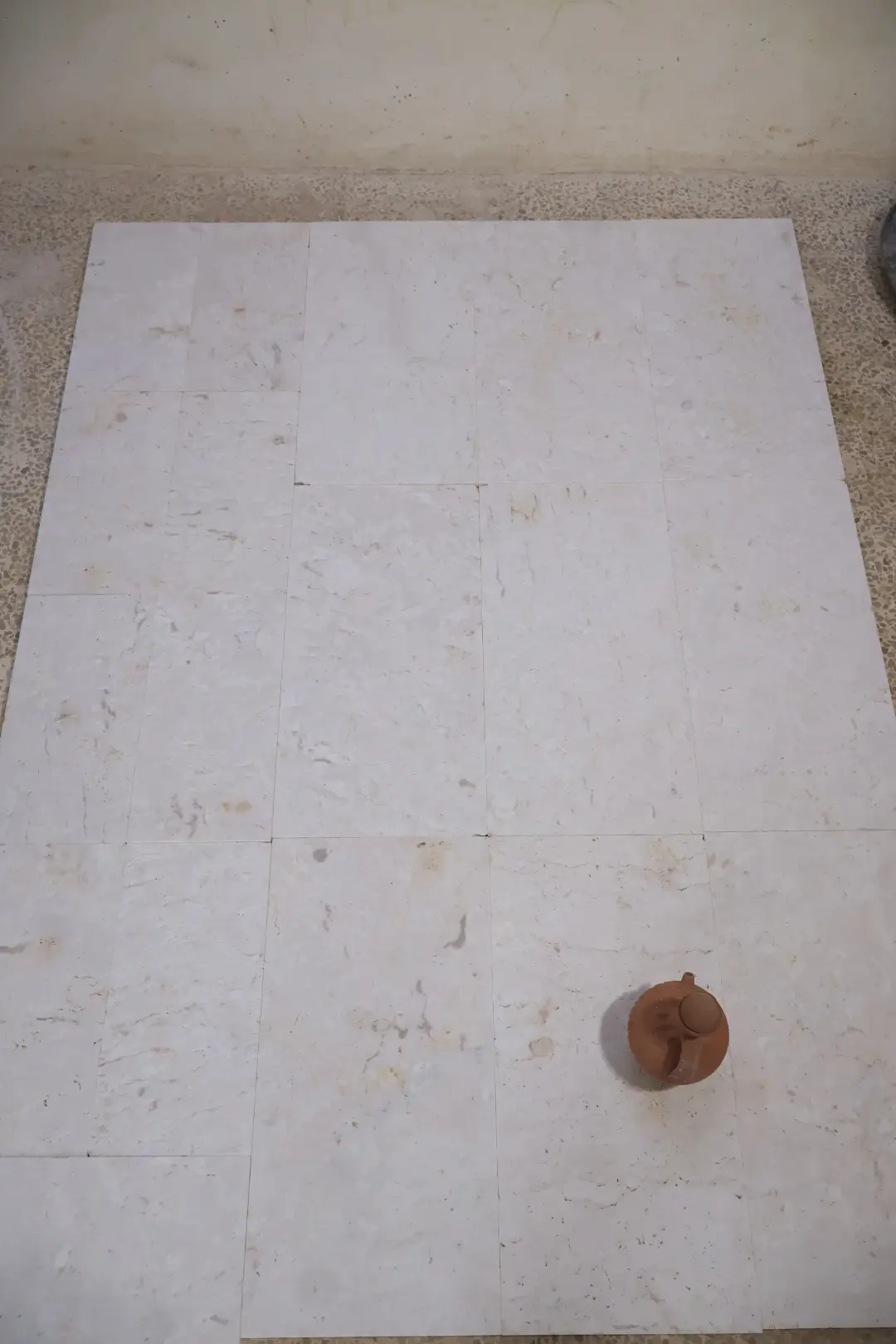
Grey Tandoor Stone and Outdoor Floor Tile Selection for Arizona Climates
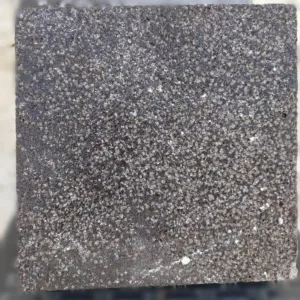
Grey tandoor stone in Arizona occupies a distinct performance niche — its fired surface creates a durability profile closer to a ceramic than a traditional cut limestone, with absorption rates below 0.3% and surface hardness that resists abrasion from grit tracked in during dust storms. For covered outdoor areas in Gilbert and Chandler where dust storm frequency peaks in spring, tandoor’s fired surface sheds fine silica particles more completely than open-pore honed limestone, reducing the grinding abrasion that dulls surface finish over time.
Grey tumbled limestone floor tiles work differently in Arizona’s outdoor context than interior applications suggest. The surface’s natural micro-relief provides excellent wet traction — DCOF values consistently above 0.65 in wet conditions — which directly addresses the slip risk created by monsoon rain falling on warm stone surfaces. That rapid temperature differential between the warm stone and cool monsoon rain creates condensation on smooth surfaces that tumbled textures largely avoid by distributing water into the irregular surface relief rather than maintaining a continuous water film.
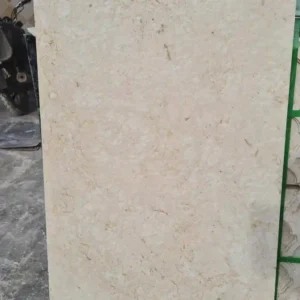
Stamford limestone tiles in Arizona create a visual rhythm with their cream-to-grey banding that reads well in both contemporary and transitional architecture common in the Scottsdale and North Phoenix markets. Stamford’s consistent stratified appearance requires attention to installation orientation — running the banding perpendicular to the primary sightline creates visual width, while parallel banding draws the eye toward a focal point. Your installation team should dry-lay a test area before setting to verify orientation before mortar commits the layout.
Sealing Protocols and Maintenance for Grey Limestone in Arizona
Sealing grey limestone for Arizona conditions requires a solvent-based penetrating impregnator rather than a topical film sealer — this is a non-negotiable field call based on how Arizona’s thermal cycling interacts with sealant films. A topical acrylic or polyurethane film sealer traps heat beneath its surface layer, which accelerates delamination from the stone face during summer peak temperatures. The film lifts, traps moisture under the peel zone, and creates a staining surface that’s more difficult to restore than unsealed stone.
A quality fluoropolymer or siloxane penetrating impregnator applied at the correct coverage rate — typically 150–200 square feet per liter on honed surfaces, 100–150 on tumbled — fills the stone’s interconnected pore structure without creating a surface film. Reapplication frequency in Arizona’s UV-intense environment should be every 18–24 months for full-sun exposures, every 30–36 months for covered areas. You’ll notice sealer performance degrading when water no longer beads on the surface and instead spreads flat — that’s your visual indicator, not a calendar date.
Cleaning protocols matter more than most homeowners realize. Grey limestone’s mid-tone color range hides initial soiling better than cream limestone, but monsoon deposits — fine red-brown Arizona clay particles — can permanently stain porous limestone if left to dry and cure into the surface. A light rinse with a garden hose within 24 hours of a heavy storm event is the simplest maintenance step that prevents the most expensive restoration work. For projects across Flagstaff‘s higher elevation zones, freeze-thaw cycling adds a sealing urgency not present in the low desert — water infiltrating unsealed limestone at 6,900 feet elevation will freeze-expand and spall surface faces within a few winters.
- Apply penetrating impregnator to dry stone — surface moisture above 4% by weight reduces sealer penetration depth by 30–50%
- Allow 72-hour cure time before water exposure in monsoon season — humidity slows cure compared to dry-season application
- Test sealer compatibility on a sample tile before full application — some grey limestone varieties with high iron content can darken with oil-based sealers
- Use pH-neutral cleaners exclusively — alkaline degreasers etch limestone surface texture over repeated application cycles
Thickness and Format Selection for Grey Limestone Applications Across Arizona
Thickness selection for grey limestone tiles in Arizona outdoor applications follows a load-and-span logic that generic catalog recommendations consistently understate. For pedestrian-only patios on a compacted aggregate base, ¾-inch nominal (actual 0.75–0.8 inch) limestone performs adequately in tile formats up to 18×18 inches. Extend that format to 24×24 inches and you need 1-inch nominal minimum, because the unsupported span across the joint gap increases bending stress at the tile center — Arizona’s thermal cycling amplifies that stress considerably.
- 12×12 and 12×24 formats: ¾-inch nominal for pedestrian applications, 1-inch for light vehicular
- 18×18 and 16×24 formats: 1-inch nominal minimum for all exterior applications
- 24×24 and larger formats: 1¼-inch minimum — the additional thickness provides bending resistance that thinner material cannot replicate
- Coping applications (grey lueders coping or similar): 2-inch minimum regardless of format width
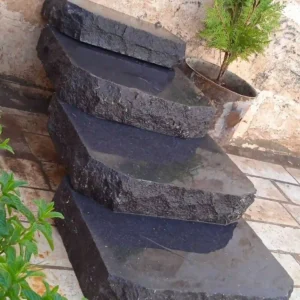
- Stepping stones in loose aggregate: 1½-inch minimum to resist rocking and edge chipping under foot strike
For Grey Limestone from Citadel Stone, format selection guidance from the technical team accounts for the specific drainage slope, base preparation method, and anticipated traffic load of your Arizona project — the combination of those three variables, not any single factor alone, determines the appropriate thickness specification. Citadel Stone ships grey limestone in Arizona across the state from regional warehouse inventory, which typically reduces lead times to 1–2 weeks compared to the 6–8 week import cycle that affects direct-import purchasing.
Mixing formats within a single installation creates visual dynamism but requires careful joint alignment planning. A common approach in contemporary Scottsdale residential projects pairs 12×24 field tiles with 24×24 accent bands — the joint lines from the smaller tiles align with the midpoint of the larger tiles, creating a staggered pattern that reads deliberately designed rather than accidentally misaligned. Your setting crew needs a reference layout drawing before starting, not after the first row reveals the alignment issue.
Grey Limestone in Arizona — Request Samples and Specifications from Citadel Stone
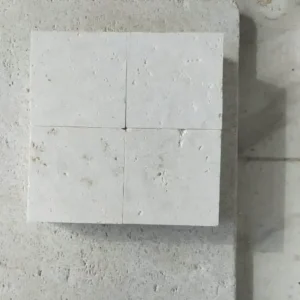
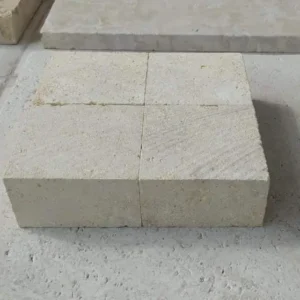
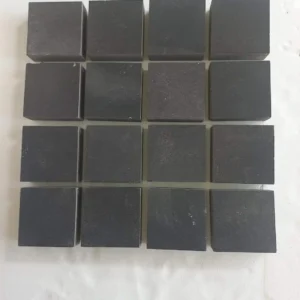
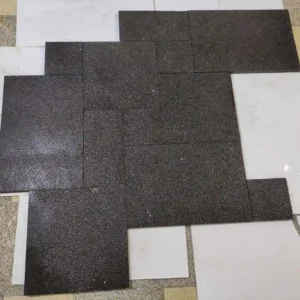
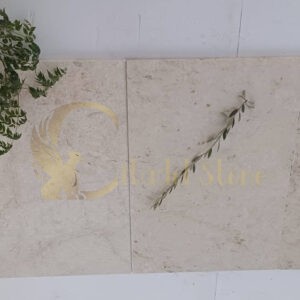
Citadel Stone supplies grey limestone tiles in Arizona in formats and thickness specifications matched to the state’s drainage, thermal, and structural demands — not generic international catalog offerings adapted after the fact. Available options include agincourt grey tumbled limestone, ash grey limestone, fossil grey limestone, German limestone, grey honed limestone tiles, taj grey limestone tiles, Stamford limestone tiles, Ramon grey limestone, grey tandoor stone, and grey lueders coping, all sourced from established quarry partners with batch-level quality inspection before warehouse inventory entry.
- Request material samples and specification sheets before committing to a project quantity — sample boards show actual color, texture, and finish under Arizona light conditions
- Trade and wholesale enquiries receive project-specific pricing based on format, thickness, and total quantity — contact Citadel Stone’s technical sales team for a project assessment
- Custom cutting for non-standard formats, radius work for curved pool coping, and book-matched slab orders are available with confirmed lead times provided upfront
- Delivery covers Phoenix, Tucson, Scottsdale, and project sites statewide — truck scheduling coordinates with your installation team’s base preparation timeline
Delivery logistics across Arizona are straightforward from Citadel Stone’s warehouse inventory — standard truck delivery to accessible sites typically schedules within 5–7 business days from order confirmation, with heavy-format pallets (24×24 and coping stone) requiring ground-level access for forklift offload. Verify your site’s truck access clearance before confirming delivery — restricted access in walled residential communities may require a smaller delivery vehicle and adjusted per-piece pricing. As you plan your Arizona stone project, related hardscape considerations can inform your overall specification — 24 Inch Paver in Arizona covers large-format paver performance details relevant to similar site conditions, making it a practical reference for projects where grey limestone and large-format pavers share the same installation environment. Grey Limestone from Citadel Stone reaches project sites across Flagstaff, Sedona, and Yuma and throughout Arizona.