


Thermal cycling is the variable that separates a well-specified grey limestone floor tiles in Arizona installation from one that starts showing joint failure within three to five years. The diurnal temperature range across Arizona’s high desert and elevation zones — sometimes exceeding 40°F between a single day’s low and high — creates cumulative stress at mortar interfaces that no amount of correct surface sealing can compensate for after the fact. Getting this right means understanding the material’s thermal expansion coefficient, your substrate movement characteristics, and how those two interact before a single tile goes down.
Why Thermal Cycling Defines Grey Limestone Performance in Arizona
Grey limestone floor tiles in Arizona face a stress regime that most continental US climates don’t impose. The issue isn’t maximum heat — it’s the rate and frequency of expansion and contraction cycles across a calendar year. In Phoenix, a January night can drop to 38°F while the afternoon climbs past 70°F. In Flagstaff, that same January swing might run from 10°F overnight to 45°F by midday. Each cycle loads the tile-to-substrate bond, the grout joint, and the setting bed with micro-movement that accumulates over months and years.
Grey limestone carries a linear thermal expansion coefficient of approximately 4.4 to 5.0 × 10⁻⁶ per °F depending on density and crystalline structure. Across a 20-square-foot tile run at a 50°F daily swing, that translates to dimensional movement you need to account for in your joint spacing — not the 3/16-inch minimum you’d use in a stable climate, but 1/4 to 3/8 inch for exterior applications in Arizona’s temperature-cycling zones. Miss that detail and you’re looking at tile tenting, grout cracking, or delamination within a few seasons.

Understanding Grey Limestone Material Properties for Arizona Floors
The grey and light grey limestone tiles you’re evaluating for Arizona floors typically come from quarries producing sedimentary carbonate stone with compressive strengths ranging from 8,000 to 14,000 PSI. That range matters more than you’d think — the lower end of that spectrum handles interior residential loads comfortably but struggles with high-traffic exterior applications where point loading from furniture legs and foot traffic concentrates stress.
Porosity is the second critical specification. Light grey limestone tiles in Arizona should carry an absorption rate below 3% for exterior floor applications — ideally below 2% if your project is in a freeze-thaw zone like Flagstaff, where absorbed moisture that freezes can cause spalling within a single hard winter. The interconnected pore structure in lower-density limestone expands when moisture freezes, and repeated freeze-thaw cycles create progressive microfracturing that no surface treatment reverses.
- Compressive strength minimum 8,500 PSI for exterior floor applications in Arizona
- Water absorption below 3% for outdoor installs, below 2% in freeze-thaw elevation zones
- Modulus of rupture above 1,200 PSI to handle thermal bending stress across large format tiles
- Consistent thickness within ±1/16 inch across a batch — inconsistent thickness creates lippage that compounds with thermal movement
- Calibrated or gauged tiles recommended for large-format installations where 1/8-inch bed variations create alignment problems
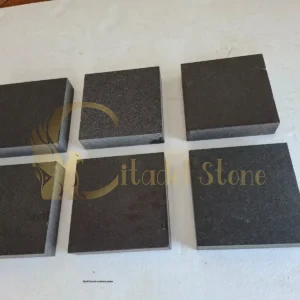
Citadel Stone sources grey limestone from established quarry partners and inspects each batch for thickness consistency, absorption rates, and surface integrity before it reaches the warehouse. You can request material data sheets and sample tiles before committing to a full project quantity — a step that’s worth building into your specification timeline, especially when your installation schedule crosses seasonal temperature transitions.
Grey Limestone Finishes and Formats for Arizona Floor Installations
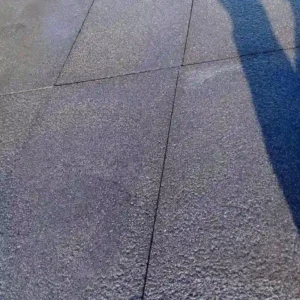
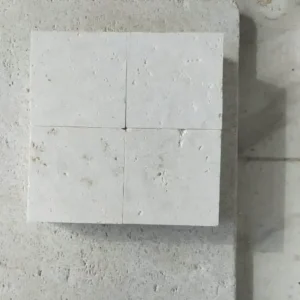
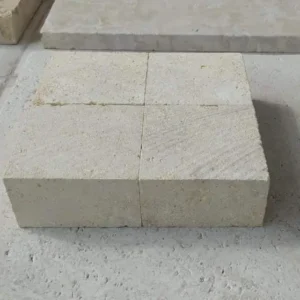
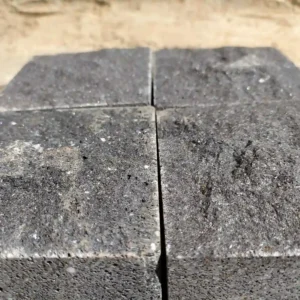
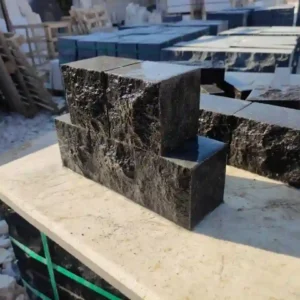
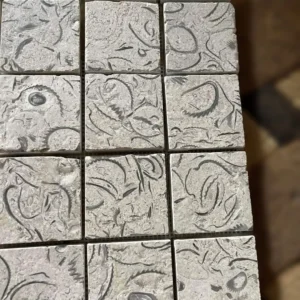
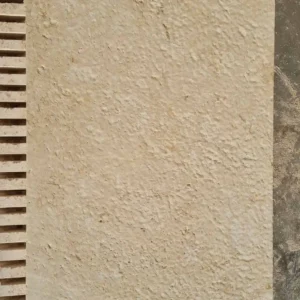
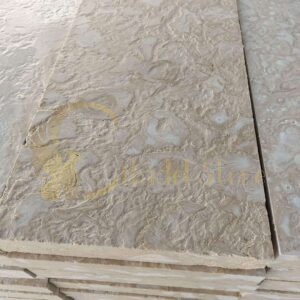
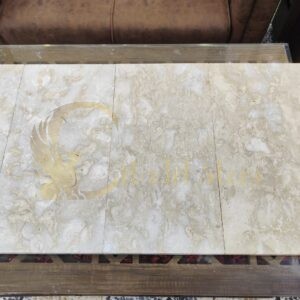
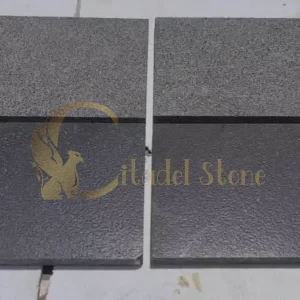
Finish selection affects both slip resistance and thermal performance in ways that aren’t always obvious from a product catalog. Grey tumbled limestone in Arizona projects brings a naturally worn, textured surface profile that scores well on ASTM C1028 wet coefficient of friction testing — typically 0.70 to 0.85 depending on surface depth — making it one of the more practical choices for covered outdoor entertaining areas and transitional spaces that see rain or irrigation overspray.
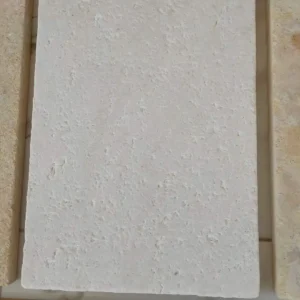
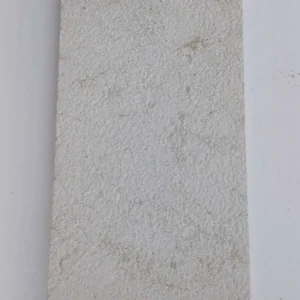
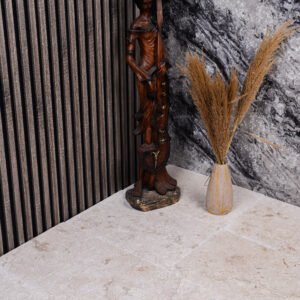
Worn grey limestone tiles deliver a similar aesthetic to tumbled product but with tighter dimensional tolerances, which simplifies installation on large floor planes where lippage control matters. The honed finish on light grey limestone floor tiles reads cleanly in interior applications — great rooms, entry halls, kitchen floors — where the cooler grey palette works well with Arizona’s popular white oak and concrete design language. Honed surfaces do require more consistent sealing maintenance than tumbled or antique finishes because the lower surface texture means fewer microscopic recesses to slow moisture ingress.
- Tumbled finish: best for exterior zones, pool surrounds, covered patios — natural texture improves traction and hides minor thermal movement
- Honed finish: suited to interior floors and shaded covered spaces where aesthetics drive selection and maintenance schedules are reliable
- Brushed finish: a middle ground offering moderate texture with a refined look — performs well in covered outdoor kitchens in Scottsdale and Phoenix
- Antiqued or worn finish: popular for Mediterranean and Spanish Colonial projects common in Tucson and Sedona — slightly deeper texture than honed
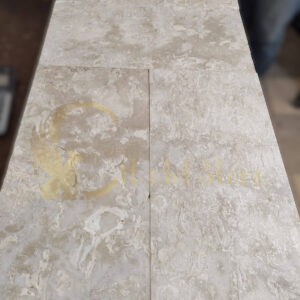
Standard formats for grey limestone floor tiles in Arizona projects run from 12×12 inches up to 24×24 inches, with 18×18 and 24×12 plank formats gaining popularity for contemporary interiors. Larger formats — 24×24 and above — amplify the importance of base flatness, since any deviation in the substrate telegraphs through the tile over time as thermal cycling introduces micro-movement.
Base Preparation for Grey Limestone Flooring in Arizona Conditions
The base is where most grey limestone flooring in Arizona failures originate, and the thermal cycling dynamic makes this more consequential than it would be in a stable-climate state. Your setting bed needs to accommodate substrate movement without transferring it directly to tile faces. That means uncoupling membranes deserve serious consideration for exterior slab installations, particularly in areas with significant seasonal temperature ranges.
Caliche layers — the calcium carbonate hardpan common across the Sonoran Desert floor — affect drainage and base stability in ways that vary considerably between sites. In Phoenix, caliche can sit 12 to 36 inches below grade and acts as a near-impermeable layer that redirects lateral moisture movement. For interior slab-on-grade floors, this matters less, but for exterior terraces and covered patio floors, poor drainage engineering above a caliche layer creates moisture accumulation at the slab interface — moisture that then cycles between expansion and contraction as temperatures swing. For projects requiring specific base engineering guidance, Grey Limestone Floor Tiles from Citadel Stone provides detailed specification context that connects material selection to site preparation requirements across Arizona’s varied elevation and soil zones.
- Use uncoupling membrane systems (Schluter Ditra or equivalent) for exterior limestone floor applications on concrete slabs subject to seasonal movement
- Minimum 4-inch compacted granular base for ground-level exterior installations — increase to 6 inches if the site has expansive clay soils
- Slope exterior substrate minimum 1/8 inch per foot toward drainage — thermal cycling accelerates freeze-thaw damage when water pools
- Allow concrete substrate a minimum 28-day cure before tile installation — early installation on green concrete guarantees shrinkage cracking beneath tiles
- In elevation zones above 5,000 feet, use polymer-modified thinset rated for freeze-thaw environments — standard thinset loses bond strength through repeated cycling
Grey Limestone Tile Thermal Expansion Joint Specification for Arizona
Expansion joint placement is probably the most under-specified element in grey limestone floor tile installations across Arizona. The Tile Council of North America (TCNA) EJ171 guideline provides a starting framework, but Arizona’s thermal cycling profile pushes you toward the more conservative end of those recommendations — and in some cases beyond them.
For interior floors in climate-controlled spaces, expansion joints every 20 to 25 linear feet in both directions is workable. For exterior or unconditioned covered spaces in Phoenix, Tucson, or Scottsdale, reduce that interval to 12 to 15 feet. At Citadel Stone, we advise clients in high-elevation zones — anywhere above 4,500 feet — to treat every field installation as an exterior application even if the space has a roof, because temperature differentials between day and night can still exceed 35°F in summer and 45°F in winter at those elevations.
- Interior climate-controlled floors: expansion joints every 20–25 linear feet, filled with ASTM C920 sealant
- Exterior or semi-exposed floors in low desert: every 12–15 feet — never rely on grout joints alone to absorb thermal movement
- Perimeter joints mandatory at all walls, columns, and changes in plane — these are the first joints to fail when expansion is constrained
- In freeze-thaw elevation zones: consider a full uncoupling system rather than relying on expansion joints alone to manage movement
- Joint width minimum 3/8 inch for exterior applications — 1/4 inch is insufficient for Arizona’s diurnal thermal range
Sealing and Maintenance for Grey Limestone Floors in Arizona Climates
Sealing protocols for grey limestone flooring in Arizona differ from what you’d apply in a coastal or humid climate. In a dry climate, the primary sealing goal shifts from moisture exclusion to UV stabilization and surface hardening — though moisture management remains important in the seasonal monsoon months of July through September.
Penetrating impregnators based on fluoropolymer or silane-siloxane chemistry outperform topical acrylic sealers for Arizona floors because they don’t build a surface film that can delaminate under UV exposure and thermal cycling. A fluoropolymer impregnator applied to grey limestone floor tiles at installation, followed by reapplication every 24 to 36 months depending on traffic, delivers consistent performance without the yellowing or peeling that topical sealers exhibit after two or three Arizona summers.

- Apply penetrating impregnator at installation — allow 48 hours before grouting to prevent sealer from contaminating joint bond
- Reapply every 24 months in high-UV exterior applications, every 36 months for interior floors with normal traffic
- Test sealer performance annually: apply a few drops of water — if it absorbs within 3 minutes rather than beading, reapplication is due
- Avoid acidic cleaners on grey or light grey limestone — pH below 7 attacks the carbonate matrix and accelerates surface erosion
- In monsoon-affected exterior areas, check grout joints in September each year — thermal cycling plus moisture intrusion concentrates failure at joints
Gray limestone tile in Arizona’s high-UV environment benefits from sealer products with UV stabilizers included in the formulation. This is a detail worth confirming with your sealer supplier — not all penetrating impregnators include UV protection, and in Arizona’s solar intensity, an unprotected sealer can break down within 12 to 18 months on south-facing exterior applications.
Grey Limestone Colour and Shade Selection for Arizona Projects
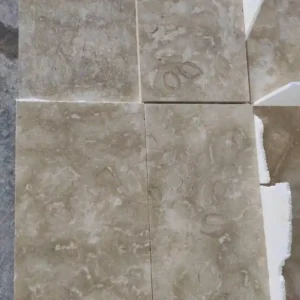
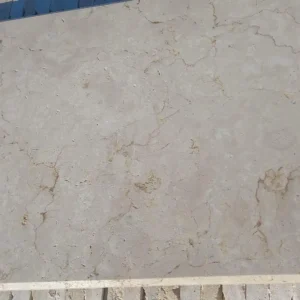
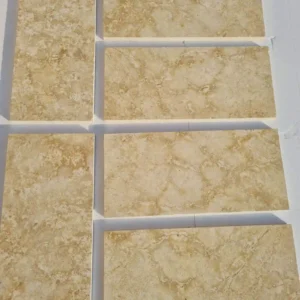
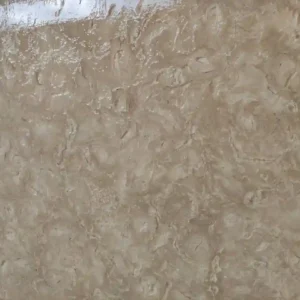
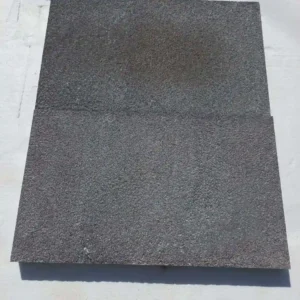
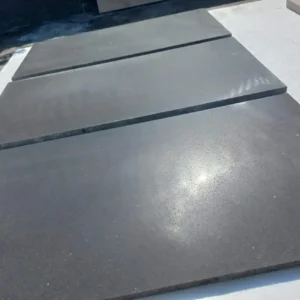
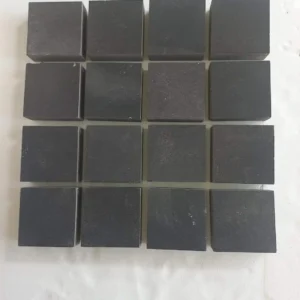
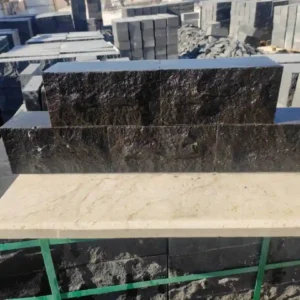
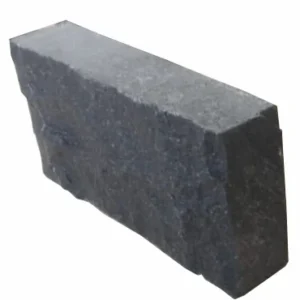
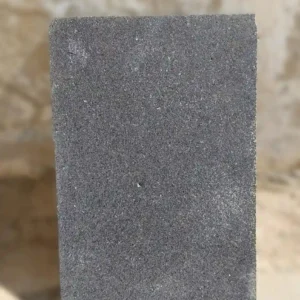
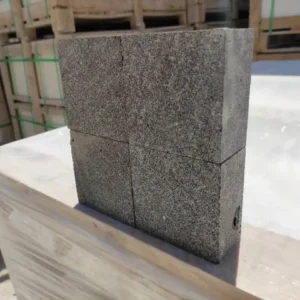
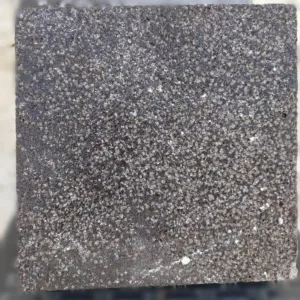
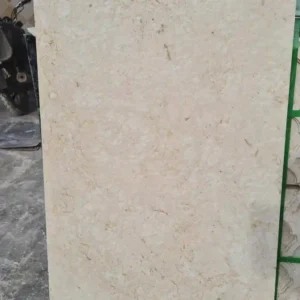
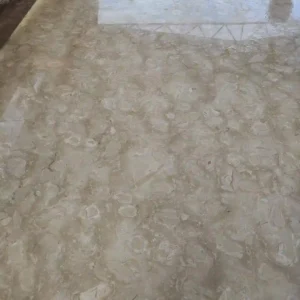
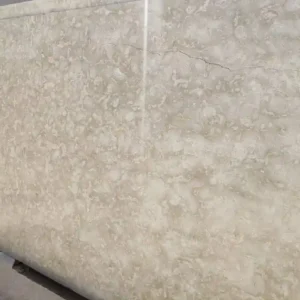
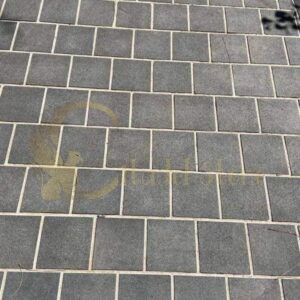
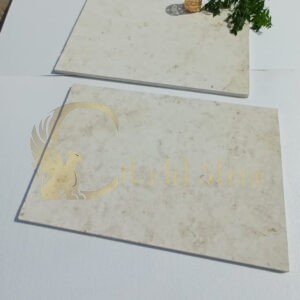
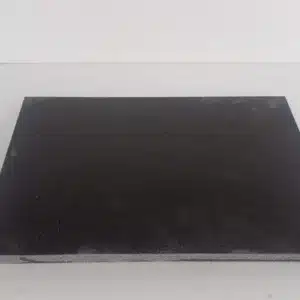
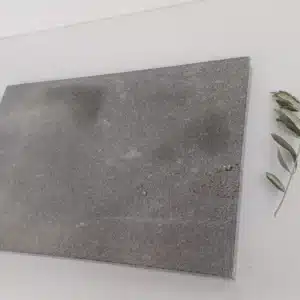
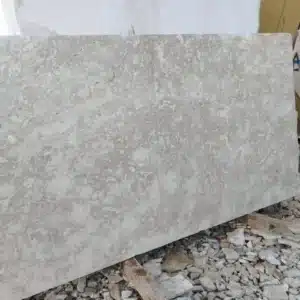
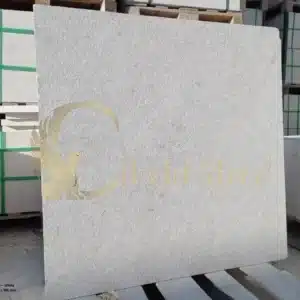
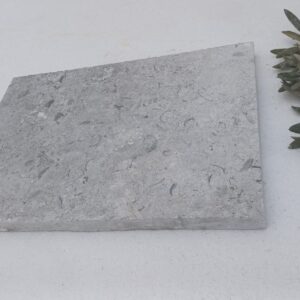
Gray limestone flooring in Arizona spans a wider tonal range than most buyers expect from a single material category. Within the grey limestone family, you’ll encounter everything from near-white silver-grey with minimal veining, through mid-range blue-grey and warm taupe-grey tones, to darker charcoal variations that read as near-black in shade but show complex crystalline movement in direct light.
Light grey limestone floor tiles in Arizona perform thermally in a distinct way from darker grey options. Lighter tones with higher solar reflectance index (SRI) values — typically in the 45 to 65 range for light grey limestone in Arizona — absorb less radiant heat than dark grey or charcoal options, which matters considerably for barefoot comfort on exterior terraces. Gray limestone floor tile in darker charcoal shades can reach surface temperatures 25 to 35°F higher than adjacent light grey tiles under identical direct sun exposure in a Phoenix July afternoon.
- Light grey limestone: SRI approximately 45–65, cooler barefoot surface, shows soiling more readily — best for shaded or interior applications
- Mid-grey limestone: SRI approximately 30–45, balances aesthetics with thermal performance — popular for covered patio floors
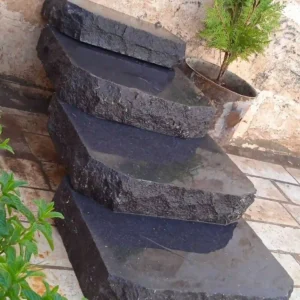
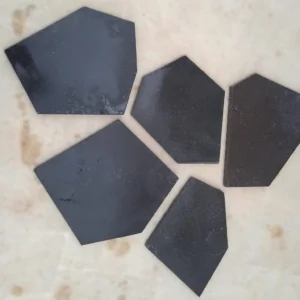
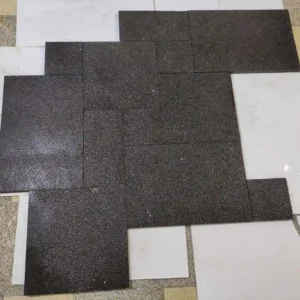
- Dark grey or charcoal limestone: SRI below 25, absorbs significant radiant heat — reserve for shaded interiors or north-facing exterior applications
- Gray limestone flooring with warm beige undertones tends to read more harmoniously with Arizona’s sandstone and terracotta architectural palette
- Cool blue-grey tones work well in contemporary interior floor applications with white walls and minimal warm accent materials
Gray limestone tile in Arizona projects also benefits from natural batch variation that adds visual depth — the slight tonal movement across a floor plane reads as intentional warmth rather than manufacturing inconsistency. You should request multiple sample tiles from the same batch to assess the realistic variation range before specifying large quantities. Citadel Stone’s warehouse holds production-matched inventory, which means you can confirm batch consistency before committing to your full project quantity.
Specifying Grey Limestone Tile Thickness for Arizona Floor Loads
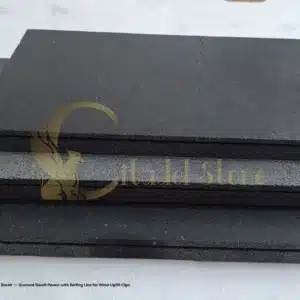
Thickness specification gets less attention than it deserves in grey limestone floor tile projects. The standard 3/8-inch nominal thickness works for interior residential floors on well-prepared substrates, but 1/2-inch or 3/4-inch material adds meaningful resistance to flexural stress — particularly relevant for exterior installations in Arizona where thermal cycling induces ongoing micro-movement in the substrate.
Gray limestone flooring in commercial applications — hotel lobbies, retail spaces, restaurant interiors — should default to 3/4-inch minimum thickness to handle concentrated point loads from furniture and equipment. The modulus of rupture data for your specified stone should support the loading scenario you’re designing for. A stone with 1,400 PSI MOR in 1/2-inch thickness provides adequate safety margin for most residential exterior applications in Arizona, but drops into marginal territory for commercial or high-traffic zones.
- 3/8-inch (10mm): interior residential floors on stable, flat substrates — not recommended for exterior in Arizona
- 1/2-inch (12–13mm): exterior residential patios, covered terraces — adequate with proper base preparation and uncoupling membrane
- 3/4-inch (20mm): commercial interiors, high-traffic residential, exterior installations without uncoupling systems
- 1-inch or 40mm: exterior ground-level installations without mortar bed — dry-lay applications in desert landscaping contexts
Buy Grey Limestone Floor Tiles in Arizona Direct — Citadel Stone Arizona
Citadel Stone stocks grey limestone floor tiles in Arizona in standard formats from 12×12 through 24×24, with 18×18 and plank formats available depending on current warehouse inventory. Honed, tumbled, brushed, and antiqued finishes are available across light grey, mid-grey, and warm grey tonal ranges to match the specific design and performance requirements of your project. You can request sample tiles and full material data sheets — including absorption rates, compressive strength, and modulus of rupture specifications — before committing to your project quantity.
Trade and wholesale enquiries receive dedicated project consultation on thickness selection, finish options, and batch matching for large-format installations. Lead times from warehouse to project site typically run one to two weeks for stocked formats across Arizona, compared to the six to eight week cycle on imported material ordered to specification. Truck delivery is coordinated to your project site with advance scheduling — worth confirming early if your site has access constraints that affect truck sizing or delivery timing.
For custom cuts, non-standard formats, or projects with specific freeze-thaw performance requirements, Citadel Stone’s team can advise on material selection and lead times before your specification is finalised. Your complete project scope — quantities, format mix, finish, and delivery address — should be confirmed before placing an order so warehouse allocation can be reserved against your timeline. As you plan your Arizona stone project, related material applications across the state can inform broader specification decisions — Limestone Tile in Arizona covers how limestone tile products perform across different application contexts throughout the state. Grey Limestone Floor Tiles from Citadel Stone reaches project sites across Flagstaff, Sedona, and Yuma and throughout Arizona.


