
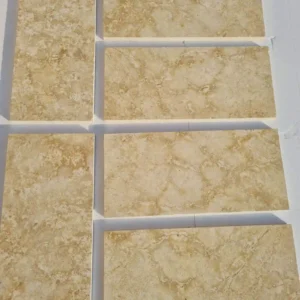

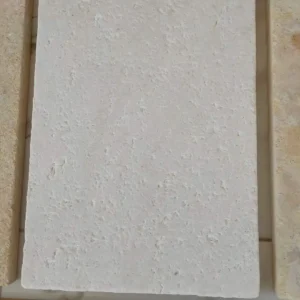
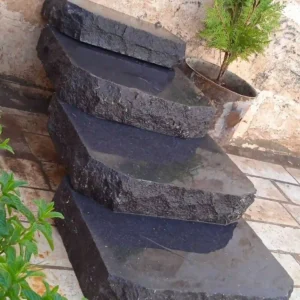
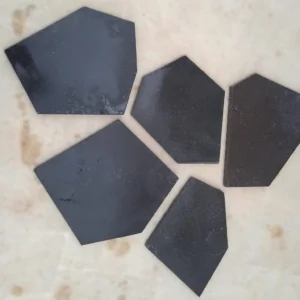



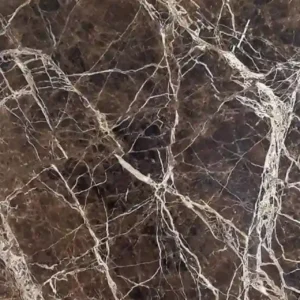
Drainage geometry determines the long-term fate of French limestone flooring in Arizona far more than most specifiers realize — and getting it wrong in the design phase rarely announces itself until the second or third monsoon season. The interaction between Arizona’s intense but concentrated rainfall events and the absorption characteristics of French limestone creates a performance equation that’s entirely different from what you’d face with this material in a European climate. Your specification needs to account for peak flow volumes that can exceed 1.5 inches per hour during monsoon pulses, not the steady drizzle the material was historically installed alongside.
Why Arizona Rainfall Patterns Define French Limestone Performance
Arizona’s hydrology catches a lot of specifiers off guard the first time they work here. The state’s bimodal rainfall pattern — a winter Pacific moisture season and a summer monsoon season — means your French limestone flooring in Arizona faces two completely different moisture stress events per year. The monsoon season, running roughly July through September, delivers precipitation in short, high-intensity bursts rather than sustained rainfall. Phoenix can receive over half its annual rainfall in just a handful of storm events, which puts enormous short-duration hydraulic pressure on any paving system that hasn’t been properly graded and jointed.
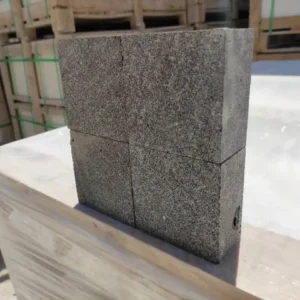
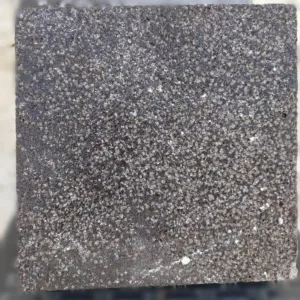
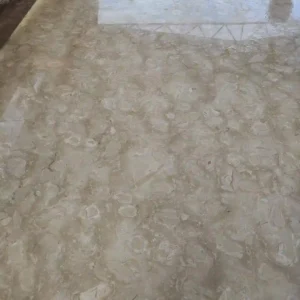
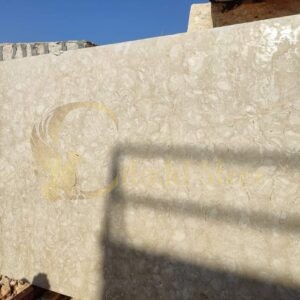
French limestone tiles in Arizona carry a natural open porosity of 8–14%, depending on the specific bed orientation and quarry origin. That porosity is an asset in controlled moisture conditions — it allows vapor transmission and prevents hydrostatic pressure buildup beneath sealed surfaces. The risk appears when surface water cannot drain away fast enough and instead saturates the stone body repeatedly through intense wet-dry cycling. You’ll see efflorescence, joint washout, and surface spalling develop within three to five years on installations where designers applied European drainage assumptions to Arizona monsoon conditions.
Citadel Stone sources French limestone floor tiles from established quarry partners in Burgundy and the Loire valley, and each incoming batch undergoes porosity verification and dimensional checks before warehouse release — that material consistency is what makes accurate drainage design calculations possible at the specification stage.

Understanding French Limestone Tile Properties for Wet-Dry Climates
The mineralogy of authentic French limestone gives it a fine, interlocking crystalline structure that outperforms many competitors on freeze-thaw resistance — a relevant specification point for higher elevation Arizona projects — but what matters equally in the low desert is its capillary absorption rate. French limestone floor tiles from Burgundian quarries typically show capillary absorption coefficients in the range of 0.05–0.15 kg/m²·√hr under ASTM C97 testing. That rate influences how quickly a submerged or saturated stone body can drain and recover between storm events.
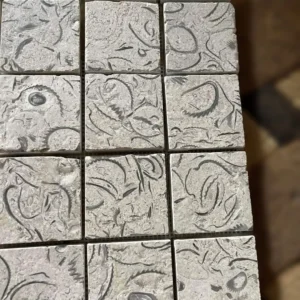
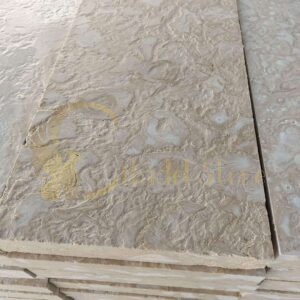
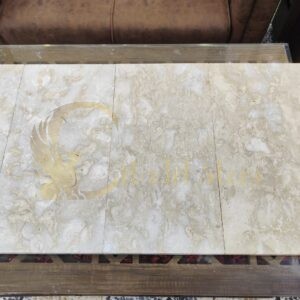
For outdoor installations, antique French limestone flooring brings one additional variable: the tumbling and honing processes that create its aged surface texture also close some of the surface pore network without significantly affecting internal porosity. This means the surface sheds water faster than raw French limestone, which actually benefits monsoon drainage performance — but it also means your sealing schedule needs calibration. A surface that’s been densified by mechanical aging requires a penetrating silane-siloxane sealer applied at 4–5 year intervals rather than the 2–3 year schedule you’d follow on raw-cut material.
- Capillary absorption coefficient: 0.05–0.15 kg/m²·√hr (ASTM C97) — verify with supplier test data before specifying
- Water absorption by immersion: typically 5–9% by weight for Burgundian limestone varieties
- Compressive strength: 6,000–10,000 PSI depending on bed orientation — specify perpendicular-to-bed orientation for horizontal applications
- Flexural strength: 1,200–1,800 PSI — critical for spanning aggregate voids in base preparation
- Slip resistance: DCOF above 0.42 wet (ANSI A137.1) achievable with brushed or tumbled finishes — verify finish-specific test results before outdoor specification
You can request detailed laboratory test sheets and finish-specific slip resistance data from Citadel Stone before committing to a specification — that documentation is what your architect of record needs to sign off on outdoor and pool-adjacent installations.
Drainage Design Principles for French Limestone Flooring in Arizona
Surface cross-slope is the single most important drainage variable for French limestone flooring in Arizona, and the minimum threshold here is higher than most standard specifications call for. Generic hardscape guidelines often cite 1% cross-slope as adequate. For Arizona monsoon conditions, you’ll want a minimum of 1.5% and ideally 2% away from structures and toward collection points. The difference between 1% and 2% cross-slope on a 20-foot-wide terrace translates to a 2.4-inch elevation differential — meaningful enough that it needs to be designed in, not adjusted during installation.
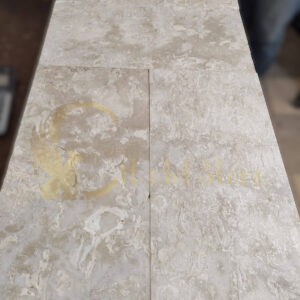
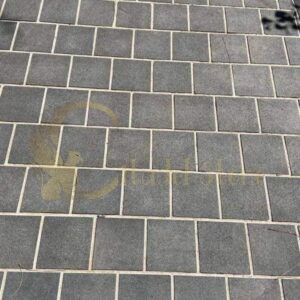
French limestone pavers in Arizona outdoor applications require a gap joint specification that balances aesthetics against hydraulic capacity. Tight-butted joints of 2–3mm look elegant and suit interior aged French limestone flooring perfectly, but outdoors they function as a hydraulic bottleneck during peak storm flow. A 6–8mm joint filled with polymeric sand allows surface runoff to pass through and relieve hydrostatic pressure before it migrates beneath the stone body. In covered patio applications where rainfall impact is reduced, you can return to the tighter joint specification without compromising drainage performance.
- Minimum cross-slope for uncovered outdoor installations: 1.5–2.0%
- Minimum cross-slope for covered patio or loggia installations: 1.0–1.5%
- Joint width for outdoor pavers: 6–8mm polymeric sand fill
- Joint width for covered or interior applications: 2–4mm unsanded grout or limestone dust fill
- Perimeter drain channel spacing: every 15–20 linear feet of field area for installations exceeding 400 square feet
- Channel drain capacity: size for a 10-year storm event at minimum — consult local municipal drainage data for your specific site
The detail that often gets missed in perimeter drain design is the transition between the limestone field and the drain channel itself. A poorly executed transition creates a lip that traps debris and allows water to pond against the stone edge — the exact condition that accelerates joint failure and edge spalling over time.
Base Preparation and Subgrade Moisture Control
Arizona soils present a range of subgrade challenges depending on your project location, and the moisture behavior of each soil type directly affects your base specification for French limestone floor tile installations. The caliche hardpan common throughout Maricopa and Pinal counties creates a naturally low-permeability layer that prevents subgrade drainage — water that infiltrates through your limestone joint system has nowhere to go, which creates a saturated aggregate base that destabilizes the bedding layer over time.
For projects in Scottsdale and surrounding areas with confirmed caliche presence, the correct response is not to rely on subgrade percolation but to design a closed drainage system. A 4-inch compacted Class II aggregate base over a non-woven geotextile separation fabric, sloped at 1% minimum toward perimeter collection drains, gives your French limestone paver installation an independent drainage path that doesn’t depend on soil permeability.
- Expansive clay soils (common in parts of Tucson and the Sulphur Springs Valley): require a minimum 6-inch aggregate base with 95% Proctor compaction
- Caliche hardpan zones: install 4-inch perforated drain pipe at perimeter before aggregate placement — do not rely on subgrade percolation
- Sandy desert soils (common in lower Yuma County elevations): achieve excellent drainage naturally but require geotextile separation to prevent aggregate migration into subgrade
- Fill areas and disturbed ground: require proof-roll testing and engineered compaction before any base placement
Mortar-set applications for aged French limestone flooring on concrete substrates shift the drainage design entirely to the surface — subsurface drainage becomes irrelevant, but your concrete substrate must slope correctly and must have expansion joints every 10–12 feet rather than the 15–20 feet standard in temperate climates. Arizona’s thermal cycling range of 40–110°F creates differential movement that standard European joint spacing cannot accommodate.
French Limestone Pavers in Arizona — Format and Thickness Selection
Thickness specification for French limestone pavers in Arizona outdoor applications comes down to two variables: the expected point load and the support condition. For sand-set or aggregate-set installations without a concrete substrate, the minimum practical thickness is 1.5 inches (40mm) for pedestrian-only areas and 2 inches (50mm) for light vehicle access. Thinner formats — the 20–30mm tiles common in interior applications — will fracture under point loads that the aggregate base cannot fully transfer.
Format selection involves a less-discussed trade-off between drainage and aesthetics. Large-format french limestone floor tiles (600mm × 900mm and above) minimize the joint network available for drainage in an outdoor setting. Field data on French limestone pavers across Arizona climates shows that large-format installations without supplemental drain channels develop moisture-related problems at roughly twice the rate of smaller-format installations under equivalent rainfall conditions. The reason is straightforward — a 900mm tile spanning a 75mm drop in cross-slope creates a surface that channels water laterally rather than dispersing it through the joint network.
For projects seeking the aesthetic of large-format French limestone tiles in Arizona while managing drainage performance, a practical solution is to use large-format tiles in the field and introduce a 10–12mm sacrificial joint every third or fourth tile, filled with a matching limestone grit rather than polymeric sand. The joint is wide enough to handle peak flow drainage but narrow enough to read as a design detail rather than a drainage channel.
- Interior and covered patio applications: 20–30mm thickness, all formats including large-slab
- Uncovered pedestrian outdoor: 40mm (1.5 inch) minimum, formats up to 600mm × 600mm recommended
- Pool deck perimeter and heavily trafficked outdoor areas: 50mm (2 inch) minimum
- Light vehicle access (driveways, porte-cocheres): 60–75mm with full mortar bed on concrete substrate
- French limestone pavers in Arizona driveway applications: confirm with structural engineer for vehicle weight distribution
For complex outdoor projects requiring custom cuts or non-standard formats, the team at Citadel Stone can advise on lead times and whether warehouse stock can support your phased delivery schedule — particularly relevant for large projects running multiple installation stages.
Antique and Aged French Limestone Flooring Performance in Extreme Heat
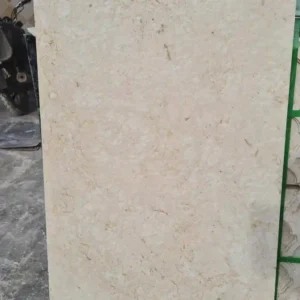
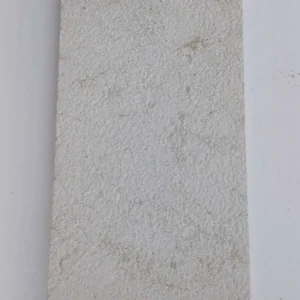
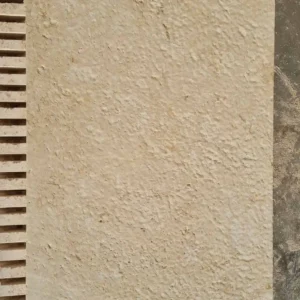
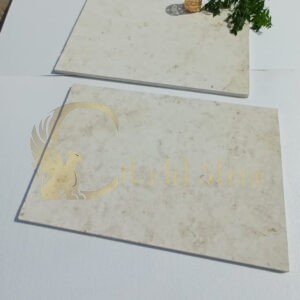
Antique French limestone flooring carries a surface texture profile that performs distinctly differently from honed or polished alternatives under Arizona solar exposure. The micro-relief of a properly tumbled or hand-distressed surface creates a thermal gradient across the stone face that reduces peak surface temperature by 8–12°F compared to a mirror-polished surface of identical material. That temperature differential is meaningful when your installation sits in full southern exposure in Phoenix and guests walk barefoot across it.
Aged French limestone flooring also handles thermal cycling differently at the joint interface. The mechanical distressing process that creates the antique character micro-fractures the stone edge in a controlled way — those micro-fractures act as micro-expansion relief points that reduce stress concentration at grout or sand joints during rapid temperature swings. This is one reason aged French limestone flooring outperforms cut-edge French limestone tiles in climates with extreme diurnal temperature ranges: the material’s thermal stress is distributed across the stone body rather than concentrated at joint edges.
The practical specification implication is that antique French limestone flooring can tolerate slightly tighter joint spacing outdoors than equivalent cut-edge material — 4–5mm versus 6–8mm — while maintaining comparable thermal performance. That tighter joint is often preferred by designers working in Southwestern residential projects where a more refined aesthetic is required without sacrificing the material’s inherent character.
Regarding sealing under Arizona UV conditions, penetrating impregnators based on silane-siloxane chemistry provide the best balance of water repellency and vapor transmission for both antique and standard French limestone flooring in Arizona. Film-forming sealers trap moisture vapor in a climate where evaporation rates are high, leading to blush, delamination, and accelerated surface degradation — avoid them entirely on exterior applications. For detailed maintenance protocols that keep your installation performing over decades, French Limestone Flooring from Citadel Stone covers the full resealing schedule, stain treatment hierarchy, and joint maintenance procedures specific to Arizona conditions.

Installation Sequencing and Moisture Timing in Arizona Conditions
Arizona’s low ambient humidity creates an installation timing challenge that European limestone installers encounter as a surprise. Mortar and grout cure by chemical hydration, not by air drying — but in an environment where surface evaporation rates can pull moisture from a fresh mortar bed within 20–30 minutes, you’re effectively working against the material’s cure process. Standard mortar open time specifications printed on packaging bags reflect temperate European conditions and can be cut by 30–40% on a 105°F Arizona summer afternoon.
The practical adjustment is to pre-wet your French limestone tiles in Arizona applications — a 10-minute soak followed by surface toweling before setting into the mortar bed gives the stone a moisture reserve that slows evaporation from the adhesive interface. Schedule mortar-set installations in the early morning hours during summer months; the combination of lower air temperature, lower solar angle, and residual overnight humidity gives you a workable window that disappears by 10 AM in July.
Projects in Flagstaff face a different timing challenge: the elevation brings freeze risk as early as October and as late as April, which means your curing mortar can encounter sub-zero temperatures before it reaches full strength. For Flagstaff installations in transitional seasons, use a fast-setting modified thinset rated for temperatures above 40°F and plan your truck deliveries to align with a minimum 72-hour frost-free window after installation completion.
- Summer installation (below 3,500 ft elevation): work between 6 AM and 10 AM, use extended-open modified thinset rated for high-temperature application
- Pre-wet tiles before setting in ambient temperatures above 90°F
- Avoid grouting within 24 hours of a monsoon weather event — rising humidity alters cure chemistry
- Winter installation at high elevations: confirm 72-hour frost-free forecast minimum after grouting
- Allow full mortar cure (minimum 14 days) before applying penetrating sealer — premature sealing traps moisture in the adhesive layer
Source French Limestone Flooring from Citadel Stone
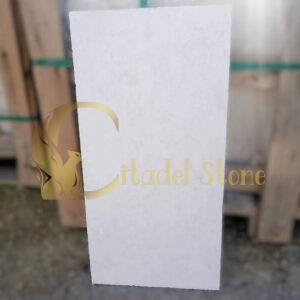
Citadel Stone stocks French limestone flooring in standard formats including 12×12, 16×16, 18×18, 24×24, and mixed-size European patterns in both antique tumbled and honed finishes, with nominal thicknesses of 3/4 inch (20mm), 1.5 inch (40mm), and 2 inch (50mm) available from regional warehouse inventory. French limestone floor tiles in the 3/4-inch format are held in warehouse stock for interior and covered applications, while outdoor-rated 40mm and 50mm formats ship from regional inventory with typical lead times of one to two weeks for standard orders.
You can request sample tiles in your preferred finish and thickness directly from Citadel Stone — the sample process includes a material specification sheet with porosity, absorption, and slip resistance test data so your project documentation is complete before purchase commitment. For trade accounts, wholesale pricing and project-quantity scheduling are available through a straightforward consultation that covers your delivery address, site access for truck unloading, and phased quantity requirements across your installation timeline.
Projects requiring custom cuts, non-standard formats, or large volumes above 2,000 square feet should initiate contact early — lead times on custom-dimension French limestone pavers in Arizona vary by quarry availability and may extend to four to six weeks depending on origin. Citadel Stone ships French limestone flooring across Arizona with truck delivery to Phoenix, Tucson, Scottsdale, Flagstaff, and surrounding markets. Contact the Citadel Stone team to request a material quote, sample package, or project consultation tailored to your drainage design requirements and format specification. As your project planning expands to additional Arizona hardscape elements, Rustic Limestone Flooring in Arizona explores a complementary limestone option that suits projects where a more textured, informal character fits the design intent. Architects and builders in Flagstaff, Sedona, and Yuma specify Citadel Stone French Limestone Flooring for Arizona outdoor installations.


