50 Years Of Manufacturing & Delivering The Highest-Quality Natural Stone. Sourced & Hand-Picked From The Middle East.

Escrow Payment & Independent Verifying Agent For New Clients

Contact Me Personally For The Absolute Best Wholesale & Trade Prices:

USA & Worldwide Hassle-Free Delivery Options – Guaranteed.

Flagstone Wall in Arizona

Drainage performance is a defining factor in any Arizona flagstone wall project — and Citadel Stone supplies flagstone wall material direct to Arizona contractors, architects, and homeowners in the thickness profiles and formats engineered to handle the state's seasonal flash flooding, hardpan soil conditions, and moisture-retention challenges. Properly specified flagstone wall construction requires material sourced with consistent density and surface texture to prevent water infiltration behind wall faces, a detail Citadel Stone's product range addresses across both irregular and cut-to-dimension formats. Citadel Stone Flagstone Wall in Arizona is supplied with specification support available to help contractors and designers select the right thickness and coursing profile before material is ordered — a step that directly affects both structural performance and drainage outcomes on sloped or flood-prone sites. How wall base depth, batter angle, and drainage aggregate interact with your chosen flagstone thickness can shift project costs considerably — a full breakdown follows below. For Arizona outdoor projects in Phoenix, Tucson, and Scottsdale, Citadel Stone provides Flagstone Wall in multiple formats and thicknesses.

See & Feel the Quality – Free Arizona Stone Samples

Our stones are made for the Arizona sun. See how the colors hold up in your specific light.

Design Your Arizona Home with a Local Stone Expert

Get personalized advice on the best stone for Arizona's climate and your design style.

Premium Natural Stone — All Sizes & Thicknesses Available

From standard cuts to fully custom dimensions — our limestone, granite, basalt & shellstone
are cut to your exact specifications. Residential or commercial, we’ve got you covered.

Showing all 69 resultsSorted by popularity

Get Your Free Arizona Stone Quote

Transparent Pricing for Your Arizona Project

Elevate Your Arizona Property with Premium Stone, Priced for Value.

Unlock $10,000 Worth of Deals on Beautiful Paver, Tiles & Cobble Setts—For Free!

Invest in Arizona’s Landscape: Stone That Lasts a Lifetime.

100% Happiness Guarantee

Trust 50 Years of Expertise. Invest in Quality Limestone Tiles

Custom-Cut for Your Arizona Project: Any Size, Any Finish.

No-Obligation Consultation: Get Expert Advice for Your Arizona Home.

The Stone Supplier Trusted by Arizona's Leading Architects & Designers.

Arizona's Most Diverse Selection of Natural Stone.

Elevate Your AZ Property with Natural Stone Built for the Desert. Our expansive collection of Natural Stone brings timeless beauty and proven durability to both residential and commercial spaces across Arizona. As the state’s leading supplier, we offer a diverse palette of colors and finishes—from cool, light tones that reflect the sun to rich, earthy textures that complement the Southwest landscape. Transform your environment with limestone that stands up to the Arizona heat while providing the sophisticated aesthetic you desire.

Incredible Prices for Top-Quality Stone—Shop Citadel Stone Today!

Table of Contents

Designing a flagstone wall in Arizona forces you to confront a hydrological problem before you ever touch a structural one — the state’s monsoon-driven rainfall arrives in concentrated bursts that generate runoff volumes most wall systems weren’t designed to absorb. A flagstone wall that ignores drainage geometry will fail hydraulically long before it fails structurally, regardless of how good the stone is. Getting the water management right is the foundational specification decision, and everything else — footing depth, joint width, batter angle, coping detail — flows from that single premise.

How Arizona Water Behaves Against Flagstone Walls

Arizona’s precipitation pattern is unlike most of the continental United States. Rather than steady seasonal rain distributed across weeks, the Sonoran Desert monsoon delivers intense short-duration events — sometimes exceeding 2 inches per hour — concentrated between July and September. Your flagstone wall doesn’t need to handle average annual rainfall. It needs to handle peak intensity without allowing hydrostatic pressure to build behind the face.

Hydrostatic pressure is the silent killer of masonry walls. Water-saturated backfill can exert lateral force exceeding 60 pounds per square foot against a wall face, and compacted caliche soil — common throughout the Phoenix valley — transmits that pressure efficiently because it drains so poorly on its own. You need to interrupt the pressure cycle by designing drainage out before it builds up.

  • Install a continuous gravel drainage column (clean 3/4-inch crushed aggregate) directly behind the wall, minimum 12 inches wide from footing to cap
  • Slope the footing trench floor a minimum of 1% toward a perforated collector pipe at the base
  • Use weep holes every 4–6 linear feet at footing level — never rely on mortar joint permeability alone
  • Wrap the drainage aggregate in geotextile filter fabric to prevent fine soil migration that clogs drainage over time
  • Extend the drainage column at least 6 inches above the finished grade line on the backfill side

The flagstone wall cladding detail matters here too. Flagstone wall cladding applied over a CMU or concrete block backup wall needs weep screed openings that align with the drainage column — if you seal the cladding base without a drainage path, you’ve just created a hidden reservoir. According to The Masonry Society natural stone wall construction standards, proper drainage integration behind stone veneer systems is a structural requirement, not an optional enhancement.

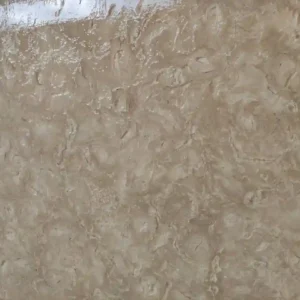
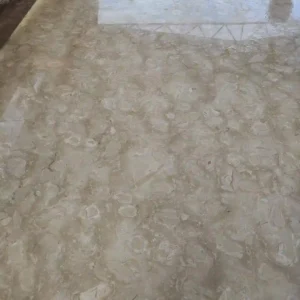
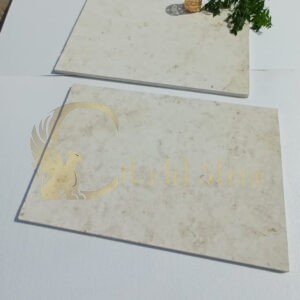
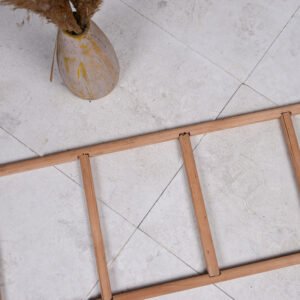
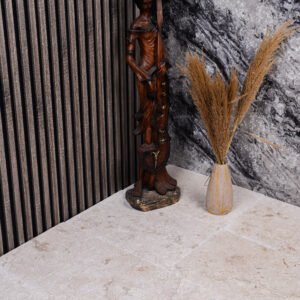
A flagstone wall arizona, sample showing small terracotta jug sits on a light-colored, subtly patterned tile floor.
Explore flagstone wall arizona, quality — light-colored tile is ideal for creating a serene and natural look in any space.

Flagstone Wall Stone Selection for Arizona Drainage Conditions

The stone you choose for exterior flagstones in Arizona isn’t just an aesthetic decision — it’s a performance specification that intersects directly with moisture behavior. Dense sedimentary flagstones with absorption rates below 3% by weight are the appropriate range for walls in high-moisture-event climates. Stone with absorption above 6% will cycle through wet-dry expansion repeatedly during monsoon season, and that cycling degrades mortar bonds and widens joints over 5–8 seasons.

Flagstone masonry in Arizona performs best when the stone face resists spalling from rapid moisture absorption followed by high-UV drying. That combination — fast wetting, fast drying — creates micro-crack propagation in porous stone faces over time. External flagstones in Arizona that exhibit consistent density across the slab face (no laminar weakness or soft sedimentary layers) will outlast visually similar stones that have internal porosity variation.

  • Target minimum compressive strength of 8,000 PSI for load-bearing flagstone wall applications
  • Absorption rate below 3% by weight is the specification benchmark for monsoon-zone exterior walls
  • Avoid flagstones with visible lamination planes parallel to the wall face — these delaminate under freeze-thaw at higher elevations like Flagstaff
  • Request material safety data sheets and quarry batch test results before committing to large-volume orders
  • Sawn-face flagstone wall stone provides more consistent bed depth for mortar setting than split-face in veneer applications

According to flagstone sedimentary rock characteristics and paving use, flagstone’s natural cleavage planes that make it ideal for splitting into consistent slabs are the same planes that require careful orientation when used vertically in wall applications — the cleavage axis should run horizontally across the wall face, not perpendicular to it, to maximize resistance to face spalling under hydraulic stress.

Citadel Stone sources flagstone wall stone from established quarry partners whose batch consistency we verify before each warehouse intake. You can request thickness specifications and sample pieces before committing your project to a full order — this is standard practice for commercial flagstone masonry work, and it’s the step that prevents costly mid-project material substitutions.

Flagstone Retaining Wall Design and Drainage Engineering

The flagstone retaining wall in Arizona is the most technically demanding wall type in the landscape — it combines structural loading with the drainage challenge outlined above, and errors in either category cause the same result: wall movement, cracking, and eventual failure. Getting the engineering sequence right starts with understanding batter ratios and their relationship to drainage geometry.

A dry-stacked flagstone retaining wall should lean into the slope at a minimum 1 inch per 1 foot of wall height (a 1:12 batter) — this counteracts the outward rotation tendency from saturated backfill loading. Mortared flagstone retaining walls can use a reduced batter of 1:24 because the mortar bond provides tensile resistance, but they require more aggressive drainage detailing precisely because the mortared face prevents incidental drainage through joints.

  • For walls exceeding 4 feet in retained height, engage a licensed structural engineer — Arizona building code requires engineered drawings for retaining walls above this threshold
  • Flagstone retaining wall block selection for the base courses should favor larger, heavier pieces (minimum 40 lbs per unit) to resist hydraulic and soil pressure at the footing zone
  • Install a French drain system at footing level before beginning any flagstone wall construction — this is not a retrofit option
  • In Tucson’s clay-rich desert soils, compaction testing of the drainage aggregate layer should reach 95% Standard Proctor before wall construction begins
  • Flagstone wall blocks in the first two courses above grade should be set in full mortar beds, not spot-patched, to maintain structural continuity at the critical pressure zone

For projects requiring technical consultation on flagstone wall specifications — including course height planning, drainage integration details, and material quantity calculations — Flagstone Wall from Citadel Stone technical guidance is available before construction begins, covering everything from flagstone retaining wall block sizing to drainage column sequencing for Arizona soil conditions.

Flagstone Wall Cladding and Veneer Installation in Arizona

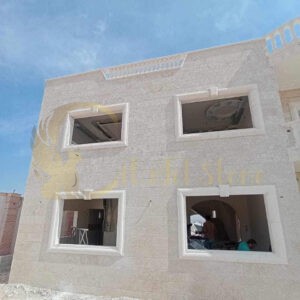
Flagstone wall cladding installed over an existing structural backup presents a different set of drainage considerations than a free-standing masonry wall. The cavity between stone veneer and backup wall is where moisture accumulates when flashings are poorly designed or omitted — and in Arizona’s monsoon climate, that cavity can hold enough water to corrode ties, degrade mortar, and cause progressive delamination of the cladding face.

Your veneer installation should include a continuous flashing at the base with end dams turned up at corners, lapped over a through-wall weep system. A 1-inch air cavity between stone back and building paper or moisture barrier is the minimum detailing standard. In Scottsdale’s high-end residential and commercial projects, architects commonly specify a 2-inch cavity with continuous mortar net to prevent cavity blockage — this is worth the added material cost when you’re cladding a feature wall that the client will see every day.

  • Use stainless steel or hot-dipped galvanized wall ties — standard steel corrodes within 3–5 years behind cladding in wet-dry cycling environments
  • Space wall ties at maximum 24 inches horizontally and 18 inches vertically for flagstone wall cladding over 1 inch thickness
  • Apply a breathable masonry waterproofer to the flagstone wall stone face after installation — it reduces absorption without sealing moisture vapor transmission from the cavity
  • Seal all horizontal ledge surfaces (sills, caps, projections) with a polyurethane or silicone sealant to prevent water ponding at horizontal joints
  • Control joints in flagstone wall cladding should align with control joints in the backup structure — misalignment forces the cladding to bridge movement it can’t accommodate

The IBC Chapter 21 masonry code provisions, referenced in IBC Chapter 21 natural stone masonry and veneer building code requirements, define minimum tie spacing, cavity dimensions, and flashing requirements for anchored masonry veneer — your project drawings should reference these provisions explicitly when submitting for permit review in Arizona jurisdictions.

Flagstone Garden Wall and Landscape Wall Applications

The flagstone garden wall and flagstone landscape wall occupy a different performance bracket than structural retaining walls — the loads are lower, the regulatory requirements are typically less demanding, and the design flexibility is greater. Drainage remains just as important, though, because a poorly drained garden wall will heave, lean, and crack in Arizona soils over 2–3 monsoon cycles regardless of how carefully it was built.

Low garden walls in the 18-to-36-inch height range are ideal candidates for dry-stacked construction using irregular flagstone pieces. The joints between stones act as natural weep channels, eliminating the need for engineered drainage systems in most residential garden applications. Your base course should still sit on a compacted aggregate pad — 4 inches minimum of 3/4-inch crushed stone — to keep the bottom course above grade moisture and allow base drainage.

  • Select flagstone pieces with at least one flat bearing face for stable stacking — irregular shapes with multiple flat planes are easier to integrate and lock together naturally
  • Stagger vertical joints (run bond pattern) with a minimum 4-inch overlap from course to course for structural continuity
  • Flagstone landscape wall caps should be your heaviest, flattest pieces — they hold the top courses in place and shed water away from the wall core
  • Flagstone patio wall sections that adjoin paved surfaces need a 1/4-inch-per-foot slope on the cap to direct runoff away from the paving joint
  • In areas with established trees, root intrusion beneath the base course is a long-term concern — install a root barrier membrane before setting your aggregate base

Flagstone Edging, Curbing, and Path Border Details

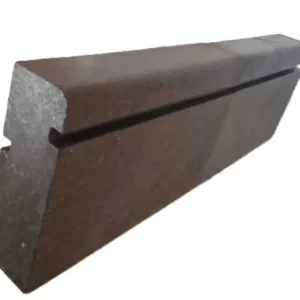
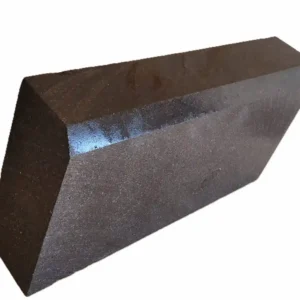
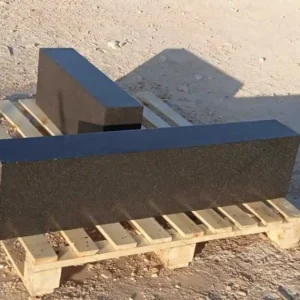
Flagstone edging stone is a functional drainage element as much as an aesthetic one — the edge detail at a path, garden bed, or paved surface is where sheet flow either moves effectively off the hardscape or backs up into it. Designing flagstone path edging and flagstone garden edging to function as subtle grade-break elements protects both the paving and the planting zones from waterlogging during storm events.

Flagstone curbing in Arizona landscapes works best when it’s set 1 to 1.5 inches proud of the adjacent paving surface — this creates a defined edge that channels sheet flow along the curb line rather than across the paving face. The flagstone landscape edging pieces should be set in a concrete haunch at the base to prevent lateral movement from soil cycling — dry-set edging migrates noticeably in expansive soils over two or three seasons.

  • Flagstone edging in Arizona should be minimum 2 inches thick to resist the edge-load impact of mowing equipment and foot traffic
  • Use a 4-inch concrete haunch (lean mix, 2000 PSI minimum) to lock edging pieces in position — this doesn’t make the installation rigid, it prevents lateral drift
  • 4×12 flagstone wall and edging pieces from the same quarry batch maintain color and texture consistency across a landscape design
  • Flagstone edging stone at planting bed borders should be set 1 inch below the adjacent soil surface to accommodate mulch depth without blocking drainage
  • At path intersections, cut flagstone path edging pieces to 45-degree miters rather than butting them — the miter joint sheds water cleanly and reads more refined in finished landscapes
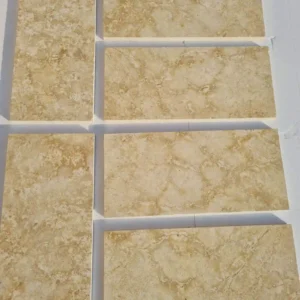
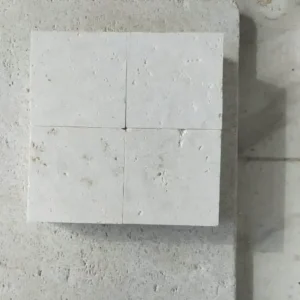
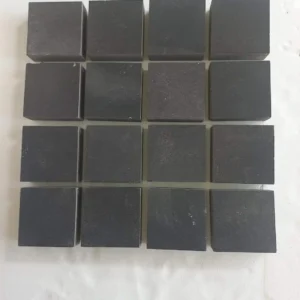
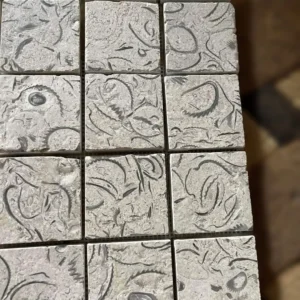
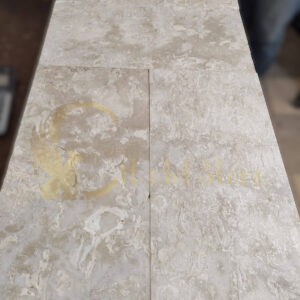
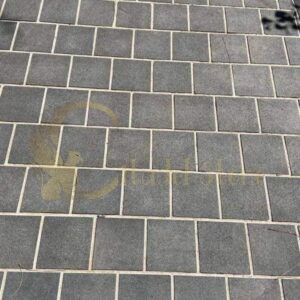
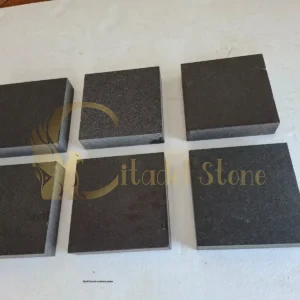
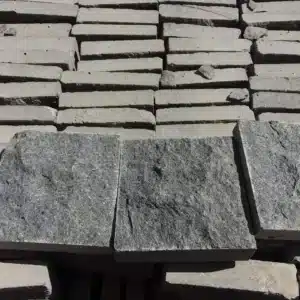
A flagstone wall arizona, sample showing collection of rectangular flagstone tiles arranged in a grid pattern on a textured surface.
Explore flagstone wall arizona, quality — flagstone tiles offer a classic and versatile flooring option, ideal for creating elegant spaces.

Installation: Base Preparation and Mortar Specification for Arizona Walls

Base preparation is the phase where flagstone wall projects succeed or fail permanently — and it’s also the phase most commonly abbreviated when project budgets tighten. In Arizona’s variable soils, a compromised base is not a recoverable condition. You can’t re-mortar a wall that’s moved off its footing plane; you demolish and rebuild.

Your footing depth should reach below the active soil zone — typically 18 to 24 inches in the Phoenix metro area for walls under 4 feet, deeper in Flagstaff’s freeze-thaw zone where frost penetration extends to 18 inches in severe winters. The footing width should be a minimum of 1.5 times the wall thickness to distribute bearing load across a larger soil area. Concrete footings for mortared flagstone walls should reach 3,000 PSI minimum compressive strength before you begin setting stone — this typically means 28 days cure time, or 7 days with Type III high-early cement.

  • Type S mortar (ASTM C270) is the correct specification for exterior flagstone wall construction — it offers higher flexural bond strength than Type N, which matters in thermally active environments
  • Adjust mortar water content for ambient temperature — in Phoenix summer installations, add 5% less water than the mix design calls for, because surface evaporation accelerates set time unpredictably
  • Back-butter each flagstone wall stone piece individually before setting — trowel-only bed application leaves voids behind the stone face that fill with water during monsoon events
  • Joint width should be consistent at 3/4 inch to 1 inch for flagstone masonry — this width accommodates the natural face variation in split flagstone while maintaining a cohesive visual pattern
  • Tool joints to a concave profile — this sheds water more effectively than flush or raked joints and is less prone to edge chipping under thermal cycling

Demand for dimension flagstone in wall applications has maintained consistent volume in southwestern states, reflecting both the material’s established performance record and the ongoing preference for natural stone aesthetics in high-value residential construction. This sustained demand also means that warehouse availability for quality flagstone wall stone is generally reliable, but you should verify current stock levels with your supplier before finalizing project schedules — lead times from the warehouse to your site can vary by 1–3 weeks depending on regional logistics and batch availability.

Maintenance, Resealing, and Long-Term Wall Performance in Arizona

A properly built flagstone wall in Arizona will realistically deliver 25 to 35 years of service before significant maintenance intervention is needed — but that performance window assumes biennial resealing and annual joint inspection. The monsoon wet-dry cycle works on mortar joints steadily, and catching hairline cracks at year 2 or 4 prevents the water infiltration that causes structural joint failure by year 8 or 10.

Sealing exterior flagstones in Arizona with a penetrating silane-siloxane sealer after installation and every two years thereafter reduces moisture absorption significantly at the stone face. This directly reduces spalling risk and keeps the wall face looking consistent by preventing mineral deposit streaking from hard Arizona water. Avoid film-forming sealers on exterior flagstone masonry — they peel under UV exposure and create a moisture trap behind the film layer.

  • Inspect mortar joints annually in fall after the monsoon season — look for hairline cracking, hollow-sounding sections (tap lightly with a mallet), and any efflorescence indicating active moisture movement
  • Repoint affected joints with matching Type S mortar — clean the joint to a minimum 3/4-inch depth before applying new mortar to ensure adequate bond depth
  • Clean flagstone wall faces with a diluted masonry cleaner (pH neutral, avoid acid-based cleaners on calcareous stone) to remove biological growth that retains moisture
  • Check drainage column outlets (weep holes and French drain exits) annually — fine soil migration can partially block these over 3–5 years in sandy soil conditions
  • Wall flagstone in Arizona exposed to full western sun will develop a natural patina within 5–7 years — this is normal mineral oxidation, not deterioration

Order Flagstone Wall — Direct Supply from Citadel Stone

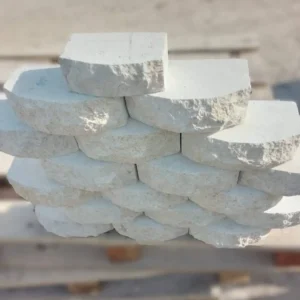
Citadel Stone stocks flagstone wall stone in standard formats — ranging from irregular cut flagstone suitable for dry-stacked garden walls through to sawn-face flagstone wall cladding panels in nominal thicknesses from 1 inch to 3 inches. You can request sample pieces and batch thickness specifications before placing a full order, which is the standard process for commercial flagstone masonry projects and any high-visibility residential application where material consistency matters.

For trade accounts, wholesale enquiries, and contractor pricing, Citadel Stone’s team can advise on lead times and available inventory by format. We maintain regional inventory across Arizona, which typically brings truck delivery lead times to 1–2 weeks for stocked items — significantly faster than the 6–8 week cycle common for imported stone. For non-standard formats, custom-cut flagstone wall stone, or projects requiring large volumes with tight delivery schedules, contact us early in your planning phase to confirm warehouse availability and logistics coordination.

Citadel Stone ships flagstone wall stone across Arizona, with truck delivery coverage extending to residential and commercial sites in the Phoenix metro area, Tucson, Scottsdale, and surrounding regions. You can contact Citadel Stone directly to request a quote, schedule a consultation, or discuss material specifications for your specific wall project. As your project wraps up, you may also find value in exploring flagstone walkway options in Arizona — a complementary application that often uses the same material batch and extends the design continuity of a stone wall installation across the broader landscape. Contractors in Flagstaff, Sedona, and Yuma select Citadel Stone Flagstone Wall for Arizona residential and commercial projects.

Why Arizona’s Builders Choose Citadel Stone?

Free AZ Comparison: Citadel Stone vs. Other Suppliers—Find the Best Value!

FeaturesCitadel StoneOther Stone Suppliers
Exclusive ProductsOffers exclusive natural stones sourced from selected quarriesTypically offers more generic or widely available stone options
Quality and AuthenticityProvides high-grade, authentic natural stones with unique featuresQuality varies; may include synthetic or mixed-origin stone materials
Product VarietyWide range of premium productsProduct selection is usually more limited or generic
Global DistributionDistributes stones internationally, with a focus on providing consistent qualityOften limited to local or regional distribution
Sustainability CommitmentCommitted to eco-friendly sourcing and sustainable production processesSustainability efforts vary and may not prioritize eco-friendly sourcing
Customization OptionsOffers tailored stone solutions based on client needs and project specificationsCustomization may be limited, with fewer personalized options
Experience and ExpertiseHighly experienced in natural stone sourcing and distribution globallyExpertise varies significantly; some suppliers may lack specialized knowledge
Direct Sourcing – No MiddlemenWorks directly with quarries, cutting unnecessary costs and ensuring transparencyOften involves multiple intermediaries, leading to higher costs
Handpicked SelectionHandpicks blocks from quarries and hand select paver and tile post manufacture for quality and consistency. Ensuring only the best materials are chosenSelection standards vary, often relying on non-customized stock
Durability of ProductsStones are carefully selected for maximum durability and longevityDurability can be inconsistent depending on supplier quality control
Vigorous Packing ProcessesUtilizes durable packing methods for secure, damage-free transportPacking may be less rigorous, increasing the risk of damage during shipping
Citadel Stone OriginsKnown as the original source for unique limestone tiles from the Middle East, recognized for authenticityOrigin not always guaranteed, and unique limestone options are less common
Customer SupportDedicated to providing expert advice, assistance, and after-sales supportSupport quality varies, often limited to basic customer service
Competitive PricingOffers high-quality stones at competitive prices with a focus on valuePrice may be higher for similar quality or lower for lower-grade stones
Escrow ServiceOffers escrow services for secure transactions and peace of mindTypically does not provide escrow services, increasing payment risk
Fast Manufacturing and DeliveryDelivers orders up to 3x faster than typical industry timelines, ensuring swift serviceDelivery times often slower and less predictable, delaying project timelines

Extra Benefits

Choosing Citadel Stone offers unique advantages beyond premium stone quality:

Exclusive Access to Durable Stones

Citadel Stone specializes in unique, regionally exclusive stones, sourced directly from the Middle East.

Transparent Pricing – No Hidden Costs

With no middlemen, Citadel Stone provides direct, transparent pricing that reduces unnecessary costs.

Flexible Customization for Bespoke Projects

Tailor your order to precise specifications, from sizes to finishes, ensuring your project aligns perfectly with your vision.

Streamlined Delivery & Reliable Stock Availability

Benefit from fast production and delivery timelines, designed to minimize delays and ensure reliable availability.

The Preferred Stone Supplier for Luxury AZ Developments.

Scale Your Vision: We Support Arizona's Largest Projects with Reliable, Fast Delivery.

With unlimited tiles, pavers, cobble setts, curbstones, and the fastest delivery options, What’s not to love? Say goodbye to unnecessary hassles!

Leading AZ Stone Suppliers are Loving Citadel Stone!

Don’t Settle for Less. Source the Best Stone for Your Local Stone Expert.

DanielOwner
Thank you, Kareem. We received the order. The stones look great!
FrankOwner
You are a good businessman and I believe a good person. I admire your honesty, this is why I call you a good businessman.
Gemma C
Gemma CPrivate Project
Undoubtedly the price was the reason that we chose Citadel stone, in addition to the fact that you offer a white limestone that is hard to source. Your products are very good value for money by comparison with other companies. You have helped at every stage of the process and have been quick and reliable in your responses. It was a big risk for us to pay everything up front including shipping and not know the quality. You did make me feel that I could trust you and your company however and we are very happy with the tiles. They appear to have been finished to a very high quality of smoothness and I can't wait to see them once they have been laid. We need to see now how easy they are to fit and maintain, yet you also sealed them before shipment so we think that they will be very durable. Our building project has been delayed for a few months now so it may be sometime before we see them laid, but I promise that I will send photos as soon as we have them down. Thank you so much Kareem and your team, you have done a great job. I am hoping that we can pay for, and receive our second shipment in the not too far future, so that we can finish everything off. Wishing you well. Gemma
Molly McK
Molly McKPrivate Project
I appreciate the quality of product and care for the custom order in packaging each crate to minimize breakage as well as the flexibility with the order to help us make the most of shipping. The timely communications are impressive from the beginning and throughout the process. It's reassuring to have gone through one order to know what the process will be like in the future. I am glad to have had some guidance through the importing process and recommendations for shipping partners to assist. It's incredible to think about the journey the stone traveled to get to our site and I'm grateful to have made it to the next stage of the project relatively smoothly and with from what I can tell

Frequently Asked Questions

If your question is not listed, please email us at [email protected]

How does Arizona's rainfall and flash flooding affect flagstone wall design?

Arizona’s monsoon season delivers intense, short-duration rainfall that can saturate compacted soil rapidly, creating hydrostatic pressure behind retaining and freestanding flagstone walls. Proper drainage design — including gravel backfill, weep holes, and a compacted base that promotes lateral water escape — is essential to wall longevity. Ignoring drainage in the wall assembly is one of the most common causes of flagstone wall failure in desert climates, even in areas that receive relatively low annual rainfall.

For load-bearing or retaining applications in Arizona, flagstone pieces in the 2-inch to 3-inch thickness range are generally preferred, as thinner material is more susceptible to cracking under lateral soil pressure and freeze-thaw cycles at higher elevations. The appropriate thickness also depends on the wall height — taller walls require thicker, more uniform coursing to maintain structural integrity over time. A project consultation before ordering ensures the thickness profile matches both the design intent and the site conditions.

Dry-stacked flagstone walls are a practical choice in Arizona for lower retaining walls and decorative garden borders, as the open joints allow water to drain freely without building up pressure during monsoon events. For mortared flagstone walls, a Type S mortar is commonly specified in arid and semi-arid environments because it offers sufficient bond strength while tolerating the thermal expansion cycles common across Phoenix, Tucson, and Scottsdale. The choice between dry-stack and mortared construction should be informed by wall height, soil movement risk, and intended load.

Sealing is not universally required for flagstone walls in Arizona, but it is worth considering for walls in low-lying areas where moisture wicks into the base of the wall during monsoon season or irrigation runoff. A penetrating sealer can reduce water absorption and minimize the mineral staining or spalling that can develop when moisture cycles repeatedly through porous stone. The decision depends on the specific stone type, its natural porosity, and the site’s drainage conditions rather than a one-size-fits-all approach.

Arizona soils vary significantly — from stable decomposed granite in Scottsdale-area foothills to expansive clay soils found across parts of the Tucson basin — and this directly determines how deep and how wide the wall’s foundation needs to be. Expansive soils that absorb water and shift seasonally require a more substantial compacted base and may need a geotextile fabric barrier to separate the base aggregate from the native soil. Getting a basic soil assessment before beginning wall construction avoids costly remediation if settling or lateral movement occurs after installation.

From the point of specification through to site delivery, Citadel Stone keeps the process straightforward — material is available in the formats and thicknesses needed for Arizona wall construction, with ordering structured to accommodate both single-pallet residential projects and multi-truckload commercial installations. Citadel Stone’s climate-specific product knowledge means the right stone density and finish are matched to Arizona’s moisture and drainage demands before an order is placed, not after. Arizona projects across Phoenix, Tucson, Scottsdale, and surrounding regions benefit from Citadel Stone’s established supply coverage throughout the state.