50 Years Of Manufacturing & Delivering The Highest-Quality Natural Stone. Sourced & Hand-Picked From The Middle East.

Escrow Payment & Independent Verifying Agent For New Clients

Contact Me Personally For The Absolute Best Wholesale & Trade Prices:

USA & Worldwide Hassle-Free Delivery Options – Guaranteed.

Flagstone Patio in Arizona

For Arizona landscape architects and contractors designing patios with character, Citadel Stone supplies flagstone direct — offering irregular and cut formats in the warm earth tones and rust-tinged palettes that complement both Southwestern adobe traditions and contemporary desert-modern aesthetics. Flagstone thickness options range from 1" to 2"+, supporting applications from lightly trafficked garden paths to full outdoor living decks where structural consistency matters. The Citadel Stone Flagstone Patio in Arizona resource walks through how regional design preferences — from Tucson's Sonoran vernacular to Scottsdale's resort-influenced hardscape styles — shape stone selection decisions, including surface finish, joint width, and color blending across large-format installations. Wholesale and trade supply is available for contractors and designers, with specification support to help match material to project scale. The choice between irregular and gauged flagstone has meaningful implications for labor cost and finished appearance — a distinction worth understanding before finalizing your material order. Flagstone Patio from Citadel Stone is available to Arizona contractors and designers serving Phoenix, Tucson, and Scottsdale.

See & Feel the Quality – Free Arizona Stone Samples

Our stones are made for the Arizona sun. See how the colors hold up in your specific light.

Design Your Arizona Home with a Local Stone Expert

Get personalized advice on the best stone for Arizona's climate and your design style.

Premium Natural Stone — All Sizes & Thicknesses Available

From standard cuts to fully custom dimensions — our limestone, granite, basalt & shellstone
are cut to your exact specifications. Residential or commercial, we’ve got you covered.

Showing all 69 resultsSorted by popularity

Get Your Free Arizona Stone Quote

Transparent Pricing for Your Arizona Project

Elevate Your Arizona Property with Premium Stone, Priced for Value.

Unlock $10,000 Worth of Deals on Beautiful Paver, Tiles & Cobble Setts—For Free!

Invest in Arizona’s Landscape: Stone That Lasts a Lifetime.

100% Happiness Guarantee

Trust 50 Years of Expertise. Invest in Quality Limestone Tiles

Custom-Cut for Your Arizona Project: Any Size, Any Finish.

No-Obligation Consultation: Get Expert Advice for Your Arizona Home.

The Stone Supplier Trusted by Arizona's Leading Architects & Designers.

Arizona's Most Diverse Selection of Natural Stone.

Elevate Your AZ Property with Natural Stone Built for the Desert. Our expansive collection of Natural Stone brings timeless beauty and proven durability to both residential and commercial spaces across Arizona. As the state’s leading supplier, we offer a diverse palette of colors and finishes—from cool, light tones that reflect the sun to rich, earthy textures that complement the Southwest landscape. Transform your environment with limestone that stands up to the Arizona heat while providing the sophisticated aesthetic you desire.

Incredible Prices for Top-Quality Stone—Shop Citadel Stone Today!

Table of Contents

Flagstone patio design in Arizona isn’t primarily a heat management problem — it’s an aesthetic alignment challenge that most specifiers approach from the wrong direction. The state’s architectural vocabulary runs deep: Spanish Colonial revival in Tucson’s historic districts, contemporary desert minimalism across Scottsdale’s new-build corridors, and the organic Southwestern adobe traditions that influence everything from grout color to stone edge profile. Your material selection for a flagstone patio in Arizona needs to answer those design languages before it answers any engineering question.

The good news is that flagstone’s natural variation — its irregular faces, sedimentary layering, and range of warm earth tones — maps directly onto Arizona’s dominant landscape palette. Buff sandstone reads beautifully against rammed earth walls. Blue-grey quartzite complements the steel-and-glass vocabulary of modern desert architecture. Rust-toned flagstone echoes the iron-oxide soils that define the Sonoran landscape. Getting this alignment right from the outset is what separates a patio that photographs well from one that genuinely belongs to its site.

How Arizona’s Architectural Traditions Shape Flagstone Selection

Arizona’s built environment draws from at least three distinct design traditions, and each one creates different expectations for outdoor stone. Spanish Colonial and Territorial styles — still dominant in central Tucson and older Scottsdale neighborhoods — favor warm, muted tones: tan, buff, and terracotta-adjacent flagstone that echoes the adobe and plaster surfaces inside the home. Rough-textured, hand-split flagstone surfaces feel native to this vocabulary. Overly uniform or machine-cut square flagstone tends to look out of place against those organic walls.

Contemporary desert architecture pushes in the other direction. Smooth flagstone patio surfaces in slate grey or blue-grey quartzite suit the clean-line aesthetic of flat-roofed modern homes. Square flagstone in Arizona’s newer residential developments — particularly in the East Valley cities — often runs in large-format layouts with minimal joint spacing, creating the continuous-surface look that modern landscape architects favor. The format choice (irregular organic shapes versus square flagstone cuts) is as important a design decision as the stone variety itself.

  • Territorial and Spanish Colonial homes: rough flagstone patio surfaces in buff, tan, and warm sand tones with wide mortar joints
  • Contemporary desert modern: smooth flagstone patio layouts in grey, slate, or blue-toned stone with tight dry-laid joints
  • Organic Southwestern: irregular flagstone shapes in red, rust, and brown tones that echo the native soil palette
  • Ranch and agrarian styles: utility-forward rough flagstone patio configurations that prioritize durability and honest material expression
  • Mediterranean revival: cream and ivory flagstone tile for patio surfaces with decorative border treatments

Citadel Stone maintains warehouse inventory of flagstone varieties across these finish profiles and color ranges, which means you can request sample pieces before committing to a full project quantity — a step that’s genuinely worth taking when the material needs to align with existing exterior finishes.

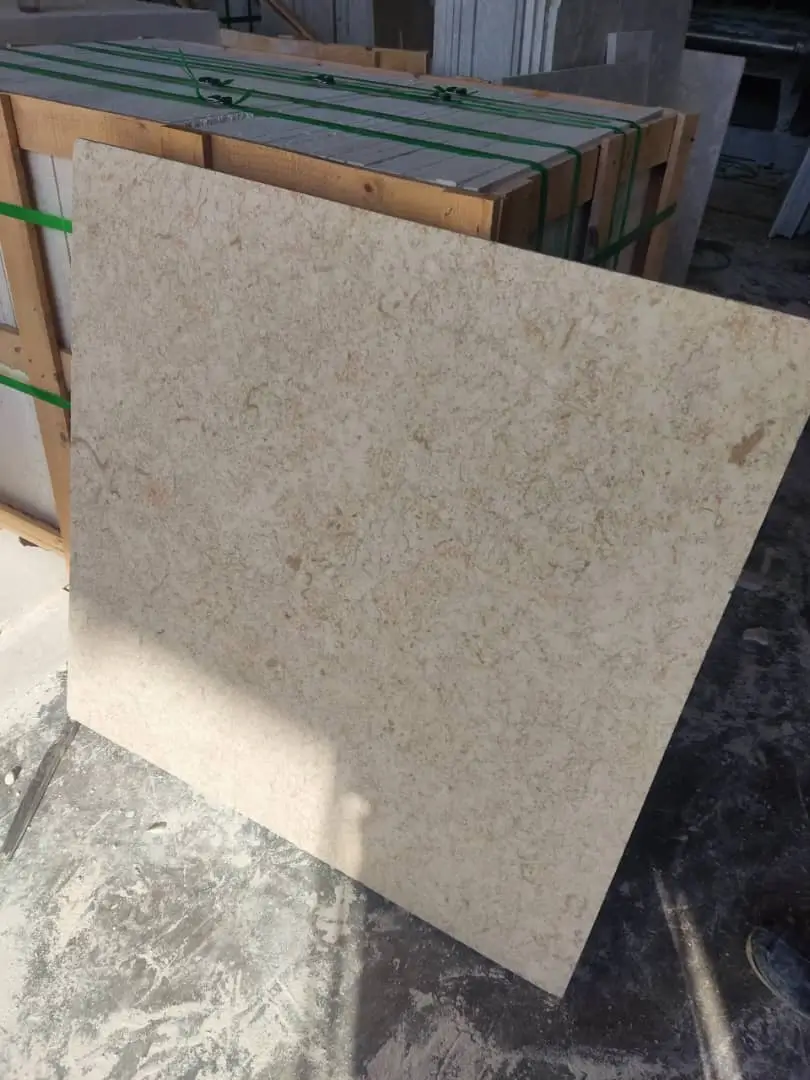
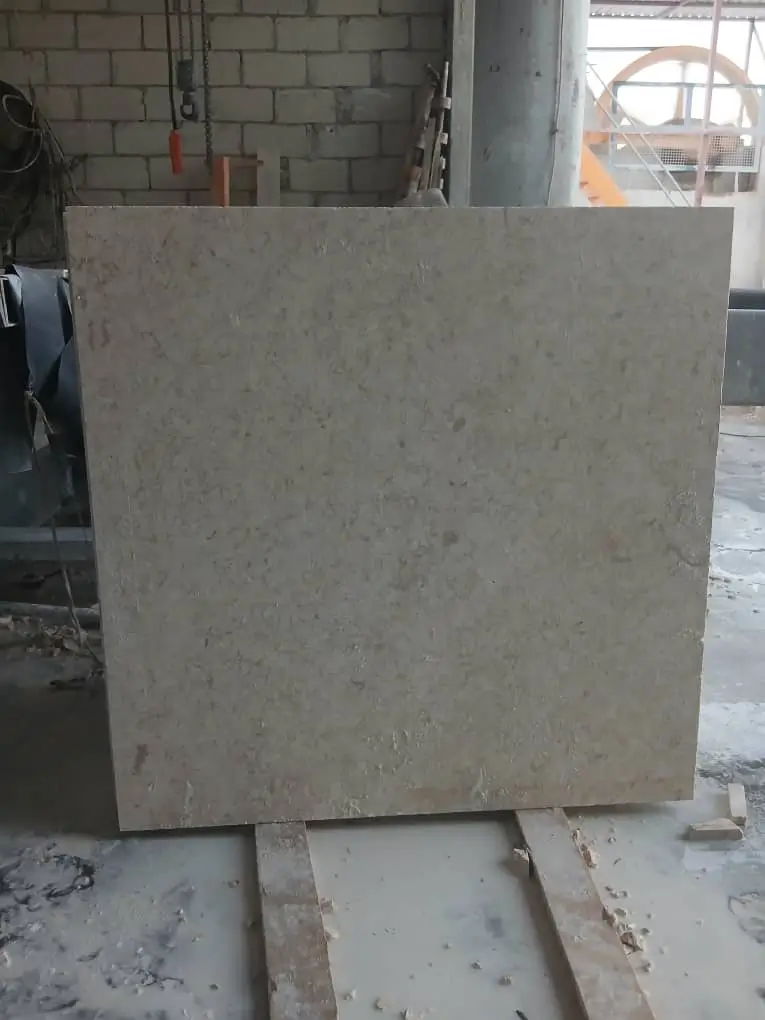
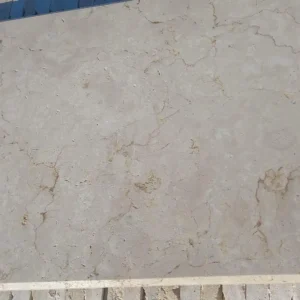
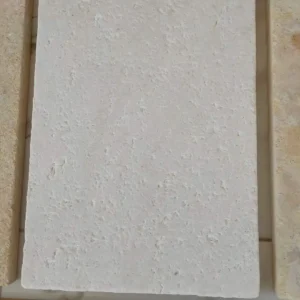
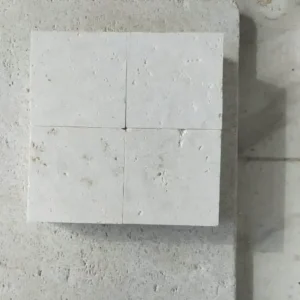
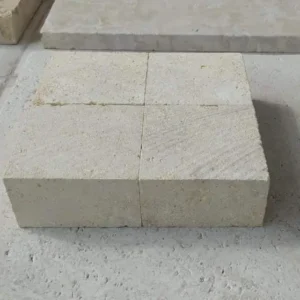
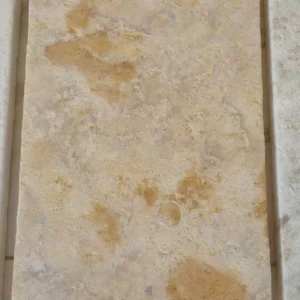
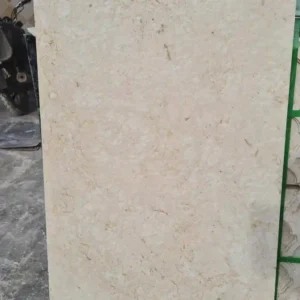
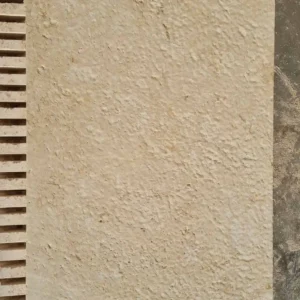
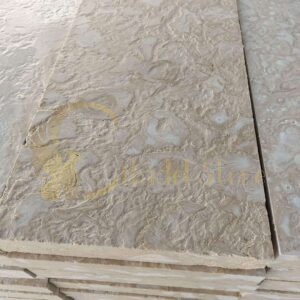
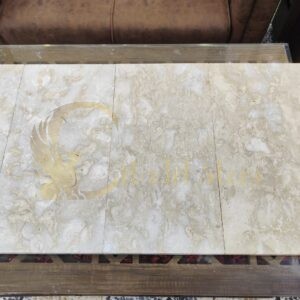
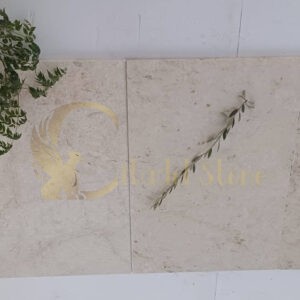
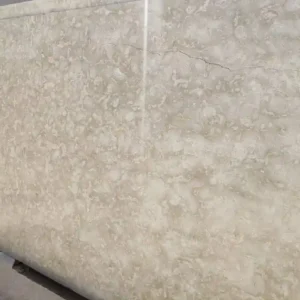
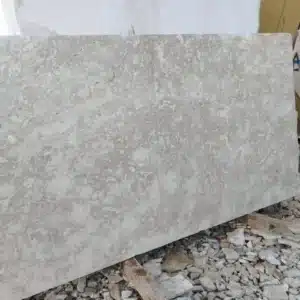
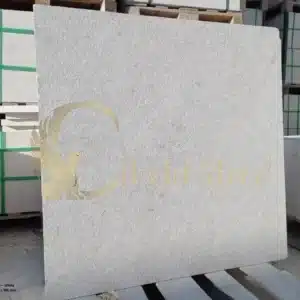
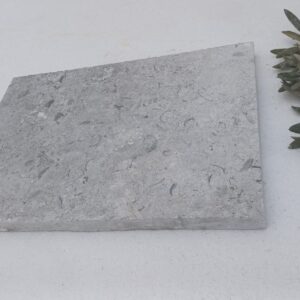
Flagstone patio arizona, featured here — close-up of a light beige flagstone slab showing subtle textural variations and veining.
Explore flagstone patio arizona, quality — suppliers offer quality flagstone slabs for a variety of construction and landscaping projects.

Flagstone Varieties and the Arizona Color Palette

The range of stone types marketed as flagstone is wider than most buyers realize. Sandstone, quartzite, slate, and limestone all appear in the category — and each brings a distinct color range and surface character that performs differently within Arizona’s landscape. Understanding the material behind the label matters for both aesthetics and long-term performance.

Buff and tan sandstone flagstone dominates the traditional Arizona outdoor patio landscape because it genuinely belongs here — the same iron-oxide and silica chemistry that produces Arizona’s red rock formations produces this stone. It reads warm in every light condition and weathers gracefully in dry climates. The limitation is surface abrasion resistance: sandstone is softer than quartzite and can show wear in high-traffic flagstone patio walkway zones within 8 to 12 years without periodic resealing.

Blue-grey quartzite flagstone performs structurally at a different level — compressive strength above 18,000 PSI in well-sourced material — and its cooler tone complements the steel, concrete, and weathering steel accents common in contemporary desert architecture. The surface is harder to cut cleanly into square flagstone shapes, which drives up fabrication cost but produces a premium product for modern flagstone patio applications. According to flagstone sedimentary rock characteristics and paving use, flagstone’s natural cleavage along bedding planes is what makes it practical to split into paving slabs without machining, a quality that varies significantly by stone type and quarry source.

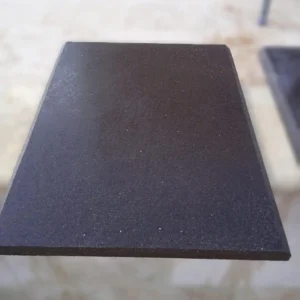
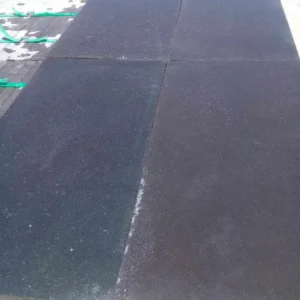
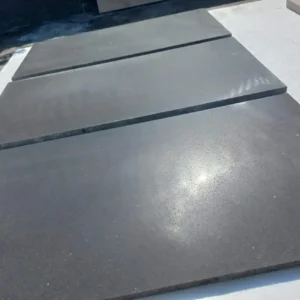
Slate flagstone — typically the darkest option in the category — brings dramatic contrast to landscape designs that use desert-tone gravel or white decomposed granite as a groundcover. A rough flagstone patio in charcoal slate against white DG creates a high-contrast composition that reads particularly well in the austere landscape style popular in Phoenix’s urban core.

  • Buff sandstone: warm, native tone, softer surface, excellent for traditional and Southwestern styles, requires sealing every 2–3 years
  • Quartzite: cool grey to blue tone, very high compressive strength, ideal for modern flagstone patio layouts, harder to fabricate into clean square cuts
  • Slate: dark charcoal to green-grey, dramatic contrast material, excellent cleavage for thin-format flagstone tile for patio applications
  • Limestone flagstone: cream to grey range, moderate hardness, suits Mediterranean and contemporary palettes equally
  • Granite-based flagstone: speckled buff and grey, highest durability, suits front yard flagstone patio and garden patio flagstone applications where long-term appearance matters

Landscape Integration: Making Your Flagstone Patio Feel Native

The most common design mistake in Arizona flagstone patio backyard projects is treating the stone as an island surrounded by lawn or generic landscaping. Arizona’s natural landscape doesn’t support lawn-centric design — and a flagstone patio that fights its surroundings visually will never look right, regardless of stone quality. The successful approach integrates the patio into the surrounding xeriscape using the stone itself as the transition material.

A flagstone patio walkway that extends naturally into the planting areas — with irregular flag stones for patio edges blending into decomposed granite or native gravel — creates the landscape continuity that defines high-quality Arizona outdoor design. The patio doesn’t stop abruptly at a straight edge; it dissolves into the yard. This approach also solves drainage, since the flagstone outdoor patio area drains toward planted zones rather than pooling at hard edges.

Plant selection adjacent to the patio influences stone choice more than most designers acknowledge. Ocotillo, agave, and saguaro create a spiky, vertical landscape vocabulary that pairs well with smooth flagstone patio surfaces — the contrast between blade-like foliage and flat horizontal stone is compositionally strong. Palo verde trees cast dappled shade over patio surfaces and drop small seed pods that lodge in wide flagstone joints. That’s a maintenance reality worth considering when choosing joint width and filler material. For projects integrating similar stone applications into the broader garden design, Flagstone Patio from Citadel Stone provides specification details that apply directly to Arizona xeriscape integration approaches.

Flagstone patio blocks — thicker-cut pieces in the 2.5 to 3-inch range — allow for dry-lay installation over compacted decomposed granite base, which is the preferred method in much of Arizona because it maintains permeability and avoids the cracking that mortar beds can develop under extreme thermal cycling. The ASLA natural stone and flagstone outdoor paving guidance supports permeable flagstone installations in residential settings specifically for their drainage performance and environmental compatibility — a relevant consideration for Arizona’s monsoon rain events that deliver intense short-duration runoff.

Front Yard Flagstone Patio: Curb Appeal and Neighborhood Context

A front yard flagstone patio in Arizona serves a different design function than a backyard installation. It’s a public-facing statement that interacts with the street, the neighboring properties, and the community’s architectural character. In established neighborhoods — particularly the older residential areas of Mesa and Gilbert — front yard flagstone patio designs that reference the home’s original architectural period feel intentional. Modern flagstone patio layouts in mid-century neighborhoods can feel jarring if the stone format and color don’t acknowledge the surrounding context.

The front yard also sees more variable foot traffic patterns than the backyard. Delivery paths, guest approach routes, and the natural desire lines that visitors create across a front landscape all put pressure on flagstone surface durability. A smooth flagstone patio finish in a front yard application requires higher slip resistance consideration than a rear patio — particularly in the section leading from a driveway across decomposed granite.

  • Choose square flagstone in Arizona front yards when the home’s architecture uses strong geometric forms — it creates visual alignment between the building and the landscape
  • Irregular flagstone shapes suit organic and naturalistic front yard designs but require more care in layout to avoid an unplanned appearance
  • Front yard flagstone patio walkway connections should use the same stone as the patio field — transitions to a different material read as an afterthought
  • Mortar-set installations in front yard locations provide better stability in high-foot-traffic zones than loose-set alternatives
  • Modern flagstone in Arizona front entries reads best when the joint lines are tight and consistent — random wide joints introduce visual noise in a formal setting

Base Preparation and Arizona Soil Considerations

Arizona’s soil conditions vary more dramatically by elevation and region than most specifiers account for. The Valley’s caliche layers create a hard pan below the topsoil that resists drainage and causes moisture to accumulate directly beneath a flagstone patio installation — exactly where you don’t want it. Flagstaff’s high-altitude clay soils expand and contract with freeze-thaw cycling in ways that Valley soils don’t, which changes base thickness requirements significantly. A 4-inch compacted aggregate base that performs well in Phoenix may be inadequate for Flagstaff conditions, where 6 inches of properly graded base material is a more defensible specification.

The caliche problem in Valley projects often gets discovered after the first shovel breaks through — the layer can sit anywhere from 6 inches to 24 inches down. You’ll need to either break through it mechanically to restore drainage or design your flagstone patio drainage to route water away from the caliche zone laterally. Ignoring it and setting flagstone directly over caliche-influenced soil is how patio installations heave, settle unevenly, and develop joint failures within the first three years.

  • Excavate to a minimum 6-inch depth for dry-lay installations; 8 inches where caliche is suspected within 18 inches of grade
  • Use Class II road base or 3/4-inch minus crushed aggregate — not native soil backfill — as the compaction layer
  • Compact in 3-inch lifts to 95% Proctor density; single-pass compaction over 6 inches of aggregate is inadequate
  • Install a 1-inch sand setting bed over compacted aggregate for dry-lay flag stones for patio placement
  • Set flagstone patio blocks with a minimum 1/2-inch joint for dry-lay projects; mortar-set joints can run tighter at 1/4 inch with appropriate control joint planning
  • Include drainage swales or French drain laterals where caliche creates a perched water table below the installation plane

Citadel Stone’s technical team can advise on flagstone thickness and format selection based on your specific base preparation approach — particularly for projects in higher-elevation sites where freeze-thaw cycles add a variable that Valley-centric specifications don’t address. Sourced from established quarry partners, each batch is inspected for thickness consistency and face quality before it enters warehouse stock.

Flagstone Finish Options and Climate Performance in Arizona

The finish specification on a flagstone patio in Arizona isn’t purely aesthetic — it directly affects surface temperature, slip resistance, and long-term maintenance requirements. Rough flagstone patio surfaces with natural split faces retain more texture than honed or smooth alternatives, which is an advantage for barefoot use in shade-side installations but creates cleaning challenges where fine Sonoran dust settles into irregular surface topography.

Smooth flagstone patio finishes — typically achieved through mechanical grinding or tumbling — create a cleaner, more formal surface that reads well in contemporary landscape design. The trade-off is that polished or smooth stone surfaces heat up faster in direct sun exposure and require a textured sealer or non-slip additive in areas adjacent to pools or water features. The USGS flagstone and dimension stone paving data confirms that flagstone’s natural cleavage properties vary significantly by stone type — which means surface roughness is partly a function of the stone’s natural geology, not just the finishing process.

Tumbled flagstone — a finish category that artificially ages the stone’s edges and face — suits Spanish Colonial and Territorial design contexts particularly well. The worn appearance integrates naturally with historic architectural materials and avoids the too-new look that fresh-cut flagstone can project in restoration and renovation projects. Tumbled flagstone patio installations also hide edge chips more effectively than clean-cut square flagstone, which matters on high-traffic surfaces that see furniture movement and foot traffic from multiple directions.

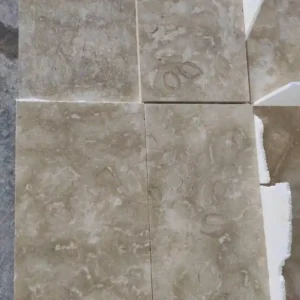
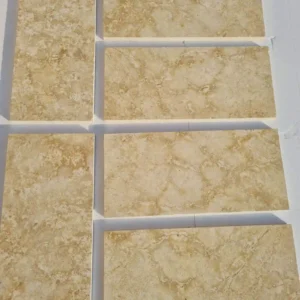
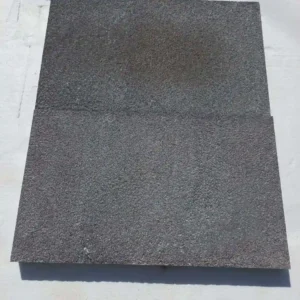
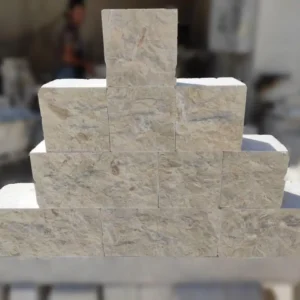
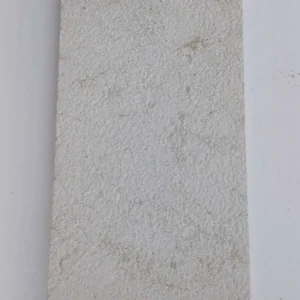
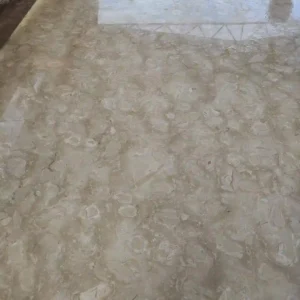
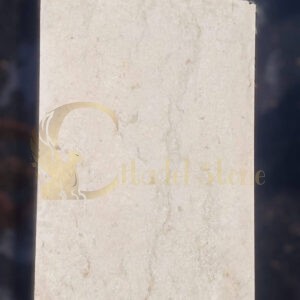
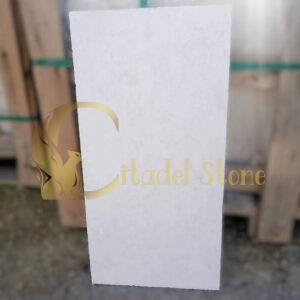
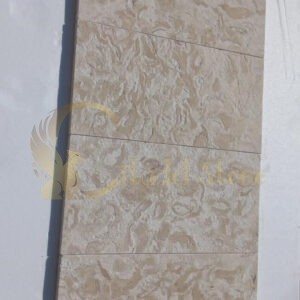
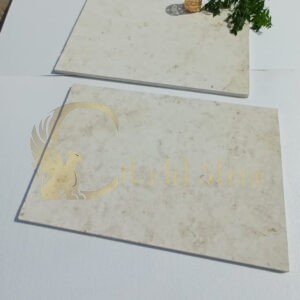
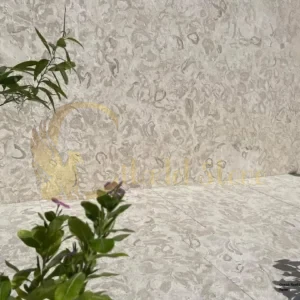
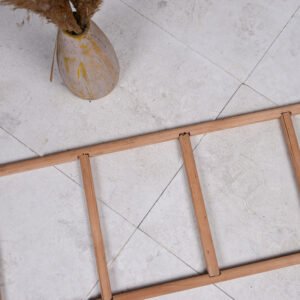
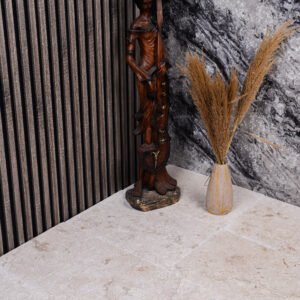
Flagstone patio arizona, featured here — close-up of light gray flagstone pavers showing natural veining and texture.
These flagstone pavers offer a subtle, natural aesthetic suitable for elegant outdoor spaces and walkways, demonstrating flagstone patio arizona, versatility.

Sealing and Maintenance for Long-Term Flagstone Performance

Arizona’s UV intensity accelerates sealer degradation faster than most product specifications account for. Sealer manufacturers typically cite 3 to 5 year reapplication intervals based on moderate-climate testing — in Phoenix, Scottsdale, and the broader Valley, plan for a 2 to 3 year reapplication cycle on south-facing and west-facing flagstone patio surfaces. East-facing patios that receive morning sun and afternoon shade hold their sealers noticeably longer.

Penetrating sealers outperform surface-coat sealers for outdoor flagstone patio backyard applications in Arizona because they don’t trap UV radiation between the coating and the stone face. A surface coat sealer can peel, blister, and yellow under sustained UV — a problem that penetrating sealers, which soak into the stone matrix without forming a film, don’t exhibit. For porous sandstone flagstone, a penetrating silane-siloxane blend provides both water and oil repellency without altering the stone’s natural appearance.

  • Apply sealer only to clean, dry flagstone — moisture trapped beneath sealer causes adhesion failure and milky discoloration
  • Test sealer on an inconspicuous piece of flag stone before full application to confirm it doesn’t darken the stone beyond your design intent
  • Re-apply sealer when water no longer beads on the surface — this is the practical field test, not a calendar-based schedule
  • Sweep flagstone garden patio and flagstone outdoor patio areas regularly to prevent fine dust from becoming airborne abrasive in wind events
  • Use pH-neutral cleaners for periodic washing — acidic or alkaline cleaners degrade both the stone surface and sealer chemistry
  • Inspect flagstone patio joints annually for sand loss in dry-lay installations; replenish joint sand to prevent edge chipping and surface movement

Square Flagstone and Modern Patio Design in Arizona

The demand for square flagstone in Arizona’s residential market has grown substantially as contemporary desert architecture has become the dominant new-build style across Chandler, Peoria, and the broader East Valley. Square flagstone patio layouts in large-format cuts — 24×24 inch and 24×36 inch being the most specified — deliver the clean geometric floor plane that modern architecture requires without abandoning natural stone’s material authenticity.

Modern flagstone patio design in Arizona often pairs square flagstone with ipe wood decking, concrete wall panels, or weathering steel planting bed frames — materials whose precision fabrication demands that the stone format match their dimensional discipline. Irregular flagstone works against this aesthetic; square flagstone in Arizona contemporary settings works with it. The practical challenge is that natural stone doesn’t cut to perfectly consistent dimensions, so large-format square flagstone installations require more careful layout planning and a higher proportion of cut pieces than irregular formats.

A deck and flagstone patio in Arizona — where a timber or composite deck connects to a flagstone outdoor patio area — is a design combination that requires careful attention to level transitions and drainage management. The deck surface typically sits 1 to 2 inches above the flagstone patio elevation, which creates a positive drainage direction away from the structure. Getting this transition right in the design phase is considerably easier than correcting it after both surfaces are installed. Citadel Stone ships flagstone patio materials across Arizona from regional warehouse inventory, which helps with the sequencing coordination that deck-and-patio hybrid projects require — you can schedule flagstone delivery after the deck structure is confirmed level and the adjacent grade is established.

Flagstone Patio in Arizona — Request a Quote from Citadel Stone

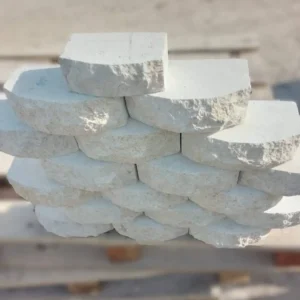
Citadel Stone stocks flagstone patio materials in a range of formats suited to Arizona residential and commercial projects — from irregular natural-split pieces for organic landscape patio flagstone applications to precision-cut square flagstone in large-format sizes for modern flagstone patio layouts. Available thicknesses run from 1.5-inch nominal for mortar-set flagstone tile for patio installations to 3-inch flagstone patio blocks for dry-lay over compacted base.

You can request sample pieces or full thickness specifications before committing to a project quantity — a step that’s particularly valuable when the flagstone needs to coordinate with existing exterior stone, plaster, or concrete tones. For trade accounts, wholesale pricing, and contractor enquiries, Citadel Stone’s team can advise on lead times, truck delivery scheduling across Arizona, and custom-cut availability for projects requiring non-standard dimensions.

Standard warehouse stock typically supports 1 to 2 week lead times for flagstone outdoor patio materials across most Arizona locations. Projects in higher-elevation areas including Flagstaff may require advance planning for truck access and delivery scheduling based on seasonal road conditions. Contact Citadel Stone directly for current availability, pricing, and project consultation — the warehouse team can confirm which flagstone varieties are in stock and provide thickness samples before your project timeline commits you to a quantity.

As you plan your Arizona stone project, complementary material choices can inform your overall hardscape palette — tumbled travertine options in Arizona offer a related dimension of stone specification that pairs naturally with flagstone in mixed-material outdoor designs. Citadel Stone supplies Flagstone Patio to Arizona contractors working across Flagstaff, Sedona, and Yuma on residential and commercial sites.

Why Arizona’s Builders Choose Citadel Stone?

Free AZ Comparison: Citadel Stone vs. Other Suppliers—Find the Best Value!

FeaturesCitadel StoneOther Stone Suppliers
Exclusive ProductsOffers exclusive natural stones sourced from selected quarriesTypically offers more generic or widely available stone options
Quality and AuthenticityProvides high-grade, authentic natural stones with unique featuresQuality varies; may include synthetic or mixed-origin stone materials
Product VarietyWide range of premium productsProduct selection is usually more limited or generic
Global DistributionDistributes stones internationally, with a focus on providing consistent qualityOften limited to local or regional distribution
Sustainability CommitmentCommitted to eco-friendly sourcing and sustainable production processesSustainability efforts vary and may not prioritize eco-friendly sourcing
Customization OptionsOffers tailored stone solutions based on client needs and project specificationsCustomization may be limited, with fewer personalized options
Experience and ExpertiseHighly experienced in natural stone sourcing and distribution globallyExpertise varies significantly; some suppliers may lack specialized knowledge
Direct Sourcing – No MiddlemenWorks directly with quarries, cutting unnecessary costs and ensuring transparencyOften involves multiple intermediaries, leading to higher costs
Handpicked SelectionHandpicks blocks from quarries and hand select paver and tile post manufacture for quality and consistency. Ensuring only the best materials are chosenSelection standards vary, often relying on non-customized stock
Durability of ProductsStones are carefully selected for maximum durability and longevityDurability can be inconsistent depending on supplier quality control
Vigorous Packing ProcessesUtilizes durable packing methods for secure, damage-free transportPacking may be less rigorous, increasing the risk of damage during shipping
Citadel Stone OriginsKnown as the original source for unique limestone tiles from the Middle East, recognized for authenticityOrigin not always guaranteed, and unique limestone options are less common
Customer SupportDedicated to providing expert advice, assistance, and after-sales supportSupport quality varies, often limited to basic customer service
Competitive PricingOffers high-quality stones at competitive prices with a focus on valuePrice may be higher for similar quality or lower for lower-grade stones
Escrow ServiceOffers escrow services for secure transactions and peace of mindTypically does not provide escrow services, increasing payment risk
Fast Manufacturing and DeliveryDelivers orders up to 3x faster than typical industry timelines, ensuring swift serviceDelivery times often slower and less predictable, delaying project timelines

Extra Benefits

Choosing Citadel Stone offers unique advantages beyond premium stone quality:

Exclusive Access to Durable Stones

Citadel Stone specializes in unique, regionally exclusive stones, sourced directly from the Middle East.

Transparent Pricing – No Hidden Costs

With no middlemen, Citadel Stone provides direct, transparent pricing that reduces unnecessary costs.

Flexible Customization for Bespoke Projects

Tailor your order to precise specifications, from sizes to finishes, ensuring your project aligns perfectly with your vision.

Streamlined Delivery & Reliable Stock Availability

Benefit from fast production and delivery timelines, designed to minimize delays and ensure reliable availability.

The Preferred Stone Supplier for Luxury AZ Developments.

Scale Your Vision: We Support Arizona's Largest Projects with Reliable, Fast Delivery.

With unlimited tiles, pavers, cobble setts, curbstones, and the fastest delivery options, What’s not to love? Say goodbye to unnecessary hassles!

Leading AZ Stone Suppliers are Loving Citadel Stone!

Don’t Settle for Less. Source the Best Stone for Your Local Stone Expert.

DanielOwner
Thank you, Kareem. We received the order. The stones look great!
FrankOwner
You are a good businessman and I believe a good person. I admire your honesty, this is why I call you a good businessman.
Gemma C
Gemma CPrivate Project
Undoubtedly the price was the reason that we chose Citadel stone, in addition to the fact that you offer a white limestone that is hard to source. Your products are very good value for money by comparison with other companies. You have helped at every stage of the process and have been quick and reliable in your responses. It was a big risk for us to pay everything up front including shipping and not know the quality. You did make me feel that I could trust you and your company however and we are very happy with the tiles. They appear to have been finished to a very high quality of smoothness and I can't wait to see them once they have been laid. We need to see now how easy they are to fit and maintain, yet you also sealed them before shipment so we think that they will be very durable. Our building project has been delayed for a few months now so it may be sometime before we see them laid, but I promise that I will send photos as soon as we have them down. Thank you so much Kareem and your team, you have done a great job. I am hoping that we can pay for, and receive our second shipment in the not too far future, so that we can finish everything off. Wishing you well. Gemma
Molly McK
Molly McKPrivate Project
I appreciate the quality of product and care for the custom order in packaging each crate to minimize breakage as well as the flexibility with the order to help us make the most of shipping. The timely communications are impressive from the beginning and throughout the process. It's reassuring to have gone through one order to know what the process will be like in the future. I am glad to have had some guidance through the importing process and recommendations for shipping partners to assist. It's incredible to think about the journey the stone traveled to get to our site and I'm grateful to have made it to the next stage of the project relatively smoothly and with from what I can tell

Frequently Asked Questions

If your question is not listed, please email us at [email protected]

What flagstone colors and finishes work best for Arizona patio design?

Arizona patios benefit most from flagstone in warm buff, terracotta, rust, and sand tones that echo the region’s natural desert palette and complement stucco, adobe, and concrete block construction common throughout the state. Cleft-face and natural split finishes are preferred for outdoor patios because they provide texture underfoot and reduce glare in intense Sonoran sunlight. Lighter neutral tones perform well in Scottsdale’s resort and contemporary styles, while deeper iron-rich flagstones suit the earthy, traditional aesthetics more common in Tucson and rural high-desert settings.

Irregular flagstone refers to naturally shaped pieces with varied edges and dimensions, typically set in a dry-laid or mortared mosaic pattern — it creates an organic, handcrafted visual but requires more skilled labor to fit and level correctly. Gauged flagstone is cut to consistent thickness, making it easier to achieve a flat, stable surface with predictable joint lines, which is preferred for contemporary or formal patio designs. The trade-off is cost: gauged material generally carries a higher unit price but can reduce installation time and long-term maintenance on projects requiring a uniform finish.

A minimum thickness of 1.25″ to 1.5″ is generally recommended for flagstone set on a prepared sand or mortar bed in residential patio applications, while high-traffic areas or installations over compacted decomposed granite may benefit from 1.75″ to 2″+ pieces for added stability. Thinner flagstone can crack under concentrated point loads — outdoor furniture legs, heavy planters, and foot traffic from entertaining areas are all load factors worth accounting for in selection. The base preparation beneath the stone is equally important: Arizona’s expansive clay soils in some areas require deeper compacted base layers to prevent settling and cracking over time.

Yes — flagstone integrates well in deck-and-patio combination layouts, typically used at grade level while decking materials handle elevated platform areas, creating a layered outdoor living space that suits Arizona’s year-round exterior lifestyle. The key design consideration is managing the transition between the two surfaces: consistent height alignment and a clean material boundary prevent tripping hazards and give the finished space a deliberate, designed appearance. Material selection for the flagstone portion should account for the tonal relationship with the deck material — whether wood, composite, or concrete — to maintain visual coherence across the full outdoor area.

In most Arizona installations, flagstone requires a compacted crushed aggregate base of 4″ to 6″ depth depending on soil conditions, followed by a setting bed of coarse sand or dry-pack mortar for mortared applications. Areas with high clay content — found in parts of the Phoenix metro and along valley floors — may require deeper excavation and the addition of a geotextile fabric layer to limit soil migration into the base. Drainage planning is especially important in Arizona’s monsoon season, where heavy short-duration rainfall can saturate improperly graded patio bases and undermine stone stability over multiple seasons.

Experienced Arizona contractors prioritize suppliers who understand how desert conditions — intense UV exposure, monsoon saturation cycles, and thermal movement across wide daily temperature ranges — affect flagstone performance and long-term appearance. That climate-specific knowledge directly influences which stone types, thicknesses, and surface finishes Citadel Stone recommends for different project classifications, from residential backyard patios to large-scale commercial outdoor spaces. Arizona professionals benefit from Citadel Stone’s regional inventory of popular flagstone sizes and finishes, which supports reliable material access without the schedule disruptions that come with extended procurement timelines.