








50 Years Of Manufacturing & Delivering The Highest-Quality Limestone & Black Basalt. Sourced & Hand-Picked From The Middle East.

Escrow Payment & Independent Verifying Agent For New Clients

Contact Me Personally For The Absolute Best Wholesale & Trade Prices:

USA & Worldwide Hassle-Free Delivery Options – Guaranteed.

Bluestone Pool Pavers in Arizona

Bluestone pool pavers in Arizona perform best when installation is scheduled around the state's distinct seasonal windows — specifically the mild shoulder months of October through early December and late February through April, when ambient temperatures allow mortar and polymeric sand to cure without accelerated moisture loss. A properly timed install significantly reduces the risk of joint failure and surface bonding issues that can occur when materials are laid during peak summer conditions. Citadel Stone supplies bluestone pool pavers in a range of field sizes and finishes suited to Arizona's outdoor living standards, with regional inventory that allows contractors to confirm availability and coordinate phased delivery around their site schedule rather than waiting on import lead times. What many specifiers don't anticipate is how subbase moisture management shifts dramatically between spring and fall installs in the Sonoran region — a distinction covered in the guidance below. For a closer look at long-term surface performance, explore Citadel Stone Arizona pool solutions. Citadel Stone helps Arizona homeowners select and install bluestone pool pavers that hold up to the desert climate while maintaining a clean, refined appearance.

See & Feel the Quality – Free Arizona Stone Samples

Our stones are made for the Arizona sun. See how the colors hold up in your specific light.

Design Your Arizona Home with a Local Stone Expert

Get personalized advice on the best stone for Arizona's climate and your design style.

Premium Natural Stone — All Sizes & Thicknesses Available

From standard cuts to fully custom dimensions — our limestone, granite, basalt & shellstone
are cut to your exact specifications. Residential or commercial, we’ve got you covered.

Get Your Free Arizona Stone Quote

Transparent Pricing for Your Arizona Project

Elevate Your Arizona Property with Premium Stone, Priced for Value.

Unlock $10,000 Worth of Deals on Beautiful Paver, Tiles & Cobble Setts—For Free!

Invest in Arizona’s Landscape: Stone That Lasts a Lifetime.

100% Happiness Guarantee

Trust 50 Years of Expertise. Invest in Quality Limestone Tiles

Custom-Cut for Your Arizona Project: Any Size, Any Finish.

No-Obligation Consultation: Get Expert Advice for Your Arizona Home.

The Stone Supplier Trusted by Arizona's Leading Architects & Designers.

Trusted by Top Stone Experts Around the Globe

Arizona's Most Diverse Selection of Limestone Tiles.

Elevate Your AZ Property with Limestone Built for the Desert. Our expansive collection of limestone tiles brings timeless beauty and proven durability to both residential and commercial spaces across Arizona. As the state’s leading supplier, we offer a diverse palette of colors and finishes—from cool, light tones that reflect the sun to rich, earthy textures that complement the Southwest landscape. Transform your environment with limestone that stands up to the Arizona heat while providing the sophisticated aesthetic you desire.

Explore Arizona-Tough Alternative Stones

Product NameDescriptionPrice per Square Foot
Travertine TilesBeautiful natural stone with unique textures$8.00 - $12.00
Marble TilesLuxurious and elegant, available in various colors.$10.00 - $15.00
Granite TilesExtremely durable and perfect for high-traffic areas.$7.00 - $12.00
Slate TilesRich colors and textures; ideal for wet areas.$6.00 - $10.00
Porcelain TilesVersatile and low-maintenance, mimicking natural stone.$4.00 - $8.00
Ceramic TilesAffordable with a wide variety of designs.$3.00 - $6.00
Quartzite TilesStrong and beautiful, resistant to stains.$9.00 - $14.00
Concrete PaversCustomizable for patios; durable and cost-effective.$5.00 - $9.00
Glass TilesStylish, reflective, and brightening.$15.00 - $25.00
Composite TilesEco-friendly options made from recycled materials.$5.00 - $10.00

Incredible Prices for Top-Quality Stone—Shop Citadel Stone Today!

Table of Contents

Thermal cycling between night and day can push surface temperatures on an Arizona pool deck past 160°F by early afternoon — and that’s the variable that determines whether your bluestone pool pavers in Arizona perform for two decades or begin rocking and spalling within five years. The specification decision isn’t just about stone selection; it’s about understanding how installation timing interacts with curing chemistry, jointing behavior, and the desert’s unforgiving seasonal schedule. Get the timing right, and you’re building something that holds. Get it wrong, and you’re resetting joints by year three.

Why Installation Timing Defines Long-Term Performance

Arizona’s seasonal calendar creates narrow windows where adhesive mortars, polymeric joint sand, and stone surface chemistry all cooperate simultaneously. Outside those windows, you’re fighting the material at every step. The desert doesn’t give you much margin, but it does give you a reliable annual rhythm — and once you understand that rhythm, scheduling your bluestone pool deck in Arizona becomes a straightforward planning exercise rather than a guessing game.

Mortar and thin-set adhesives require ambient temperatures between 50°F and 90°F during application and the first 24 to 48 hours of cure. Below 50°F, hydration slows enough to compromise bond strength permanently. Above 95°F, moisture evaporates from the mortar bed faster than the chemical cross-linking can complete — leaving a surface that looks fine but has internal shear planes waiting to open under foot traffic and thermal load. In Phoenix and Scottsdale, that upper threshold gets breached with regularity from late May through mid-September.

  • Optimal cure temperature range: 50°F to 90°F ambient during and after placement
  • Mortar open time reduces by roughly 30% at 95°F compared to 75°F — you need smaller batches and faster placement sequences
  • Joint sand activation with water becomes problematic above 90°F as surface evaporation outpaces penetration depth
  • Stone surface temperatures can exceed ambient air by 40 to 60°F in direct sun, requiring shade staging and pre-wetting protocols

Citadel Stone’s project consultation team regularly walks contractors through these seasonal constraints before finalizing delivery schedules — because getting stone on-site two weeks ahead of an optimal window is far better than rushing installation during a marginal period.

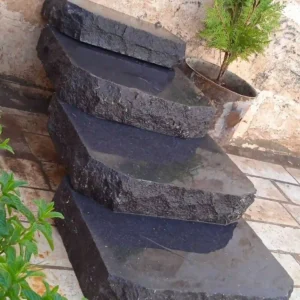
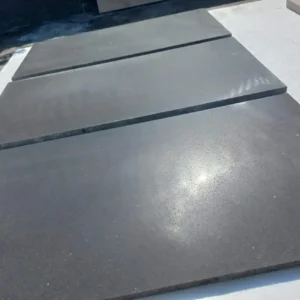
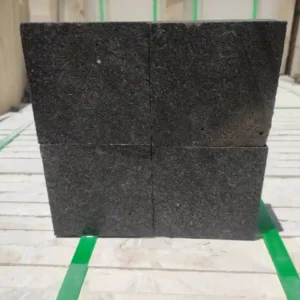
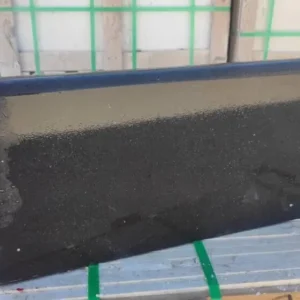
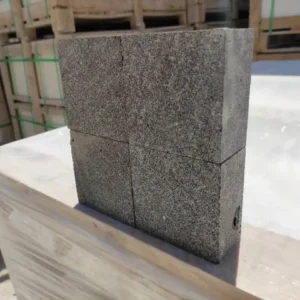
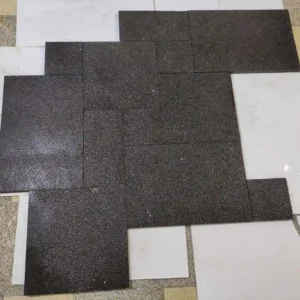
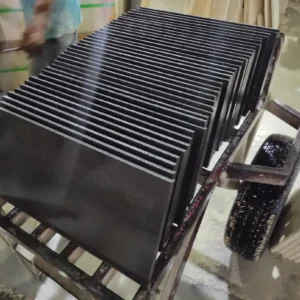
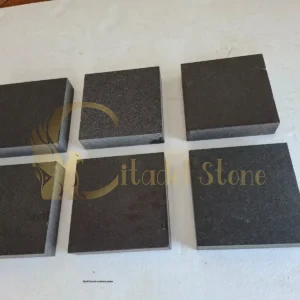
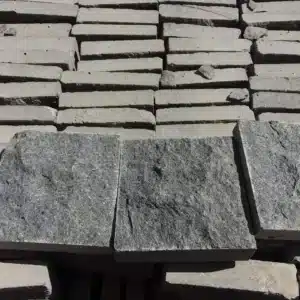
Three dark gray stone slabs are stacked on a white surface.

Arizona’s Seasonal Installation Windows for Bluestone Pool Pavers

The two reliable installation windows in Arizona’s low desert fall between mid-October through late November, and again from late February through mid-April. These periods give you ambient daytime temperatures in the 65°F to 85°F range with nighttime lows staying above 45°F — essentially ideal conditions for mortar hydration and polymeric sand cure.

The fall window is generally the stronger of the two. Monsoon season ends in mid-September, leaving behind lower humidity and stable high-pressure systems that persist through November. Ground temperatures from summer heat retention actually benefit adhesive bond strength in this period, keeping mortar beds slightly warmer than ambient air and extending working time. For contractors installing bluestone pavers pool in Arizona across large deck areas, the fall window allows full-day uninterrupted production without the thermal scramble of summer work.

The spring window is productive but tighter. February and early March work well, but by late April, afternoon temperatures in the Phoenix metro regularly push into the mid-90s. Projects that start in late March need aggressive early-morning scheduling — plan to have stone placed and joints swept before 11:00 AM. Afternoon work on exposed deck areas in April becomes increasingly compromised.

  • Fall window (mid-October to late November): most reliable for large-format bluestone layouts
  • Spring window (late February to mid-April): viable but requires early-morning placement discipline
  • Summer months (May through September): avoid mortar-set installations; mechanical sand-set systems with generous joint spacing are the only reasonable approach
  • Winter window (December to January): workable in Phoenix and Tucson for dry-lay systems; avoid thin-set application when overnight lows drop below 45°F

Elevation Changes Everything About Your Installation Schedule

What works in Phoenix doesn’t automatically translate to higher-elevation projects. The contrast between low-desert and highland Arizona is significant enough to warrant entirely separate installation calendars. Flagstaff sits at roughly 6,900 feet elevation, which means genuine freeze-thaw cycling — a performance factor that barely registers in Phoenix but becomes the dominant specification driver for pool surrounds at elevation.

For bluestone around pool in Arizona at elevations above 5,000 feet, you’re dealing with a material that needs to handle freeze-thaw cycles reliably. Bluestone’s dense, low-absorption structure handles this well, but the installation base system needs to accommodate frost heave potential. Compacted crushed stone bases with positive drainage become non-negotiable — mortar beds that perform beautifully at pool level in Scottsdale can fracture at Flagstaff elevations if freeze-thaw cycling forces movement that the rigid system can’t absorb.

The installation window at elevation also compresses significantly. Flagstaff’s reliable frost-free window runs roughly May through September, but that overlaps with monsoon season — which introduces moisture complications for jointing work. The practical sweet spot for elevated Arizona installations lands in May and late September to early October, giving you perhaps six to eight total weeks of genuinely optimal conditions per year.

  • Elevations above 5,000 feet: design for freeze-thaw cycling, specify sand-set or mortar systems with flexible joint compounds
  • Elevations below 2,500 feet: freeze-thaw is negligible; thermal expansion under intense solar load is the primary movement driver
  • Mid-elevation sites (2,500–5,000 feet): assess frost penetration depth for your specific microclimate before specifying base depth

How Bluestone Pool Pavers in Arizona Perform Under Solar Load

The surface temperature behavior of bluestone pavers around pool in Arizona deserves more nuanced treatment than the standard “light colors stay cooler” guidance. Bluestone’s thermal mass characteristics create a performance curve that plays out across the day in ways that affect both comfort and specification decisions.

Bluestone absorbs heat more slowly than concrete but releases it more gradually as well. In practical terms, this means the peak surface temperature on a bluestone pool deck in Arizona typically arrives 45 to 90 minutes later in the afternoon than on adjacent concrete — which matters for barefoot comfort during peak pool hours. However, that retained heat also means bluestone stays warmer well into the evening, which some users find uncomfortable for nighttime poolside use. Specifying lighter-toned bluestone finishes, particularly the blue-gray varieties with higher quartz content, can reduce peak surface absorption measurably.

Citadel Stone stocks bluestone pool deck materials in multiple finish profiles — sawn smooth, tumbled, and brushed — each with different surface texture implications for both slip resistance and thermal behavior. Requesting sample tiles before committing to a full project order lets you assess heat retention under actual site conditions, which is worth the extra step on any exposed Arizona pool deck.

  • Sawn smooth finish: highest thermal absorption, lowest slip coefficient when dry — typically requires additional anti-slip treatment for pool surrounds
  • Tumbled bluestone pool coping in Arizona: reduced thermal absorption surface area due to irregular texture, naturally higher slip resistance
  • Brushed finish: moderate thermal profile, good barefoot texture, widely used for pool deck fields
  • Thermal expansion coefficient of dense bluestone: approximately 5 to 6 × 10⁻⁶ per °F — requires expansion joints at 12 to 15 feet on center in full-exposure Arizona applications

Base Preparation: Timing Matters as Much as Depth

Your base preparation schedule in Arizona needs to account for two seasonal soil behaviors that catch out-of-state contractors off guard regularly. First, native desert soils — particularly the expansive clay soils found in many Phoenix-area subdivisions — exhibit significant volumetric change between wet and dry seasons. Second, caliche hardpan, which occurs extensively across central and southern Arizona, behaves differently as a sub-base depending on its moisture content at the time of compaction.

For a bluestone patio around pool in Arizona on native soil, excavating and compacting your aggregate base during the dry season (October through May) gives you the most stable sub-base geometry. Compacting a base during or immediately after monsoon season means you’re locking in a slightly expanded soil state — which can then contract and create voids beneath your aggregate layer as the soil dries out over the following months. A 4-to-6-inch compacted crushed granite base is the standard Arizona specification, but on sites with known expansive clay, increasing to 8 inches with a geotextile separation layer is worth the added cost.

In Scottsdale, caliche layers at 18 to 30 inches depth are common and actually provide a useful natural load-bearing platform when properly broken and re-compacted — but they need to be thoroughly wetted before compaction to achieve consistent density. Leaving caliche dry during base prep creates unpredictable long-term settlement under thermal cycling. For projects comparing material and installation cost structures, the bluestone pool deck options resource on Citadel Stone’s site covers base specification cost variables alongside material pricing, which helps you build realistic project budgets early in the planning phase.

Specifying Tumbled Bluestone Pool Coping in Arizona

Coping selection for Arizona pool surrounds involves a different set of trade-offs than deck field pavers. The coping unit is simultaneously a structural cap, a waterproofing transition, and the primary visual frame for the pool — and in Arizona’s thermal environment, it also undergoes the most aggressive expansion-contraction cycling of any element in the assembly.

Tumbled bluestone pool coping in Arizona has established a strong performance record for several reasons. The tumbled profile naturally creates a rounded nosing edge that doesn’t concentrate thermal stress at a sharp corner — one of the more common failure modes for sawn-edge coping in extreme heat climates. The irregular surface texture also reduces barefoot burn sensation at the nosing edge, which is the contact point most users engage directly as they exit the pool.

Coping units need to be mortared with flexible polymer-modified thin-set or a dedicated pool coping adhesive — not standard gray mortar. The bond line at the pool bond beam experiences both thermal cycling and hydrostatic pressure fluctuation simultaneously, and standard mortar lacks the elasticity to maintain adhesion across that combined movement range. Specify a minimum 1/4-inch flexible sealant joint between coping units, not polymeric sand — the differential movement at pool edge is too significant for sand-set joints to handle reliably.

  • Coping unit thickness for residential pools: 1.5 to 2 inches nominal, with cantilever projection of 1 to 1.5 inches over pool wall
  • Bond material: polymer-modified thin-set or dedicated coping adhesive — not standard mortar
  • Joint spacing: 1/4-inch minimum flexible sealant joints between coping units — no polymeric sand at pool edge
  • Sealant compatibility: verify sealant is rated for continuous wet/dry cycling and UV exposure at Arizona intensity levels
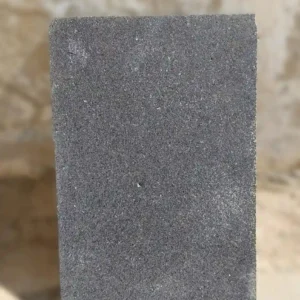
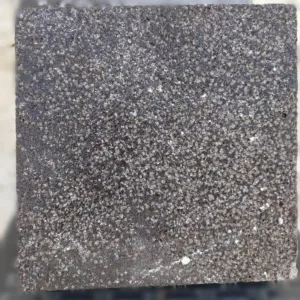
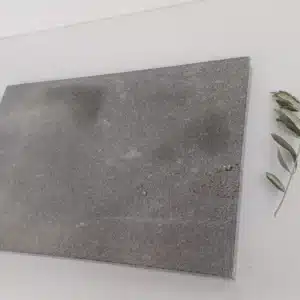
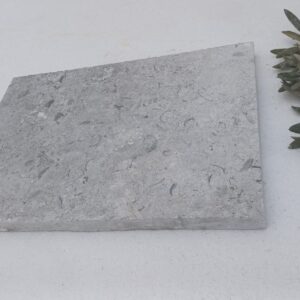
A dark, speckled stone slab rests on a white surface with olive branches.

Sealing Protocol and Timing for Arizona Bluestone Pool Decks

Sealing bluestone in Arizona requires you to work within a temperature window that’s easy to miss if you’re scheduling around pool construction completion dates rather than seasonal conditions. Most penetrating sealers specify application between 50°F and 85°F with no rain anticipated for 24 to 48 hours — conditions that broadly align with Arizona’s fall and spring windows but can be surprisingly tight when you factor in project completion timelines.

The desert’s low humidity accelerates solvent flash-off in solvent-based sealers, which reduces penetration depth. In dry Arizona conditions, a second thin coat applied within 30 minutes of the first often outperforms a single heavy application — the first coat opens the pore structure slightly, and the second coat achieves meaningfully better depth. Water-based penetrating sealers behave more consistently in low-humidity conditions and are increasingly the preferred choice for Arizona pool surrounds.

Resealing frequency for pool bluestone pavers in Arizona should be on a two-year cycle for surfaces that receive direct sun on south and west exposures. North-facing or heavily shaded deck areas can extend to three years between applications. A simple water bead test in spring — if water soaks in rather than beading — confirms the sealer film has degraded and reapplication is due before the heat season begins.

  • Initial sealing: 28 to 30 days after installation to allow full mortar cure before sealer application
  • Application temperature: 50°F to 85°F, low humidity preferred, no rain within 48 hours
  • Arizona resealing cycle: every 2 years for south/west exposures; every 3 years for shaded surfaces
  • Sealer type: penetrating silane-siloxane or impregnating fluoropolymer — avoid film-forming topcoats that peel under UV degradation

Ordering, Warehouse Inventory, and Delivery Logistics Across Arizona

Coordinating material delivery with your installation window requires earlier planning than most Arizona pool projects allow. The fall installation window in particular creates a demand spike — every contractor who avoided summer work is now scheduling simultaneously, and warehouse stock for premium bluestone formats can move quickly in October and November.

Citadel Stone ships bluestone pavers around pool in Arizona from regional warehouse inventory, with standard lead times of one to two weeks for in-stock formats. Custom cuts, non-standard thicknesses, or specific coping profiles may require four to six weeks from quarry sourcing through final inspection — which means you need those specifications locked in well before your installation window opens. At Citadel Stone, we inspect each batch for color consistency and surface quality before it ships, because bluestone’s natural variation can be significant enough to affect visual uniformity on large pool deck areas if pallets from different quarry pulls are mixed without review.

Truck access to your project site is a logistical detail worth confirming early. Full-pallet bluestone deliveries typically arrive on flatbed trucks that require a clear 40-foot staging area and reasonable grade access. In established Phoenix and Scottsdale neighborhoods with mature landscaping and narrow side-yard access, this can require coordination with your project superintendent to arrange temporary material staging on the street or adjacent staging area. Confirming your truck access situation when you place your warehouse order avoids last-minute delivery complications that can push your installation into a marginal weather window.

  • Order lead times: 1 to 2 weeks for in-stock formats; 4 to 6 weeks for custom specifications
  • Verify warehouse inventory levels before committing to installation start dates — fall demand spikes are real
  • Confirm truck access, staging area dimensions, and site grade before scheduling delivery
  • Request material samples for color and finish approval before full-quantity orders on large projects

Getting Bluestone Pool Pavers Right in Arizona

The projects that perform best over time in Arizona share a consistent pattern: installation during the fall or early spring window, base preparation completed during the dry season, expansion joints specified at 12 to 15 feet on center, polymer-modified adhesives at the coping bond line, and penetrating sealer applied on schedule every two years. None of these are complicated decisions — they’re just decisions that need to be made deliberately rather than defaulted into during a fast-moving construction schedule.

Searching for bluestone pool pavers near me in Arizona will surface suppliers, but evaluating which ones understand Arizona’s specific installation demands — rather than applying generic stone installation logic — is the qualifying question worth asking before you commit to a material source. The bluestone for pool deck in Arizona that performs over a 25-year horizon is the same material specified correctly from the start, not a different product.

Pool bluestone pavers in Arizona also pair well with complementary hardscape elements, and your overall outdoor space planning may extend beyond the pool surround itself. For inspiration and specification guidance on adjacent project areas, Bluestone Patio Pavers in Arizona covers how the same material family performs across broader patio and outdoor living applications in the Arizona climate. For Arizona properties requiring durable and attractive poolside surfaces, Citadel Stone provides bluestone pool paver materials and guidance suited to the regional environment.

Why Arizona’s Builders Choose Citadel Stone?

Free AZ Comparison: Citadel Stone vs. Other Suppliers—Find the Best Value!

FeaturesCitadel StoneOther Stone Suppliers
Exclusive ProductsOffers exclusive Ocean Reef pavers, Shellstone pavers, basalt, and white limestone sourced from SyriaTypically offers more generic or widely available stone options
Quality and AuthenticityProvides high-grade, authentic natural stones with unique featuresQuality varies; may include synthetic or mixed-origin stone materials
Product VarietyWide range of premium products: Shellstone, Basalt, White Limestone, and moreProduct selection is usually more limited or generic
Global DistributionDistributes stones internationally, with a focus on providing consistent qualityOften limited to local or regional distribution
Sustainability CommitmentCommitted to eco-friendly sourcing and sustainable production processesSustainability efforts vary and may not prioritize eco-friendly sourcing
Customization OptionsOffers tailored stone solutions based on client needs and project specificationsCustomization may be limited, with fewer personalized options
Experience and ExpertiseHighly experienced in natural stone sourcing and distribution globallyExpertise varies significantly; some suppliers may lack specialized knowledge
Direct Sourcing – No MiddlemenWorks directly with quarries, cutting unnecessary costs and ensuring transparencyOften involves multiple intermediaries, leading to higher costs
Handpicked SelectionHandpicks blocks and tiles for quality and consistency, ensuring only the best materials are chosenSelection standards vary, often relying on non-customized stock
Durability of ProductsStones are carefully selected for maximum durability and longevityDurability can be inconsistent depending on supplier quality control
Vigorous Packing ProcessesUtilizes durable packing methods for secure, damage-free transportPacking may be less rigorous, increasing the risk of damage during shipping
Citadel Stone OriginsKnown as the original source for unique limestone tiles from the Middle East, recognized for authenticityOrigin not always guaranteed, and unique limestone options are less common
Customer SupportDedicated to providing expert advice, assistance, and after-sales supportSupport quality varies, often limited to basic customer service
Competitive PricingOffers high-quality stones at competitive prices with a focus on valuePrice may be higher for similar quality or lower for lower-grade stones
Escrow ServiceOffers escrow services for secure transactions and peace of mindTypically does not provide escrow services, increasing payment risk
Fast Manufacturing and DeliveryDelivers orders up to 3x faster than typical industry timelines, ensuring swift serviceDelivery times often slower and less predictable, delaying project timelines

Extra Benefits

Choosing Citadel Stone offers unique advantages beyond premium stone quality:

Exclusive Access to Durable Stones

Citadel Stone specializes in unique, regionally exclusive stones, sourced directly from the Middle East.

Transparent Pricing – No Hidden Costs

With no middlemen, Citadel Stone provides direct, transparent pricing that reduces unnecessary costs.

Flexible Customization for Bespoke Projects

Tailor your order to precise specifications, from sizes to finishes, ensuring your project aligns perfectly with your vision.

Streamlined Delivery & Reliable Stock Availability

Benefit from fast production and delivery timelines, designed to minimize delays and ensure reliable availability.

The Preferred Stone Supplier for Luxury AZ Developments.

Scale Your Vision: We Support Arizona's Largest Projects with Reliable, Fast Delivery.

With unlimited tiles, pavers, cobble setts, curbstones, and the fastest delivery options, What’s not to love? Say goodbye to unnecessary hassles!

Leading AZ Stone Suppliers are Loving Citadel Stone!

Don’t Settle for Less. Source the Best Stone for Your Local Stone Expert.

DanielOwner
Thank you, Kareem. We received the order. The stones look great!
FrankOwner
You are a good businessman and I believe a good person. I admire your honesty, this is why I call you a good businessman.
Gemma C
Gemma CPrivate Project
Undoubtedly the price was the reason that we chose Citadel stone, in addition to the fact that you offer a white limestone that is hard to source. Your products are very good value for money by comparison with other companies. You have helped at every stage of the process and have been quick and reliable in your responses. It was a big risk for us to pay everything up front including shipping and not know the quality. You did make me feel that I could trust you and your company however and we are very happy with the tiles. They appear to have been finished to a very high quality of smoothness and I can't wait to see them once they have been laid. We need to see now how easy they are to fit and maintain, yet you also sealed them before shipment so we think that they will be very durable. Our building project has been delayed for a few months now so it may be sometime before we see them laid, but I promise that I will send photos as soon as we have them down. Thank you so much Kareem and your team, you have done a great job. I am hoping that we can pay for, and receive our second shipment in the not too far future, so that we can finish everything off. Wishing you well. Gemma
Molly McK
Molly McKPrivate Project
I appreciate the quality of product and care for the custom order in packaging each crate to minimize breakage as well as the flexibility with the order to help us make the most of shipping. The timely communications are impressive from the beginning and throughout the process. It's reassuring to have gone through one order to know what the process will be like in the future. I am glad to have had some guidance through the importing process and recommendations for shipping partners to assist. It's incredible to think about the journey the stone traveled to get to our site and I'm grateful to have made it to the next stage of the project relatively smoothly and with from what I can tell

Frequently Asked Questions

If your question is not listed, please email us at [email protected]

When is the best time of year to install bluestone pool pavers in Arizona?

The optimal installation windows in Arizona fall between October and early December, and again from late February through April. During these periods, daytime temperatures stay in a range that supports proper mortar hydration and polymeric sand activation without the rapid evaporation that mid-summer heat produces. Scheduling outside these windows is possible but requires additional protective measures, including shading freshly set stone and misting curing joints — steps that add time and cost to the project.

Curing conditions established during installation directly influence how well the bedding layer bonds and how stable the joint material remains over time. In Arizona, if mortar or setting bed compounds lose moisture too quickly due to high ambient temperatures, the resulting bond can be brittle and prone to cracking under thermal expansion cycles. Stone installed during a controlled curing environment — moderate temps, manageable evaporation rates — consistently outperforms rushed summer installs when evaluated years later.

Bluestone’s natural cleft and thermal finishes offer meaningful slip resistance, which makes it a practical choice for wet pool surrounds. Thermal finish, in particular, opens the surface texture through controlled heat treatment, providing additional grip underfoot. That said, the finish selection should match the anticipated traffic and pool use — a honed finish, while visually refined, requires closer attention around areas with frequent splash exposure.

Arizona experiences significant diurnal temperature swings, particularly in the higher elevation zones like Flagstaff and Prescott, where overnight lows can follow very warm daytime highs. This thermal cycling causes consistent expansion and contraction in the stone and its setting bed. Properly specified joint widths — typically 3/16 to 3/8 inch filled with high-quality polymeric sand — give the installation room to move without cracking, which is why joint sizing and material selection matter as much as the stone itself.

In Arizona’s low-humidity environment, bluestone generally requires less moisture-related maintenance than in wetter regions, but UV exposure and alkaline pool water chemistry can gradually lighten and etch unsealed surfaces. Applying a penetrating stone sealer every two to three years helps preserve surface color and reduces the absorption of pool chemicals that can weaken the stone over time. Periodic re-sanding of joints is also worth factoring into an annual maintenance schedule, particularly after the monsoon season shifts subgrade moisture levels.

Projects sourced through Citadel Stone arrive with consistent coloration and dimensional tolerances because the selection process begins at the quarry level — each shipment is hand-evaluated before it reaches domestic inventory. That traceability from Syrian natural stone heritage through to site delivery means fewer surprises during layout. Arizona contractors benefit directly from Citadel Stone’s warehouse proximity, which reduces lead times compared to import-to-order suppliers and keeps project schedules on track.