


















50 Years Of Manufacturing & Delivering The Highest-Quality Limestone & Black Basalt. Sourced & Hand-Picked From The Middle East.

Escrow Payment & Independent Verifying Agent For New Clients

Contact Me Personally For The Absolute Best Wholesale & Trade Prices:

USA & Worldwide Hassle-Free Delivery Options – Guaranteed.

Black Slate Outdoor Paving in Arizona

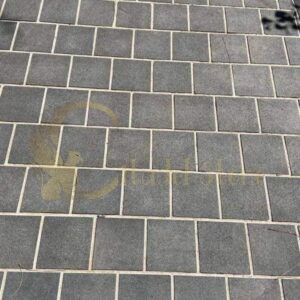
Black slate outdoor paving in Arizona performs best when installation is timed around the state's distinct seasonal windows — specifically the moderate shoulder months of March through May and September through November, when ground temperatures stabilize and adhesive mortars cure within manufacturer-recommended ranges. Attempting installation during Arizona's peak summer months risks accelerated moisture loss from setting beds before adequate bond strength develops, while winter desert nights in higher-elevation areas can compromise early-stage curing in thin-set applications. For contractors and homeowners planning projects around these windows, our Arizona slate paving solutions include split and honed slate formats in standard field sizes, with specification support available to match material selection to site-specific subbase and drainage requirements. One detail that surprises many project planners is how thermal mass scheduling — not just air temperature — determines the actual safe installation window on any given Arizona site. Citadel Stone provides Arizona homeowners and contractors with durable, carefully sourced black slate outdoor paving suited to the demands of the regional climate and terrain.

See & Feel the Quality – Free Arizona Stone Samples

Our stones are made for the Arizona sun. See how the colors hold up in your specific light.

Design Your Arizona Home with a Local Stone Expert

Get personalized advice on the best stone for Arizona's climate and your design style.

Premium Natural Stone — All Sizes & Thicknesses Available

From standard cuts to fully custom dimensions — our limestone, granite, basalt & shellstone
are cut to your exact specifications. Residential or commercial, we’ve got you covered.

Get Your Free Arizona Stone Quote

Transparent Pricing for Your Arizona Project

Elevate Your Arizona Property with Premium Stone, Priced for Value.

Unlock $10,000 Worth of Deals on Beautiful Paver, Tiles & Cobble Setts—For Free!

Invest in Arizona’s Landscape: Stone That Lasts a Lifetime.

100% Happiness Guarantee

Trust 50 Years of Expertise. Invest in Quality Limestone Tiles

Custom-Cut for Your Arizona Project: Any Size, Any Finish.

No-Obligation Consultation: Get Expert Advice for Your Arizona Home.

The Stone Supplier Trusted by Arizona's Leading Architects & Designers.

Trusted by Top Stone Experts Around the Globe

Arizona's Most Diverse Selection of Limestone Tiles.

Elevate Your AZ Property with Limestone Built for the Desert. Our expansive collection of limestone tiles brings timeless beauty and proven durability to both residential and commercial spaces across Arizona. As the state’s leading supplier, we offer a diverse palette of colors and finishes—from cool, light tones that reflect the sun to rich, earthy textures that complement the Southwest landscape. Transform your environment with limestone that stands up to the Arizona heat while providing the sophisticated aesthetic you desire.

Explore Arizona-Tough Alternative Stones

Product NameDescriptionPrice per Square Foot
Travertine TilesBeautiful natural stone with unique textures$8.00 - $12.00
Marble TilesLuxurious and elegant, available in various colors.$10.00 - $15.00
Granite TilesExtremely durable and perfect for high-traffic areas.$7.00 - $12.00
Slate TilesRich colors and textures; ideal for wet areas.$6.00 - $10.00
Porcelain TilesVersatile and low-maintenance, mimicking natural stone.$4.00 - $8.00
Ceramic TilesAffordable with a wide variety of designs.$3.00 - $6.00
Quartzite TilesStrong and beautiful, resistant to stains.$9.00 - $14.00
Concrete PaversCustomizable for patios; durable and cost-effective.$5.00 - $9.00
Glass TilesStylish, reflective, and brightening.$15.00 - $25.00
Composite TilesEco-friendly options made from recycled materials.$5.00 - $10.00

Incredible Prices for Top-Quality Stone—Shop Citadel Stone Today!

Table of Contents

Thermal expansion rates and surface temperature behavior separate a slate installation that lasts two decades from one that starts failing at the joint line within five years. Black slate outdoor paving in Arizona performs exceptionally well when you understand its specific thermal conductivity profile — the material absorbs heat differently than porcelain or concrete, reaching equilibrium faster but also releasing it faster after sunset, which actually works in your favor during shoulder-season evenings. What most specifiers underestimate is how that thermal cycle interacts with adhesive cure schedules and joint sand performance across Arizona’s distinct seasonal windows.

Why Seasonal Timing Defines Black Slate Outdoor Paving Success in Arizona

Arizona doesn’t give you a year-round installation window the way coastal states do. The slate responds to ambient and substrate temperatures, and those numbers swing 80°F between a January morning in Flagstaff and a July afternoon in the low desert — and your mortar, bedding compound, and joint stabilizer all have a narrower tolerance range than that swing. Flagstaff’s elevation of roughly 7,000 feet also means freeze-thaw cycling enters the performance equation, which eliminates several adhesive and grout products that work fine down in the valley.

The optimal installation window for black slate patio slabs in Arizona runs from late September through November in the south, and from May into early June in the northern high country. Those windows share a critical common denominator: ambient temperatures between 50°F and 85°F with low relative humidity — conditions where your setting bed cures at the right rate without flash-setting or staying tacky too long. You can request technical data sheets and sample tiles from Citadel Stone before committing to a project schedule, which helps you match the specific product batch to your timing constraints.
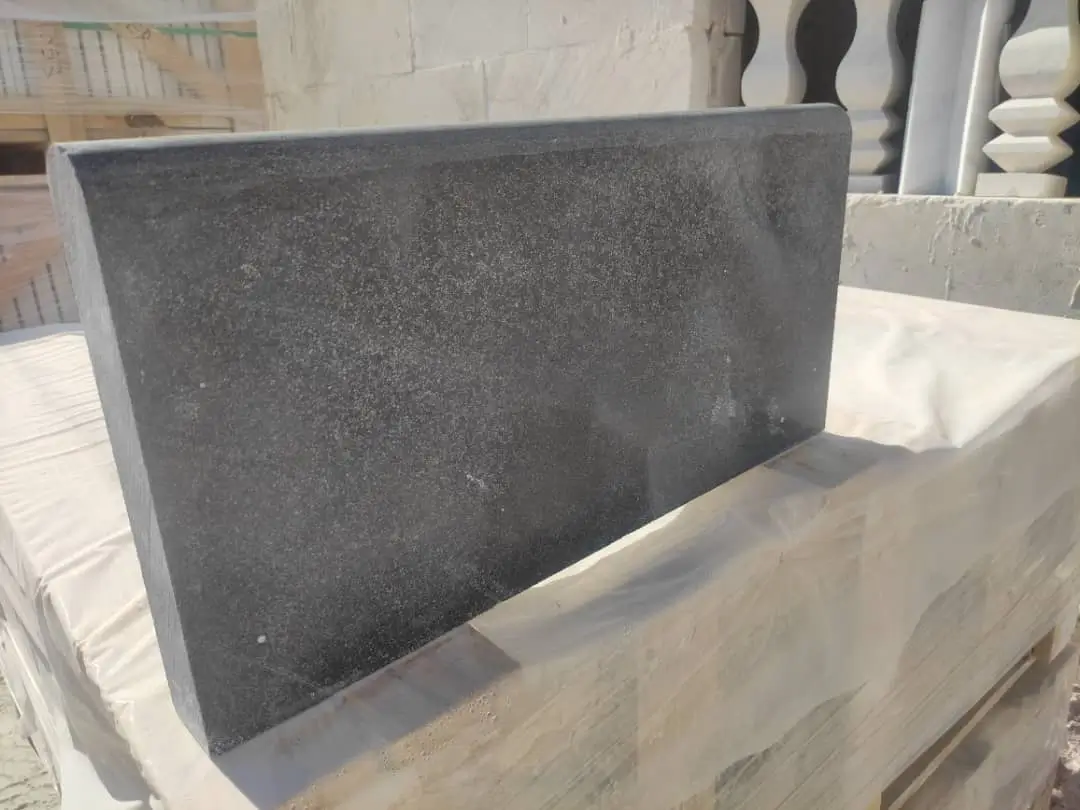
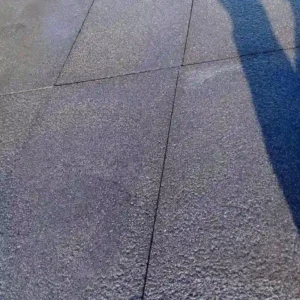
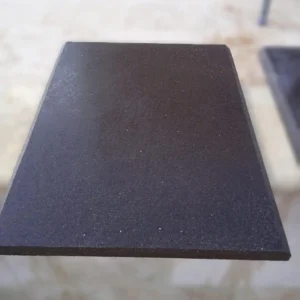
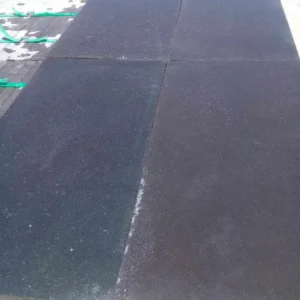
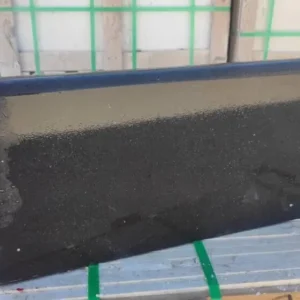
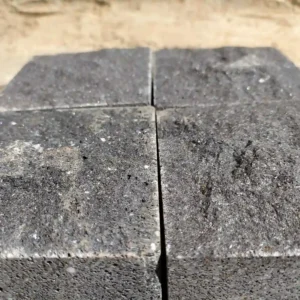
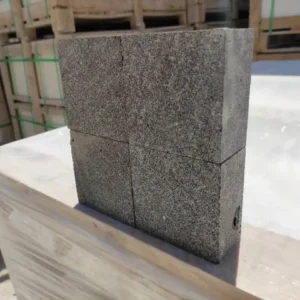
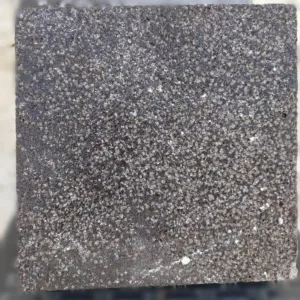
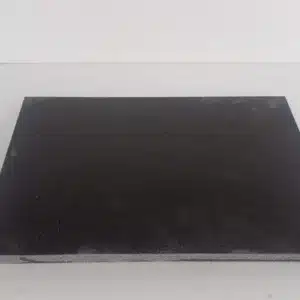
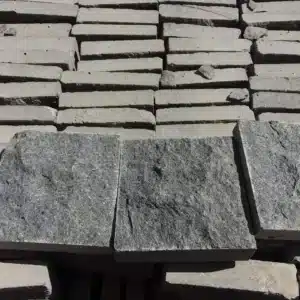
Close-up view of a dark speckled slate slab resting on a pallet.

Summer Scheduling Risks for Black Slate Garden Paving in Arizona

Phoenix and the surrounding Valley of the Sun present a specific problem between June and mid-September that goes beyond the obvious. Substrate temperatures — the actual slab or compacted base you’re setting stone onto — routinely hit 140°F to 160°F by early afternoon. At those temperatures, polymer-modified thinset mortars flash-cure before proper bond development occurs, leaving you with a mechanically weak interface that looks fine for the first six months and then starts lifting.

Your installation schedule in summer months, if unavoidable, needs to be compressed into the pre-dawn hours. This means starting layout and setting at 4:00 AM, completing your wet work by 9:00 AM, and protecting freshly laid black slate garden paving in Arizona with reflective shade cloth and misting systems through the heat of the day. Even with those precautions, you’re working against the clock, and most experienced crews in the Phoenix market will tell you summer installs carry a meaningful callback risk that autumn installs simply don’t.

  • Substrate temperatures above 100°F require pre-wetting or shade staging of stone before setting
  • Mortar open time drops from the standard 20–30 minutes to under 10 minutes in peak summer conditions
  • Joint stabilizing sand cures unevenly when surface temps vary by more than 40°F across the same install zone
  • Sealer applied above 90°F ambient risks blistering and adhesion failure within the first season
  • Night installations require artificial lighting that adds cost and increases the chance of layout errors

The Autumn and Spring Advantage for Black Slate Patio Slabs

October and November represent the best installation months across most of Arizona’s low and mid-elevation zones. Daytime highs stabilize between 70°F and 88°F, overnight lows stay above 45°F, and the absence of monsoon humidity means your joint sand and any penetrating sealers cure cleanly without moisture interference. Black slate garden paving in Arizona installed during this window typically shows superior long-term joint performance because the grout or polymeric sand cures at a controlled rate without the stress of extreme temperature gradients.

Spring — specifically March through early May — offers a secondary installation window that works well in central and southern Arizona. The risk in spring is the late-season freeze event in higher elevations and the rapid temperature climb that can compress your usable window to just six or seven weeks before conditions become difficult again. Projects in Scottsdale typically have until mid-May before substrate temperatures start pushing into problematic ranges, while higher-elevation sites outside the metro area may retain favorable conditions two to three weeks longer.

For projects requiring black slate patio slabs in Arizona at scale, Citadel Stone ships material across the state from regional warehouse inventory, which means you can time your delivery to land two to three days before your crew mobilizes — keeping the stone shaded and acclimated to site conditions before it goes into the ground. Coordinating your truck delivery schedule with your installation crew’s mobilization date is a detail that separates well-run projects from rushed ones.

Base Preparation and How Seasonal Moisture Affects Your Sub-Base

The Arizona monsoon season — roughly July through September — saturates desert soils that spend the rest of the year at near-zero moisture content. Caliche layers common across Mesa and much of the East Valley can behave as near-impervious barriers during heavy monsoon events, creating perched water tables directly beneath your aggregate base. Installing black slate outdoor paving in Arizona directly after monsoon season, without allowing adequate dry-out time, embeds that moisture into your base profile and creates a freeze risk for higher-elevation sites and a differential settlement risk everywhere else.

The practical guidance is straightforward: allow a minimum of four weeks after the last significant monsoon rainfall before commencing base compaction on projects where caliche is present. A moisture probe reading at 18 inches should show less than 8% moisture content before you begin compaction. Rushing that timeline to hit an early October start date is the single most common cause of subtle settlement issues that emerge in the second or third year after installation.

  • Compact aggregate base in lifts no deeper than 4 inches using plate compaction equipment rated for your sub-base material
  • Target 95% Standard Proctor density on the finished compacted base before setting any stone
  • Install French drain outlets at the perimeter for sites with significant caliche presence
  • Allow 48 hours between base compaction and bedding application in autumn conditions
  • For sand-set applications, your bedding layer should be 1 inch nominal — no more, regardless of the season

Black Slate Thermal Performance and Why Color Matters More Than Most Specs Acknowledge

The dark coloration of black slate outdoor paving creates a surface temperature dynamic that you need to account for in residential applications specifically. Surface readings on black slate in direct Arizona sun peak 15°F to 25°F above comparable light-colored materials. That doesn’t disqualify the material — far from it — but it does mean barefoot comfort on a residential patio is limited to shaded zones and early morning or evening hours during summer months. For covered patio applications, pergola-shaded courtyards, and north-facing installations, this performance characteristic becomes irrelevant and the aesthetic advantages of the dark slate are fully realized without the heat retention trade-off.

The black slate patio slabs Arizona specification guide covers thickness selections and finish options in detail, which helps you match the right product to your specific project exposure and use pattern. Honed finishes on black slate tend to absorb slightly more heat than brushed or cleft-face finishes because the smoother surface reduces the micro-shadowing effect that lightly textured stone provides — a nuance that matters more in full-sun Arizona applications than in most other markets.

Finish Selection, Slip Resistance, and Arizona’s Dry Climate Advantage

Slip resistance testing for natural stone follows ASTM C1028 wet static coefficient of friction protocols, but here’s what that standard doesn’t capture well for Arizona conditions: your installation spends the vast majority of its functional life in a dry state. The dynamic coefficient of friction on cleft-face black slate in dry conditions typically measures between 0.75 and 0.90, which comfortably exceeds the 0.60 minimum for pedestrian hardscape areas. Even honed finishes on black slate generally register above 0.55 in dry conditions — adequate for most patio applications away from pool decking.

Pool deck applications require a different finish specification. Brushed or flamed black slate maintains adequate wet traction for pool surrounds, and the irregular texture also provides better drainage channeling than a honed surface. Black slate garden paving in Arizona used around water features or in areas subject to irrigation overspray should always be specified with a textured finish rather than honed. The aesthetic difference is subtle — especially on dark-colored stone — but the safety performance difference in wet conditions is significant.
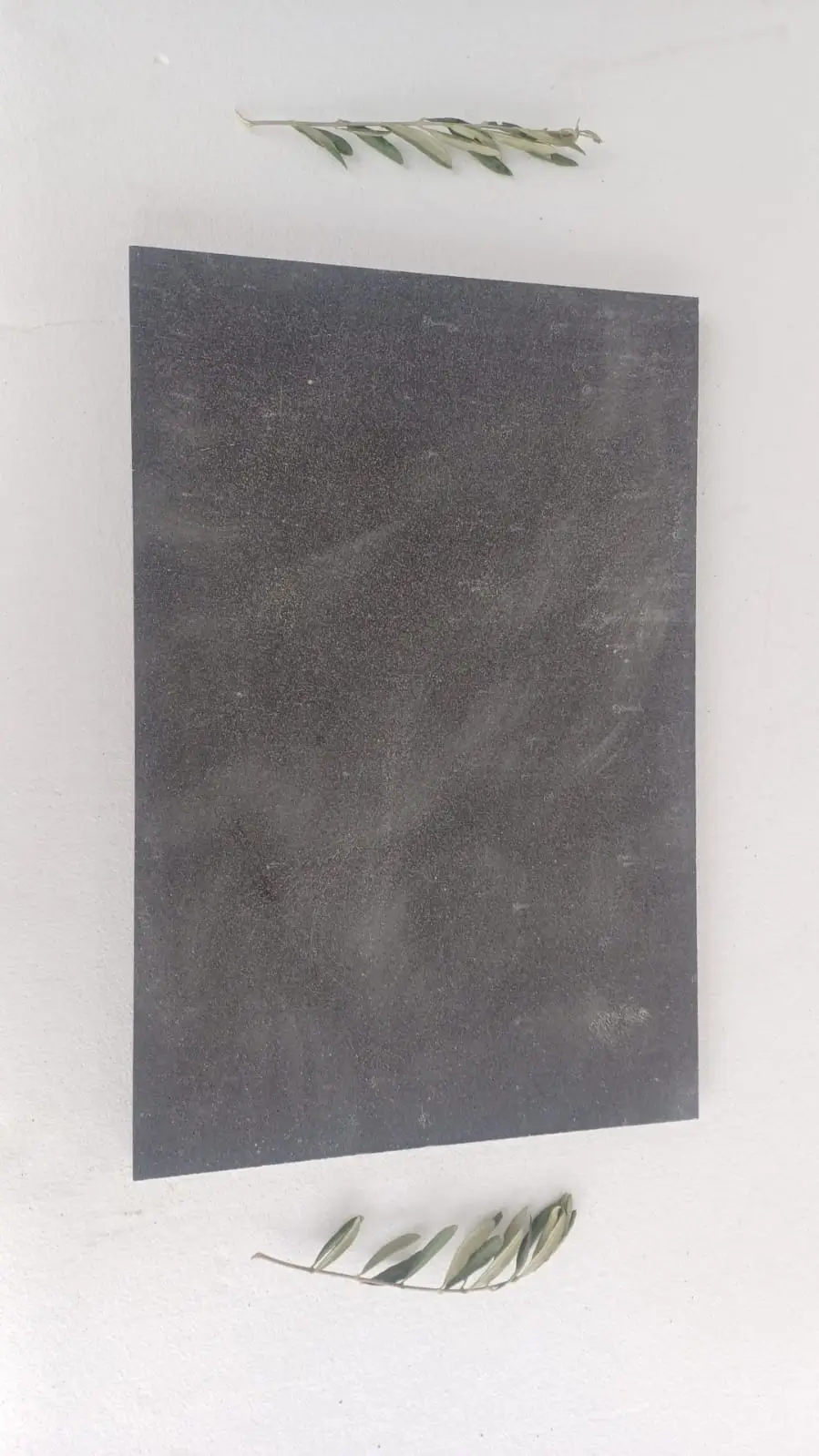
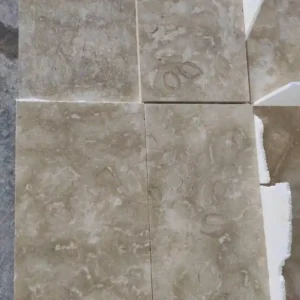
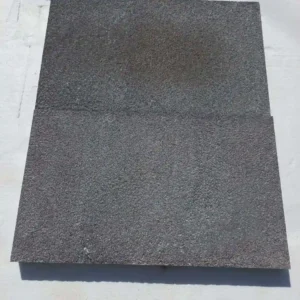
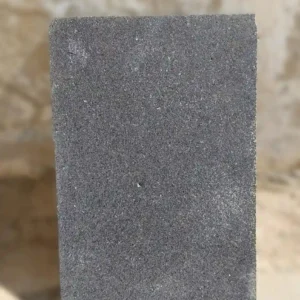
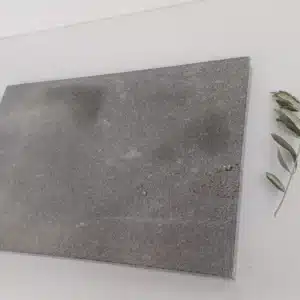
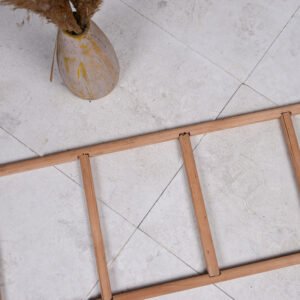
Dark gray stone slab with subtle texture and two olive branches.

Sealing Protocols and Maintenance Scheduling for Long-Term Performance

Black slate is a fine-grained metamorphic material with a relatively low absorption rate compared to travertine or sandstone, but it’s not impervious. A penetrating silane-siloxane sealer applied after installation and renewed on a two-year cycle provides adequate protection against Arizona’s alkaline caliche dust infiltration and occasional oil or food contamination on residential patios. The timing of your initial sealer application matters — applying within 24 to 48 hours of completion, when the surface is clean and the joints have cured but before any site traffic resumes, gives the sealer the best penetration depth.

Avoid applying sealers when ambient temperatures are below 50°F or above 90°F. In practice, this reinforces the same autumn and spring installation windows that apply to the stone setting work itself — your sealing schedule and your installation schedule align naturally when you plan the full project within the optimal seasonal windows. Skipping the sealing step entirely is a decision some specifiers make on the basis of slate’s lower porosity, but in Arizona’s caliche-heavy environments, the fine dust infiltration into micro-surface features will dull the finish noticeably within two seasons without protection.

  • Apply sealer in two thin coats rather than one heavy coat — this prevents surface film buildup that dulls the natural slate color
  • Allow 4 hours between the first and second sealer coat at autumn temperatures
  • Avoid water contact for a minimum of 24 hours after final sealer coat in optimal conditions
  • Re-seal every 24 months in full-sun installations and every 36 months in covered or shaded applications
  • Use a color-enhancing penetrating sealer if you want to deepen the black tones — test on a spare piece first, as results vary by batch

Order Black Slate Outdoor Paving in Arizona from Citadel Stone

Citadel Stone stocks black slate outdoor paving in Arizona in standard formats including 12×24, 16×16, 18×24, and 24×24 inch sizes, with thickness options at 3/4 inch, 1 inch, and 1.5 inch nominal — the latter being the specification most appropriate for driveways and vehicular access areas. Cleft-face, honed, and brushed finishes are available across the primary format range. For projects requiring non-standard sizing or custom cuts, the Citadel Stone technical team can advise on lead times, which typically run 10 to 15 business days from warehouse inventory and 6 to 8 weeks for special-order batch sourcing from quarry partners. Each batch is inspected for color consistency and surface integrity before it leaves the warehouse, which matters on large-area installs where visual uniformity across the field is a client expectation.

Trade and wholesale enquiries are handled directly through the Citadel Stone team, with project-specific pricing available once format, finish, and quantity are confirmed. Samples are available on request before you commit to a volume order — a step worth taking when specifying black slate, since natural color variation between quarry runs can be meaningful. Truck delivery coverage extends across Arizona, with logistics coordinated to align with your installation crew’s schedule. Beyond black slate paving, your Arizona property may benefit from complementary stone applications — Black Limestone Driveway in Arizona covers how dark-toned limestone performs in Arizona’s driveway and access conditions, which is worth reviewing when considering a cohesive material palette across your project. For projects across Arizona, Citadel Stone offers knowledgeable guidance and consistent supply of black slate patio slabs that meet both aesthetic and structural requirements.

Why Arizona’s Builders Choose Citadel Stone?

Free AZ Comparison: Citadel Stone vs. Other Suppliers—Find the Best Value!

FeaturesCitadel StoneOther Stone Suppliers
Exclusive ProductsOffers exclusive Ocean Reef pavers, Shellstone pavers, basalt, and white limestone sourced from SyriaTypically offers more generic or widely available stone options
Quality and AuthenticityProvides high-grade, authentic natural stones with unique featuresQuality varies; may include synthetic or mixed-origin stone materials
Product VarietyWide range of premium products: Shellstone, Basalt, White Limestone, and moreProduct selection is usually more limited or generic
Global DistributionDistributes stones internationally, with a focus on providing consistent qualityOften limited to local or regional distribution
Sustainability CommitmentCommitted to eco-friendly sourcing and sustainable production processesSustainability efforts vary and may not prioritize eco-friendly sourcing
Customization OptionsOffers tailored stone solutions based on client needs and project specificationsCustomization may be limited, with fewer personalized options
Experience and ExpertiseHighly experienced in natural stone sourcing and distribution globallyExpertise varies significantly; some suppliers may lack specialized knowledge
Direct Sourcing – No MiddlemenWorks directly with quarries, cutting unnecessary costs and ensuring transparencyOften involves multiple intermediaries, leading to higher costs
Handpicked SelectionHandpicks blocks and tiles for quality and consistency, ensuring only the best materials are chosenSelection standards vary, often relying on non-customized stock
Durability of ProductsStones are carefully selected for maximum durability and longevityDurability can be inconsistent depending on supplier quality control
Vigorous Packing ProcessesUtilizes durable packing methods for secure, damage-free transportPacking may be less rigorous, increasing the risk of damage during shipping
Citadel Stone OriginsKnown as the original source for unique limestone tiles from the Middle East, recognized for authenticityOrigin not always guaranteed, and unique limestone options are less common
Customer SupportDedicated to providing expert advice, assistance, and after-sales supportSupport quality varies, often limited to basic customer service
Competitive PricingOffers high-quality stones at competitive prices with a focus on valuePrice may be higher for similar quality or lower for lower-grade stones
Escrow ServiceOffers escrow services for secure transactions and peace of mindTypically does not provide escrow services, increasing payment risk
Fast Manufacturing and DeliveryDelivers orders up to 3x faster than typical industry timelines, ensuring swift serviceDelivery times often slower and less predictable, delaying project timelines

Extra Benefits

Choosing Citadel Stone offers unique advantages beyond premium stone quality:

Exclusive Access to Durable Stones

Citadel Stone specializes in unique, regionally exclusive stones, sourced directly from the Middle East.

Transparent Pricing – No Hidden Costs

With no middlemen, Citadel Stone provides direct, transparent pricing that reduces unnecessary costs.

Flexible Customization for Bespoke Projects

Tailor your order to precise specifications, from sizes to finishes, ensuring your project aligns perfectly with your vision.

Streamlined Delivery & Reliable Stock Availability

Benefit from fast production and delivery timelines, designed to minimize delays and ensure reliable availability.

The Preferred Stone Supplier for Luxury AZ Developments.

Scale Your Vision: We Support Arizona's Largest Projects with Reliable, Fast Delivery.

With unlimited tiles, pavers, cobble setts, curbstones, and the fastest delivery options, What’s not to love? Say goodbye to unnecessary hassles!

Leading AZ Stone Suppliers are Loving Citadel Stone!

Don’t Settle for Less. Source the Best Stone for Your Local Stone Expert.

DanielOwner
Thank you, Kareem. We received the order. The stones look great!
FrankOwner
You are a good businessman and I believe a good person. I admire your honesty, this is why I call you a good businessman.
Gemma C
Gemma CPrivate Project
Undoubtedly the price was the reason that we chose Citadel stone, in addition to the fact that you offer a white limestone that is hard to source. Your products are very good value for money by comparison with other companies. You have helped at every stage of the process and have been quick and reliable in your responses. It was a big risk for us to pay everything up front including shipping and not know the quality. You did make me feel that I could trust you and your company however and we are very happy with the tiles. They appear to have been finished to a very high quality of smoothness and I can't wait to see them once they have been laid. We need to see now how easy they are to fit and maintain, yet you also sealed them before shipment so we think that they will be very durable. Our building project has been delayed for a few months now so it may be sometime before we see them laid, but I promise that I will send photos as soon as we have them down. Thank you so much Kareem and your team, you have done a great job. I am hoping that we can pay for, and receive our second shipment in the not too far future, so that we can finish everything off. Wishing you well. Gemma
Molly McK
Molly McKPrivate Project
I appreciate the quality of product and care for the custom order in packaging each crate to minimize breakage as well as the flexibility with the order to help us make the most of shipping. The timely communications are impressive from the beginning and throughout the process. It's reassuring to have gone through one order to know what the process will be like in the future. I am glad to have had some guidance through the importing process and recommendations for shipping partners to assist. It's incredible to think about the journey the stone traveled to get to our site and I'm grateful to have made it to the next stage of the project relatively smoothly and with from what I can tell

Frequently Asked Questions

If your question is not listed, please email us at [email protected]

When is the best time of year to install black slate outdoor paving in Arizona?

The most reliable installation windows in Arizona fall between mid-March and late May, and again from early October through November. During these periods, both ambient and surface temperatures remain within the 50°F–90°F range that most cementitious setting materials require for consistent curing. Scheduling outside these windows — particularly during July and August monsoon season or after hard freezes at elevations above 4,500 feet — introduces meaningful risk of bond failure and surface stress before the paving fully sets.

In Flagstaff, Prescott, and other high-elevation Arizona communities, freeze-thaw cycling is a genuine performance factor that separates quality slate from lower-grade material. Dense, low-absorption slate with a water absorption rate below 0.4% resists spalling caused by moisture expansion within the stone matrix during repeated freeze events. Specifying the correct slate grade for elevation-specific conditions is one of the more important pre-project decisions, and it directly affects long-term surface integrity in ways that aren’t immediately visible after installation.

Arizona’s caliche-heavy and expansive clay soils in regions like the Phoenix Valley and Tucson Basin require a compacted aggregate base of at least 4 to 6 inches beneath the setting bed to counteract ground movement during seasonal moisture fluctuations. Skipping adequate base depth is one of the most common causes of slate cracking and joint failure in outdoor applications here, even when the surface installation itself is technically sound. A geotextile separation layer between native soil and aggregate is worth considering on sites with known clay activity.

For exterior paving applications subject to foot traffic, outdoor furniture loads, and thermal cycling, a minimum slate thickness of 3/4 inch (20mm) is the practical baseline — thinner gauges are better suited to interior wall cladding or low-traffic accent applications. In outdoor Arizona settings where thermal expansion across large paved areas is a factor, 1-inch (25mm) slate offers additional resilience against stress cracking at grout joints. Thickness selection should also factor in whether the installation is directly over concrete, a mortar bed, or a pedestal system, as each changes the structural demand on the stone itself.

In Arizona’s low-humidity environment, the primary maintenance concern for black slate is dust accumulation within the stone’s natural surface texture and UV-related fading of any topical sealers applied at installation. A penetrating impregnator sealer — rather than a film-forming coating — is the preferred choice for exterior slate in arid climates because it doesn’t trap the fine airborne particulates that settle into unsealed surfaces and because it doesn’t peel or chalk under intense UV exposure. Reapplication every two to three years, depending on sun exposure and foot traffic, maintains the stone’s natural depth of color without altering its surface character.

Contractors working on timed Arizona installations consistently cite material availability as a scheduling risk — which is where Citadel Stone’s warehouse stock model makes a measurable difference. Citadel Stone maintains ready inventory of black slate in standard field sizes, which means projects scoped around Arizona’s optimal installation windows aren’t delayed waiting on import lead times. Citadel Stone’s familiarity with Arizona’s regional build cycles and seasonal demand patterns directly informs how inventory is planned and allocated, keeping supply aligned with when contractors actually need to be on site.