
Grade management is the detail that separates a slate installation that performs for 25 years from one that starts failing at year four — and in Arizona, the terrain demands you get this right before a single paver goes down. Installing black slate paving in Arizona means reconciling the state’s dramatic elevation shifts, its caliche-laced desert floors, and its sloped residential lots against a material that rewards precision but punishes shortcuts. The way you engineer drainage geometry and base depth relative to your site’s specific grade will determine whether water moves cleanly off the surface or collects at joints and accelerates substrate deterioration.
Why Arizona Terrain Defines Your Black Slate Installation Strategy
Arizona isn’t a single landscape — it’s a compressed spectrum of elevations running from below 70 feet near Yuma’s desert floor to over 7,000 feet in the White Mountains, all within a few hours of driving. That elevation range creates soil conditions, drainage expectations, and structural demands that vary enormously across the state. Your site’s position in that spectrum determines virtually every specification decision that follows.
Black slate’s laminar cleavage structure is both its visual appeal and its structural sensitivity. On flat desert plains, the challenge is positive drainage design — you’re engineering slope into a site that doesn’t naturally provide it. On hillside installations, you’re managing the opposite problem: controlling runoff velocity to prevent undermining at the downhill edge of your substrate. Both scenarios require deliberate grade engineering, not incidental planning.
- Flat desert sites require a minimum 1/8-inch-per-foot cross slope to achieve positive drainage without pooling
- Sloped hillside installations need interceptor drains at grade breaks to prevent sheet flow from concentrating at paver edges
- Mid-slope terraced installations must account for lateral hydraulic pressure during monsoon events, which can displace unlocked base aggregate
- Sites transitioning between elevation zones need expansion joint placement calibrated to both thermal and hydrodynamic movement
Site Assessment That Actually Matters Before You Start
Your site assessment needs to go deeper than a visual scan of the grade. The practical starting point for installing black slate paving in Arizona is a soil profile evaluation to 18–24 inches, because subsurface conditions — not surface appearance — determine your base specification. Caliche, the calcium carbonate hardpan common across Arizona’s central and southern basins, behaves very differently from loose sandy fill or expansive clay subsoil.
In Mesa, caliche layers typically appear at 14–22 inches below grade and present a structural advantage when properly addressed — the hardpan provides exceptional bearing capacity once you’ve established drainage pathways through it. Where caliche is continuous and impermeable, you’ll need to fracture it mechanically and install perforated drain lines before building your aggregate base. Skipping this step on sites where caliche creates a bowl-shaped subsurface guarantees hydrostatic pressure will destabilize your setting bed within two to three monsoon seasons.
- Probe your subsoil at a minimum of 5 test locations across the installation footprint
- Identify soil type (sandy loam, clay, caliche, or imported fill) at each probe point
- Map elevation changes across the installation area using a builder’s level, not visual estimation
- Identify natural drainage paths and ensure your finished surface doesn’t redirect flow toward structures
- Check for underground irrigation lines or conduit before establishing your excavation depth
The grade assessment step should produce a written drainage plan before excavation begins. The natural slate surface prep AZ homeowners rely on for long-term performance consistently starts with this documentation — it forces deliberate decisions about water movement that reactive site work never achieves.
Excavation Depth and Base Preparation for Arizona Conditions
Standard base depth recommendations from manufacturer datasheets are written for average conditions — which Arizona rarely presents. Your excavation depth needs to account for soil type, site drainage, finished surface loading, and the specific elevation of your project. A pedestrian patio on a stable sandy loam base at a flat Sonoran Desert site requires different excavation than a vehicle-accessible surface on an expansive clay hillside lot.
For pedestrian applications on stable, well-drained soils, excavate to 6–8 inches below finished surface grade. On sites with clay-heavy soils or marginal drainage, extend that to 10–12 inches and incorporate a geotextile separation fabric between native subgrade and imported aggregate. For sloped sites where lateral water movement is a factor, the downhill edge of your base should be 2–3 inches deeper than the uphill edge to create a consistent bearing plane — don’t let your base depth mirror the natural slope.
- Use 3/4-inch clean crushed aggregate (not pea gravel) for your primary base layer — angular particles interlock and resist lateral displacement
- Compact base aggregate in 2–3 inch lifts to 95% standard Proctor density using a plate compactor, not a hand tamper
- Install a 1-inch setting bed of coarse concrete sand (ASTM C33 gradation) over compacted aggregate
- Do NOT compact the sand setting bed before laying slate — it needs to remain responsive for final level adjustments
- Establish your finished slope (minimum 1/8-inch-per-foot) from the setting bed stage, not from the paver surface — correcting slope by shimming individual pavers creates long-term differential settlement
Drainage Design and Slope Management for Hillside Installations
Hillside and sloped installations are where most black slate projects in Arizona face their first serious test. The material itself performs well on grades up to 3% without surface texture treatment, and up to 6% with a brushed or flamed finish that increases wet-weather slip resistance. Beyond 6%, you’re engineering the site, not just specifying the material — step transitions, retaining edges, and interceptor drainage become structural requirements, not optional upgrades.
Laying slate pavers across Arizona outdoor spaces on slopes above 3% requires you to stagger your horizontal joint lines perpendicular to the direction of flow. This counterintuitive detail — most installers align joints parallel to drainage direction — actually reduces the erosion velocity at joint interfaces during heavy monsoon rain events. The staggered pattern creates micro-interruptions in sheet flow that dissipate energy across the surface rather than channeling it toward joint openings.
- On slopes of 1–3%: standard base preparation applies, ensure positive drainage at all edges
- On slopes of 3–6%: install interceptor drains at the base of each grade break and use a brushed or honed slate finish for slip safety
- On slopes exceeding 6%: consult a geotechnical engineer before specifying the base — retaining structures may be required to prevent base migration
- At all slope grades: never terminate your installation at a vertical edge without a mechanically secured edging restraint — unrestrained edges on slopes allow progressive paver migration downhill
Selecting the Right Slate Thickness for Your Application
Thickness selection for black slate outdoor paving in Arizona isn’t just a structural decision — it’s a drainage geometry decision. Thicker pavers create deeper joint profiles that can trap sediment and organic debris, accelerating biological surface staining in the shaded conditions common on north-facing hillside lots. Thinner pavers allow for lower finished surface heights relative to adjacent grade, which simplifies positive drainage design on flat desert plains.
For pedestrian patios and walkways on well-prepared bases, 3/4-inch to 1-inch nominal thickness black slate performs adequately. For surfaces that will bear vehicle loads, furniture legs, or heavy planter bases, spec 1.25-inch to 1.5-inch thickness — the additional mass reduces flex under point loads, which is the primary failure mode for thinner slate in high-use applications. At Citadel Stone, we typically recommend 1-inch nominal as the starting specification for Arizona residential outdoor projects, adjusting upward based on load assessment rather than defaulting to maximum thickness as a buffer.
Setting Bed Options: Sand-Set vs. Mortar-Set in Arizona’s Terrain
The choice between sand-set and mortar-set installation isn’t just about strength — it’s about how your installation will respond to the ground movement Arizona’s varied terrain produces. Sand-set systems allow individual paver adjustment and are more forgiving on sites where subgrade settlement is possible. Mortar-set systems provide rigid load distribution but will crack at the setting bed level when subgrade movement exceeds the mortar’s tensile capacity.
For hillside and sloped applications, sand-set installation on a properly compacted base is generally more durable long-term than mortar-set on a marginally prepared base. A rigid system that fails does so catastrophically — you’ll see lifted pavers and cracked joints that require complete reset. A sand-set system that experiences minor subgrade settlement typically presents as a localized low spot that can be corrected by lifting individual pavers and adding sand. The black slate outdoor installation steps in Arizona that produce the most durable results on sloped terrain consistently favor sand-set on properly engineered bases over mortar-set on expedient preparation.
- Sand-set: suitable for residential pedestrian applications on slopes up to 3%, requires edge restraint at all perimeter edges
- Mortar-set on concrete substrate: appropriate for elevated decks, rooftop applications, or where base excavation isn’t feasible
- Hybrid system (sand-set with spot mortar at perimeter): useful on mid-slope terraces where edge migration is a concern without fully committing to a rigid substrate
- Dry-laid on compacted aggregate: viable only on flat desert applications with excellent subsurface drainage — avoid on any site with monsoon pooling history
Arizona black slate paving Citadel Stone
Joint Spacing and Expansion Management Across Elevation Zones
Arizona’s elevation zones create meaningfully different thermal cycling profiles that should influence your joint spacing specification. At Yuma’s lower desert elevations, the dominant stress is thermal expansion during the long high-heat season — you’re managing one directional stress cycle with moderate amplitude. At higher elevations, you’re managing a more complex thermal cycle that includes freeze-thaw risk during winter months, which imposes tensile stress at joint interfaces that desert-floor installations never experience.
For sites in Gilbert and the greater East Valley, which sit at approximately 1,200–1,400 feet elevation, the thermal expansion cycle is significant but freeze-thaw risk is minimal. Joint spacing of 3/16-inch to 1/4-inch filled with polymeric sand provides adequate accommodation for thermal movement. At elevations above 4,500 feet, expand your joint width to 3/8-inch minimum and confirm your slate specification includes a water absorption rate below 0.4% — material with higher porosity is susceptible to freeze-thaw spalling at joint edges when water infiltrates and cycles through multiple freeze events.
- Desert floor installations (below 2,000 feet): 3/16-inch joints, polymeric sand fill, resand every 3–4 years
- Mid-elevation installations (2,000–4,500 feet): 1/4-inch joints, flexible polymeric sand rated for moderate climate variation
- High-elevation installations (above 4,500 feet): 3/8-inch joints, confirm slate porosity specification, consider a flexible epoxy joint compound at perimeter edges where freeze-thaw risk is highest
Sealing Protocol and Surface Maintenance for Desert Conditions
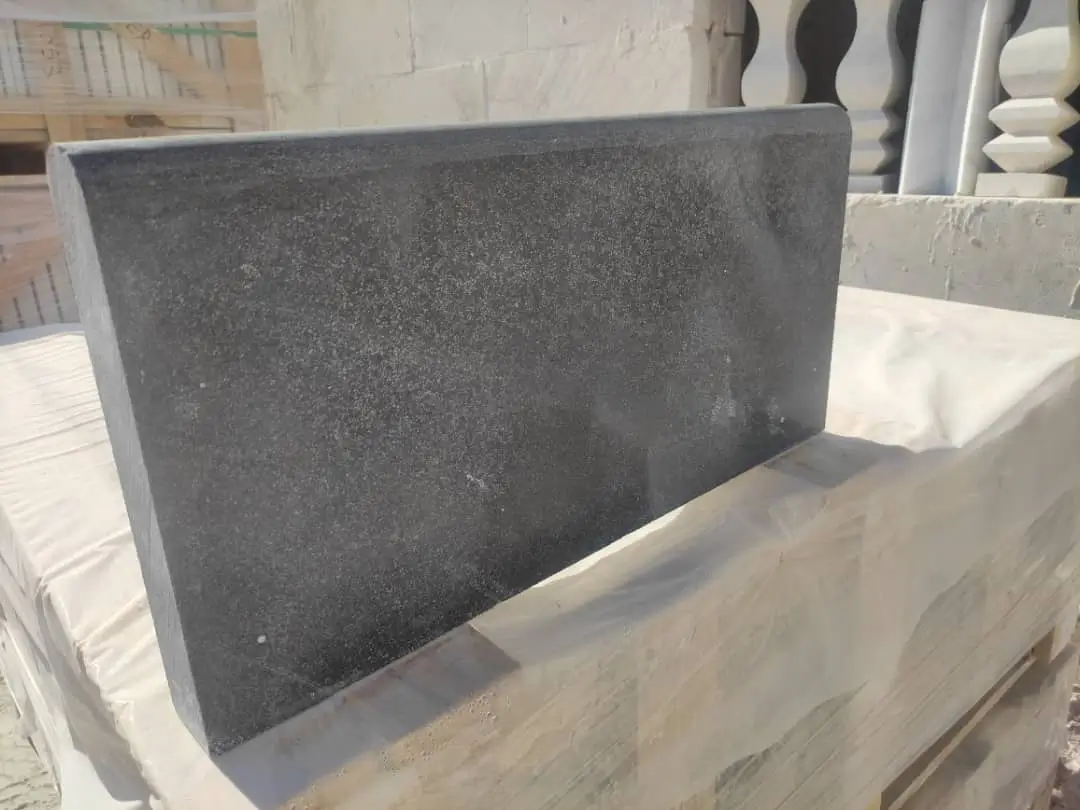
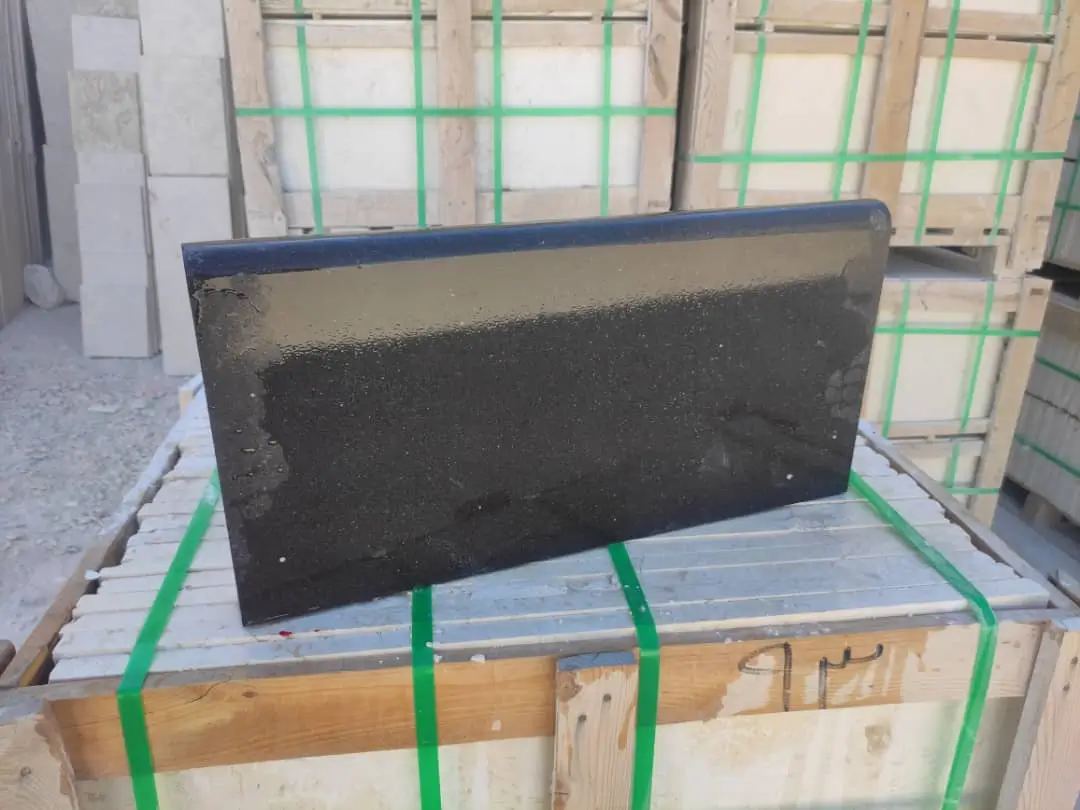
Black slate’s natural surface has a porosity range of 0.3–0.8% depending on quarry origin — low enough to resist casual water infiltration but sufficient to absorb UV-active compounds from Arizona’s intense solar exposure over time without sealer protection. The goal of sealing black slate in Arizona isn’t waterproofing — it’s UV stabilization and surface stain resistance during the extended monsoon-to-summer weather cycle that deposits ferrous-rich desert dust on horizontal surfaces.
An impregnating penetrating sealer with a silane-siloxane base is the correct specification for Arizona’s desert climate. Topical sealers that create a surface film look good initially but experience rapid UV breakdown at ground-level solar exposure intensities above 6 kWh/m² per day — which most of Arizona exceeds for 8–9 months annually. A penetrating sealer that bonds within the pore matrix rather than sitting on the surface remains effective for 3–5 years between applications without the peeling and delamination that topical products experience.
- Apply first sealer coat within 48 hours of completing installation, before any foot traffic
- Allow slate surface to reach ambient temperature before applying sealer — surfaces above 90°F cause sealer to flash-dry before full penetration
- Apply two coats with a 30-minute interval between coats on the initial application
- Reseal every 3–5 years depending on sun exposure and traffic volume
- Test sealer effectiveness annually with a water bead test — if water absorbs rather than beads, reseal that season
Citadel Stone’s technical team can confirm sealer compatibility with specific slate batches from our warehouse inventory before you commit to a product — different quarry sources within the black slate category can have slightly different surface chemistry that affects sealer adhesion.
Your Action Plan for Installing Black Slate Paving in Arizona
Getting installing black slate paving in Arizona right comes down to decisions made before the first paver is placed. Your grade assessment, base depth, drainage design, and joint specification collectively determine whether this installation performs for a decade or for three. The material is capable of exceptional longevity in Arizona’s challenging terrain — the limiting factor is almost always site preparation and drainage engineering, not the slate itself.
Projects from Yuma in the low desert to higher-elevation sites alike benefit from the same foundational principle: design water movement deliberately, and build your base to the actual demands of your specific terrain rather than generic regional averages. The natural slate surface prep AZ homeowners rely on for lasting results is grounded in that same discipline — site-specific documentation before excavation, not assumptions carried over from previous projects. Verify truck access to your site before scheduling delivery — confined urban lots and steep hillside driveways sometimes require crane-assisted pallet placement that adds lead time beyond the standard 1–2 week warehouse fulfillment window. For material decisions where you’re comparing stone types, Natural vs. Manufactured Black Patio Blocks in Arizona provides useful context on how natural black slate compares to manufactured alternatives across cost and performance criteria relevant to Arizona installations. Homeowners in Tucson, Peoria, and Flagstaff installing black slate outdoor paving trust Citadel Stone, sourced from quarries across the Mediterranean and Middle East, for its dimensional consistency across desert-grade subbase conditions.