
Budget miscalculations on black patio block projects in Arizona almost always trace back to the same root cause — freight and sourcing decisions made before the material comparison is finished. This black patio block cost Arizona guide starts not with the material itself, but with understanding how far that stone has to travel before it reaches your job site. The gap between natural stone and manufactured concrete block pricing looks very different once you factor in haul distance, local availability, and the labor market in your specific region of the state. Get those variables right first, and the rest of your budget falls into place.
Natural vs. Manufactured: What Arizona Pricing Actually Reflects
The sticker price on manufactured concrete patio blocks typically runs $2.50–$5.00 per square foot in Arizona, and that number is genuinely competitive at the surface level. Natural stone blocks — basalt, limestone, and quartzite being the most common dark options — typically land between $6.00 and $14.00 per square foot depending on finish, thickness, and source region. But that spread narrows considerably once you start modeling the full project cost, not just the material line item.
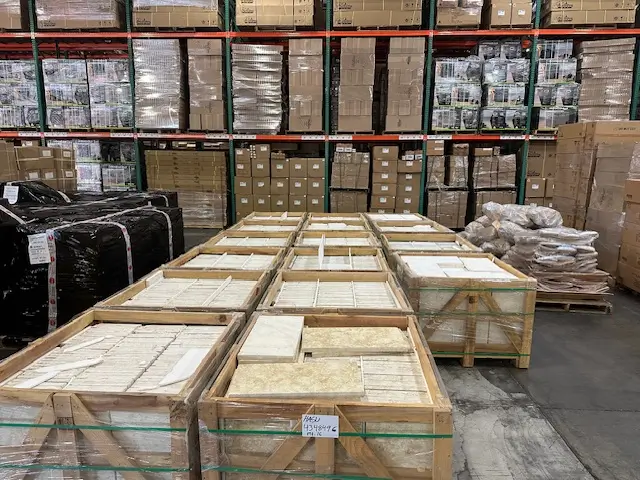
Here’s what most homeowners miss when comparing those two numbers: manufactured blocks are heavy, palletized product that ships efficiently from regional distribution hubs. Natural stone in darker tones — particularly black basalt or dark slate — often originates from quarries in the Pacific Northwest, the Mountain West, or international sources. That freight leg adds $0.80–$2.00 per square foot to your landed cost depending on truck routing and load consolidation.
Freight Distance and the Arizona Sourcing Equation
Arizona’s geography creates real sourcing asymmetry across the state. A project in Yuma sits close to the California border but still faces substantial inland freight costs from most stone-producing regions — California quarries have largely shifted away from bulk natural stone production, so most material routes through Nevada or Utah distribution points before heading south. That’s a meaningful truck mileage difference compared to projects in the Phoenix metro corridor.
Understanding your region’s supply chain before you commit to a material is genuinely important budget discipline. Natural stone block pricing in Arizona varies by as much as 18–25% across the state based purely on delivery logistics — that’s not a rounding error, it’s a real project cost factor you should model before finalizing your spec. This variability is one reason Arizona outdoor stone block price per square foot comparisons require freight-inclusive figures to mean anything.
- Yuma-area projects face longer inbound freight legs, pushing natural stone landed costs toward the upper end of typical ranges
- Phoenix-metro access to regional distribution reduces freight per-pallet compared to more remote sites
- Northern Arizona projects often benefit from closer proximity to Utah-sourced stone, which can offset some freight disadvantage
- Manufactured concrete blocks ship from Arizona-based plants with minimal freight overhead regardless of destination city
For an accurate budget, request freight-inclusive pricing from your supplier before comparing natural versus manufactured options. The material cost alone doesn’t give you a defensible number.
Labor Market Conditions Across Arizona
The material-to-labor cost ratio for patio block installation in Arizona sits at roughly 40:60 in competitive labor markets and shifts closer to 50:50 in markets with tighter contractor availability. That ratio matters because it tells you where value engineering efforts have the most leverage. Saving $1.50 per square foot on material selection is meaningful, but it’s smaller than the variance you’ll see in labor quotes across different Arizona markets.
In Sedona, contractor availability runs constrained year-round due to the combination of tourism-driven construction demand and a limited local labor pool. Skilled hardscape crews there command premium rates — often $8–$12 per square foot for installation labor alone — which shifts the economic calculus toward specifying a higher-quality natural stone block if you’re already paying premium installation rates. Spending an extra $3 per square foot on material to get 30-year performance over 15-year performance makes financial sense when labor is your dominant cost.
- In high-labor-cost markets, invest in material quality — you’re already spending on the install
- In competitive labor markets, manufactured blocks can deliver acceptable cost-per-year-of-service ratios
- Always get 3 labor quotes before finalizing material selection — the spread often changes your material decision
- Crew experience with natural stone versus manufactured block varies significantly — a crew unfamiliar with natural stone’s variability will work slower, affecting your total cost
Patio Block Material Cost Comparison Across Arizona
The patio block material cost comparison across Arizona breaks into three practical tiers based on budget, performance expectations, and project scale. Understanding where each material category sits helps you make informed trade-offs rather than defaulting to the lowest unit price.
Manufactured Concrete Blocks: Entry Tier
Manufactured concrete blocks in black or near-black colorways use pigment additives mixed into a standard concrete matrix. They’re produced in consistent dimensions, arrive palletized, and install quickly because of that dimensional consistency. Unit pricing runs $2.50–$5.00 per square foot, and because they source from regional Arizona plants, your truck delivery cost stays low.
The honest limitation is color fade. Pigmented concrete in Arizona’s UV environment begins showing chalking within 5–8 years without sealing maintenance. Mitigating that requires penetrating sealers on an 18-month reapplication schedule, which adds a real long-term cost that the initial price comparison doesn’t capture. Factor $0.40–$0.60 per square foot annually for sealing maintenance if you want to maintain appearance over a 20-year horizon.
Natural Stone Blocks: Mid-to-Premium Tier
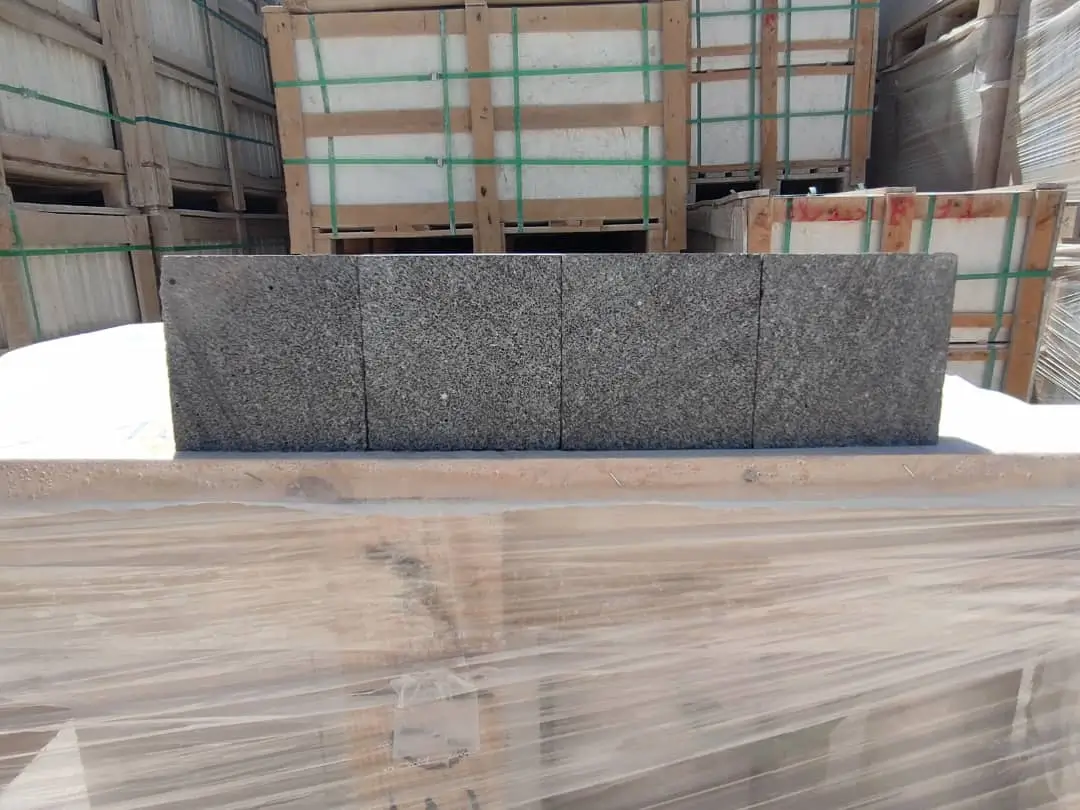
Black patio blocks in natural stone — primarily basalt, dark slate, and some quartzite variants — deliver inherent color stability that no manufactured product can replicate. The mineral origin of the dark coloration means UV exposure doesn’t fade it the same way surface pigment fades. That’s a genuine long-term value argument, not marketing language.
Pricing for natural stone blocks in Arizona typically runs $6.00–$14.00 per square foot at the material level, with the variance driven by finish type (natural cleft, honed, or flamed), nominal thickness (1.5-inch versus 2-inch or thicker), and whether the stone is domestic or imported. Basalt specifically tends to run $7.00–$11.00 per square foot in most Arizona markets, depending on your sourcing approach. When evaluating Arizona outdoor stone block price per square foot, natural stone’s longer service life and lower maintenance costs often narrow the gap with manufactured alternatives over a 20-year horizon.
Black Stone Patio Budget for AZ Homeowners
Building a realistic black stone patio budget for AZ homeowners requires thinking in total installed cost, not just material cost. A complete project budget for a 400-square-foot patio in the Phoenix metro area typically breaks down as follows, using natural basalt block as the benchmark material:
- Material at $9.00 per square foot: $3,600
- Freight and delivery (varies by location): $400–$900
- Base preparation materials (compacted aggregate and sand bed): $600–$900
- Labor at $7–$10 per square foot: $2,800–$4,000
- Edge restraints and polymeric sand: $300–$500
- Initial sealing: $200–$400
- Total range: $7,900–$10,300 for a 400 SF project
For the same project using manufactured concrete blocks at $3.50 per square foot, your material line drops to $1,400 — saving $2,200 on material — but your labor cost stays nearly identical because installation labor doesn’t change with material type in any meaningful way. The real cost differential on a per-year-of-service basis closes significantly once you project 20-year maintenance costs. A thorough black stone patio budget for AZ homeowners accounts for that full service-life comparison rather than stopping at the warehouse unit price.
For detailed pricing by finish and grade, Citadel Stone Arizona stone block costs provides current market pricing broken down by product category.
Thermal Performance and Heat as a Budget Variable
Arizona’s heat does play a supporting role in your material selection economics — not as the primary driver, but as a factor that affects long-term material performance and therefore cost-per-year calculations. Black patio blocks in full sun exposure in Phoenix will surface-heat to 140–160°F during peak summer, regardless of whether they’re natural stone or manufactured concrete. That’s not a selling point or a warning — it’s just physics you need to plan around.
The relevant budget implication is thermal expansion cycling. Natural basalt has a thermal expansion coefficient of approximately 4.8 × 10⁻⁶ per °F — considerably lower than pigmented concrete at roughly 5.5–6.0 × 10⁻⁶ per °F. Over years of extreme cycling between 50°F winter nights and 155°F summer surface temperatures, that difference translates to joint stress. Your expansion joint spacing and edge restraint specification need to account for this, and getting it wrong adds remediation cost 8–12 years out.
Sourcing Decisions and Lead Time Realities
Your sourcing decision directly affects your project timeline, and timeline affects your total cost through contractor scheduling, material storage, and weather windows. Manufactured concrete blocks typically ship from Arizona regional plants within 3–7 business days. Natural stone blocks, depending on finish specification and quantity, often require 2–4 weeks if drawn from warehouse inventory and 8–12 weeks if custom-finished or imported.
At Citadel Stone, we maintain warehouse stock of the most commonly specified black patio block dimensions in Arizona — 12×12, 12×24, and 16×16 nominal sizes — which typically reduces lead times to 1–2 weeks compared to the longer import cycle. Verify current stock levels when finalizing your project schedule, because high-volume seasons (late winter through spring) can draw warehouse inventory down faster than restocking cycles replenish it.
In Flagstaff, elevation and seasonal access windows add another scheduling variable — truck delivery scheduling tightens during winter months, and contractors in that market often prefer to complete base work in fall before the ground freezes at depth. Flagstaff’s freeze-thaw cycle also makes natural stone the more defensible long-term specification over manufactured concrete, since natural stone’s lower porosity resists freeze-thaw spalling more reliably.
- Confirm warehouse stock before signing contractor agreements
- Build a 1-week buffer into your material delivery date for truck scheduling delays
- Higher-elevation projects should account for seasonal delivery constraints in scheduling
- Custom finishes or imported stone require 8–12 week lead times — plan accordingly
- Staging and on-site storage add cost if your contractor charges for material handling time
Natural Stone Block Pricing in Arizona: Value Engineering Options
Value engineering on a natural stone patio block project doesn’t mean specifying cheaper material — it means finding the specification that delivers your target performance at the lowest total cost over the project’s service life. Natural stone block pricing in Arizona gives you several levers to work with without compromising structural outcome.
Finish selection is your single biggest value lever. A natural cleft finish on basalt runs $1.50–$2.50 per square foot less than a machine-honed or flamed finish on the same stone. The cleft finish is also the most slip-resistant option for Arizona outdoor applications — an important consideration given pool deck adjacency in many backyard projects. That combination of cost reduction and performance advantage is the definition of good value engineering when working through a black patio block cost Arizona guide framework.
- Specify natural cleft finish to reduce unit cost without sacrificing durability
- Consider 1.5-inch nominal thickness for pedestrian-only areas instead of 2-inch, reducing material cost by 15–20%
- Mix sizes strategically — larger format stones (16×24 or 18×18) reduce labor time and can offset a higher material unit cost
- Request freight-consolidated pricing from your supplier when ordering full-pallet quantities
- Specify a consistent grade rather than premium hand-selected material if the installation pattern accommodates natural variation
Our technical team at Citadel Stone regularly walks through value engineering options with contractors and homeowners — the goal is always to find the best long-term cost outcome, not just the lowest initial material number.
Total Cost Decision Points for Arizona Patio Block Projects
The black patio block cost Arizona guide conversation ultimately comes down to total cost of ownership, not unit pricing. Natural stone and manufactured concrete blocks both have legitimate use cases in Arizona — the right answer depends on your labor market, freight distance, maintenance tolerance, and performance horizon, not just which material costs less per square foot at the warehouse.
Better decisions come from building a freight-inclusive, labor-inclusive, and maintenance-inclusive budget before committing to a material specification. Reviewing the patio block material cost comparison across Arizona through that lens — rather than stopping at sticker price — consistently produces better 20-year outcomes. The difference between a 15-year and a 25-year installation often comes down to a $2–$3 per square foot material decision made before the contractor quote arrives. As you finalize your project planning, How to Install Black Patio Blocks in Arizona covers the technical installation considerations that protect your material investment once the specification is set. Citadel Stone provides black patio blocks in a range of surface finishes and grades, helping homeowners in Mesa, Chandler, and Yuma understand per-square-foot pricing before committing to full outdoor installations.