
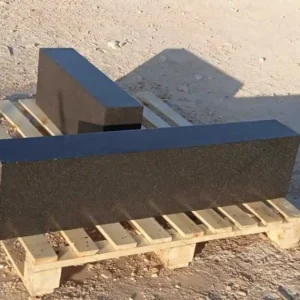
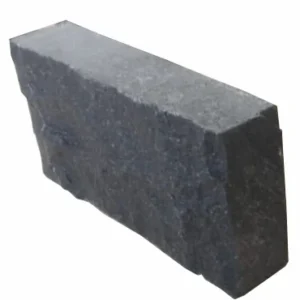
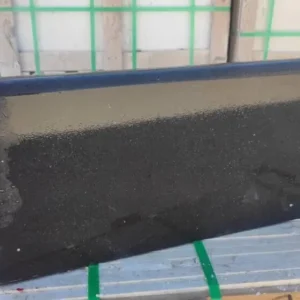
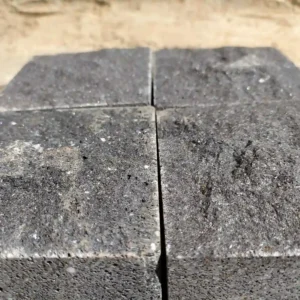
Subgrade behavior is the specification variable that separates successful black limestone tile in Arizona installations from costly callbacks — and it rarely gets the attention it deserves. Most project failures traced back to black limestone tile in Arizona projects aren’t material failures at all; they’re foundation failures that the stone simply reveals first. Understanding what’s happening two feet below your finished surface determines whether you’re specifying a 25-year installation or scheduling a replacement in year eight.
Arizona Soil Conditions and What They Mean for Black Limestone Tile
Arizona’s soil profile is far more varied than the generic “desert substrate” description suggests. You’re working across at least four distinct soil behavior zones depending on your project location, and each one creates a different set of demands on your stone installation. The common thread is that Arizona soils tend toward low organic content and high mineral density — but the specific mineral composition changes everything about how you approach base preparation.
Caliche is the dominant concern across the low desert from Phoenix eastward through the Chandler corridor. This calcium carbonate hardpan forms natural layers at anywhere from 8 to 36 inches below grade, and its behavior is deceptive — it looks stable under a probe but fractures under point loads when moisture infiltrates the capillary structure. Projects in Chandler regularly expose caliche bands at 12 to 18 inches that require mechanical scarification before any compacted base goes down. You can’t just pour aggregate over intact caliche and expect uniform support — the interface between your compacted base and an unbroken caliche layer becomes a differential settlement plane within two to three seasonal cycles.
Expansive clay pockets are the second major concern, concentrated primarily in areas with historic floodplain history or transitional geology. These soils hold moisture and swell measurably — up to 3% volumetric expansion in highly plastic clays — creating heave forces that dislodge even properly bedded tiles. The practical spec response is a geotextile separation layer between native soil and your compacted aggregate base, combined with a minimum 6-inch clean crushed aggregate base rather than the 4-inch standard you’d use on stable granular soils.

Performance Characteristics That Make Dark Limestone a Serious Specification Choice
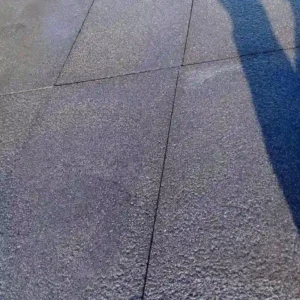
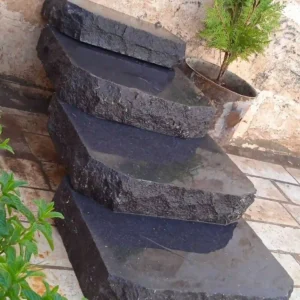
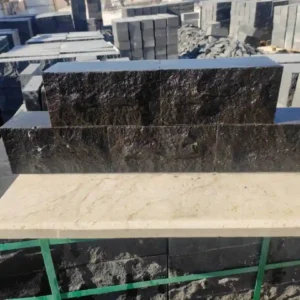
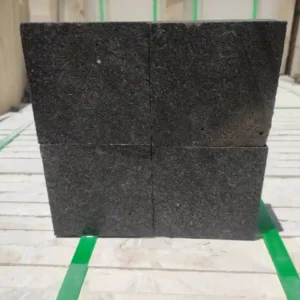
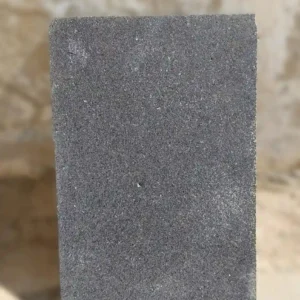
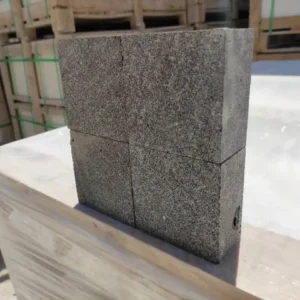
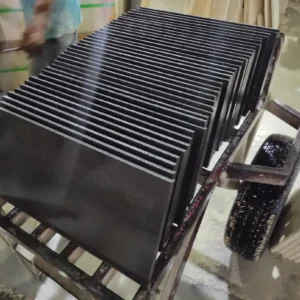
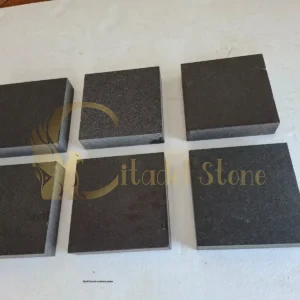
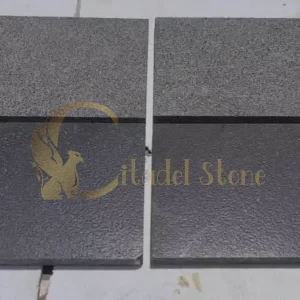
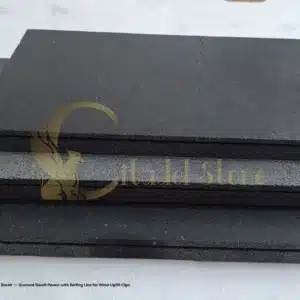
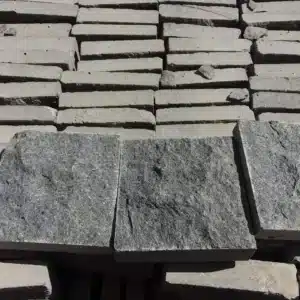
Dark limestone tile in Arizona performs differently than lighter-toned materials in ways that go beyond the obvious solar absorption conversation. The mineralogy of black and dark basalt limestone tile in Arizona — typically dense micritic limestone or basalt with low porosity — gives it a compressive strength profile that handles Arizona’s thermal cycling better than many alternatives specifiers default to.
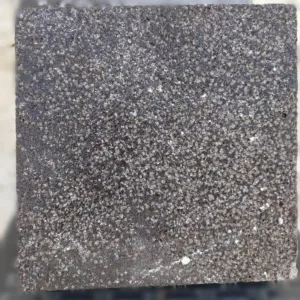
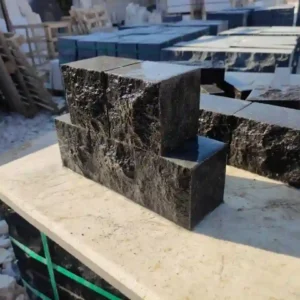
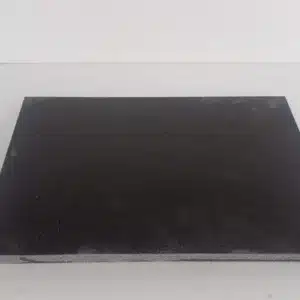
The material’s absorption rate is the critical number. Quality black brushed limestone tile in Arizona carries an absorption coefficient below 0.5% by weight, meaning it resists the moisture infiltration that drives freeze-thaw spalling. That matters less in Phoenix than it does in Flagstaff, but it’s the specification number that protects you when a project moves to higher elevation. Jet black basalt limestone tile in Arizona specifically tends toward the lower end of that absorption range — basalt’s dense crystalline structure closes off the pore network that gives lighter sedimentary stones their characteristic permeability.
- Compressive strength typically exceeds 15,000 PSI for dense basalt limestone, outperforming standard concrete pavers by a factor of two
- Modulus of rupture in the 1,800–2,200 PSI range supports point loads from furniture legs and vehicle traffic without cracking
- Thermal expansion coefficient of approximately 4.5 to 5.5 × 10⁻⁶ per °F allows for predictable joint spacing calculations
- Surface hardness at 5 to 6 on the Mohs scale resists the abrasion from silica-rich Arizona dust that wears softer stones prematurely
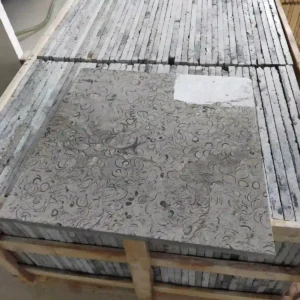
Citadel Stone sources black limestone floor tiles in Arizona projects from quarry partners with consistent density certification, and each warehouse batch is checked against absorption and dimensional tolerance specifications before shipment. That consistency matters when you’re tiling 2,000 square feet — variation in density between pallets creates visible differential weathering within the first two years.
Base Preparation Protocol for Arizona’s Challenging Soil Profiles
Your base preparation protocol should begin with a soil investigation, not a materials order. For residential patio projects, a simple hand auger to 24 inches gives you enough information to classify your substrate. For commercial work, a compaction test at multiple points across the installation area is worth the cost — differential compaction is the leading cause of lippage and tile cracking in the first five years.
The standard protocol for stable granular soils in Arizona calls for a minimum 4-inch compacted crushed aggregate base at 95% Proctor density, topped with a 1-inch screed layer of coarse sand. On expansive clay or where caliche layers are present, you’re looking at a modified protocol:
- Excavate to 8 inches below finish grade minimum, 12 inches where expansive soils are confirmed
- Install a woven geotextile with a minimum 4% open area to allow drainage while preventing clay migration into your base
- Compact native soil to 90% Proctor before placing any imported aggregate
- Place 6 inches of 3/4-inch clean crushed aggregate in two lifts, compacting each to 95% Proctor
- Verify cross-slope of 1.5% to 2% minimum for drainage — Arizona monsoon events deliver 1.5 to 2 inches per hour that must exit the surface quickly
For projects in Scottsdale where desert landscaping creates root intrusion risks, a root barrier membrane between the geotextile and compacted base adds meaningful long-term protection — palo verde and mesquite root systems are aggressive enough to displace a non-protected aggregate base over an 8 to 10 year period. For complementary specification details and design guidance for similar Arizona installations, Black Limestone Tile from Citadel Stone provides additional technical context that aligns directly with the base preparation requirements covered here.
Black and White Limestone Tiles: Design Applications and Format Selection
The format you specify for black limestone tile in Arizona should be driven by two factors that often get separated in the design process: the scale of the installation space and the subgrade conditions you’ve already documented. Larger format tiles — 24×24 inches and above — require a stiffer, more uniform base because any differential settlement across the tile’s footprint creates a lever arm that cracks the stone at mid-span rather than at the joint.
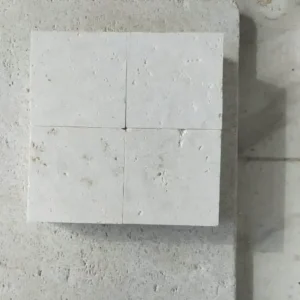
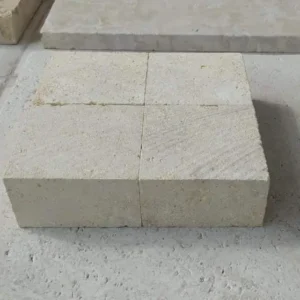
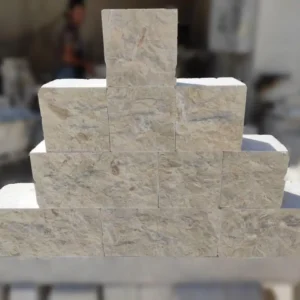
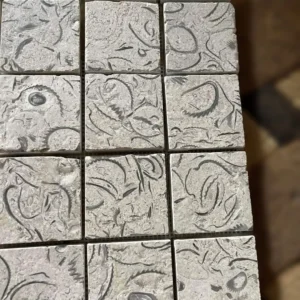
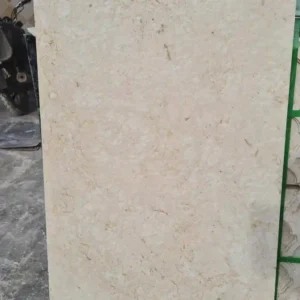
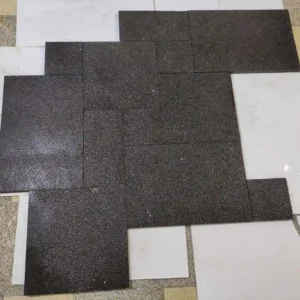
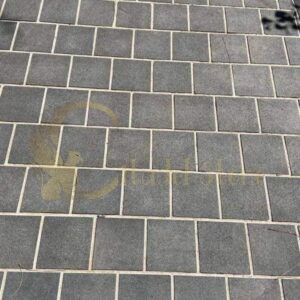
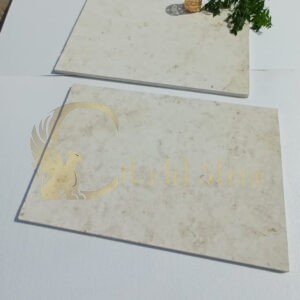
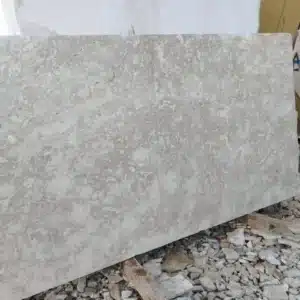
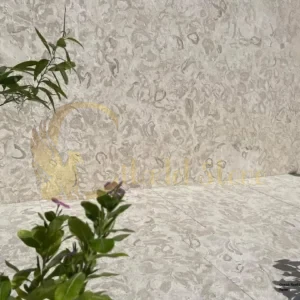
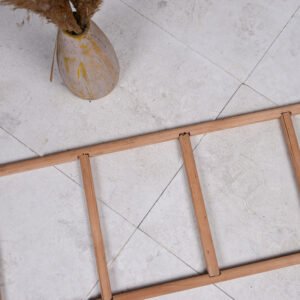
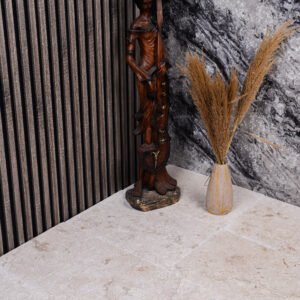
Black and white limestone tiles create a design language that reads well in both contemporary desert architecture and traditional Southwestern aesthetics. The contrast ratio between jet black basalt and cream limestone delivers a visual punch that works at distance — useful for large Scottsdale courtyard installations where the material needs to register from the interior. Black and white limestone tiles in smaller formats, 12×12 or 16×16, allow you to maintain the visual impact while reducing the span-to-thickness ratio that creates vulnerability in large-format installations over variable subgrades.
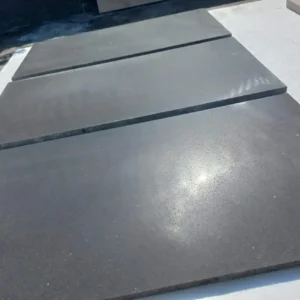
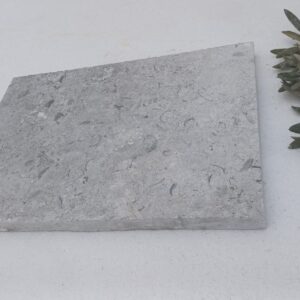
- Brushed and honed finishes on dark limestone tile handle the transition between wet and dry surfaces better than polished surfaces in outdoor applications
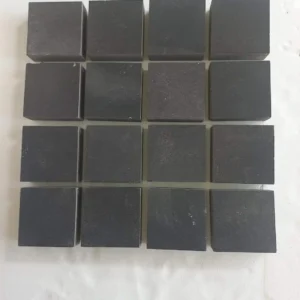
- Tumbled edges on smaller formats absorb the minor lippage from imperfect base preparation without the trip hazard that square-edged tiles present
- Calibrated thickness in the 3/4-inch to 1-inch range provides adequate span strength for most residential applications over a properly prepared base
- For vehicular applications, specify a minimum 1.25-inch thickness with a sand-set mortar bed rather than a thin-set application
Black brushed limestone tile in Arizona outdoor applications offers a practical maintenance advantage over polished surfaces — the brushed texture doesn’t telegraph dust and mineral deposits the way a mirror-polished surface does in a climate where calcium-rich water leaves visible scale. You’ll still need to seal, but your maintenance cycle between visible cleaning events stretches from weeks to months.
Drainage Geometry, Joint Spacing, and the Details That Determine Longevity
Drainage geometry is where good specifications earn their keep in Arizona. The monsoon season delivers moisture volumes that flat, poorly-drained installations can’t handle — and standing water on dark limestone flooring in Arizona triggers the thermal cycling damage that most installers attribute to the stone rather than the drainage failure.
Your surface slope specification matters more than your joint width on most residential Arizona projects. The 1.5% minimum is not negotiable in the monsoon zone, and 2% is a better target where you have design flexibility. Joint width for black limestone tile in the 12×12 to 24×24 range should be specified at 3/16 inch minimum in climate zones below 3,500 feet elevation, and 1/4 inch minimum above 3,500 feet where freeze-thaw cycling introduces additional movement.
Polymeric sand is the standard joint fill for outdoor applications, but the product selection matters. High-temperature polymeric sand formulations hold stability to 140°F — critical for dark limestone tile in Arizona where joint temperatures in direct sun can exceed 130°F on August afternoons. Standard polymeric sand rated to 110°F will soften and track within the first summer season.

Sealing Dark Limestone Flooring in Arizona’s Climate Zones
The sealing conversation for dark limestone tile splits clearly by application zone. Interior and covered exterior installations running black limestone floor tiles in Arizona’s climate need a penetrating impregnating sealer applied before grouting and refreshed on a two-to-three year cycle. Exposed outdoor applications need a UV-stable penetrating sealer — and the UV stability specification is not optional in a state where UV index routinely exceeds 10 from April through September.
Non-UV-stable sealers on dark limestone flooring in Arizona develop a milky subsurface haze within 12 to 18 months of exposure. The haze occurs as the sealer’s polymer chains break down under UV bombardment and recrystallize as a whitish deposit in the stone’s pore network. It doesn’t damage the stone, but it permanently alters the surface appearance in a way that’s visible and difficult to reverse without stripping the sealer entirely.
- Apply sealer to dry stone only — residual moisture from installation or rain traps below a sealed surface and creates a vapor blister that delaminates the sealer film
- Test absorption before each sealing cycle by applying a few drops of water to the surface — if it absorbs within 3 minutes, the sealer needs refreshing
- In Flagstaff and other high-elevation installations where freeze-thaw cycling occurs, apply sealer in fall before first frost and verify coverage on all joint edges, not just the tile face
- Avoid film-forming sealers on exterior dark limestone tile in Arizona — the thermal expansion differential between the sealer film and stone surface causes peeling in the first summer
Efflorescence management is a related sealing concern specific to Arizona’s calcium-rich groundwater. As moisture wicks through a limestone installation and evaporates at the surface, it deposits calcium carbonate as a white powdery residue. You can’t eliminate the process entirely, but a quality penetrating sealer applied before the tile sees water significantly slows the migration rate. Plan for an efflorescence treatment as part of your first-year maintenance program regardless of sealer quality.
Basalt Limestone Tile in Arizona: How It Compares to Standard Dark Limestone Options
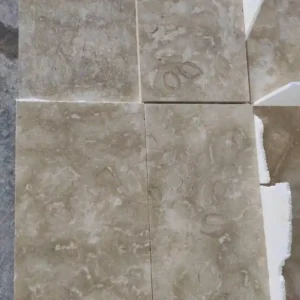
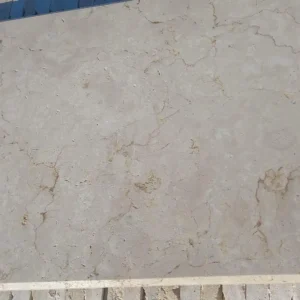
The distinction between basalt limestone tile in Arizona and standard dark sedimentary limestone is worth understanding before you commit to a specification. Both read as dark stone — both qualify under the broad category of black limestone flooring — but their behavior profiles diverge in ways that matter for Arizona installations specifically.
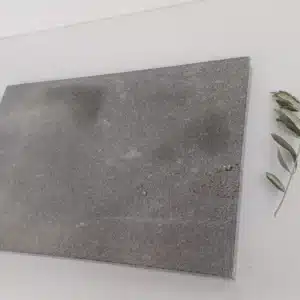
Basalt is an igneous material with a crystalline structure that gives it superior density and lower absorption than most sedimentary limestones. Basalt limestone tile in Arizona installations typically shows absorption rates below 0.3% compared to the 0.4 to 0.8% range common in darker sedimentary limestone varieties. That difference translates directly to stain resistance performance — basalt’s tighter pore structure gives you more time to clean spills before they penetrate to the depth where mechanical removal becomes necessary.
The trade-off is workability. Jet black basalt limestone tile in Arizona is harder to cut cleanly than sedimentary limestone — diamond blade wear increases by roughly 30%, and thin cuts below 3 inches require a slower blade speed to avoid micro-fracturing at the cut edge. For complex cuts around curves, columns, or irregular pool edges, sedimentary dark limestone gives your tile setter more working latitude. Factor cut complexity into your material choice, not just the field tile performance specification.
- Basalt offers consistent color through the full thickness — cut edges and chips reveal the same dark tone as the surface
- Sedimentary dark limestone may show lighter mineral layers at cut edges, which affects how repairs and trim pieces read against field tiles
- Basalt’s higher density makes it approximately 15% heavier per square foot — truck load calculations and structural loading checks matter for elevated deck applications
- Both materials accept the same sealing protocols, but basalt’s lower absorption means you’ll use less sealer per application cycle
Black Limestone Tile in Arizona — Order Direct from Citadel Stone
Citadel Stone stocks black limestone floor tiles in Arizona in standard formats covering 12×12, 16×16, 18×18, and 24×24 inch tiles across multiple thickness grades from 3/4 inch through 1.25 inch. Brushed, honed, and tumbled surface finishes are available from warehouse inventory, with polished surface options available on lead times of approximately two to three weeks from confirmed order. You can request physical samples and full dimensional specification sheets before committing to your project quantity — a step worth taking when matching to existing stone elements or coordinating with architectural finishes.
Trade and wholesale enquiries are handled directly through Citadel Stone’s project team, who can advise on pallet configurations, overage allowances for complex layouts, and delivery scheduling to match your installation timeline. At Citadel Stone, we recommend verifying warehouse stock levels at least three weeks before your scheduled installation date, particularly for larger orders above 500 square feet where a full pallet consistency check becomes important. Citadel Stone delivers black limestone tile across Arizona, with regional warehouse inventory typically supporting one to two week lead times for standard formats compared to the six to eight week import cycle that direct-order projects face.
For projects requiring custom cuts, non-standard thicknesses, or format mixing across a single installation, Citadel Stone’s technical team can walk you through the specification requirements and confirm material compatibility before your order ships. Your project scope — whether a 200-square-foot Scottsdale courtyard or a large commercial lobby in Phoenix — determines which format, thickness, and finish combination delivers the strongest long-term performance. Beyond black limestone, your Arizona property may benefit from complementary stone options for related surfaces — White Limestone Tile in Arizona covers another dimension of Citadel Stone’s limestone range that pairs well with dark stone accents across the same project. Stone selections for Arizona projects in Flagstaff, Sedona, and Yuma include Black Limestone Tile supplied direct from Citadel Stone.


