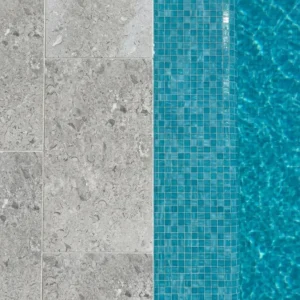
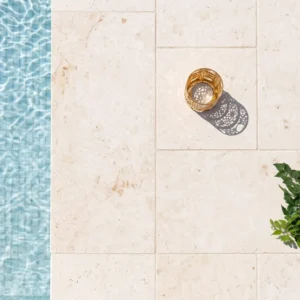
Porosity in natural limestone bathroom tile varies more than most spec sheets suggest, and that variance directly changes your sealing schedule. A dense, calcite-rich block might sit at 3-4% water absorption, while a fossil-rich variety runs closer to 8-10%, and that gap is what separates a 12-month resealing cycle from an 18-month one. You’ll rarely see this distinction called out on a product page, but it’s the first thing worth checking before you commit to a slab. Finish selection — honed versus polished — compounds the effect, changing how quickly water beads or wicks into the surface.
What Sets Natural Limestone Bathroom Tile Apart
Natural limestone bathroom tile is calcium carbonate at its core, giving it a soft, matte warmth that printed porcelain struggles to replicate. According to current limestone technical specifications, compressive strength ranges from roughly 4,000 to 24,000 PSI depending on quarry source and density — a spread that matters when choosing stone for a shower floor versus a vanity surround. Denser, tighter-grained varieties suit wet areas, while more porous, textured stone works fine for accent walls with minimal water contact.
- Compressive strength varies widely by quarry source, so request lot-specific test data rather than generic averages
- Porosity affects both slip resistance when honed and how often the installation needs resealing
- Density influences sound transmission in tiled shower enclosures, a detail rarely discussed in residential specs
- Color consistency varies more in natural stone than engineered surfaces, so order from a single production lot
Choosing a Natural Limestone Sink for Long-Term Performance
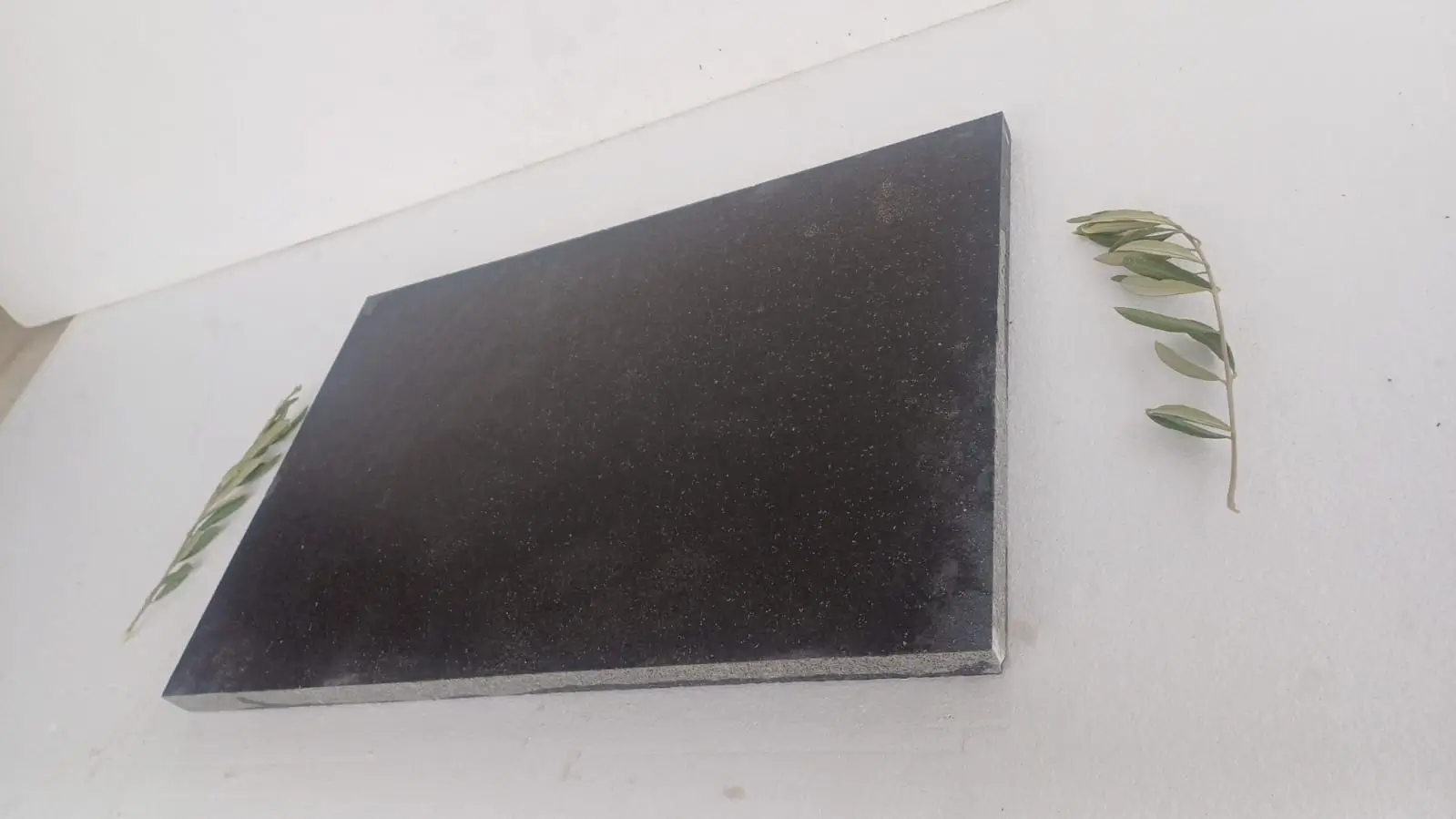
A natural limestone sink creates continuity of material from floor to fixture, since a single block can supply both flooring and basin without a visible shift in tone. Vessel basins carved from solid stock behave differently than integrated sink-and-countertop pieces — wall thickness at the drain opening becomes the failure point if a fabricator ignores stress concentration around the bore. Ask your fabricator for a minimum 1.25-inch wall thickness at the basin’s thinnest point; anything less risks hairline cracking within a few years.
Natural Limestone Backsplash Design and Water Exposure
A natural limestone backsplash sees more direct contact with soap, toothpaste, and hard water minerals than any other surface in the room, and that combination etches unsealed stone faster than plain water alone. Testing in warehouse mockups at Citadel Stone shows a penetrating sealer reapplied every 9-12 months in backsplash zones, noticeably shorter than the 18-24 month interval that works for floor tile in the same bathroom. Vertical installations shed water differently than horizontal ones, so the sealer schedule from your flooring quote doesn’t automatically apply to a natural limestone backsplash.
Slab Thickness, Finish, and Format Selection
Format selection changes more than the look of a room — large-format slabs show fewer grout lines but demand a flatter substrate than a mesh-backed mosaic sheet forgives. Thickness for floor tile typically runs 3/8 to 5/8 inch, while sink surrounds and curbs benefit from 3/4-inch stock for stability at exposed edges. A 1/2-inch minimum holds flatness better in any bathroom with in-floor heating, since thinner stock telegraphs substrate movement faster.
- 3/8-inch tile suits backsplash and wall applications where load isn’t a factor
- 1/2 to 5/8-inch flooring stock resists cracking over radiant heat systems better than thinner formats
- 3/4-inch or thicker stock earns its cost for curbs, thresholds, and exposed sink edges
Quarry Sourcing, Fabrication, and Thermal Cycling Effects
Before a limestone slab reaches your bathroom, it typically sits through weeks of temperature swings at the quarry block yard and again during transport, and that thermal cycling matters more than most buyers realize. Blocks stored outdoors in regions with wide day-to-night swings undergo repeated expansion and contraction along existing microfractures, and fabricators who skip a pre-cut inspection can pass along stone carrying stress you won’t notice until it’s grouted in place. At Citadel Stone, we run a warehouse quality check on incoming lots specifically for thermal stress lines before any block reaches the saw. For projects needing matched material across multiple rooms, Citadel Stone bathroom stone ships from consistent lot runs, reducing the color and veining mismatch that shows up when slabs arrive piecemeal on different trucks and schedules.
Waterproofing and Substrate Requirements
Substrate prep for a natural limestone bathroom differs from porcelain in one important way — limestone’s calcium carbonate structure can react with certain alkaline setting materials, so a cured, sealed backer board matters more here than with denser surfaces. TCNA tile installation standards for natural stone specifically flag this reaction risk, and skipping the buffer coat is one of the more common callback issues in wet-area installs. A full waterproof membrane behind shower walls matters too — limestone is highly water-resistant when properly sealed, but a sealer isn’t a substitute for a proper membrane system.
Sealing Schedules and Long-Term Maintenance
Realistic sealing intervals for limestone in wet rooms run 12-18 months for floors and closer to 9-12 months for backsplash and shower surrounds, assuming a quality penetrating sealer rather than a topical coating that wears under foot traffic. You can expect decades of service life from a well-installed natural limestone bathroom floor with consistent resealing and proper drainage slope, though that outlook drops fast if grout lines are left unsealed. Hard water spotting is the most common complaint, and it’s almost always a sealing lapse rather than a flaw in the stone.
- Skipping grout sealant while sealing only the stone field leaves an easy entry point for staining
- Acidic bathroom cleaners strip penetrating sealers within a handful of applications
- Standing water from poor drainage slope accelerates etching even on properly sealed surfaces
Extending Limestone Outdoors: Exterior Stone Tile Considerations
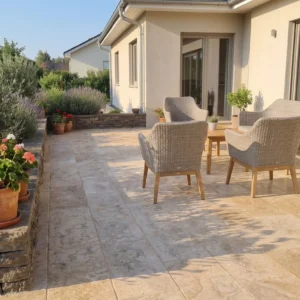
Some bathroom projects extend the same material palette outward — a connected outdoor shower, a threshold, or a garden-facing window sill — and that’s where outdoor specification decisions diverge from interior planning. Freeze-thaw cycling becomes the dominant durability factor once limestone sits outside a climate-controlled room, since water trapped in the stone’s pore structure expands roughly 9% when it freezes, gradually widening existing microfractures with each cycle. Federal limestone composition data confirms pore structure varies significantly between quarry sources, which is why a stone rated fine for an interior bathroom floor can fail within a few winters outdoors in freeze-thaw regions. A lower-absorption, denser variety — generally under 3% water absorption — suits any exterior stone tile application connected to your bathroom design, along with wider movement joints to account for thermal expansion across seasonal extremes.
Common Specification Mistakes to Avoid
The most expensive mistakes in natural limestone bathroom projects happen before installation starts, usually during material selection and quoting rather than on the job site. Buyers often underestimate lead times, assuming natural stone ships like a big-box tile order, when custom-cut limestone can take three to six weeks from quarry to warehouse to job site delivery by truck. Citadel Stone maintains warehouse inventory nationwide for popular limestone formats, which typically cuts that lead time to one to two weeks compared to the six-to-eight week import cycle many custom orders face.
- Ordering tile from multiple production lots creates visible color banding across a wall or floor
- Underestimating waste factor — plan for 10-15% overage rather than the 5-8% typical for manufactured tile
- Skipping a physical slab viewing before a large order, since photos shift color more than expected
- Assuming truck delivery works like standard freight — oversized crated stone often needs liftgate service and a firm window
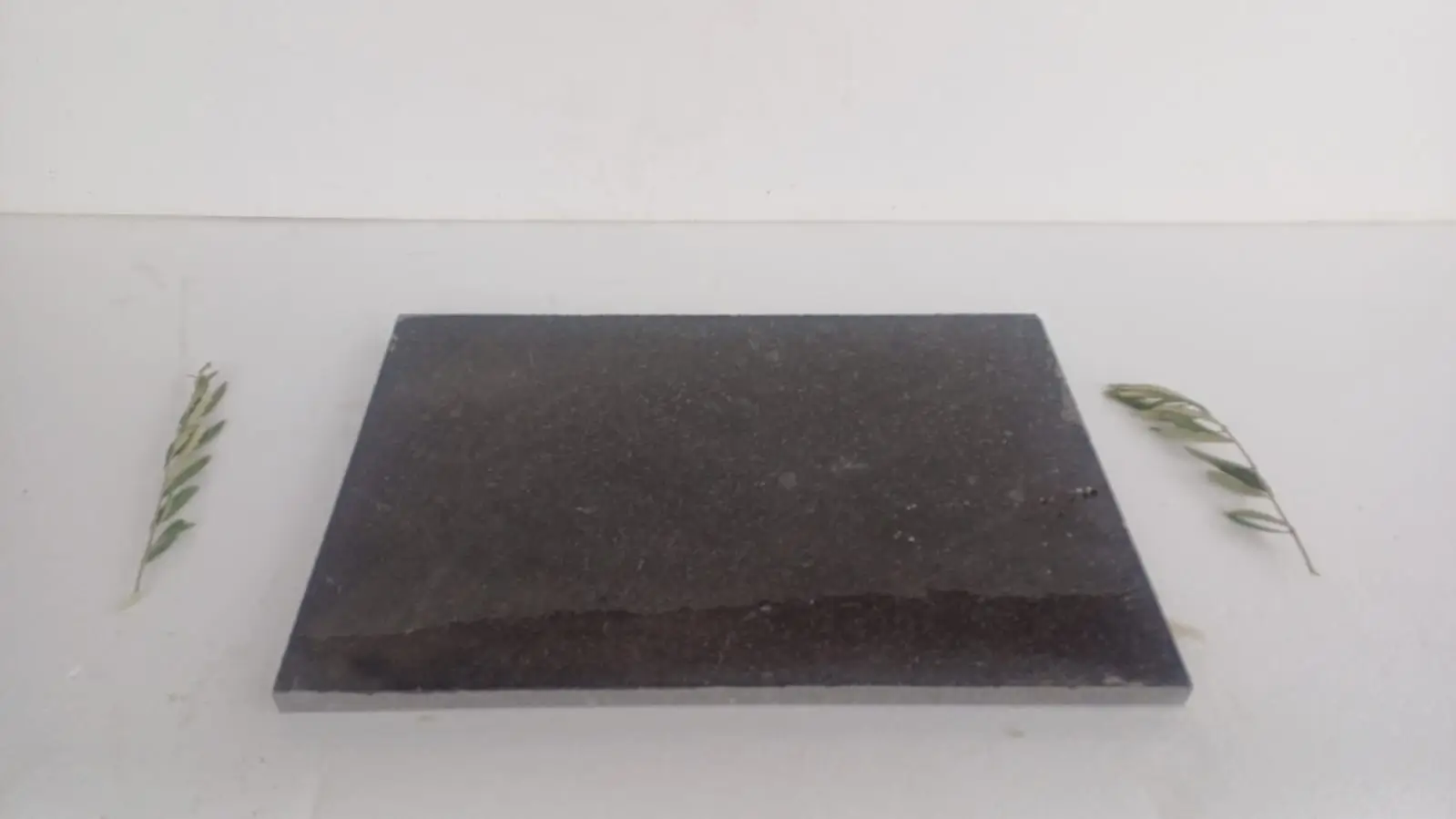
Getting Natural Limestone Bathroom Specifications Right
Matching stone density and finish to the wet-zone demands of each surface — rather than applying one spec sheet uniformly across floor, sink, and backsplash — is what separates a limestone bathroom that performs well from one that becomes a maintenance problem. If your project extends into transitional spaces, outdoor limestone step selection covers the safe-tread considerations relevant once stone moves from a bathroom floor toward an exterior entry. Working with a supplier who checks lot consistency and thermal stress before fabrication meaningfully reduces the callback risk that generic import pipelines carry. Bathroom stone from Citadel Stone is offered in matched wall and sink pieces for cohesive suites, sourced from premium quarries in Turkey and the broader Middle East region.
Related reading: is limestone natural stone · Fossil Limestone Slabs Guide: Patterns, Formation & Use · 7 Natural Limestone Landscape Ideas for Outdoor Flow.