

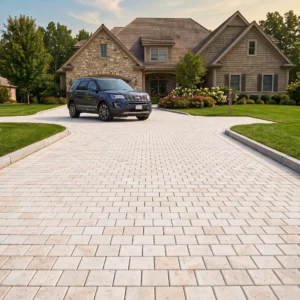
The compressive strength of quality Kerb Stones & Edging is not what decides field performance — the real determinant of longevity is how the stone and its bedding respond to repeated expansion and contraction. You’ll find that the failure point in most edging installations isn’t the stone itself but the interface between the stone base and the surrounding aggregate, where movement concentrates. Getting Kerb Stones & Edging right means treating the entire assembly as a system, not a line of individual blocks. That’s the depth this guide delivers.
Material Selection That Holds Up Under Load
Your first decision — the stone type — sets a ceiling on everything downstream. Granite delivers the highest abrasion resistance and the lowest water absorption, which is why granite kerb stone suppliers dominate the heavy-traffic and municipal edging market. Limestone and sandstone read warmer and cost less, but they demand tighter attention to sealing and drainage in wet regions.
- Granite: the lowest water absorption of the common kerb materials, ideal for roadside kerbs and driveway borders facing vehicle loads — ask for the absorption result on the batch
- Limestone edging: softer aesthetic, cream and ivory tones, better suited to garden borders and pedestrian paths
- Basalt setts and blocks: dark grey to charcoal, excellent for contemporary landscape edging with a fine crystalline surface
- Sandstone kerb blocks: warm buff tones, appropriate for lighter-duty patio and walkway borders
Here’s what most specifiers miss: the stone’s absorption figure predicts how it behaves when temperatures swing. Dense granite curbstone shrugs off moisture intrusion, while a more porous edging stone can wick water into its pore network and become vulnerable during cold snaps. According to USGS dimension stone production data, granite curbing remains the most specified stone for durability-critical borders precisely because of this low-absorption profile.
How Temperature Cycling Affects Edging Longevity
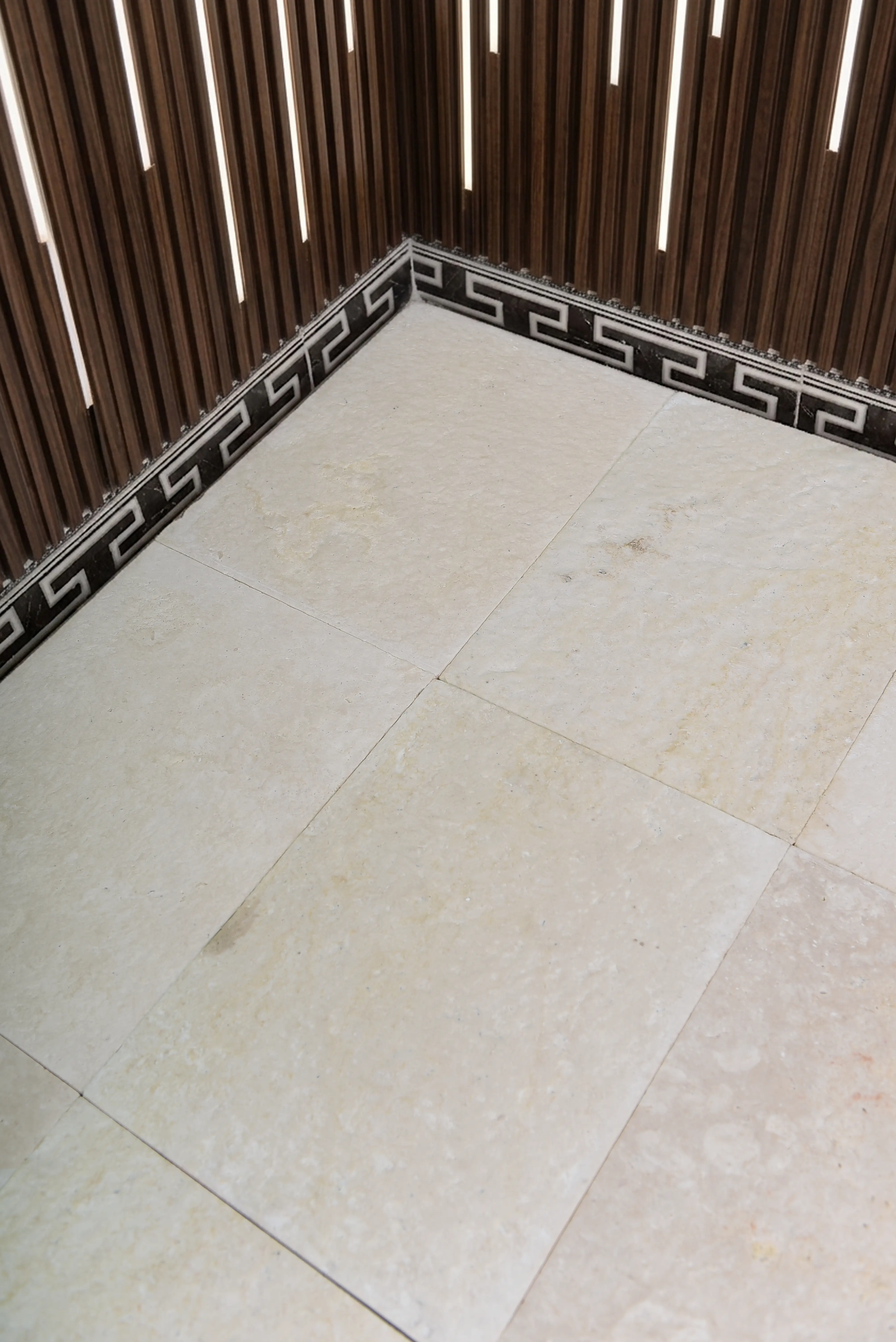
Field performance data shows the biggest threat to natural stone borders isn’t a single hard freeze — it’s the repeated cycling between day and night, and across seasons, that fatigues both the stone and the joints. Water finds its way into a hairline joint, expands roughly 9% as it freezes, then contracts again as it thaws. Repeat that a few hundred times across a winter and you understand why joints open and stones tilt.
The daily temperature range matters as much as the seasonal one. In regions with wide diurnal swings, the surface of a curbstone can heat quickly under morning sun while its base stays cold, creating differential expansion that stresses the bedding. You’ll want to account for this by specifying stone with low absorption and by keeping joints tight but not rigid.
- Choose dense stone (granite, basalt) in freeze-thaw regions to limit water uptake
- Slope the base so meltwater drains away rather than pooling against the stone
- Use a flexible jointing compound where seasonal movement is significant
- Avoid saturated bedding sand going into a freeze — it heaves and lifts edging out of line
Independent standards work bears this out; ASTM stone durability testing methods assess absorption and freeze-thaw resistance precisely because these properties predict field survival in cycling climates.
Base Preparation That Prevents Shifting
The detail that matters most in any edging project happens below grade. You’ll achieve 20+ year performance when your base is compacted properly and drains — and you’ll be re-setting stones within three seasons when it isn’t. A haunched concrete bed remains the gold standard for kerbs facing any vehicular load.
Your aggregate base depth should account for expected traffic and local soil behavior. Clay-heavy soils expand and contract with moisture, so you’ll want a deeper granular base to buffer that movement before it reaches your stone. Base preparation standards vary with soil composition and drainage, and for projects where recurring movement is the concern, why edging stones keep shifting covers the specification details that address these exact site conditions. Getting the subgrade right at this stage prevents the most common long-term failures.
- Excavate to firm subgrade and compact in lifts — never set stone on loose fill
- Provide 4–6 inches of compacted granular base for pedestrian edging, more for driveways
- Use a concrete haunch on the back face of kerbs bordering roads or driveways
- Confirm positive drainage so water never sits beneath or behind the stone
Formats, Sizes, and Profiles to Specify
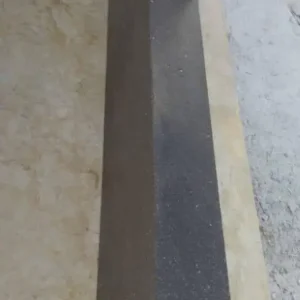
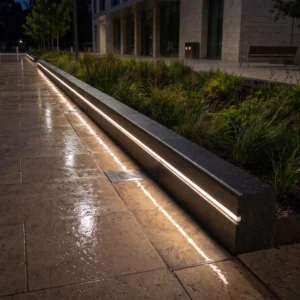
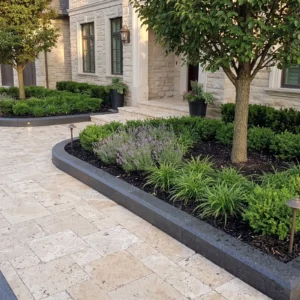
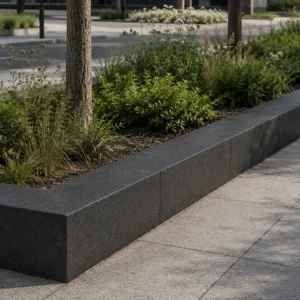
You’ll find that profile choice drives both function and appearance. A bullnose or chamfered edge sheds water and resists chipping better than a sharp square arris, especially where mowers or foot traffic make contact. Citadel Stone stocks Kerb Stones & Edging in standard formats including straight lengths, radius units for curves, and dropper kerbs for vehicle crossings.
- Straight kerb units: common lengths from 500mm to 1000mm for efficient laying
- Radius kerbs: pre-cut curves that avoid the segmented look of forcing straight units around a bend
- Setts and cobbles: small-format blocks laid as a mowing strip or decorative border
- Flat edging blocks: low-profile grey edging blocks for garden and landscape borders
Available in a range of finishes — from sawn and flamed granite to tumbled limestone — to match your project’s design language. You can request sample pieces or exact thickness specifications from Citadel Stone before committing to a full order, which is worth doing when color consistency across a long run matters.
Comparing Stone Against Concrete Alternatives
Concrete kerbs cost less at purchase, and that’s the honest trade-off. But you should weigh the full lifecycle. Concrete carbonates and spalls under freeze-thaw exposure, fades under UV, and rarely improves with age. Natural stone edging holds its color, develops a patina rather than degrading, and outlasts concrete by decades in cycling climates.
- Natural stone resists surface spalling far better through repeated freeze-thaw
- Color runs through the full depth of stone — chips don’t expose a different material
- Stone carries higher upfront cost but lower lifecycle replacement cost
- Granite and basalt offer abrasion resistance concrete cannot match under vehicle contact
Independent stone property references from the Natural Stone Institute variety specifications confirm why dense natural stone remains the specification choice for borders expected to perform for generations rather than years.
Installation Details and Jointing
What often gets overlooked is joint treatment. Butt-jointed granite setts with a fine sand-cement pointing look crisp, but rigid pointing cracks when the assembly moves. In freeze-thaw regions, a slightly wider joint with a flexible filler tolerates seasonal expansion without opening a channel for water.
Consider how your bedding mortar behaves in cold weather during install. Temperature affects setting times and cure quality — mortar placed in near-freezing conditions can fail to develop strength and then heave when the ground below freezes. You’ll want to schedule stone-setting work outside the hardest cold windows where you can.
- Keep joints consistent — variable joint width telegraphs as an uneven line
- Point after the bedding has cured, not simultaneously, to control shrinkage cracking
- Leave weep paths so trapped water can escape rather than freezing behind the stone
- Recheck alignment after the first freeze-thaw season and re-bed any movers early
Maintenance and Long-Term Care
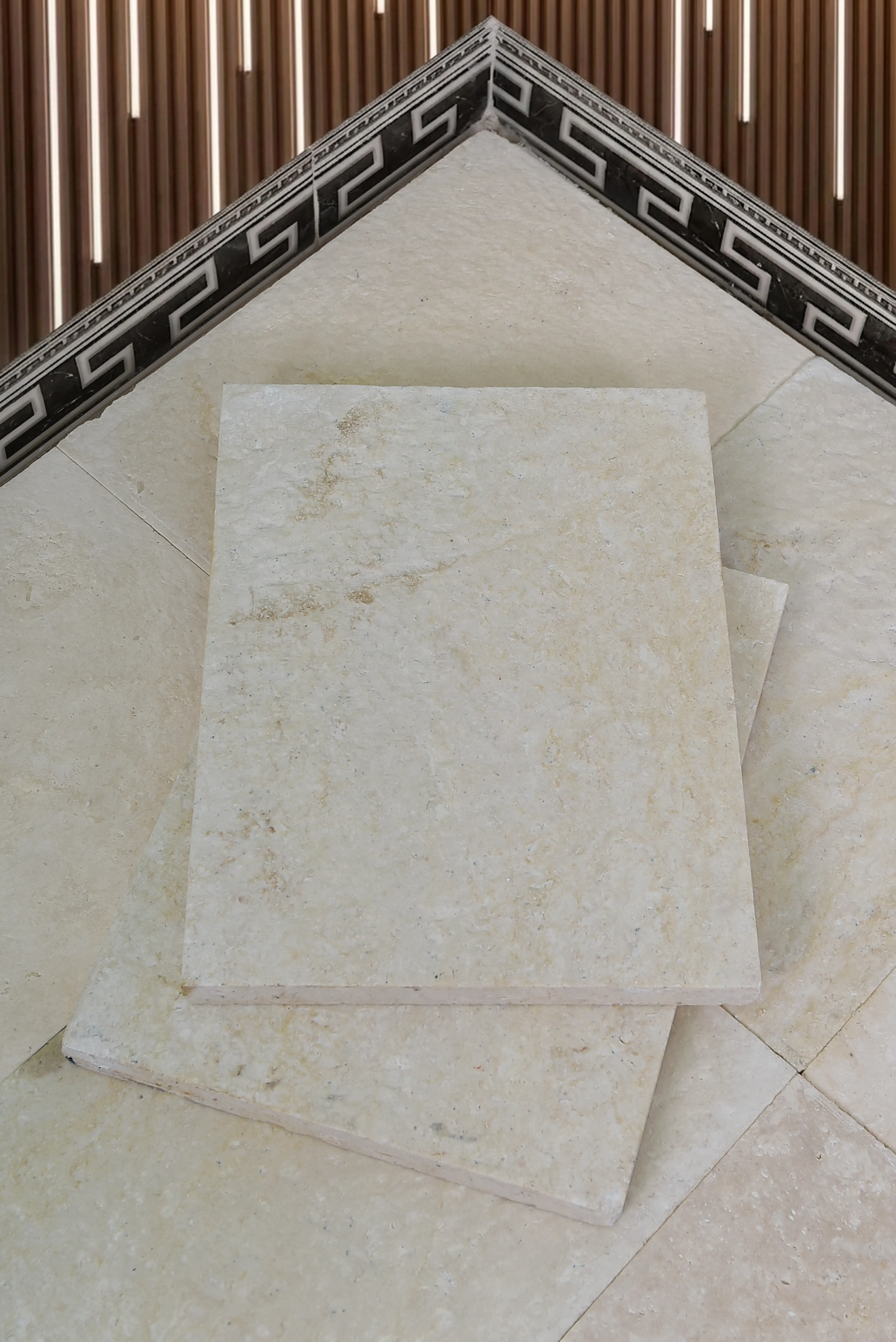
You can expect 25–30 year service from properly installed stone edging with minimal upkeep. The maintenance that actually matters is drainage-related, not cosmetic. Keep the base draining and you eliminate the single largest cause of tilting and heave.
- Clear debris from joints and drainage paths seasonally, especially before winter
- Re-point failed joints promptly before water tracks deeper into the bedding
- Seal porous limestone and sandstone borders in wet, cycling climates to reduce absorption
- Inspect after harsh winters — early re-bedding of a single mover prevents a domino line failure
At Citadel Stone, we inspect each batch at our warehouse for dimensional consistency and edge quality before it ships, because a run of kerbs that varies in height creates alignment headaches no installer can fully hide. Sourced from our selected premium quarries, each delivery is checked for the color and size uniformity that a long border demands.
Source Kerb Stones & Edging — Nationwide Supply by Citadel Stone
You can buy Kerb Stones & Edging directly from Citadel Stone in straight lengths, radius units, droppers, setts, and low-profile grey edging blocks across granite, limestone, basalt, and sandstone. Available finishes include sawn, flamed, honed, and tumbled to suit both formal and garden landscape borders. As granite kerb stone suppliers serving projects nationwide, we ship from regional inventory, which typically reduces lead times to 1–2 weeks compared with the 6–8 week import cycle many projects face. Reliable kerb stone suppliers keep this stock ready, so you can request samples, thickness specifications, or trade and wholesale pricing before you commit — and for custom cuts or non-standard radius profiles, our team can advise on realistic lead times and truck delivery scheduling to your site. Contact us for a project quote or to confirm current warehouse stock on the formats you need. As you round out your hardscape specification, complementary elements deserve equal attention, and wall and garden stone options explore another dimension of the same durability principles. Architects and builders choose how to install edging stones, sourced from quarries across the Mediterranean and Middle East, for outdoor installations.
Related guides: interlocking edging stones · Why Kerb Stones Crack and How to Prevent It · maintaining stone edging · Sintered Stone Suppliers vs Natural Stone Edging · cobblestone edging buyer guide · marble edging comparison guide.