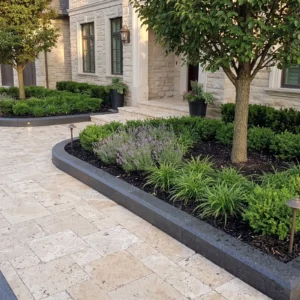
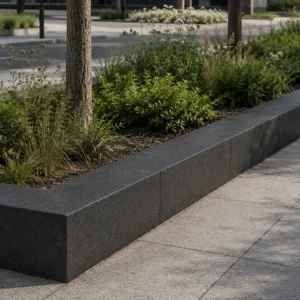
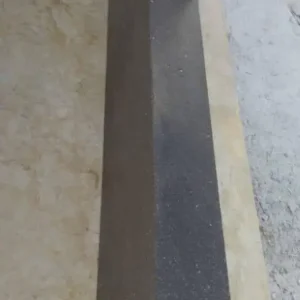
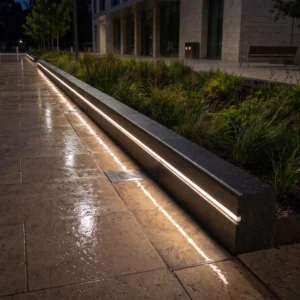
The real differentiator in interlocking edging stones isn’t the stone type — it’s the tolerance. Pieces calibrated to within 2mm of each other at the tongue-and-groove interface hold alignment under soil movement; pieces cut to looser tolerances migrate within a single frost-thaw cycle. Your selection process should start there, well before you consider color or finish. Understanding which surface options perform under specific loading, drainage, and aesthetic demands is what this guide is built around.
What Interlocking Edging Stones Actually Do
Edging stone does more than define a border — it anchors the lateral forces that would otherwise push a paved surface outward over time. The interlocking profile, whether it’s a shiplap-style overlap, a tongue-and-groove channel, or a stepped rebate, transfers horizontal load between adjacent units rather than relying purely on bedding material. That mechanical connection is what separates engineered interlocking edging stones from simple border pieces placed in a trench.
The performance difference shows up within the first two to three years. Non-interlocking borders tend to creep outward incrementally, especially where vehicular overhang or foot traffic applies repeated lateral force. Interlocking profiles resist that movement because each piece is physically restrained by its neighbor. For landscape beds, pathway margins, and lawn edges that need to stay crisp over a decade, the interlocking mechanism is the specification detail that matters most.
- Interlocking profiles distribute lateral load across multiple units, reducing migration at any single joint
- Tongue-and-groove connections maintain vertical alignment on sloped installations where gravity adds a downhill force component
- Stepped rebate profiles are particularly effective for tight radius bends around curved beds and irregular pathway edges
- Shiplap-style overlap suits straight runs where speed of installation is a priority
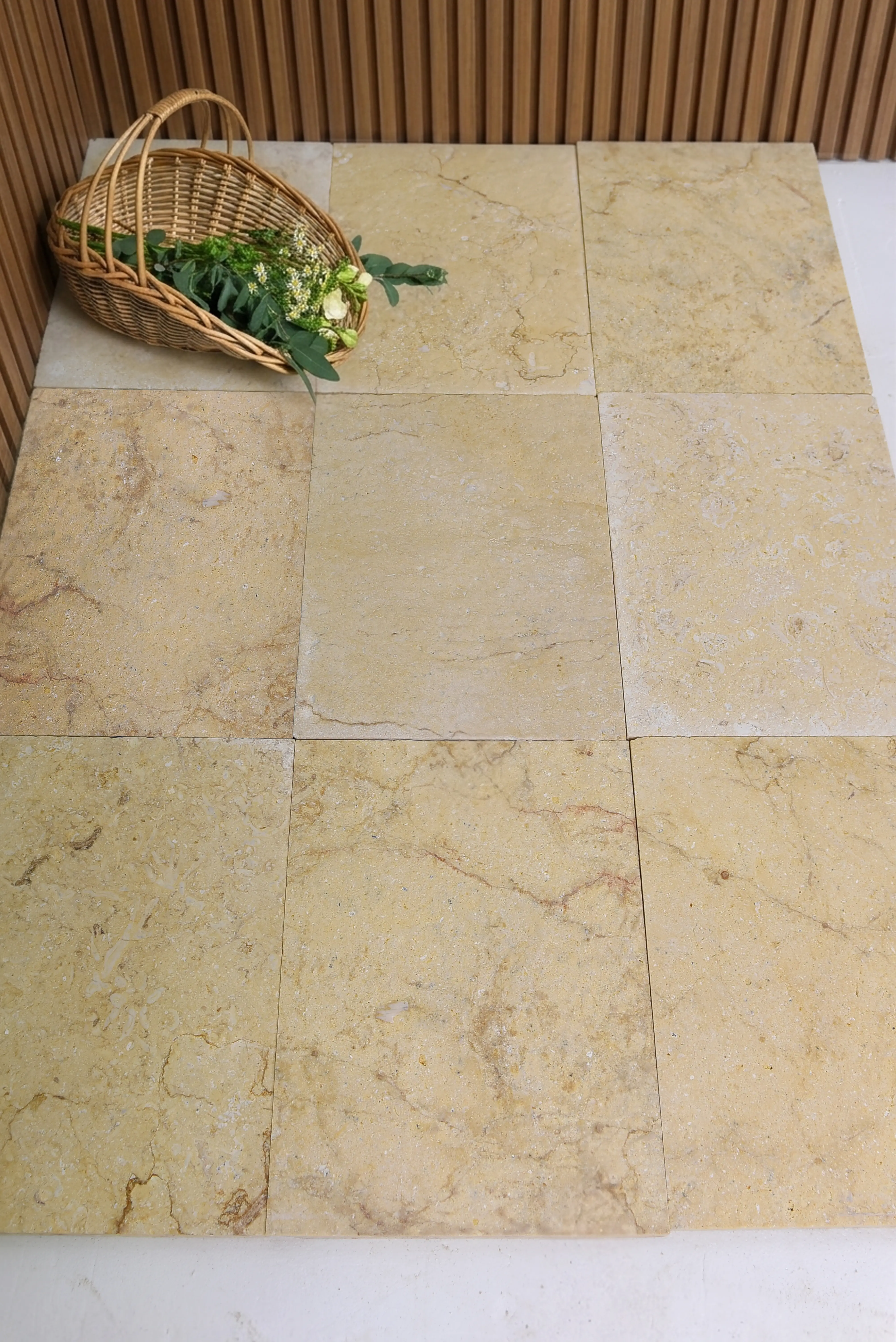
Natural Stone Surface Options Explained
The surface finish on your interlocking edging stones affects three things simultaneously: slip resistance underfoot at the edge transition, weathering behavior over time, and visual integration with the paved field. Getting the balance right requires understanding what each finish actually does to the stone’s surface at a micro level — not just how it looks in a showroom sample.
Sawn Finish
A sawn surface is the baseline — cut by diamond wire or blade, left with a slightly directional texture that reads as clean and contemporary. It’s the most dimensionally consistent finish, which matters when tight interlocking tolerances are a specification requirement. Sawn granite and sawn limestone edging both perform well in this profile because the cut face doesn’t develop the micro-spalling that softer finishes can show after repeated freeze-thaw exposure.
You’ll find sawn finish the most practical choice for formal garden designs where crisp geometric lines need to hold for 15-plus years. The trade-off is that sawn surfaces on polishable stones like limestone can become slicker when wet if the stone’s natural porosity is low. For pathway margin edging where foot traffic crosses the unit, a light thermal or brushed pass over the top arris removes that risk without altering the clean profile.
Tumbled and Aged Finish
Tumbled interlocking edging stones carry deliberately softened arrises and a matte, irregular surface that reads as aged or reclaimed. The tumbling drum rounds the corners and creates micro-texture across the face, which improves wet grip considerably — typically lifting the coefficient of friction from around 0.42 on a polished face to 0.65 or above on a well-tumbled surface, measured against ASTM compressive and durability standards for edging stone. For cottage garden styles, naturalistic planting beds, and heritage-aesthetic projects, this finish integrates far better than a machine-cut face.
The interlocking profile on tumbled pieces needs closer inspection at specification stage. The tumbling process softens the tongue-and-groove interface as well as the exposed face, which can reduce the mechanical precision of the connection. Specify tumbled interlocking edging stones with a minimum 15mm engagement depth at the joint to compensate — anything shallower and the connection can work loose over a heavy wet season.
Thermal and Flamed Finish
Thermal finishing uses a controlled flame pass to burst the surface crystals of dense stones like granite and basalt, producing a deeply textured, grippy surface with high slip resistance. This finish is particularly well suited to interlocking edging stones used at step-edge transitions and ramp margins where the edging unit itself becomes a tactile warning surface. The flamed texture holds its grip characteristics even when covered with leaf debris or standing water — a meaningful advantage on sites with seasonal heavy rainfall.
- Thermal finish raises the surface COF to 0.7 or above on granite, making it the preferred choice for safety-critical edge transitions
- The finish opens surface porosity slightly, so a penetrating sealer applied within 90 days of installation prevents early biological staining in humid climates
- Color intensity deepens with thermal treatment — grey granites shift toward blue-charcoal tones, which can be used deliberately as a design accent
- Not suitable for calcite-rich stones like marble — the thermal process causes spalling in high-calcium materials
Material Selection for Interlocking Edging Stones
Granite dominates commercial and high-end residential edging specifications for good reason. Its compressive strength — typically ranging from 19,000 to 30,000 PSI depending on quarry source — handles vehicular overhang loading, lawn equipment impact, and the cumulative lateral stress of root expansion without fracture. According to NSI granite durability specifications, granite also carries an absorption rate below 0.4%, which keeps moisture ingress minimal even in high-rainfall or freeze-thaw regions. For interlocking edging stones that need to perform for 30-plus years without resets, granite is the baseline recommendation.
Limestone offers a softer, warmer aesthetic and works well in lower-traffic garden bed applications. You’ll want to specify dense limestone varieties — those with a water absorption rate below 3% per ASTM C568 — rather than the more porous buff limestones that can develop surface spalling in wet climates. Limestone interlocking edging stones suit formal planting beds, pathway edges in pedestrian-only areas, and any project where the warm buff, grey, or blue-grey tones complement existing paving. Your sealing schedule needs to be biennial in wetter zones to maintain surface integrity.
- Granite: best for driveways, parking edges, high-traffic pathways, and anywhere vehicular loads apply
- Limestone: suited to garden beds, pedestrian walkways, and projects where warm natural tone is the design priority
- Basalt: excellent compressive strength with a near-black aesthetic; sourced from volcanic formations that produce exceptional density and low absorption
- Sandstone: limited suitability for interlocking profiles — the layered formation makes thin tongue sections prone to delamination under lateral load
For dimensional consistency across a large order, confirm with your supplier that units come from a single quarry batch. At Citadel Stone, we check dimensional tolerances at the warehouse level before dispatch — tongue engagement depth and overall unit length are both measured against the specification sheet, because a 3mm variance across a 50-piece run is enough to cause alignment failures at the curved sections of a pathway border.
Base Preparation and Drainage Design
Your base preparation for interlocking edging stones needs to account for the hydraulic forces that water applies to the soil-stone interface — not just the static load above. This is where most installation failures begin, and it’s almost never the stone that fails first. Poor drainage beneath the edging trench creates hydrostatic pressure that lifts units out of alignment during heavy rain events, particularly in clay-heavy subsoils that expand when saturated.
The standard specification for a residential pathway margin calls for a 150mm compacted aggregate base, but that depth assumes free-draining soil. In sites with clay subsoil, low-lying grades, or exposure to high seasonal rainfall and associated ground saturation, increase the base depth to 250mm and install a perforated land drain along the edging trench at the 150mm depth mark. That single addition reduces the hydrostatic uplift force by enough to keep interlocking edging stones in plane through multiple wet seasons. Drought-cycle soils present the opposite problem — shrink-swell movement in clay substrates can push edging inward as soil contracts, so a compressible sand layer between the aggregate base and the stone unit absorbs that movement without cracking the interlocking joint.
- Free-draining sandy loam: 150mm compacted aggregate base, no land drain required in most cases
- Clay or silty subsoil: 250mm aggregate base plus perforated drain at mid-depth
- Sites with flood risk or high seasonal rainfall: add geotextile separation layer between subsoil and aggregate to prevent fines migration upward into the base
- Sloped installations: install edging units from the low point upward to allow the interlocking profile to resist downslope migration
The ASLA landscape edging and permeable surface guidance reinforces the case for drainage-integrated edging details — surface water management and edging stability are directly linked in practice, and the base specification should address both simultaneously.
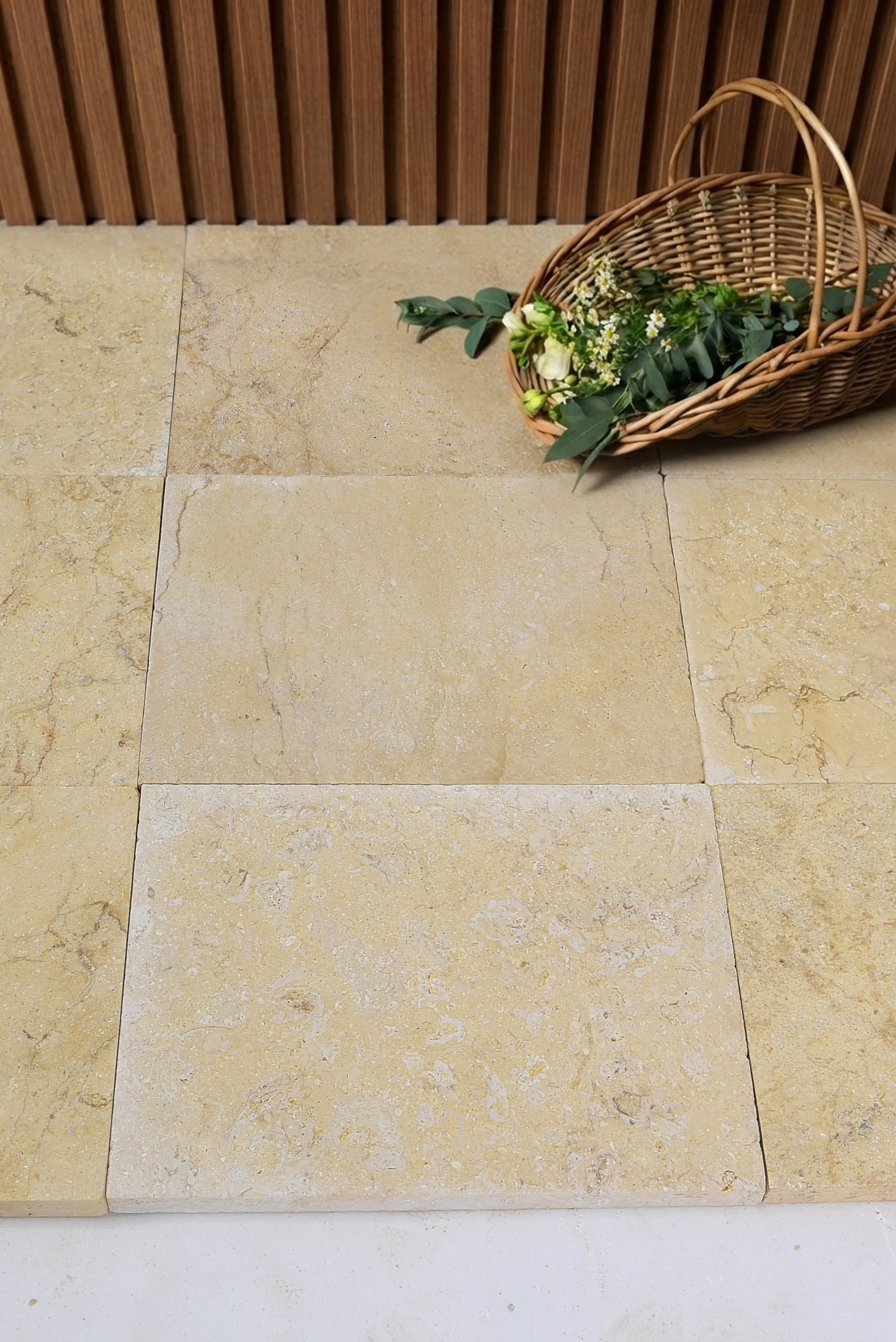
Sizing and Radius Bends
Standard interlocking edging stones come in lengths between 200mm and 600mm, with 300mm being the most common unit for residential pathway work. Longer units are more efficient on straight runs — fewer joints mean faster installation and a cleaner sight line — but they become a liability on curved edges. A 600mm unit can only negotiate a radius above approximately 2.5 metres before the joint gaps open enough to require packing. For the tight radius bends you find around planting islands, tree pits, and organic-shaped garden beds, 200mm units are the correct specification.
The depth of the interlocking edging stones guides you toward proper sizing: for pathway margins carrying pedestrian traffic only, a 100mm-deep by 50mm-wide profile is sufficient. For lawn edges subject to ride-on mower pressure, spec at least 150mm depth to resist the lateral push of the mower deck catching the top of the unit. For driveway borders or parking edges where vehicle tyres may occasionally mount the kerb, 200mm depth with a 75mm width at the base provides the mass needed to resist displacement without concrete haunching.
- 200–250mm unit length: tight radii below 2m, planting beds, tree surrounds
- 300mm unit length: standard pedestrian pathway margins, general garden edging
- 400–600mm unit length: straight runs, formal driveway borders, long uninterrupted edges
- Unit depth 100mm: pedestrian-only pathway and garden bed applications
- Unit depth 150–200mm: lawn edges with machinery access or light vehicular exposure
Joint Filling and Long-Term Maintenance
The joint between interlocking edging stones needs to be filled — leaving it open invites root intrusion that levers units apart from below. The choice of fill material depends on whether you want a rigid or semi-flexible joint. Dry-brushed polymeric sand cures to a firm but slightly flexible grout that resists ant ingress and weed germination; it’s the standard for most residential applications. For formal or heritage-style projects where a pointed mortar joint is appropriate, a weak lime mortar mix (3:1 sand-to-lime) provides excellent aesthetics without the brittleness of a cement-heavy mix that will crack at joint movement.
Maintenance intervals are simpler than most clients expect. A well-installed run of granite interlocking edging stones with polymeric sand joints needs inspection every two years — check for joint sand loss, particularly at the ends of runs where water exit points erode the fill fastest. Top up with fresh polymeric sand as needed, mist to activate, and the installation resets without disturbing a single unit. For limestone edging in exposed positions, apply a penetrating silane-siloxane sealer every two to three years to prevent progressive surface erosion from acid rain and organic acid from mulch contact.
- Polymeric sand fill: best for most residential and commercial applications; resists insects and weeds
- Lime mortar pointing: appropriate for heritage, conservation, and formal garden contexts
- Open joints: never acceptable for planted bed edges where root pressure is a factor
- Inspection cycle: every two years for joint sand integrity and stone surface condition
Ordering and Project Logistics
Calculating your edging quantity requires perimeter length plus a 5-8% overrun allowance for cuts at corners and curve terminations. On a project with multiple tight-radius bends, increase that allowance to 10% — curve cuts produce significant waste, and running short on a specific calibrated batch creates color-match problems that are difficult to resolve after the fact. Your delivery access also affects timing: edging stone pallets are heavy and dense, and a rigid-axle truck needs a clear turning radius of at least 12 metres to position safely. Flag any access restrictions when you place your order so delivery can be scheduled around site constraints.
Citadel Stone maintains warehouse stock across the national range, which means standard interlocking edging profile orders typically ship within 5-7 business days rather than the 6-10 week lead times associated with special-order imported profiles. For large commercial projects, confirm warehouse availability of your specified unit at order confirmation — not two weeks before the installation date. The Citadel Stone interlocking range covers the full profile and material selection, from granite sawn-finish straight units to tumbled limestone curved-radius sections.
Seasonal demand spikes in spring and early summer mean warehouse stock levels on popular profiles — particularly 300mm tumbled granite and sawn limestone — can tighten quickly. If your project has a fixed start date, locking in material 4-6 weeks ahead is the practical buffer that keeps installation schedules intact.
Getting Your Interlocking Edging Stone Specification Right
Specifying interlocking edging stones well comes down to three decisions made in the right order: material for the load and exposure conditions, profile geometry for the radius demands of your layout, and surface finish for the aesthetic and slip-resistance requirements of the site. Getting those three aligned before the first truck arrives on site prevents the reset costs that make edging projects frustrating and expensive. Beyond edging, if your project also incorporates organic-material borders and planted bed margins, pebble edging ideas for beds and pathways covers how complementary stone elements work alongside the structured edging profile. Every detail you lock in at specification stage is one fewer problem to solve mid-installation. Stone for nationwide projects arrives with interlocking edges calibrated for tight radius bends around beds and pathways.
Related reading: Cobblestone Edging Buyer Guide: Sizes and Patterns · marble edging comparison guide · how to install edging stones.