What Size Actually Matters in Cobblestone Edging
This cobblestone edging buyer guide prioritises the dimension decisions that determine whether your border holds its line for two decades or starts migrating after the first hard freeze-thaw cycle — because size isn’t just a visual choice, it’s a structural one. The mass of each unit, its height-to-width ratio, and how it bears against the adjacent paving all interact to resist lateral movement under load and storm-driven water infiltration at joints.
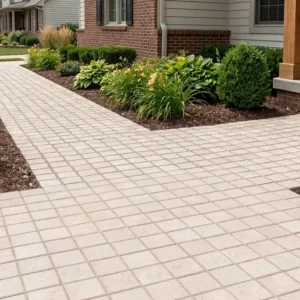
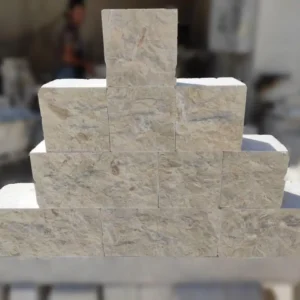
Standard cobblestone edging units run in three broadly recognised size families. The small-format range — typically 4″ × 4″ × 4″ cubes — suits pedestrian pathways and ornamental garden borders where wheel loads are absent. The mid-format range, closer to 4″ × 6″ × 4″ or 4″ × 6″ × 6″, is where most residential driveway edging specifications land, offering the visual weight of traditional cobblestone while maintaining workable handling sizes. Large-format setts — 6″ × 9″ and above — are the right call for high-traffic driveways, commercial entries, and installations where vehicular overhang onto the edge course is a real-world risk.
Granite Versus Other Stone Types for Edging Duty
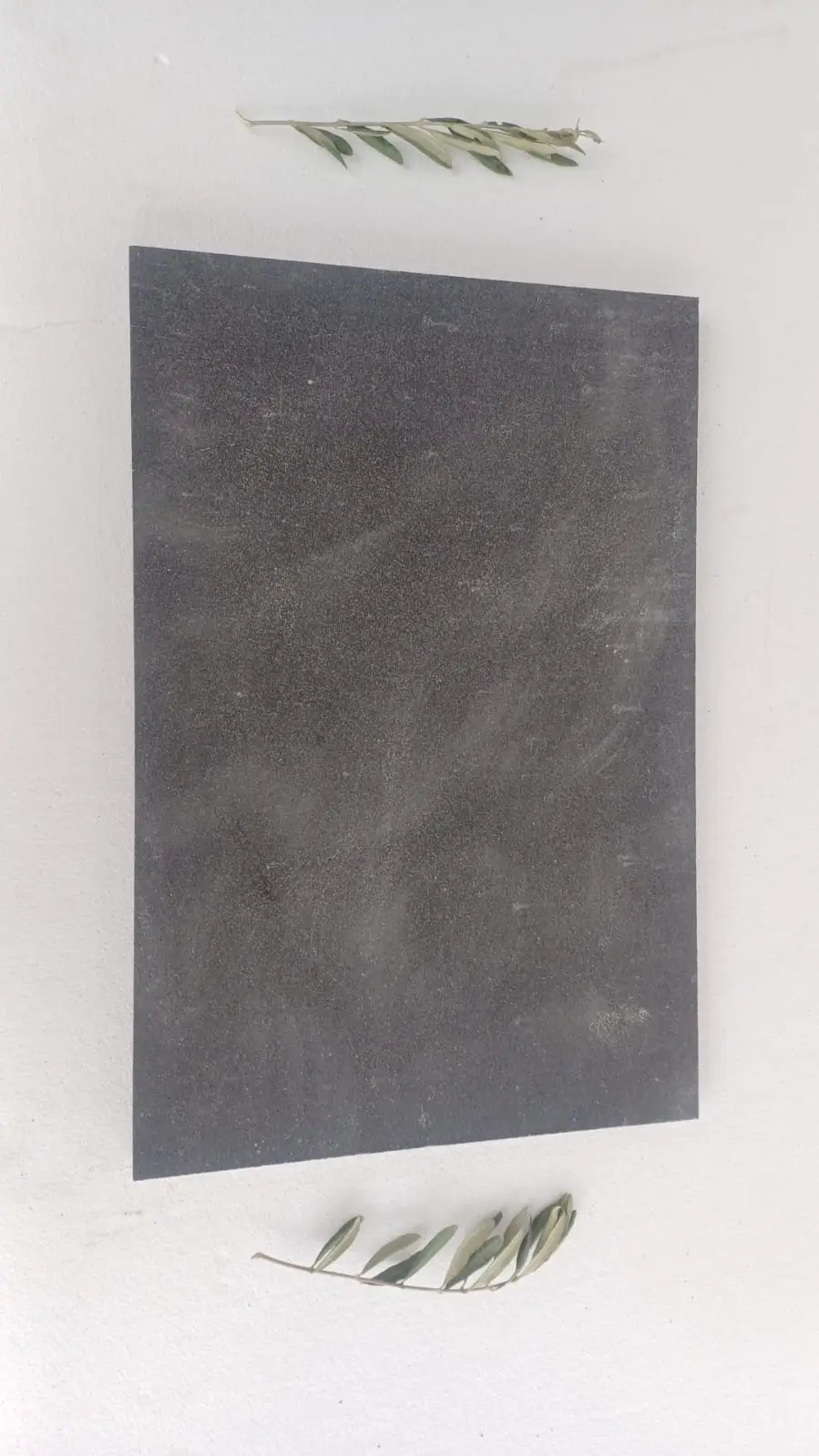
Granite stepping stones and granite cobblestone edging share the same fundamental advantage: compressive strength that routinely exceeds 25,000 PSI under ASTM C615 testing protocols, compared to limestone’s typical 8,000–12,000 PSI range. For edging duty specifically, that compressive strength translates to resistance against the point loads generated when vehicle tires ride up on the border course — something that happens more often than most homeowners expect, especially on driveway approaches with curves.
The choice between granite and limestone for cobblestone edging stones comes down to two variables. First, freeze-thaw durability: granite’s near-zero absorption rate (typically under 0.4%) means water has nowhere to lodge, so edge units stay dimensionally stable through aggressive freeze-thaw cycling. According to NSI granite durability and application data, this absorption profile makes granite one of the most reliable choices for exterior edging across climate zones where freeze-thaw events are frequent. Limestone edging is a legitimate option in temperate climates, but spec a denser, lower-absorption grade — aim for absorption below 3% per ASTM C568 — if freeze-thaw exposure is part of your project reality.
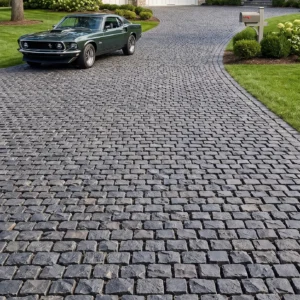
- Granite cobblestone edging: best for high-traffic driveways, freeze-thaw regions, commercial borders, and anywhere impact resistance matters
- Limestone cobblestone edging: appropriate for garden borders, pedestrian pathways, and lower-traffic residential applications in moderate climates
- Basalt edging setts: strong performer in wet environments due to low absorption, though harder to source in the dimensional consistency that patterned edging requires
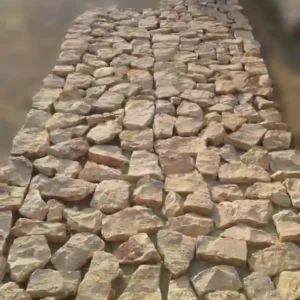
- Sandstone edging: aesthetically warm but susceptible to delamination at the face over time — not recommended for driveway borders subject to mechanical stress
Pattern Options: Fan, Soldier Course, and Running Bond
Your edging pattern choice does more than set the visual tone — it directly affects how well the border resists lateral spreading and how tolerant it is of dimensional variation in the stone units you receive. Each pattern has a different load-transfer geometry, and understanding that geometry helps you match the pattern to the actual stresses your project will generate.
Soldier Course: The Workhorse Pattern
The soldier course — units set vertically with their longest dimension running parallel to the border — is the most mechanically stable edging configuration for driveways and straight pathways. Setting stones on their edge increases the embedded depth, which improves resistance to lateral kickout under vehicle loading. Effectively, this increases the anchor depth without changing the unit itself. For a 4″ × 6″ cobblestone edging stone, a soldier-course set gives you 6″ of embedment rather than 4″ — that extra 2″ makes a measurable difference in edge stability over time.
Fan Pattern: Geometry and What It Demands
The fan pattern (also called the radial fan in traditional cobblestone work) creates a distinctive curved arrangement radiating from a central point. It’s the classic choice for circular forecourts, curved driveway aprons, and ornamental garden entrances. The geometry demands tightly graded stone — unit-to-unit dimensional variation needs to stay under 3/16″ to maintain even joint widths through the arc. When sourcing cobblestone edging stones for a fan layout, request a tighter grading tolerance from your supplier before committing to the pattern. Loose tolerances in the stone will force you to cut units on-site, which adds time and cost.
Running Bond for Long Straight Runs
Running bond — offset joints, units laid flat — is the most forgiving pattern dimensionally and works well for extended straight runs on pathway borders and garden bed edging. The offset joint structure distributes lateral stress across more contact points than a stack bond, which means individual units are less likely to rock or migrate. It’s also the fastest pattern to install, which matters on larger projects where labor cost is a real specification variable.
Base Preparation: The Detail That Decides Everything
Most cobblestone edging buyer guides skip this entirely: the base preparation protocol for edging is fundamentally different from the base prepared for field paving. Edging units carry a different load profile — they experience more lateral pressure and less vertical compression than field pavers — so the base needs to resist horizontal movement, not just vertical settlement.
The minimum compacted aggregate base for cobblestone edging on a driveway application should be 6″ of dense-graded crushed stone (ASTM No. 57 or equivalent), compacted to 95% Standard Proctor density. Below that, in clay-heavy soils, include either a geotextile separation layer or a 4″ sand sub-base to manage moisture migration. The compaction requirement isn’t negotiable — uncompacted base is the single most common cause of edging migration, and no amount of quality stone compensates for a soft bed. According to USGS dimension stone production and use data, granite setts used in kerbing and edging applications consistently outperform other stone types in field durability — but that durability assumes a properly prepared subgrade.
- Residential pedestrian edging: 4″ compacted aggregate base is sufficient for garden and pathway borders
- Residential driveway edging: 6″ compacted aggregate base minimum, with concrete haunching on the back of the edging course if overhang loading is expected
- Commercial or heavy-duty applications: 8″ compacted base plus concrete bed and haunch — don’t cut corners here regardless of how good the stone is
- Clay soil conditions: always include a geotextile filter fabric to prevent clay migration into your aggregate base over time
Joint Spacing and the Setting Bed
Joint width for cobblestone edging stones is a decision that intersects aesthetics, drainage, and structural performance. Tight joints — 1/4″ to 3/8″ — give a more refined appearance and resist wind-driven rain infiltration at the border face, but they demand tightly toleranced stone and careful installation. Wider joints — 1/2″ to 3/4″ — accommodate dimensional variation in the units and allow better surface drainage through the edging line, which matters in sloped applications where water needs to pass through the border rather than pond against it.
For the setting bed, a dry-mix mortar bed (3:1 sand/cement) at 1″ to 1.5″ nominal thickness is standard for most cobblestone edging installations. Wet mortar beds are an option for commercial-grade applications where movement tolerance is extremely tight, but they require controlled cure times and remove the ability to make minor adjustments during layout. One field detail that matters: dampen the aggregate base before setting cobblestone edging stones onto the dry mix bed. A bone-dry base will pull moisture out of the setting material too fast, resulting in incomplete hydration and a weaker set. It’s a simple step that installers routinely skip, and it costs longevity.
For projects where cohesive sourcing across both the edging and the field paving matters, Citadel Stone cobblestone borders are available in sizing formats that coordinate with standard field paving dimensions, which eliminates the dimensional mismatch issues that show up when edging and field paving come from different sources.
Storm Resistance and Edge Restraint Integrity
Severe weather events apply mechanical stress to cobblestone edging in ways that are easy to underestimate at specification time. Wind-driven rain penetrates open joints and, in freeze-thaw regions, cycles through the setting bed repeatedly — each freeze event expanding water by approximately 9% in volume, creating hydraulic pressure that slowly fractures mortar bonds and shifts edge units. Impact resistance matters too: wind-borne debris in storm-prone areas can strike edging units at forces that chip lower-density stones. Granite’s surface hardness (Mohs 6–7) makes it substantially more impact-resistant than limestone (Mohs 3–4) in these scenarios.
Edge restraint design for storm-exposed installations should include concrete haunching on the field side of the edging course. A 4″ wide × 4″ deep concrete haunch, cast against the back of the soldier-course edging, provides a continuous mechanical anchor that resists the lateral forces generated by water pressure, frost heave, and ground movement after significant storm events. Without that haunch, even well-bedded edging will migrate outward over three to five seasonal cycles. The ASLA guidance on permeable edging and border stone design reinforces the importance of edge restraint as a structural requirement, not just an aesthetic choice. Joint integrity under storm conditions also depends on the fill material — polymeric sand, activated with water after installation, creates a semi-rigid joint that resists washout under heavy rainfall far better than conventional kiln-dried sand.
- Use granite cobblestone edging in storm-exposed locations for impact resistance against wind-borne debris
- Specify polymeric sand joint fill — not standard kiln-dried sand — for any edging installation subject to heavy rainfall or slope drainage
- Cast a concrete haunch on the field side of driveway edging courses to resist storm-cycle lateral movement
- Check that edging unit joints align with drainage break points where water should pass through the border, not pond against it
Ordering, Logistics, and Lead Times
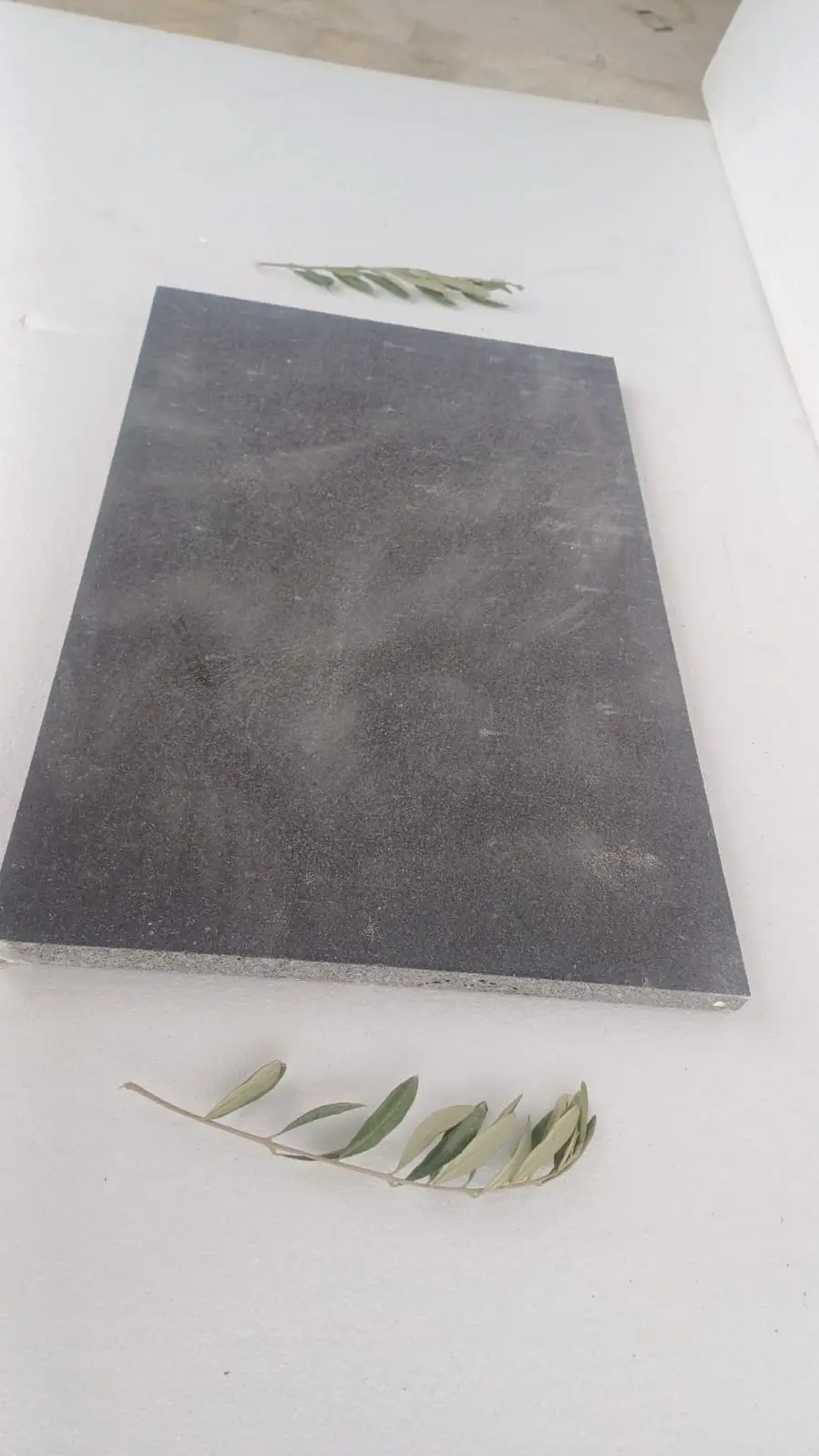
Cobblestone edging projects have a tendency to stall at the ordering stage because specifiers underestimate how much variation exists between suppliers in terms of available sizing formats and stock levels. Not every supplier carries soldier-course-height units in both granite and limestone simultaneously, and dimensional mismatches between what you specified and what arrives on a truck create field problems that are expensive to resolve mid-installation.
Your quantity calculation for cobblestone edging stones needs to include a 10–12% overage for cutting waste, breakage, and pattern adjustments at corners and curves — not the 5% that most general paving specs call for. Edging installations involve far more cuts per linear foot than field paving, especially on fan patterns and curved runs. Citadel Stone maintains warehouse inventory in multiple sizing formats, which means your project doesn’t have to wait on import cycles that can stretch 6–8 weeks. Confirming warehouse availability before finalising your project timeline is worth a direct conversation with the supply team. Delivery scheduling should account for truck access at your site: edging stone arrives on pallets, and narrow residential driveways sometimes require smaller delivery vehicles or crane-off options — flag this early so logistics can be arranged before the stone is on the truck.
- Calculate linear footage of edging, then convert to unit count based on your chosen size and pattern — don’t estimate this informally
- Order 10–12% overage for cobblestone edging installations (higher than standard paving overage due to cut frequency)
- Confirm stock format and color consistency from a single warehouse batch — color variation between batches is a real risk with natural stone
- Check truck access constraints for your delivery site and flag narrow access points to your supplier before the order is placed
Granite Stepping Stones as Complementary Elements
A cohesive hardscape design often pairs cobblestone edging with granite stepping stones set within the bordered zone — creating a visual and material language that reads as intentional and resolved rather than assembled from independent decisions. Granite stepping stones in a flagged or irregular format inside a cobblestone edging border give you the contrast of scale that makes both elements read clearly in the landscape.
The specification detail to manage carefully here is the thickness differential. Standard cobblestone edging stones in soldier-course set will present a finished height of 4″–6″ above the setting bed. Granite stepping stones, typically 1.5″–2″ thick, sit at a dramatically different elevation unless the stepping stone base is built up to match the finished surface grade. Base depths need to be calculated independently for each element — not applied uniformly across the project. Getting this wrong creates trip hazards at the transition points between edging and stepping stone elements, which is a safety and liability issue on any pedestrian-trafficked surface.
Sealing and Long-Term Maintenance
Cobblestone edging receives more direct weather exposure than most field paving — it’s at the perimeter, fully exposed to driving rain, freeze-thaw action, and ground moisture from adjacent soil. The sealing protocol needs to reflect that reality. For granite cobblestone edging, a penetrating impregnating sealer applied in two coats at installation provides the foundational protection layer. For limestone edging, resealing every 18–24 months is more realistic than the 3–5 year cycles cited in generic stone care guides, because limestone’s higher absorption rate means the sealer depletes faster under exposure conditions.
Joint maintenance is the other variable that determines long-term performance. Polymeric sand joints should be inspected annually — particularly after severe storm seasons — and replenished where washout or settlement has reduced fill depth below the top third of the joint. A joint that’s only half-filled provides almost no lateral support to the edging unit. It’s a maintenance task that takes 30 minutes with the right materials and prevents the kind of edge migration that requires full re-installation to correct. The ASTM standards framework governing stone compressive strength and durability testing for kerb and edging stone provides the technical baseline for understanding why material selection and maintenance together determine service life — neither element alone is sufficient.
- Apply a penetrating sealer at installation — not a surface-coating sealer, which can trap moisture below and accelerate joint deterioration
- Reseal limestone cobblestone edging every 18–24 months; granite edging every 3–4 years under normal conditions
- Inspect and replenish polymeric sand joints after storm seasons or whenever visual inspection shows joint depth below the top third of the unit
- Check for evidence of edge migration annually — a unit that has moved 1/4″ is correctable; a unit that has moved 1″ requires resetting the section
Getting Cobblestone Edging Specifications Right
A well-specified cobblestone edging installation starts with a size and pattern decision that’s grounded in load reality, not just visual preference. The pattern you choose — fan, soldier course, or running bond — should be matched to your project’s curve geometry, traffic type, and the dimensional tolerance of the stone units you’re sourcing. Base preparation depth and compaction standard are non-negotiable variables, and joint fill material should be selected based on drainage conditions and storm exposure, not default habit. For complementary guidance on how cobblestone material performs across garden applications beyond the edging border itself, laying garden cobble stones effectively covers installation method and material performance in planted-area contexts. Citadel Stone carries cobblestone edging in multiple sizing formats, allowing traditional fan and soldier-course laying patterns to be matched across driveways and pathways.
Related reading: how to install edging stones · why edging stones keep shifting.