





Drainage Performance: Why Black Granite Cobbles Excel in Arizona’s Storm Patterns
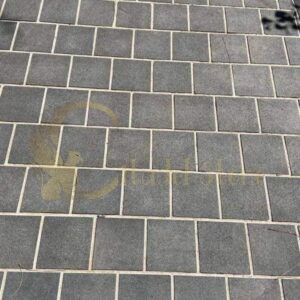
Compressive strength exceeding 19,000 PSI means black granite cobbles in Arizona don’t just survive flash flood conditions — they maintain dimensional stability when saturated subgrades shift beneath lighter paving materials. Arizona’s monsoon season delivers intense, short-duration rainfall events that concentrate runoff faster than most drainage systems anticipate. You’ll need a material that sheds water at the surface level while your sub-base handles the volume load below, and dense-grain black granite cobbles handle that surface role without absorbing moisture that would otherwise compromise freeze-thaw performance at elevation. For projects in Scottsdale and across the Phoenix metro, specifying black cobble stones in Arizona with cross-fall gradients of 1.5–2% toward designated drainage channels prevents the pooling that degrades mortar beds and destabilizes edge restraints over time.
Water Absorption and Material Science Behind Black Granite
The absorption rate of quality black granite sits between 0.1% and 0.4% by weight — a figure that matters enormously in a state where monsoon moisture is followed almost immediately by intense evaporative drying. Materials with higher absorption rates, like certain sandstones or lower-density limestones, undergo repeated wet-dry cycling that progressively weakens the crystal lattice structure at the surface. Black granite’s interlocking silicate mineral structure resists this degradation cycle effectively, which is why you’ll see 25-year-old black cobble installations in commercial plazas around Scottsdale still holding tight joints and sharp arris edges despite two decades of monsoon seasons.
Black slate cobbles in Arizona are sometimes proposed as a cost-alternative, but slate’s foliated cleavage planes create preferential moisture migration paths that granite simply doesn’t have. Under Arizona’s rapid wetting and drying cycles, slate can delaminate along those planes within 8–12 years, particularly in installations with limited airflow beneath the stone. Granite’s massive crystalline structure gives you a material that treats each monsoon event as a non-event rather than a cumulative stress cycle. Black slate cobbles in Arizona also present long-term maintenance cost increases that offset any initial savings when delamination repairs are factored into the total project budget.
- Absorption rate 0.1–0.4% prevents capillary moisture uptake during monsoon saturation
- Dense interlocking mineral grain structure eliminates preferential fracture planes
- Surface tension characteristics shed sheet flow efficiently on cobble profiles
- Wet-dry cycling has negligible effect on structural integrity at standard installation depths
- Dimensional stability under saturated subgrade conditions reduces joint migration over time
Base Preparation and Drainage Design for Arizona Cobble Installations
Your drainage design starts 12 inches below finish grade, not at the surface. Arizona’s expansive clay soils — particularly common in the Chandler and Gilbert corridors — absorb monsoon moisture and swell laterally, creating heave pressures that dislodge poorly anchored cobblestones regardless of how well the surface was installed. A properly engineered sub-base for black granite cobbles in Arizona requires compacted Class II aggregate base at minimum 6 inches for pedestrian applications and 10–12 inches for vehicular loads, with a geotextile separation fabric between native soil and aggregate to prevent clay migration upward into the drainage layer.
In Flagstaff, the drainage calculation changes significantly because freeze-thaw cycling compounds the moisture management challenge. At elevations above 6,900 feet, you’re designing for both monsoon infiltration and winter frost penetration simultaneously. Frost depth in Flagstaff reaches 18–24 inches in severe winters, which means your aggregate base needs to extend well below that frost line or you need to accept annual minor resetting work as a maintenance budget line item. Polished black cobbles in Arizona at Flagstaff elevations are better specified in a flexible mortar bed rather than rigid setting to accommodate that seasonal movement without cracking.
- Minimum 6-inch compacted aggregate base for pedestrian cobble applications
- 10–12 inch aggregate depth required for driveway and vehicular cobble installations
- Geotextile separation layer prevents clay fines migration into drainage aggregate
- 1.5–2% cross-fall gradient directs monsoon runoff to planned drainage outlets
- Perimeter edge restraints must be anchored below frost depth in Flagstaff-elevation projects
- Permeable jointing sand blends allow minor vertical infiltration between cobble units
Black Granite Cobble Formats, Finishes, and Sizing for Arizona Projects
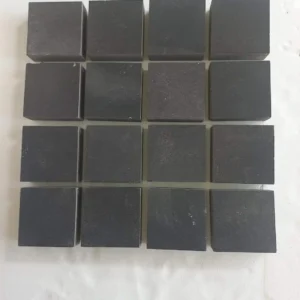
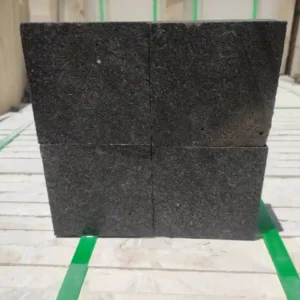
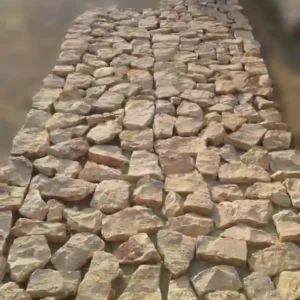
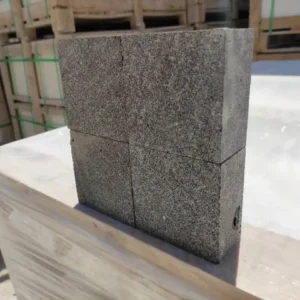
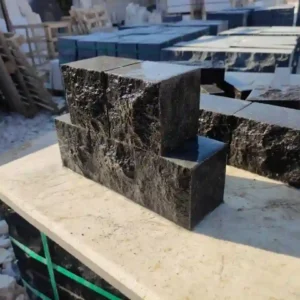
The format decision for black garden cobbles in Arizona matters more than most specifiers initially realize, and it connects directly to drainage efficiency. Larger cobble formats — typically 4×4×4 inches and 6×6×6 inches — create wider joint spacing when laid in traditional patterns, which allows more surface water to infiltrate between units rather than sheeting across the surface. Smaller cobble formats in the 2×2×2 inch range pack more tightly, reducing infiltration but creating a smoother surface profile that channels runoff directionally more predictably. Your drainage engineer’s input should inform which format range you specify before you commit to a stone order.
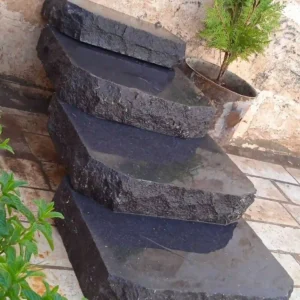
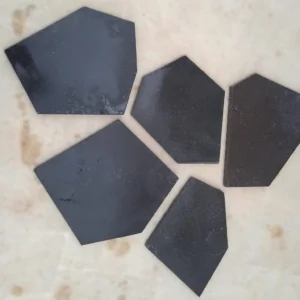
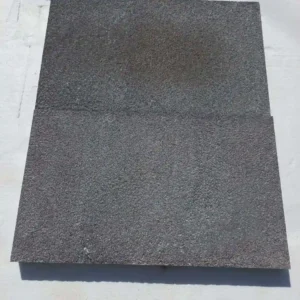
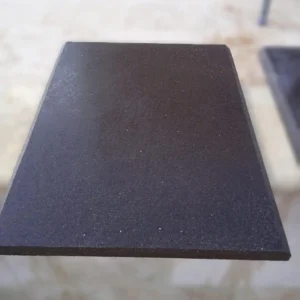
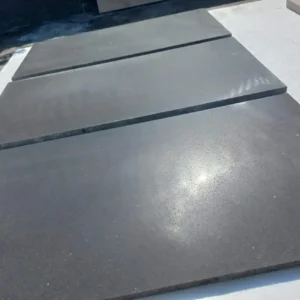
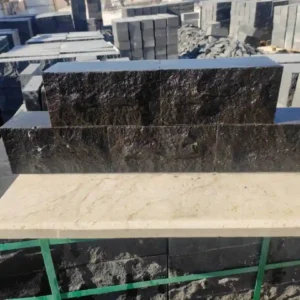
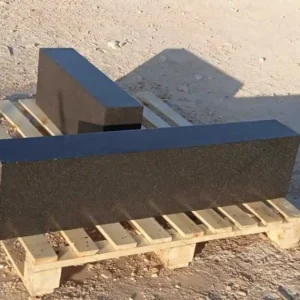
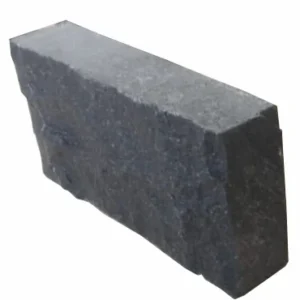
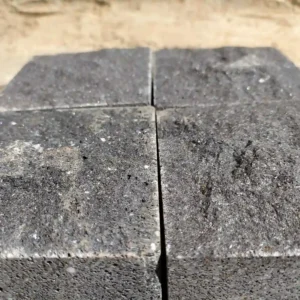
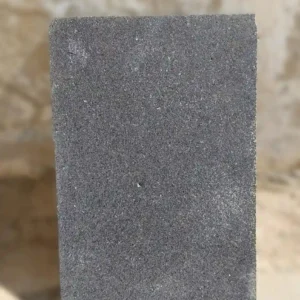
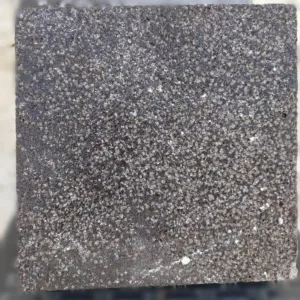
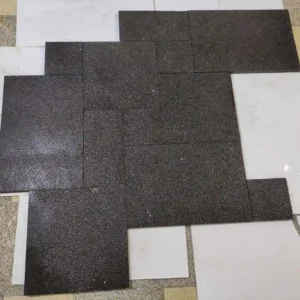
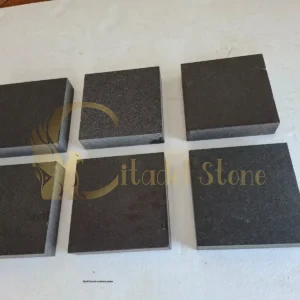
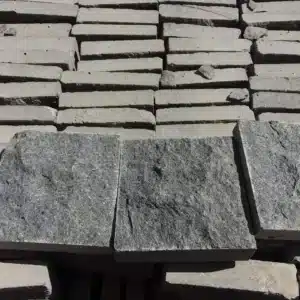
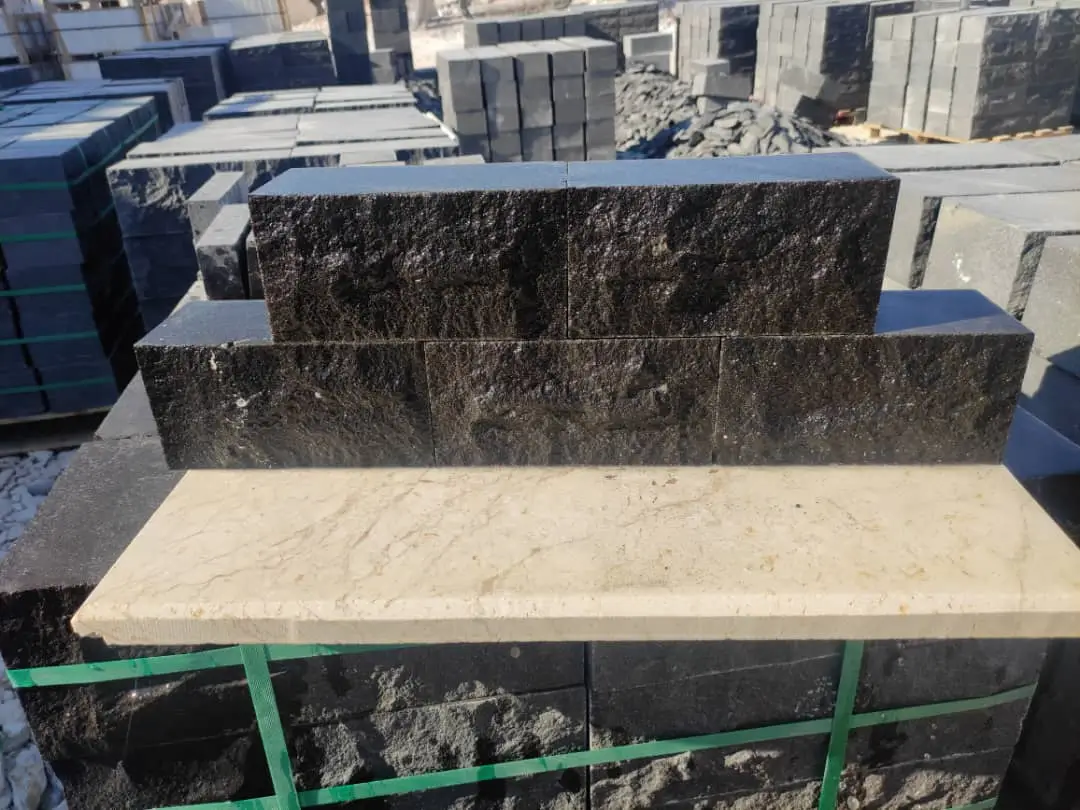
Polished black cobbles in Arizona are specified most frequently in commercial and high-end residential applications in the Phoenix metro, where the reflective surface quality under landscape lighting creates a premium aesthetic. The polished finish does reduce surface texture compared to natural split or tumbled finishes, dropping the wet slip resistance coefficient from approximately 0.65 on tumbled surfaces to 0.45–0.50 on polished black cobbles in Arizona. For any application where pedestrians walk during or immediately after monsoon rainfall, specifying a bush-hammered or tumbled finish gives you the same visual depth with significantly better traction. Citadel Stone stocks black granite cobbles in tumbled, natural split, and polished finishes, so you can request sample pieces to evaluate finish options before finalizing your specification.
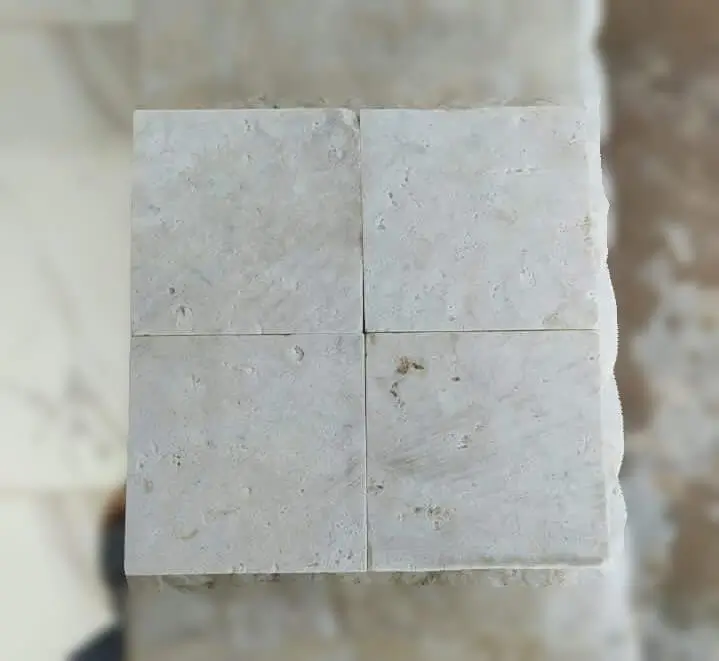
Installation, Jointing, and Monsoon-Season Scheduling
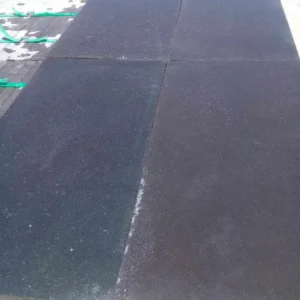
Scheduling black cobble installations around Arizona’s monsoon season — typically July through mid-September — requires more planning than most contractors budget for. Freshly laid cobblestones in a polymeric sand joint compound need 24–48 hours of dry conditions to cure the binding agents that lock joint material in place. A monsoon event hitting an installation within that curing window washes joint sand out completely, costing you a full re-joint operation plus potential displacement of individual cobble units if the sub-base gets saturated before compaction is complete. For projects running through monsoon season, you should either target installation windows in the May–June period or build a contingency budget for a single re-jointing operation. For mid-project cost reference and specification details, Black Granite Cobbles from Citadel Stone covers the full pricing framework alongside installation specification guidance that applies directly to Arizona drainage conditions. Joint width for standard black granite cobbles in Arizona should run 8–12mm for pedestrian applications — tight enough to prevent individual unit rocking under foot traffic, wide enough to allow the minor thermal expansion that Arizona summer temperatures introduce.
- Avoid polymeric sand curing operations within 48 hours of forecast monsoon events
- Target installation windows in May–June or mid-September through October where possible
- Joint width 8–12mm balances drainage infiltration with structural unit-to-unit support
- Allow full sub-base compaction and 72-hour settlement before placing cobble units
- Perimeter edge restraints must be in place before infilling central field cobblework
- Vibratory plate compaction after cobble placement should be completed in dry conditions
Black Granite vs. Alternative Dark Cobbles: Making the Right Material Call
Black slate cobbles in Arizona generate interest because initial pricing is often 15–25% lower than granite, but the total cost of ownership calculation shifts that comparison significantly. Slate’s layered structure, while visually appealing when fresh, develops surface spalling within the first 5–7 years in Arizona’s UV-intense environment. The same foliated structure that creates the characteristic silvery-black surface sheen also allows the outermost laminar layer to delaminate under repeated thermal shock — morning shade to direct 105°F midday sun creates a differential thermal stress that slate handles less gracefully than granite over a 20-year horizon.
Black garden cobbles in basalt are a more credible alternative to granite in terms of durability, with similar compressive strength and comparable absorption rates. The practical difference comes down to color consistency — basalt cobbles show natural greenish-grey undertones that become more apparent as surface patina develops, whereas black granite maintains a more consistent dark charcoal to jet-black tone across the installation life. For projects where visual uniformity matters — entrance courts, formal garden paths in Phoenix residential properties — granite’s color stability over decades justifies the modest premium over basalt. Black garden cobbles in granite also resist chloride attack near pool features more effectively than either slate or basalt alternatives.
- Black granite: compressive strength 19,000+ PSI, absorption 0.1–0.4%, 25+ year service life
- Black slate: lower initial cost but delamination risk within 5–7 years under Arizona UV load
- Black basalt: comparable durability to granite, with greenish undertones developing over time
- Tumbled granite cobbles maintain natural split texture without introducing foliation weaknesses
- Granite’s mineral stability resists chloride attack in projects near pool features
Sealing and Maintenance Protocols for Arizona Black Cobble Installations
Sealing black cobble stones in Arizona serves two distinct functions that are easy to conflate but need to be addressed separately in your maintenance plan. The first is color enhancement — a penetrating impregnator seal deepens the black tone and reduces the chalky efflorescence that sometimes appears in the first season as calcium compounds migrate to the surface in high-alkalinity soils. The second is surface protection from organic staining — pool equipment oils, plant tannins, and irrigation mineral deposits all penetrate unsealed granite slowly over time, creating staining that’s difficult to reverse without abrasive treatment. A quality penetrating silane-siloxane sealer applied 28 days after installation and renewed every 3–4 years handles both functions effectively.
The sealing schedule shifts depending on project exposure. Polished black cobbles in Arizona used in shaded courtyard conditions in Tucson might extend comfortably to a 5-year resealing interval. The same material in full western sun exposure in a Yuma-area installation should return to a 2–3 year schedule because UV degradation of the sealer film accelerates significantly at sustained high temperatures. Verifying sealer performance is straightforward — run water across the surface and observe: if it beads and sheets, the sealer is intact; if it absorbs and darkens the stone, you’re past the resealing threshold.
Request Black Granite Cobbles in Arizona — Order from Citadel Stone
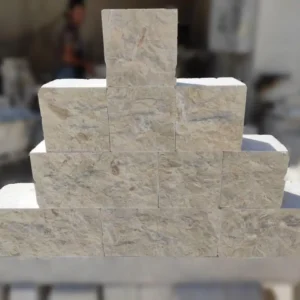
Citadel Stone supplies black granite cobbles in Arizona in tumbled, natural split, and polished finishes across standard formats from 2×2×2 inches through 6×6×6 inches, with custom-cut options available for project-specific requirements. You can request sample pieces or full specification datasheets — including absorption rates, compressive strength figures, and slip resistance test data — before committing to a project order. Trade and wholesale enquiries are handled directly through the Citadel Stone team, with lead times from warehouse inventory typically running 1–2 weeks for standard stock formats across Arizona. Truck delivery covers the full state, including the Phoenix metro, Tucson basin, Flagstaff plateau, and outlying areas. At Citadel Stone, we inspect each batch for color consistency and dimensional tolerance before it leaves our facility, because a mixed delivery creates sorting work on your site that nobody budgets for. Contact Citadel Stone for project-specific pricing, volume breakdowns, and delivery scheduling that fits your installation window — particularly if you’re planning around Arizona’s monsoon season calendar. Beyond black granite, complementary stone elements can complete a cohesive hardscape palette — White Cobbles in Arizona offers a contrasting specification reference for projects that incorporate light and dark stone together within the same Citadel Stone supply relationship. Contractors in Flagstaff, Sedona, and Yuma select Citadel Stone Black Granite Cobbles for Arizona residential and commercial projects.